 Dog Gear, Sized Right
Our Top-Rated Dog Harness Picks
Padded, adjustable, no-pull picks for strong large-breed dogs, tested-brand favorites.
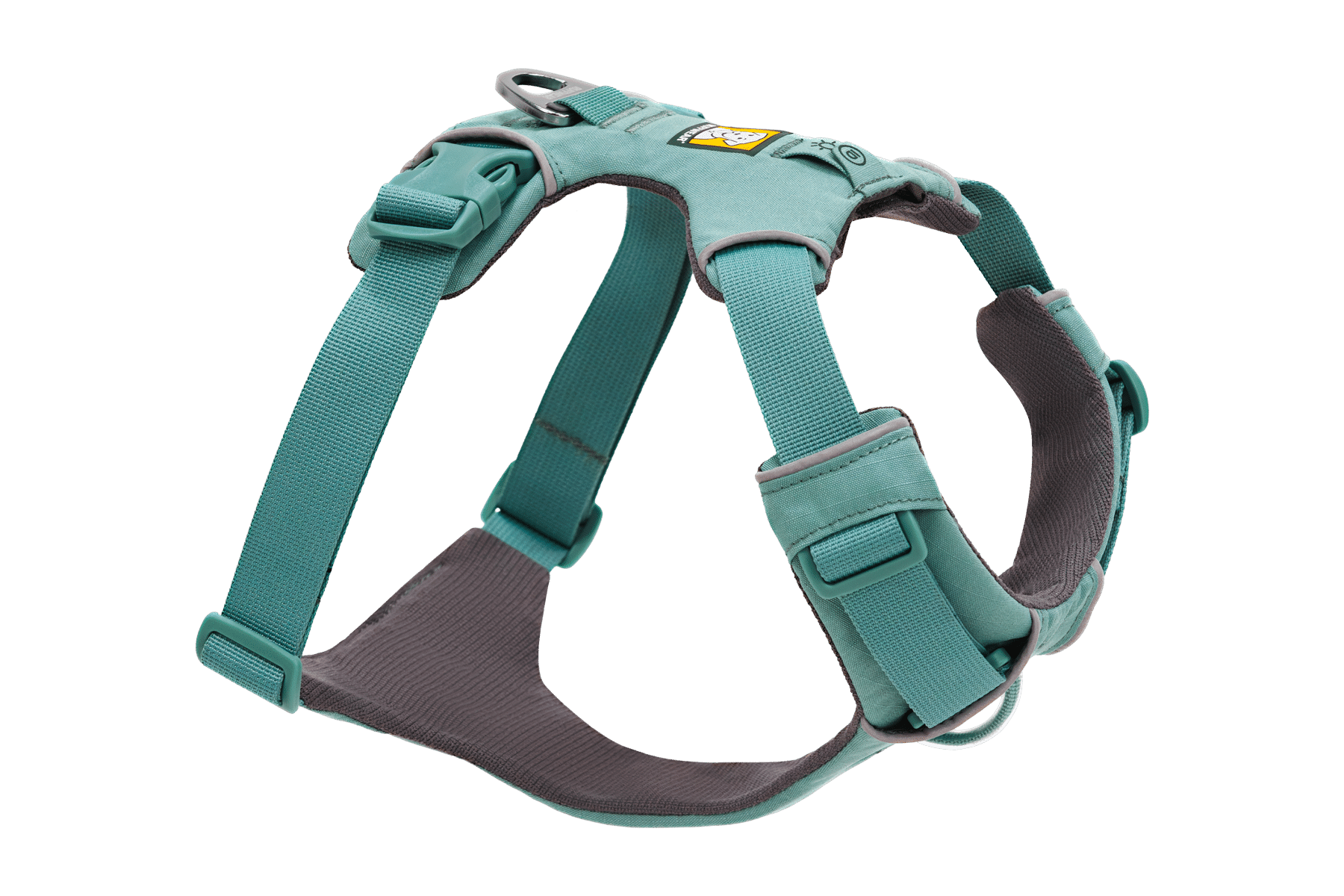
Ruffwear Front Range Harness
The do-everything everyday harness: a padded chest panel, four points of adjustment, and both front and back leash rings for relaxed walks or gentle no-pull steering.
What we like
- Two-clip versatility suits any walk
- Padded yoke spreads pressure on the chest
The catches
- No top control handle on this model
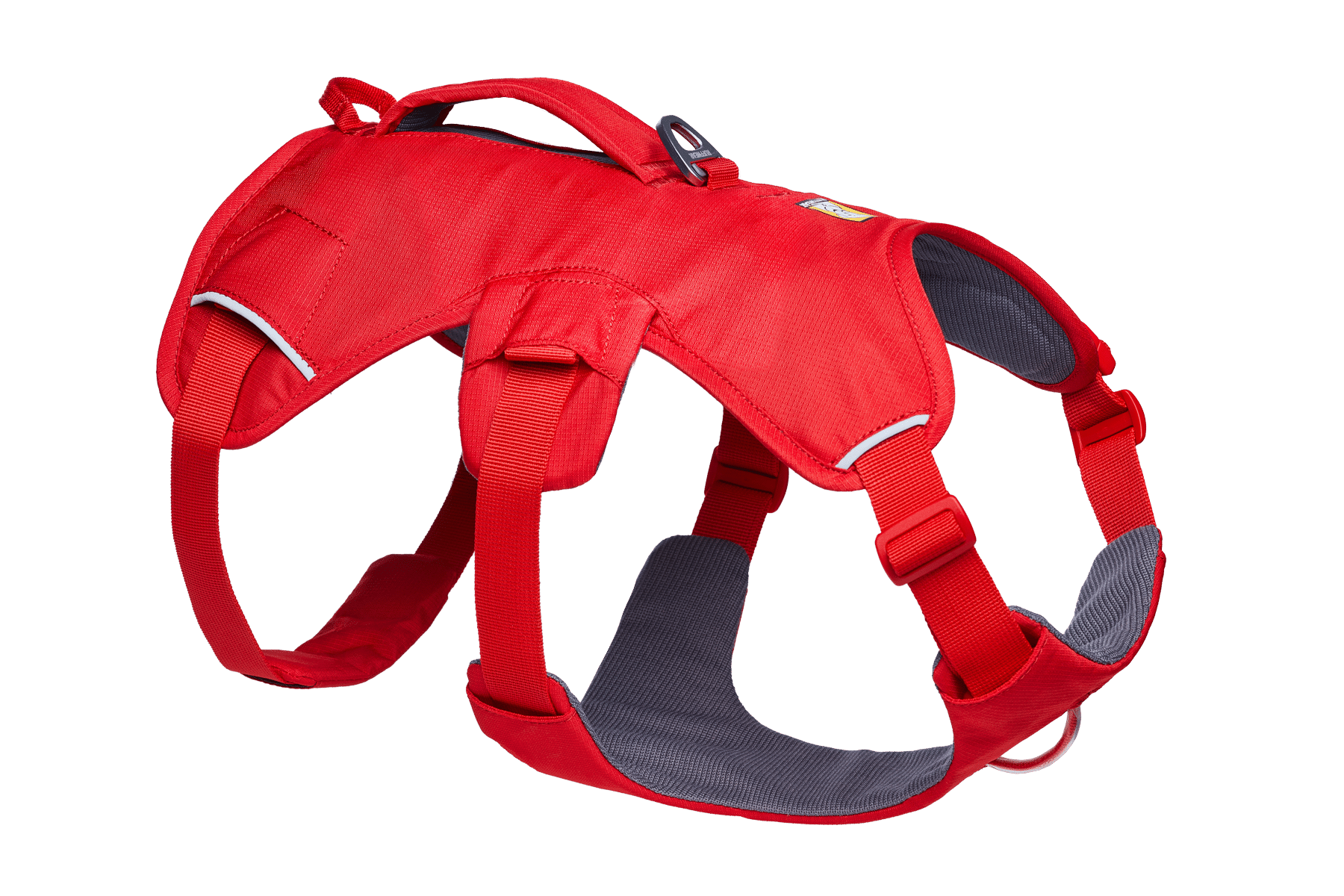
Ruffwear Web Master Harness
A three-strap, escape-resistant build with a reinforced top handle for lifting and steadying large dogs over rough terrain or into a vehicle.
What we like
- Sturdy handle lifts and controls big dogs
- Five adjustment points lock in a secure fit
The catches
- More webbing than casual walkers need
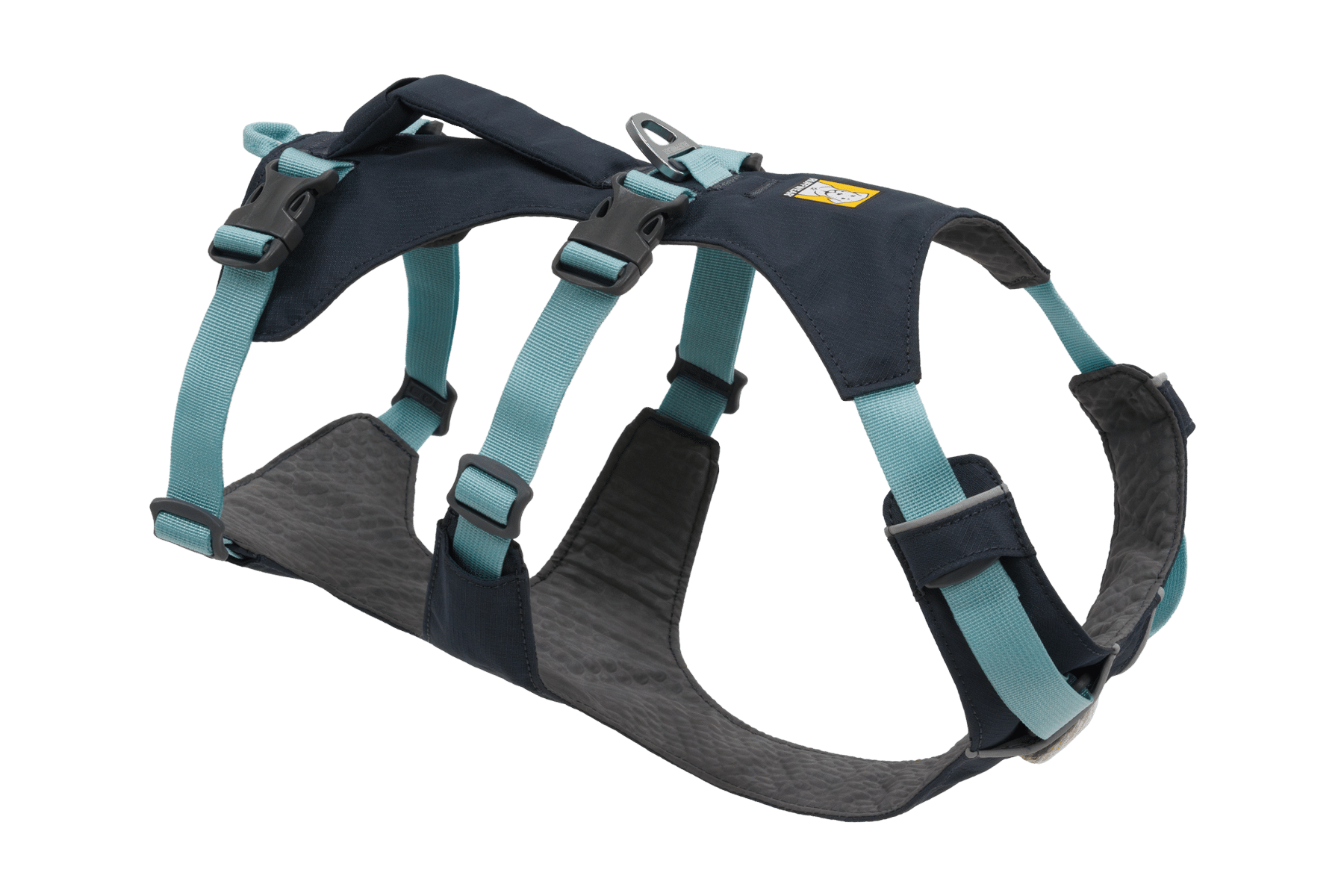
Ruffwear Flagline Harness
A lightweight handled harness with five adjustment points, built to fit deep-chested and non-standard proportions without restricting the shoulders.
What we like
- Dials in on barrel-chested and deep-chested dogs
- Padded handle folds flat when not in use
The catches
- Premium price for a walking harness
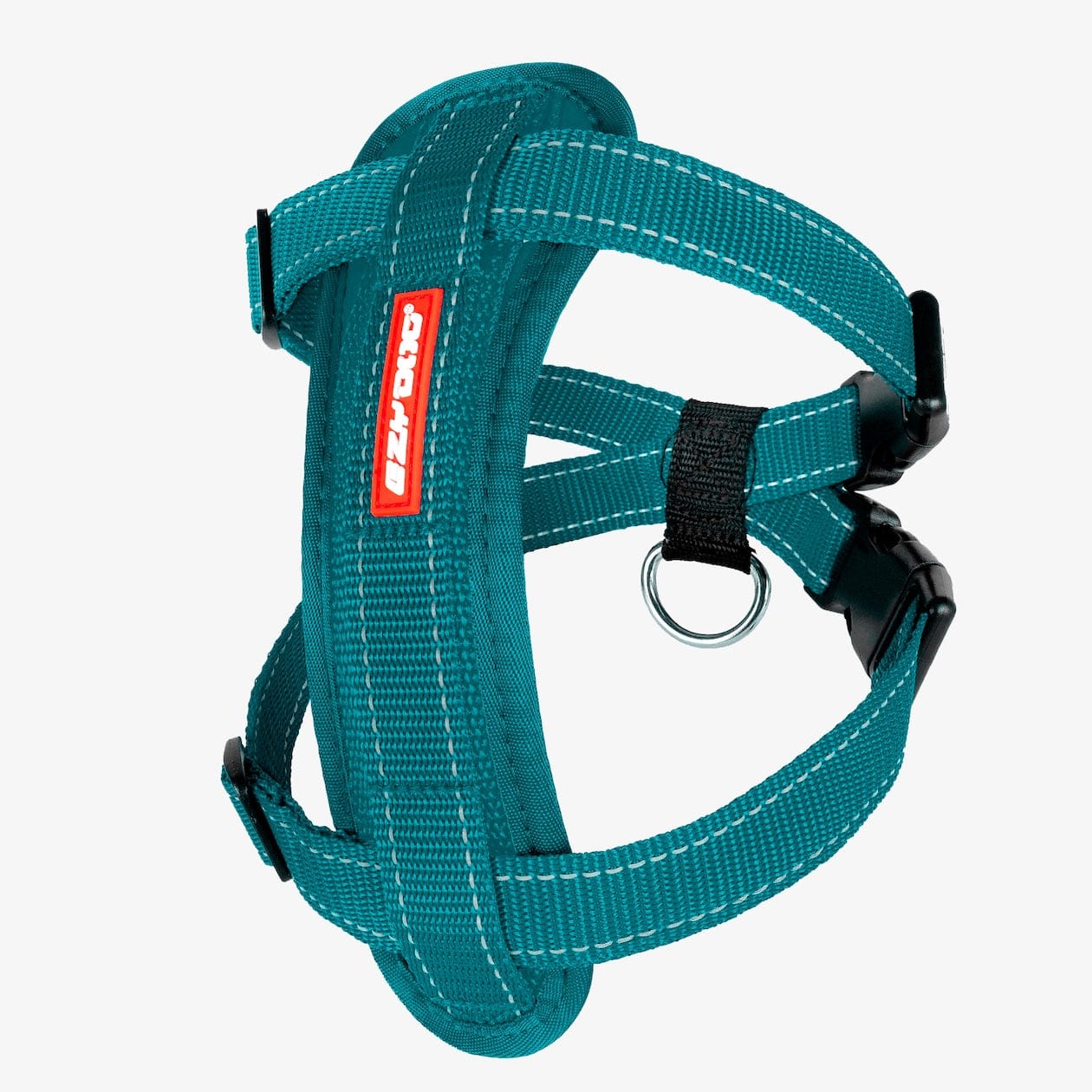
EzyDog Chest Plate Harness
A car-seat-foam chest plate distributes pressure across the sternum, making this back-clip harness a comfortable pick for strong, broad-chested dogs.
What we like
- Thick chest plate cushions pulling pressure
- Doubles as a car restraint with a seat-belt loop
The catches
- Back-clip only, limited no-pull steering
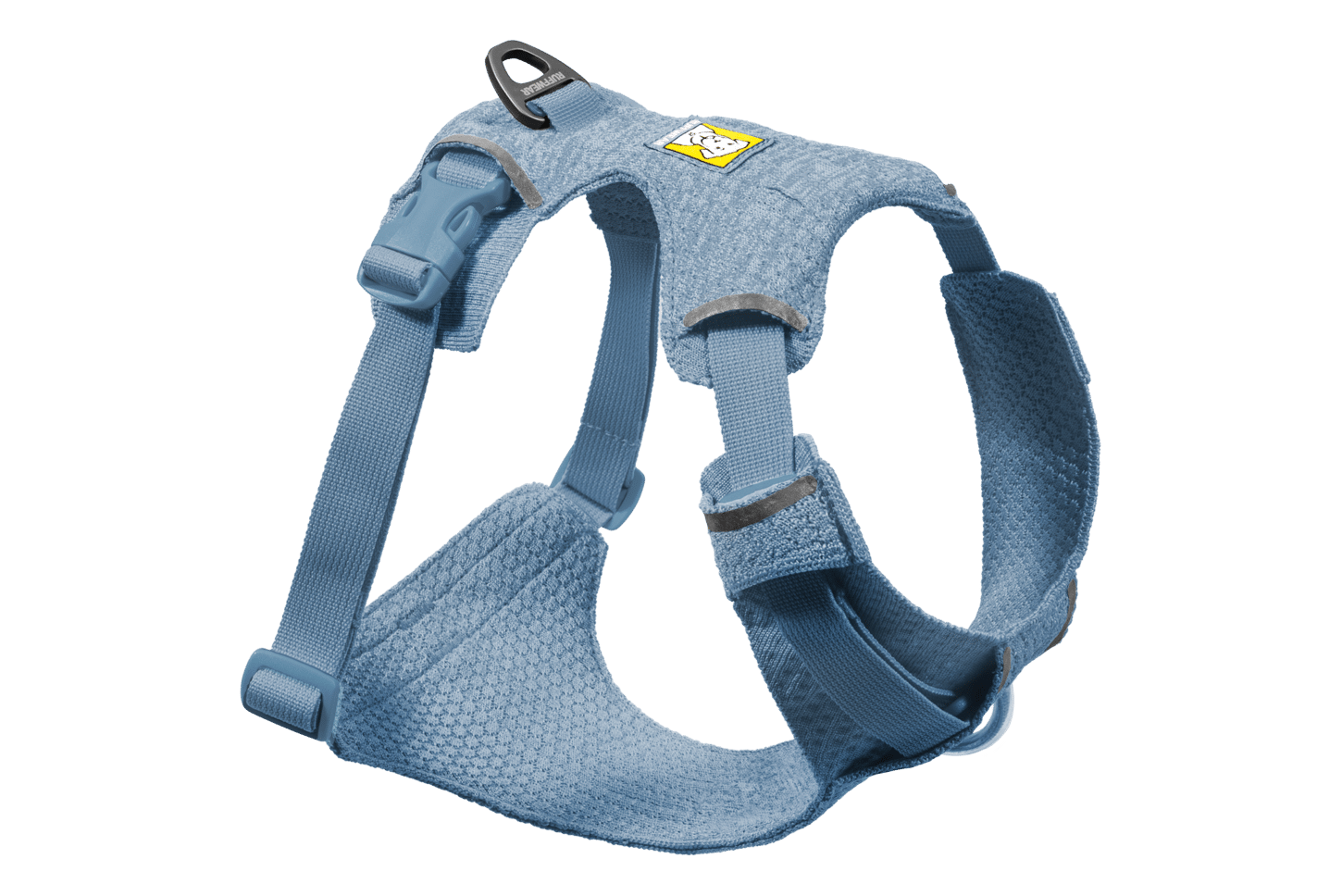
Ruffwear Front Range Flex
The Front Range reimagined with stretch panels that move with an active dog, plus the same dual-clip layout and padded chest panel.
What we like
- Flexible panels follow a dog in motion
- Front and back rings for any walking style
The catches
- Costs more than the original Front Range
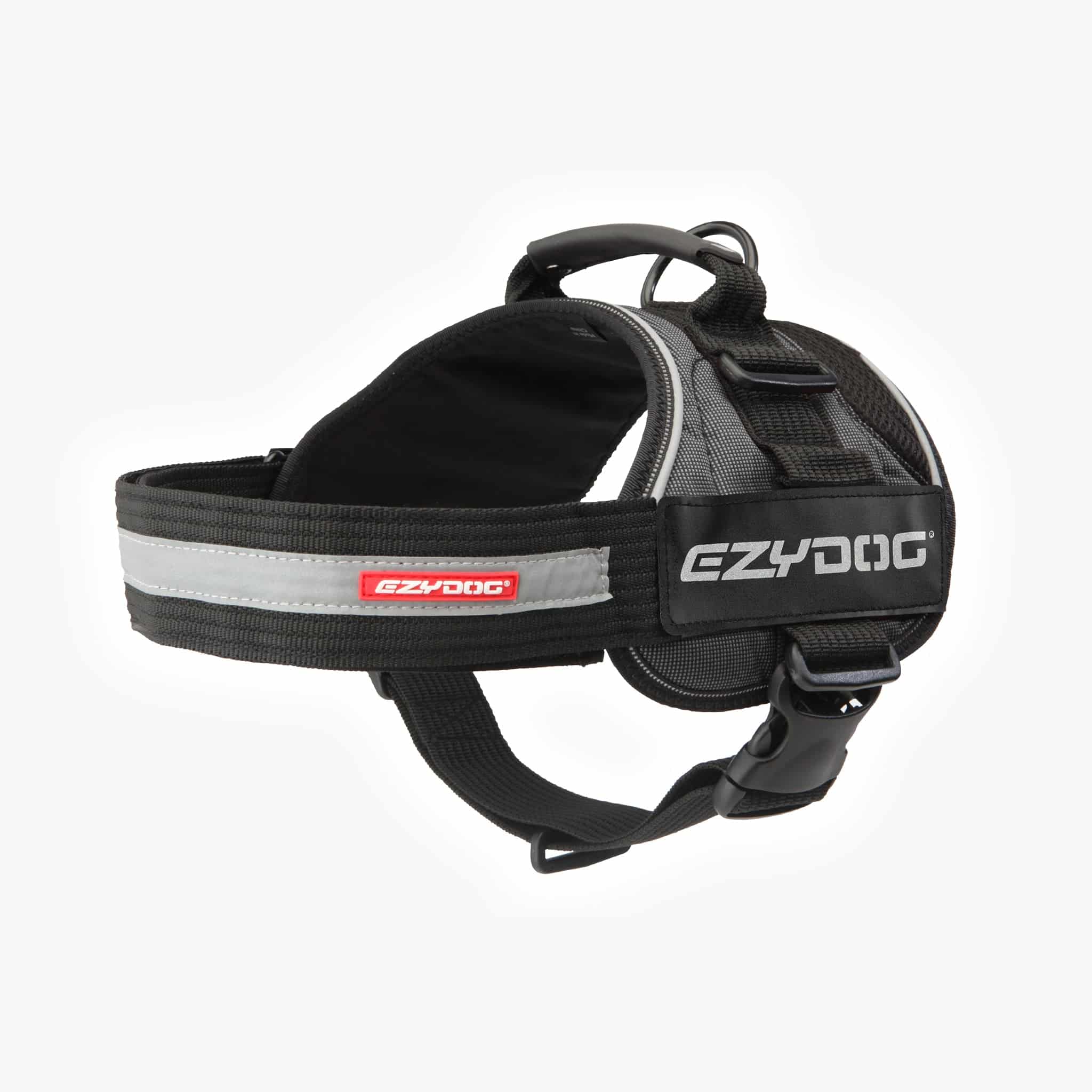
EzyDog Convert Harness
A rugged, service-style harness with hook-and-loop side panels for patches, a grab handle, and modular attachment points for working and adventure dogs.
What we like
- Patch panels suit service and working dogs
- Handle and tough build hold up to abuse
The catches
- Heavier than a plain walking harness
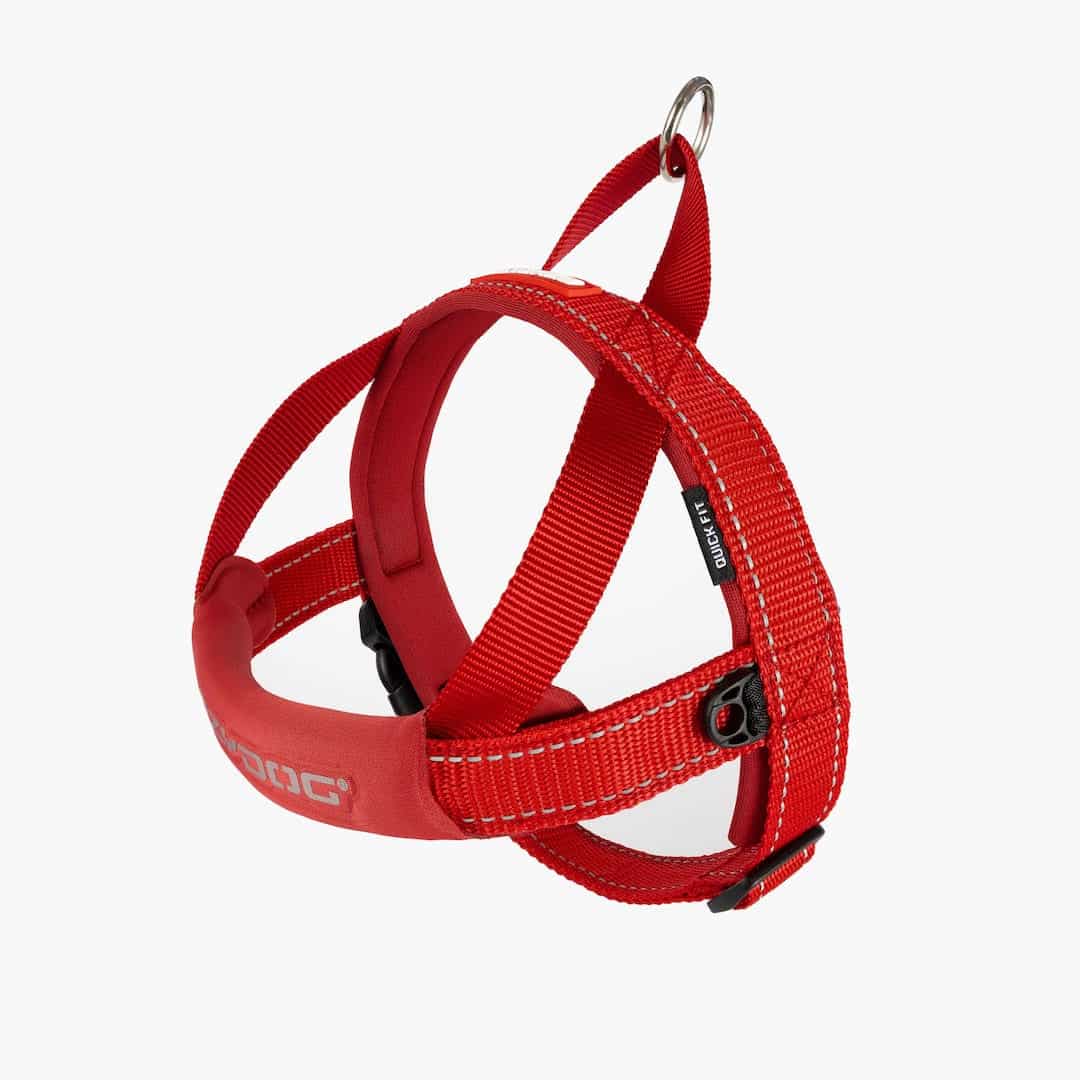
EzyDog Quick Fit Harness
An over-the-head harness with a single quick-clip buckle and a reflective chest panel, simple, affordable, and easy to size on growing dogs.
What we like
- Fast to fit and friendly on the budget
- Reflective panel boosts low-light visibility
The catches
- Less padding than the Chest Plate
How to Choose the Best Dog Harness
Dog harnesses are an essential tool for pet owners, providing a safe and comfortable way to control their dogs while on walks and other outdoor activities. My Little and Large offers a wide range of high-quality dog harness to fit any size and breed of dog, making it easy to find the perfect harness for your furry friend.
Different types of dog harnesses are used for various purposes. These include vests with padded chests, multi-clips, and reflective trims. Some of these harnesses can be made of high-quality materials and come with a comfortable fit, making them ideal for training your dog.
Different Styles of Dog Harnesses

Back-clip Harness
A back clip for dog harnesses can be an ideal training tool. These harnesses allow your dog to get more exercise while not putting pressure on their throat and trachea. However, if your pet is not trained correctly, this could lead to a pull on the leash.
When shopping for a dog harness, look for the best material. Materials should be durable enough to last through frequent use. It’s also a good idea to pick one that is easy to clean. Make sure you can machine wash the straps, too.

Multi-clip Harness
Multi-clip dog harnesses are an excellent option for dogs who pull a lot. They provide better control over pulling and teach good leash manners.
In addition, these harnesses come in a variety of designs. Some offer multiple points for leash attachment, while others are more minimalistic. Regardless of your preference, these dog harnesses come in various colors.

Padded Chest Harness
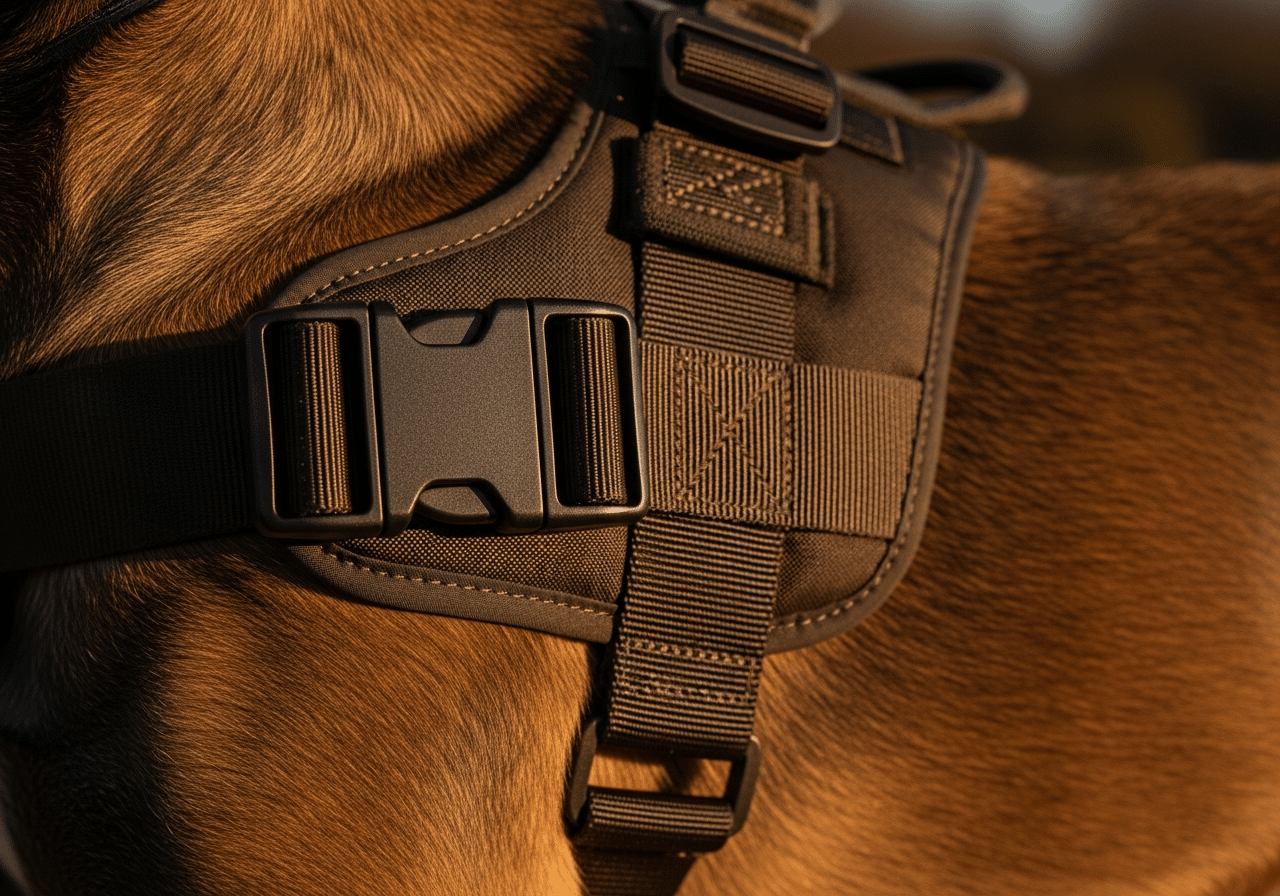
Padded chest dog harnesses are designed to provide additional comfort and protection to your canine. These harnesses come in a variety of colors and styles. Some harnesses have padding that prevents rubbing and calluses, and some are breathable and lightweight.
A fully padded dog harness features an ergonomic design that allows it to fit over your dog’s head. It also has adjustable straps that ensure that it is snug on your pet’s chest.
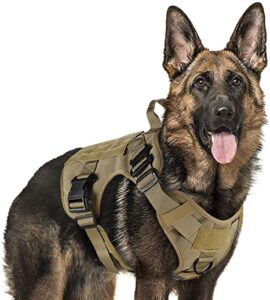
Tactical Vest Harness
There are several different types of dog harnesses available on the market today. Each has its features and benefits. The best harness will fit your dog’s needs and keep your canine friend comfortable and safe. It would be best to read reviews of various dog harnesses to choose the right one.
Dogs can be very active, and the proper harness can help them stay safe and comfortable while doing their daily activities. Some harnesses feature a padded seat belt that is breathable and scratch-resistant.

Reflective Trims For Your Harness
A reflective trim on a dog harness is a great way to keep your four-legged pal safe and well-behaved while out and about in the great outdoors. The best dog harnesses are made of tough materials to stand up to the elements while being soft and light enough to fit your dog’s little body. If you have an active dog, the easy-grab handle can help you get a better grip on the leash without much tugging.
Several other ways to make your dog more visible to pedestrians and motorists. One of the best is the most elegant-looking reflective dog harnesses on the market. These come in various styles and sizes to suit various canine tastes and preferences. A slew of fancy features like waterproof outer shells and chunky reflective stripes also accompanies them.
Types of Dog Harnesses
No-pull harness
No-pull harnesses rely on force, avoidance, and pain to change the pet dog’s behavior. When the canine pulls, a strap within the harness tightens up. If the canine pulls, the leash goes off to the side and directs the canine back towards the owner.
Sled dog harness
Sled pets use harnesses for running, cycling, sledding, skijoring, or pulling weight. There are numerous different kinds of harnesses available for sled dogs. Some typical harness types: X-back, H-back, spreader, and half-harness bar harness The X-back design harness is the common option for sprint/mid-distance and recreational mushers, due to their light-weight and resilient make, ease of access, and fit modification, along with the speed at which they can be placed on and taken off canines. Half-harnesses are thought by some mushers to result in fewer athletic injuries and are used by some long-distance mushers in place of the conventional X-back. A sled dog harness with a thicker lining and a broader chest strap is chosen for pulling heavy weights. They feature more general padding and extend even more behind the dog (no greater than 24 inches from the base of the tail in weight-pull competition). It has been designed to assist the dog pull heavier loads securely and effectively and may feature a spreader bar behind the wheel for pets and in front of the sled or cart. These harnesses assist in dispersing the weight of the freight over a wider location of the body.
Rehab and lifting harness
Numerous rehab or pet lifting harnesses depend upon which parts of the pet’s body need assistance. It is a harness with a minimum of one deal that wraps around a canine’s body to enable an individual to help raise the weight off of their hips, spinal column or legs. Several different types of them are offered, each offering its special advantages. They include front harnesses, rear harnesses, front and rear combo, mid-section assistance harnesses, amputee harnesses, and full-body harnesses. Some conditions may make it necessary or a minimum of helpful to utilize a pet lifting harness, some of the most common being: hip dysplasia, broken bones, sprained knees, spine injuries, arthritis, current surgery, stretched muscles and missing out on limbs.
Tactical dog harness
A tactical pet vest or harness supplies an additional layer of security. Many tactical dog harnesses are offered with a deal to assist the pet dog on difficult terrain. It can also be used to hold extra devices, such as a GPS tracker or a light. Additional specialization is possible depending upon requirements: bulletproof; appropriate for descent; mantrailing harness, etc.
Assistance dog harness
Help pet dogs usually wear a vest, cape, or harness for recognition. The gear is frequently made use of throughout the pet dog’s work. Cape harnesses are well-made and ergonomic. Normally, there is ample space for identification patches. The pulling harnesses are used by service dogs who require to pull heavyweight. Pulling harnesses are typically padded for comfort. Movement support harnesses are for assistance dogs who require pulling their owners. They are ergonomic and have a stiff manage.
Car safety harnesses
Safety harnesses were developed to limit the animal in a safety seat using the cars and truck’s safety belt. In the event of an accident, the harness disperses the pulling force. Numerous automobile safety harnesses have been designed that pass crash tests conducted in the USA by the Center for Family Pet Security.
resource: https://en.wikipedia.org/wiki/Dog_harness
Front-clip vs back-clip vs dual-clip harnesses
The leash-ring placement is the core decision for a big dog harness. A front-clip harness has a ring on the chest that turns a pulling dog back toward you, the best option for no-pull training and steering a powerful dog. A back-clip harness places the ring between the shoulders for relaxed, no-strain walks; it is easiest on the neck but offers little anti-pull leverage. A dual-clip (2-in-1) harness has both rings, which makes it the most versatile choice for large breeds: train on the front ring, then switch to the back ring once your dog settles. Some adventure harnesses also add a step-in or over-the-head entry style, step-in is quickest, over-the-head is the most secure.
How to measure your dog for a harness

Sizing by weight alone is the most common fitting mistake. Use a soft tape and measure two things. First, your dog’s girth, the circumference of the ribcage at its widest point, just behind the front legs. Second, the base of the neck, where the harness collar will sit. Match both numbers to the manufacturer’s size chart, because chest depth varies hugely between, say, a Labrador and a Greyhound. Once it is on, apply the two-finger rule: you should be able to slide two fingers flat under any strap. Barrel-chested and deep-chested dogs do best with a five-point-adjustment harness like the Ruffwear Flagline that can be dialed in independently at the neck and chest.
Features that matter on a large-breed harness
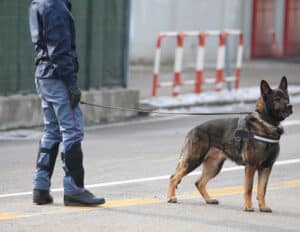
Big dogs put more force through their gear, so build quality counts. Look for a padded chest plate or yoke that cushions and spreads pulling pressure; breathable mesh or neoprene for warm-weather comfort; and reflective trim or stitching for low-light visibility. A top control handle lets you grab, steady, or lift your dog over obstacles and into a vehicle, invaluable on a 70-pound dog. For escape artists, choose a three-strap, escape-resistant design with four or more adjustment points, and look for two or three sturdy D-rings if you want both a walking and a training attachment. Heavy-duty webbing and metal hardware outlast plastic on strong pullers.
Harness vs collar for big dogs
For most large dogs, a harness beats a collar. A collar concentrates all leash force on the neck, which can press on the trachea and strain the spine, a real risk for dogs that lunge or pull. A harness distributes that same force across the chest and shoulders, protecting the throat and giving you more leverage over a strong dog. Keep the collar for ID tags and quick yard trips, and reach for the harness for walks, training, hiking, and car travel.
Related Harness Reviews & Guides
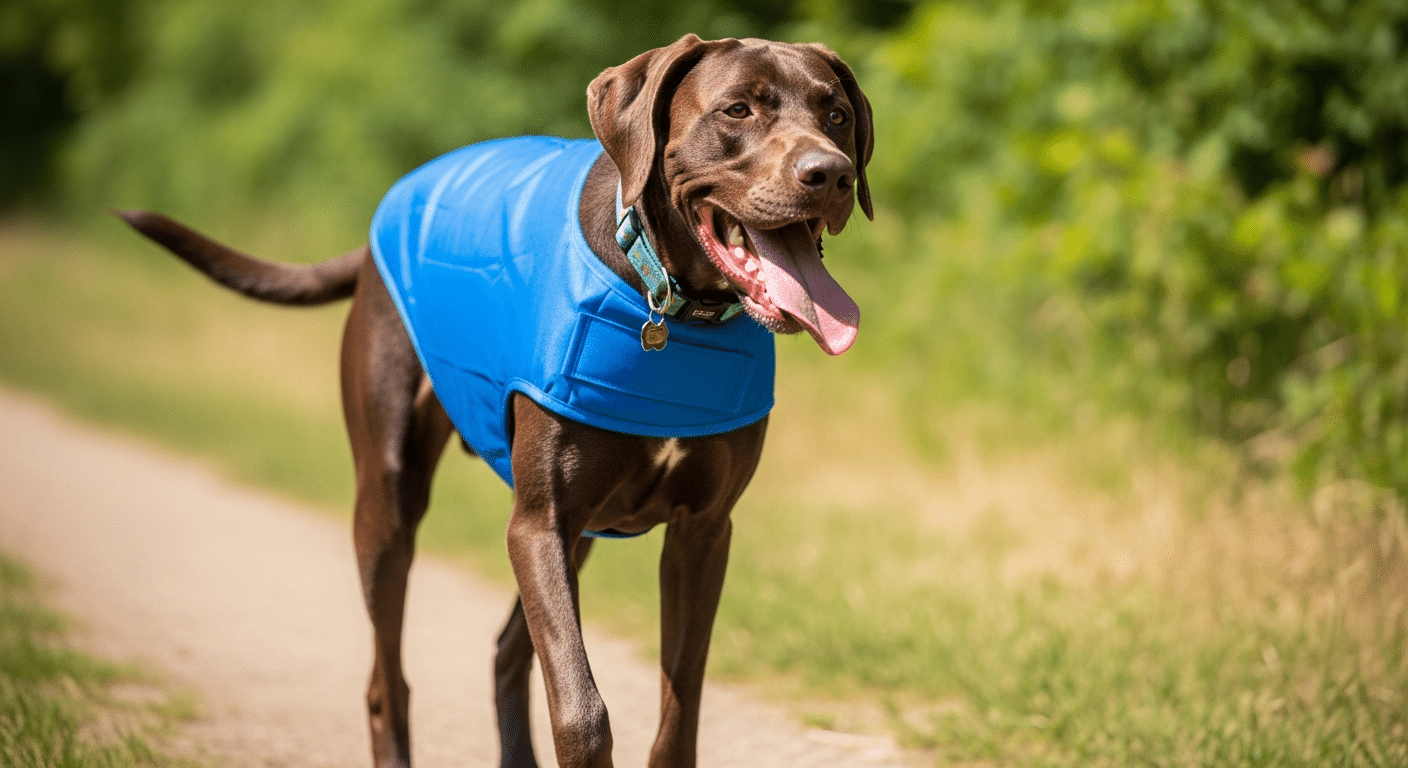
Best Cooling Vests for Dogs
Read it →
Review to Doggie Stylz Service Dog Harness with Removable Saddlebag Backpack
Read it →
PETAC GEAR Tactical Dog Harness K9 Working Dog Vest Review
Read it →
High-Quality Dog Harness Guide: What to Look for and Why It Matters
Read it →
Small Dog Harness Reviews: The Best Harnesses for Toy and Small Breeds
Read it →
Find the Best Large Dog Harness: A Complete Buying Guide for Big Dogs
Read it →
Large Dog Harness Review: Top Picks for Big Dogs That Demand Quality
Read it →
Review to OneTigris No-Pull Tactical Dog Harness Vest
Read it →Review to ICEFANG Tactical Dog Harness with 4X Metal Buckles
Read it →Review to PETAC GEAR K9 Tactical Dog Harness
Read it →A Review of Ruffwear Harnesses: Performance Gear for Active Dogs
Read it →Dog Collar vs Dog Harness: Which Is Better for Your Dog?
Read it →How to Measure a Dog for a Harness
Read it →Do No-Pull Harnesses Actually Work?
Read it →Front-Clip vs Back-Clip Harness
Read it →How to Stop a Dog Pulling on the Leash
Read it →How Tight Should a Dog Harness Be?
Read it →Can a Dog Escape a Harness?
Read it →Should a Dog Wear a Harness All Day?
Read it →Do You Need a Tactical Dog Harness?
Read it →Doggie Stylz Service Dog Harness with Packs
Read it →Doggie Stylz Tactical Dog Vest Review
Read it →PJDDP Tactical Dog Training Harness Review
Read it →ICEFANG Tactical Dog Operation Harness Review
Read it →Review
Read it →Review
Read it →Review
Read it →Review
Read it →OneTigris Tactical Vest Nylon Front Clip Dog Harness
Read it →Kurgo RSG Dog County Harness
Read it →Using a Tactical Dog Harness
Read it →Buying A Military Grade Dog Harness
Read it →Active Dog Harnesses
Read it →What is a dog Harness
Read it →Types of dog harnesses
Read it →Harnesses VS Collars For Your Dog
Read it →Best Dog Harness for Training
Read it →Review
Read it →Top-Quality Tactical Dog Harness
Read it →Review
Read it →Enhancing Pet Comfort and Safety with Kurgo Pet Harnesses
Read it →Some Amazon Dog Harness Options
Read it →Different Types of Dog Harnesses
Read it →Ruffwear Doubleback Strength Rated Safety Dog Harness Review
Read it →Dog Sports for an Active Life
Read it →Dog Harness FAQs
What is the best harness for a large dog?
For most large dogs the best all-around choice is a dual-clip harness with a padded chest panel and several points of adjustment, such as the Ruffwear Front Range. It spreads pressure across the chest, gives you a front ring for no-pull steering and a back ring for relaxed walks, and adjusts to fit broad or deep-chested builds. If you need to lift or steady your dog, step up to a handled, heavy-duty model like the Ruffwear Web Master.
Are harnesses better than collars for big dogs?
Yes. A harness is safer than a collar for most large dogs because it spreads leash force across the chest and shoulders instead of putting pressure on the throat. That protects the trachea and neck, especially for dogs that pull, and a well-fitted harness gives you far more control over a strong dog than a collar does.
Front-clip vs back-clip vs dual-clip, which should I use?
A front-clip ring sits on the chest and gently turns a pulling dog back toward you, so it is the best choice for training and no-pull control. A back-clip ring sits between the shoulders for relaxed, no-strain walks and is easiest for calm dogs. A dual-clip harness has both, so it is the most versatile pick for large breeds, use the front ring while training and the back ring once your dog walks nicely.
How do I measure my dog for a harness?
Measure two things with a soft tape. First, the girth: the circumference of the chest at its widest point, just behind the front legs. Second, the base of the neck where the harness collar sits. Match those numbers to the brand’s size chart rather than going by weight alone, and re-check the fit on the dog.
Do no-pull harnesses actually work, and are they cruel?
Front-clip no-pull harnesses do work for many dogs: when the dog pulls, the chest ring redirects them sideways back toward you instead of letting them lean into the leash. They are not cruel, unlike a choke or prong collar, a no-pull harness applies no pressure to the neck and simply removes the leverage a dog uses to pull. Pair it with reward-based training for the best results.
How tight should a dog harness be?
A harness should be snug but not constricting. You should be able to slide two fingers flat under any strap, that is the two-finger rule. If you can pull a strap more than a couple of inches away from the body or the harness twists and shifts, it is too loose and a determined dog may back out of it.
What type of dog harness is best for my dog?
Several types of dog harnesses are available, each with unique benefits. The most common types include back-clip, front-clip, and no-pull harnesses. Back-clip harnesses are best for well-behaved dogs on walks, while front-clip harnesses are ideal for dogs that tend to pull or become easily distracted. No-pull harnesses are designed to discourage pulling and make walking easier for the dog and the owner.
How do I clean my dog harness?
The best way to clean a dog’s harness will depend on your harness type and the materials it is made from. Most harnesses can be cleaned with a damp cloth or sponge and mild soap. Avoid using harsh chemicals or bleach, as these can damage the materials and cause the harness to lose its effectiveness. If your harness has metal components, dry it thoroughly to prevent rust.
How long will my dog harness last?
The lifespan of a dog harness will depend on several factors, including the materials it is made from, the frequency of use, and the amount of wear and tear it is subjected to. A well-made dog harness should last for several years if properly cared for. If your harness becomes damaged or worn, it is vital to replace it to ensure your dog’s safety and comfort.