 Dog Gear, Sized Right
The Best Dog Houses for Every Climate & Size
From igloo domes to insulated, heated and air-conditioned shelters, we compare the outdoor dog houses that actually keep dogs safe through real winters and real summers, sized from toy breeds to giants.
A dog house is not just a box in the yard, it is your dog’s shelter from wind, rain, freezing nights and blistering afternoons. The right one keeps an outdoor dog genuinely comfortable year-round; the wrong one is a cold, damp, or stifling trap.
This guide compares the dog house styles that matter most: the all-weather igloo dome, the deeply insulated cold-weather house, the lightweight resin house, the classic wooden house with a porch, and the oversized large-breed lodge. For each we look at what actually decides comfort, insulation and R-value, the raised floor, the doorway design, ventilation, build materials and correct sizing, then point you to the climate-specific shelters we cover in depth: solar heated, electric heated, and air-conditioned dog houses.
Every pick is chosen on merit first, checked against the manufacturer’s real specifications, and only then routed to the merchant that has it in stock at a fair price, never the one that simply pays us the most.
Dog house comparison
The five shelters below cover almost every yard, climate and dog size. Compare them fast, then read the full picks underneath.
| Dog house | Best for | Material | Climate | Our rating | |
|---|---|---|---|---|---|
| All-weather IRIS USA Igloo | Small to medium, year-round | Plastic dome | Ventilated, 3-season | ★★★★★ 4.7 | Check price |
| Eco wood New Age Pet ECOFLEX | Low-maintenance, all-weather | Wood-composite | All-season | ★★★★★ 4.6 | Check price |
| Classic Suncast Outdoor House | Mild climates, value | Resin | Vented, 3-season | ★★★★☆ 4.3 | Check price |
| Wood Trixie Natura Classic | Best wood build | Solid pine | Cold + mild | ★★★★½ 4.6 | Check price |
| Large GUTINNEEN Insulated | Large dogs | Insulated wood + steel | Cold | ★★★★ 4.4 | Check price |
Our best dog houses, reviewed
Each pick names the trade-offs, not just the wins. Prices are typical ranges, tap through for the live in-stock price.
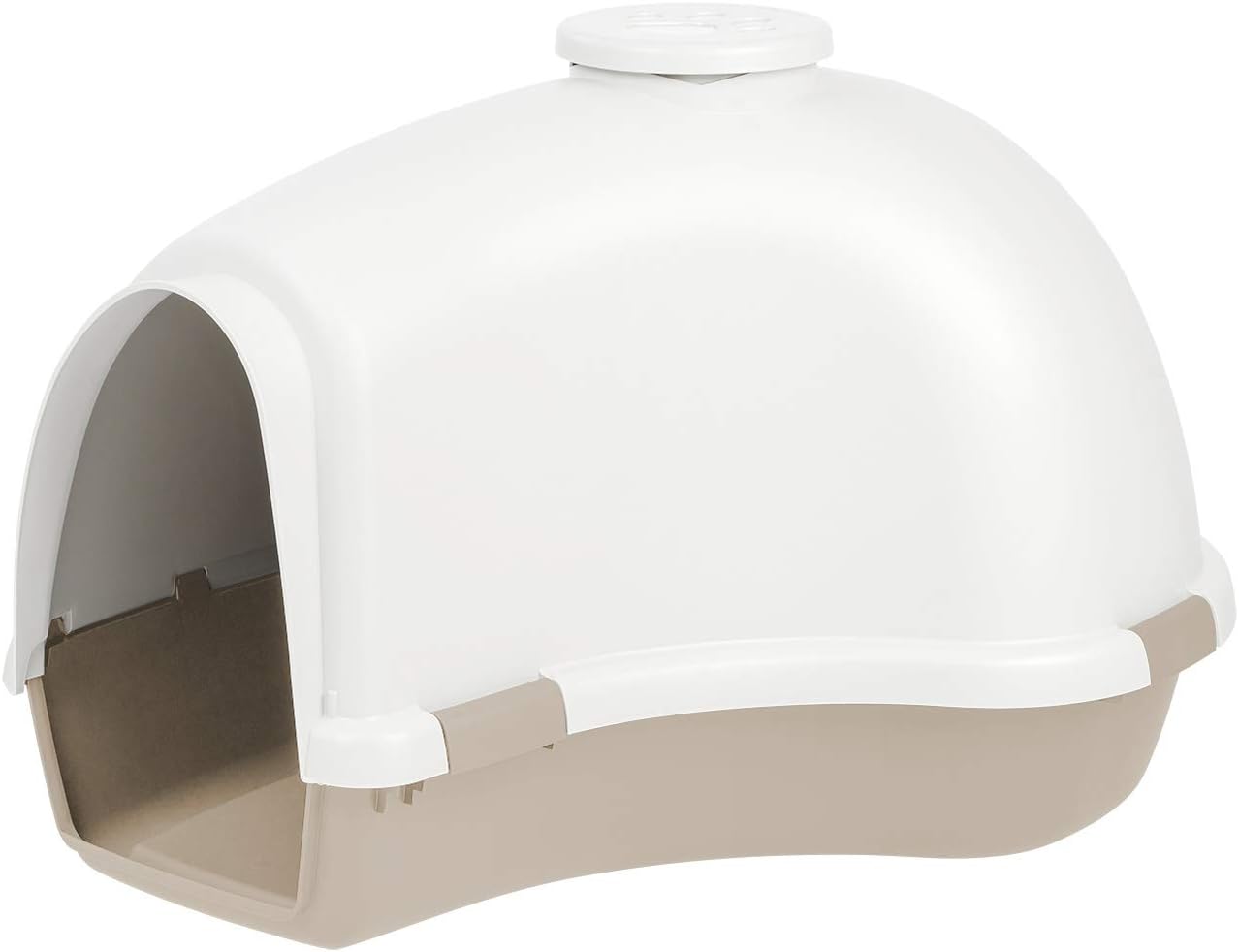
IRIS USA Igloo Dog House
The igloo shape is the quiet workhorse of outdoor shelter: the rounded dome deflects wind, rain and snow instead of catching them, and the recessed hood keeps a draft off your dog. IRIS adds a top air vent for summer breathability and a wipe-clean shell that hoses out in seconds. A genuinely good year-round pick for smaller dogs and cats.
What we like
- All-weather dome sheds wind & snow
- Top vent breathes in summer
- Lightweight, wipes clean
The catches
- Sized for small to medium dogs (not giants)
- Not insulated, add bedding for deep cold
- Stake it down in high wind
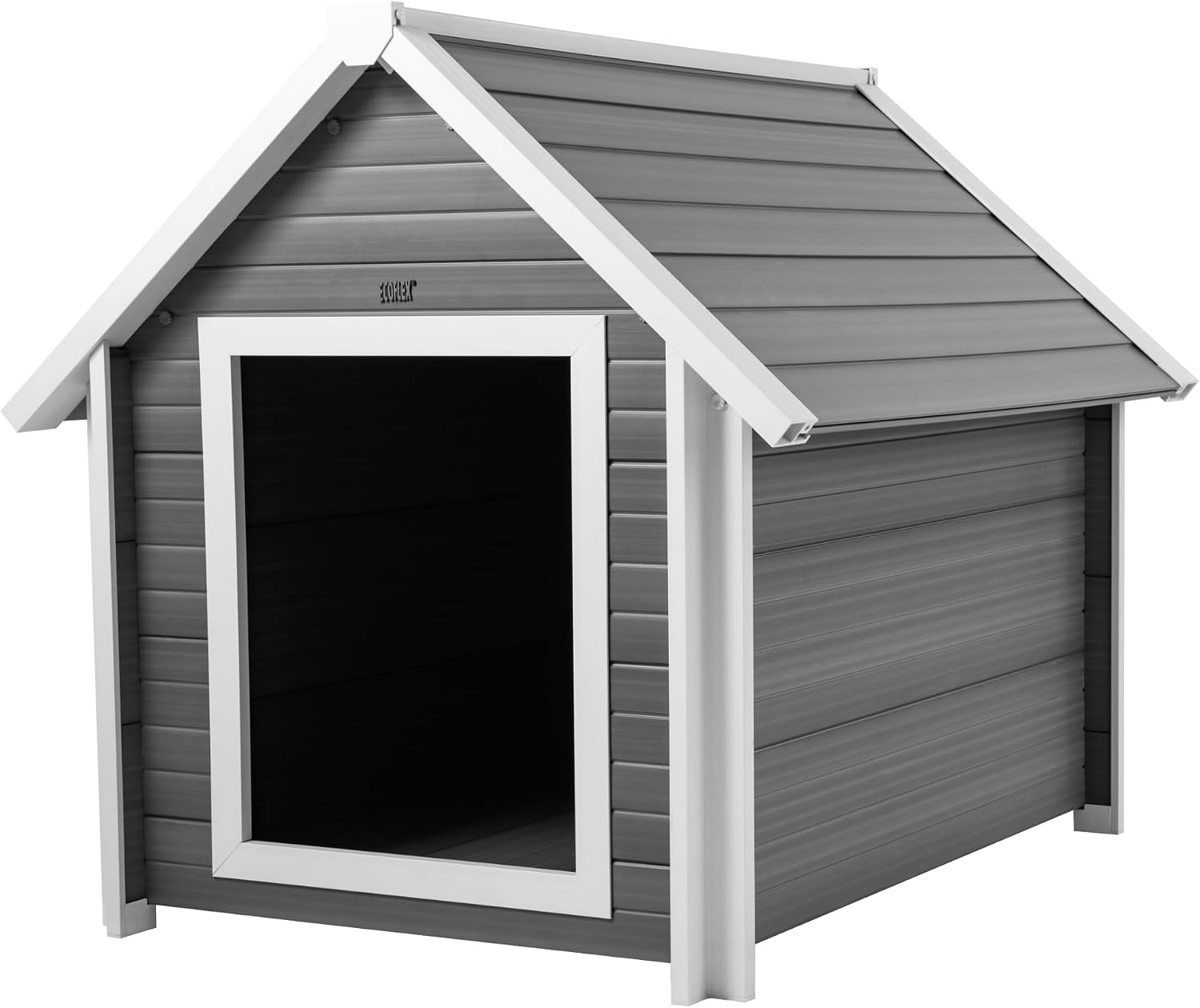
New Age Pet ECOFLEX Dog House
ECOFLEX is a recycled wood-plastic composite that won’t rot, warp, crack or soak up moisture the way solid wood does, and it’s non-toxic. A raised floor keeps the interior dry and off cold ground, the roof lifts off for easy cleaning, and the build shrugs off years of weather with almost no upkeep. A genuinely low-maintenance step up from a plain wooden box, and a long-time best-seller.
What we like
- Composite never rots, warps or splinters
- Raised floor + lift-off roof, easy to clean
- Recognizable, genuinely well-built brand
The catches
- Not insulated for deep cold, add bedding
- Pricier than basic plastic houses
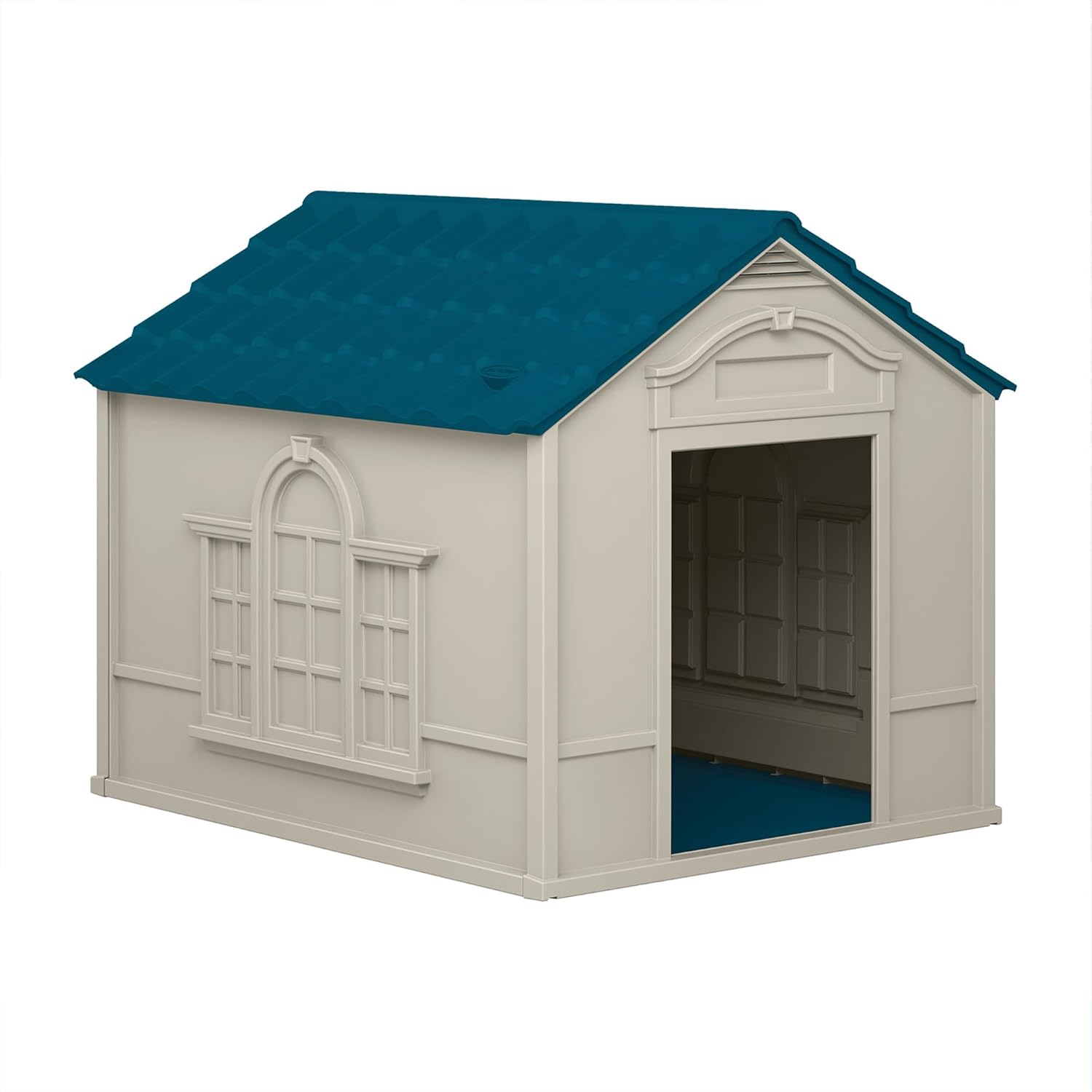
Suncast Outdoor Dog House
If your climate is mild and you mostly need shade, rain cover and a dry place to nap, the Suncast nails it for the money. The resin shell won’t rot, rust or fade, roof vents cut summer heat, and a crowned, channeled floor keeps moisture away from your dog. It snaps together in minutes and wipes clean.
What we like
- Excellent price-to-shelter value
- Ventilated for warm weather
- Zero-maintenance shell
The catches
- Not insulated, mild climates only
- Light enough to need staking
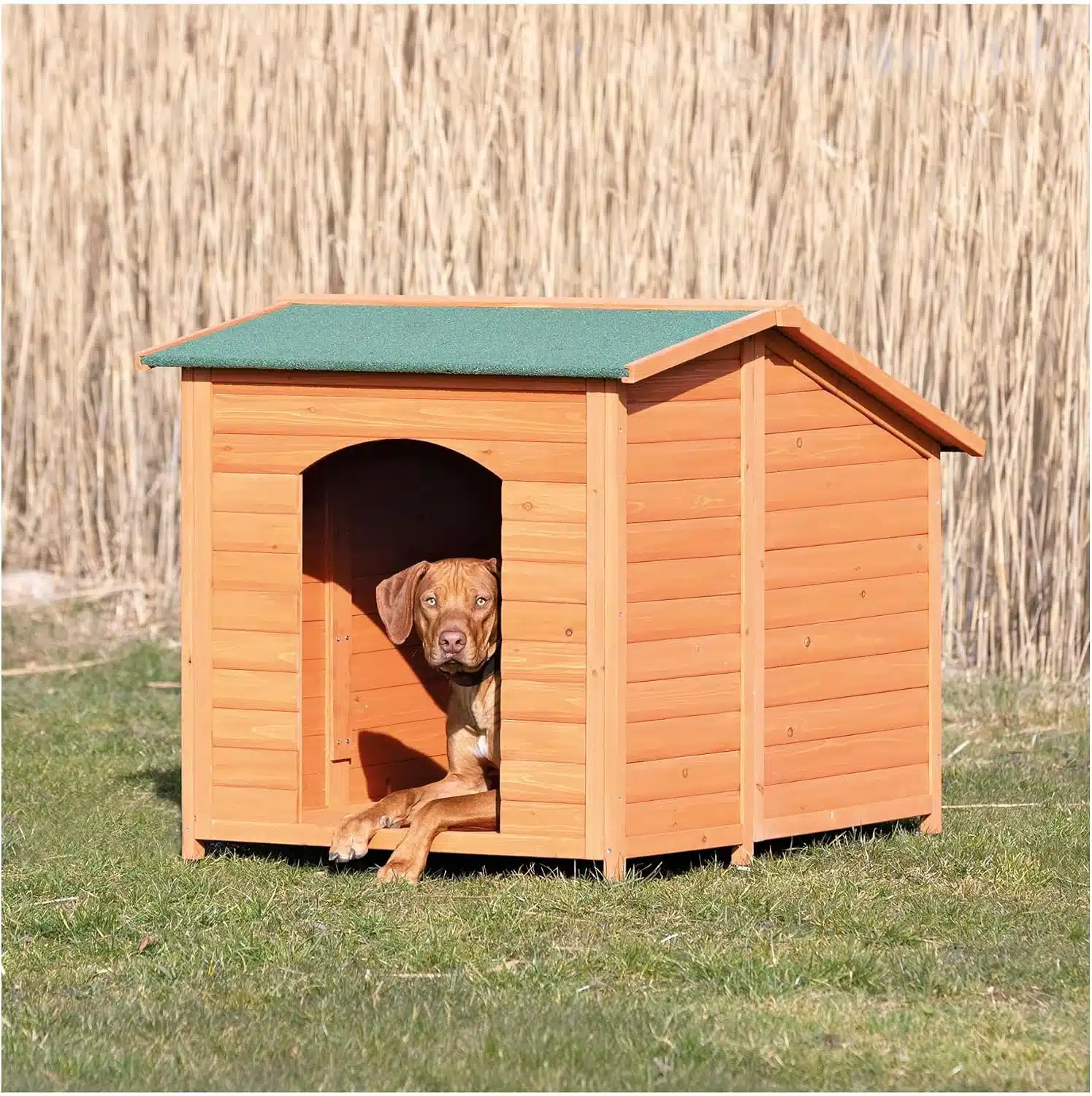
Trixie Natura Classic Dog House
A premium, well-built pine house from established brand Trixie: an overhanging peaked roof that sheds rain and snow, adjustable feet to level it anywhere, and a hinged roof for cleaning. Solid-wood walls hold body heat well.
What we like
- Reputable brand and noticeably better build
- Peaked roof sheds rain & snow
- Adjustable feet for uneven ground
- Hinged roof opens for cleaning
The catches
- Premium price
- Add a door flap/pad for deep cold
- Assembly takes time

GUTINNEEN Insulated House
Insulated wood panels wrapped in a powder-coated steel frame, on raised metal legs that keep it off cold, wet ground. Tough enough for big, hard-on-their-gear dogs and roomy enough for a Golden or Lab.
What we like
- Insulated walls + steel frame survive rough dogs
- Raised legs block ground cold & damp
- Large interior for big breeds
- Flat hinged roof for cleaning
The catches
- Heavy to reposition
- Flat roof prefers cover in heavy snow
- Longer assembly
Climate-controlled dog houses
If your dog lives outside in real cold or real heat, a basic house isn’t enough. These are the three climate categories we cover in depth, each with its own tested roundup.
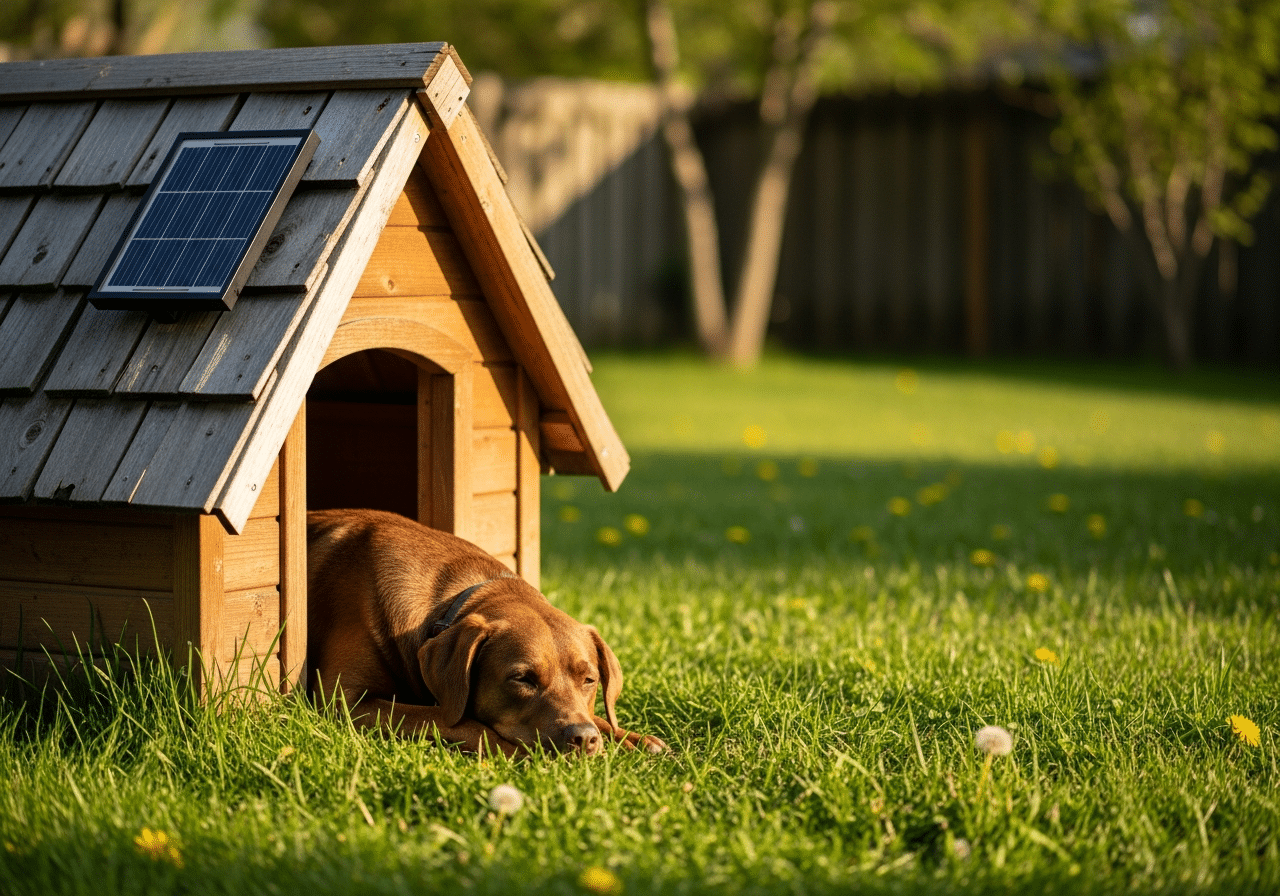
Solar Heated Dog Houses
Off-grid daytime warmth stored for cold nights, no wiring, no running cost.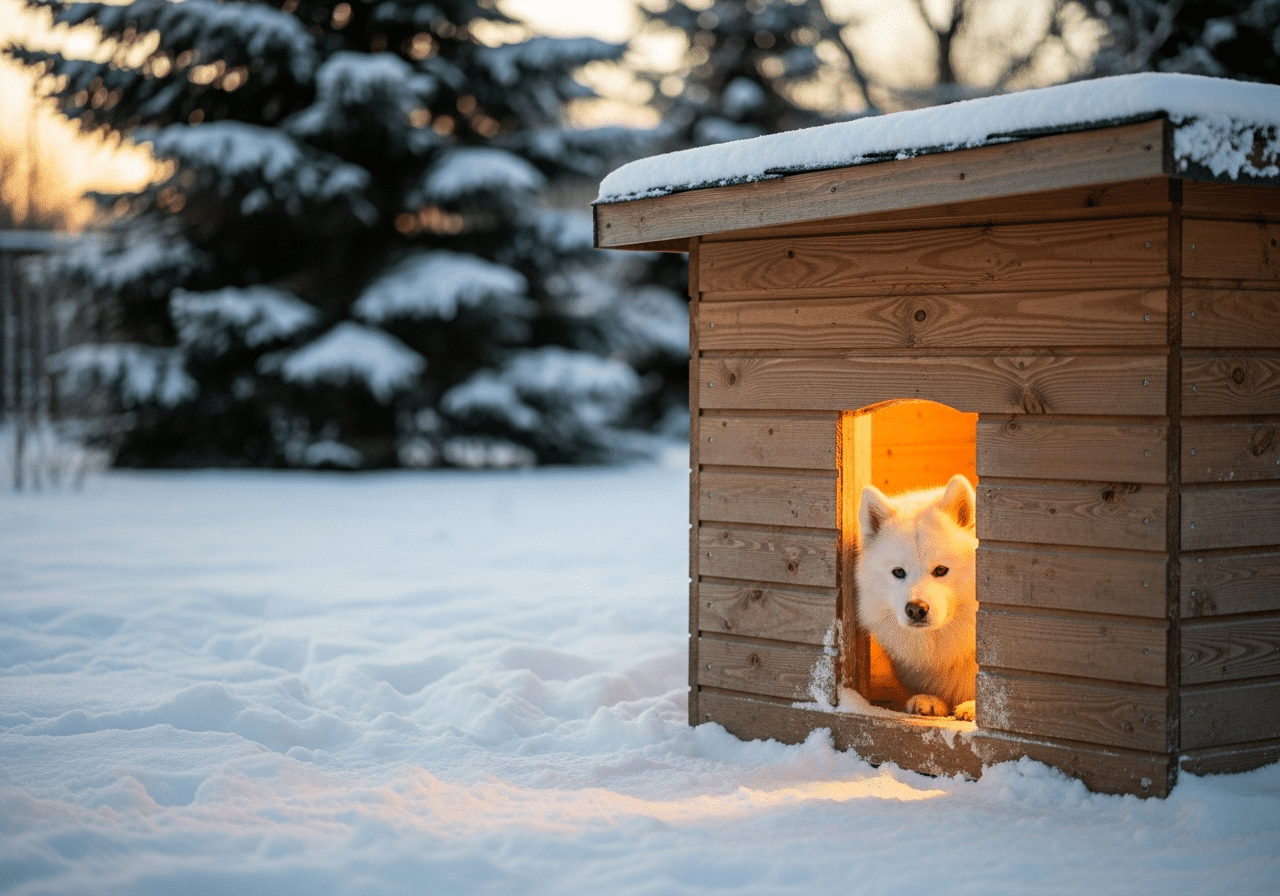
Heated Dog Houses
Thermostat-controlled, chew-guarded warmth for dogs in freezing climates.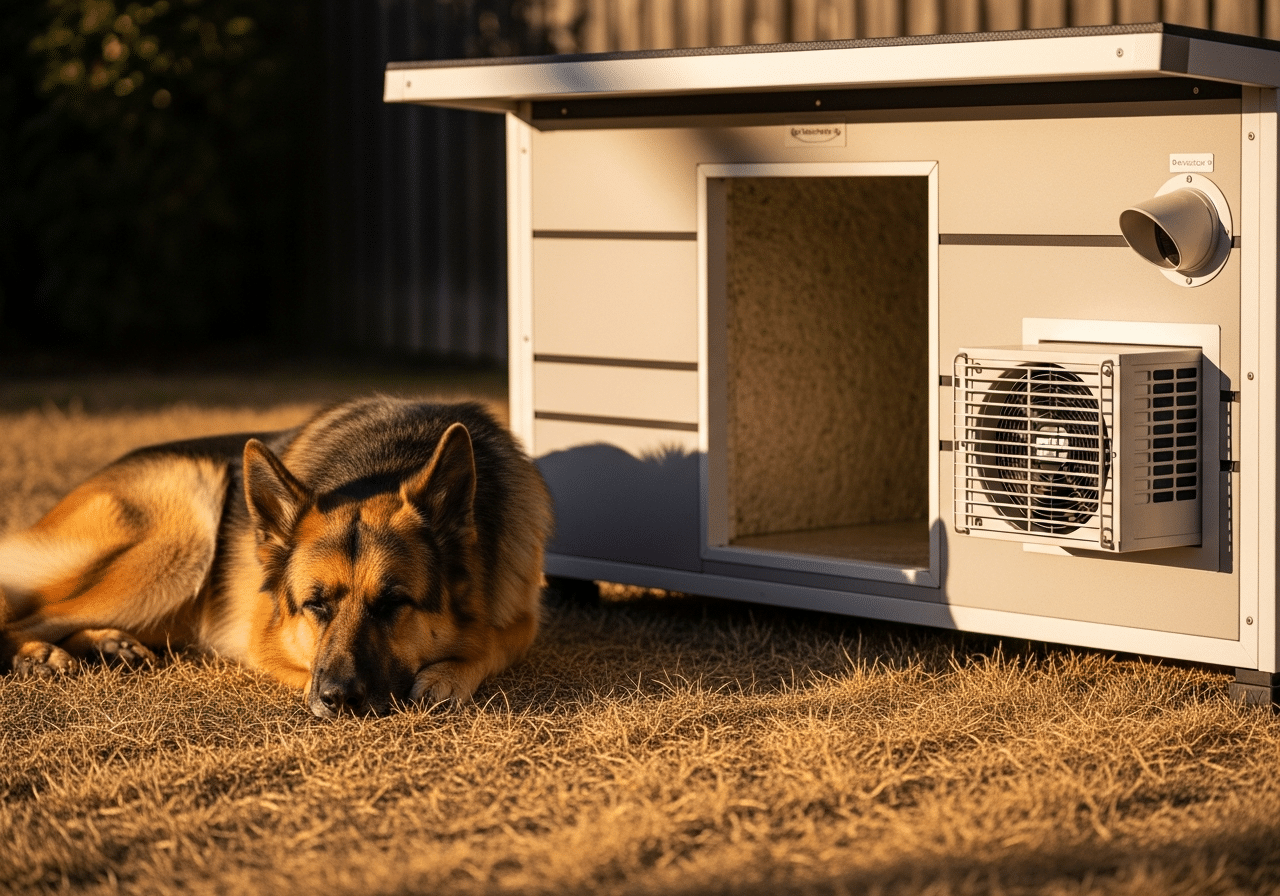
Air-Conditioned Dog Houses
Real compressor cooling for scorching summers and thick-coated breeds.How to choose the right dog house
Six things decide whether an outdoor dog house actually keeps your dog comfortable. Here’s exactly what we check on every model, and how to size and place yours.
01 Size it to the dog, not the biggest box on the shelf
The single most common mistake is buying too big. A dog house is warmed by your dog’s own body heat, so an oversized house never reaches a comfortable temperature in winter. Your dog should be able to stand up, turn around and lie down fully stretched, and not much more than that.
The measurements the best manufacturers actually use:
| Interior length | At least your dog’s nose-to-tail length; add ~25%, no more |
|---|---|
| Interior height | Roof 25 to 50% taller than your dog at the shoulder |
| Doorway height | About 75% of shoulder-to-ground height (keeps heat in, lets them duck through) |
| Floor width | Wide enough to turn around comfortably and curl up |
We list sizing by breed weight on every roundup, and split picks for little and large dogs, because a Papillon and a Mastiff need opposite things. If you’re between sizes, see how to choose the right size.
02 Material: wood vs. plastic vs. structural foam
Material drives insulation, durability and how much maintenance you’ll do. None is “best” outright, it depends on your climate and how much upkeep you want.
| Material | Strengths | Trade-offs |
|---|---|---|
| Wood | Natural insulation, repairable, handsome, sturdy | Needs sealing; can rot or splinter if neglected |
| Plastic / resin | Lightweight, weatherproof, hoses clean, cheap | Poor cold insulation; can flex or shift in wind |
| Structural foam | Sturdy, holds temperature, low maintenance | Fewer shapes; igloo footprint not for every yard |
For a deeper look at the trade-offs, see is plastic or wood better for a dog house and the best material to build a dog house.
03 Insulation & R-value, the part marketing hides
“Insulated” on a box means nothing without a material and a thickness. Real insulation comes from closed-cell foam or expanded polystyrene (EPS) built into the walls, floor and roof. As a rough target:
- R-5 to R-10 is adequate for moderate climates
- R-15 and up for sub-zero winters
- Reject any house that claims “insulated” but won’t state the material or thickness
The floor matters as much as the walls, most heat is lost downward into cold ground. A double-wall house with an insulated floor will out-perform a thicker-walled house that sits on bare earth.
04 Raised floor, doorway & roof
Three build details separate a dry, warm house from a damp, drafty one:
- Raised floor: 2 to 4 inches off the ground stops rain wicking in and blocks cold conducting up from the soil. Adjustable feet help on uneven yards.
- Offset or flapped doorway: a door set to one side, or fitted with a PVC flap, stops wind blowing straight onto your sleeping dog. A centered, open hole is the draftiest design.
- Roof: a gable or sloped roof sheds rain and snow; a hinged or lift-off roof makes cleaning far easier. Avoid flat roofs that pool water.
05 Ventilation & moisture control
Counter-intuitively, a sealed box is a bad box. Without airflow, a dog’s breath condenses on cold interior walls, soaks the bedding and defeats the insulation, the leading cause of a “cold” insulated house. Look for discreet vents near the roofline or under the eaves that let moisture escape without creating a draft at floor level. In wood houses, an annual coat of pet-safe sealant keeps water out of the grain.
06 Climate control: heated, solar & AC
For genuinely harsh weather, insulation alone may not be enough. This is where you step up to a climate-controlled shelter:
- Heated, a thermostat-controlled heater or heated floor pad for freezing climates. Demand a chew-resistant steel-wrapped cord and UL/ETL-listed parts. See our heated dog house picks.
- Solar heated, stores daytime sun as warmth for the night with no wiring or running cost, ideal for yards and homesteads off the grid. See our solar heated picks.
- Air-conditioned, for serious summer heat and thick-coated breeds, a real compressor unit (not a fan) is the only thing that meaningfully cools the interior. See our AC dog house picks.
Match the house to where your dog actually sleeps and how cold or hot it gets there, and you’ll get the choice right the first time. For broader safety guidance on outdoor shelter, the Humane Society’s cold-weather pet guidelines are a good independent reference.
How we vet every dog house
No house makes this list until it clears all three. If we wouldn’t put our own dog in it, it isn’t here.
Model the real demand
We study what’s genuinely working for owners in each climate, match the depth of the best guides, then verify every claim independently.
Check the real build
R-values, wall and floor insulation, doorway design, cord safety and weight limits, confirmed against the maker, not the listicle.
Route to the best deal
410+ merchants compared. The buy button goes to the one that’s in stock and priced fairly, never the one that simply pays us most.