 Dog Gear, Sized Right
Front-Clip vs Back-Clip Dog Harness: Which Is Better?
Front clip steers pullers. Back clip is more comfortable. A dual-clip harness does both. Here’s exactly when to use each, and which type to buy.
Front clip vs back clip dog harness: which should you buy? The short answer is: it depends on your dog’s leash manners right now. A front-clip (chest-clip) harness uses the leash attachment on your dog’s sternum to redirect forward momentum back toward you, the physics genuinely reduce pull force, which is why trainers reach for them first with pullers. A back-clip harness attaches at the spine between the shoulder blades, leaving your dog free to move naturally, comfortable, tangle-free, great for dogs who already walk nicely. A dual-clip harness (both rings) is the best default buy for most owners: you use the front ring when you need control and the back ring once the dog settles. This guide breaks down exactly how each works, the honest trade-offs, and the specific situations where each clip type wins.
Our top pick: the dual-clip harness that does both
If you only buy one harness, get one with both attachment points, you get pulling control today and comfort walking tomorrow. Verified in stock; tap through for the live price.
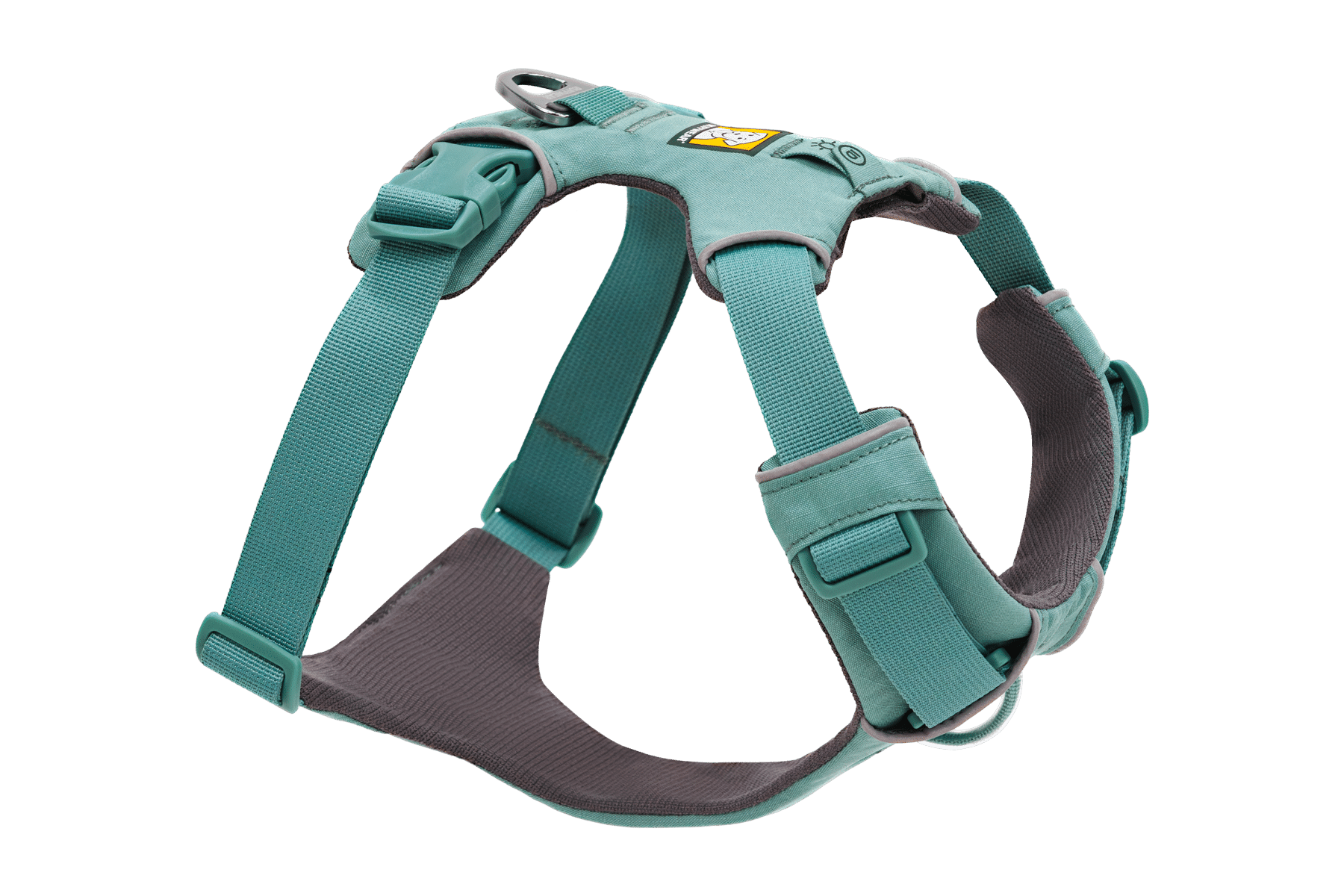
Ruffwear Front Range Harness
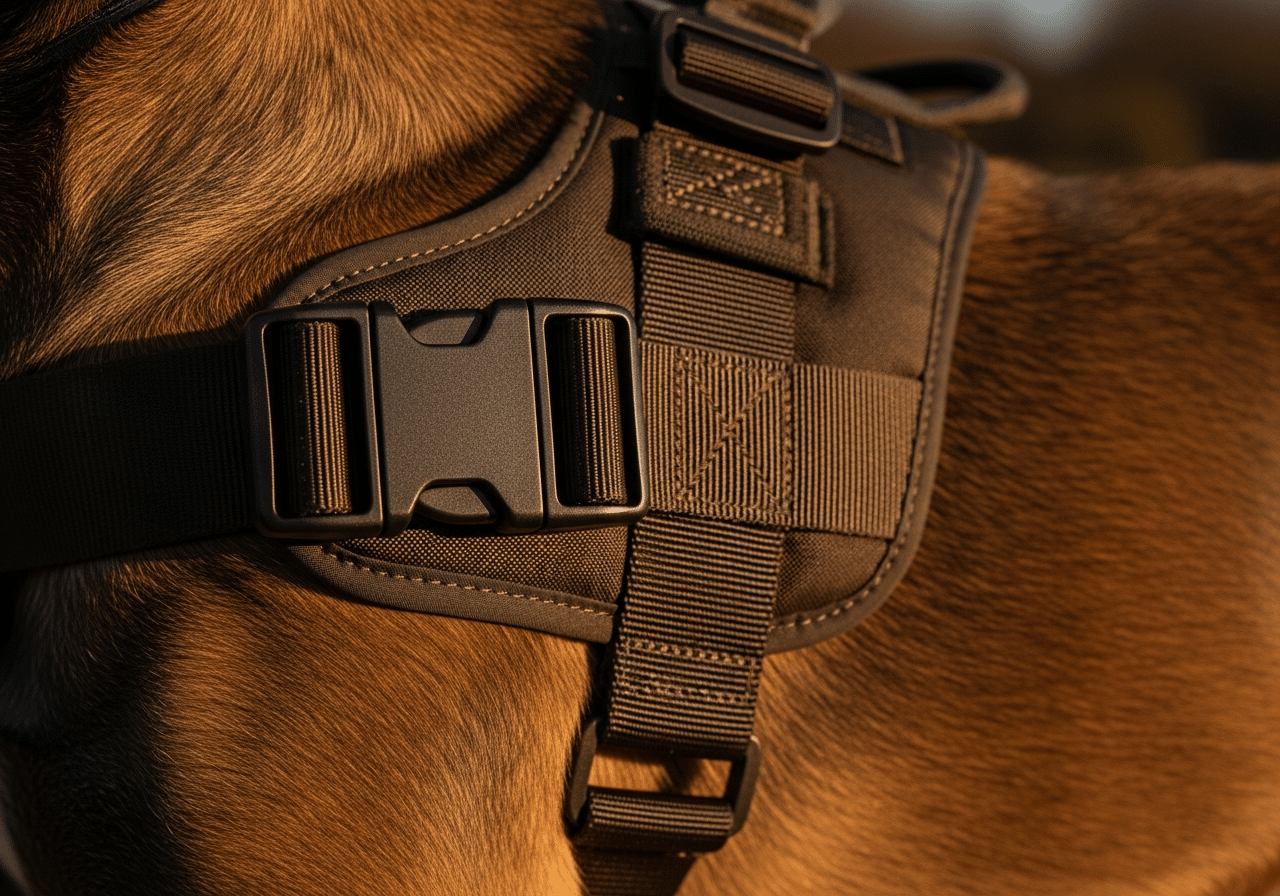
The Front Range settles the front-clip-vs-back-clip debate by giving you both rings on one harness: clip to the front chest ring to redirect pullers mid-training, then switch to the back ring for comfortable off-leash hikes or car-ride tethers. The wide, load-distributing chest panel means neither attachment point creates pressure hot spots, and the padded belly wrap stays comfortable even on all-day outings.
What we like
- Two attachment points, clip front for pulling control, back for relaxed walks or runs
- Wide padded chest and belly panel distributes pressure, no choking or rubbing
- Four adjustment points fit oddly-shaped dogs (deep-chested, narrow-waisted breeds)
- Reflective trim and a top handle for quick grabs, practical for everyday use
The catches
- Pricier than single-clip budget harnesses (~$60 vs ~$20 to 30)
- Step-in style can be fiddly on squirmy dogs at first
- Front clip sits slightly lower than some harnesses, not ideal for very small breeds
How a front-clip harness actually works
A front-clip harness, sometimes called a chest-clip or no-pull harness, has its leash ring on the sternum, at the center of your dog’s chest. The physics here are the whole reason trainers love it: when a dog surges forward, the leash tension pulls sideways and down on the chest ring, pivoting the dog’s front end back toward you rather than letting them drive straight ahead. That pivot disrupts their forward momentum without any pain, it’s redirection, not punishment.
This works because it defeats the opposition reflex: the natural canine instinct to push into pressure. Back-clip harnesses trigger that reflex by pulling from behind, which is why sled dogs are harnessed back there, the design encourages forward drive. Clip to the chest instead, and the moment a dog leans forward they get turned around, so pulling becomes unrewarding fast.
Biomechanical studies show front-clip harnesses can reduce pull force by 70 to 90% on dogs that have learned to respond to the sensation. That’s a real mechanical advantage, not magic, and not a substitute for training, but a tool that makes training faster and walks more manageable during the process.
How a back-clip harness works, and when it shines
A back-clip harness attaches the leash at a ring between your dog’s shoulder blades, on the spine side. The dog’s weight is distributed across a wide chest panel and belly strap, and the leash runs straight up behind them, no steering geometry, no pivot.
That sounds like a drawback, and for a puller it is. But for a dog that already walks on a loose leash, the back clip is the more comfortable daily setup: no leash near the front legs (no tangling), no chest hardware to shift around on a trot, and a cleaner connection for running, cycling, or canicross where you want your dog moving freely in front of you.
Back-clip harnesses are also the right choice for car-ride safety tethers, the attachment point is on the back, away from the crash-load zone of the chest, and most crash-tested harnesses like the Sleepypod Clickit use a back clip for exactly that reason. They are also generally easier to put on and take off, which matters if your dog needs to go in and out of a harness multiple times a day.
Where the back clip falls short: it gives you no steering and actively makes pulling harder to interrupt. If your dog is still learning loose-leash manners, a back-clip harness won’t help and may make training slower.
Front clip vs back clip: honest pros and cons side by side
| Feature | Front Clip | Back Clip | Dual Clip |
|---|---|---|---|
| Pulling control | Excellent, redirects forward drive | Poor, triggers opposition reflex | Excellent (use front ring) |
| Comfort on walks | Good, no neck pressure, but leash near legs | Best, free movement, no front hardware | Best (use back ring when settled) |
| Leash tangle risk | Higher, leash can catch under paws at slack | Low, leash runs clean up the back | Depends on which ring you use |
| Running/jogging | Not recommended, steering can trip a fast dog | Great, natural forward motion | Use back ring for runs |
| Car-ride tether | Not ideal, chest attachment in crash zone | Good, crash load goes to back | Use back ring in car |
| Ease of fitting | Moderate, extra chest hardware to position | Simple, over the head or step-in | Moderate |
| Best for | Pullers, reactive dogs, training phase | Trained dogs, small breeds, runs, car rides | Most dogs, most situations |
When to choose a front-clip harness
Use a front-clip harness when:
- Your dog pulls consistently. If walks are a tug-of-war and a regular flat collar or back-clip harness hasn’t helped, the front clip gives you the mechanical leverage to interrupt the pulling reflex on every step.
- You’re in the loose-leash training phase. The front clip is not a cure, the dog still needs training repetitions, but it makes each rep more effective by turning pulling into an unrewarding pivot instead of a forward reward.
- You have a reactive or lunging dog. Front clips let you steer a reactive dog away from triggers quickly and without physical strain. This is especially useful for smaller handlers with large, powerful dogs.
- You’re working with a trainer. Most positive-reinforcement trainers recommend front-clip harnesses because they create a teaching moment rather than suppressing behavior with pain.
One honest caveat: a front-clip harness alone won’t stop a truly determined puller. It’s a tool, not a solution. A high-drive dog chasing a squirrel may pivot twice and keep going. The front clip works best paired with consistent training, not instead of it.
When to choose a back-clip harness
A back-clip harness is the right choice when:
- Your dog already walks on a loose leash. There’s no reason to add a steering mechanism for a dog that doesn’t need one. The back clip is cleaner, more comfortable, and tangle-free for a well-mannered walker.
- You have a small or toy breed. Front-clip rings often hang low enough on small dogs to interfere with their gait, or the leash drags across short legs. A back clip sits higher and out of the way, most small-dog harness specialists (Canada Pooch, Puppia, RC Pets) design primarily around this for a reason.
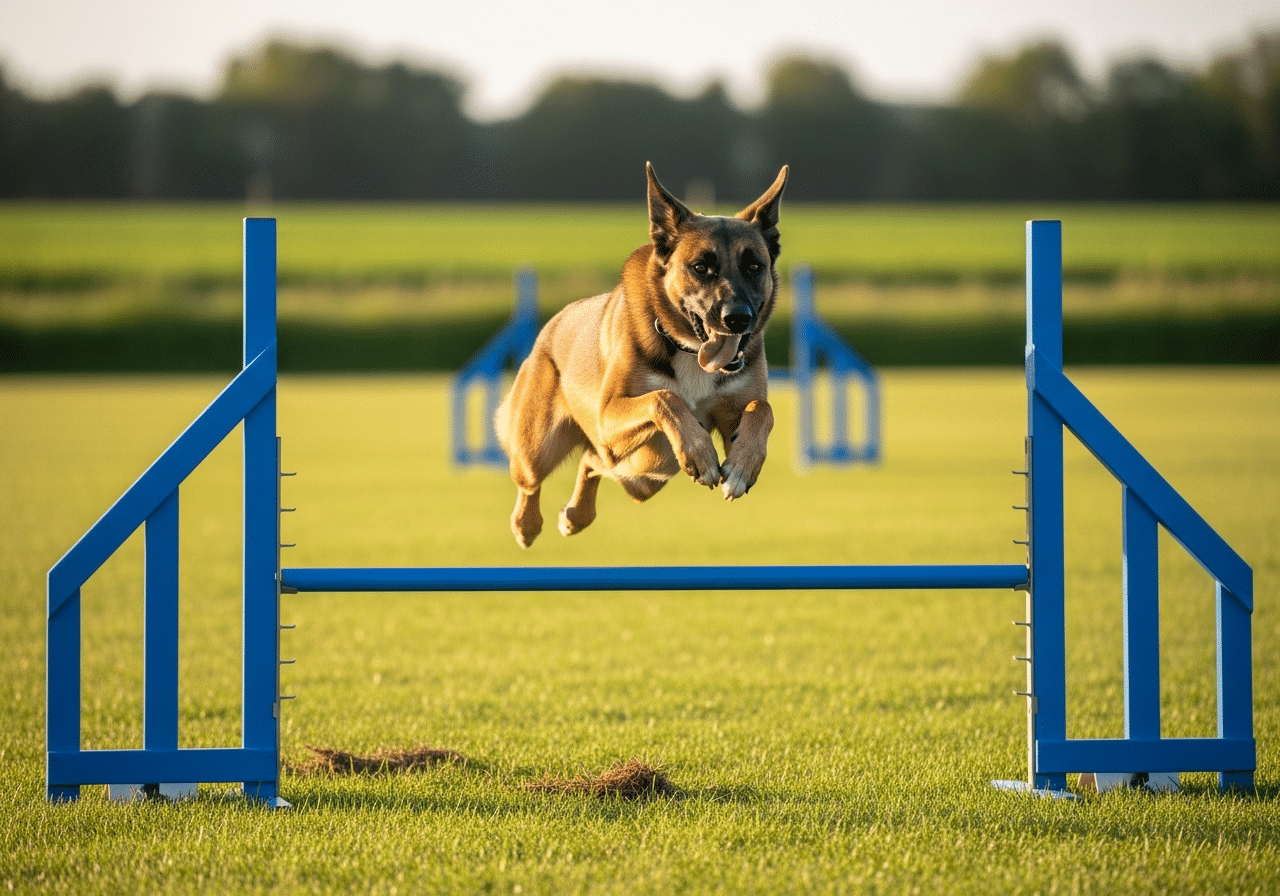
- You’re running, cycling, or doing canicross. The back clip lets a dog drive forward naturally and keeps the leash out of the leg movement. A front clip would create steering interference at speed, which is exactly what you don’t want in a run partner.
- You’re using a car-safety tether. Crash-test-approved harnesses are back-clip designs because they can absorb impact from the rear without loading the chest and throat. If you’re buckling a dog in during car travel, use a back-clip harness rated for crash restraint.
- You have a dog with a short neck, brachycephalic breed, or trachea issues. Any harness keeps pressure off the neck, but back-clip models have no frontal chest hardware to shift or create friction, better for flat-faced breeds (Bulldogs, Pugs, Frenchies) or dogs with collapsing trachea.
The case for a dual-clip harness: why it’s the best default
If you’re buying one harness and your dog is anywhere on the spectrum from “still learning” to “mostly good with occasional slip-ups,” a dual-clip harness, one with both a front chest ring and a back ring, is the most practical long-term buy. Here’s why:
- Your dog’s leash manners will improve. The front clip that works so well today becomes unnecessary once training clicks. A dual-clip harness lets you transition seamlessly, no new harness purchase, just move the leash clip.
- Different situations call for different clips. Morning walk in a busy neighborhood? Front clip for control. Off-leash trail run? Back clip so your dog moves freely. Car ride to the vet? Back clip for the tether. One harness, three scenarios.
- You don’t pay a “wrong choice” tax. Buying a front-clip-only harness and then a back-clip-only harness to cover all bases costs more than one well-made dual-clip model, and adds clutter to your gear drawer.
The most widely recommended dual-clip harness in this space is the Ruffwear Front Range, which is why it’s our top pick here. It has a padded aluminum front ring at the sternum and a welded steel back ring at the spine, both rated for daily use on dogs up to 110 lbs. The wide chest panel distributes load so neither ring creates a pressure point, and four adjustment points make it one of the most accurately fittable harnesses on the market. Other worth-knowing dual-clip options include the Julius-K9 IDC Powerharness (excellent for large, powerful breeds with its handle), the EzyDog Convert Harness (lighter weight, great for medium dogs), and the PetSafe Easy Walk Harness (front-clip-focused with a martingale loop, good budget option if you only need front control).
Does a front-clip harness hurt a dog’s shoulders?
This is a fair concern that circulates online, and it’s worth addressing directly. Some older research, particularly a 2016 paper by Dr. Beth Jarvis, raised the hypothesis that front-clip harnesses might restrict shoulder movement due to the chest strap crossing the shoulder joint. The concern was that a strap lying across the point of the shoulder could interfere with the natural forelimb extension during a stride.
The practical picture is more nuanced. Fit matters enormously. A front-clip harness that sits too far forward, with the chest strap resting directly over the shoulder point, is more likely to cause restriction than one fitted correctly, with the chest piece sitting on the sternum, between and below the shoulders. On a well-fitted harness the strap crosses the chest, not the shoulder joint itself.
The evidence for actual injury from a properly fitted front-clip harness on a normal dog is limited. For daily recreational walking at moderate pace, a well-fitted front-clip harness is not considered harmful by most veterinary rehabilitation specialists. If your dog has a known orthopedic issue, shoulder OA, elbow dysplasia, a previous injury, ask your vet or a canine physiotherapist for a specific recommendation. For most healthy dogs, the bigger risk is a harness that fits poorly (any style), not the clip position itself.
The takeaway: fit before you buy, and check fit regularly as your dog’s weight changes. A front-clip harness fitted correctly, chest piece on the sternum, straps snug but not pinching, is safe for everyday use on healthy dogs. Learn more in our guide to how to put on a dog harness correctly.
Front clip vs back clip: the verdict
There’s no universally “better” clip type, but there is a best choice for your dog’s current situation:
- Dog pulls and you’re working on it? Front clip. The steering mechanic is the single most effective tool for making training sessions productive without physical force.
- Dog walks nicely and you want comfort and ease? Back clip. Less hardware, no tangle risk, better for runs and car rides.
- Not sure, or your dog is somewhere in between? Dual clip. The Ruffwear Front Range is our consistent recommendation here, it handles both roles well and is built to last years of daily use.
The broader point: any well-fitted harness is better than a collar for a dog that pulls, both for control and for spinal and tracheal health. The clip position is about optimizing that choice, not a difference between good and bad, but between better and best for your specific dog at this specific stage of training.
For more on choosing the right harness for your dog’s size and breed, see our main dog harness hub. If you’re also weighing whether to use a harness vs. a collar at all, our explainer on the difference between a collar and a harness covers the trade-offs in detail.
Keep reading: harness guides
Front clip vs back clip harness: common questions
Is a front-clip or back-clip harness better for a dog that pulls?
Front-clip is better for a dog that pulls. The chest attachment redirects forward momentum back toward you when the dog lunges, defeating the opposition reflex that makes back-clip harnesses counterproductive for pullers. Biomechanical studies show front clips can reduce pull force by 70 to 90% on dogs that respond to the sensation. Back-clip harnesses are ideal only once a dog already walks on a loose leash.
Can I use a back-clip harness for a dog that pulls?
You can, but it won’t help reduce pulling and may make it worse. Dogs have an opposition reflex that causes them to push into pressure applied from behind, the same biomechanics that make sled dogs effective. A back-clip harness on a puller essentially gives the dog a comfortable, efficient pulling rig. For a dog that pulls, switch to a front-clip or dual-clip harness.
What is a dual-clip harness?
A dual-clip harness has two leash attachment points: one on the chest (sternum) for anti-pull steering, and one on the back (between the shoulder blades) for comfortable free movement. The Ruffwear Front Range is the most widely recommended example. You clip to the front ring when you need control and the back ring for relaxed walks, runs, or car-ride tethers. It’s the most versatile option if you’re buying one harness for all situations.
Does a front-clip harness hurt a dog’s shoulders?
A properly fitted front-clip harness is not considered harmful for healthy dogs doing everyday walks. The concern comes from research suggesting that a chest strap sitting directly over the shoulder point could restrict stride. On a correctly fitted harness the chest piece sits on the sternum, between and below the shoulders, not across the joint itself. Fit matters more than clip position: a poorly fitted harness of any style is more problematic than a well-fitted front-clip model. If your dog has a shoulder or elbow condition, consult a vet or canine physiotherapist for a specific recommendation.
Which harness clip type is best for running with my dog?
Back-clip is best for running. It lets your dog drive forward naturally and keeps the leash away from the front legs. A front-clip harness at jogging or running speed can create steering interference, the chest pivot that’s useful at walking pace becomes a tripping hazard at a sprint. If you use a dual-clip harness like the Ruffwear Front Range, simply switch to the back ring for runs and the front ring for leash-training walks.
Is the Ruffwear Front Range a front-clip or back-clip harness?
Both. The Ruffwear Front Range is a dual-clip harness with a padded aluminum ring on the chest (front clip) and a welded steel ring on the back (back clip). This makes it the most versatile everyday harness: use the front ring to redirect a dog that’s pulling during training, and switch to the back ring for comfortable off-leash hikes, runs, or car-ride tethers once the dog settles.