 Dog Gear, Sized Right
Do No-Pull Dog Harnesses Actually Work?
Honest answer: yes, they reduce pulling, immediately for many dogs. But they work best as a training aid, not a permanent shortcut. Here’s the full picture.
Do no-pull harnesses actually work? The short answer is yes, a front-clip no-pull harness genuinely reduces pulling, often dramatically and from the very first walk. But “reduces” is the operative word. A harness is a management tool, not a cure. A determined puller wearing one still needs some consistent technique from the human end of the leash. This guide covers the physics of why front-clip harnesses work, why back-clip harnesses don’t stop pulling, how head halters compare, who benefits most, and what realistic expectations look like, so you can decide whether one is right for your dog before you spend any money.
Our pick: a harness that gives you both options
This is an explainer, not a roundup, but if you want the one harness trainers reach for when a dog pulls, the dual-clip Front Range is it. Verified in stock; tap through for the live price.
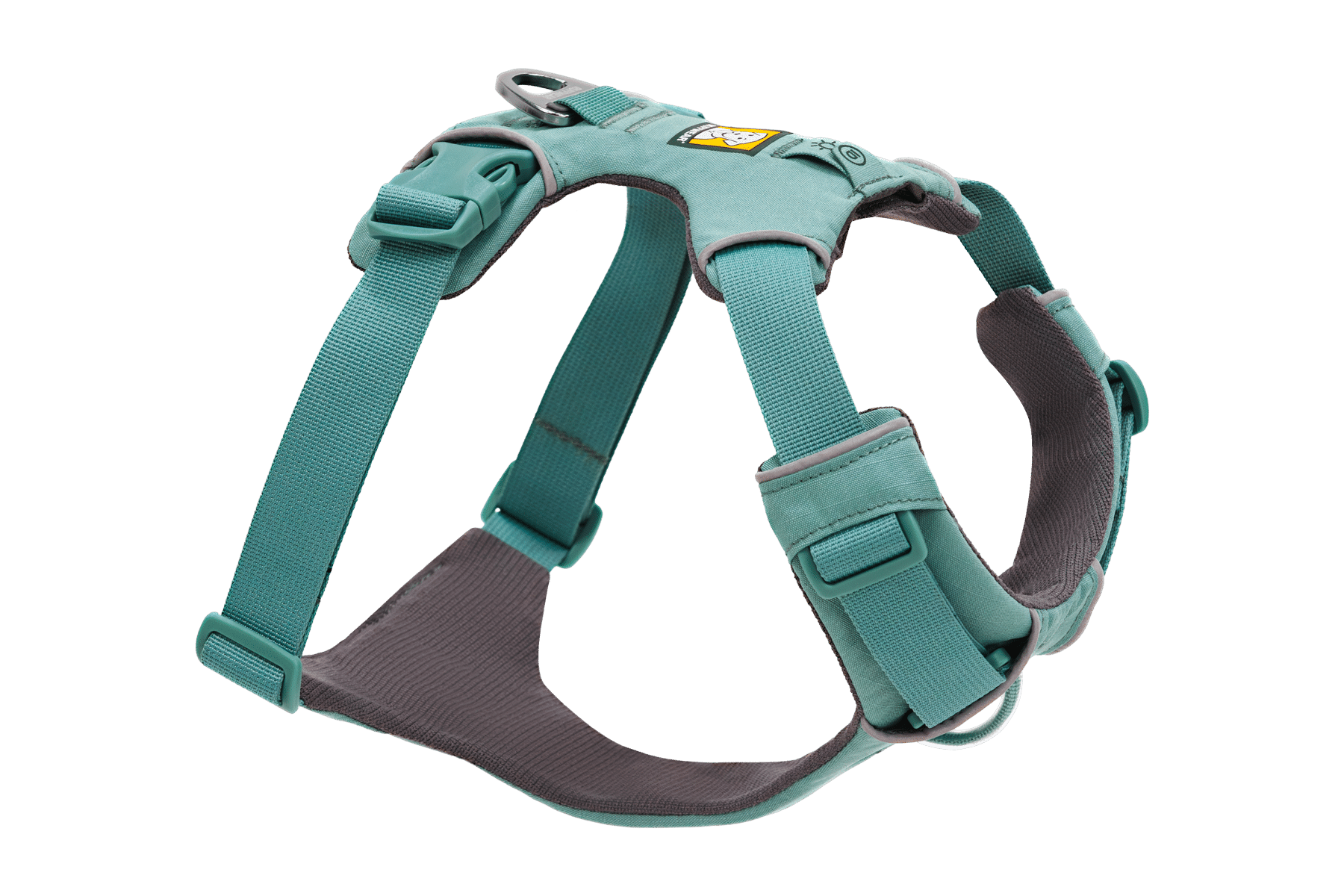
Ruffwear Front Range Harness
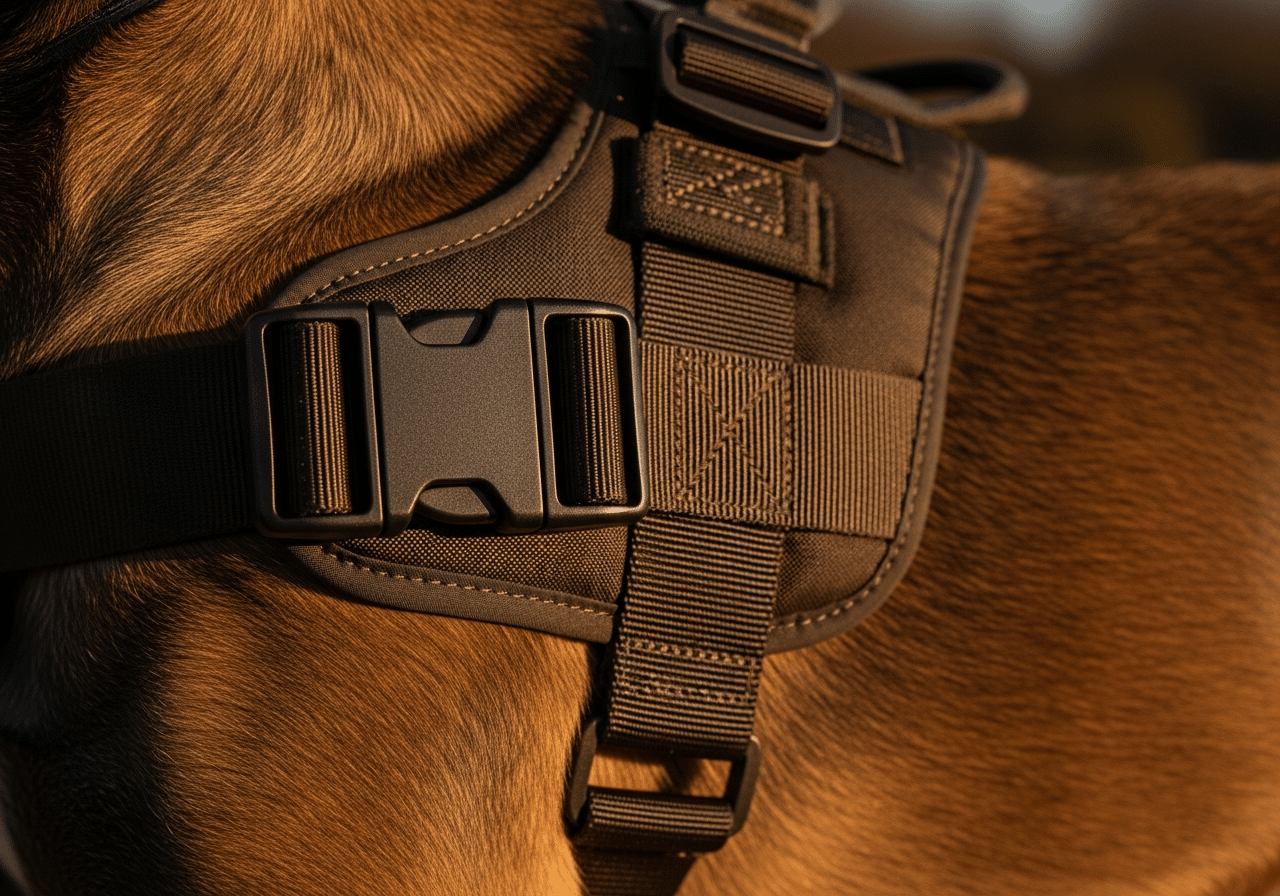
Most harnesses force a choice: front clip for pulling control, back clip for comfort. The Front Range gives you both attachment points, clip at the chest for no-pull redirection on tough walks, switch to the back when your dog is having a calm day. It’s padded, fully adjustable, and built for dogs that actually go places, which is why it consistently shows up on trainer shortlists alongside budget picks that only have one ring.
What we like
- Dual attachment, front clip redirects pullers, back clip for casual walks
- Five adjustment points fit wide, deep-chested breeds (Labradors, GSDs, mastiffs)
- Padded chest and belly straps prevent the chafing common on budget single-clip harnesses
- ID pocket and reflective trim, practical for real daily use, not just training sessions
The catches
- No-pull effect still needs a little training to stick long-term, it’s a tool, not a cure
- Premium price (~$60) over budget alternatives in the $20-$35 range
- Deep-chested dogs occasionally need sizing up for the belly strap to clear the sternum
The physics: why a front-clip harness actually stops pulling
Understanding the mechanism makes everything else click. When a dog wearing a front-clip harness surges forward and hits the end of the leash, the attachment point is at the dog’s chest. The leash tension pulls the front of the dog to the side, rotating the dog’s body so it ends up facing back toward you. The dog can’t get traction to keep pulling because its momentum is redirected sideways rather than forward.
Compare that to a back-clip harness: the attachment sits between the shoulder blades. When a dog pulls, the leash pressure runs straight back along the direction of travel, parallel to the dog’s spine. There’s nothing to redirect momentum. Instead, the dog can lean into the harness the way a sled dog leans into a pulling rig. Back-clip harnesses were literally designed for working dogs that are supposed to pull. Using one on a leash-walking dog and hoping it stops pulling is working against the physics.
The front-clip redirect isn’t painful or coercive, it’s purely mechanical. The dog simply discovers that pulling doesn’t go anywhere. Over a handful of walks, most dogs start choosing to walk closer because surging forward no longer gets results. That’s the training effect happening automatically, which is why front-clip harnesses are the tool trainers reach for first with a puller.
Front-clip vs back-clip vs head halter: how they compare
There are three main hardware approaches to reducing pulling. Here’s the honest comparison:
| Tool | How it works | Pulling reduction | Best for | Main downside |
|---|---|---|---|---|
| Front-clip harness | Leash clips at chest; pulling turns dog sideways | High, immediate on most dogs | Moderate-to-strong pullers; most dog sizes | Doesn’t teach loose-lead on its own; needs consistency |
| Back-clip harness | Leash clips at shoulders; no redirection | None, can encourage pulling | Already-trained dogs; small breeds | The dog can lean into it and pull harder |
| Head halter (e.g. Gentle Leader) | Controls the head; where the head goes, the body follows | Very high, most immediate control | Very large or very strong dogs | Requires long desensitisation; many dogs resist it |
| Dual-clip harness | Has both rings; you choose per walk | High when front-clipped | Dogs in training who still need off-duty comfort walks | Slightly more hardware; costs more than single-clip |
For the vast majority of dogs and owners, the front-clip harness is the right starting point: good pulling reduction, easy to fit, no desensitisation required, and gentle enough for daily use. Head halters are worth considering for very large or very determined dogs, a 50 kg Rottweiler with serious pulling habit can overpower the redirect, but they need careful introduction or the dog will spend the whole walk trying to rub the thing off.
Who benefits most, and when they work best
No-pull harnesses work best in these situations:
- Large or strong dogs. A collar gives you no mechanical advantage against a 40 kg Labrador that wants to reach the next lamppost. A front-clip harness shifts the physics in your favour immediately.
- Reactive or excitable dogs. The redirect slows a lunge and gives you a beat to re-engage the dog’s attention before the situation escalates, you’re not just hanging on for dear life.
- Dogs new to leash walking. Puppies and newly adopted dogs have no pulling habit to break, a front-clip harness from day one means they never build the habit in the first place.
- Owners with physical limitations. If pulling genuinely risks injury to you, the immediate mechanical reduction a no-pull harness provides isn’t optional, it’s the safe choice while training catches up.
- Paired with basic loose-lead training. The harness handles the moment-to-moment management; a few minutes of “stop when the leash goes tight” practice each walk teaches the dog what you actually want. Together they work faster than either alone.
Where they work less well: a high-drive dog mid-chase, prey instinct can overpower the redirect just as it overrides correction-based tools. And a harness does nothing to address the root cause of pulling (which is usually that the dog has learned that pulling gets it places). Management tools are excellent; don’t mistake them for a replacement for training.
Realistic expectations: what a no-pull harness will and won’t do
Being honest here matters, because the marketing on these products often isn’t. Here’s what you can actually expect:
- Immediate reduction in pulling force. Almost every dog pulls less on the first front-clipped walk. Many dogs pull dramatically less, owners describe it as a transformation. The mechanical redirect is real and it works from walk one.
- Not a permanent cure on its own. Take the harness off and put on a regular collar, and many dogs go straight back to pulling. The harness manages the behaviour in the moment; it doesn’t teach the dog to choose loose-leash walking independent of the gear.
- Best with 5 to 10 minutes of deliberate training per walk. The classic method: the instant the leash goes tight, stop dead and wait. The moment it goes slack, walk on. Dogs figure this out within days when the rule is consistent. The harness makes this easier because you’re not wrestling an 80 lb dog while trying to stand still.
- A determined puller still needs technique. Some dogs, especially those that have been pulling for years, have a deeply ingrained habit. The harness reduces the force; it doesn’t eliminate the drive. These dogs benefit from the harness AND a structured training approach (reward-based loose-lead work, building attention and check-ins). They’re not lost causes, they just need more consistency.
Do no-pull harnesses work for large dogs specifically?
Yes, and for large dogs in particular, the case for one is strongest. A standard flat collar on a dog that weighs 35 to 60+ kg and pulls hard concentrates all that force on a narrow band around the trachea and neck. Over time this risks damage to the dog’s throat and neck structures, a concern that’s well-documented in veterinary literature for strong, habitual pullers. A harness distributes pressure across the chest and shoulders instead.
For a large, powerful dog, a back-clip harness alone is often worse than a collar because it’s comfortable for the dog and gives the handler no leverage. A front-clip harness on a large dog is where the physics pay off most, the redirect uses the dog’s own momentum to bring them back into line, and a bigger dog generates more momentum, so the effect is proportionally stronger. Trainers who work with large-breed rescues. Labradors, Mastiffs, German Shepherds, Rottweilers, tend to reach for front-clip or dual-clip harnesses as standard, not as a last resort.
If you walk one of the bigger breeds, our full dog harness roundup covers the fit nuances that matter for deep-chested and barrel-bodied dogs, because a harness that fits a Beagle well can cause chafing or restrict gait on a Rottweiler.
Potential downsides to know before you buy
No-pull harnesses are not universally perfect. The real issues to be aware of:
- Chafing at the armpit. The chest strap on a front-clip harness runs across the dog’s chest and around the front of the legs. If it’s too low, it will rub the axilla (armpit) area during normal walking motion. This is a fit problem, not a design flaw, adjusting the chest strap up and checking the fit regularly (especially on growing dogs) solves it.
- Gait interference. A harness that sits too far forward can restrict shoulder movement. The chest strap should sit two to three finger-widths behind the front leg pits, not across the shoulder joint itself. Most well-designed harnesses mark this on their sizing guides.
- Hard to fit on unusual body types. Barrel-chested breeds (Bulldogs, Basset Hounds) and very deep-chested dogs (Greyhounds, Whippets) can be tricky to fit in standard harness designs. Some need breed-specific cuts.
- It doesn’t work while you’re not using it. If your dog is walked by different people, some using the harness, some using a collar, the pulling management is inconsistent and training stalls. Whoever walks the dog needs to use the same setup.
- A very determined puller can still pull. The redirect works best when the dog isn’t fully committed to going somewhere. A dog that has spotted a squirrel and is already at full sprint may take the redirect, spin, and sprint sideways. Prey-drive pulling and chase-mode lunging need training, not just different hardware.
How to introduce a no-pull harness (and get the best results from day one)
How you introduce the harness matters almost as much as the harness itself. A dog that associates the harness with good things walks better in it immediately.
- Let the dog sniff and investigate it first. Drop it on the floor, pair it with treats, let them nose it for a minute before you attempt to put it on. No drama, no wrestling.
- Fit it before you leave the house, not on the street. Fitting a new harness outside while the dog is already excited is a recipe for a struggle. Put it on calmly indoors, let the dog wear it for a few minutes with treats and praise, then head out.
- Check the fit: two-finger rule everywhere. You should be able to slide two fingers under every strap. The chest piece sits flat across the sternum, and the belly strap clears the front legs without digging in at the armpit.
- Clip the leash to the front ring. This is the non-obvious part, many people buy a front-clip harness and clip the leash to the back ring out of habit. The no-pull effect requires the front ring.
- Apply the stop-and-wait method from walk one. Every time the leash tightens, stop. Stand still. Say nothing — no “uh-uh,” no pulling back. The instant the leash goes slack (the dog looks back at you or steps toward you), say “yes” and walk on. Two to five days of this, combined with the front-clip redirect, produces a noticeably different dog on a leash.
If you want the deeper version of this, how to build genuine loose-leash walking rather than just managing pulling, look for a guide on how to stop a dog pulling on the leash. The harness handles the physical management; the training is how the dog learns to want to walk calmly.
What the research says
The evidence base for no-pull harnesses is solid, if not enormous. A 2017 study published in Applied Animal Behaviour Science found that dogs in front-clip harnesses showed significantly reduced pulling force compared to back-clip control conditions, the researchers noted the redirect effect was measurable within a few walks when paired with basic positive-reinforcement handling.
Certified applied animal behaviourists (CAABs) and most accredited trainer bodies, including the Certification Council for Professional Dog Trainers, endorse front-clip harnesses as a first-line tool for pulling, recommended ahead of prong collars, choke chains, or any aversive device on welfare grounds. The front-clip harness appears on nearly every “how to stop pulling” list published by accredited behaviourists because the physics genuinely work and the approach is kind.
What no study claims is that the harness alone produces a trained dog. The research consistently shows it reduces pulling while worn. Transfer to other equipment (a collar, a different harness) requires training. That’s the honest picture: a genuinely effective tool, not a substitute for teaching the dog.
The verdict: should you get one?
If your dog pulls and walking it is a battle, the answer is almost certainly yes. A front-clip no-pull harness will make your walks better from day one, is kinder to the dog’s neck than a collar, and gives you the mechanical advantage to actually apply consistent training instead of just surviving the walk. For large dogs especially, it’s the responsible default.
Be honest with yourself about what you’re buying: a management tool that makes training easier, not a magic fix. The 10 minutes of stop-and-wait practice each walk is what produces a dog that eventually walks well on any gear. The harness just makes those 10 minutes achievable rather than exhausting.
For a dual-clip harness that gives you the front-clip no-pull option without sacrificing all-day wearability, the Ruffwear Front Range is what most experienced trainers reach for. For the full spectrum of options by breed size and walking style, our dog harness roundup breaks down every category, from budget front-clips to heavy-duty tactical builds for working dogs.
Keep researching dog harnesses
No-pull harness questions, answered honestly
Do no-pull harnesses actually work?
Yes, a front-clip no-pull harness genuinely reduces pulling, often dramatically from the very first walk. The mechanism is mechanical: clipping the leash at the chest means that when a dog surges forward, the tension redirects its front end sideways, breaking the pulling motion. The limitation is that the effect only applies while the harness is worn. Combined with basic stop-and-wait training, most dogs show lasting improvement within a week or two. Without any training, the dog manages well in the harness but may revert when wearing other equipment.
What is the difference between a front-clip and back-clip harness for pulling?
A front-clip harness attaches the leash at the dog’s chest. When the dog pulls, the leash tension rotates the dog’s front end sideways, redirecting momentum and breaking the pulling motion. A back-clip harness attaches at the shoulders, running the leash parallel to the dog’s spine, which gives the dog something to lean into, the same way a sled dog leans into a pulling harness. For a dog that pulls, a back-clip harness provides no mechanical deterrent and may actually make pulling easier.
Are no-pull harnesses better than head halters?
Both work, but in different ways. A head halter (like a Gentle Leader) controls the head directly, where the head goes, the body follows, and provides very immediate control, which is why it’s sometimes recommended for very large or very strong dogs. The downside is that many dogs find them uncomfortable and need extended desensitisation before they’ll wear one calmly. A front-clip harness is easier to fit, needs no special introduction, and is effective for the majority of pullers. Most trainers try the front-clip harness first and move to a head halter only if the dog’s size or drive requires more control.
Will a no-pull harness stop my dog pulling forever?
A no-pull harness reliably reduces pulling while you’re using it. Whether that improvement transfers to other equipment depends on whether you pair it with training. A dog that learns through the harness experience that pulling doesn’t get anywhere, because you’re also practising stop-and-wait consistently, will generalise that lesson over time. A dog that only wears the harness and never encounters any training consequence for pulling will likely revert when the harness comes off. The harness does the heavy lifting; a little training locks the lesson in permanently.
Can a no-pull harness hurt my dog?
A properly fitted front-clip harness is safe and comfortable for everyday use. The two issues to watch are chafing at the armpit (caused by a chest strap set too low, slide it up until it clears the front leg pits) and shoulder restriction (caused by a chest strap that sits too far forward over the shoulder joint, it should sit two to three finger-widths behind the front legs). Neither is inherent to the design; both are fit errors. A harness distributes leash pressure across the chest and shoulders rather than concentrating it on the neck, which is safer than a flat collar for a strong puller.
What is the best no-pull harness for large dogs?
For large dogs, look for a harness with a front clip, five adjustment points (to accommodate wide chests and varying body proportions), padded straps to prevent chafing at scale, and robust hardware. The Ruffwear Front Range is a consistent trainer recommendation because it has both a front and back clip, fits a wide range of large breed body types, and is built for daily use rather than just occasional walks. Budget options exist in the $20-$35 range and work on the same front-clip principle, though padding and durability tend to reflect the price. For the full breakdown by breed and body type, see our dog harness roundup.