 Dog Gear, Sized Right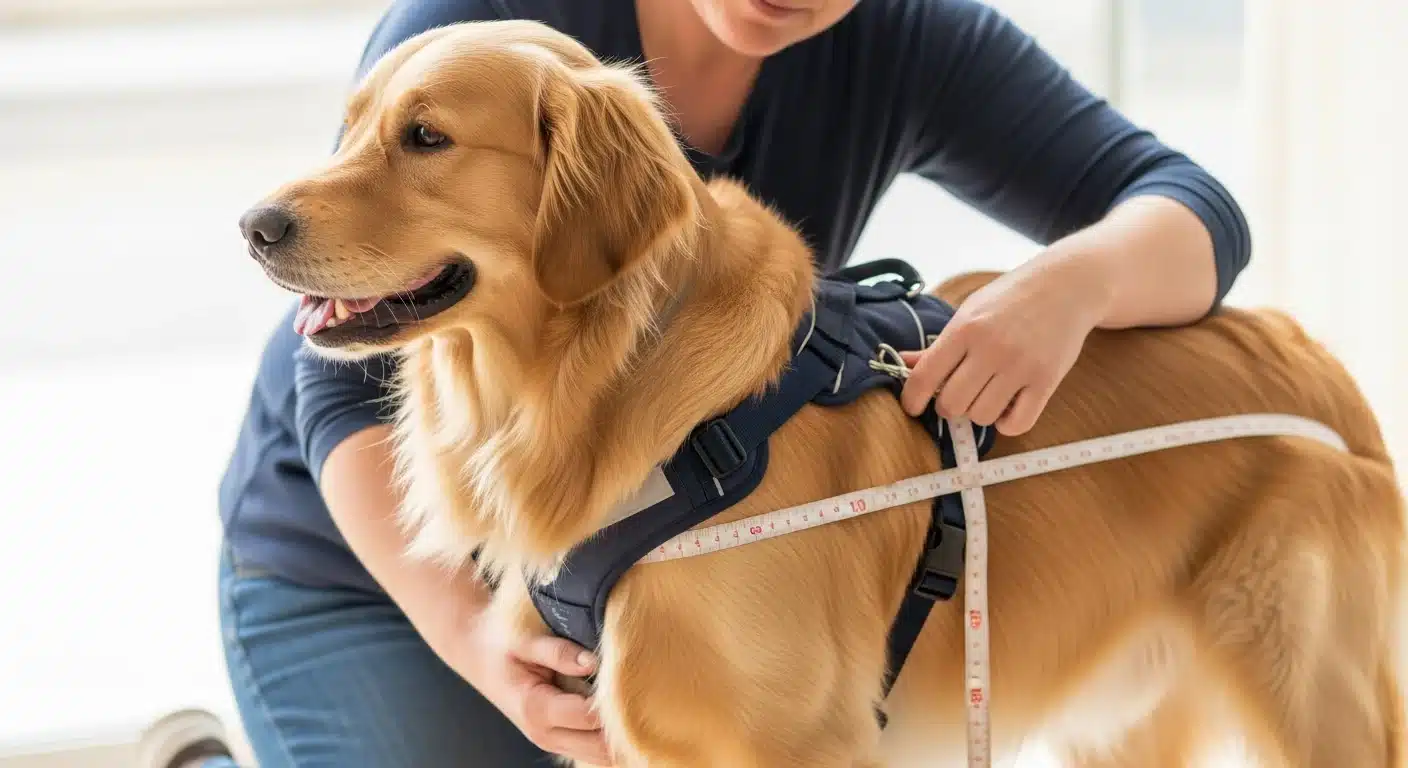
How to Measure a Dog for a Harness (with Size Chart)
Measure the widest part of the ribcage behind the front legs, that single number unlocks the right size. Here’s exactly how to do it, plus a real size chart with girth ranges in inches.
How to measure a dog for a harness: wrap a soft tape measure around the widest part of the ribcage, just behind the front legs. That number, your dog’s chest girth, is what every harness size chart actually uses. Weight and breed are rough guides at best; two dogs of the same weight can have very different chest depths. Get the girth in inches, compare it to the chart below, and you’ll know your size before you open a single product page. This guide also covers where to measure the neck (for step-in styles), what to do when your dog falls between two sizes, how to measure a still-growing puppy, and the two-finger fit check that tells you, once the harness is on, whether it’s actually right.
Our top pick for getting the fit right
If you’re buying new, pick a harness with enough adjustment range to absorb a sizing error or a still-growing dog. The Ruffwear Front Range is verified in stock, tap through for the live price and size selector.
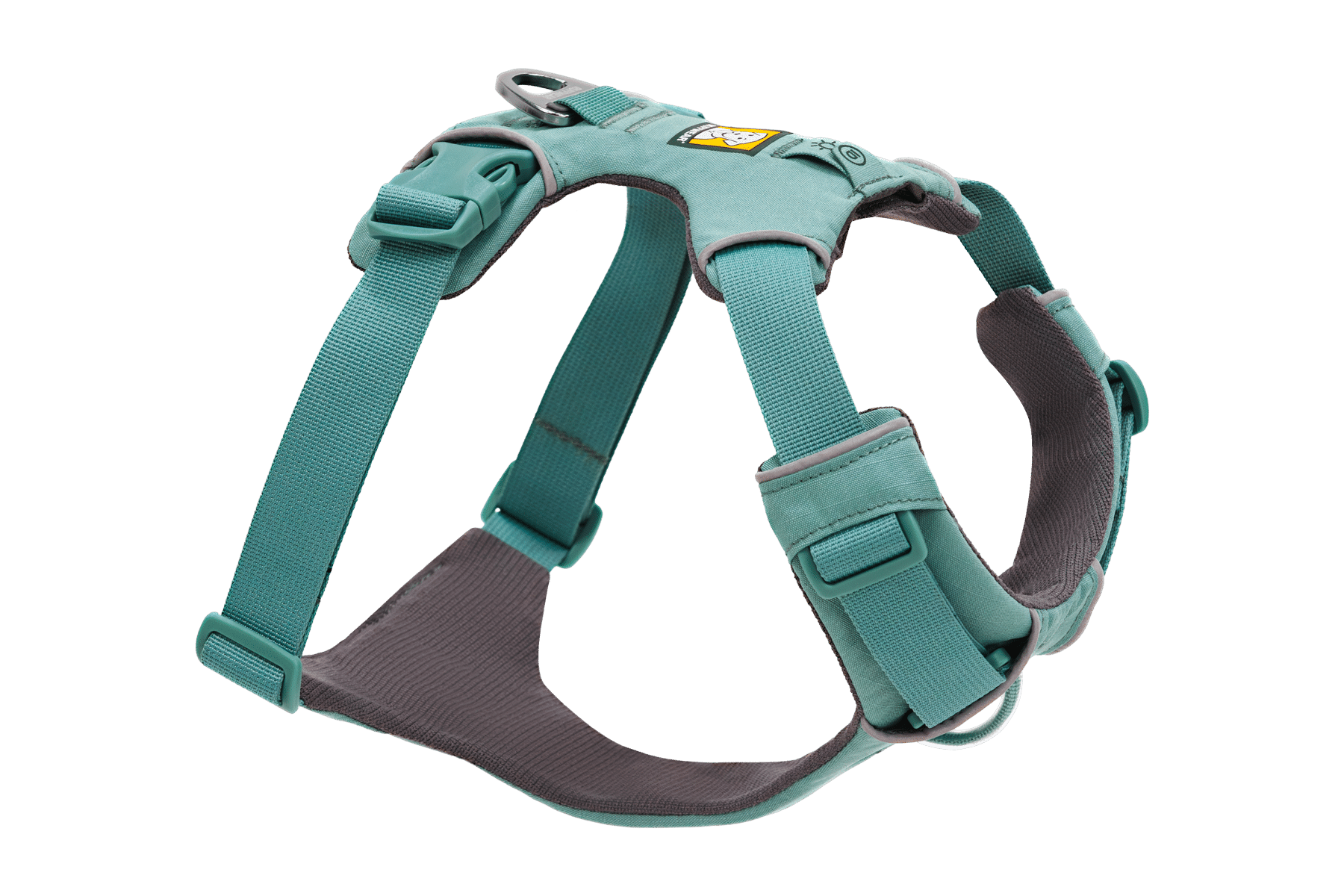
Ruffwear Front Range Harness
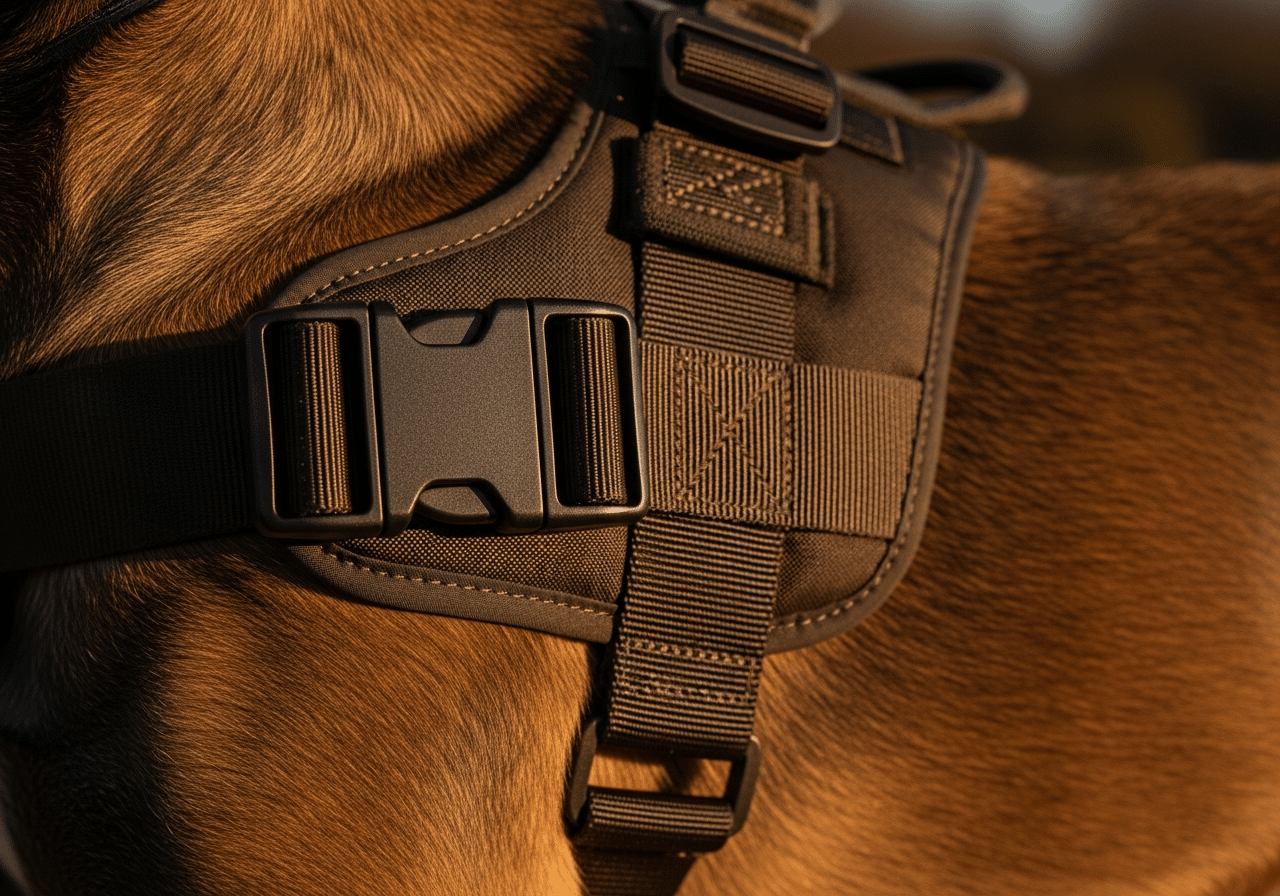
Four points of adjustment, two on the chest strap, one on each side panel, mean the Front Range can dial in to almost any body shape once you have your dog’s chest girth measured. The padded chest and belly panels distribute pressure evenly, so if you’re right on a size boundary and size up, that extra adjustment range covers the difference without the harness shifting or chafing.
What we like
- Four adjustment points let you fine-tune fit after sizing, critical if your dog sits between sizes
- Padded chest and belly panels prevent the chafing that a too-loose harness causes with movement
- Front clip redirects pullers without pressure on the trachea; back clip for calmer dogs
- Reflective trim and an ID pocket, practical extras once the fit is sorted
The catches
- Sizing runs slightly narrow for very barrel-chested breeds, measure carefully and consider sizing up
- More buckles than a minimal harness; takes a minute to learn on first use
- Top-of-the-market price, there are cheaper options, but the adjustment range is worth it for fit
Why getting harness size right matters
A harness that’s too loose can slip forward over a dog’s shoulders when they pull, giving a determined dog a literal Houdini exit. The front legs slide back through the chest strap and the dog steps out. Worse, a loose harness shifts and rubs during movement, creating hotspots and chafing on the axilla (armpit) and sternum even on a 30-minute walk.
A harness that’s too tight restricts the natural swing of the front legs (called scapular freedom), which over time can cause gait changes and shoulder discomfort, especially in working breeds or dogs that hike or run. A chest strap sitting forward of the shoulder blades is a classic sign of a harness that’s too small in the chest.
The right size sits snug without pinching: the two-finger rule (more on this below) is the real-world check. Getting there starts with one tape measure and two numbers.
The one measurement that matters most: chest girth
Most harness sizing, including Ruffwear, Julius-K9, Kurgo, and virtually every other major brand, is built around chest girth: the circumference of the widest part of the ribcage, measured just behind the front legs. This is not the same as the chest’s widest point from the front; it’s where the rib cage is deepest and widest when viewed from the side, typically 1 to 2 inches behind where the front legs meet the body.
How to measure chest girth
You’ll need a soft fabric tape measure (tailor’s tape). A string you mark and then measure against a ruler works too.
- Stand your dog on a flat surface. Sitting works but standing gives a truer measurement of the chest at its widest.
- Slide the tape around the body, starting just behind one front leg, across the sternum (breastbone), and back up behind the other front leg, meeting where you started.
- Keep the tape snug but not tight, you should be able to slide two fingers under it. Do not pull it tight.
- Read the number. Round up to the nearest half-inch if you’re in between marks.
If your dog is fluffy (Husky, Samoyed, Chow), measure over the coat, the harness will sit on the coat surface, not against the skin.
Chest girth size chart, inches to harness size
This chart covers the size ranges used by most mainstream harness brands (Ruffwear, Kurgo, Cesar Millan, EzyDog, and others). Always cross-check against the specific brand’s chart before buying, brands vary slightly at the overlap zones. When in doubt between two sizes: size up.
| Size | Chest Girth (in) | Approx. Weight | Example Breeds |
|---|---|---|---|
| XS | 13 to 17 in | 5 to 12 lb | Chihuahua, Yorkshire Terrier, Toy Poodle |
| S | 17 to 22 in | 12 to 25 lb | Beagle, Shih Tzu, Miniature Schnauzer, Cocker Spaniel |
| M | 22 to 27 in | 25 to 55 lb | Border Collie, Australian Shepherd, Bulldog, Springer Spaniel |
| L | 27 to 32 in | 55 to 90 lb | Labrador, Golden Retriever, German Shepherd, Boxer, Weimaraner |
| XL | 32 to 42 in | 90 to 150 lb+ | Great Dane, Mastiff, Saint Bernard, Newfoundland, Cane Corso |
Should you also measure your dog’s neck?
For most over-the-head harnesses (the kind you slip on from the front), chest girth alone is enough. Neck measurement matters for step-in harnesses, the style where you lay the harness flat and clip it up the sides after the dog steps in, because the neck loop has to clear the head going on and stay snug in use.
To measure neck: wrap the tape around the base of the neck, just above where the dog’s collar normally sits, not at the top of the neck or at the collarbones, but in the narrow zone between them. The tape should sit snugly but not tight. Add 1 to 2 inches to that number as a minimum clearance if you’re buying a step-in.
A third measurement you might see on size charts is back length (from the base of the neck to the base of the tail), but very few harness brands use it for sizing. It appears more often on dog coat and jacket charts. For harness shopping, chest girth is the number that counts.
What to do if your dog is between two sizes
Almost every sizing guide, including Ruffwear’s own, gives the same answer: size up. Here’s why that’s the right call:
- Harnesses are adjustable, harness panels are not. Every harness has adjustment straps (usually on the chest and girth bands) that let you tighten the larger size down to fit. You cannot make a too-small harness bigger.
- Scapular freedom. Sizing up keeps the front strap from sitting on the shoulder blades, which is the most common fit error and the one most likely to cause gait restriction.
- The chafing zones are forgiving when bigger. A harness that’s snugged down from the larger size distributes its contact points better than one stretched to its limit at the smaller size.
The practical limit: if your dog is at the very top of the larger size’s range (not the bottom), you’ve gone too far, go back to the smaller size. The rule is for dogs who fall near the upper boundary of the smaller size, not for dogs who are plainly in the middle of one.
The two-finger fit check
Once you have the harness on and adjusted, the two-finger check is your pass/fail test. Run two fingers (index and middle, flat) under every strap of the harness: the chest strap, the belly strap (girth band), and the side panels. Two fingers should slide under with mild resistance, not loose and not squeezed.
What different results mean:
- Can only fit one finger (or none): too tight, loosen the relevant strap or consider sizing up.
- Three or more fingers slide under easily: too loose, the harness will shift and may allow escape on a strong pull.
- Two fingers with mild resistance: correct, the harness is snug enough to stay put and loose enough not to restrict movement.
Check each strap separately. A common error is adjusting the chest strap correctly but leaving the belly strap loose, which lets the whole harness ride forward. Both need to pass the two-finger test independently.
After the first walk, re-check. Harnesses, especially new ones, settle and may need a half-notch tighten after the first hour of wear.
Measuring a growing puppy
Puppies are awkward to size because they grow fast, a Labrador puppy can gain an inch of chest girth every two to four weeks between 8 and 20 weeks of age. A few practical approaches:
- Measure now, buy for now. A harness that’s too big on a puppy is a safety hazard, it shifts, chafes, and can be stepped out of. Size for your dog’s current measurement, not a projected adult size. Most owners end up buying two harnesses across puppyhood anyway.
- Choose a harness with the widest adjustment range. Ruffwear’s Front Range, for example, has enough adjustment within each size that many puppies can stay in one size for 2 to 3 months of growth rather than one. That range is the thing to look for.
- Re-measure monthly. Set a calendar reminder. Puppies that suddenly start escaping a harness they used to fit aren’t being clever, they’ve grown past it. A new measurement takes 60 seconds.
- Large and giant breeds grow longest. Great Danes, Mastiffs, and Saint Bernards may not hit full chest girth until 18 to 24 months. Plan for at least two harness sizes before they’re adults.
When measuring a wriggly puppy: put them on a non-slip mat, have a helper hold a treat at nose level, measure during the two-second pause when they’re focused on the treat. Two quick measurements and take the average.
Harness fit by body type: barrel-chested, deep-chested, and sighthounds
Standard size charts assume a roughly proportionate dog. Several common body types need a little extra thought:
- Barrel-chested breeds (Bulldog, Staffordshire Bull Terrier, French Bulldog, Boxer): the chest is very wide relative to body weight, so these dogs almost always size up from where their weight suggests. Go by girth, not weight, a 50 lb Bulldog can need a medium-large harness that a 50 lb Border Collie wouldn’t.
- Deep-chested breeds (Greyhound, Whippet, Saluki, Doberman): the chest is tall and narrow. Standard harnesses often sit too wide and allow the dog to slip through. Look for a sighthound-specific harness (often labeled “H-style” or “Y-front”) with a narrower chest panel, or measure extra carefully and use the tightest adjustment.
- Stocky, short-legged breeds (Dachshund, Basset Hound, Corgi): the chest strap tends to sit close to the armpits regardless of size. Look for a harness with an adjustable belly strap that can be positioned further back, and check that the girth band doesn’t interfere with the elbows on a short-legged dog.
- Coated breeds (Newfoundland, Bernese, Alaskan Malamute): measure over the coat, because the harness will live on top of it. Add 1 to 2 inches to what you’d measure if the coat were clipped. The belly strap especially catches coat, choose a model with smooth, wide straps that won’t mat the fur.
If you’re fitting a breed with an unusual body shape and the generic size chart isn’t landing right, look for the brand’s breed-specific guidance or reach out to the brand, most serious harness makers will advise directly given your measurements.
For breed-specific harness picks, see our dog harness roundup, it covers the best options for large breeds with specific body-type notes for each.
Final checklist before you buy
Run through this before clicking Add to Cart:
- Chest girth measured? In inches, standing position, snug not tight, behind the front legs.
- Girth cross-checked against THIS brand’s size chart? Not a generic chart, the specific brand’s own numbers, which may differ slightly. Most brands publish it on the product page.
- At the top edge of the smaller size? Size up.
- Deep-chested or barrel-chested breed? Check for a breed-appropriate style, not just a size.
- Is this a puppy? Buy for current measurements, set a reminder to re-measure in 4 weeks.
- Does the harness have enough adjustment range? Wide range (like the Ruffwear Front Range’s four-point system) is worth paying for if you’re unsure of the fit or the dog is still growing.
Once the harness arrives, do the two-finger check on every strap and the escape test before any off-lead use. A harness that passes those two checks and was sized from actual measurements, not guesswork, should be a safe, comfortable fit from the first walk. For the full fitting walkthrough once the harness is in your hands, see our guide on how to put on a dog harness.
Keep researching harnesses
Harness sizing: common questions answered
How do I measure my dog for a harness?
Use a soft tape measure to measure the widest part of your dog’s chest just behind the front legs, this is the chest girth. Keep the tape snug but not tight (two fingers should slide under it). That number in inches is what harness size charts use. As a secondary measurement, some step-in harnesses also need the neck circumference, measured at the base of the neck just above the collar position. Always use your dog’s girth number, not their weight, to find the right size.
What size harness does my dog need?
Measure your dog’s chest girth (the widest point of the ribcage behind the front legs) and match it to the size chart: XS fits 13 to 17 in, S fits 17 to 22 in, M fits 22 to 27 in, L fits 27 to 32 in, and XL fits 32 to 42 in. Weight is only a rough guide, two dogs of the same weight can have very different chest depths. Always base size on the tape measure, and if your dog falls between two sizes, choose the larger one.
Where do you measure a dog for a harness?
The primary measurement is the chest girth: wrap the tape around the widest point of the ribcage, just behind where the front legs meet the body, typically 1 to 2 inches behind the front legs. This is not the same as measuring across the chest from the front; it’s the full circumference of the rib cage at its deepest point. If the harness requires a neck measurement, measure at the base of the neck, just above the collar position.
What if my dog is between two harness sizes?
Size up. Harnesses are adjustable, you can tighten a larger size down to fit, but you cannot make a too-small harness bigger. Sizing up also keeps the front strap away from the shoulder blades, which is the most common fit error. The only exception is if your dog’s measurement puts them at the very top of the larger size’s range, not just near the upper boundary of the smaller one, in that case the smaller size is actually correct and the larger would be too big.
How do I know if my dog’s harness fits correctly?
Use the two-finger check: run two fingers flat under every strap of the harness. Two fingers should slide under with mild resistance, not loose and not squeezed. Also do the escape test: with the dog on a lead, try to gently slip the harness forward over the dog’s head. It should not come off. If it does, tighten the chest strap one notch and repeat. A correctly fitted harness stays put when the dog backs up or rolls, and the front strap sits behind (not on) the shoulder blades.
How do I measure a puppy for a harness?
Measure the puppy’s current chest girth and buy for their current size, not a projected adult size. A harness that is too big on a puppy shifts, chafes, and is easy to escape. Choose a harness with a wide adjustment range (like the Ruffwear Front Range) so the puppy can grow into the upper end of the size without needing an immediate replacement. Re-measure monthly, large-breed puppies can gain 1 to 2 inches of girth per month during their fastest growth phase. Most owners go through at least two harness sizes before their dog reaches adult dimensions.