 Dog Gear, Sized Right
Our Top Dog Harness Picks
Chest-distributing harnesses that protect the neck and add control.
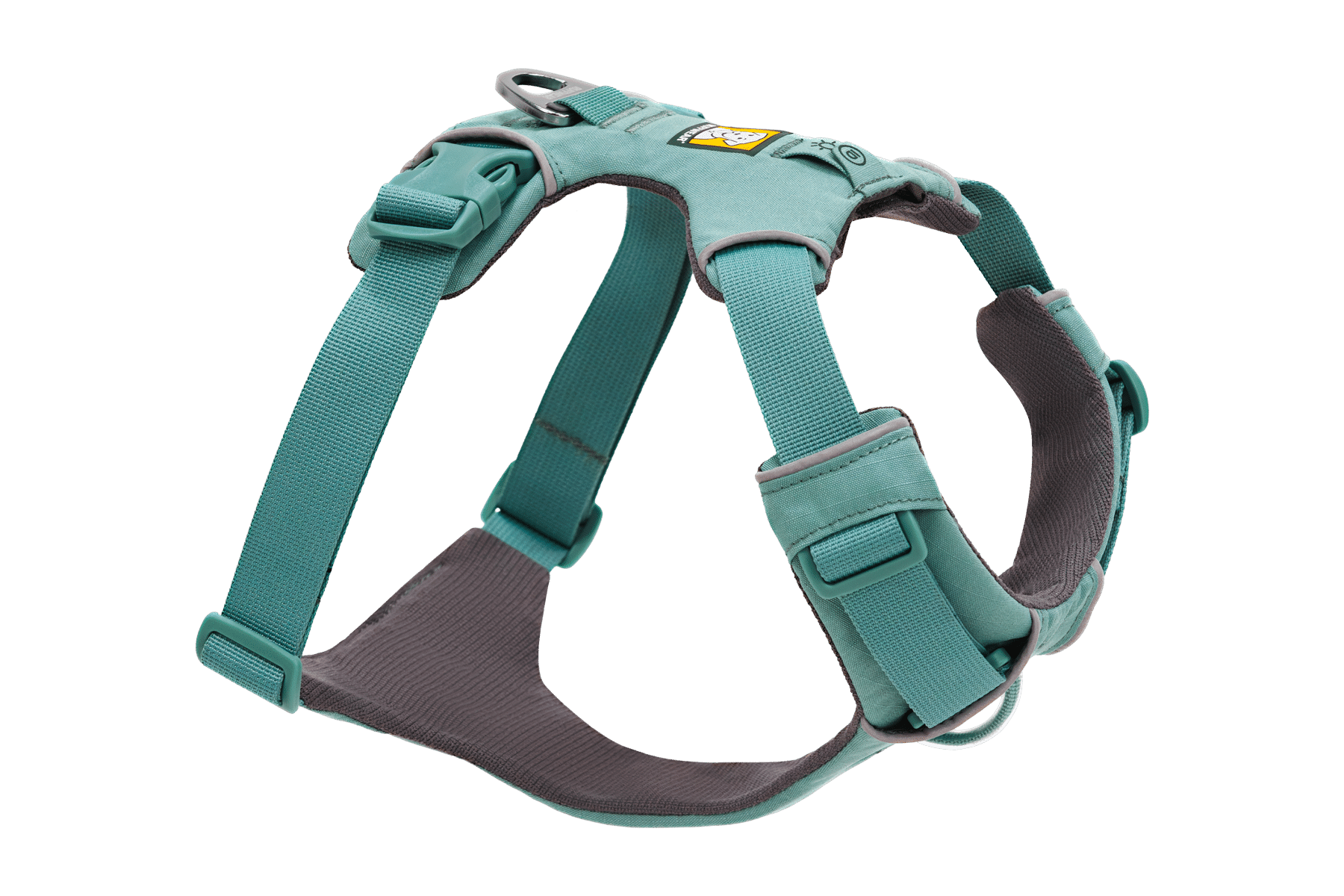
Ruffwear Front Range Harness
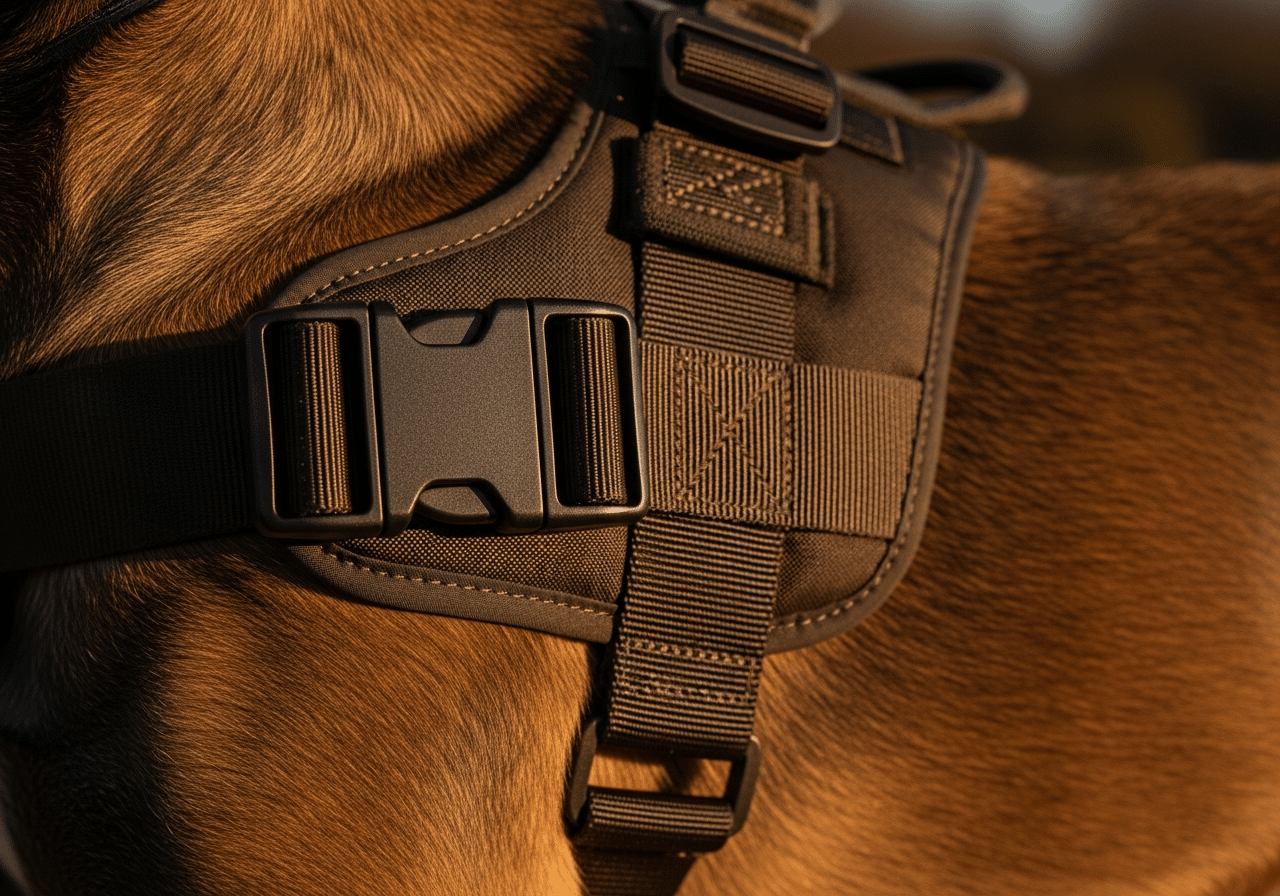
The do-everything everyday harness: a padded chest panel, four points of adjustment, and both front and back leash rings for relaxed walks or gentle no-pull steering.
What we like
- Two-clip versatility suits any walk
- Padded yoke spreads pressure on the chest
The catches
- No top control handle on this model
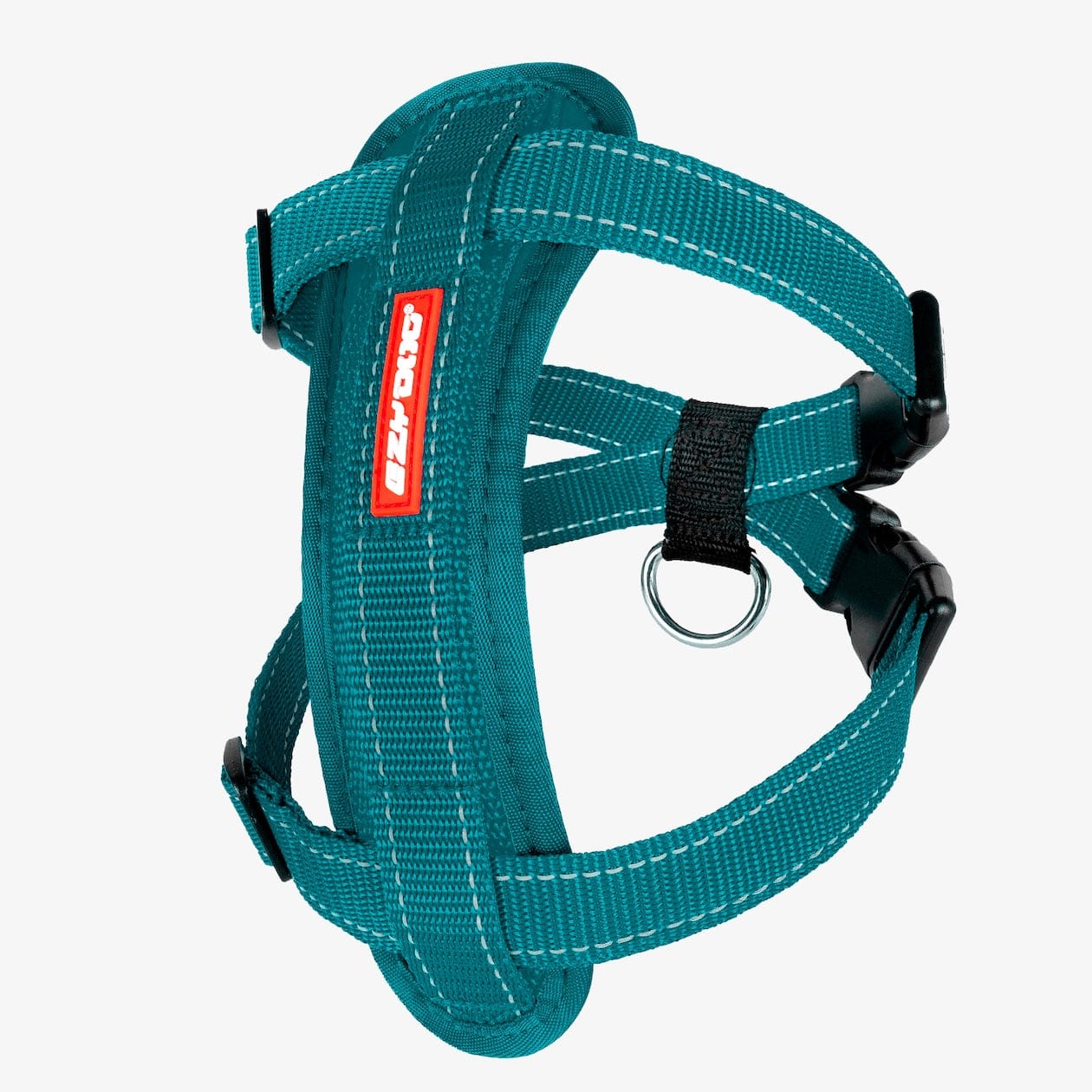
EzyDog Chest Plate Harness
A car-seat-foam chest plate distributes pressure across the sternum, making this back-clip harness a comfortable pick for strong, broad-chested dogs.
What we like
- Thick chest plate cushions pulling pressure
- Doubles as a car restraint with a seat-belt loop
The catches
- Back-clip only, limited no-pull steering
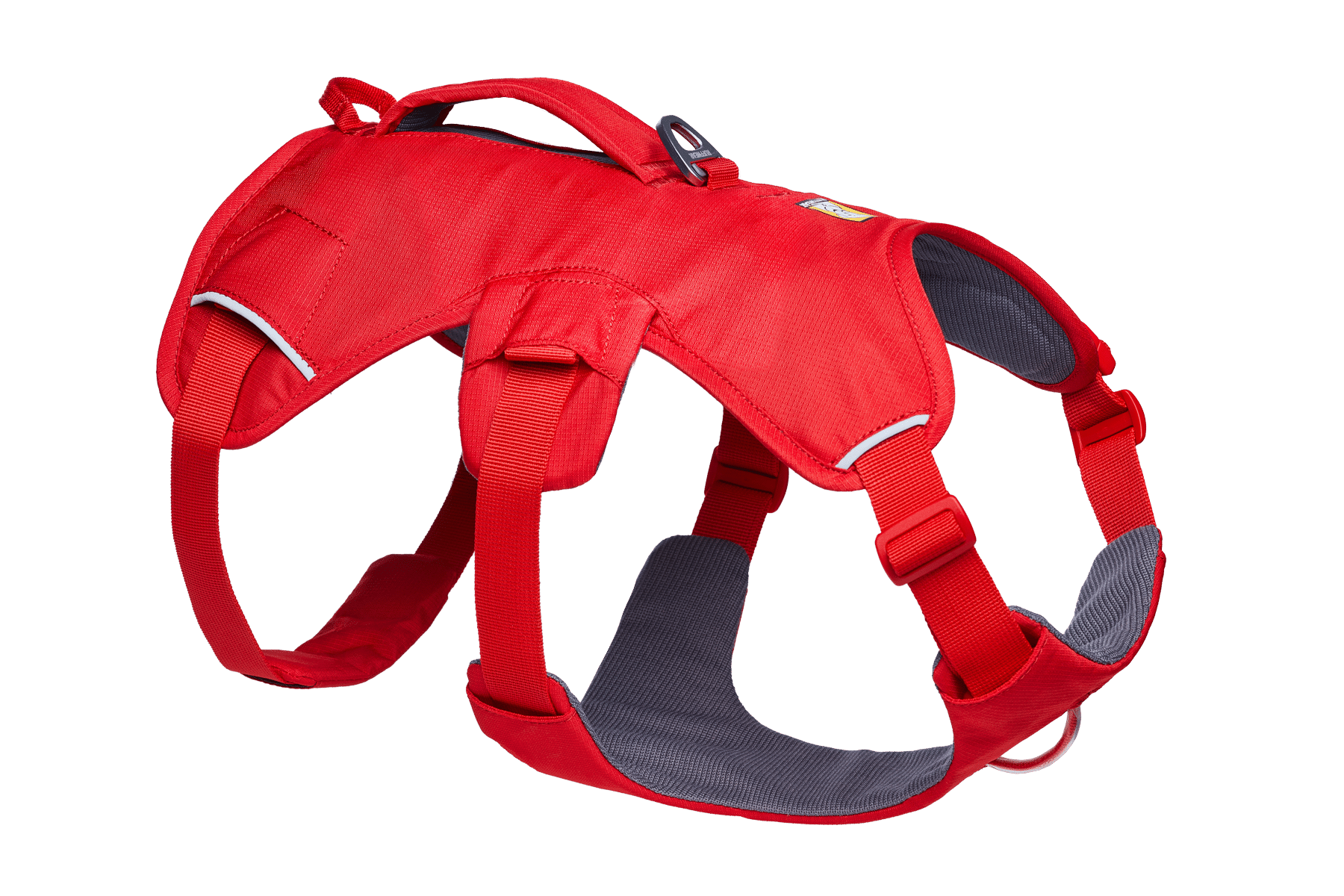
Ruffwear Web Master Harness
A three-strap, escape-resistant build with a reinforced top handle for lifting and steadying large dogs over rough terrain or into a vehicle.
What we like
- Sturdy handle lifts and controls big dogs
- Five adjustment points lock in a secure fit
The catches
- More webbing than casual walkers need
What is The Difference Between a Dog Collar and a Dog Harness
When deciding between a dog collar and a dog harness, you have to take into account the safety features of each of them. For instance, a dog collar may not be able to detach from a dog’s neck under pressure, whereas a dog harness can be easily adjusted to fit your dog. In addition, a dog collar is not always suitable for dogs with medical conditions.
Front-clip harness vs. rear-clip harness
There are two main types of dog harnesses: front-clip and back-clip. The former is often used for moderate use, while the latter is more suitable for long walks. Understanding the difference between the two is essential to choose the best one for your dog.
Front-clip harnesses are designed to reduce the amount of pulling a dog does on a leash. They work by lifting the shoulders of the dog when it pulls. In turn, the dog will pivot towards the owner and be less likely to pull. This makes them a good choice for training a dog to walk on a leash.
Diamond-encrusted harnesses
The Lux Dog harness is a sleek black stingray leather piece accented with over one carat of colorless diamonds. It is made in collaboration with Buddy Belts, a Canadian pet accessory company with a stellar reputation.
The Lux Dog has its fair share of competitors, but this harness is the real deal. This is a finely crafted piece of haute couture that will last a lifetime. You can get your hands on it from the Buddy Belts website. You might even receive a gift certificate from the CEO if you are lucky.
For those who are a little more frugal, plenty of cheaper dog harness options are available. In addition to Buddy Belts, you can also shop for this item from Canadian pet brand Pawty and American-made tuxedo brand Peta. Both brands have been around for quite some time and have been protecting the sensitive necks of dogs for years.
Adjustable collars
There are many different types of collars and harnesses. It’s essential to choose the right one for your dog. They can help prevent injuries and make for safer walks. But there are also some drawbacks.
Collars are easier to put on and off and are usually a better option for most dogs. However, if your dog is small, you might want to look at harnesses. Harnesses are bulkier, but they will give you more control over your dog.
Dogs that get excited and start to run after objects will often try to escape from their harness. This can be dangerous and can lead to accidents. The best way to avoid this is to ensure your dog’s harness is durable.
Control of the dog’s neck
One of the best attributes of the canine is the neck. It supports the weight of the head without muscle exertion. In addition to supporting the body, the neck is an energy-conserving device. As such, it is a critical component of the canine body. Hence, it is an ideal training tool. The use of collars and leashes are not unheard of in the dog arena. To test the effectiveness of such a device, a study was performed. A sample size of eight dogs was used to compare the performance of different collars.
The study compared three of the more popular dog collars. The results were analyzed using a statistical software suite.
Collars that don’t detach under pressure can cause choking
If you’ve been following the dog news, you probably have heard of dogs that stop on their collars. These dogs are more susceptible to infections and generally slower and less sharp when learning new things. They also have a much higher incidence of ulcers.
Choke collars are painful and can cause severe injuries to your dog’s throat, esophagus, and ocular blood vessels. It would be best if you also remembered that a dog might be unable to tell when he’s in pain. To minimize the chances of choking, keep your dog on a long leash so it cannot pull itself into a head-first dive onto the ground.
Collars are not suitable for dogs with medical conditions
Whether you’re considering using a collar for your pet or already do, it’s essential to know the dangers of these items. Several different types of injuries can occur from wearing a collar.
In addition to the apparent neck and back pain, a collar can exacerbate a dog’s preexisting medical conditions. Dogs with trachea and neck problems will have trouble breathing and coughing when wearing a collar. Likewise, dogs with glaucoma can experience additional issues because of the pressure exerted by the collar.
A collar can also be a source of choking. Hanging tags can get caught on objects, such as doors and fences, and can cause your dog to choke.
Dog Harness FAQs
What size harness does my dog need?
Measure the chest girth just behind the front legs and the neck, match it to the brand's size chart, size up if you're between sizes, then fine-tune to a two-finger fit.
Is a harness better than a collar for my dog?
For most dogs, yes, a harness spreads pressure across the chest instead of the throat, giving more control and protecting the windpipe, especially for pullers and flat-faced breeds.
How do I stop my dog pulling on a harness?
Use the front (chest) leash clip, it turns the dog back toward you when it pulls, discouraging pulling without choking. Pair it with reward-based loose-leash training.
How tight should a dog harness be?
Snug but not restrictive: you should slide two flat fingers under any strap. Too loose and an athletic dog can twist or back out of it.
Can my dog wear a harness all day?
For walks and supervised time it's fine, but take it off for crating and long unsupervised periods to avoid rubbing and let the coat breathe.