 Dog Gear, Sized Right
Our Top Training Harness Picks
Front-clip, no-pull harnesses that steer a pulling dog without choking.
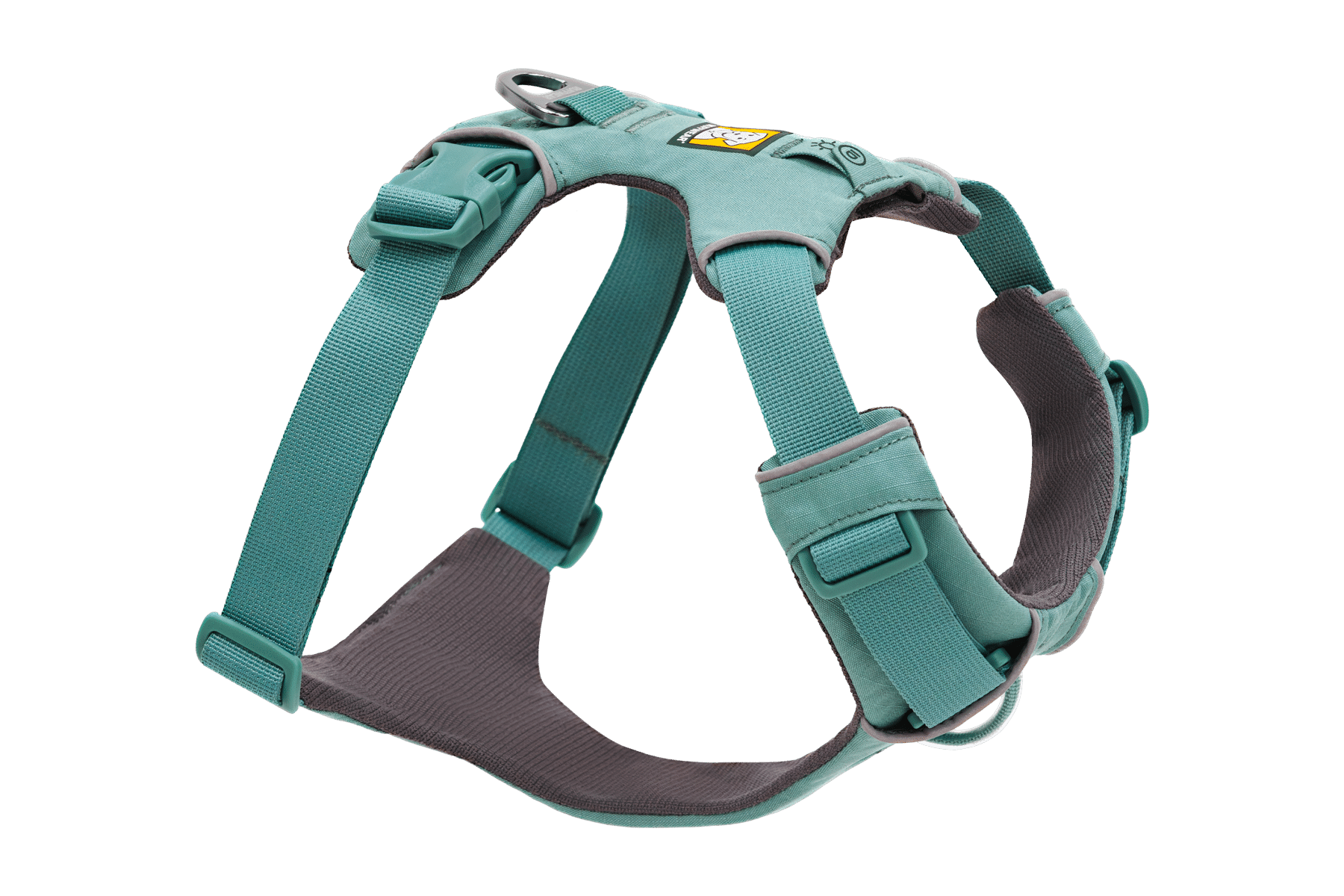
Ruffwear Front Range Harness
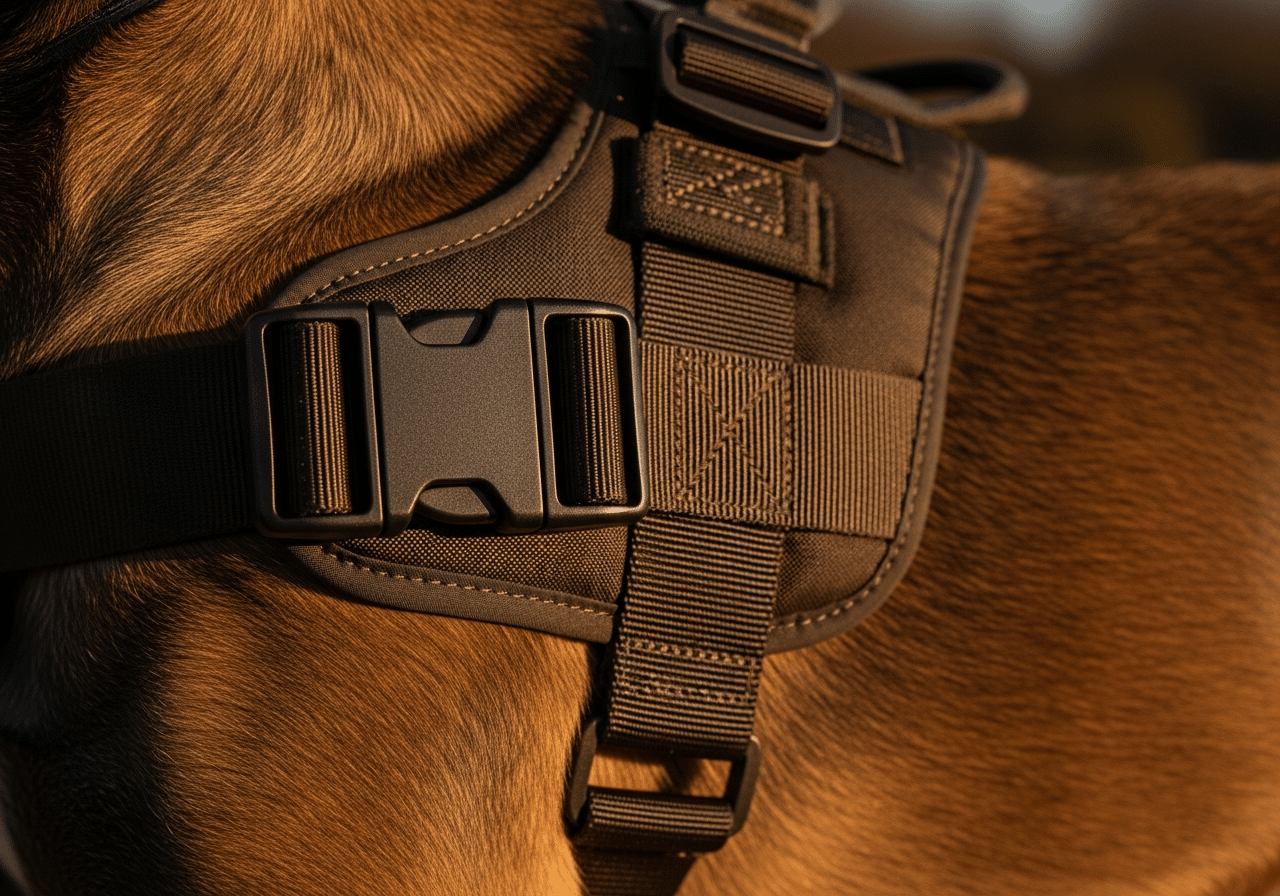
The do-everything everyday harness: a padded chest panel, four points of adjustment, and both front and back leash rings for relaxed walks or gentle no-pull steering.
What we like
- Two-clip versatility suits any walk
- Padded yoke spreads pressure on the chest
The catches
- No top control handle on this model
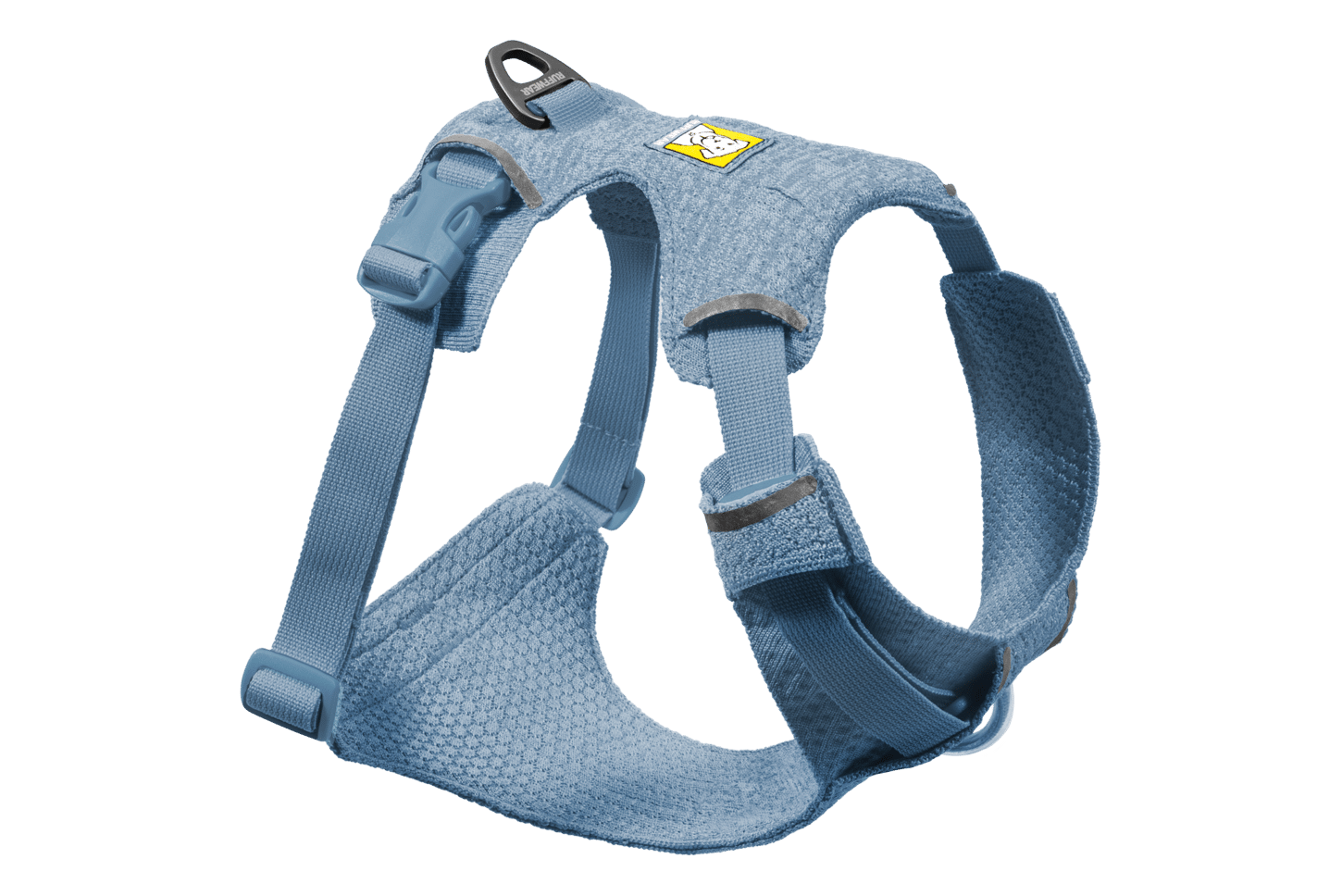
Ruffwear Front Range Flex
The Front Range reimagined with stretch panels that move with an active dog, plus the same dual-clip layout and padded chest panel.
What we like
- Flexible panels follow a dog in motion
- Front and back rings for any walking style
The catches
- Costs more than the original Front Range
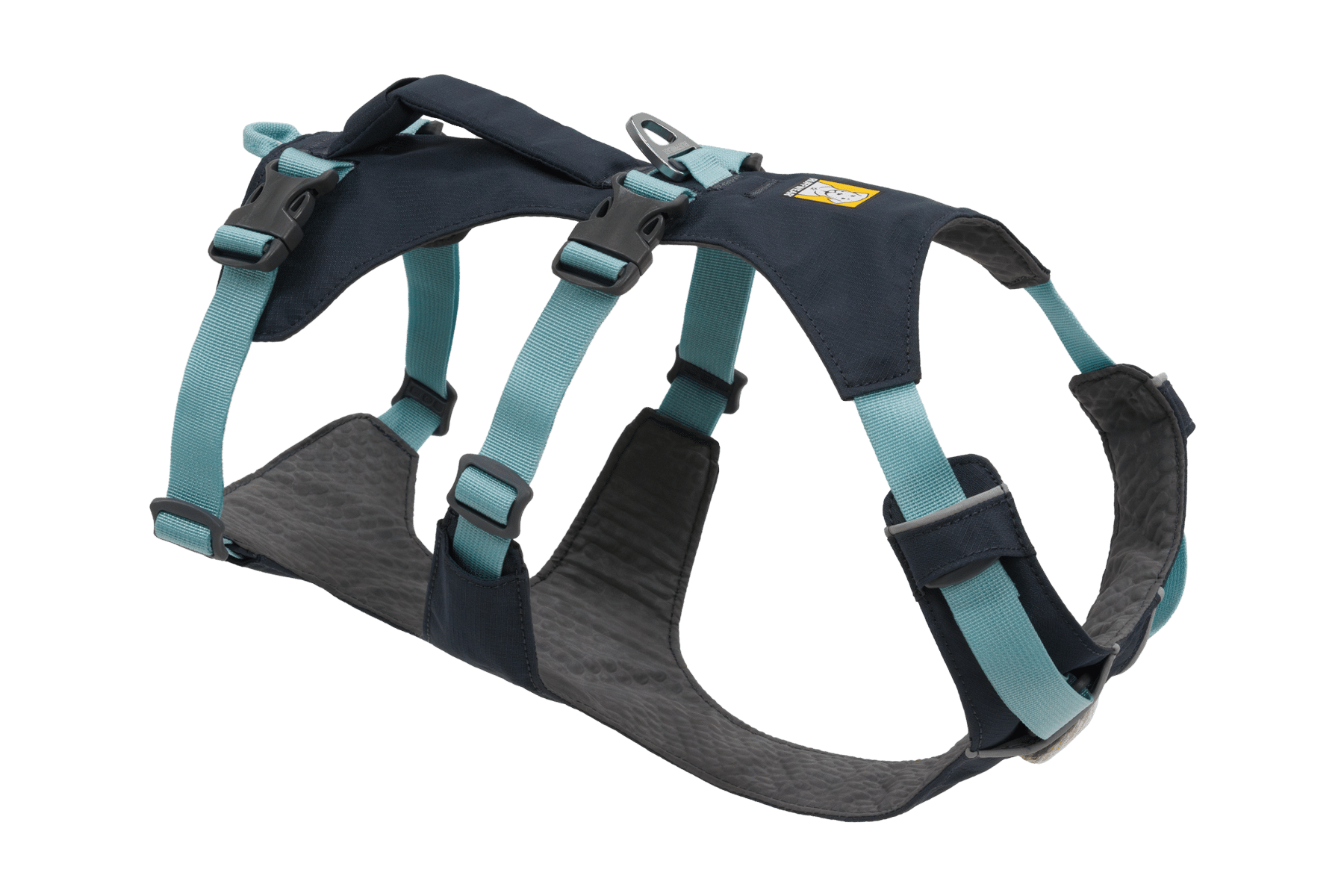
Ruffwear Flagline Harness
A lightweight handled harness with five adjustment points, built to fit deep-chested and non-standard proportions without restricting the shoulders.
What we like
- Dials in on barrel-chested and deep-chested dogs
- Padded handle folds flat when not in use
The catches
- Premium price for a walking harness
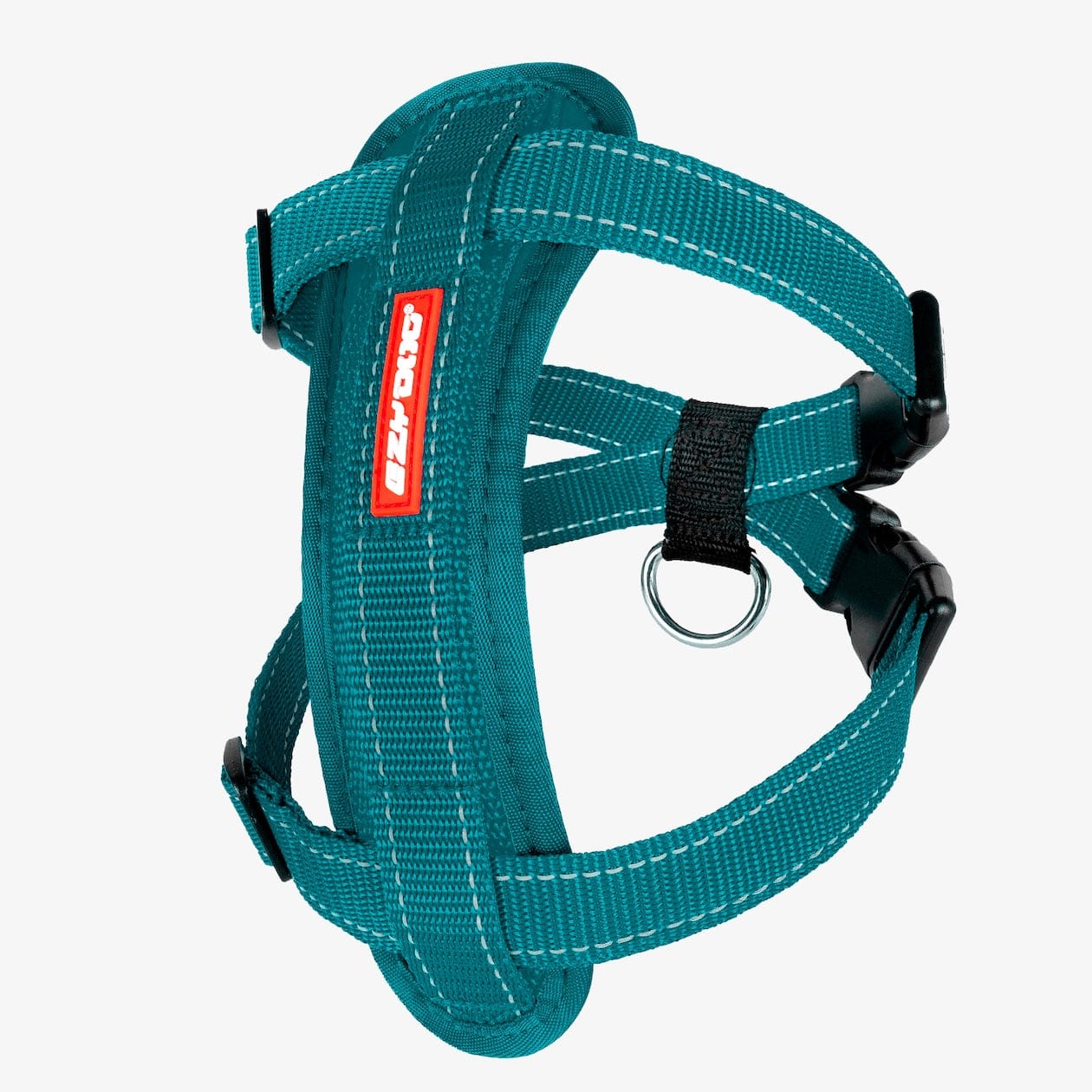
EzyDog Chest Plate Harness
A car-seat-foam chest plate distributes pressure across the sternum, making this back-clip harness a comfortable pick for strong, broad-chested dogs.
What we like
- Thick chest plate cushions pulling pressure
- Doubles as a car restraint with a seat-belt loop
The catches
- Back-clip only, limited no-pull steering
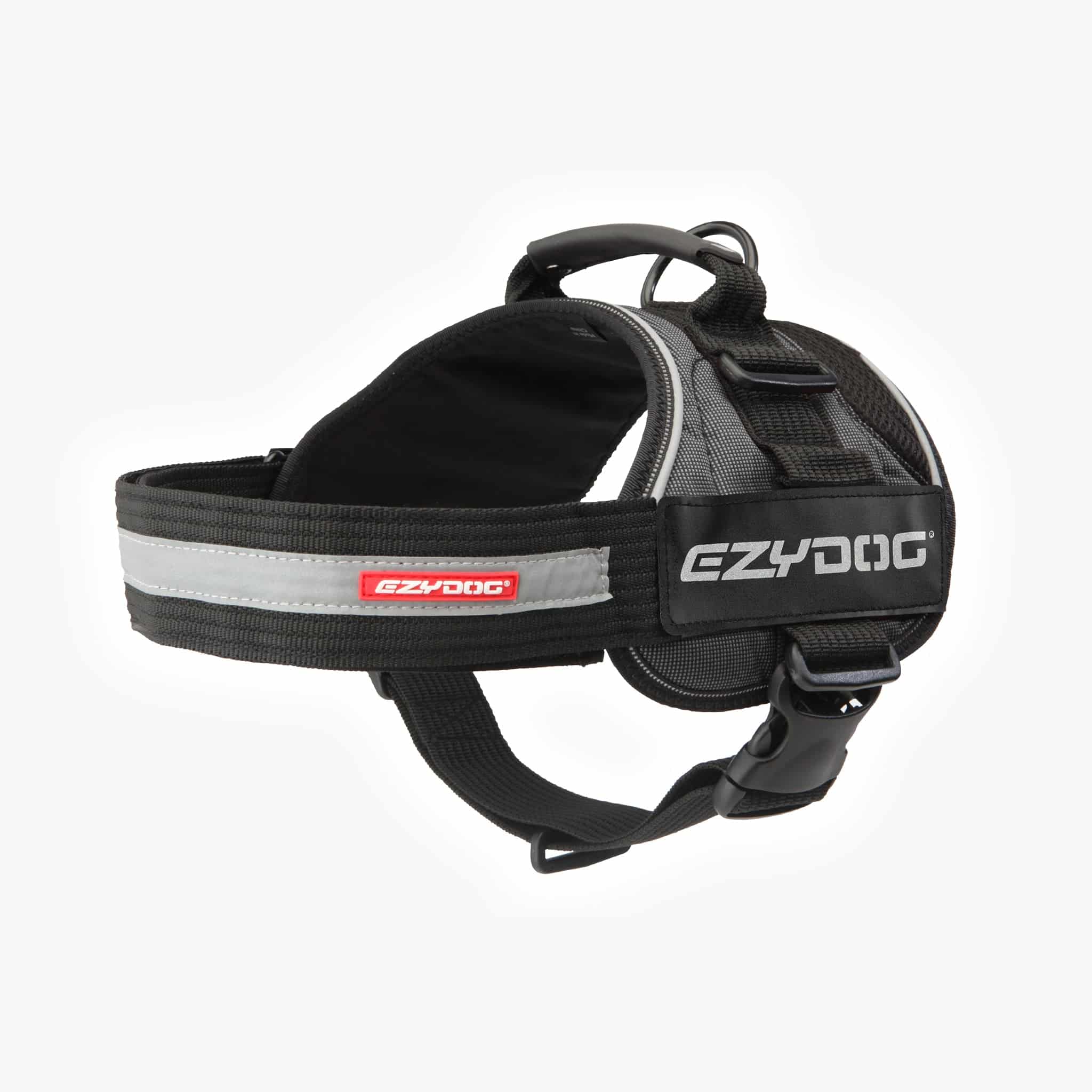
EzyDog Convert Harness
A rugged, service-style harness with hook-and-loop side panels for patches, a grab handle, and modular attachment points for working and adventure dogs.
What we like
- Patch panels suit service and working dogs
- Handle and tough build hold up to abuse
The catches
- Heavier than a plain walking harness
What is the Best Dog Harness for Training?
The best dog harness for training is quality dog harnesses that have some substance to them. There are a ton of different K9 harness options out there. However, the ones that are made of straps that are similar to the ratchet straps you use to keep your RV on the trailer don’t look very comfortable. Would you want to wear that? When you are looking at dog harnesses, you should consider comfort. These are typically on the dog for a length of time and can cause irritation. Be sure that you find one that is made for your breed and the size of the dog.
For example, you might have a small breed dog such as a Shih Tzu. However, they tend to have a much broader chest than that of a small breed such as a Chihuahua. Because of this, you will need a harness that will accommodate a larger chest. Always look at the size and design of the harness to decide if that one is a good fit for your breed of dog. The best dog harness for training is one that has a proper fit for your dog. If you are not sure, measure your dog to find out what the right size would be. Many of these dog harnesses are adjustable to a degree.
Finding a Good Dog Harness for Training
The best dog harness for training is one that will move with your dog. You don’t want any areas that are going to cause uncomfortable rubbing. It is similar to you finding a good pair of shoes. When you have purchased a harness, check every so often to be sure that the harness is not causing sores under and near the straps. When actively training you might be moving around a lot and this can begin to irritate their skin rather quickly. Be sure that you check often when you are first using a dog harness.
When training you will have to teach your dog the proper way to walk and run beside you. Some dogs will be natural to this. However, most dogs will be pulled at first, which makes a harness so nice in training. You have more control of the dog and you won’t accidentally choke the dog when you are resisting their pull. The harness has a loop typically in the middle of the shoulder blades or center of the back. Sometimes there is a loop for our leash on the collar portion or under the chin as well. The loop needs to be at the center of the dog or between the shoulder blades for optimum control.
If you are looking for the best dog harness for training take your time. What dog harness works for one, might not work for another. Your dog’s size and energy will also be factors in determining which is best for your situation. If you have a dog that has a lot of energy and is going to be pulling and running, you will need to find a harness that is made with quality materials. If you are going to do some training at night, you might want a dog harness that has reflectors on it, so the cars can see you and your dog. There are many considerations for a good dog harness, finding the perfect one for yours has never been easier with so many options online.
About My Little and Large
Our passion is providing quality products for pets.
Keeping your dog safe and secure with quality products is our only purpose. We can agree that quality beats price any day.
Team Tested and Team Approved
Our team is comprised of well-researched and accurate representations of items and products. If you find any information that is contradictory to that we would love to update our records. Being real people we sometimes make a mistake and we appreciate you understanding that. More about My Little and Large
Dog Harness FAQs
What size harness does my dog need?
Measure the chest girth just behind the front legs and the neck, match it to the brand's size chart, size up if you're between sizes, then fine-tune to a two-finger fit.
Is a harness better than a collar for my dog?
For most dogs, yes, a harness spreads pressure across the chest instead of the throat, giving more control and protecting the windpipe, especially for pullers and flat-faced breeds.
How do I stop my dog pulling on a harness?
Use the front (chest) leash clip, it turns the dog back toward you when it pulls, discouraging pulling without choking. Pair it with reward-based loose-leash training.
How tight should a dog harness be?
Snug but not restrictive: you should slide two flat fingers under any strap. Too loose and an athletic dog can twist or back out of it.
Can my dog wear a harness all day?
For walks and supervised time it's fine, but take it off for crating and long unsupervised periods to avoid rubbing and let the coat breathe.