 Dog Gear, Sized Right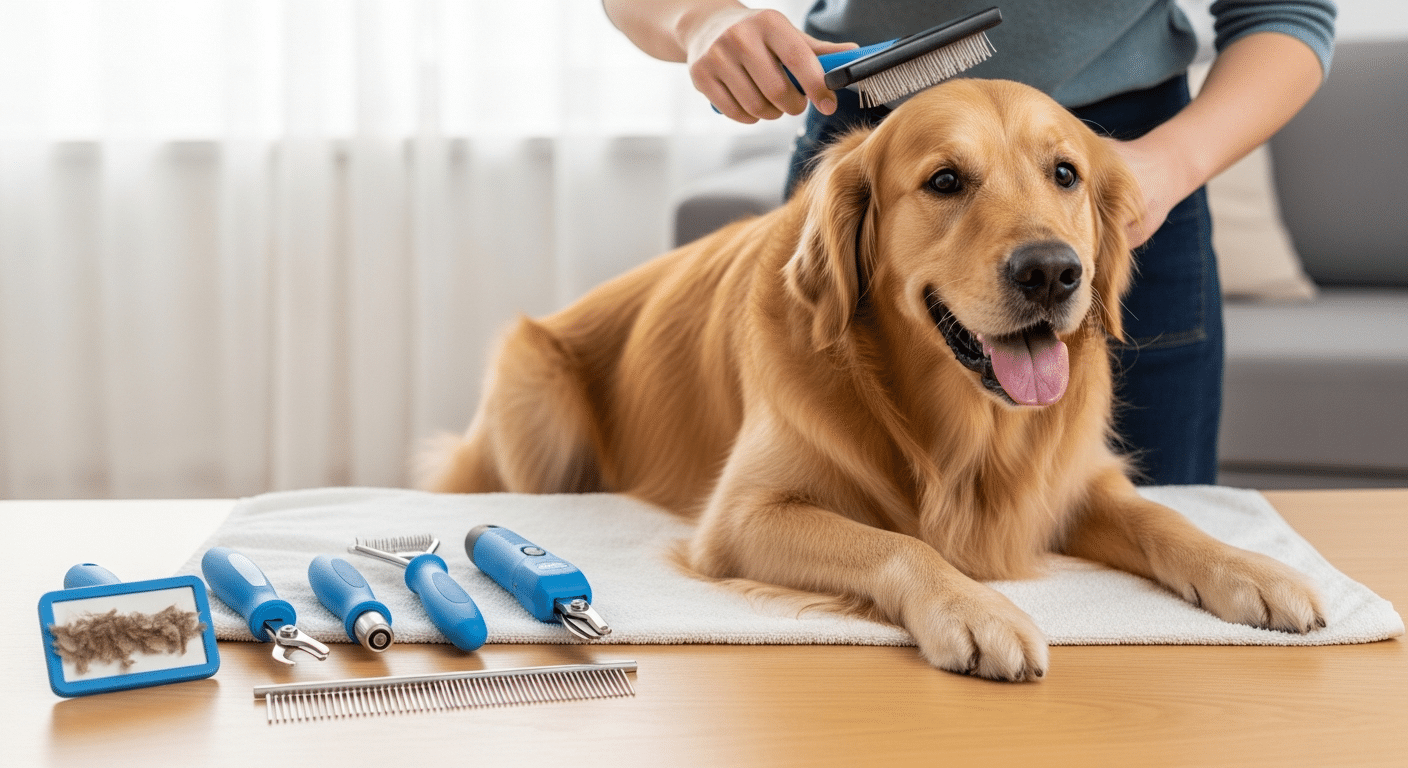
The Best Dog Grooming Tools for an At-Home Kit
We built the at-home grooming kit from the ground up, the deshedder, the everyday brush, the nail tool, the clippers and the dryer that actually beat fur, mats and dread-the-nails day. Five real picks, ranked, with the catches called out and what each coat type needs.
Grooming your dog at home saves a small fortune and bonds the two of you, but walk into the pet aisle and you’re hit with a hundred brushes, three kinds of nail tools and a wall of clippers, with no idea which you actually need.
We cut through it. Below is the complete at-home kit, built from five best-in-class tools: the FURminator deshedding tool for the fur that’s everywhere, the Hertzko slicker brush for daily upkeep, the Casfuy quiet nail grinder for the chore everyone dreads, the Wahl Deluxe Pro cordless clipper kit for real haircuts, and the SHELANDY force dryer that makes drying a thick coat fast. Every pick is real, in stock and routed to a live Amazon listing the day we published.
The single most important step before you buy anything: identify your dog’s coat type. A double-coated Husky, a curly Doodle, a short-haired Boxer and a wiry terrier need genuinely different tools, and the biggest grooming mistakes (like shaving a double coat) come from ignoring it. We break coat types down right under the table, then walk through deshedding vs. brushing, grinder vs. clipper, and when a force dryer is worth it.
A quick word on what you don’t need on day one. You can build this kit one tool at a time: nearly every dog benefits from the slicker brush (under $15) and a nail tool first; the deshedder is essential if you’ve got a double-coated shedder; clippers and a force dryer matter most if your dog’s coat grows or is thick. Total beginner? Read the kit alongside our step-by-step how to groom a dog at home guide.
Best dog grooming tools at a glance
The five-tool at-home kit, what each one is for and the coat it’s built around.
| Product | Best for | Type | Key features | Our rating | |
|---|---|---|---|---|---|
| #1 FURminator deShedding Tool | Best deshedding tool | Deshedding tool | Stainless edge · FURejector · double coats | ★★★★★ | Check price |
| #2 Hertzko Slicker Brush | Best everyday brush | Slicker brush | Self-cleaning · long & short coats · under $15 | ★★★★★ | Check price |
| #3 Casfuy Nail Grinder | Best nail tool | Nail grinder | ~45 dB · 6 speeds · 3 ports · 2 LED | ★★★★☆ | Check price |
| #4 Wahl Deluxe Pro Cordless Kit | Best clippers | Clipper kit | Cordless · 4 guide combs · self-sharpening | ★★★★☆ | Check price |
| #5 SHELANDY Force Dryer | Best dryer | Force dryer | Adjustable airflow · low heat · 4 nozzles | ★★★★☆ | Check price |
The 5 best dog grooming tools, ranked
Each tool does one job better than the rest, here’s what it’s best at and the catch to know.
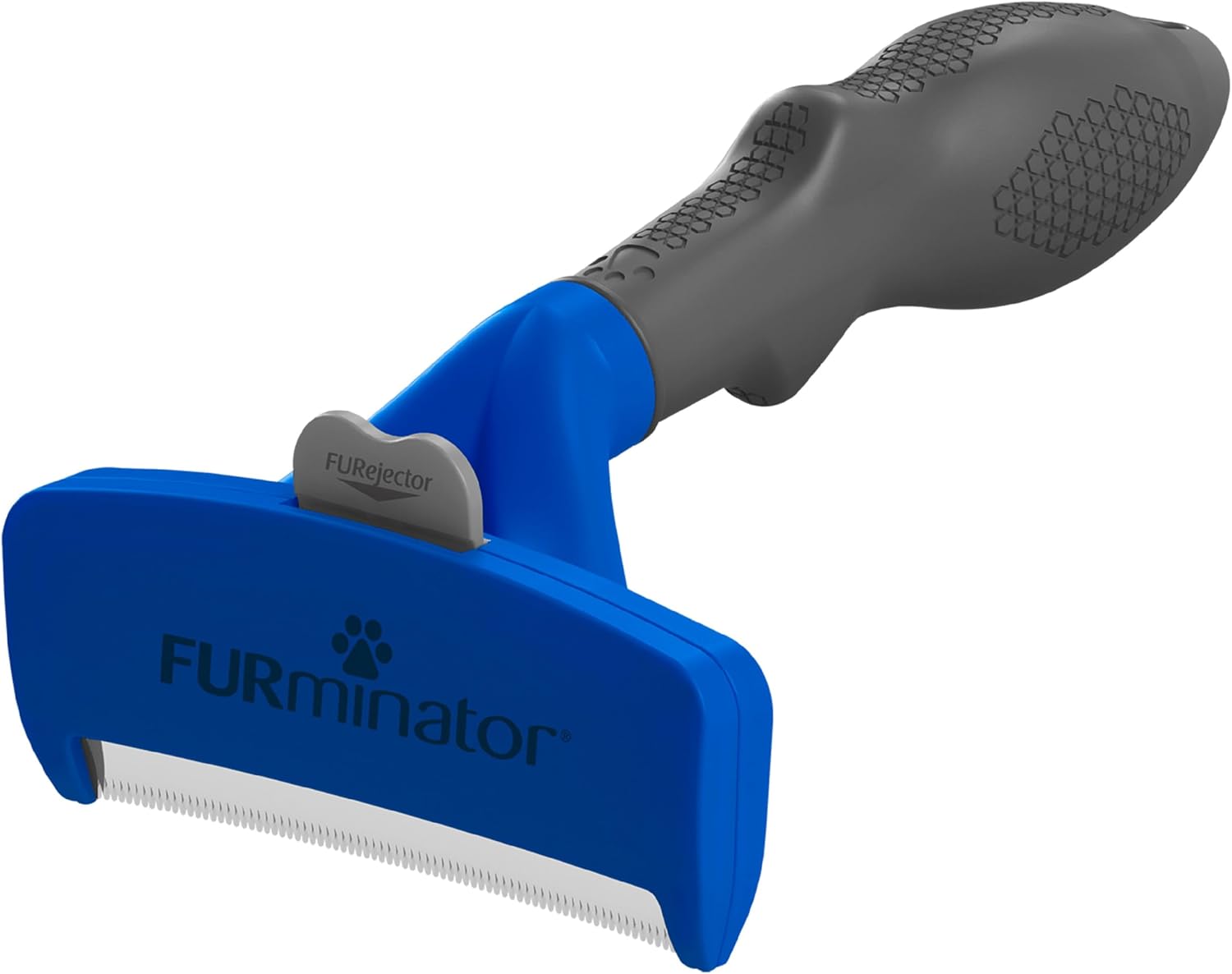
FURminator Undercoat deShedding Tool
If your dog blows its coat and you’re vacuuming fur off everything, this is the single most satisfying tool you can buy. The FURminator’s stainless-steel edge reaches through the topcoat to pull out the loose undercoat, the layer that’s actually shedding, and the maker says it cuts loose hair by up to 90%. A FURejector button flicks the trapped fur off in one click. Pick the version sized to your dog and coat (this is the large-dog, long-hair edition); short-hair and small-dog sizes exist too. The one rule: it’s for double-coated and undercoat breeds, and you go gently, over-using it or dragging it on a single-coated dog can thin the coat. 📋 Best deshedding tools for dogs →
What we like
- Pulls out loose undercoat the way no brush can, dramatic, visible results
- FURejector button clears the trapped fur in one click
- Sized by dog size and coat type so you get the right reach
- Reduces what ends up on your floors, sofa and clothes between baths
The catches
- Double-coat / undercoat breeds only, not for single-coated or hairless dogs
- Easy to overdo: light passes, never force it, or you can irritate skin
- Pricier than a basic brush (but it’s the tool that actually works)
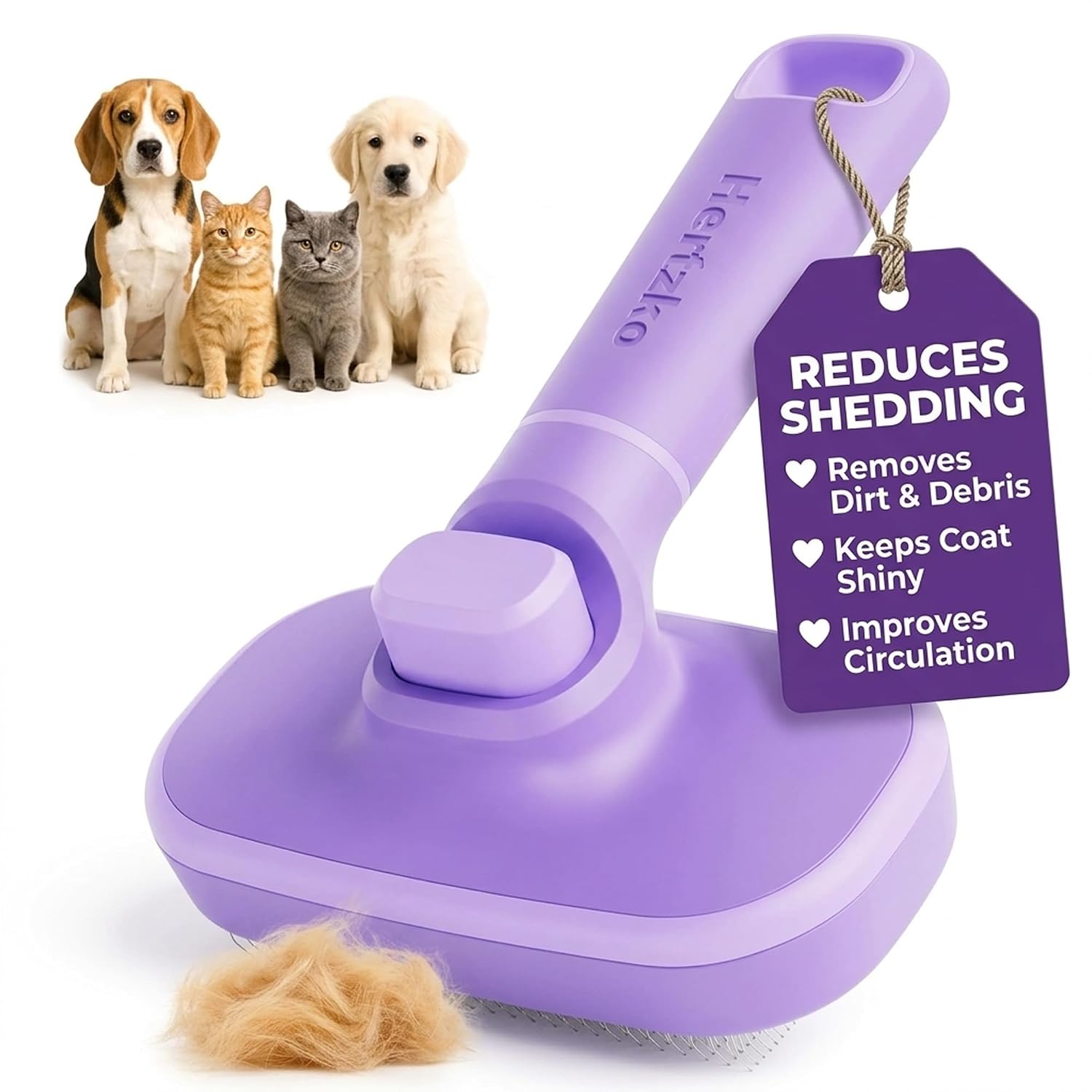
Hertzko Self-Cleaning Slicker Brush
The brush you’ll actually reach for every day. Fine bent-wire bristles slide through the coat to lift loose hair, dander, dirt and small tangles without scratching the skin, and the self-cleaning retractable head means one click of a button pops all the collected fur off the brush, no picking it out by hand. It works on long and short coats and is the perfect partner to the FURminator: brush daily, deshed weekly. With 60,000+ reviews it’s the most-trusted slicker on the market for a reason, and it’s under $15.
What we like
- Removes tangles, loose hair and dander gently on most coat types
- One-click self-cleaning button, the fur pops right off
- Comfort grip and anti-slip handle for long sessions
- Cheapest tool here and the one you’ll use most
The catches
- A slicker, not a deshedder, pair it with the FURminator for heavy shedders
- Wire tips can scratch if you press too hard; use a light touch
- Won’t break up severe, set-in mats on its own
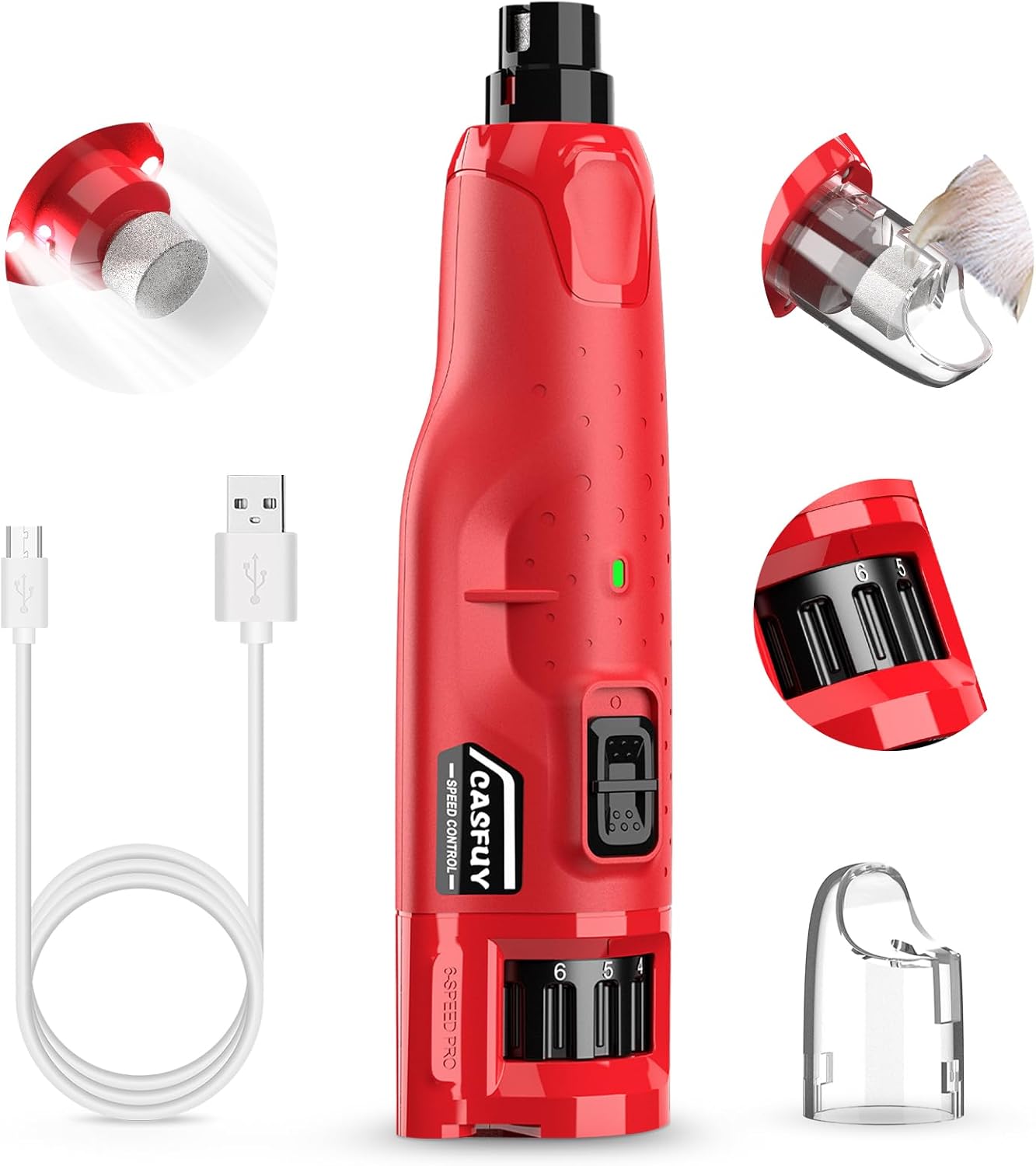
Casfuy Dog Nail Grinder (Quiet)
Nails are the job most owners dread, and a grinder makes it far safer than clippers. Instead of one nerve-wracking snip, you shave a tiny bit at a time, so it’s much harder to hit the quick and draw blood. This Casfuy is our pick because it’s genuinely quiet (around 45 dB), the #1 thing for an anxious dog, with 6 adjustable speeds, three port sizes (use the big one for a large dog’s thick nails), two LED lights to help you see the quick, and USB-C charging with a long runtime. Rounded, smooth nails that won’t scratch your floors or your legs. 📋 Best dog nail grinders →
What we like
- Far less risk of cutting the quick than clippers, shave a little at a time
- Quiet and low-vibration, the best option for nervous dogs
- Big-port opening and speed range handle thick large-breed nails
- Leaves nails smooth and rounded, no sharp clipped edges
The catches
- Slower than a clean clipper cut; needs a charge
- The grinding sound and feel still take a few sessions to get a dog used to
- Keep long ear/face fur clear of the spinning head
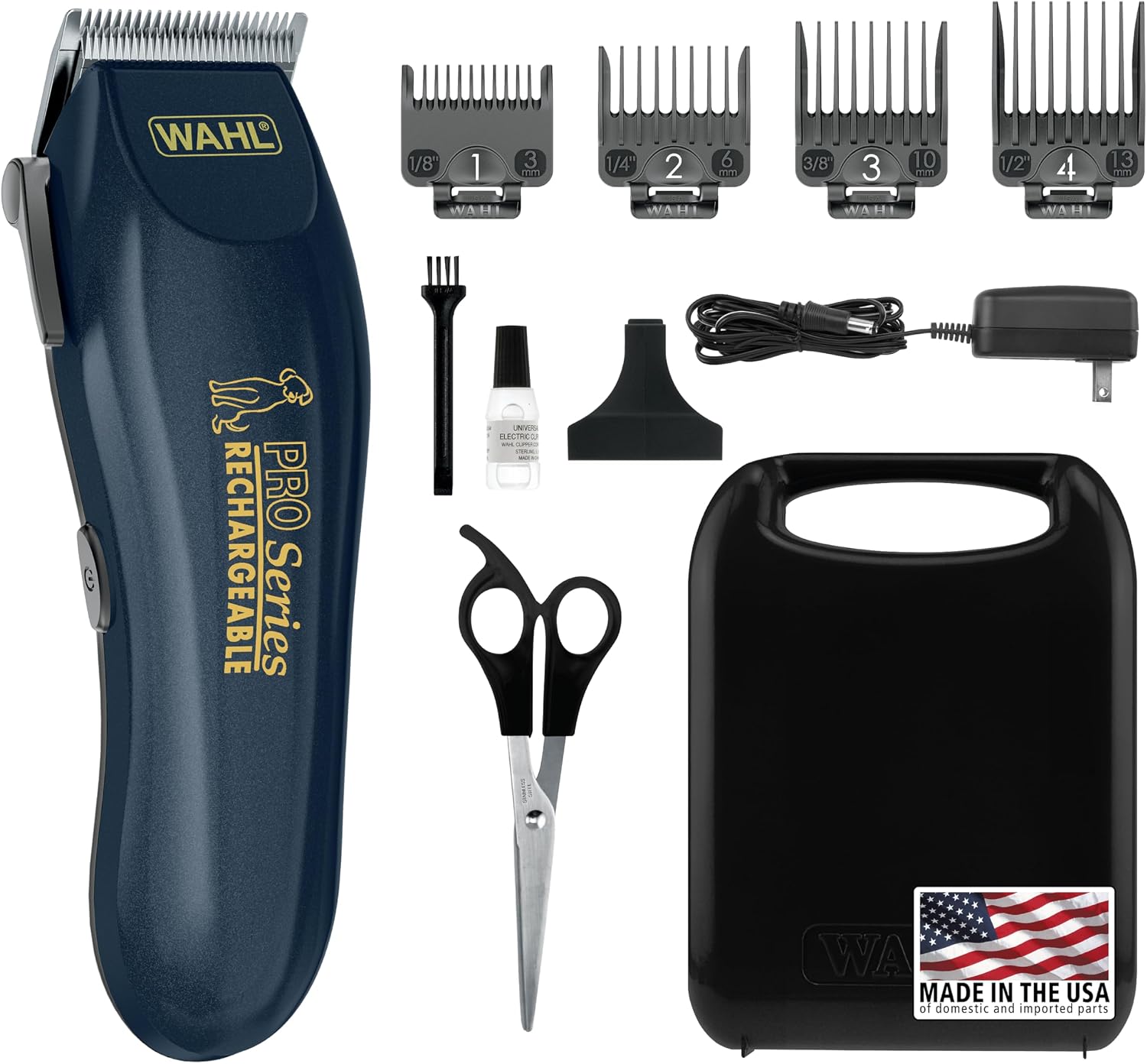
Wahl Deluxe Pro Series Cordless Clipper Kit
When your dog needs an actual haircut, not just brushing, this Wahl kit is the value play that does it. It’s a cordless lithium-ion clipper (about 2 hours per charge, with a 10-minute quick-charge), a heavy-duty motor for thick coats, self-sharpening high-carbon blades, and a complete kit: four guide combs for different lengths, an adjustable taper lever, scissors, blade oil, a cleaning brush and a storage case. Wahl is the name groomers trust, and this is far cheaper than a few salon visits. Go slow on a matted coat and keep blades oiled so they stay cool.
What we like
- Complete kit, clippers, four guide combs, scissors, oil and case
- Cordless with a strong motor that handles thick double coats
- Pays for itself fast vs. repeat grooming-salon haircuts
- Wahl is the brand professional groomers actually use
The catches
- A clipper is the steepest learning curve here, practice on a calm dog
- Blades run hot if you don’t oil them; clip mats out first, never through them
- Louder than a brush; introduce it slowly to a nervous dog
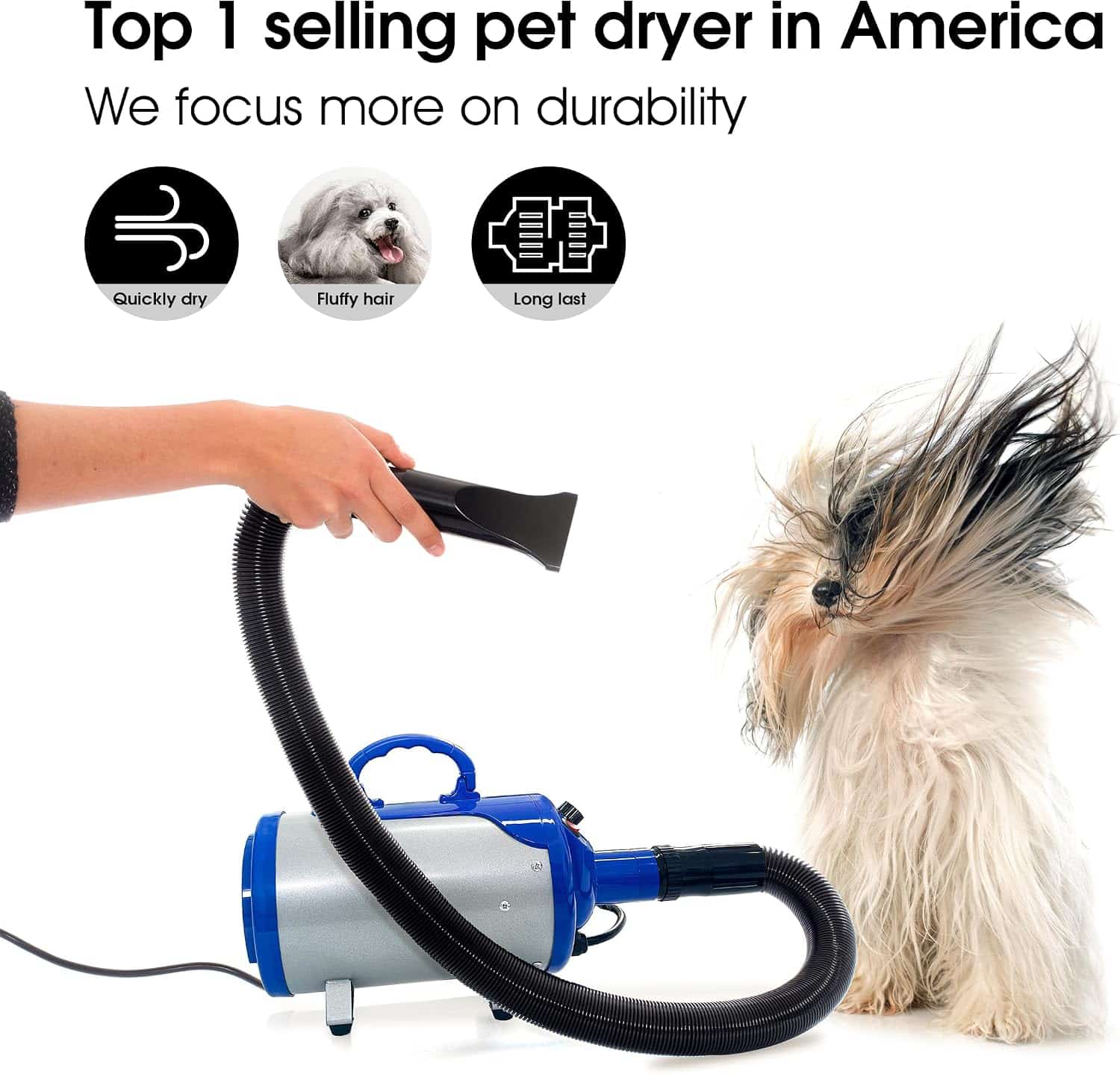
SHELANDY Pet Hair Force Dryer
A force dryer is the secret weapon nobody tells first-time at-home groomers about. After a bath, this high-velocity blower pushes the water out of a thick coat in a fraction of the towel-or-air-dry time, and on a double coat it blasts out the loose, dead undercoat at the same time, so you shed less all week. It has adjustable airflow, an optional low heat setting, four nozzles and a stretchable hose. It’s loud, so build up to it and protect your dog’s ears, but for a big, thick-coated dog it turns drying from a two-towel ordeal into a few minutes. 📋 Best dog dryers →
What we like
- Dries a thick or double coat in a fraction of the time
- Blasts loose dead undercoat out, less shedding around the house
- Adjustable airflow plus a gentle heat setting and multiple nozzles
- Far cheaper than the pro Flying Pig blowers and plenty for home use
The catches
- Loud, introduce it gradually and never aim it at the ears or face
- Bulky to store compared to a brush or grinder
- Overkill for a short, single-coated dog that towel-dries fine
Start with your dog (and your dread)
Shortcut to the right tool for your dog’s coat, the nails you keep putting off, or a total-beginner routine.
How to choose dog grooming tools
The eight things that decide which tools belong in your at-home kit, starting with your dog’s coat.
1 Start with your dog’s coat type, it changes everything
Before you buy a single tool, name your dog’s coat, because it decides what you actually need. Double-coated breeds (Huskies, Goldens, German Shepherds, most northern and herding dogs) shed in clumps and need a deshedding tool and a force dryer, and should never be shaved. Long, silky or curly coats (Doodles, Shih Tzus, Spaniels) mat easily and need a slicker brush, a metal comb and clippers for regular trims. Short, single coats (Boxers, Beagles, Pit-types) are the easiest, a slicker or rubber curry brush and the occasional deshed is plenty. Wire coats need hand-stripping or clipping. Buy for the coat you have, not the longest list. New to all of this? Start with our how to groom a dog at home walkthrough.
2 Deshedding vs. brushing, they’re not the same job
This trips up most owners. A brush (like the Hertzko slicker) works the surface: it lifts loose hair, dander and small tangles and should be used daily or every couple of days. A deshedding tool (the FURminator) reaches under the topcoat to pull out the loose undercoat, the layer that’s actually blowing out, and is used weekly, in light passes. You want both: brush often to manage daily fur, deshed weekly to attack the source. The mistake to avoid is over-desheading or using a FURminator on a single-coated dog, which can thin the coat. Full breakdown in our best deshedding tools guide.
3 Nail grinder vs. clipper, which to choose
Trimming nails is the chore owners fear most because of the quick, the blood vessel inside the nail that bleeds if you cut it. A clipper is fast but unforgiving: one bad snip and you’ve hit the quick. A grinder (our Casfuy pick) shaves a little at a time, so it’s much harder to go too far, and it leaves smooth, rounded edges instead of sharp clipped ones. The trade-offs are noise and speed, which is why a quiet, low-vibration grinder is worth paying for with a nervous dog. Many owners clip the bulk and finish with a grinder. More in our best dog nail grinder guide.
4 When you actually need a force dryer
A force (high-velocity) dryer isn’t for everyone, but for the right dog it’s transformative. If you have a big, thick or double-coated dog, towel-and-air drying takes forever and leaves a damp undercoat that mats and smells. A force dryer blasts the water out in minutes and pushes out loose dead undercoat at the same time, so you shed less all week. Use the cool or low-heat setting (never hot), keep it away from the ears and face, and introduce the noise slowly. A short, single-coated dog that towel-dries in two minutes doesn’t need one. See our best dog dryers guide.
5 Clippers, blades, guide combs and noise
If you’re doing full haircuts at home, the clipper is your biggest purchase and your steepest learning curve. Look for a strong motor for thick coats, self-sharpening or detachable blades, and a set of guide combs (the snap-on attachments that set the cut length, our Wahl kit includes four). Cordless lithium is the convenient norm now; corded clippers run cooler for very long sessions. Keep the blade oiled so it stays cool, go with the grain, and never clip through a mat, cut it out first. And avoid shaving double-coated breeds: the coat insulates against heat and cold and may grow back patchy.
6 Shampoo & skin, match it to the coat, rinse it out
The bath matters as much as the tools. Use a dog-specific shampoo (human and even baby shampoo are the wrong pH for canine skin), match it to the dog, oatmeal or hypoallergenic for itchy or sensitive skin, a deshedding or whitening formula for specific needs, and dilute and rinse thoroughly, because leftover residue is a top cause of itching. Bathe only when needed (roughly every 4 to 8 weeks for most dogs; over-bathing strips natural oils). Brush before the bath to remove loose hair and tangles, wet mats tighten and become much harder to remove.
7 Ears, teeth and the finishing tools
A complete home routine goes beyond the coat. Ears: wipe the visible part with a vet-approved ear-cleaning solution and cotton, never push a swab deep into the canal; floppy-eared and water-loving breeds need it more often. Teeth: brush with a dog toothbrush or finger brush and enzymatic dog toothpaste (never human toothpaste, the fluoride and xylitol are toxic). The small finishers that round out a kit: a metal comb with wide and fine teeth to detangle and check your work, blunt-tip scissors for the face, paws and sanitary areas, and a microfiber towel that soaks up far more water than cotton.
8 Build your own kit vs. an all-in-one grooming vacuum
You’ll see two paths. Build your own kit, the individual best-in-class tools on this page, gives you a better deshedder, a better grinder and real clippers than any bundle, and you replace one piece at a time. All-in-one grooming vacuums (oneisall, Neakasa and similar) bundle a clipper, deshedding head and brush onto a vacuum that sucks the fur straight into a canister as you groom, the big win is mess containment, and they’re great for nervous dogs if they’re quiet. The catch is the individual tools are usually only okay, not great. Our take: buy the standalone tools for performance; if loose fur all over the house is your real problem, a grooming vacuum, or a good pet vacuum, is the fix. See our best vacuums for dog hair.
How we vet dog grooming tools
No product is listed until it clears all three. If we wouldn’t put it on our own dogs, it isn’t here.
Model the real demand
We study what’s genuinely working for owners, match the depth of the best guides, then verify every claim independently.
Check the real build
Wattage, R-values, materials, cord safety and weight limits, confirmed against the maker, not the listicle.
Route to the best deal
410+ merchants compared. The buy button goes to the one that’s in stock and priced fairly, never the one that just pays us most.
Best dog grooming tools, your questions answered
What tools do I need to groom a dog at home?
A solid at-home kit covers five jobs: brushing (a slicker brush like the Hertzko, plus a metal comb), deshedding (a FURminator for double coats), nails (a grinder or clipper), bathing & drying (dog shampoo, a microfiber towel, and a force dryer for thick coats), and haircuts (a clipper kit with guide combs and scissors if your dog’s coat grows). Round it out with an ear cleaner and a dog toothbrush. You don’t need all of it on day one, buy for your dog’s coat type and add as you go.
What are the best dog grooming tools overall?
For most owners: the FURminator Undercoat deShedding Tool is the best deshedder, the Hertzko Self-Cleaning Slicker Brush is the best everyday brush (and under $15), the Casfuy quiet nail grinder is the safest way to do nails, the Wahl Deluxe Pro Series cordless kit is the best value clipper set for at-home haircuts, and the SHELANDY force dryer is the one upgrade that transforms drying a thick-coated dog. Together they’re a complete home kit for a fraction of ongoing salon costs.
What’s the difference between a deshedding tool and a slicker brush?
A slicker brush works the surface of the coat, it lifts loose hair, dander and small tangles and you use it daily. A deshedding tool reaches under the topcoat to pull out the loose undercoat, the layer that’s actually shedding, and you use it weekly in light passes. They do different jobs, so most owners use both: brush often, deshed weekly. Don’t use a deshedding tool on a single-coated dog. More in our deshedding tools guide.
Is a nail grinder or a clipper better for dogs?
For most owners a grinder is safer. A clipper is fast but one bad cut hits the quick and bleeds; a grinder shaves a little at a time, so it’s much harder to go too far, and it leaves smooth rounded edges. The downsides are that it’s slower and makes noise, so a quiet, low-vibration grinder (like our Casfuy pick) is worth it for an anxious dog. Some owners clip the bulk and finish with a grinder. See our nail grinder guide.
How often should I groom my dog?
It depends on the coat. Brush most dogs every day or two (daily for long or double coats to prevent mats). Deshed double-coated breeds about once a week, more during seasonal coat blows. Trim nails every 3 to 4 weeks, if you hear them click on the floor, they’re too long. Bathe roughly every 4 to 8 weeks for most dogs (over-bathing strips natural oils). Clip coats that grow every 6 to 8 weeks. Brush ears and teeth regularly. A few minutes a day beats one big battle.
Can I use human clippers on my dog?
No. Human clippers and shavers aren’t built for dog hair, a dog’s coat is denser and the motors clog, overheat and pull, which hurts the dog. Dog clippers have stronger motors, cooler-running blades and guide combs sized for coats. The same goes for shampoo and toothpaste: use dog-specific products, because human ones are the wrong pH (shampoo) or contain ingredients like fluoride and xylitol that are toxic to dogs (toothpaste). It’s not a corner worth cutting.
Is the FURminator safe? Can you over-deshed a dog?
It’s safe when used correctly, but yes, you can overdo it. The FURminator is designed for double-coated and undercoat breeds, use it in light passes about once a week, more during a seasonal coat blow. Pressing too hard, going too often, or using it on a single-coated or hairless dog can irritate the skin and thin the coat. It removes loose undercoat, not healthy topcoat, so a gentle touch is all you need. If the skin looks pink or irritated, ease off.
Do I need a dog dryer, or can I just air-dry?
It depends on the coat. A short, single-coated dog towel-dries fine and doesn’t need a dryer. A big, thick or double-coated dog is a different story: air-drying takes hours and leaves a damp undercoat that mats and smells, so a force dryer is genuinely worth it, it blasts the water out in minutes and pushes out loose undercoat at the same time. Use cool or low heat only, keep it away from the ears, and introduce the noise slowly. See our dog dryer guide.
How do I groom a matted dog?
Carefully. Work on dry fur (water tightens mats), and tease the mat apart with your fingers and a metal comb or de-matting tool, working from the outside edge inward and holding the fur at the base so you don’t pull the skin. Never bathe a matted dog first, it locks the mats in. For tight mats close to the skin, clip them out with clippers rather than scissors (scissors near skin cause cuts). If a dog is badly matted all over, that’s a job for a professional groomer, it can be painful and a humane shave-down is sometimes the kindest fix.
Should I shave my double-coated dog in summer?
No, this is one of the most common grooming mistakes. A double coat insulates against heat as well as cold, and shaving it can leave the dog more prone to overheating and sunburn, and the coat often grows back patchy or with a changed texture. Instead, deshed and brush out the loose undercoat with a FURminator and a force dryer, that’s what actually keeps the dog cool and comfortable. Save shaving for matted or medical situations on a groomer’s or vet’s advice.