 Dog Gear, Sized Right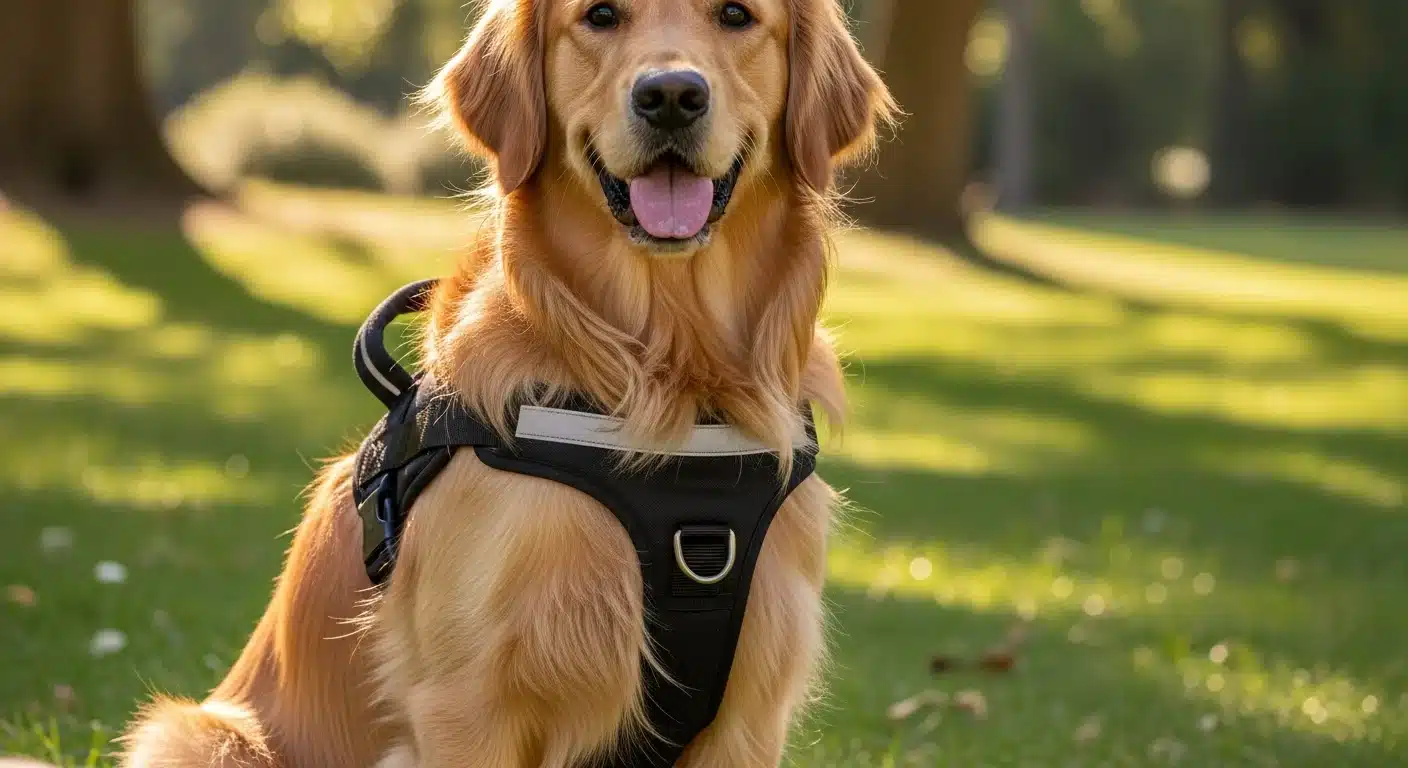
Should a Dog Wear a Harness All Day?
The honest answer: no, not as a rule, take it off when your dog is resting or sleeping. But there are real exceptions, and a well-chosen harness makes extended wear much safer.
Should a dog wear a harness all day? The short answer is no, a harness is a walking and activity tool, not something most dogs should wear continuously around the clock. Leaving one on during rest, sleep, or crate time creates real risks: chafing and bald spots where straps rub, matted or compressed fur, moisture trapped against the skin, and, especially in a crate, the real danger of a strap snagging on the wire. That said, there are legitimate situations where keeping a harness on for most of the day makes sense: a full active day out, a reactive dog you need instant control over, or a dog being managed in public. When those situations come up, the harness itself matters enormously, a padded, breathable, well-fitted design dramatically reduces the harm of extended wear. Here’s everything you need to know.
The harness best suited to extended daily wear
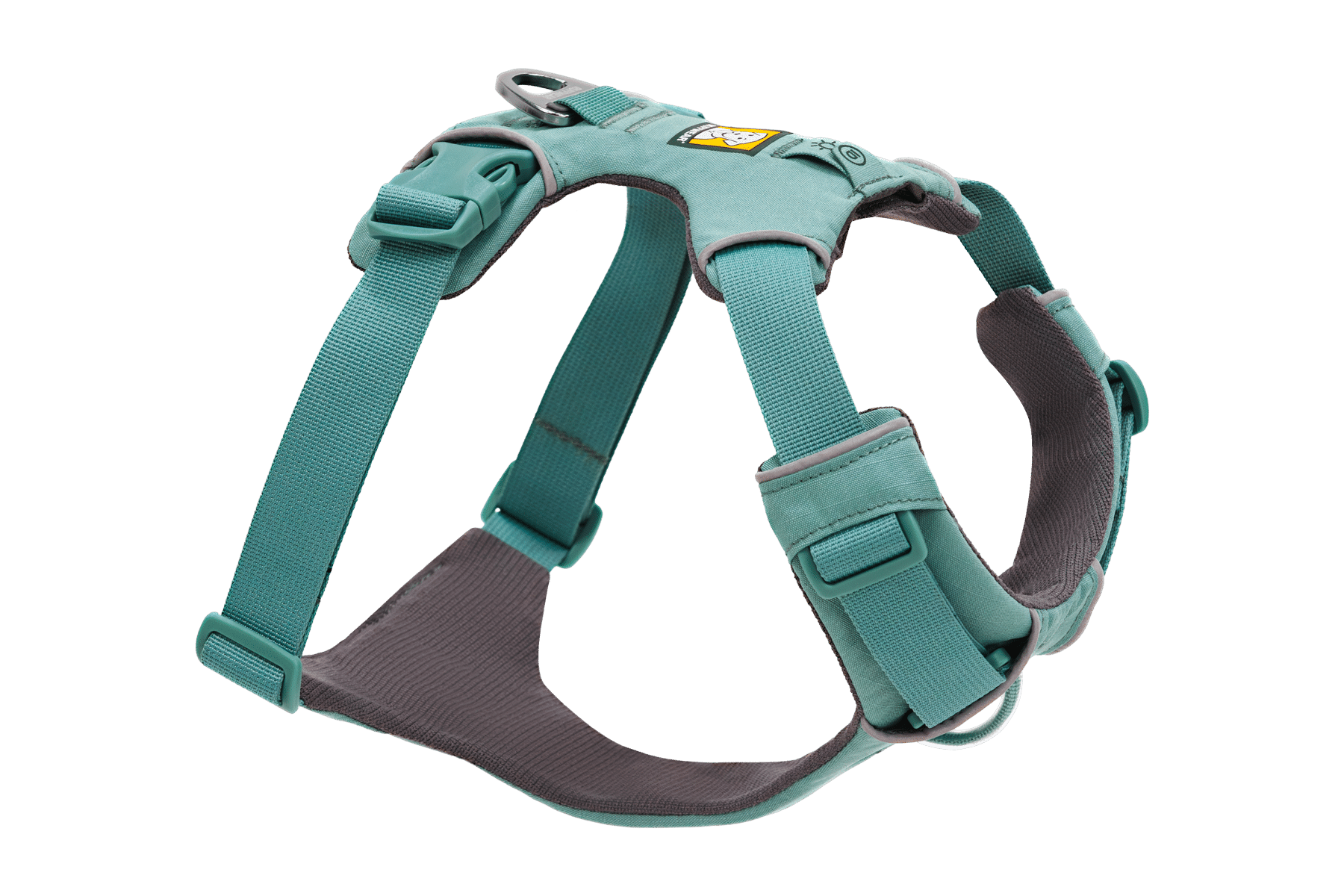
This is an informational guide, not a roundup, but if you’re going to have a harness on for most of a day, the material and fit matter. The Ruffwear Front Range is the most wear-friendly everyday option we’ve tested. Stock verified; tap through for the current live price.
Ruffwear Front Range Harness
If any harness comes closest to being comfortable for most-of-the-day wear, it’s the Front Range. Closed-cell foam padding on the chest and belly panel stops strap dig-in at the most common pressure points, and the breathable polyester mesh lining wicks moisture rather than trapping it, the two biggest causes of chafing and hot spots with extended wear. Four adjustment points mean you can dial in a snug, even fit that doesn’t shift and rub during the day.
What we like
- Closed-cell foam padding removes strap pressure at chest and belly, the first place chafing shows up
- Breathable mesh lining wicks sweat and moisture instead of trapping it against skin
- Four adjustment points give a precise, even fit that doesn’t shift and rub over hours
- Dual leash clips (front + back) make it versatile for reactive dogs who need quick front-clip control
The catches
- Still needs to come off for sleep, crating, and rest periods, no harness is truly 24/7 safe
- Price has risen to $59.95, cheaper options exist if you only need occasional walk-time wear
- Sizing can run large; size down if your dog is between sizes
The honest answer: take it off for rest
Most dogs do not need to wear a harness all day, and most shouldn’t. A harness is designed for walks, outdoor activity, and situations where you need control. When your dog is resting at home, lounging on the sofa, napping, or going into their crate, the harness should come off.
The reason isn’t just comfort. It’s that the risks of extended continuous wear add up in ways that are easy to miss until a problem is already there: fur compressed for hours in the same spots, moisture locked in, straps shifting and rubbing with every small movement. None of these cause instant harm, but leave a harness on day after day and you’ll start to see bald patches, reddened skin, or matting in exactly the areas the straps sit.
The hard rule most vets and trainers agree on: off when you’re not actively using it. On for walks, hikes, training sessions, outings. Off for rest, sleep, crating, and indoor hanging-around time. That one habit prevents almost every harness-related skin issue.
The 5 real risks of leaving a harness on too long
These aren’t hypothetical, they’re the things owners actually find after weeks of not taking the harness off:
1. Chafing and bald spots
The most common problem. Harness straps rub against the same patches of skin and fur with every movement. In short-haired breeds and dogs with thin skin, this shows up as raw, red patches, most often in the armpits (where the front leg straps sit), behind the front legs, and across the chest where the girth strap crosses. The skin doesn’t need to be red and sore for fur loss to happen; even low-level friction over days causes bald spots that take weeks to grow back.
2. Matted and compressed fur
Long-coated breeds. Golden Retrievers, Border Collies, Aussies, Spaniels, develop matting where the harness straps compress and hold the fur flat for hours. Matts aren’t just cosmetic: severe ones pull on the skin, restrict movement, and sometimes have to be cut or professionally groomed out. If you already see strap-shaped flat patches in your dog’s coat after taking the harness off, that’s the early stage.
3. Trapped moisture and skin irritation
Wet fur under a harness, from rain, swimming, sweat on a hot day, can’t dry properly when the straps are holding it against the skin. That creates the conditions for dermatitis, yeast infections, and hot spots, particularly in dogs with skin folds (Bulldogs, Shar-Peis) where moisture already tends to pool. A wet harness on a dog for even a few hours in warm weather is a setup for a vet visit.
4. Snag hazards, especially in a crate
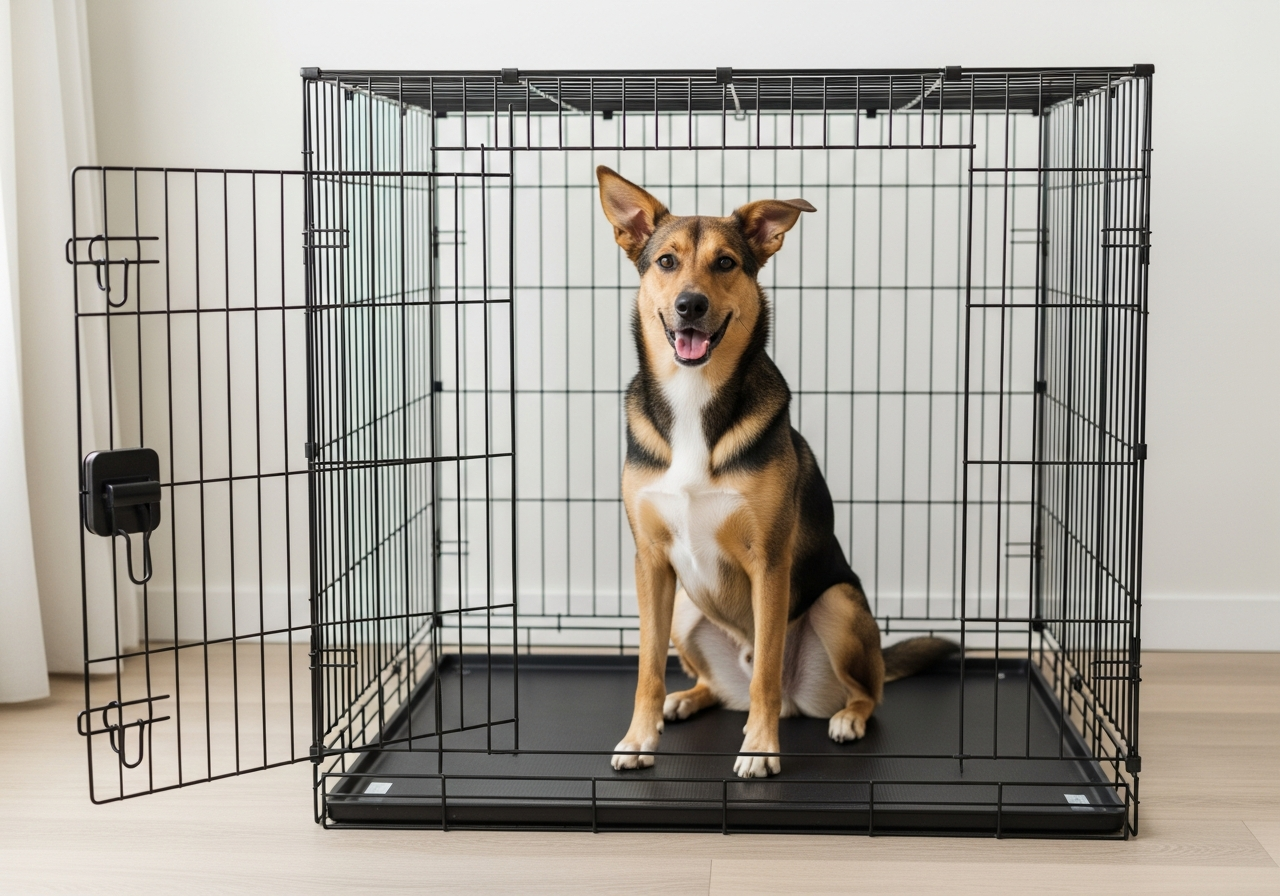
A crate is the most dangerous place for a dog to wear a harness. The D-rings, clips, and even the webbing straps themselves can catch on crate wires, latches, and hooks. A dog that turns over in its sleep, gets spooked, or tries to back up can tangle a strap around a wire in a way that becomes a strangulation risk. This isn’t a remote scenario, it’s the main reason vets and trainers universally say to remove the harness before crating. The same applies to outdoor dog runs with wire fencing.
5. Restriction and discomfort during rest
Dogs sprawl, roll, curl, and shift position constantly when resting. A harness limits that range of motion, straps pulling across the chest when the dog tries to stretch, pressure on the shoulder when lying on their side. For large and giant breeds particularly, restricted sleep positions over time can contribute to joint stiffness. It’s a smaller risk than the others, but it’s a real one for dogs that sleep long hours.
| Risk | Who’s most affected | When it shows up |
|---|---|---|
| Chafing / bald spots | Short-haired dogs, thin-skinned breeds | After days to weeks of continuous wear |
| Matting | Long-coated breeds | After hours of compression in one spot |
| Moisture + skin infection | Dogs with skin folds; post-swimming | After a few hours wet under the harness |
| Snag / entanglement | Any dog in a wire crate or run | Immediately, remove before crating |
| Restricted rest | Large and giant breeds | Accumulates over weeks and months |
When keeping a harness on most of the day is fine
There are situations where a well-fitted harness can stay on for most of an active day without a problem, and where the benefits of having it on outweigh the minor risks of extended wear:
- A full active day out. A hike, a beach day, a long trail run, if your dog is with you and moving for most of the day, a harness on for 6 to 8 hours of activity is fine. The skin is moving and airing out; it’s rest and compression that cause problems, not movement.
- A reactive dog in public. If you have a reactive dog and need instant leash control the moment something appears, keeping the harness on through the whole outing (rather than clipping and unclipping) makes practical sense. A front-clip harness like the Front Range gives you quick control without scrambling to attach a leash.
- Short-term management situations. Moving house, a vet trip that takes most of the day, a boarding or daycare facility where the harness is required, a few hours of wear in a supervised, active context is low-risk.
- A very well-fitted, padded, breathable harness. The harness design is the biggest variable. A cheap H-shaped nylon harness with thin straps and no padding will chafe in two hours. A padded, mesh-lined harness with proper adjustment can go several hours without problems. The design matters more than the duration, up to a point.
The common thread in all the “fine” scenarios: the dog is active and supervised, the harness is well-fitted and padded, and someone is checking for rub marks or discomfort. What is never fine: overnight, unsupervised crate time, or day after day without removal.
Puppies and harnesses: extra caution needed
Puppies need harnesses for walks, but they also need the harness off sooner and more often than adult dogs. Puppy skin is thinner and more sensitive to friction, and their coats aren’t yet fully developed. Bald spots from strap rub show up faster in young dogs, and because puppies are growing rapidly, a harness that fits one week may be digging in the next.
A few puppy-specific rules:
- Check fit every week or two while a puppy is growing fast. Straps that were loose can tighten up quickly, and tight straps are the primary cause of chafing.
- Off after every walk. Puppies sleep a lot, and a harness on a sleeping puppy is compressing developing fur and skin for hours. Remove it as soon as you’re home.
- Never in the crate. Even more important than for adult dogs: puppies don’t yet have the spatial awareness to keep from tangling themselves, and they’re more likely to panic and thrash if caught. Remove the harness before every crate session, no exceptions.
- Watch for early signs: flat-pressed fur, any small patch where the fur looks thinner, or the puppy reaching to scratch or bite at a strap area. These are early chafing signs; take the harness off and let the skin recover before walking again.
For very young puppies (under 10 to 12 weeks), some trainers prefer to start with a flat collar for brief introductory leash sessions rather than a full harness, simply because the proportions are awkward and fit is hard. Ask your vet or trainer what’s appropriate for your breed and size.
Should a dog sleep in a harness? (No, here’s why)
No. Not ever, really, not even for a nap in a crate. The reasons stack up:
- Hours of static compression. Sleep means your dog is in one position for a long time. The straps press against the same spots for 6, 8, even 10 hours. That’s exactly the condition that produces hot spots and hair loss, not movement, but unrelieved pressure.
- No airflow. A dog that isn’t moving isn’t generating airflow under the harness either. Any trapped moisture or warmth stays there. In warm weather especially, this is a setup for skin problems.
- Snag risk in a crate. Covered above but worth repeating here: crate wire can catch harness hardware. A dog that rolls or repositions during sleep can twist a strap around a crate bar. This is an entanglement and strangulation risk that makes night-time harness wear in a crate genuinely dangerous, not just uncomfortable.
- It’s simply uncomfortable. Even the best padded harness digs in when a dog lies on it or rolls onto the chest panel. Dogs can’t reposition a harness that’s strapped on. Removing it gives them genuinely uninterrupted rest.
The practical rule is easy to remember: harness goes on when you pick up the leash; harness comes off when you get home. If you need your dog to wear ID overnight, use a flat collar with tags, not the harness.
How to choose a harness that’s comfortable for extended wear
If your lifestyle means your dog does long active days in a harness, trail work, urban commuting with a reactive dog, service or working dogs, the harness you pick matters. These are the features that separate comfortable extended-wear harnesses from the ones that chafe by hour three:
- Chest and belly padding. Closed-cell foam or neoprene padding on the chest panel and girth strap are the single biggest comfort upgrade over bare webbing. The Ruffwear Front Range uses closed-cell foam here, it doesn’t absorb sweat, it cushions the contact points, and it distributes pressure instead of concentrating it on one narrow strap.
- Breathable mesh lining. The material that sits against the skin should allow airflow and wick moisture away. Look for a mesh or perforated panel, not solid nylon against the coat. This is the feature that prevents the moisture-trapping hot-spot problem.
- Four or more adjustment points. A harness with only chest and girth adjustment often doesn’t account for the individual proportions between a dog’s chest width and depth. More adjustment points mean you can fit the harness to the dog rather than the other way around, and a precise fit is the best prevention for strap shift and rub.
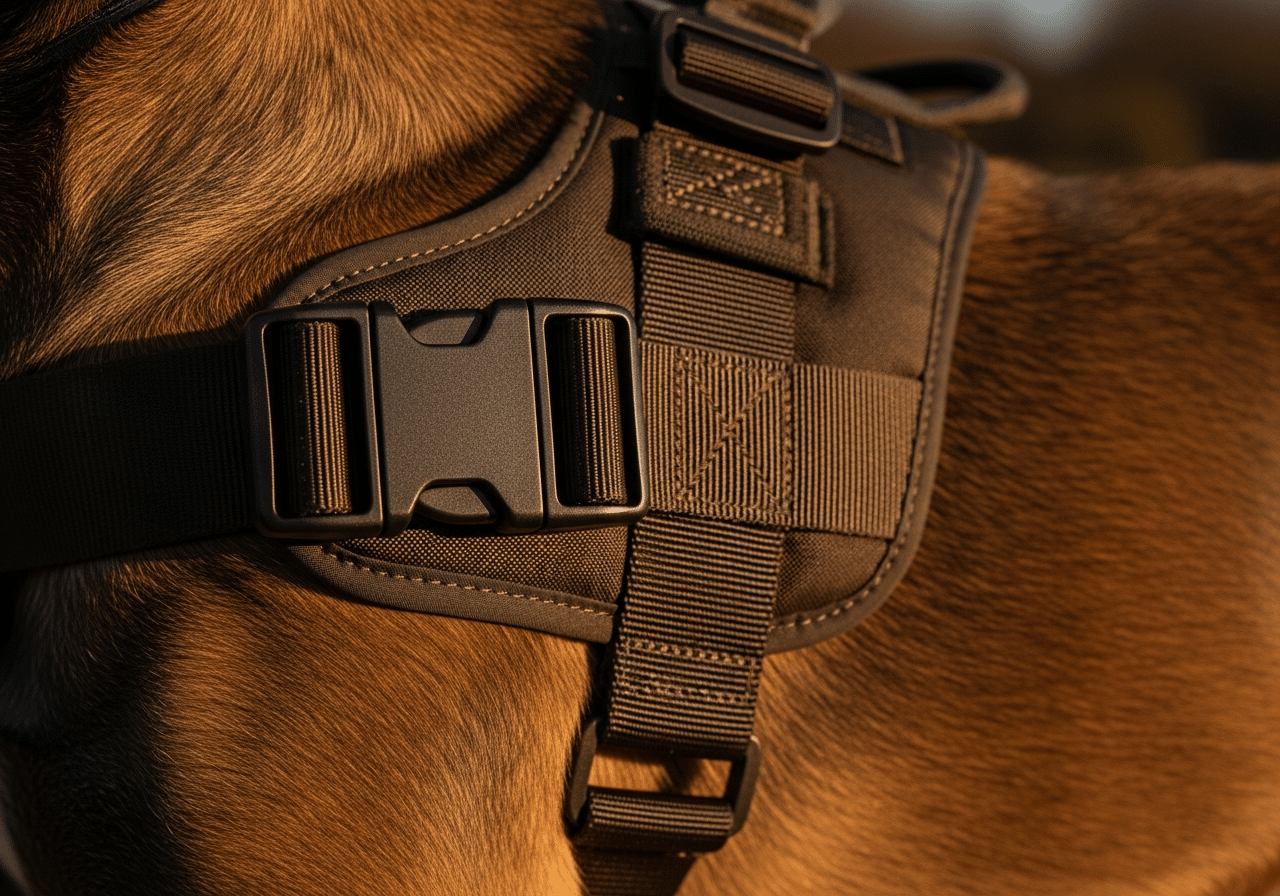
- No hard hardware against the body. Buckles, D-rings, and adjustment sliders should sit on the outside of the harness, not pressed against the dog’s coat. On cheap harnesses, these dig in during rest or movement. Good designs route all hardware to where it can’t make skin contact.
- Lightweight construction. For a full day out, a lighter harness means less fatigue and less pulling on the attachment points. Heavy tactical-style harnesses with MOLLE webbing are purpose-built for working dogs; for everyday extended wear, something in the 200 to 400g range is more appropriate.
In practice, this points to a padded everyday harness rather than a minimalist step-in or a heavy working harness. The Ruffwear Front Range hits all five points at a reasonable price. Julius-K9 and Kurgo also make padded options worth considering; the key is to verify that the padding sits on the chest and belly panel, not just at the collar attachment.
For more on harness types and how fit affects long-term comfort, see our full dog harness guide and our explainer on how to fit a harness correctly.
Signs your dog’s harness is causing problems
Because chafing and skin irritation develop gradually, owners often miss the early signs. Check these areas when you take the harness off, especially after long wear:
- Armpits and behind the front legs: the single most common chafe zone. Part the fur and look for pinkish or red skin, any area where the hair is thinner or shorter, or small scabby patches.
- Across the chest and sternum: where the chest strap crosses. Feel for any roughness or see if the dog flinches when you touch the area.
- Under the girth strap (behind the rib cage): this can get hot and damp after exercise. Check for any pink or moist skin.
- Flat, strap-shaped compression marks in the fur: normal after a walk, should disappear within 30 minutes. If they don’t, or if the fur in those lines looks thinner week over week, the straps are too tight or the harness is on too long.
If you find red, raw, or broken skin: keep the harness off until it’s healed, clean the area gently, and see a vet if it doesn’t improve quickly or looks infected. When you return to harness use, check every day and shorten wear sessions until you’re confident the fit is right.
Harness vs collar: which can stay on longer?
A lot of owners wonder whether a collar or a harness is safer for extended wear. The answer depends on the design, but in general, a well-fitted flat collar is lower-risk for around-the-house wear than a harness, specifically because a flat collar doesn’t cross the shoulders, chest, or armpits where the most sensitive skin is, and because ID tags need to be on something 24/7 anyway.
That said, a collar still shouldn’t be a tight permanent fixture. Most vets recommend a flat collar loose enough to slip two fingers under, removed for crating in the same way a harness should be. No collar or harness is a substitute for a microchip for permanent ID.
For the actual walk and outdoor activity, a harness is generally the better choice: it distributes leash pressure across the chest and back rather than concentrating it at the throat, and for most large breeds it’s simply safer on a leash. The key is treating each item as purpose-built: collar for ID and around the house; harness for walks and outings, then off when you’re home. See our full breakdown of the difference between a dog collar and a harness for the complete comparison.
The bottom line
Should a dog wear a harness all day? For most dogs in most situations: no. A harness is a walking tool, not a permanent accessory. The responsible default is on for walks, training, and active outings, off when you’re home, always off for sleep, always off in a crate.
When extended daily wear is appropriate, active working dogs, reactive dogs out in public all day, full trail days, the harness design is what protects your dog. A padded, breathable, well-fitted harness with hardware away from the skin dramatically reduces the risk of chafing, matting, and moisture problems compared to bare nylon webbing.
Check the skin under the harness regularly. Use the two-finger rule to verify fit every few weeks. Take it off any time your dog is resting for more than a short period. And never, ever leave it on in a crate. Do that and your dog can wear a harness comfortably for every walk and outing for years without a skin problem.
Browse all our tested picks in the best dog harnesses guide, or see how to get a proper fit in our harness fitting guide.
Harness all-day wear: common questions answered
Should a dog wear a harness all day?
No, not as a general rule. A harness should be on during walks, outdoor activity, and training, and off when your dog is resting at home. Extended continuous wear leads to chafing and bald spots where straps rub (especially in the armpits), matting in long-coated breeds, and moisture trapped against the skin. A well-fitted, padded harness can be worn for a full active day out without problems, but should always come off for rest, sleep, and crating.
Can a dog wear a harness all the time?
No. Dogs should not wear a harness around the clock. The two hardest rules: never leave a harness on overnight while the dog sleeps, and always remove it before crating. Static overnight wear causes pressure sores and skin problems from hours of unrelieved strap contact. In a wire crate, harness hardware can snag on the bars and create a strangulation hazard. Use a flat collar for ID tags; use the harness for walks and outdoor time only.
Is it bad to leave a harness on a dog?
Yes, if it’s left on for rest, sleep, or crating. Leaving a harness on a dog that’s inactive, especially overnight, causes chafing and bald spots from static strap pressure, matting in long-coated breeds, trapped moisture, and entanglement risk in wire crates. A few hours of wear during an active outing is not a problem for a healthy adult dog with a well-fitted harness. The issue is continuous, passive wear with no removal.
Should I take my dog’s harness off at night?
Yes, always. At night your dog is stationary for hours, which means strap pressure on the same skin and fur spots with no relief. This is the exact condition that produces chafing, hair loss, and hot spots. In a crate, a harness is also a snag and strangulation risk. Remove the harness when you get home from your last walk of the day, put it back on before the first walk the next morning. If you need your dog to wear ID overnight, use a flat collar with tags instead.
Can a dog wear a harness in a crate?
No, remove the harness before any crate time. The D-rings, buckles, and webbing of a harness can catch on wire crate bars and latches. If the dog rolls, backs up, or panics, the strap can twist around a wire and become a choking or strangulation hazard. This applies during the day as well as at night. It’s one of the firmest rules in dog safety: harness off, always, before crating.
What harness is most comfortable for extended wear?
Look for a padded, breathable everyday harness, closed-cell foam padding on the chest and belly panel, a breathable mesh or perforated lining, four or more adjustment points, and hardware positioned away from the skin. The Ruffwear Front Range is the most tested and recommended everyday harness for extended wear: it has all of these features at a mid-range price. Julius-K9 and Kurgo also make padded options. Even the best harness should come off for sleep and crate time.