 Dog Gear, Sized Right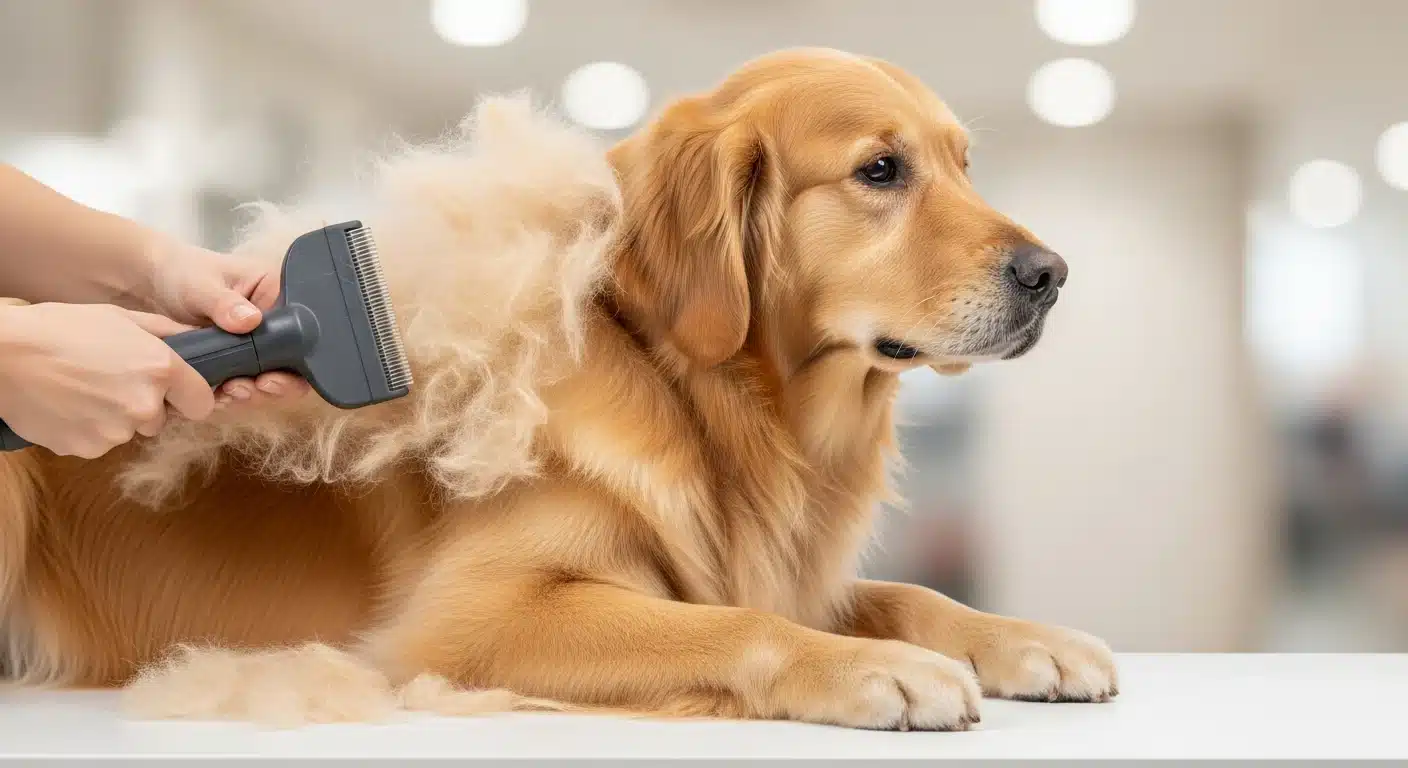
How to Reduce Dog Shedding (What Actually Works)
You can’t stop a healthy dog from shedding, but you can dramatically cut the hair in your home. Here’s what actually moves the needle.
How to reduce dog shedding? The honest answer starts with one important truth: shedding is a normal, healthy biological process, and no product or trick will stop it entirely. What you can do, and what this guide focuses on, is dramatically reduce the hair that ends up on your floors, furniture, and clothes. The single biggest lever is removing loose undercoat before it falls: a good deshedding tool used regularly can cut ambient shedding by 60 to 70% on heavy-shedding breeds. After that come bath cadence, blow-dry technique, diet, and home management. We cover each one honestly, including what doesn’t work (shaving a double coat, supplements as a magic fix), so you can spend your time on what actually matters.
The tool that makes the biggest difference
This is a grooming guide, not a full roundup, but one tool does more for shedding than anything else. It’s verified in stock; tap through for the live price. For a full breakdown of brushes, rakes, and dryers see our best deshedding tools guide.
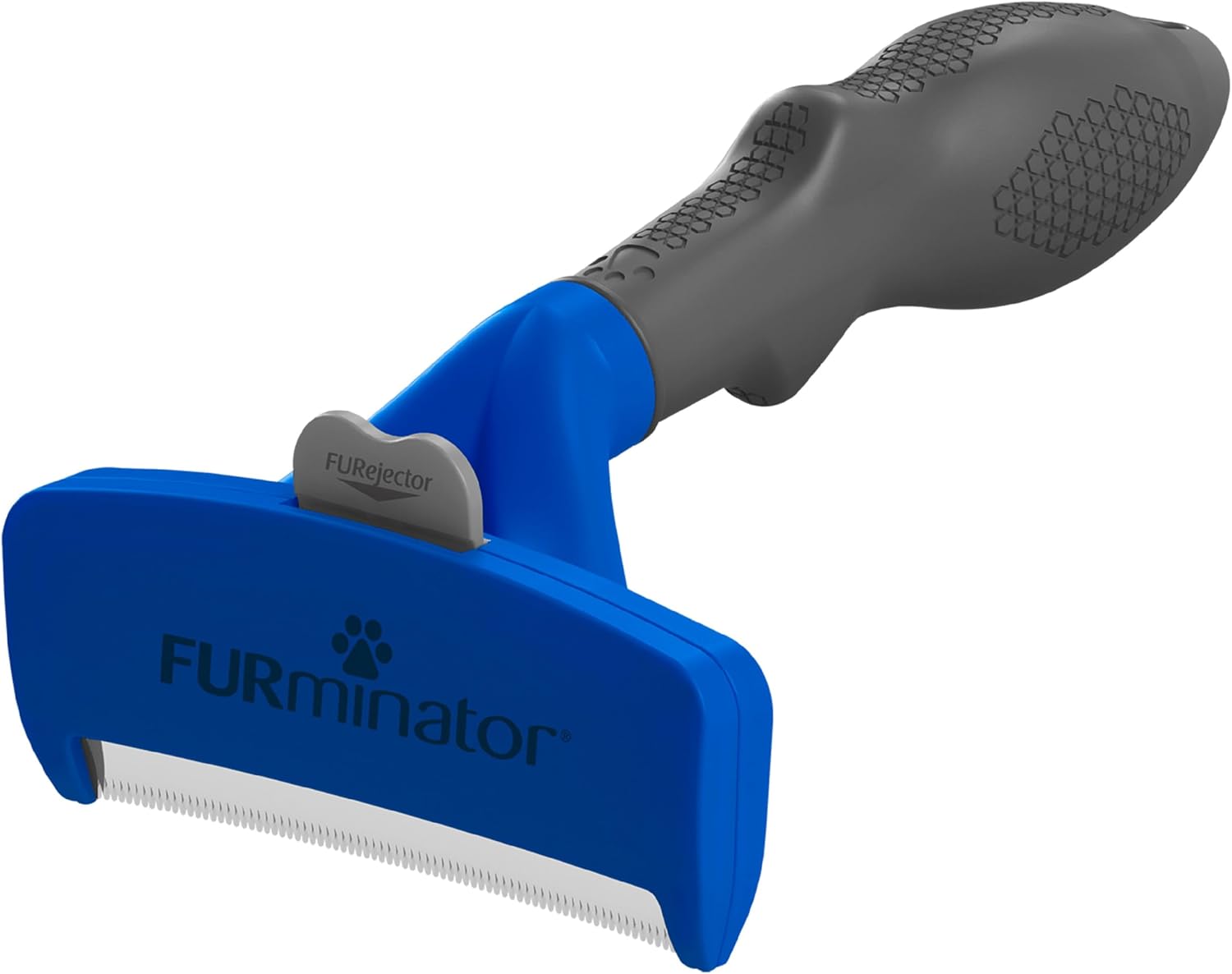
FURminator Undercoat deShedding Tool (Large, Long Hair)
The FURminator’s stainless-steel edge reaches through the topcoat and pulls out dead undercoat, the hair that would have ended up on your couch or floors, before it ever gets there. Used once or twice a week on a double-coated dog, owners consistently report 60 to 70% less ambient shedding. The FURejector button clears the collected fur from the blade with a single press, which makes long sessions much less tedious. Not a magic fix for every coat type, but for heavy-shedding large breeds it’s the highest-leverage grooming investment you can make.
What we like
- Reaches the undercoat, removes loose hair before it lands on furniture
- FURejector button clears collected fur quickly without stopping your session
- Fits large-breed proportions; comfortable, non-slip handle for long grooming sessions
- Genuine, measurable results on double-coated breeds (Goldens, Huskies, Labs, GSD)
The catches
- Not the right tool for single-coated or wire-coated breeds, use a slicker or pin brush instead
- Over-use (more than twice a week) can thin the topcoat, stick to the recommended frequency
- The steel edge is sharp; keep it off irritated or broken skin
Why dogs shed (and why you can’t stop it)
Shedding is driven by photoperiod, the changing length of daylight, and hormonal cycles, not by temperature alone. As days lengthen in spring, dogs dump their dense winter undercoat. As days shorten in fall, they shed their lighter summer coat to make room for the next winter layer. Indoor dogs on artificial light shed more year-round because their coat cycles are less sharply seasonal, but the underlying biology is the same.
This matters because it tells you where not to spend money. No supplement, shampoo, or grooming product can override your dog’s hormonal shedding cycle. What you can control is how much of that loose hair ends up in your home versus on a brush. That’s the game, and it’s very winnable.
| What you can control | What you cannot control |
|---|---|
| How much loose fur is captured before it lands | Whether a healthy dog sheds at all |
| Coat condition (diet, hydration, bathing) | Seasonal shedding driven by daylight cycles |
| How much hair you find on furniture | Breed-level shedding volume |
| Shedding season severity (with preparation) | Genetic coat structure |
Double coat vs single coat: know which you’re dealing with
The most important variable in any shedding strategy is coat type, because the tools and approach that work on one coat can be wrong, or even damaging, on another.
Double-coated breeds (Golden Retrievers, Labrador Retrievers, German Shepherds, Huskies, Malamutes, Great Pyrenees, Bernese Mountain Dogs, most herding and working breeds) have two layers: a dense, insulating undercoat and a longer, weather-resistant topcoat. The undercoat is the source of the majority of household shedding, and the reason these breeds go through the dramatic coat blow twice a year. Deshedding tools and undercoat rakes are designed specifically to target this layer.
Single-coated breeds (Poodles, Shih Tzus, Maltese, Yorkshire Terriers, many doodle crosses) have one layer of hair that grows continuously and falls out less dramatically. They shed, but much more evenly throughout the year. A slicker brush or fine-tooth comb is usually all you need.
The single biggest lever: regular deshedding with the right tool
If you only do one thing on this list, make it this: use an undercoat deshedding tool on your dog once or twice a week. The FURminator and similar tools work by sliding a fine-toothed stainless-steel edge through the topcoat to pull out loose, dead undercoat hair, the exact hair that would otherwise end up on your floors and furniture. The hair doesn’t stop growing, but you’re capturing it before it’s released into your home.
The results on double-coated heavy shedders are genuinely striking. Owners of Huskies and Goldens regularly report going from vacuuming daily to two or three times a week after building a consistent brushing routine. The key words are consistent and correct tool:
- Double-coated breeds: Use a deshedding tool or undercoat rake 1 to 2× per week; daily during coat-blow season. The goal is to get into the undercoat, not just smooth the surface.
- Single-coated breeds: A slicker brush or wide-tooth comb 2 to 3× per week is plenty. Avoid harsh deshedding tools on single coats, you risk pulling healthy hair.
- Short double coats (Lab, Beagle): A rubber curry brush or shorter-toothed deshedding tool works well; the coat is thinner but the undercoat is still there.
Brush with, then against, the direction of hair growth to loosen as much dead coat as possible. Finish in the direction of growth to smooth the topcoat. For a full comparison of tools. FURminator vs undercoat rakes vs deshedding gloves, see our best deshedding tools for dogs guide.
Bathing and blow-drying: the underrated shedding fix
A proper bath-and-dry session is the second most impactful thing you can do, and it’s the one most owners underuse. Hot water and a good deshedding shampoo loosen dead undercoat from the follicles, hair that a dry brush alone would never reach, and the act of lathering works the loose fur to the surface. The catch is that most of the shed fur is still trapped in the coat when the bath ends. Here’s where the blow-dry step matters:
A high-velocity force dryer (like the B-Air Bear Power or equivalent) literally blows the loose coat out of the dog while drying it. Professional groomers routinely remove more fur in a 10-minute force-dry than a dog would shed on its own over two weeks. This is not an exaggeration, if you have a heavily-shedding breed and haven’t tried this, the results will surprise you.
- Bath frequency: Every 4 to 6 weeks for most heavy shedders. More frequent isn’t always better, over-bathing strips natural oils and can worsen skin flaking, which shows up as increased shedding.
- Shampoo: A deshedding or moisturizing formula (look for oatmeal, aloe, or omega-enriched options). Avoid harsh detergent shampoos that dry the skin.
- Dry thoroughly: Don’t let a double-coated dog air-dry damp, it traps moisture against the skin and can lead to hot spots. A force dryer or a regular high-powered dryer on a cool setting gets the undercoat dry.
- Brush after drying: Once dry, run through with a deshedding tool to collect everything the dryer loosened. This is when you’ll get the most out of a single session.
Diet and coat condition: what actually helps
A dog’s coat is a reflection of overall health, and diet is the foundation of coat condition. This doesn’t mean expensive prescription diets, it means making sure your dog is eating a complete, balanced food with adequate protein and fat. Hair is made of protein (keratin), and a diet that’s low in quality protein will show up as a dull, brittle coat that sheds more than it should.
The specific nutrient with the most evidence behind it for coat health is omega-3 fatty acids. Omega-3s (particularly EPA and DHA, found in fish oil) support skin barrier function and reduce inflammation, both of which contribute to a healthier coat that sheds less abnormally. A daily fish oil supplement appropriate for your dog’s weight is one of the more defensible additions to a shedding-reduction routine. Look for a product formulated for dogs with a clear EPA+DHA label rather than a generic “omega blend.”
Hydration matters too. Dehydrated dogs develop dry skin, and dry skin sheds more. If your dog is on a dry kibble diet, make sure they’re drinking enough water, and consider adding a splash of low-sodium broth to their bowl if they’re reluctant drinkers.
NEVER shave a double-coated dog
This one deserves its own section because the misconception is so widespread. It seems logical: if you shave the coat, there’s less hair to shed, right? Wrong, and here’s why it backfires.
A double coat has two layers that grow at different rates and serve different functions. The topcoat (guard hairs) regulates temperature in both directions, it insulates against cold and reflects heat in summer. The undercoat provides insulation. When you shave a double coat, you disrupt the relationship between these two layers. The undercoat often grows back faster and coarser than the topcoat, leading to a condition called post-clipping alopecia, a patchy, uneven regrowth that can be permanent in some dogs.
- Shedding doesn’t decrease. The same amount of hair is shed, it’s just shorter, which makes it harder to collect and easier to embed in fabrics.
- Temperature regulation is compromised. A shaved double-coated dog is more vulnerable to both sunburn and overheating, not less, the coat is what keeps them comfortable.
- Coat texture may change permanently. “Clipper alopecia” or disrupted regrowth is a real and documented outcome, particularly in northern breeds.
If your dog is hot in summer, the answer is brushing the undercoat out (which genuinely helps airflow to the skin), shade, cool water access, and a cooling vest, not shaving. The coat is there for a reason.
Managing coat blow: surviving shedding season
Twice a year, typically spring (March to June) and fall (September to November), double-coated dogs go through a dramatic shed called a coat blow. The winter coat releases in spring to make way for a lighter summer coat; the summer coat releases in fall for the thicker winter growth. For heavy-shedding breeds, this means clumps of undercoat releasing continuously for 2 to 4 weeks per season, the “fur tumbleweeds” phenomenon that surprises new large-breed owners every spring.
You can’t stop coat blow, but you can manage it so it doesn’t take over your home:
- Increase brushing frequency to daily during coat blow. Even 10 minutes a day makes a significant dent.
- Do a full bath-and-blow-dry at the start of shedding season to loosen as much dead coat as possible in one go. Many owners take their dog to a professional groomer for a deshedding treatment at this point, it’s worth it.
- Keep a lint roller at every door. Coat blow coincides with trips in and out; catching it at the door keeps it out of the car and off your work clothes.
- Expect it to last 2 to 4 weeks and plan accordingly. It’s not a medical problem, it’s just seasonal. It ends.
For breeds like Huskies, Malamutes, and Great Pyrenees, coat blow can be genuinely overwhelming. If daily brushing at home isn’t keeping up, a professional groomer with a force dryer is a legitimate and cost-effective investment twice a year.
Home management: keeping on top of the hair that does fall
Even with the best grooming routine, some hair will land. These are the home-side tactics that make the most difference:
- Vacuum with a pet-specific model that has strong suction and a motorized brush roll. Standard vacuums can clog quickly on heavy fur. HEPA filtration is worth having for allergy sufferers. Vacuum 2 to 3× per week during coat blow, weekly otherwise.
- Washable furniture covers. Microfiber and tight-weave covers collect less fur than loose-weave fabrics. Having a dedicated washable throw on the couch makes laundry day easier and protects the upholstery.
- Dog bed covers that go in the washing machine. The dog’s own bed is often the single highest-fur-density surface in the house. A machine-washable cover washed weekly cuts the ambient fur load significantly.
- Air purifiers with HEPA filters capture airborne pet dander and fine hair. Helpful for allergy sufferers, less impactful on actual hair accumulation on surfaces.
- Designate a grooming spot outdoors (patio, driveway) so the big shed sessions don’t happen inside. Let the wind carry it, birds actually use dog fur as nesting material.
Quick action checklist: your shedding reduction plan
Here’s the full routine compressed into a checklist. Start with the top items, they have the most impact, and work down:
- ✓ Identify coat type (double vs. single), determines which tools and approach apply to your dog
- ✓ Get the right deshedding tool, undercoat rake or FURminator for double coats; slicker/comb for single coats
- ✓ Brush 2 to 3× per week minimum (daily during coat-blow season); reach into the undercoat, not just the surface
- ✓ Bathe every 4 to 6 weeks with a deshedding or moisturizing shampoo; force-dry or blow-dry thoroughly after
- ✓ Feed a complete, protein-rich diet with adequate omega-3 fats; supplement with fish oil if the coat looks dull or brittle
- ✓ NEVER shave a double coat, it damages the coat, doesn’t reduce shedding, and removes the dog’s natural temperature regulation
- ✓ Prepare for coat blow twice a year with increased brushing frequency and a professional deshedding bath if needed
- ✓ Vacuum 2 to 3× per week with a pet-specific model; use washable furniture covers to make cleanup easier
For more on specific tools, undercoat rakes, deshedding gloves, dryers, and shampoos, see our full deshedding tool guide and the broader dog grooming tools hub. If nail grinding is also on your list, the best dog nail grinders guide covers that separately. And if you want to tackle bathing at home more efficiently, see our how to groom a dog at home walkthrough.
Keep reading: grooming guides
Dog shedding: common questions answered
How do I reduce dog shedding?
The most effective steps are: brush regularly with the right tool (an undercoat deshedding tool or rake for double-coated breeds, a slicker or comb for single-coated breeds), bathe every 4 to 6 weeks with a deshedding shampoo and force-dry thoroughly afterward, and feed a complete diet with adequate omega-3 fatty acids. Used consistently, these three steps can reduce the hair you find in your home by 60 to 70% on heavy-shedding breeds. You can’t stop shedding entirely, it’s a normal biological process, but you can capture most of the loose fur before it lands on your furniture.
Can you stop a dog from shedding?
No, shedding is a normal, healthy biological process driven by hormonal cycles and changes in daylight, and no product or trick will stop it entirely. What you can do is dramatically reduce how much shed hair ends up in your home by removing loose undercoat before it falls, maintaining good coat condition through diet and bathing, and keeping up with home management (vacuuming, washable covers). Brands that promise to “stop” shedding are overstating what’s possible.
What is the best tool to reduce dog shedding?
For double-coated breeds (Goldens, Labradors, Huskies, German Shepherds, and most large working breeds), an undercoat deshedding tool like the FURminator is the most effective single grooming tool. It reaches through the topcoat to pull out dead undercoat, the main source of household shedding, before it falls. A rubber curry brush or shorter deshedding comb works well on short double coats. For single-coated breeds, a slicker brush or wide-tooth comb is the right choice; avoid harsh deshedding tools on single coats.
Should I shave my dog to reduce shedding?
No, especially not a double-coated breed. Shaving does not reduce shedding (the same amount of hair is shed, just shorter and harder to collect), and on double-coated breeds it can permanently damage the coat by disrupting the relationship between the topcoat and undercoat. It also removes the dog’s natural temperature regulation, making them more vulnerable to both heat and cold. The correct approach is regular deshedding brushing to remove loose undercoat, not shaving.
What is a coat blow in dogs?
A coat blow is the dramatic seasonal shed that double-coated dogs go through twice a year, typically in spring (March to June) when the heavy winter undercoat releases, and in fall (September to November) when the lighter summer coat drops. For 2 to 4 weeks, loose undercoat releases in large clumps continuously. It’s completely normal and not a medical problem. The best ways to manage it are increasing brushing to daily during the season and doing a bath-and-force-dry session at the start to loosen as much dead coat as possible at once.
Do omega-3 supplements help with dog shedding?
Omega-3 fatty acids (particularly EPA and DHA from fish oil) support skin barrier function and can contribute to a healthier coat that sheds less abnormally, so they’re a reasonable addition to a shedding-reduction routine, especially if a dog’s coat looks dull or flaky. That said, they’re not a magic fix for normal shedding. If a dog is already eating a complete, balanced diet and the coat is healthy, omega-3 supplements will have modest impact. They work best when the underlying diet or skin condition was already suboptimal.