 Dog Gear, Sized Right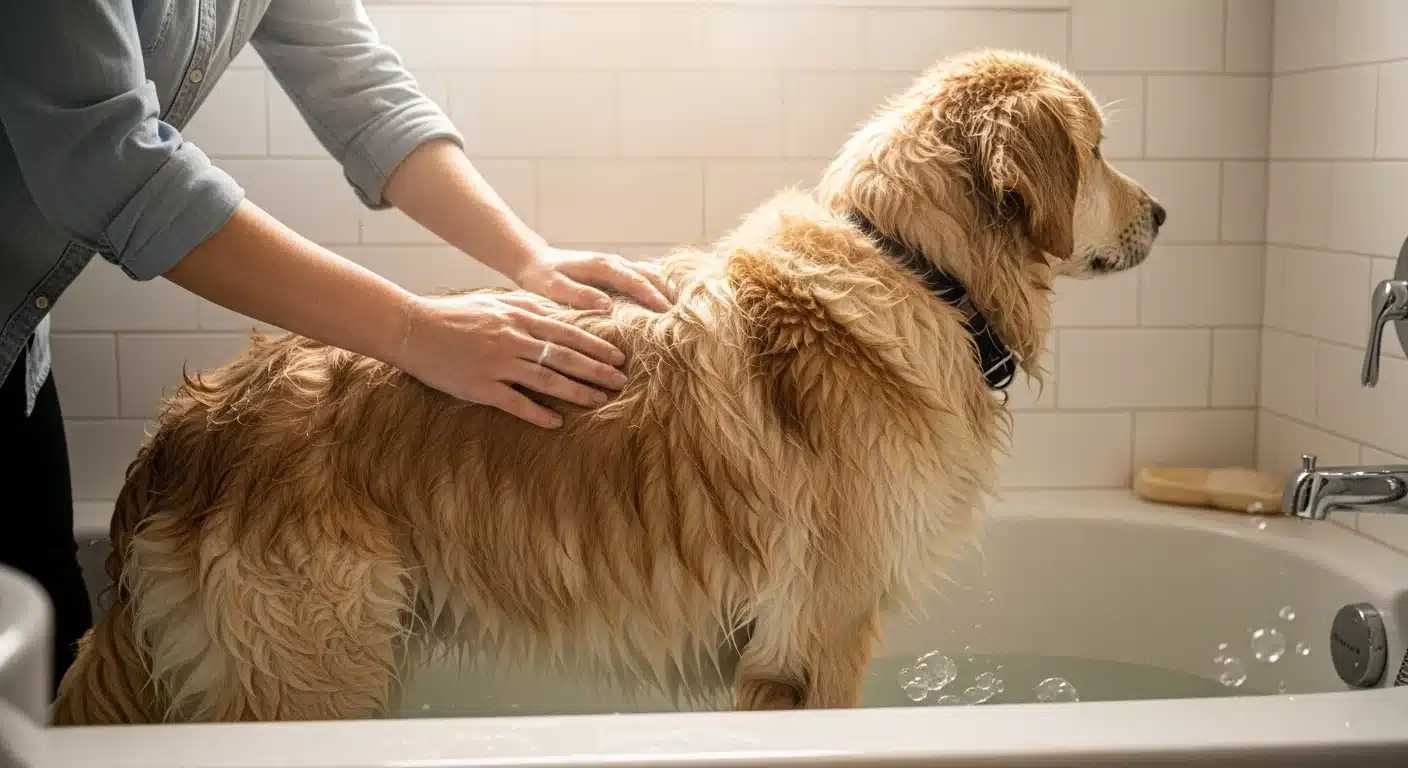
Can You Use Human Shampoo on a Dog?
The honest answer is no, not regularly. Here’s the pH science behind why, what’s safe in a pinch, and how to pick the right shampoo for your dog.
Can you use human shampoo on a dog? The short answer: no, not as a regular habit, and the reason is pH, not marketing. Human skin runs mildly acidic at around 5.5, so human shampoos are formulated to match that. Dog skin is significantly more neutral, sitting between 6.5 and 7.5. That gap sounds small, but pH is a logarithmic scale, meaning the difference is bigger than the numbers suggest, and using a product calibrated for your skin on your dog’s disrupts the protective acid mantle that keeps their coat shiny and their skin healthy. The good news: a single rinse with a mild shampoo in an emergency won’t hurt a healthy dog. The habit of doing it regularly will. This guide covers the science plainly, what to do if you’re caught without dog shampoo, which human products to avoid entirely, and how to pick a dog shampoo that actually works, plus one pre-bath step that makes every shampoo perform better.
The pre-bath step most owners skip
Switching to a dog-formulated shampoo is the main fix, but brushing out the undercoat before the bath is the step that makes any shampoo work better, reduces lather effort, and cuts dry time. Verified in stock; tap through for the live price.
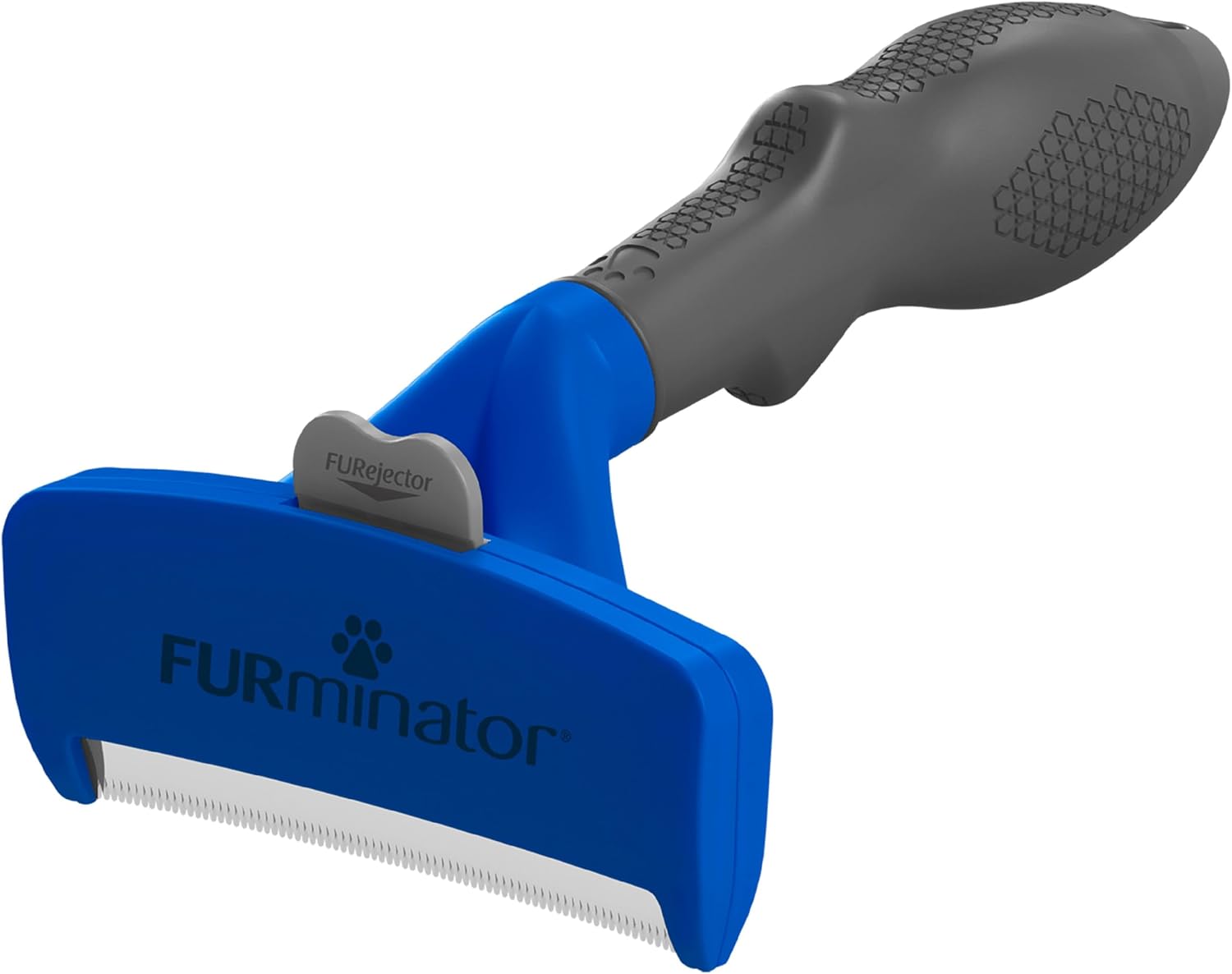
FURminator Undercoat deShedding Tool (Large, Long Hair)
Before you even turn on the tap, a good deshedding brush removes the loose undercoat that traps dirt and prevents shampoo from reaching the skin. The FURminator’s stainless-steel edge reaches through the topcoat to pull out dead undercoat, reducing the load on your dog-formulated shampoo and cutting dry time in half. The FURejector button clears the blade in one click so you spend more time brushing and less time picking hair off the tool.
What we like
- Stainless-steel deShedding edge pulls out dead undercoat before it goes down the drain
- FURejector button clears collected hair in one press, no picking
- Used before bathing it lets shampoo lather evenly all the way to the skin
- Reduces post-bath shedding by removing loose coat while it’s dry and easy to control
The catches
- Not for single-coated or wire-coated breeds, check FURminator’s breed chart first
- Aggressive raking on an already-irritated or matted coat can cause discomfort
- Requires a gentle hand on thin-skinned areas (belly, armpits)
Why pH matters for your dog’s skin
Skin pH is a measure of how acidic or alkaline the skin surface is, on a scale of 0 (most acidic) to 14 (most alkaline). Human skin sits at roughly 5.5, mildly acidic. Dog skin is more neutral, typically between 6.5 and 7.5 depending on breed, body region, and individual variation. That difference matters because every shampoo you buy is pH-balanced for a specific range.
Human shampoos, including most baby shampoos, are formulated to match human skin’s acidity. Applied to a dog, they push the dog’s skin surface in the wrong direction, making it more acidic than it should be. The result is a disrupted acid mantle: the thin protective film that sits on top of the skin, regulates moisture, and acts as the first line of defence against bacteria, environmental allergens, and irritants.
A disrupted acid mantle means the skin struggles to hold moisture, the coat looks dull and feels dry, and the skin becomes more permeable to bacteria and irritants. You usually won’t see it after one bath, you see it after weeks of using the wrong product, when the coat starts to look lifeless and the dog is scratching more than usual.
There’s one more factor worth knowing: dog skin is structurally thinner than human skin. Humans have 10 to 15 layers of cells in the outermost skin layer; dogs have only 3 to 5. That makes a dog’s skin barrier inherently more sensitive to products that weren’t made for it.
What the acid mantle actually does, and what breaks it
The acid mantle is the thin, slightly acidic film that covers the outermost layer of skin (the stratum corneum). It performs three jobs that are easy to take for granted until they stop working:
- Barrier against bacteria and viruses. The mild acidity of the acid mantle inhibits the growth of many harmful microorganisms. Disrupting it lowers that defence.
- Moisture regulation. The mantle helps the skin absorb and retain water, reducing transepidermal water loss. Without it, skin dries out faster.
- Coat oil protection. The healthy acid environment keeps the sebaceous glands producing the right amount of oil to keep the coat shiny. Strip the mantle and you strip those oils with it, leaving the coat dull, brittle, and prone to matting.
What breaks the acid mantle? Products with the wrong pH, which includes most human shampoos. Also high concentrations of harsh surfactants (like sodium lauryl sulfate), synthetic fragrances, and certain essential oils at undiluted strengths. The irony is that some of the things marketed as ‘natural’ or ‘gentle’ on human packaging can still be too strong for a dog’s thinner, more neutral-pH skin.
The skin does rebuild its acid mantle after a disruption, but it takes time (roughly 14 days for full recovery, according to veterinary dermatology sources). If you’re bathing your dog weekly with the wrong shampoo, the mantle never fully recovers between washes.
Can you use human shampoo on a dog in an emergency?
Yes, with the right caveats. If your dog has rolled in something foul, you’re away from home, and there is no dog shampoo within reach, a single use of a mild, fragrance-free human shampoo (or a fragrance-free baby shampoo) on a healthy adult dog is unlikely to cause any lasting harm. The acid mantle can recover from one disruption, especially if you rinse thoroughly and don’t repeat it.
What makes an emergency shampoo ‘mild enough’? The short checklist:
- Fragrance-free or unscented. Synthetic fragrances are among the most common irritants for dogs and their highly sensitive noses.
- No medicated or active ingredients. Dandruff shampoos (containing selenium sulfide or zinc pyrithione), anti-fungal shampoos, or anything with ‘medicated’ on the label are not for dogs, those active ingredients are dosed for human skin at human skin pH.
- No high-concentration essential oils. Tea tree oil in particular can be toxic to dogs even at skin-contact levels, and eucalyptus, peppermint, and citrus oils are also problematic at the concentrations common in human products.
- Plain baby shampoo (Johnson’s original, unscented) is the most commonly cited emergency option by groomers, it’s formulated to be very gentle and low-irritant, though still not pH-matched for dogs.
The key word is ’emergency’ and ‘once.’ If you find yourself reaching for your own shampoo for the third bath in a row, that’s the moment to order dog shampoo, not a reason to conclude it’s fine.
Human shampoo products to avoid entirely
While a mild shampoo in a pinch is low-risk, some human products should never go on a dog, full stop:
| Product type | Why it’s a problem for dogs |
|---|---|
| Dandruff shampoos (Head & Shoulders, Selsun Blue, etc.) | Contain selenium sulfide or zinc pyrithione, active ingredients calibrated for human skin that can cause irritation, redness, and toxicity concerns on dogs |
| Anti-hair-loss / thickening shampoos | Often contain minoxidil or caffeine, minoxidil is acutely toxic to dogs even in small amounts |
| Shampoos with tea tree oil | Tea tree (melaleuca) oil is toxic to dogs at the concentrations typical in human products, signs of poisoning include muscle weakness, tremors, and low body temperature |
| Strong-fragrance products | Synthetic fragrance compounds (often listed simply as ‘fragrance’ or ‘parfum’) can cause skin irritation and respiratory discomfort, dogs’ sense of smell is roughly 50 times more sensitive than humans’ |
| Shampoos with high SLS / SLES concentrations | Sodium lauryl sulfate strips skin oils aggressively, already a concern for sensitive human skin, it’s harsher still on a dog’s thinner skin barrier |
| 2-in-1 or conditioner-combined shampoos | pH and silicone-coating chemistry optimised for human hair cuticles, not a dog’s very different coat structure |
The rule of thumb: the more active ingredients or fragrance a human shampoo has, the less appropriate it is for a dog, even once.
How to choose a dog shampoo that’s actually right for your dog
Now for the useful part. Dog shampoos are formulated to the correct pH range (6.5 to 7.5), which means they clean effectively without disrupting the acid mantle. But not all dog shampoos are the same, here’s how to narrow it down:
- For most dogs: a gentle, fragrance-free formula. If your dog doesn’t have specific skin issues, a simple, unscented dog shampoo with mild surfactants is the default. Fragrance-free is worth seeking out even if your dog has never reacted to scents, it reduces cumulative irritant load on the skin.
- For dry, itchy, or sensitive skin: oatmeal-based shampoo. Colloidal oatmeal is a clinically recognised skin protectant with anti-inflammatory properties. It helps soothe irritation, locks in moisture, and is well-tolerated by even reactive dogs. Look for it listed as Avena sativa (oat) kernel flour or colloidal oatmeal in the ingredients.
- For heavy-shedding or double-coated dogs: deshedding shampoo. These are formulated to loosen the undercoat during the bath, used alongside a deshedding brush before and after, they can noticeably reduce the hair that ends up on your floors.
- For dark coats: colour-enhancing or whitening shampoos designed for dogs. These are coat-specific, but make sure they’re labelled for dogs, human colour-protection shampoos use different chemistry.
- What to avoid in any dog shampoo: synthetic fragrances, artificial dyes, parabens, phthalates, and high-concentration essential oils. A shorter, more recognisable ingredient list is generally a good sign.
If your dog has a diagnosed skin condition, recurring hot spots, allergies, yeast overgrowth, or a bacterial issue, a vet-recommended medicated dog shampoo formulated for that condition is the appropriate tool. That’s a different conversation from the everyday shampoo choice, and one worth having with your vet rather than self-selecting off a shelf.
For a broader overview of grooming tools and products, our dog grooming tools hub covers what’s worth buying and what’s filler.
How to bathe a dog properly (and avoid undoing the shampoo’s work)
Even the right shampoo can leave a dog’s skin worse off if the bath itself isn’t done well. The common mistakes:
- Skipping the pre-bath brush. Loose undercoat tangles when wet, traps shampoo, and prevents it from reaching the skin evenly. Brush thoroughly, especially on double-coated breeds, before the water goes on. A deshedding tool like the FURminator (above) is purpose-built for this step.
- Water that’s too hot. Lukewarm water, comfortable on your wrist, is the target. Hot water dries the skin and can cause discomfort, especially for sensitive dogs.
- Not wetting to the skin. A thick double coat can feel wet on the outside while the inner layers are still dry. Take time to soak all the way through before applying shampoo, or the lather won’t distribute.
- Lathering the face. Keep shampoo well clear of eyes, ears, and nose, use a damp cloth for the face and clean the ear area separately (never pour water into the ear canal).
- Incomplete rinsing. Shampoo residue left on the skin is one of the most common causes of post-bath itching and dull coats. Rinse until the water runs completely clear and the coat feels ‘squeaky’ with no slipperiness from product.
- Skipping the post-bath brush. Brushing again while the coat is still slightly damp prevents tangles from setting and helps the coat dry in the right direction. A slicker brush or undercoat rake works well at this stage.
How often? Most dogs do well with a bath every 4 to 6 weeks. Active or outdoorsy dogs may need more frequent bathing; dogs with dry or sensitive skin may do better bathing less often. Over-bathing, even with the right shampoo, can strip coat oils and irritate skin. If you’re not sure, err on the side of bathing less and brushing more: regular brushing removes dirt, distributes coat oils, and keeps the coat healthier between baths. See our how to groom a dog at home guide for the full routine.
Baby shampoo: is it really safer than regular shampoo?
Baby shampoo, particularly Johnson’s Original Baby Shampoo, is the most commonly suggested emergency substitute among groomers, and there’s a reason for that: it’s formulated to be extremely low in irritants, free of strong fragrances, and gentler on the eye area. For a single emergency use, it’s a better choice than a heavily fragranced adult shampoo.
But ‘gentler than regular human shampoo’ is not the same as ‘right for dogs.’ Baby shampoo is still pH-calibrated for human skin (~5.5 to 6.0), not dog skin (~6.5 to 7.5). Regular use of baby shampoo will still gradually disrupt your dog’s acid mantle, strip coat oils, and leave the skin less protected over time, it just takes a bit longer to show than a harsher product would. Some dogs with particularly sensitive skin react to it after just a few uses.
Signs your dog’s skin has been affected by the wrong shampoo
If you’ve been using human shampoo on your dog for a while, here are the signs the skin barrier has been disrupted:
- Dry, flaky skin, dandruff-like flakes on a dark coat, or visible dryness around the ears, elbows, and back
- Dull or brittle coat, loss of the sheen and softness the coat had before, with more split ends and breakage in the fur
- Increased scratching or licking, especially in the 24 to 48 hours after a bath, suggesting the skin is irritated rather than refreshed
- Redness or irritation along the skin surface, especially on the belly or armpits where the skin is thinner
- Coat that tangles more easily than it used to, which can happen when the oils that normally lubricate the coat shaft are depleted
The fix: switch to a pH-appropriate dog shampoo and give the skin 2 to 3 bath cycles to recover. In most dogs with no underlying skin issues, the coat will start to improve noticeably within a month of switching products. For persistent or severe symptoms, a vet visit is the right call, there may be an underlying issue that the wrong shampoo exacerbated but didn’t cause.
For a broader look at grooming routines that keep skin and coat in good shape, see our best deshedding tool guide and the full grooming tools hub.
Keep reading: grooming guides
Human shampoo on dogs: common questions answered
Can you use human shampoo on a dog?
Not regularly. Human shampoo is formulated for human skin pH (~5.5), which is more acidic than dog skin pH (~6.5 to 7.5). Using it regularly disrupts your dog’s protective acid mantle, leading to dry, flaky skin, a dull coat, and increased vulnerability to bacterial irritation over time. A single use of a mild, fragrance-free shampoo in a genuine emergency is unlikely to cause lasting harm to a healthy adult dog, but it shouldn’t become a habit.
Is human shampoo bad for dogs?
Yes, with regular use. The core problem is pH mismatch: human shampoos are acidic (~5.5 pH) and dog skin is more neutral (~6.5 to 7.5 pH). Over time, using human shampoo strips the acid mantle, depletes coat oils, and leaves the skin dry and more permeable to irritants. One-off use of a mild, fragrance-free product is low-risk for a healthy dog. Medicated shampoos, dandruff shampoos, and products with tea tree oil or other concentrated essential oils should never be used on dogs.
Can you use baby shampoo on a dog?
For a single emergency bath, yes, baby shampoo (especially fragrance-free formulas) is a better emergency option than a strongly fragranced adult shampoo because it’s lower in irritants. But it’s still calibrated for human skin pH and will gradually disrupt your dog’s acid mantle with regular use. Baby shampoo is not a substitute for dog-formulated shampoo and isn’t appropriate for puppies, dogs with skin conditions, or repeated use.
What is the difference between dog shampoo and human shampoo?
The main difference is pH. Dog shampoos are formulated to match dog skin’s neutral pH of 6.5 to 7.5; human shampoos are formulated for human skin’s more acidic pH of ~5.5. Dog skin is also structurally thinner (3 to 5 cell layers versus 10 to 15 in humans), so it’s more sensitive to products with the wrong chemistry. Dog shampoos also avoid ingredients like high-concentration essential oils that are common in human products but potentially harmful to dogs.
How often should you bathe a dog?
Most dogs do well with a bath every 4 to 6 weeks. Very active or outdoor dogs may need more frequent bathing; dogs with dry or sensitive skin often do better with less frequent bathing. Over-bathing, even with the correct dog shampoo, can strip coat oils and irritate skin. Regular brushing between baths distributes coat oils and removes dirt, reducing how often a full bath is needed.
What human shampoo ingredients are dangerous for dogs?
The ones to avoid most urgently: tea tree oil (toxic to dogs even at skin-contact levels), minoxidil (found in hair-loss shampoos, acutely toxic to dogs), selenium sulfide and zinc pyrithione (active ingredients in dandruff shampoos, not safe for dogs), high concentrations of essential oils (eucalyptus, peppermint, citrus), and synthetic fragrances which are major irritants for a dog’s sensitive skin and nose.