 Dog Gear, Sized Right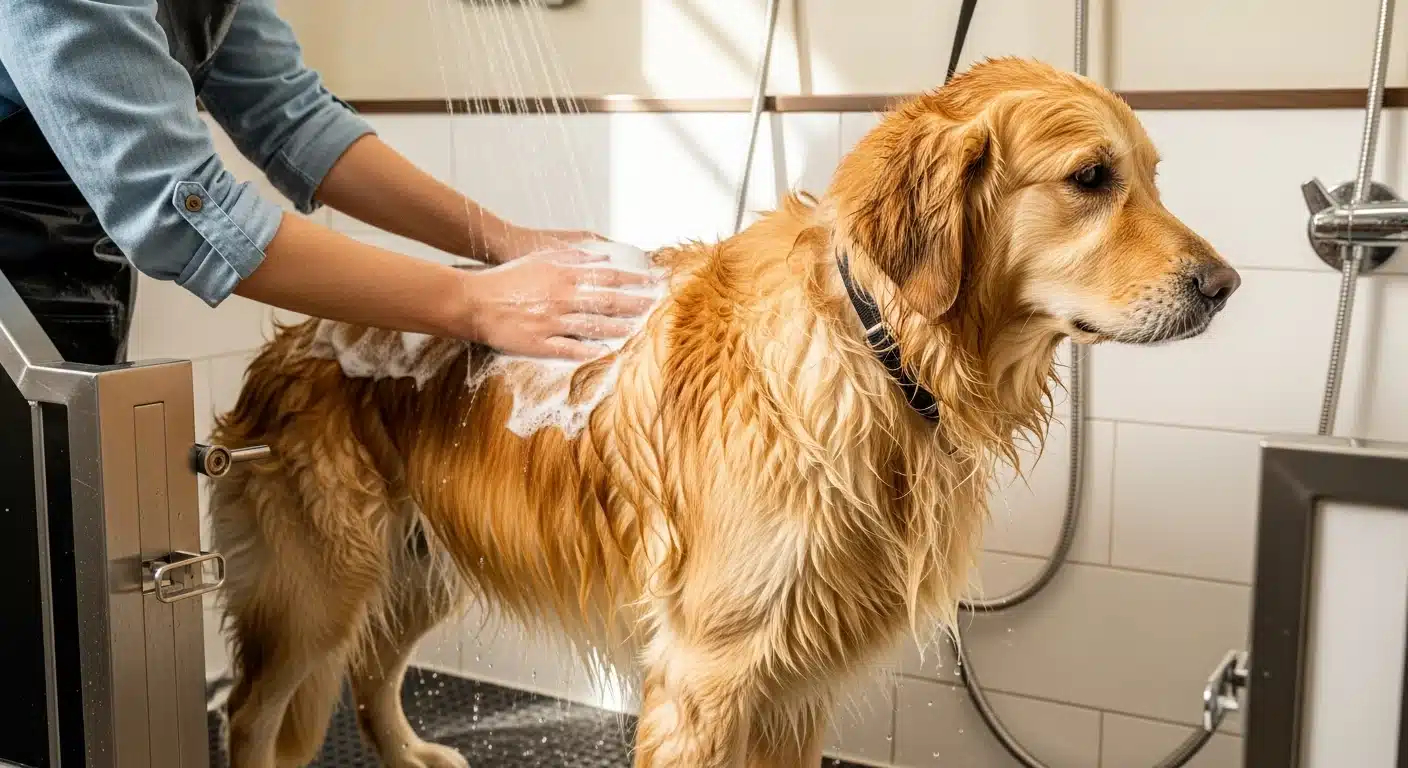
How Often Should You Bathe a Dog?
Most healthy dogs need a bath every 4 to 12 weeks, but coat type, lifestyle, and skin condition change everything. Here’s the honest, specific answer for your dog.
How often should you bathe a dog? The short answer for most healthy dogs: somewhere between every 4 and every 12 weeks, depending almost entirely on coat type and how much time your dog spends rolling in things. That’s a wide range on purpose, a short-coated Labrador that swims weekly needs to be handled very differently from a Husky or a hairless breed. What most owners get wrong is bathing too often: over-bathing strips the natural oils from your dog’s skin and coat, leading to dry, itchy skin, a dull-looking coat, and, paradoxically, more odor as the skin overproduces oil to compensate. Below we break down the real numbers by coat type, explain the over-bathing problem in detail, and cover why regular brushing between baths is the single best thing you can do to reduce how often you need to run the water at all.
The brushing tool that lets you bathe less
This is an informational guide, not a roundup, but the one tool that genuinely changes how often you need to bathe a double-coated dog is a quality deshedding brush. Verified in stock; tap through for the live price.
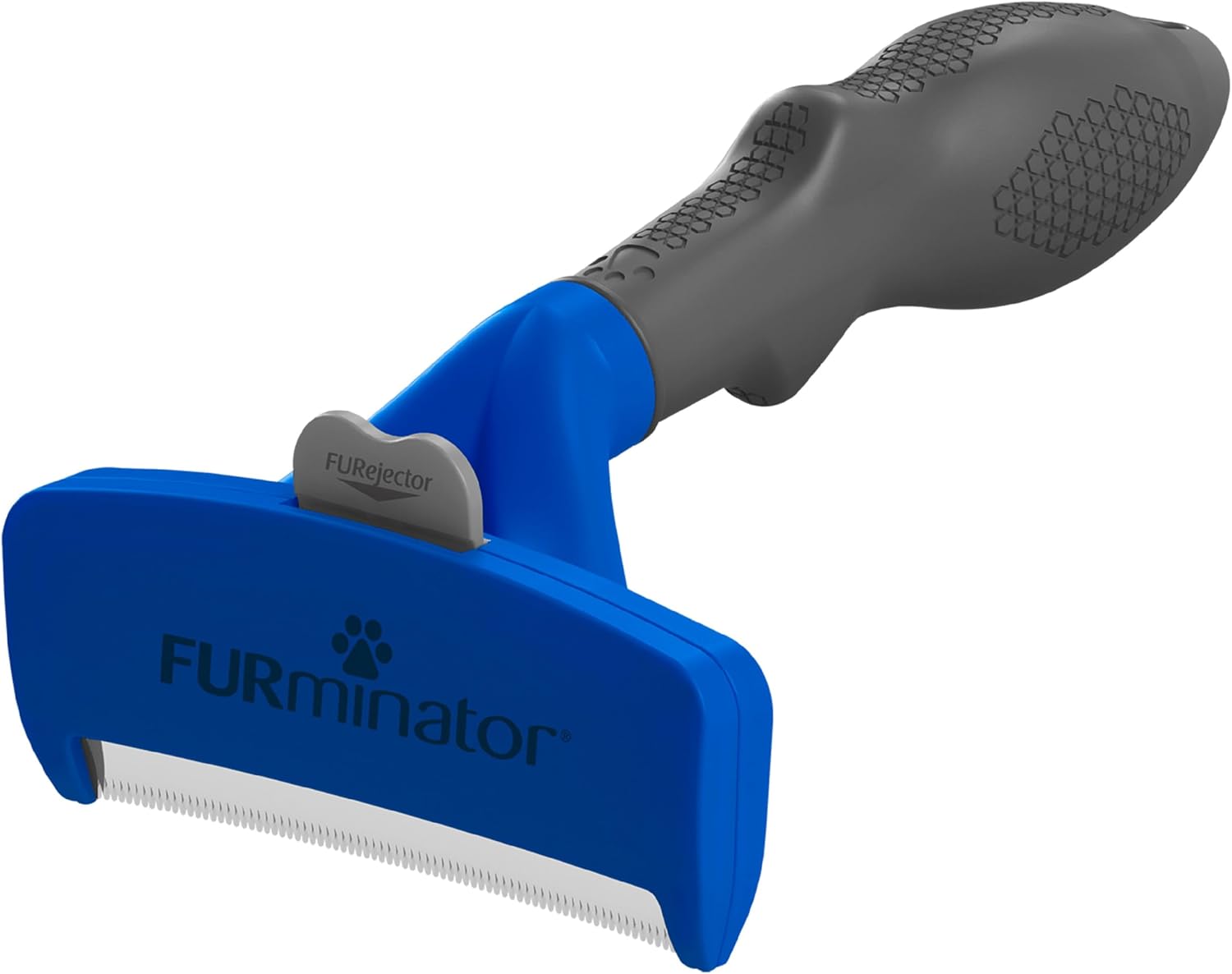
FURminator Undercoat deShedding Tool (Large, Long Hair)
Regular brushing with a deshedding tool is the single most effective way to cut bath frequency for double-coated and heavy-shedding breeds. The FURminator’s stainless-steel edge reaches through the topcoat to pull out loose undercoat before it mats, traps odor, or turns into tumbleweeds, so your dog stays cleaner between baths and each bath is faster and easier. Used once or twice a week, it visibly reduces the loose hair that builds up and makes coats smell stale, and the FURejector button clears collected fur from the tool in one click.
What we like
- Reaches the loose undercoat that regular brushes slide over, the main source of odor between baths
- Weekly use can push a double-coated dog’s bath schedule from every 4 weeks to every 6 to 8 weeks
- Cuts bath-to-dry time significantly by removing dead hair beforehand
- FURejector button clears the tool head in one click, no picking hair out by hand
The catches
- For double and long coats only, not for short smooth, curly, or wire coats
- Short strokes only; pressing too hard or over-working one area can irritate skin
- Match size to your dog, the large version is built for dogs over 50 lb
The general rule: every 4 to 12 weeks for most dogs
If you want a single number to start with: once a month is a reasonable baseline for a typical medium-to-large dog with a normal, healthy coat. Most dogs do perfectly well bathed every 4 to 6 weeks, and many do just fine on an 8 to 12-week schedule with good brushing in between. Professional groomers and the AKC generally land in this range for the majority of breeds.
What that guideline assumes:
- The dog has a healthy skin barrier, no chronic dry skin, no yeast, no medicated bathing protocol
- You’re brushing regularly between baths (more on that below)
- The dog isn’t spending most of their time in mud, saltwater, or rolling in things
- You’re using a dog-specific shampoo formulated for a dog’s skin pH (not human shampoo, which is too acidic)
If all four of those apply, a bath once a month keeps almost any dog clean without stressing their skin. The coat type section below will sharpen that range for your specific dog.
Bath frequency by coat type
Coat type is the biggest driver of how often your dog actually needs a bath. Here’s the breakdown across all the common coat categories, with the practical “when to wash” answer for each:
| Coat Type | Example Breeds | Bath Frequency | Key Notes |
|---|---|---|---|
| Short / smooth coat | Labrador, Boxer, Great Dane, Doberman, Greyhound | Every 6 to 8 weeks | Low maintenance; natural oils distribute well; bathe when visibly dirty or smelly |
| Double coat (dense shedding) | Husky, German Shepherd, Golden Retriever, Corgi, Malamute | Every 6 to 10 weeks | Brush more, bathe less; overbathing breaks down the undercoat structure; a deshedding tool between baths is essential |
| Long / silky coat | Afghan Hound, Maltese, Yorkshire Terrier, Cocker Spaniel | Every 3 to 4 weeks | Long coats tangle and trap dirt faster; more frequent bathing + conditioner keeps the coat manageable |
| Curly / wavy coat | Poodle, Goldendoodle, Portuguese Water Dog, Labradoodle | Every 3 to 6 weeks | Curls trap debris and can mat quickly; regular bathing and brushing both needed; professional groom every 6 to 8 weeks |
| Wire / rough coat | Jack Russell Terrier, Airedale, Brussels Griffon, Schnauzer | Every 6 to 8 weeks | Wiry texture repels dirt well; stripping or hand-stripping the coat is often more important than frequency of bathing |
| Oily / water-repellent coat | Basset Hound, Chesapeake Bay Retriever, Bloodhound | Every 4 to 6 weeks | Oily coats trap and amplify odor faster; a degreasing or clarifying shampoo works better than a standard formula |
| Hairless / skin-fold breeds | Chinese Crested, Xoloitzcuintli, Shar-Pei (folds), Bulldog (folds) | Weekly (skin) / folds: 2 to 3× per week | No coat to regulate the skin; hairless breeds need regular washing to prevent oil and debris buildup; skin folds need cleaning independently of full baths |
Use this as a starting point, not a rigid rule. A dog that plays outdoors every day in wet weather will need baths at the high end of the range (or more), while an indoor dog that stays clean can often stretch to the low end with good brushing.
The over-bathing problem: what happens when you wash too often
This is the part most people don’t know, and it’s the reason vets and professional groomers push back when owners say they bathe their dog every week. A dog’s skin is naturally protected by sebum, a layer of natural oils secreted by the sebaceous glands. These oils coat the hair shafts, keep the skin supple, and help the coat repel water and light dirt. Shampoo, even gentle, dog-specific shampoo, strips those oils every time you use it.
When you bathe more often than the coat needs:
- Dry skin and itching, the skin’s oil layer is gone before it can replenish, leading to flakiness and scratching that looks like allergies but is actually washing-induced irritation
- Dull, brittle coat, without sebum to coat the shafts, the fur loses its gloss and can start to break or frizz
- Rebound oiliness, the skin overproduces oil to compensate, which means a dog that’s bathed weekly can actually end up smelling worse between baths than one bathed monthly
- Disrupted coat structure, particularly in double-coated breeds, over-bathing can soften and break down the undercoat, reducing its natural insulating and water-repelling properties
The fix is simple: space out baths to match your dog’s actual coat type (see the table above), use a dog-formulated shampoo with a pH around 6.5 to 7.5, and always follow up double coats and long coats with a conditioner to help reseal the cuticle. If your dog’s skin is already dry, a moisturizing or oatmeal-based shampoo and a longer interval between baths is usually the first thing to try before assuming a skin condition.
Signs your dog actually needs a bath (and when to wait)
Rather than bathing on a fixed calendar, the best approach is to use time ranges as a safety net and let your dog’s coat tell you when it’s actually bath time. Here’s what to look for:
Signs it’s time for a bath:
- The “dog smell” is noticeable, not the neutral warm-dog scent, but a distinctly musty, sour, or stale odor from the coat. This is usually the clearest sign.
- Visible dirt or debris, dried mud, pollen coating, or grime you can see in the coat
- Greasy, flat coat, the coat looks matted down and feels slightly tacky rather than clean and airy; often means oily buildup that brushing won’t shift
- Excessive scratching with no other cause, sometimes a dirty coat, not allergies, is what’s making the dog itch
- After a swim in a lake, pond, or ocean, natural bodies of water carry bacteria and algae that shouldn’t sit in the coat
- After exposure to anything toxic or strongly smelling, skunk spray, pesticides, road tar, where you don’t need a smell test
Signs you can wait:
- The coat smells neutral and looks airy, the dog is clean, save the bath
- You just bathed less than 3 weeks ago for any coat type other than curly or long, a second bath this soon rarely serves the skin
- The skin looks or feels dry, an extra bath at this point will make it worse, not better
Trust your nose and eyes over the calendar. A dog kept indoors most of the time in a dry climate can realistically go 10 to 12 weeks between baths with no smell issue at all.
How lifestyle changes bath frequency
Beyond coat type, your dog’s daily life is the other major variable. A dog with identical genetics to another can need twice as many baths if their environment is different. The big factors:
- Muddy outdoor dogs, dogs that run trails, hike, or have free yard access in wet weather pick up more dirt and need the higher end of their coat-type range, or spot-cleaning after particularly dirty outings. Feet and belly rinses between full baths (no shampoo, just water) buy time without stressing the skin.
- Swimmers and water dogs, dogs that swim regularly in lakes, rivers, or oceans should be rinsed thoroughly after every swim and bathed at least monthly. Salt, chlorine, and freshwater algae all degrade the coat and skin if left to dry in. Note: rinsing is not the same as bathing, a plain-water rinse doesn’t strip oils and is fine to do frequently.
- Indoor city dogs, a dog that walks clean sidewalks and sleeps on the couch can reliably stretch to the longer end of their coat-type range. Many urban dogs with short coats only need 4 to 6 baths a year.
- Dogs that sleep in the bed, if your dog shares your bed or furniture, you’ll likely want baths at the shorter end of the range for practical hygiene reasons, even if the coat doesn’t strictly need it yet.
- Senior dogs, older dogs’ skin tends to be drier, so bathing less frequently and using a moisturizing shampoo is usually the right adjustment as a dog ages.
The bottom line: lifestyle modifies your coat-type baseline. A Husky that swims in the ocean three times a week is not on the same schedule as a Husky that walks city blocks.
The role of brushing: why regular brushing cuts bath frequency
Here’s something that surprises most dog owners: the most effective thing you can do to reduce how often you need to bathe your dog is to brush more. Brushing does several things that bathing does not:
- Removes loose dirt and debris before it has a chance to work into the coat and start to smell, a quick brush after outdoor time removes a surprising amount of what would otherwise stay and build up
- Distributes natural oils through the coat, which keeps it conditioned and gives it the sheen that means the coat is healthy, oils trapped at the skin root are what ferment and create odor, and brushing spreads them outward
- Removes loose undercoat in shedding breeds, which is the primary source of the musty “dog smell” in double-coated breeds, loose dead undercoat traps odor in a way that the topcoat does not
- Prevents matting in long and curly coats, mats trap moisture, debris, and bacteria, and a matted coat forces you to bathe more often (and more aggressively) to deal with what brushing would have prevented
For double-coated and shedding breeds specifically, a dedicated deshedding tool, not just a regular slicker brush, makes the biggest difference. A deshedding tool (like the FURminator-style edge) is designed to pass through the topcoat and pull loose undercoat out at the root, something a standard brush doesn’t do effectively. Dogs brushed with a proper deshedding tool twice a week often need baths half as often as dogs that only get brushed with a slicker. For the full breakdown by tool type, see our best deshedding tool guide.
The basic brushing schedule to aim for:
- Short / smooth coats: once a week with a rubber curry brush or grooming mitt
- Double coats: 2 to 3 times a week with a slicker brush + deshedding tool, daily during shedding season
- Long / silky coats: daily or every other day to prevent tangles
- Curly / wavy coats: every other day to prevent mat formation
This is also the point at which a full at-home grooming routine starts to pay off, once brushing is consistent, bathing becomes a finishing touch rather than the primary cleaning method.
Water temperature and drying: getting it right
Even perfect bath timing goes sideways if the water is too hot or the dog stays damp for hours afterward. A few basics:
Water temperature: lukewarm, not hot. A dog’s skin is more sensitive to heat than most people assume, and what feels comfortably warm on your hand is often too hot for sustained contact on a dog’s coat. Aim for around body temperature (roughly 100 to 103°F / 38 to 39°C), or slightly below. Hot water dilates pores, increases oil stripping, and can irritate already sensitive skin. Cool or cold water is uncomfortable for the dog and makes rinsing shampoo much harder. Lukewarm, consistent with what you’d use for a baby bath, is the target.
Rinsing: rinse longer than you think you need to. Shampoo residue left in the coat, especially in dense double coats, is a common cause of itching, dullness, and skin irritation post-bath. Work through the coat in sections and keep rinsing until the water runs clear and there’s no slippery feeling when you press through the fur.
Drying: get the coat as dry as possible, as quickly as possible. A damp dog left to air-dry, especially a double-coated or long-coated breed, is at risk of developing hot spots (moist dermatitis) where trapped moisture against warm skin creates conditions for bacterial growth. Towel-dry thoroughly first, then use a high-velocity dog dryer if you have one (see our best dog dryer guide for options, a force dryer on a double coat cuts dry time dramatically). If you’re using a standard hair dryer, use the low-heat or cool setting and keep it moving, never hold it stationary on one spot. For most coats, getting from “soaking wet” to “slightly damp” quickly is far more important than the total dry time.
Double-coated breeds: why less is more
If you have a Husky, German Shepherd, Malamute, Golden Retriever, Samoyed, or any heavy-shedding double-coated breed, this is probably the most important section for you. Double coats are self-maintaining in a way other coats aren’t, the dense undercoat has its own natural cleaning mechanism, and over-washing breaks it down rather than helping it.
What happens when you over-bathe a double coat:
- The undercoat loses its natural oil structure and softens, reducing its insulating and water-repelling properties
- The topcoat guard hairs become brittle and prone to breaking
- Shedding often increases because a healthy undercoat anchors better when it’s not stripped of oils
- The coat takes dramatically longer to dry, increasing the hot-spot risk
For most double-coated breeds, every 6 to 10 weeks is the right range, and the job between baths is brushing, not bathing. A good deshedding session with a proper tool every week removes the loose undercoat that would otherwise build up, trap odor, and make the dog look unkempt, without touching the skin’s oil balance. During heavy shedding seasons (typically spring and fall “coat blows”), increase brushing to daily rather than increasing bath frequency. If the coat is particularly dirty after a muddy outing, a rinse with plain water and a thorough brushing once dry will handle most situations without a full shampoo bath.
For more on managing the undercoat specifically, our deshedding tool guide covers which tools work for which coat types and how to use them correctly.
When to consider more or fewer baths than usual
The coat-type ranges above are for typical healthy dogs. A few situations push you outside that range:
You may need to bathe more often if:
- Your dog has an oily or odor-prone coat (Basset Hound, Cocker Spaniel in full coat), these breeds produce more sebum and trap odor faster than average
- Your dog has skin folds, fold areas need independent cleaning with a dog-safe wipe or damp cloth 2 to 3 times per week, regardless of how often you bathe the rest of the dog
- Your dog rolled in something, this one isn’t negotiable
- Your dog’s coat carries environmental allergens that affect human family members, some allergy-prone households bathe dogs weekly; if this is the reason, discuss a gentle moisturizing protocol with your vet to protect the skin
You may need to bathe less often if:
- Your dog has visibly dry or flaky skin that isn’t explained by another cause, spacing out baths and switching to an oatmeal-based or moisturizing shampoo is often the first adjustment
- Your dog hates baths with a level of stress that outweighs the grooming benefit, for highly bath-averse dogs, extending the interval (within reason) and investing in excellent brushing between sessions reduces the total number of baths per year significantly
- Your dog is elderly, older dogs’ skin is drier and more fragile; every 8 to 12 weeks with a moisturizing shampoo is usually more appropriate than a monthly schedule
A note on medical bathing: if your veterinarian has prescribed medicated shampoo for a specific skin condition, follow their protocol rather than these general guidelines, medicated baths for dermatological conditions operate on a different schedule entirely and your vet’s instructions take priority. This guide covers healthy dogs with normal coats only.
Continue exploring dog grooming
Dog bathing frequency: common questions
How often should you bathe a dog?
Most healthy dogs need a bath every 4 to 12 weeks, depending on coat type. Short-coated dogs (Labs, Boxers, Greyhounds) do well on a 6 to 8 week schedule. Double-coated shedding breeds (Huskies, German Shepherds, Golden Retrievers) should be bathed every 6 to 10 weeks, brushing more often is more important than bathing more often for these breeds. Long and curly coats (Poodles, Goldendoodles, Cocker Spaniels) need baths every 3 to 4 weeks to stay manageable. Hairless breeds need weekly bathing to protect their skin. The key rule for all dogs: don’t bathe more often than their coat actually needs, over-bathing strips natural oils and dries the skin.
Is bathing a dog once a week too often?
For most dogs, yes, once a week is too frequent. Weekly bathing strips the natural oils from your dog’s skin and coat faster than the sebaceous glands can replenish them, leading to dry, itchy skin, a dull coat, and often an increase in odor as the skin overproduces oil to compensate. The main exceptions are hairless breeds (Chinese Crested, Xoloitzcuintli), which need weekly bathing because they have no coat to protect their skin, and dogs on a veterinary medicated-shampoo protocol. For all other dogs, every 3 to 8 weeks is the typical healthy range depending on coat type.
How often should you bathe a double-coated dog?
Every 6 to 10 weeks is the right range for most double-coated breeds (Husky, German Shepherd, Malamute, Golden Retriever, Corgi). The more important maintenance for double coats is regular brushing, ideally with a deshedding tool 2 to 3 times a week, which removes the loose undercoat that traps odor and makes the coat look unkempt. During heavy shedding seasons (spring and fall coat blows), increase brushing to daily rather than increasing bath frequency. Over-bathing a double coat softens the undercoat structure, reduces its insulating properties, and can actually make shedding worse.
Can I bathe my dog every 2 weeks?
For most dogs, every 2 weeks is on the frequent side and will start to strip natural skin oils over time. The exceptions where every 2 weeks is reasonable: long or curly coats that mat quickly (Goldendoodles, Poodles, long Cocker Spaniels) if you’re also brushing frequently in between; oily, odor-prone coats (Basset Hound, Bloodhound) that genuinely build up faster than average; or dogs in a medically supervised bathing routine. For short, smooth, or double coats, a 2-week interval is almost certainly too often. If you’re bathing this frequently because the dog smells between baths, the better fix is increasing brushing, it removes odor at the source more effectively than bathing more often.
Does brushing really reduce how often you need to bathe a dog?
Yes, significantly. Regular brushing removes loose dirt and debris before it can build up and smell, distributes natural oils through the coat to keep it conditioned and odor-resistant, and pulls out the loose undercoat in shedding breeds, which is the main odor source in double-coated dogs. A double-coated dog brushed with a deshedding tool twice a week typically needs baths half as often as one that only gets brushed occasionally. For long and curly coats, brushing prevents matting, which means each bath is easier and less frequent. The combination of less frequent bathing and more regular brushing is what professional groomers consistently recommend for coat health.
What happens if you never bathe your dog?
For most dogs, never bathing isn’t a realistic option, the coat will accumulate dirt, debris, and dead skin cells over time, leading to persistent odor, potential skin irritation, and matting in longer-coated breeds. That said, some dogs (particularly short-coated, clean-living indoor dogs) can go quite a long time, several months, without a full bath if they’re brushed regularly and not visibly dirty. Wild dogs and wolves obviously don’t get bathed, but they have very different activity patterns and coat types from domestic breeds. For any dog, the practical answer is: bathe when the coat genuinely needs it (smell, visible dirt, greasy feel), and use brushing between baths to stretch the interval as long as the dog’s coat type allows.