 Dog Gear, Sized Right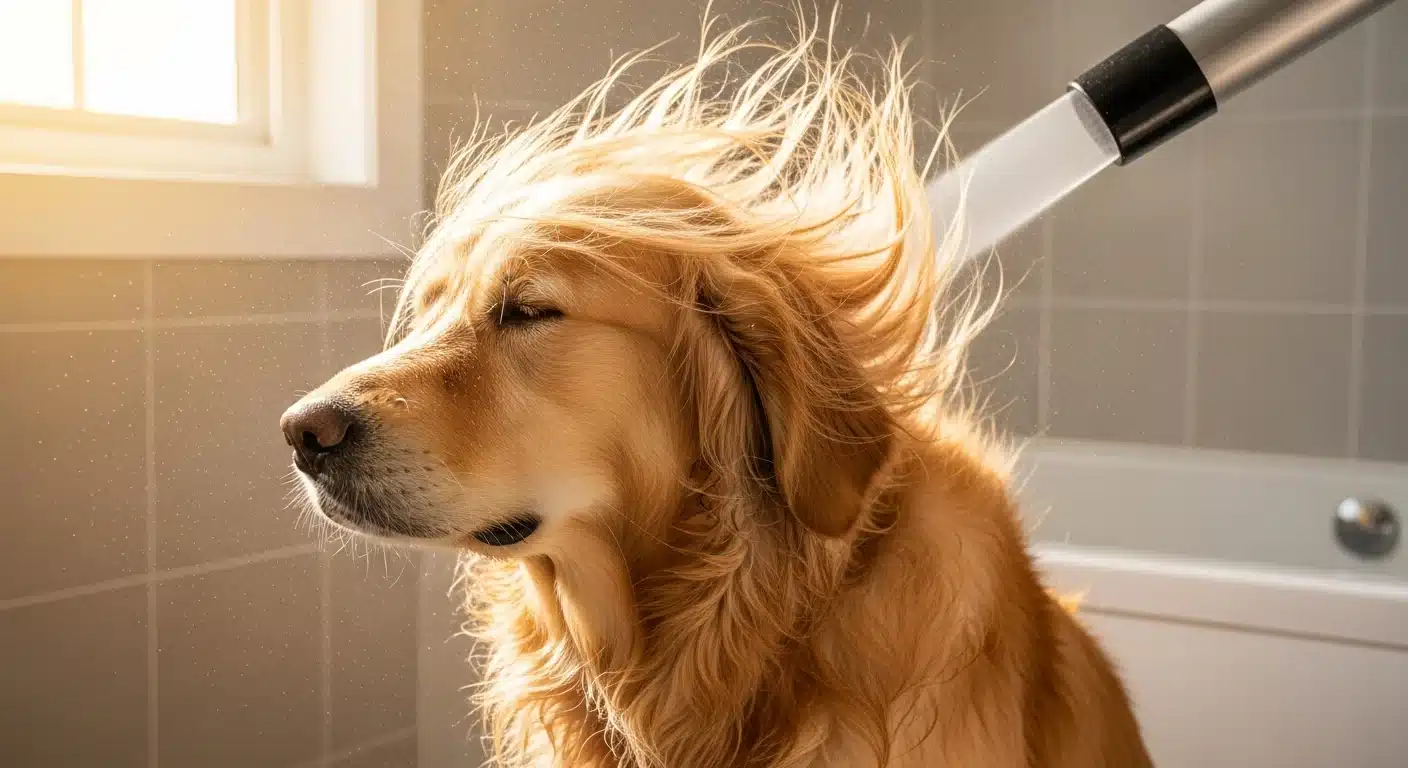
How to Dry a Dog After a Bath (the Right Way)
The method matters, skip proper drying and you’re setting your dog up for matting, skin irritation, and that lingering wet-dog smell. Here’s the honest guide.
Most owners towel-rub their dog until they seem sort of dry, then let them shake it out on the couch. It’s understandable, bath time is already a production. But drying is actually the step where things can quietly go wrong: a damp undercoat left against the skin for hours creates exactly the warm, moist environment where bacteria and yeast thrive, leading to hot spots, a persistent musty smell, and, in thick double coats, matting that forms from the inside out where you can’t see it until it’s serious. This guide covers every drying method honestly (including the one most people use that groomers quietly wince at), ranked by effectiveness, with a step-by-step and a coat-type breakdown so you know exactly what your dog actually needs.
The dryer that actually finishes the job
For short-coated dogs, a good microfiber towel is often enough. For anything with a double coat or thick undercoat, a high-velocity force dryer is the tool that makes the biggest practical difference, this is the one we recommend at home. Verified in stock; tap through for the live price.

B-Air Bear Power BPD-1 High-Velocity Dog Dryer
A 2 HP force dryer that blows water out of the coat rather than evaporating it with heat, the same principle pro groomers use. It reaches all the way through a thick double coat to the skin, cutting drying time from 60+ minutes to 15 to 25 minutes on most large dogs, and because it runs cool, there’s no risk of burning skin or drying out the coat the way a standard hair dryer can.
What we like
- Blows water out rather than baking it off, no burn risk, no overheated coat
- Reaches the undercoat on thick double-coated breeds where a hair dryer simply can’t
- Dramatically cuts drying time, large double coats go from 60+ min to ~20 min
- Filtered intake keeps dust and pet hair out of the motor
The catches
- It’s loud, start sessions short and let your dog adjust gradually
- Bulkier than a hair dryer; you’ll need a spot to store it
- The airflow is powerful enough to tangle long silky coats if you don’t brush while drying
Why proper drying actually matters
A dog that looks dry on the outside can have a completely saturated undercoat against its skin for hours. In double-coated breeds, think German Shepherds, Golden Retrievers, Huskies, Bernese Mountain Dogs, that outer layer dries first and traps moisture underneath. Here’s what that prolonged dampness causes:
- Skin irritation and hot spots. Warm, damp skin is a breeding ground for bacteria and yeast. Hot spots (acute moist dermatitis) can develop within hours on a dog that wasn’t dried properly, especially in skin folds and under the ears.
- Coat matting from the inside out. Wet hair that stays pressed together tangles as it dries. In a dense double coat, mats form deep at the base of the fur where you can’t see them until you try to brush, and by then they’re often too tight to comb out without discomfort.
- The wet-dog smell. That distinctive musty odor isn’t just water, it’s microorganisms on the skin and coat being activated by moisture. A dog that’s thoroughly dried smells clean much longer.
- Cold stress. A wet dog loses body heat fast, especially in a cool house or in winter. Small dogs, puppies, senior dogs, and short-coated breeds chill quickly and can shiver for a long time if you skip drying.
None of this means a quick shake-off after a summer swim is dangerous, context matters. But after a full bath, particularly on any dog with a thick or long coat, thorough drying is genuinely part of the grooming job, not optional.
The four drying methods, ranked honestly
Not every method is equal, and the right one depends on your dog’s coat. Here’s the honest comparison:
| Method | Best for | Speed | Mat risk | Burn / damage risk | Cost |
|---|---|---|---|---|---|
| High-velocity force dryer | Double coats, thick coats, large dogs | Fastest (15 to 25 min) | Very low (blows tangles out) | Negligible (cool air) | $60-$200+ |
| Microfiber towel | Short/smooth coats; first step for any coat | Fast for short coats; slow for thick | Medium (rubbing tangles double coats) | None | $10-$25 |
| Human hair dryer (low/cool) | Small dogs, short coats, touch-ups | Moderate | Low | Moderate if hot, or held still | Already own it |
| Air drying | Short coats in warm weather only | Slowest | High for thick/double coats | None | Free |
Method 1: Microfiber towel (start here, every time)
A good absorbent microfiber towel is always step one, regardless of what you do after. It removes the bulk of the water quickly and reduces the work any dryer has to do. Two key technique notes that actually matter:
- Blot and squeeze, don’t rub. Rubbing in circular motions on a double coat or long coat does exactly what you don’t want: it tangles the hair and mats it while it’s most vulnerable (wet). Instead, press the towel into the fur, squeeze gently, and move to the next section.
- Use a dedicated dog microfiber towel. Standard bath towels are too coarse and don’t absorb nearly as efficiently. A microfiber dog towel can remove 60 to 80% of the water in the first pass.
For short-coated dogs (Boxers, Labs, Greyhounds), a thorough towel dry is often genuinely enough, especially in warm weather. Move section by section: head → neck → back → sides → chest → belly → legs → tail.
Method 2: High-velocity force dryer (the pro method for thick coats)
This is the tool professional groomers use, and it works on a different principle than a hair dryer: instead of using heat to evaporate water, it uses high-speed airflow to physically blow water out of the coat. The difference is significant for double-coated dogs:
- The airstream penetrates through the outer coat and reaches the undercoat and skin, exactly where moisture gets trapped.
- It runs cool or warm, not hot, so there’s no risk of burning the skin or drying out or damaging the coat the way sustained heat can.
- It dramatically cuts drying time: a large Golden Retriever that might take 60+ minutes with a standard hair dryer is typically done in 20 to 25 minutes with a 2 HP force dryer.
- The airflow actually blows loose undercoat out during drying, reducing shedding and preventing the mats that form when wet dead coat clumps together.
The one real challenge: force dryers are loud. Some dogs take to them immediately; others need a gradual introduction over several sessions. Start at a distance, use a low setting, reward calm behavior, and work closer over time. Don’t aim the nozzle directly at the face or ears.
Method 3: Regular hair dryer (use with caution)
The human hair dryer many owners reach for is the method groomers are most cautious about, not because it can’t work, but because it’s easy to use it wrong. The problems:
- Human dryers run hot. The heat settings designed for human hair can reach temperatures that burn a dog’s skin, which is thinner and more heat-sensitive than ours. A dog can’t easily communicate discomfort before the damage is done.
- The airflow is weak. A standard hair dryer lacks the force to penetrate a double coat, so the undercoat stays wet even when the surface seems dry.
- Holding it still is dangerous. The dryer must be kept constantly moving. Holding it in one place for more than a few seconds can burn.
If you do use a regular hair dryer: cool setting only (or the lowest heat), held at least 6 to 8 inches from the skin, moving constantly. It’s a reasonable option for small, short-coated dogs in a pinch, or for finishing touches on the face. For anything with a thick coat, it’s genuinely the wrong tool.
Method 4: Air drying (ok for some coats, risky for others)
Air drying, just letting the dog shake off and drip-dry, is fine for short-coated breeds on warm days. A Beagle or Weimaraner in summer is probably going to air-dry without issue in 20 to 30 minutes. But for double-coated and long-coated dogs, unassisted air drying creates exactly the conditions we’re trying to avoid: prolonged moisture against the skin, coat lying flat and wet for hours, and the smell and skin risks that come with it. In a cool house, any breed left fully wet can get cold and uncomfortable. Air drying after a proper towel dry is a reasonable combination for short coats, but it’s not a complete drying strategy for most dogs.
Step-by-step: how to dry your dog after a bath
This sequence works for any coat type. Adjust the tools at each step based on your dog’s coat (more detail in the coat-type section below).
- Step 1. Squeeze excess water before they shake. Before your dog gets a chance to spray the bathroom walls, gently squeeze water from the coat with your hands, especially from the ears, legs, and tail where it pools. This takes 30 seconds and removes a surprising amount of water.
- Step 2. Towel blot from head to tail. Press a microfiber dog towel firmly into the coat, don’t rub, and work from the head back. Do the head and ears first, then neck, back, sides, chest, belly, legs, paws, and tail. Switch towels or wring out when saturated. For a large double-coated dog, plan on 2 to 3 towels and 5 to 10 minutes for this step.
- Step 3. Dry the ears gently. Fold each ear flap back and use a dry corner of the towel to blot inside the ear leather (the visible inner surface) and the base of the ear canal opening. Do not push anything deep into the ear canal. The goal is to remove visible surface moisture. This general hygiene step helps prevent the moisture buildup that can lead to ear discomfort.
- Step 4. Apply the appropriate dryer. For short-coated dogs, a good towel dry may be sufficient, check the skin by parting the coat; if it feels damp at the base, continue with a dryer on low/cool. For double-coated or long-coated dogs, use a force dryer (or low-heat hair dryer as a backup) while brushing lightly through the coat to keep it separated and drying evenly.
- Step 5. Brush while drying. This is the step most owners skip, and it makes a significant difference. Running a slicker brush or undercoat rake through the coat while the dryer is on separates the hairs so warm air reaches everywhere, removes loose dead coat, and prevents wet hair from clumping into mats as it dries. Do it section by section.
- Step 6. Check the undercoat. When the surface looks dry, part the coat down to the skin in a few places, especially on the back, flanks, and around the neck collar area on double-coated dogs. If the skin still feels damp or cool to the touch, keep going. This is the most common error: stopping when the top layer looks dry while the undercoat is still wet.
- Step 7. Finish and reward. A fully dry dog is noticeably fluffier than a damp one. Give them a final brush-through and reward the whole production generously, making bath and drying a positive experience makes every future session easier.
Drying by coat type
Your dog’s coat type determines how long drying takes and which tools matter most. Here’s the breakdown:
Short and smooth coats (Boxers, Labs, Weimaraners, Greyhounds)
The easiest coat to dry. A thorough microfiber towel-blot and a brief low-heat dryer pass, or just time in a warm room, gets the job done in 10 to 20 minutes. Matting is not a concern. The main risk is just cold, so dry them enough that they’re comfortable, not shivering.
Single-layer long coats (Setters, Afghans, Yorkies)
Takes longer than it looks because fine long hair holds water, but there’s no dense undercoat. Blot carefully, rubbing tangles fine hair badly, then use a low-heat dryer while gently combing through the coat with a wide-tooth comb or slicker brush. Work in sections from root to tip. Plan 30 to 45 minutes for a large dog.
Double coats (Golden Retrievers, Huskies, German Shepherds, Bernese Mountain Dogs)
The coat type where drying technique matters most. A force dryer is the right tool here, it’s the only home option that reliably penetrates the undercoat. Without it, expect 60 to 90+ minutes with a hair dryer, and you’re still likely to leave some moisture against the skin. Brush while you dry, working against the grain and then with it to get through all layers. Part the coat regularly to check skin-level dryness.
Curly and wavy coats (Poodles, Doodles, Spaniels)
Curly coats dry slowly and are mat-prone when wet. Use a force dryer or low-heat hair dryer while running a slicker brush through the coat to keep it straight as it dries (this also produces the fluffy blown-out finish). Letting a curly coat air-dry produces tight ringlets that can knot, it’s not just about speed, it affects the coat structure. You can also learn more about preventing mats by reading our how to groom a dog at home guide for a full pre- and post-bath workflow.
Wire and rough coats (Terriers, Schnauzers)
These naturally more weather-resistant coats dry relatively quickly and are lower-mat-risk than double or curly coats. A towel blot followed by a low-heat dryer pass is usually sufficient. Avoid over-drying, the texture of wire coats is intentional and heavy prolonged heat can soften it.
Drying puppies and senior dogs
Both puppies and older dogs need a bit more care during bath and drying time, not complicated care, just patient, gentle care.
Puppies
A puppy’s first few baths set the template for every bath to come. The goal is to keep the whole experience low-stress and positive, which means keeping it short. After towel drying, use a hair dryer on its lowest, coolest setting, puppies have sensitive skin and can be startled by noise and strong airflow. Hold it at least 12 inches away and keep it moving constantly. Pair every step with treats and calm praise. The force dryer can be introduced gradually over several sessions once your puppy is comfortable with baths in general, starting with it on in the same room (off the dog), then briefly on the body at a distance, then building up.
Small and toy breed puppies in particular chill quickly, if they start shivering, prioritize warmth over thoroughness. Have a warm room ready and wrap them in a dry towel while the dryer finishes the job.
Senior dogs
Older dogs often have thinner skin, arthritis, or less tolerance for standing still through a long grooming session. Keep drying sessions shorter if needed by breaking them up, do the body well, then let the dog rest while you finish legs and paws. Use warm (not hot) air, check frequently by pressing the back of your hand against the skin, and be alert for any signs of discomfort or overheating. A senior dog that’s wet and cold is genuinely uncomfortable, so prioritize getting them warm and dry, just at their pace.
How to dry a dog’s ears (the general hygiene step most owners skip)
Ears deserve their own step, they’re a common spot for moisture to sit unnoticed after a bath. Water pooling in the ear leather or at the base of the ear canal creates the kind of warm, moist environment that can lead to discomfort and odor over time.
After towel-drying the rest of the dog, fold each ear flap back gently and use a dry corner of the towel or a cotton pad to blot the visible inner surface, the “bowl” of the ear leather, and around the base of the ear canal. Do this gently, without pushing anything into the canal itself. You’re removing visible surface moisture only.
If your dog swims frequently or gets full-ear baths often, keeping ears dry after each session is good general hygiene. If you notice persistent odor, head-shaking, or your dog pawing at their ears, have a vet take a look, those are signs that warrant a proper veterinary check.
A tip for bath time: placing a small amount of cotton loosely in the outer ear during the bath can help reduce water entry in the first place. Remove it when you’re done.
Brushing while drying: why it matters
Running a brush through the coat while drying isn’t optional for double-coated and long-coated dogs, it’s the step that keeps mats from forming and cuts drying time significantly. Here’s why it works:
- Separating wet hair prevents it from clumping. Wet hair lying flat against itself is exactly how mats start. A brush keeps individual hairs separated so air can reach them.
- It exposes the undercoat to airflow. On a double-coated dog, brushing against the grain while drying directs air flow toward the skin, the place that stays wet longest.
- It removes loose dead coat while it’s easy to release. After a bath is the ideal time to remove shedding undercoat; it comes out much more easily when wet. A thorough brush-out during drying can dramatically reduce the shedding you see for the next several weeks. Our best deshedding tool guide covers the tools that work best for this step.
For double and thick coats, use a slicker brush or an undercoat rake, not a pin brush, which tends to skim the surface. Work in sections, brushing against the direction of growth (which opens the coat and exposes underlayers) then with the growth direction to finish each section. The coat should feel noticeably lighter and fluffier as you go.
For long single-layer coats, use a wide-tooth comb or a paddle brush and work gently from the tips toward the roots to avoid pulling. You can also take a look at our dedicated dog grooming tools hub for a full rundown of what works for each coat type.
Quick-reference: drying tips by situation
Not every bath is the same. Here’s the fast version for common situations:
- After a swim (not a full bath): A thorough towel-blot and a warm room is usually enough for short-coated dogs. For double-coated dogs, check the undercoat, lake or pool water can saturate a thick coat just as much as a bath, and the same skin-damp risks apply.
- Winter or cold weather: Prioritize getting the dog warm and dry before they go back outside or lie in a cool room. A damp dog in cold air chills much faster than a dry one. Force dryers and even a low-heat hair dryer are both fine here, the goal is thoroughness.
- Anxious dogs: Some dogs find the noise and sensation of any dryer stressful. For them, a thorough microfiber towel dry plus a heated dog blanket or a warm room are kinder options, even if slower. Comfort matters, a stressed dog is harder to groom next time. Keep pairing the experience with high-value treats.
- Very large dogs: A high-velocity force dryer isn’t a luxury for a large double-coated breed, it’s the only practical way to finish the job in a reasonable time. Plan on 20 to 30 minutes with a good force dryer, 60 to 90+ without one. See our best dog dryer guide for a full breakdown of home-use force dryers at different price points.
Keep reading: grooming guides
Drying your dog after a bath: common questions
What is the best way to dry a dog after a bath?
For short-coated dogs, a thorough microfiber towel blot followed by a low-heat dryer pass (or air drying in warm weather) is usually enough. For double-coated and thick-coated dogs, a high-velocity force dryer is the best option, it blows water out of the undercoat rather than relying on heat to evaporate it, cuts drying time dramatically, and eliminates the moisture left against the skin that causes hot spots and matting. Always start with a towel to remove bulk water, then finish with a dryer while brushing the coat to keep hairs separated.
Can I use a regular hair dryer on my dog?
You can, but with important precautions: use the cool or lowest heat setting only, keep it at least 6 to 8 inches from the skin, and never hold it still, keep it constantly moving. Human hair dryers run hot enough to burn a dog’s skin (which is thinner than human skin) if held too close or left in one spot. They also lack the airflow to penetrate a double coat effectively. For small, short-coated dogs, a hair dryer on cool is a reasonable option. For large or double-coated dogs, a high-velocity force dryer is the much better tool.
Is it okay to let a dog air dry after a bath?
For short-coated breeds in warm weather, air drying after a good towel-blot is generally fine. For double-coated, long-coated, or curly-coated dogs, it’s not recommended: prolonged moisture against the skin encourages bacterial and yeast growth, and wet hair lying flat against itself creates mats as it dries. Air drying also means a wet, potentially cold dog in a cool house for hours. A good rule of thumb: if you can part the coat and still feel dampness at the skin level, the dog isn’t dry enough to leave.
How do I dry a dog’s ears after a bath?
Fold the ear flap back gently and use a dry corner of your microfiber towel or a cotton pad to blot the inner ear leather (the visible inner surface of the ear) and around the base of the ear canal. This is a surface moisture step, do not push anything deep into the ear canal. Removing visible dampness from the ear leather after a bath is good general hygiene that reduces the moisture environment where odor and discomfort can develop. If your dog is shaking its head, scratching at ears, or you notice persistent odor, those warrant a veterinary check.
How long does it take to dry a dog after a bath?
It depends entirely on coat type and the drying method. Short-coated dogs can be towel-dry in 10 to 20 minutes. Long single-layer coats with a hair dryer on low take 30 to 45 minutes. Large double-coated dogs. Golden Retrievers, Huskies, German Shepherds, can take 60 to 90+ minutes with a standard hair dryer, but just 20 to 30 minutes with a high-velocity force dryer. The difference is that a force dryer physically blows water out of the undercoat rather than waiting for heat to slowly evaporate it.
Should I brush my dog while drying them?
Yes, especially for double-coated, long-coated, or curly-coated dogs. Brushing while drying separates wet hairs so warm air reaches them individually, directs airflow toward the undercoat on double-coated dogs, and removes loose shedding undercoat that comes out most easily when the coat is damp. Skipping this step is how mats form: wet hair lying together dries tangled. Use a slicker brush or undercoat rake for double coats, a wide-tooth comb for long single-layer coats, and work in sections while the dryer runs.