 Dog Gear, Sized Right
How to Groom a Dog at Home (Step-by-Step)
The complete beginner’s walkthrough, brush, bathe, dry, nails, ears, teeth and trim, in the right order, plus coat-type and frequency tables, the tools you need, and when to leave it to a pro.
Grooming a dog at home is mostly about doing a few simple things in the right order and keeping each session short and positive. This guide walks you through all seven steps, brush, bathe, dry, nails, ears, teeth and trim, with the tools you need for each, how it changes by coat type, how often to do it, and the jobs that are smarter to leave to a professional groomer.
The home-grooming tools we reach for
One pick for each step that needs gear, verified in stock. The full comparisons live in our deep-dive guides linked under each pick.
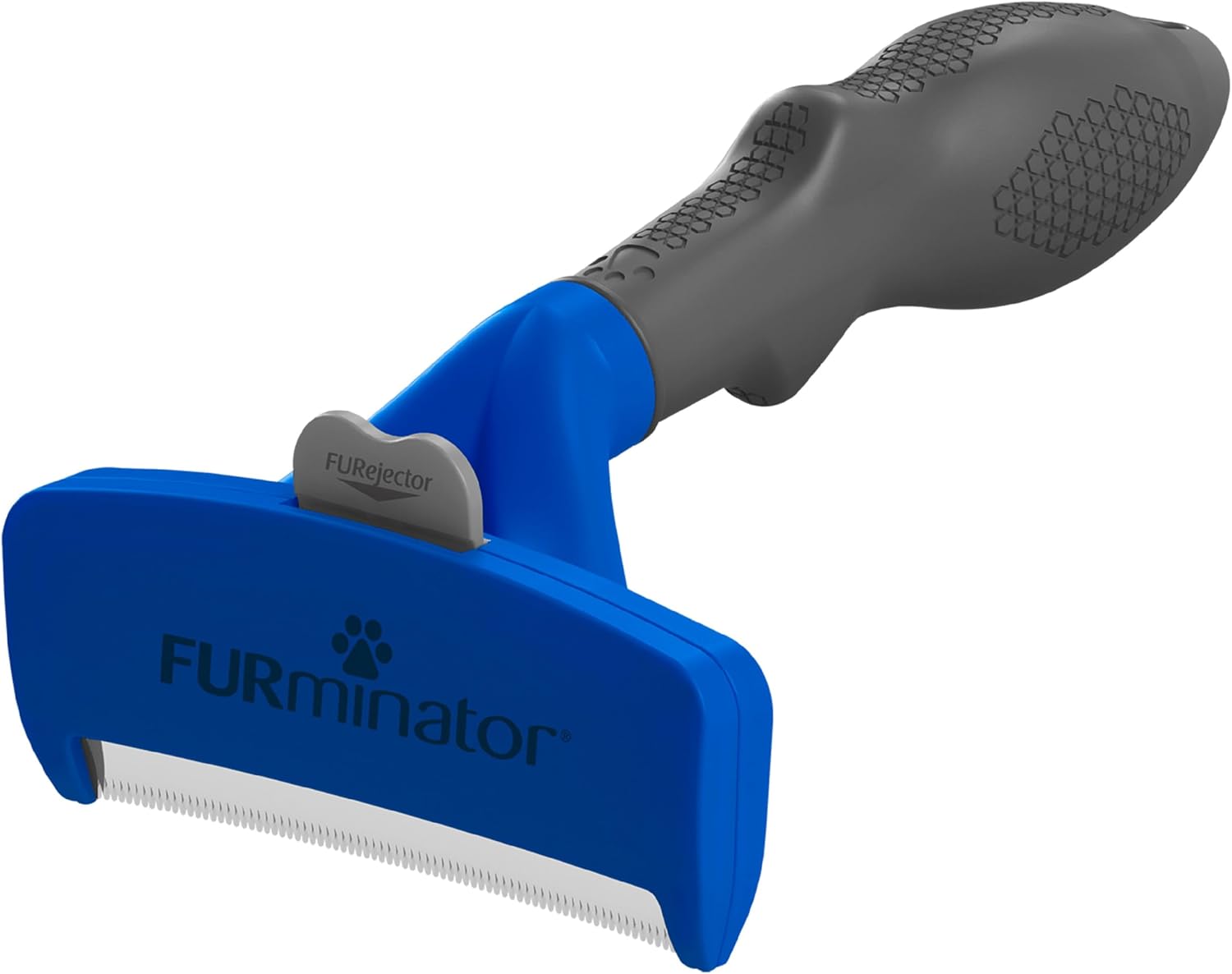
FURminator Large Dog deShedding Tool
If your dog blows its coat or leaves drifts of fur on the couch, a deshedding tool reaches the loose undercoat a normal brush slides right over. Used in the very first grooming step, dry brushing before the bath, it pulls out the dead hair that would otherwise clog your drain and re-coat your floors an hour later. It’s the single most useful tool for double-coated and heavy-shedding breeds, and the one that makes every step after it easier. 📖 See our full best deshedding tools guide →
What we like
- Removes dead undercoat a regular brush leaves behind
- Massively cuts shedding around the house when used weekly
- Makes bathing and drying far quicker and cleaner
- Doubles as your mat-prevention tool between full grooms
The catches
- Not for single-coated or curly/wool coats (use a slicker/comb instead)
- Easy to overdo, short passes, don’t dig at the skin
- Match the edge width to your dog’s size
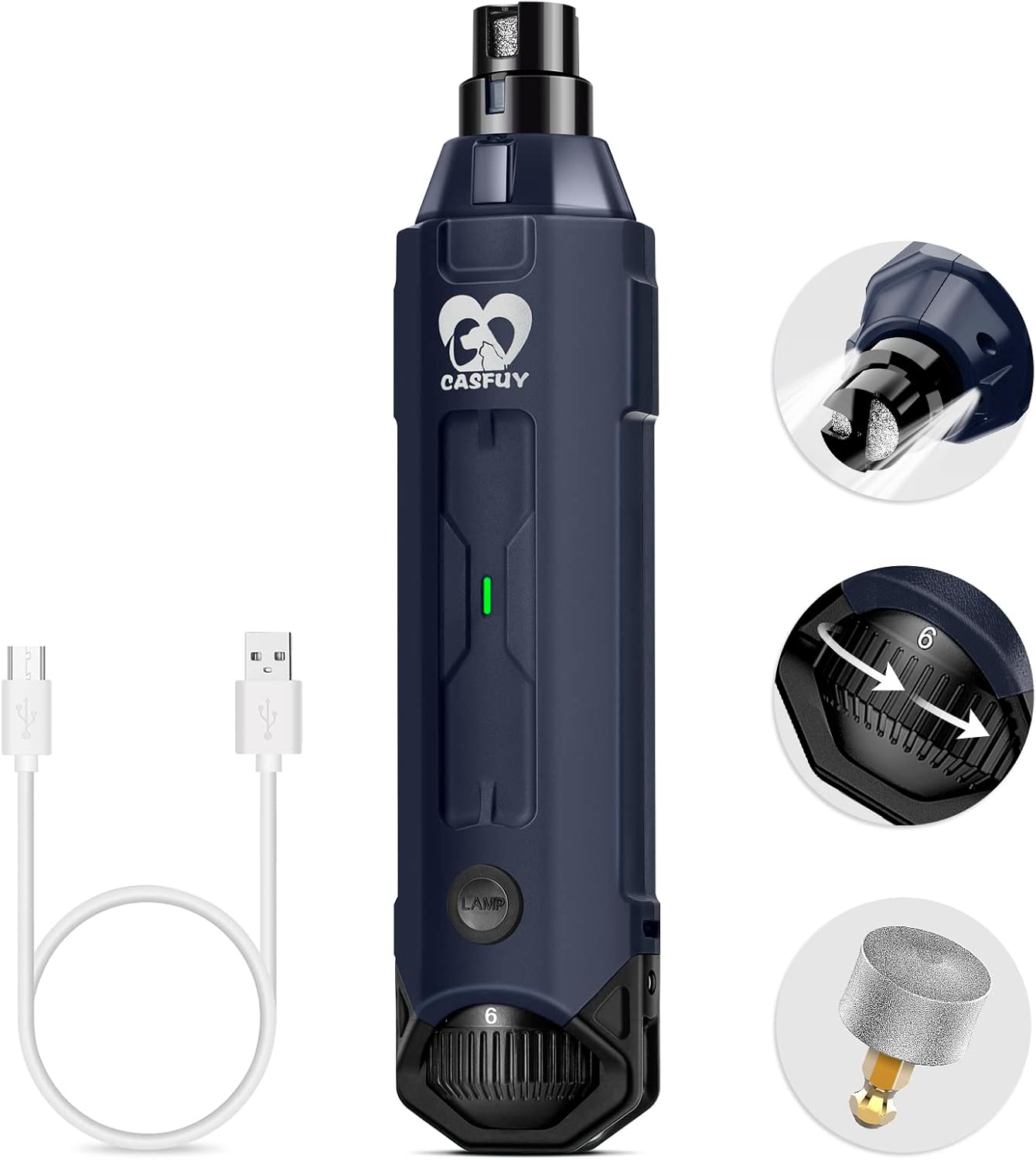
Casfuy 6-Speed Dog Nail Grinder
Nails are where most owners freeze, cut too far and you hit the quick and draw blood. A rotary grinder takes that fear away: instead of one committed snip, you take the nail down a sliver at a time and stop the moment you see the change in the cut surface. It’s quieter and gentler than it sounds once your dog is used to the hum, and it leaves a smooth edge with no sharp snag. For dark nails where you can’t see the quick at all, it’s the safer choice. 📖 See our full best dog nail grinders guide →
What we like
- Take nails down gradually, far less risk of hitting the quick
- Best option when you can’t see the quick on dark nails
- Leaves a smooth edge that won’t scratch or catch
- Low-noise models help nervous dogs accept it
The catches
- Slower than clippers, a few seconds per nail
- The hum and vibration take some getting used to
- Keep long fur clear of the head so it can’t wrap

SHELANDY 3.2HP Pet Hair Force Dryer
A towel only gets a thick or double coat so far, leave it damp and you invite mats, hot spots and that wet-dog smell. A dedicated dog dryer moves a lot of air at low heat (or no heat), so it dries down to the skin without the burn risk of a human hair dryer cranked on high. It also blows out the last of the loose hair as it dries. Introduce it gradually and keep it moving, most dogs settle once they realize it’s just warm wind. 📖 See our full best dog dryers guide →
What we like
- Dries thick and double coats fully, no damp underlayer that mats
- Low-heat air avoids the burn risk of a hot human dryer
- Speeds drying so your dog isn’t standing wet and cold
- Loosens and removes more shed hair as it dries
The catches
- The noise can spook a dog at first, build up slowly
- Bulkier to store than a hand towel
- Always use low/no heat and keep the nozzle moving
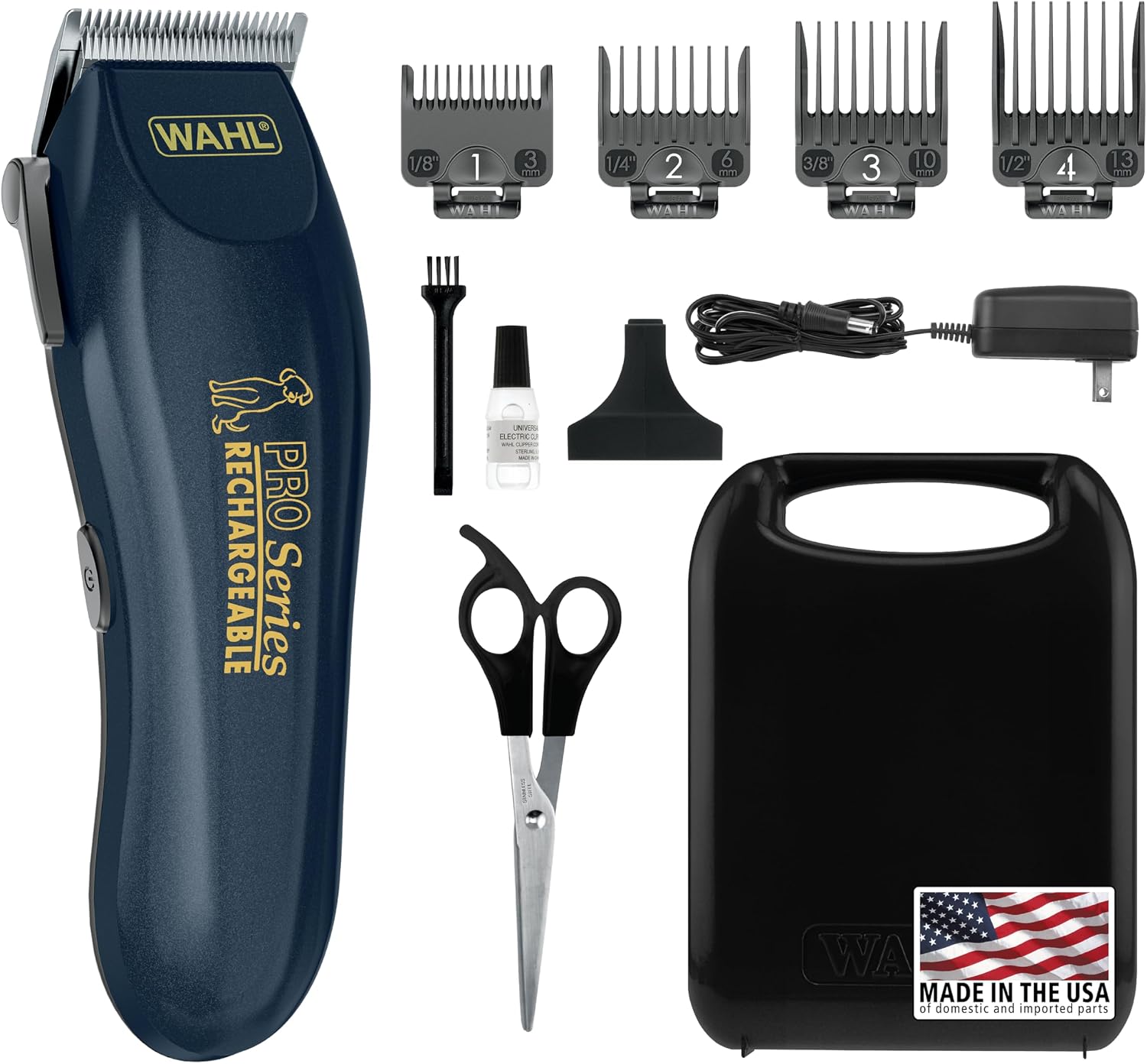
Wahl Deluxe Pro Series Cordless Clipper Kit
If your dog’s coat needs more than a tidy, a sanitary trim, neatening the paws, or a light all-over with a longer guard, a quiet cordless clipper is far safer for a beginner than scissors near the skin. This Wahl kit is a cordless lithium clipper with guide combs, scissors, oil and a case, the value pick for full at-home haircuts. Work on a fully dry, brushed-out coat, go with the lie of the hair, and start with a longer guide comb so you can’t take off too much. Leave the close face-and-eye scissoring and full breed cuts to a groomer until you’re confident.
What we like
- Complete kit, clippers, guide combs, scissors, oil and case
- Cordless lithium so you can move around the dog freely
- Guide combs make it hard to cut too short
- Wahl is the brand professional groomers actually use
The catches
- A clipper is the steepest learning curve, practice on a calm dog
- Never clip a matted coat, it pulls; clear mats first
- Clean and oil the blade so it doesn’t snag or heat up
Before you start: set the scene (and the mood)
The dogs that tolerate home grooming aren’t calmer by nature, their owners just made the first sessions short, positive and predictable. Five minutes of prep saves you a fight:
- Pick a non-slip surface. A bath mat in the tub and a towel on the counter or floor stop the scrambling that makes a dog panic. A dog that feels secure stands still.
- Gather everything first. Brush, shampoo, towels, dryer, nail tool, ear wipes, dog toothbrush, all within reach so you’re never leaving a wet dog to go hunting for a tool.
- Treats on hand. Reward calm behaviour throughout, not just at the end. You’re teaching your dog that grooming pays.
- Go in order. There’s a reason for the sequence below, do it out of order and you’ll fight mats, re-wet a dry coat, or trim hair that isn’t clean.
You don’t have to do all seven steps in one marathon. Brushing and a bath can be one day; nails and teeth another. Short and positive beats long and stressful every time.
In what order do you groom a dog?
This is the question that trips up most beginners, and getting it right makes everything easier. The order is brush → bathe → dry → nails → ears & eyes → teeth → trim. Here’s why each step sits where it does:
| # | Step | Why it’s in this order |
|---|---|---|
| 1 | Brush (dry) | Removes loose hair & mats first, water tightens mats, so never bathe a tangled dog |
| 2 | Bathe | Now that the coat is mat-free, lukewarm water + dog shampoo gets it truly clean |
| 3 | Dry | Dry fully to the skin, a damp undercoat mats and smells; trimming needs a dry coat |
| 4 | Nails | Easier after a bath, nails are softer; do them while your dog is calm |
| 5 | Ears & eyes | Quick clean of the outer ear and around the eyes while you’re already hands-on |
| 6 | Teeth | Finish the head end with a quick brush using dog toothpaste |
| 7 | Trim (if needed) | Only on a fully dry, brushed coat, last, so you’re shaping clean hair |
Step 1. Brush (the most important step)
Brushing is where home grooming is won or lost. Done first and done dry, it removes loose hair, lifts dirt, spreads the coat’s natural oils and, critically, finds and clears mats before water can tighten them. Work in the direction the hair grows, in small sections, paying extra attention to the friction zones: behind the ears, under the legs (the “armpits”), the belly and the britches behind the back legs.
The right brush depends on the coat. A deshedding tool or undercoat rake reaches the dead undercoat on double-coated and heavy-shedding dogs; a slicker and a metal comb work tangles out of long and curly coats; a rubber curry or bristle brush is plenty for a short, smooth coat. If you hit a mat, never yank, hold the hair at the base and tease it apart with your fingers or a comb, or for a tight mat, clip it out rather than pulling at the skin.
This is also your weekly maintenance job between full grooms, and the single biggest lever on how much fur ends up on your furniture.
Step 2. Bathe
Once the coat is brushed out and mat-free, it’s bath time. Use lukewarm water, never hot, and a dog-formulated shampoo. Human shampoo (and even baby shampoo) is the wrong pH for a dog’s skin and strips the coat, so it’s worth getting a proper dog shampoo. Wet the dog thoroughly from the neck back, lather, and work it in down to the skin.
- Protect the eyes and ears. Keep shampoo out of both; a cotton ball loosely in each ear canal stops water getting in (remove it after).
- Save the head for last and use a damp cloth rather than pouring water over the face, most dogs hate water on the head and that’s when they bolt.
- Rinse until the water runs completely clear. Leftover shampoo is one of the most common causes of post-bath itching.
Don’t over-bathe. Most dogs only need a bath every 4 to 8 weeks, washing too often dries the skin and causes more scratching than a little dirt ever would.
Step 3. Dry
Drying matters more than people think. A coat left damp, especially a thick or double coat, mats at the skin, develops hot spots, and holds that wet-dog smell. Towel off the worst first, pressing rather than rubbing hard (rubbing a long coat creates tangles). Then either let a short-coated dog air-dry in a warm room, or use a dog dryer on low or no heat for anything thick or long.
If you reach for a human hair dryer, use the lowest heat setting, hold it well back from the skin, and keep it constantly moving, a dog’s skin burns far more easily than ours. A purpose-built dog dryer moves more air at lower heat, which is both safer and faster, and it blows out the last of the loose undercoat as it dries. Make sure the dog is bone dry to the skin before any trimming.
Step 4. Trim nails (without hitting the quick)
If you can hear nails clicking on the floor, they’re too long, overgrown nails change a dog’s gait and can be genuinely painful. The thing everyone fears is the quick: the vein and nerve that runs partway down the nail. Cut into it and it hurts and bleeds. The trick is to take off small amounts at a time.
- On light nails you can see the pink quick, stop a couple of millimetres short of it.
- On dark nails you can’t see it, so go shallow: shave off a little at a time and stop when you see a small dark dot appear in the centre of the cut surface, that means you’re close.
- A rotary grinder takes nails down gradually and is far more forgiving than clippers, especially on dark nails.
Step 5. Clean ears and eyes
Ears and eyes are a quick clean, not a deep one. For ears, dampen a cotton ball or pad with a dog ear-cleaning solution and wipe only the outer ear and the parts you can see, never push anything (especially a cotton swab) down into the ear canal. Floppy-eared breeds and dogs that swim need this more often. If an ear smells bad, looks red, or has a dark waxy discharge, skip the DIY and see your vet, that’s an infection, not dirt.
For the eyes, wipe gently around them with a soft, damp cloth to clear the crust and tear-stain that collects in the corners, especially on light-coated and flat-faced breeds. Wipe away from the eye, and never use anything sharp or any product meant for human eyes.
Step 6. Brush the teeth
Dental care is the step most owners skip, and the one that quietly causes the most long-term trouble. Use a dog toothbrush (or a finger brush) and dog toothpaste, never human toothpaste, which often contains xylitol and fluoride that are toxic to dogs. Let your dog taste the paste first (they come in meaty flavours for a reason), then lift the lip and brush the outer surfaces of the teeth in small circles, focusing on the gum line where plaque builds.
Daily is ideal; two or three times a week still makes a real difference. Build up slowly, a few teeth at a time at first, and pair it with praise so it becomes a routine your dog accepts rather than fights.
Step 7. Trim the coat (only if it needs it)
Plenty of dogs, anything short-coated, never need a trim at all; brushing is enough. But coats that keep growing (poodles, doodles, many terriers and long-haired breeds) need tidying, and there are jobs a confident owner can do at home: a sanitary trim around the rear, neatening the hair between the paw pads, and a light all-over with a longer guard comb.
- Always work on a fully dry, brushed-out coat. Trimming damp or matted hair gives a ragged, uneven result and can pull the skin.
- Use clippers, not scissors, near the skin. A quiet cordless clipper with a guide comb is far safer for a beginner than scissors, and the guard stops you taking off too much.
- Go with the lie of the hair, in the direction it grows, in slow passes.
- Never clip through a mat, it tugs painfully. Clear mats during brushing first.
Leave the precision work, close face-and-eye scissoring, full breed-standard cuts, hand-stripping a wiry coat, to a professional groomer until you’ve built up real confidence. There’s no shame in doing the bath-and-brush yourself and booking the haircut.
Grooming by coat type
The biggest variable in home grooming isn’t the dog’s size, it’s the coat. The tools and the frequency change completely from a short-haired Lab to a curly doodle. Match your approach to the coat:
| Coat type | Example breeds | Best tools | Watch out for |
|---|---|---|---|
| Short / smooth | Lab, Beagle, Boxer, Pit | Rubber curry or bristle brush; deshedding tool | Sheds more than you’d think, weekly brush |
| Double coat | Husky, German Shepherd, Golden | Undercoat rake + deshedding tool | Never shave, the coat insulates; deshed instead |
| Long / silky | Yorkie, Maltese, Shih Tzu | Pin brush + slicker + metal comb | Mats fast, brush daily, especially behind ears |
| Curly / wool | Poodle, Doodle, Bichon | Slicker + comb; clippers for trims | Mats to the skin, usually needs regular pro trims |
| Wiry | Terriers, Schnauzer | Slicker + comb; hand-stripping (often a pro job) | Clipping softens the wiry texture over time |
How often should you groom your dog?
Grooming isn’t a once-a-season event, it’s a rhythm of small jobs. Brushing is the frequent one; bathing and trimming are occasional. Here’s a realistic schedule for an average dog (adjust up for long or double coats, and during shedding season):
| Task | How often | Note |
|---|---|---|
| Brushing | Short coat ~weekly · long/double coat daily | More during shedding season |
| Bathing | Every 4 to 8 weeks | Over-bathing dries skin and causes itch, don’t overdo it |
| Nails | Every 3 to 4 weeks | If you hear clicking on the floor, they’re too long |
| Ears | Check weekly, clean as needed | Floppy-eared & swimming dogs need more attention |
| Teeth | Ideally daily; at least 2 to 3×/week | Dog toothpaste only, human paste can be toxic |
| Full groom / trim | Every 4 to 8 weeks (coats that grow) | Short coats may never need a trim |
The pattern to remember: brush often, bathe rarely, do nails and teeth on a steady cadence. Frequent brushing is what keeps the big jobs small.
Calming an anxious or wriggly dog
Most grooming “behaviour problems” are really fear of the unfamiliar. You fix them the same way every time, slowly and positively:
- Desensitise the scary tools. Let your dog sniff the clippers or grinder while they’re off, then turned on nearby, then briefly touching, each step paired with treats, long before you actually use them.
- Handle the paws early and often. Dogs guard their feet; touch them daily during cuddles so nail day isn’t the first time.
- Keep sessions short. Two calm minutes that end on a treat beat ten minutes that end in a wrestling match. You can always finish tomorrow.
- Never force it. Forcing a frightened dog teaches it that grooming is something to fear and fight. Back off, shorten the session, reward calm.
For dogs that are genuinely panicked or that snap when handled, don’t push through it at home, a professional groomer or your vet can help, and some anxious dogs do better with a vet’s guidance.
When to see a professional groomer
Doing grooming at home doesn’t mean doing everything at home. It’s smart, not a failure, to hand off the hard jobs. See a pro when:
- The coat is badly matted down to the skin, de-matting a severe coat is a job for clippers and experience, not scissors at home.
- Your dog needs a full breed-standard cut, close face-and-eye scissoring, or hand-stripping of a wiry coat.
- Your dog is fearful or aggressive when handled, forcing it at home does more harm than good.
- You’re facing the nails, ears or anal glands and you’re not confident, there’s no prize for guessing.
A common, sensible split: do the regular brushing, bathing, nails and teeth yourself, and book a groomer every couple of months for the haircut. You keep your dog comfortable and clean between visits, and the pro handles the precision work.
Build your grooming kit, our deep-dive gear guides
Grooming your dog at home, your questions answered
How do I groom my dog at home?
Work through seven steps in order: brush the dry coat to remove loose hair and mats, bathe with lukewarm water and dog shampoo, dry fully to the skin, trim the nails a little at a time, clean the outer ears and eyes, brush the teeth with dog toothpaste, and trim the coat last if it needs it. Keep sessions short and positive, reward calm behaviour, and match your tools to your dog’s coat type. Leave matted coats, full breed cuts and anxious dogs to a professional groomer.
In what order do you groom a dog?
The order is brush → bathe → dry → nails → ears and eyes → teeth → trim. Always brush before bathing, because water tightens tangles into mats. Dry the coat completely before any trimming, and do the haircut last so you’re shaping a clean, dry, mat-free coat.
How often should I groom my dog?
Brush short coats about weekly and long or double coats daily (more during shedding season). Bathe every 4 to 8 weeks, over-bathing dries the skin. Trim nails every 3 to 4 weeks (sooner if you hear clicking on the floor), check ears weekly, and brush teeth ideally daily or at least two to three times a week. Coats that grow usually need a full trim every 4 to 8 weeks.
Do I have to brush my dog before a bath?
Yes, always brush before the bath, never after. Water tightens any existing tangles into tight mats that are then much harder to remove, so a knotted dog comes out of the tub worse than it went in. Brush the dry coat out completely first, working through the friction zones behind the ears and under the legs, then bathe.
How do I trim my dog’s nails without hurting them?
Take off small amounts at a time to avoid the quick, the vein and nerve inside the nail. On light nails, stop a couple of millimetres before the visible pink. On dark nails you can’t see it, so shave off a little at a time and stop when a small dark dot appears in the centre of the cut surface. A rotary grinder is more forgiving than clippers. Keep styptic powder handy in case you nick the quick.
What shampoo and toothpaste can I use on my dog?
Use products made for dogs only. Human shampoo is the wrong pH for a dog’s skin and strips the coat, use a gentle dog-formulated shampoo (an oatmeal formula suits most dogs). For teeth, use dog toothpaste, never human toothpaste, which can contain xylitol and fluoride that are toxic to dogs. Dog toothpastes come in meaty flavours dogs actually like.
Can I shave my double-coated dog to keep it cool?
No, don’t shave double-coated breeds like Huskies, German Shepherds, Golden Retrievers and Corgis. The double coat insulates against heat as well as cold and helps regulate temperature; shaving removes that protection and can cause the coat to regrow patchy or change texture permanently. To keep a double-coated dog cool and comfortable, deshed the loose undercoat regularly instead.
When should I take my dog to a professional groomer instead?
See a pro when the coat is badly matted to the skin, when your dog needs a full breed cut or close scissoring around the face and eyes, when a wiry coat needs hand-stripping, or when your dog is fearful or aggressive about being handled. A sensible routine is to do the brushing, bathing, nails and teeth at home and book a groomer every couple of months for the haircut.