 Dog Gear, Sized Right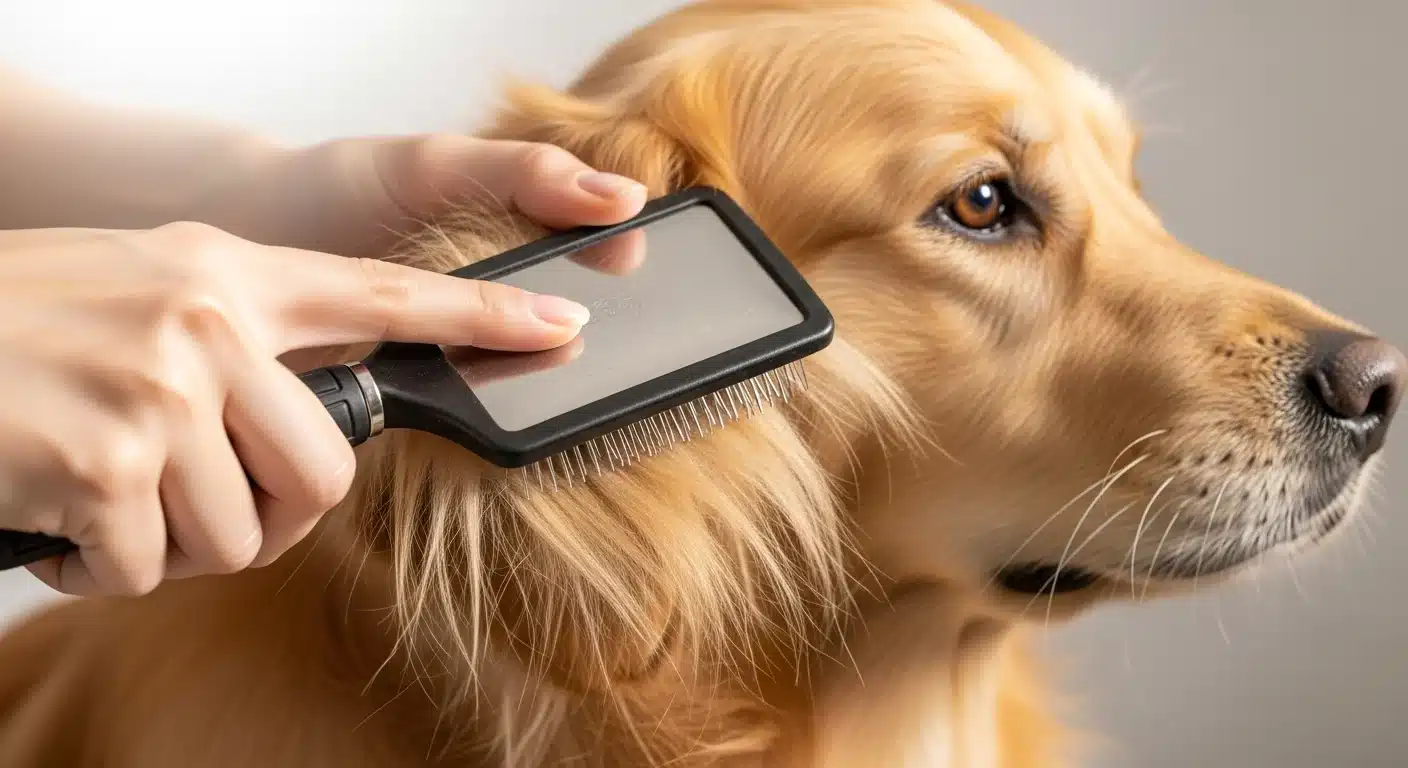
Best Dog Brush by Coat Type (Which One Do You Need?)
The right brush depends entirely on your dog’s coat, here’s exactly which tool to reach for and why.
What brush should I use for my dog? The honest answer: it depends almost entirely on coat type, and using the wrong one doesn’t just waste time, it can cause breakage, skin irritation, or leave the undercoat completely untouched. A slicker brush that’s perfect for a Golden Retriever will do almost nothing useful on a Beagle, and a deshedding tool that transforms a Husky’s shedding will shred a Poodle’s curl pattern. This guide maps every major brush type to the coat it’s designed for, covers the five most common coat types with specific tool recommendations, and includes a quick-reference table so you can identify what you need in under a minute. No fluff, just the practical information that makes grooming sessions shorter and more effective.
Our top pick for double-coat shedders
One product pick here, because the most-asked question is about deshedding, and the FURminator is the tool that genuinely delivers. For other coat types, the right brush is in the guide below. Verified in stock; tap through for the live price.
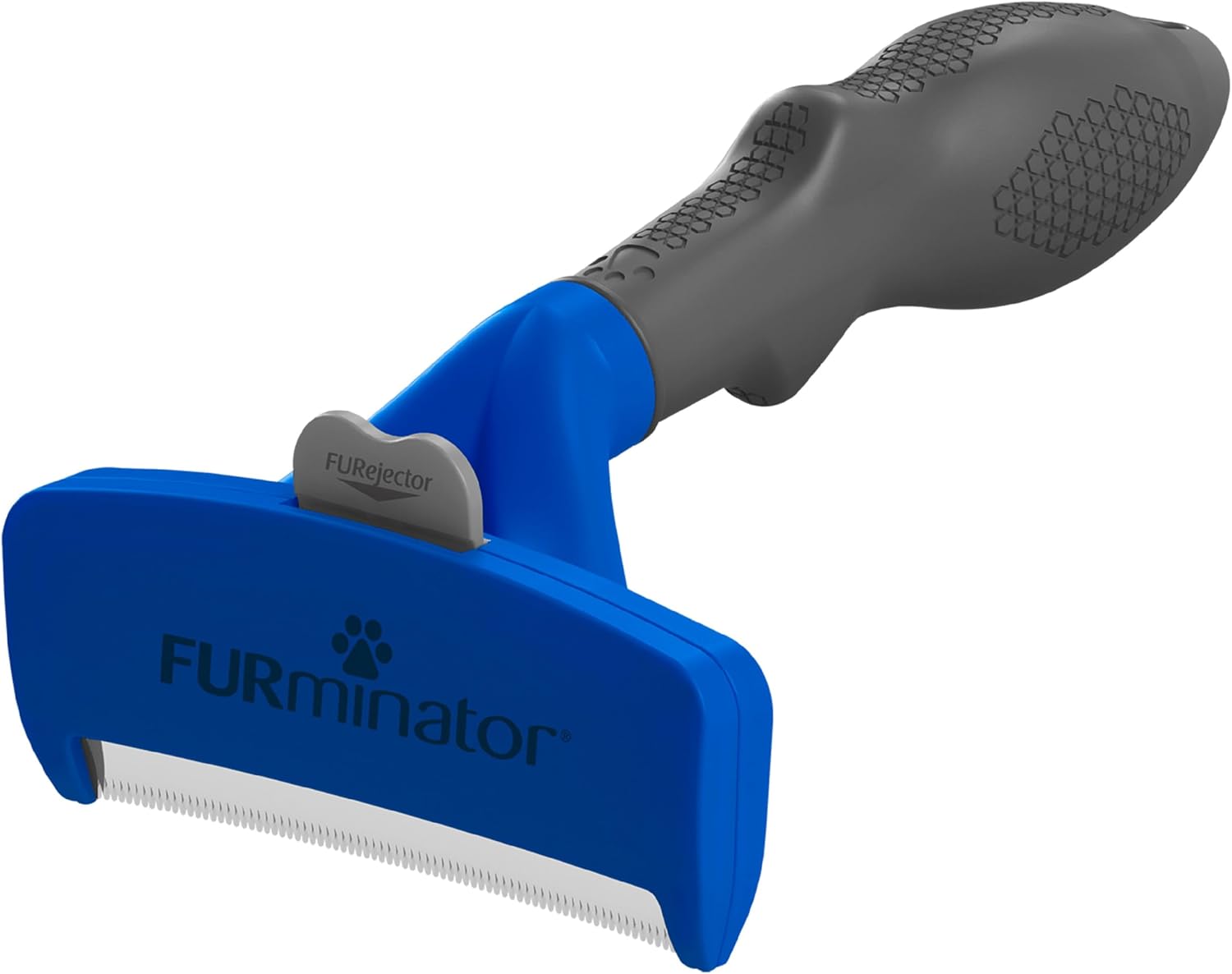
FURminator Undercoat deShedding Tool (Large, Long Hair)
The FURminator reaches past the top coat to pull loose undercoat hair before it ends up on your sofa, and it genuinely works. Regular use can reduce shedding by up to 90% in double-coated breeds like Huskies, German Shepherds, and Labs. The FURejector button ejects collected hair cleanly so you’re not picking clumps off the blade between passes.
What we like
- Reaches past the top coat to target loose undercoat, where the bulk of shedding comes from
- FURejector button cleans the blade quickly between passes
- Dramatically reduces hair on furniture and floors with regular use
- Available in size/coat-length combinations so you match tool to dog
The catches
- For double-coated breeds only, too aggressive for short smooth or long silky coats
- Must stop before skin contact; over-use on one spot can irritate the coat
- Handle could be more ergonomic for large dogs on long grooming sessions
Why the wrong brush doesn’t just fail, it can cause damage
Before matching brush to coat, it’s worth understanding why this matters more than people expect. A slicker brush used on a short smooth coat like a Boxer will scrape the skin and potentially cause ‘slicker brush burn’, redness and irritation from the fine wire pins. A bristle brush used on a Husky’s double coat will glide harmlessly over the surface and leave the dense undercoat entirely untouched, meaning the dog’s still holding all that loose fur and you’ve done nothing useful. A deshedding tool used on a Poodle or Doodle can cut and damage the curls, compromising the coat texture permanently.
The other common mistake is assuming one tool does everything. Most dogs with medium-to-long coats actually benefit from two brushes used in sequence: a slicker or pin brush to work through tangles and loose surface hair, followed by a comb to check for mats the brush missed. Double-coated dogs often need three: an undercoat rake for the dense undercoat, a slicker to smooth the top coat, and a comb for the finish. Knowing your dog’s coat type is the foundation that makes everything else faster and less frustrating.
Every brush type explained: what it is and what it’s actually for
Here are the seven brush and comb types you’ll encounter, with honest descriptions of what each does well and where it falls short.
Slicker brush
The workhorse of medium and long coats. A slicker brush has a flat or curved pad covered in fine, short wire pins angled to catch loose hair, work through tangles, and break up small mats before they tighten. It’s the right daily-maintenance tool for Golden Retrievers, Border Collies, Australian Shepherds, and most mixed breeds with medium-to-long coats. Use it on: medium, long, wire, and curly coats. Avoid it on: short smooth coats, the pins will irritate bare skin.
Bristle brush
Dense, closely packed natural or synthetic bristles that remove loose surface hair, dust, and dander while distributing skin oils down the shaft for a healthy shine. It doesn’t penetrate deep enough to be useful on long or curly coats, but for short smooth breeds it’s ideal. Use it on: short smooth coats (Labrador, Boxer, Vizsla, Whippet). Works beautifully as a finishing brush on any coat after a deeper tool has done the real work. Avoid it on: long, curly, or double-coat breeds as a primary tool, it will miss most of what needs removing.
Pin brush
Long, widely spaced pins with rounded tips (the ‘ball tips’ protect the scalp) that gently detangle and smooth long, silky, or flowing coats without pulling harshly. Think of it as the equivalent of a wide-tooth comb for hair, it works through the length of the coat rather than the base. Use it on: long silky coats (Afghan Hound, Maltese, Shih Tzu, Yorkshire Terrier, Cavalier King Charles Spaniel). Also useful as a maintenance brush on wire-coated dogs. Avoid it on: short or double coats where you need to reach the undercoat.
Undercoat rake
A grooming rake has a single or double row of long, widely spaced metal teeth designed to penetrate a thick top coat and pull out loose undercoat fur without cutting or damaging the guard hairs above. It’s a must-have for heavy double-coated breeds, the kind that leave tumbleweeds on the floor year-round. Use it on: double-coated breeds (Husky, Malamute, German Shepherd, Chow Chow, Great Pyrenees, Bernese Mountain Dog). Avoid it on: single-coated, short, or curly breeds.
Deshedding tool
A deshedding tool like the FURminator has a finer, tighter edge than an undercoat rake, it reaches deeper into the undercoat and removes more loose fur per pass. The trade-off is that it’s more aggressive: used too often or with too much pressure, it can thin the coat. Used correctly (once a week or less, avoiding the same spot repeatedly), it’s the single most effective weapon against heavy shedding. Use it on: double-coated heavy shedders. Avoid it on: everything else, it’s not appropriate for short smooth, long silky, or curly coats.
De-matting comb
A de-matting comb or mat splitter has serrated or bladed teeth designed to cut through and break apart tight mats without requiring you to cut the coat off entirely. It’s a rescue tool, you reach for it when a mat has already formed and a regular comb or brush won’t move it. Use it on: any coat type when mats are present, but most commonly on long, curly, or neglected coats. Use sparingly: a de-matting comb is a fix, not a maintenance tool. Regular brushing with the right tools prevents mats from forming in the first place.
Rubber curry brush / grooming glove
Soft rubber nubs or a glove with rubber tips that massage the skin, loosen dead hair, and give short-coated dogs a thorough but gentle groom. Many short-haired dogs that resist hard brushes enjoy the massage-like feel of a rubber curry. Excellent at bath time for working shampoo into the coat. Use it on: short smooth coats (Labrador, Boxer, Dalmatian, Weimaraner). Also works as a bonding tool and loose-hair gatherer on any dog that’s cooperative. Avoid it on: long, curly, or heavily matted coats, it’s a surface tool only.
Pin-and-bristle combo brush
A double-sided brush with pin brush on one face and bristle brush on the other. Practical for medium-coated dogs where you want to work through the coat with pins and then smooth and shine with bristles in one session without swapping tools. Use it on: medium coats with mild tangling. Not ideal for: coats that need serious undercoat work or tangle removal, you’ll want dedicated tools for those jobs.
Coat-type guide: which brush (or brushes) you actually need
Here’s the practical match-up, coat type to tool, with breed examples so you can quickly place your dog.
| Coat Type | Breed Examples | Primary Tool(s) | Finish / Check |
|---|---|---|---|
| Short / Smooth | Labrador, Boxer, Beagle, Vizsla, Dalmatian | Bristle brush or rubber curry glove | Soft cloth or chamois for shine |
| Double Coat | Husky, GSD, Malamute, Lab, Corgi, Bernese | Undercoat rake + deshedding tool (FURminator) | Slicker brush on top coat; metal comb |
| Long / Silky | Afghan Hound, Maltese, Shih Tzu, Yorkie, Cavalier | Pin brush (ball-tip) | Fine-tooth comb to check for mats |
| Curly / Wool | Poodle, Labradoodle, Goldendoodle, Portuguese Water Dog | Slicker brush (line brush through layers) | Metal comb, mandatory for mat detection |
| Wiry / Rough | Wire Fox Terrier, Schnauzer, Airedale, Irish Terrier | Slicker brush + bristle brush | Stripping comb (for hand-strip; ask groomer) |
A few notes on reading this table: Labradors are listed under double coat too, despite their short fur, Labs have a dense undercoat and are prolific shedders. A bristle brush maintains shine but an undercoat rake or deshedding tool is what actually controls shedding. Doodles get slicker plus comb, not the FURminator, their wool-type curls mat easily and a deshedding blade will damage the curl structure. And wiry coats are best maintained by hand-stripping rather than heavy brushing, a professional groomer should show you the technique.
Short and smooth coats: easy, but don’t skip it
Short smooth coats, think Labrador (the outer coat, not the undercoat), Boxer, Beagle, Dalmatian, Whippet, Vizsla, look like the easiest coats to manage, and they are. But ‘easy’ doesn’t mean ‘skip it.’ Regular brushing removes dead hair before it migrates to every surface in your home, distributes skin oils for a healthier, shinier coat, and gives you a regular hands-on check for lumps, ticks, skin changes, or irritation you’d otherwise miss.
What to use: A dense bristle brush or a rubber curry glove. The curry glove is particularly good for dogs that find hard brushes uncomfortable, the rubber nubs feel like a massage. Go over the coat once a week, working in the direction of hair growth, and finish with a dry cloth to bring up the shine. That’s genuinely all most short-coated dogs need.
If your short-coated dog is also a heavy shedder (Labrador, Boxer, Beagle), add a rubber-bristle shedding brush or a very gentle undercoat rake during seasonal blowouts in spring and autumn. But for daily maintenance, keep it simple, bristle brush or curry glove.
Double coats: the coat type that benefits most from a deshedding tool
Double-coated dogs. Siberian Huskies, German Shepherds, Alaskan Malamutes, Corgis, Chow Chows, Bernese Mountain Dogs, and yes, Labrador Retrievers, have two distinct layers: a harsh, weather-resistant top coat (guard hairs) and a soft, dense undercoat that provides insulation. The undercoat is where almost all the shedding comes from, and it’s what ordinary brushes almost entirely miss.
A bristle brush or a slicker used on a double-coated dog is doing surface work only, smoothing the guard hairs while leaving a compressed mass of loose undercoat completely untouched. To actually reduce shedding on a double-coated dog, you need a tool designed to penetrate: an undercoat rake for routine weekly maintenance, and a deshedding tool like the FURminator for the seasonal coat blows (typically twice a year, when the undercoat releases en masse).
The right sequence for a double-coated dog:
- Start with a metal undercoat rake, work through the coat in sections, going with the grain. This lifts and loosens the bulk of the dead undercoat.
- Follow with a deshedding tool, one or two passes per section, not repeatedly on the same spot (this risks thinning). You’ll pull out remarkable amounts of fur.
- Finish with a slicker brush on the top coat to smooth the guard hairs and collect anything remaining on the surface.
- Run a wide-tooth metal comb through to confirm there are no remaining mats hiding beneath the top coat.
One important rule: never shave a double coat to manage shedding. The two layers work together to regulate body temperature in both hot and cold weather, and shaving can permanently alter the coat’s ability to regrow correctly. Regular brushing with the right tools is the correct answer, not the razor. For a deep dive on controlling shedding in double-coated breeds, see our guide to the best deshedding tools for dogs.
Long and silky coats: pin brush first, then always check with a comb
Long silky coats. Afghan Hound, Maltese, Shih Tzu, Yorkshire Terrier, Cavalier King Charles Spaniel, Lhasa Apso, are beautiful and high-maintenance in equal measure. The length means tangles form quickly, especially behind the ears, in the armpits, around the collar, and at the base of the tail. The texture means you need a tool that works through the length gently, not one that grabs and breaks.
What to use: A pin brush with ball-tipped pins is the primary tool. The rounded tips slide through the coat without snagging or breaking the fine hair. Work in sections, holding the hair above the section you’re working to avoid pulling at the root, this ‘line brushing’ technique prevents painful yanking and lets you work through the coat systematically from the bottom up.
After the pin brush, always follow with a metal comb, a fine-tooth comb on fine coats, a medium comb on slightly coarser long coats. Run it all the way through to the skin. If the comb snags anywhere, a mat is forming that the pin brush slid over. Catch it now with a de-matting comb and it takes thirty seconds; leave it for a week and it’s a trip to the groomer with scissors. Daily brushing is realistic and necessary for most long-coated breeds.
A slicker brush is sometimes recommended for long coats and can work on coarser long-coated breeds (like a Rough Collie), but on very fine silky coats, the wire pins can cause breakage. When in doubt on a silky coat, pin brush plus comb is the safer combination.
Curly and wool coats (Poodles and Doodles): slicker plus comb, not a deshedding tool
Poodles, Labradoodles, Goldendoodles, Cockapoos, Portuguese Water Dogs, and other wool-coated breeds are among the most mat-prone dogs in existence. The curl structure means shed hair doesn’t fall off, it stays trapped in the coat and weaves itself into mats, sometimes down to the skin, faster than you’d believe possible. Doodles in particular are often marketed as ‘low-shedding’ in a way that misleads owners into under-grooming them, and the result is severe matting that requires full shave-downs.
What to use: A slicker brush, used with a technique called line brushing, part the coat into horizontal sections and brush each one from the skin outward before moving to the next section above. This is the only way to be confident you’re reaching the base of the coat and not just smoothing the surface while mats form underneath. Always follow with a metal comb all the way to the skin. If the comb moves freely from root to tip in every section, the coat is mat-free. If it snags, you have a mat.
What not to use: A deshedding tool or undercoat rake. Doodles and Poodles are often single-coated (despite the ‘doodle’ mix), and even in double-coated Doodles, the deshedding blade will damage the curl pattern and can thin the coat. The FURminator is explicitly not designed for curly or wool-type coats.
Frequency matters more for wool coats than any other type. Professional groomers recommend brushing at minimum every 2 to 3 days for most Doodle coats; daily for anything kept in a longer style. If you let a Doodle go two or more weeks without brushing, expect mats. A de-matting comb is worth keeping on hand for when a mat sneaks through, but the goal is a brushing routine that prevents them forming in the first place. For guidance on maintaining coat health at home, our home grooming guide covers the full process step-by-step.
Wiry coats: brush for maintenance, strip for texture
Wire-coated breeds. Wire Fox Terrier, Schnauzer, Airedale Terrier, Wirehaired Pointing Griffon, Irish Terrier, have a distinctive rough, bristly texture that comes from the structure of the guard hairs, not from the undercoat. Maintaining that texture correctly requires a technique most brush guides skip: hand-stripping.
For day-to-day maintenance between professional grooms, a slicker brush removes loose surface hair and keeps the coat tidy, and a bristle brush adds finishing polish. A comb works through any tangles in the leg furnishings and beard. For the face, legs, and beard areas where the coat is softer, a pin brush is gentle and effective.
But to preserve the correct wiry texture, the dead outer coat should be hand-stripped rather than clipped. Clipping a wire coat softens the texture and dulls the colour over time; stripping removes the dead guard hairs by the root so the new coat grows in with correct colour and feel. This is a professional technique, ask your groomer to show you the basics, or book regular hand-stripping appointments if the texture matters to you. For a show dog, hand-stripping is non-negotiable; for a pet, clipping is acceptable if texture isn’t a priority.
How often should you brush your dog? A realistic schedule
Brushing frequency depends on coat type and length more than on breed reputation. Here’s a realistic schedule based on what the coat actually demands:
- Short / smooth coats: once a week is sufficient for most; twice weekly during seasonal shedding. Quick sessions, five minutes, are enough.
- Double coats (routine maintenance): two to three times per week with an undercoat rake. During a seasonal coat blow (spring and autumn), daily brushing dramatically shortens the duration of the shedding event and keeps your home manageable.
- Long / silky coats: daily brushing is the standard recommendation for breeds like Maltese, Shih Tzu, and Afghan Hound. Every-other-day is workable for coarser long coats like Rough Collies, but any longer than that and mats start forming.
- Curly / wool coats: every 2 to 3 days at minimum; daily if kept long. This is the one coat type where skipping sessions has the fastest consequences, mats in a Doodle coat can form in a matter of days.
- Wiry coats: weekly brushing for maintenance; professional hand-stripping or clipping every 8 to 12 weeks.
A useful rule of thumb: the longer the coat, the more frequent the brushing. And brushing for five minutes three times a week prevents the kind of matting that turns into a forty-five-minute battle (or a shave-down at the groomer). The investment in a regular habit pays off immediately. For a full grooming workflow including bathing and drying, see our dog grooming tools hub and the home grooming guide.
Keep researching dog grooming
Dog brush selection: common questions
What is the best dog brush for shedding?
For double-coated heavy shedders (Husky, German Shepherd, Lab, Corgi), the best brush for shedding is a deshedding tool like the FURminator used in combination with an undercoat rake. The rake loosens the bulk of the dead undercoat; the deshedding tool removes the rest. For short smooth coats that shed moderately, a rubber curry brush or dense bristle brush is more appropriate, deshedding tools are too aggressive for smooth single-coated breeds.
What type of brush is best for a Goldendoodle or Labradoodle?
A slicker brush plus a metal comb, in that order, every 2 to 3 days. Doodles have wool-type curls that trap shed hair rather than releasing it, which means mats form quickly when brushing is skipped. Use line-brushing technique (section by section from the skin out) with the slicker, then run the comb all the way to the skin to confirm no mats are hiding underneath. Do not use a deshedding tool or undercoat rake on a Doodle, it damages the curl structure.
Should I use a slicker brush or pin brush?
It depends on coat type. A slicker brush is the better choice for medium, long-with-tangles, wire, or curly coats, its fine wire pins break up mats and remove loose hair effectively. A pin brush (with rounded ball tips) is better for long silky coats where you need to detangle gently without breaking fine hair. Afghan Hounds, Maltese, Shih Tzus, and Yorkies. For many medium-coated dogs, a pin-and-bristle combo brush handles both jobs in one tool.
Is a FURminator safe for all dogs?
No, the FURminator is designed specifically for double-coated breeds with a dense undercoat (Huskies, German Shepherds, Labradors, Corgis, etc.). It’s too aggressive for short smooth coats, long silky coats, and curly or wool coats like Poodles and Doodles. On those coat types it can cause thinning, breakage, or skin irritation. Always check whether your dog has a double coat before using a deshedding tool.
How often should I brush my dog?
Frequency depends on coat type: short smooth coats need once a week; double coats need two to three times per week (daily during seasonal shedding); long silky coats need daily brushing; curly / wool coats (Doodles, Poodles) need brushing every 2 to 3 days at minimum, daily if kept long. A five-minute session three times a week prevents the matting that causes much longer, more stressful grooming sessions later.
What brush should I use for a short-haired dog?
A bristle brush or rubber curry brush / grooming glove is best for short-haired dogs. The bristle brush removes loose hair and distributes skin oils for a healthy shine; the rubber curry gives a massage-like feel many short-coated dogs prefer and works very well at bath time to lather shampoo. Either option used weekly is all most short-haired dogs need for coat maintenance.