 Dog Gear, Sized Right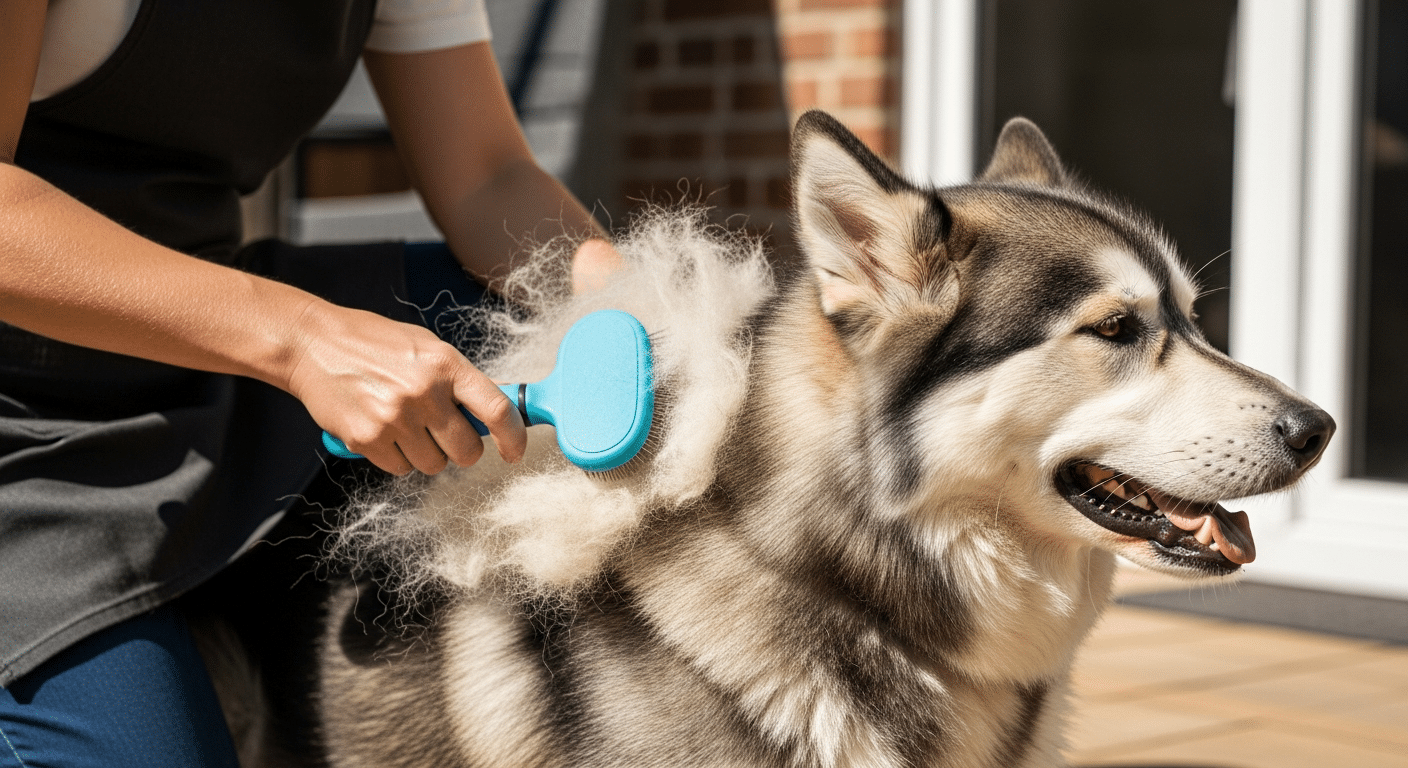
Best Deshedding Tools for Dogs (Heavy Shedders & Double Coats)
The right deshedding tool can cut the loose hair in your home by up to 90%, but only if it matches your dog’s coat. Here are the best deshedding tools for dogs, which one to use on a double coat vs a short coat, and how to deshed safely without damaging the coat or skin.
If you live with a heavy shedder, you already know the feeling: you vacuum, and an hour later the fur is back. The good news is that the best deshedding tool for dogs can cut that loose hair by up to 90%, but only if you pick the one that suits your dog’s coat. A tool built for a thick double-coated Husky is wrong for a short-coated Lab, and a FURminator that’s perfect for a Golden Retriever should never touch a single-coated Poodle. Below we rank the four tools that actually matter, a deShedding edge, an undercoat rake, a slicker brush and a deshedding glove, then show you exactly how to match the tool to the coat (double-coat breeds like the Husky, German Shepherd and Labrador get their own section), and how to deshed safely so you remove the dead undercoat without ever damaging the healthy coat or the skin underneath.
The best deshedding tools for dogs, by coat type
Four tools that cover every shedding dog, a deShedding edge for heavy double coats, a gentler undercoat rake, a finishing slicker, and a glove for short coats and fussy dogs. Each is verified in stock; prices are last-checked, so tap through for the live price.
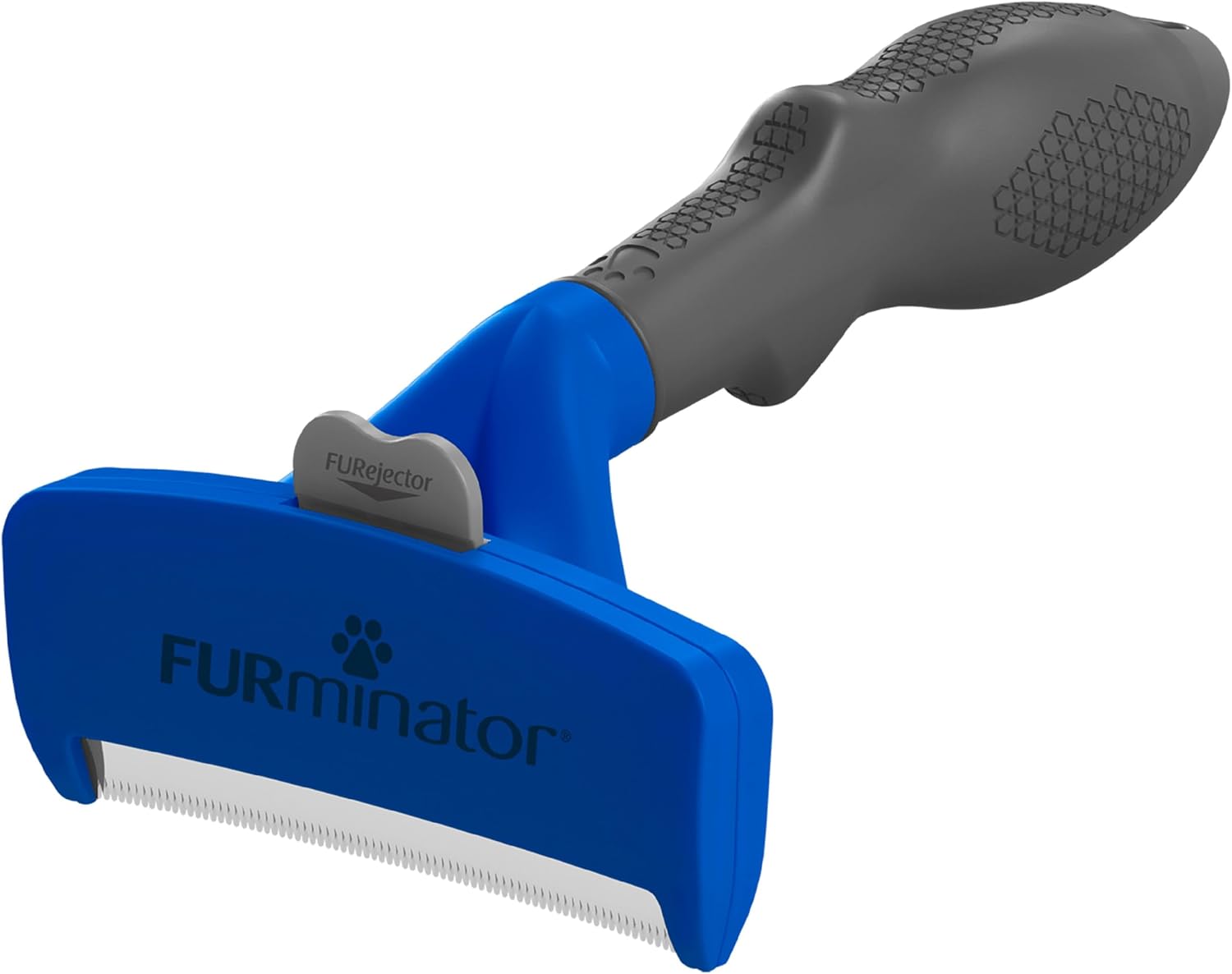
FURminator Large Dog Undercoat deShedding Tool (Long Hair)
If you have a heavy-shedding large dog and you buy one tool, make it this. The FURminator deShedding edge is a fine stainless-steel blade that reaches through the topcoat to grab the loose dead undercoat, the stuff that’s about to end up on your sofa, without cutting or damaging the healthy guard hairs on top. This is the Large, Long-Hair version, built for dogs over 50 lb with coats 2 inches or longer (think Golden Retriever, long-coat German Shepherd, Bernese, Aussie). The wide head clears a lot of dog fast, and the FURejector button pops the packed fur off the blade in one press so you’re not picking it out by hand. Used correctly, once or twice a week, 10 to 20 minutes, light pressure, it genuinely cuts loose-hair around the house by up to 90%. It’s the most aggressive tool here, so it’s the one to respect (see the safe-use section), but on a true heavy shedder nothing else removes undercoat this efficiently.
What we like
- The deShedding edge reaches under the topcoat to pull dead undercoat better than any brush here
- Sized by weight AND coat length, pick Large + Long Hair for a big, long-coated shedder
- FURejector button clears the packed fur in one press, no picking it out by hand
- Cuts visible loose hair around the house dramatically when used weekly
The catches
- The most aggressive tool on this list, over-use or heavy pressure can irritate skin or thin the coat
- Not for single-coated or fine/curly coats (Poodles, Maltese, Yorkies), use a slicker instead
- Size matters: the wrong size (short-hair tool on a long coat) won’t reach properly, match it to your dog
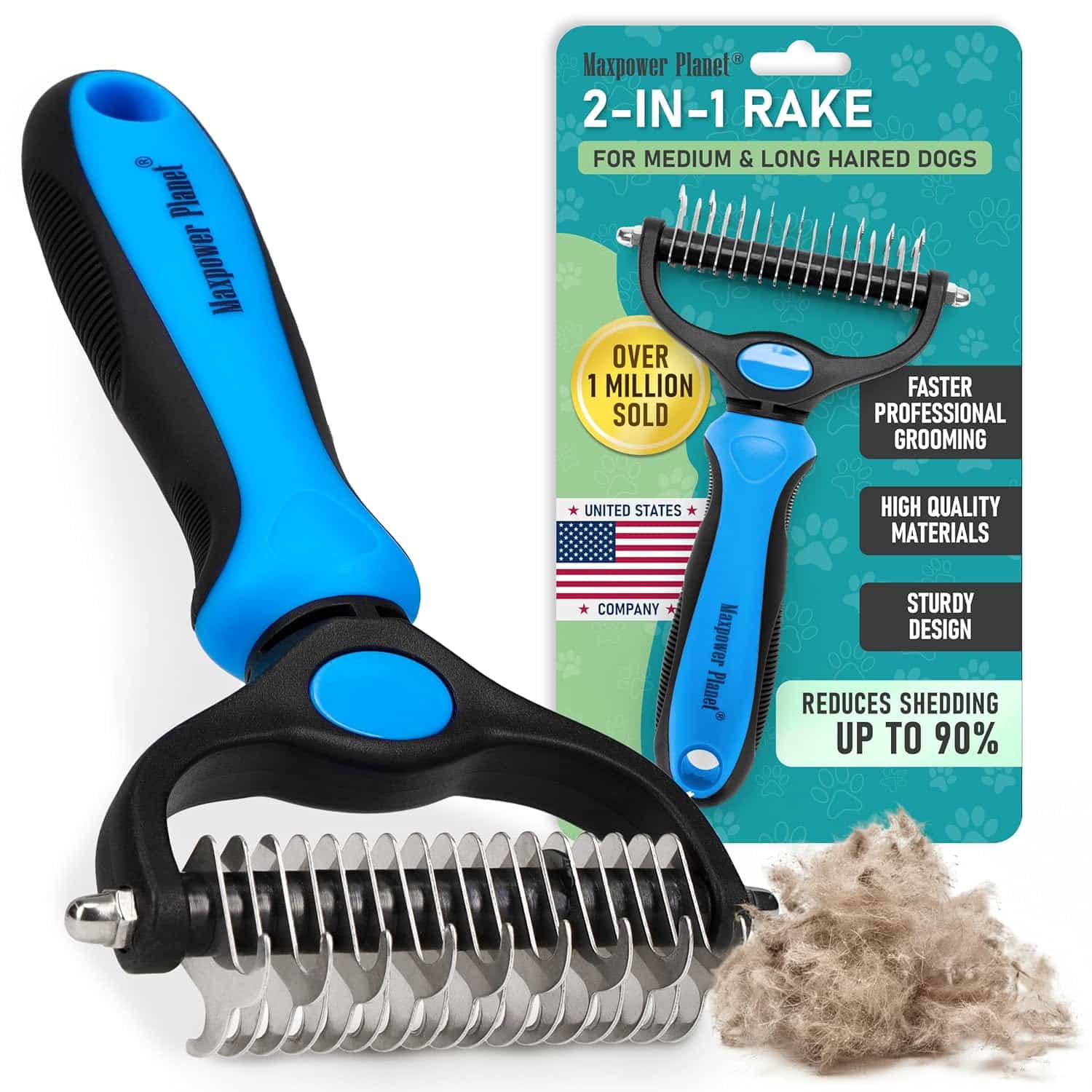
Maxpower Planet Original Pet Grooming Rake (Undercoat Rake)
For a thick double coat. Husky, Malamute, Samoyed, long-coat Shepherd, an undercoat rake is often the smarter daily tool than a deShedding edge, because it pulls loose undercoat without stripping or stressing the guard coat that keeps these breeds insulated. The Maxpower Planet rake is the one we keep reaching for: it’s double-sided, a 9-tooth side for breaking up mats and tangles, and a 17-tooth side for raking out dense, loose undercoat. The rounded-but-sharp teeth slip between the guard hairs to the undercoat, so it works with a double coat instead of against it. It’s gentler than the FURminator, which makes it the better choice for frequent brushing and for dogs that fuss at a deShedder. For a Husky in full blow-coat, this rake plus a slicker finish is the classic combo groomers use.
What we like
- Undercoat rake design pulls loose undercoat without stripping the protective guard coat, ideal for double coats
- Two sides: 9 teeth for mats and tangles, 17 teeth for raking out dense undercoat
- Gentler than a deShedding edge, so it’s safe to use more often on thick-coated breeds
- Inexpensive and durable, the best value pick on this list
The catches
- Slower per pass than the FURminator’s wide head on a very large dog
- On a badly matted coat you’ll need to work the 9-tooth side first, patiently, to avoid tugging
- Not the tool for short, smooth single coats, a rubber glove or curry does more there
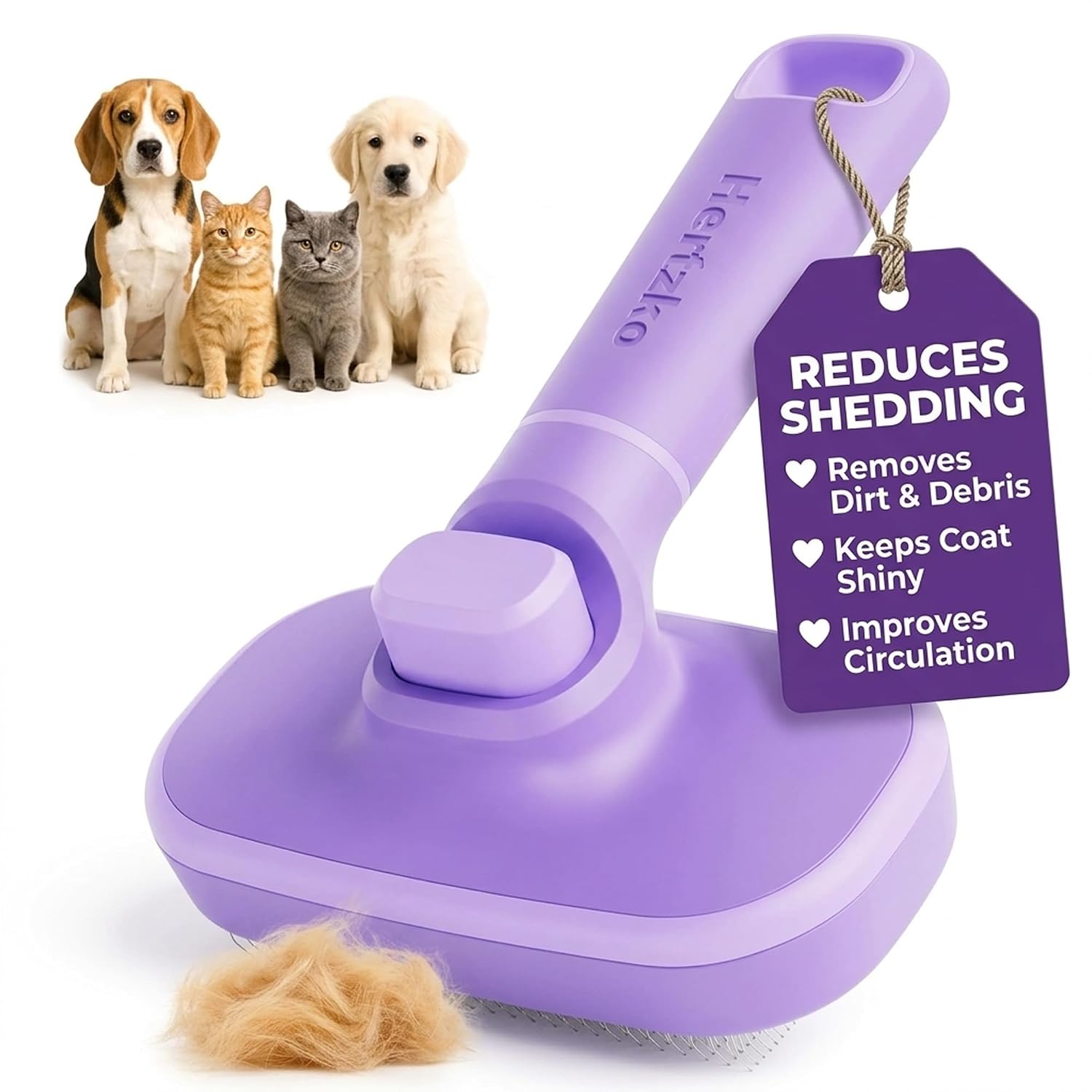
Hertzko Self-Cleaning Slicker Brush
A slicker brush does a different job from a rake or a deShedder: its fine, angled wire bristles catch the loose surface hair, light tangles and dander a rake leaves behind, and smooth the coat to a finish. It’s also the safe everyday brush for almost any coat, including the single-coated, wavy and curly dogs the FURminator shouldn’t touch. The Hertzko is the one we recommend because of its self-cleaning design: press the button and the bristles retract so the trapped fur peels off in one wipe, which makes you far more likely to actually use it. We treat it as the finishing step after the rake on a double coat, and as the main brush for shedders that don’t have a heavy undercoat. Gentle enough for sensitive skin if you keep the pressure light.
What we like
- Fine angled wires lift loose surface hair, light tangles and dander a rake leaves behind
- One-click self-cleaning button retracts the bristles so you wipe the fur off in seconds
- Safe on almost any coat, including single, wavy and curly coats a deShedder can’t touch
- Cheap, and the easiest tool here to use on the whole dog including legs and tail
The catches
- Won’t pull deep undercoat the way a rake or deShedding edge does, it’s a finisher, not the main event on a double coat
- Pressed too hard, the fine wires can scratch, keep it light, especially on bellies and faces
- On a matted coat, deal with the mats first; a slicker drags on knots

DELOMO Pet Grooming Deshedding Gloves
Some dogs hate brushes. A deshedding glove solves that: the soft silicone grooming tips on the palm grab loose hair while you simply pet your dog, so a wriggly or brush-shy dog gets groomed without a fight. The DELOMO gloves (upgrade version, 255 tips per hand) are also our pick for short, smooth coats. Labs, Boxers, Beagles, Pit-type dogs, where a FURminator is overkill and a glove pulls a surprising amount of loose hair off. They’re brilliant in the bath too: work shampoo in and lift dead coat at the same time, which is exactly when the most hair comes loose. They won’t dig deep undercoat out of a Husky the way the rake does, so think of the glove as the gentle, low-stress tool, for short coats, sensitive dogs, faces and legs, and bath time, rather than the heavy-lifting deshedder for a blown coat.
What we like
- Grooms a brush-shy dog while you pet it, no fight, no fuss
- Excellent on short, smooth coats (Lab, Boxer, Beagle) where a deShedder is too much
- Doubles as a bath mitt, lifts dead coat while you work the shampoo in
- Soft silicone tips are gentle on sensitive skin, faces and legs
The catches
- Won’t pull deep undercoat from a thick double coat, it’s a finisher and short-coat tool, not the main deshedder for a Husky
- Removes less per session than the rake or FURminator on a heavy shedder
- One-size mitts can be loose on small hands, strap them snug for control
First: deShedding edge vs undercoat rake vs slicker vs glove
“Deshedding tool” isn’t one thing, it’s four very different tools that do four different jobs. Picking the right type matters more than picking the right brand, so here’s the 60-second version before we match them to your dog:
- The deShedding edge (FURminator-style). A fine, toothed stainless-steel blade that reaches under the topcoat and pulls out loose, dead undercoat. It’s the most powerful deshedder and the most aggressive, the right tool for a heavy-shedding double coat, the wrong tool for a single or fine coat.
- The undercoat rake. A row (or two) of longer, rounded pins/teeth that rake loose undercoat out from between the guard hairs. It’s gentler than a deShedding edge and pulls fewer guard hairs, which makes it the better everyday tool for thick double coats and for dematting.
- The slicker brush. Lots of fine, bent wires that lift loose surface hair, light tangles and dander and smooth the coat. It’s a finisher on a double coat and the main brush for shedders without a heavy undercoat, and safe on almost any coat type.
- The deshedding glove. A mitt with soft silicone tips that grab loose hair while you pet the dog. It’s the gentlest option, best for short coats, fussy dogs, faces and legs, and the bath, and the least effective on deep undercoat.
Single coat vs double coat, the one thing you must know first
Before you buy anything, work out whether your dog has a single coat or a double coat, because it changes everything about how (and whether) you should deshed.
A double coat has two layers: a coarse, weather-resistant topcoat (guard hairs) over a soft, dense, insulating undercoat. The undercoat is what sheds heavily, especially in spring and fall, and it’s what a rake or deShedding edge is designed to remove. Double-coated breeds include the Siberian Husky, Alaskan Malamute, German Shepherd, Labrador and Golden Retriever, Akita, Samoyed, Corgi, Pomeranian, Australian Shepherd, Border Collie and Chow Chow.
A single coat has only one layer, no soft undercoat. Single-coated breeds include the Poodle, Maltese, Yorkshire Terrier, Bichon, Shih Tzu, Greyhound, Boxer and Dachshund. Some of these (Poodles, Maltese) have hair that keeps growing and needs clipping rather than deshedding; the smooth-coated ones (Boxer, Greyhound, Dachshund) shed lightly and do best with a glove or a rubber curry.
If you’re not sure which your dog has, part the coat with your fingers: a fluffy, soft, lighter layer hiding under the longer outer hair means a double coat. When in doubt, a slicker brush or glove is the safe default for any coat.
Best deshedding tool for a double-coat dog (Husky, German Shepherd, Lab)
Double-coated breeds are the heavy shedders this guide is really built for, and they shed in two modes: a steady year-round drift, and the dramatic seasonal “blowing coat” in spring and fall when the whole undercoat lets go at once. Here’s the routine that works:
- Everyday / between seasons: an undercoat rake (our pick: the Maxpower Planet rake) a couple of times a week pulls the loose undercoat without stressing the guard coat. Finish with a slicker to lift the surface hair and smooth the coat.
- Blowing coat (spring & fall): bring in the FURminator deShedding edge as the heavy lifter, used 1 to 2 times a week. On a big long-coated dog, many owners do a first pass with the FURminator, then work the rake to clear what’s loosened, then a slicker to finish. A forced-air dog dryer after a bath is the groomer’s secret weapon here, it literally blows the loose undercoat out before you brush.
- Match the FURminator to the dog: it’s sized by weight (under or over 50 lb) and coat length (short-hair vs long-hair). A long-coat German Shepherd, Golden or Bernese needs the Large, Long-Hair version; a short-coat Lab does better with the short-hair tool or, honestly, a glove.
Breed quick-reference:
| Breed | Coat | Best primary tool | Add |
|---|---|---|---|
| Siberian Husky / Malamute / Samoyed | Thick double | Undercoat rake | FURminator in blow-coat + slicker finish |
| German Shepherd (long coat) | Double, long | FURminator Large Long-Hair | Rake + slicker |
| Labrador / short-coat GSD | Double, short | FURminator short-hair or rake | Glove for everyday |
| Golden Retriever / Bernese | Double, long, feathered | FURminator Large Long-Hair | Slicker for feathering |
| Corgi / Pomeranian / Aussie | Dense double | Undercoat rake | Slicker + FURminator seasonally |
If your specific breed isn’t here, the rule still holds: rake for everyday, deShedding edge when the coat blows, slicker to finish. For a step-by-step home routine, see our guide to how to groom a dog at home.
Best tool for a short coat or single coat
Short-coated and single-coated dogs shed too, sometimes a lot, like a Labrador or a Boxer, but the heavy-duty deshedders are the wrong answer. Here’s what to use instead:
- Short, smooth coats (Boxer, Beagle, Dachshund, Pit-type, short-coat Lab): a deshedding glove or a rubber curry brush lifts loose hair beautifully and feels like petting. A glove in the bath is especially effective.
- Single coats that grow (Poodle, Maltese, Bichon, Shih Tzu): these don’t have a sheddable undercoat, they need regular brushing with a slicker to prevent mats, plus clipping by you or a groomer. Never use a deShedding edge on them.
- Light, fine coats and sensitive skin: a slicker on light pressure, or a glove, removes loose hair without risk. A self-cleaning slicker is the easiest to keep using because clean-up is one click.
How to deshed safely (don’t over-deshed)
The single biggest mistake people make is over-deshedding, going too hard, too often, with too aggressive a tool, which can strip the protective coat, scratch the skin, and cause irritation or hot spots. Deshedding tools, especially the FURminator, are powerful; treat them with respect and they’re safe and effective. Follow these rules:
- Limit how often. Use a deShedding edge only 1 to 2 times a week, for about 10 to 20 minutes, not daily. A gentler rake or glove can be used more often, but you still don’t need to deshed every day. In off-season, once a week is plenty.
- Light pressure, let the tool work. Don’t press the blade into the skin, let the teeth glide through the coat. If you’re pushing hard, you’re scratching skin, not removing more hair.
- Always brush WITH the direction of hair growth, in the direction the coat lays, never against it or in circles. Work in small sections, from the head back.
- Never deshed wet, matted, or bare skin. Detangle mats first (use the rake’s dematting side or a comb), let the coat dry, and stop the moment you reach skin, the tool is for coat, not skin. Skip any area that’s raw, scabbed or inflamed.
- Bathe, dry, then deshed. A bath loosens dead coat; drying, ideally with a forced-air dryer, blows much of the loose undercoat out, and a deshed afterward removes the most hair in one go with the least effort.
- Watch the skin and the dog. Stop if you see redness or flaking, or if the dog is uncomfortable. A little goes a long way; you should be removing loose hair, not yanking attached coat.
Shedding seasons, diet and the habits that help
Tools are only half the answer. A few simple habits cut how much your dog sheds in the first place, and tell you when to step up the deshedding:
- Know the seasons. Double-coated dogs “blow coat” in spring and fall as they swap their undercoat for the season ahead. That’s when to switch from a weekly rake to a couple of FURminator sessions a week, get ahead of it and you’ll find far less fur around the house.
- Feed the coat. A good diet with enough omega-3 fatty acids supports healthy skin and a stronger coat that sheds less and breaks less. Ask your vet about a supplement if the coat looks dull.
- Don’t over-bathe. Bathing helps loosen dead coat, but washing too often strips natural oils, dries the skin and can actually increase shedding. Bathe when dirty, then dry and deshed.
- Brush little and often. Five minutes with the rake a few times a week beats one marathon session, it’s easier on the dog and keeps the undercoat from building up and matting.
- Hydration and humidity. Dry indoor air and a dehydrated dog both make for a drier coat and more breakage; fresh water and a little winter humidity help.
And of course, the hair that does land has to be cleaned up, the less loose undercoat you let build up, the less ends up on the floor. Deshedding on a schedule is the cheapest upgrade to a clean house there is; pair it with the best vacuum for dog hair and you’ll spend a fraction of the time chasing tumbleweeds of fur. Deshedding at the source plus a good pet vacuum is the one-two punch that finally gets a shedding home under control.
How to choose: which deshedding tool is right for you?
To pull it all together, here’s how to choose in one pass:
- Heavy-shedding double coat, large dog (Husky, GSD, Golden, Lab): the FURminator Large deShedding tool is the heavy lifter, with the Maxpower rake for everyday and a slicker to finish. Match the FURminator to weight and coat length.
- Thick double coat, want one gentle everyday tool: the undercoat rake, gentler, dematts and deshes, safe to use often.
- Any coat, want a safe all-purpose brush / finisher: the Hertzko self-cleaning slicker.
- Short coat, fussy dog, or bath-time grooming: the DELOMO deshedding gloves.
Most heavy-shedding homes end up owning two: a rake or FURminator to pull the undercoat, and a slicker or glove to finish. For the rest of the grooming kit, clippers, dryers and more, see our best dog grooming tools guide, and if your dog hates the whole process, our how to groom a dog at home walkthrough makes it a lot calmer.
Deshedding tools for dogs: common questions
What is the best deshedding tool for dogs?
For a heavy-shedding large dog with a double coat, the best deshedding tool is the FURminator Large Undercoat deShedding Tool, its stainless-steel deShedding edge reaches under the topcoat to pull out the loose, dead undercoat without cutting the guard hairs, and it can cut loose hair around the house by up to 90% when used weekly. Match it to your dog by weight (over/under 50 lb) and coat length (short vs long hair). For everyday brushing on a thick double coat, a gentler undercoat rake like the Maxpower Planet is better; for short coats and fussy dogs, a deshedding glove is the right tool. There’s no single best tool, the best one is the one that matches your dog’s coat.
What is the best brush for a double coat?
For a double coat (Husky, German Shepherd, Golden, Malamute), an undercoat rake is the best everyday brush, its longer teeth rake loose undercoat out from between the guard hairs without stripping the protective topcoat, so it’s gentler than a deShedding edge and safe to use a few times a week. When the coat is “blowing” in spring and fall, add a FURminator deShedding edge 1 to 2 times a week as the heavy lifter, and finish with a slicker brush to lift the surface hair. The classic groomer combo is rake then slicker, with the FURminator brought in seasonally. Never shave a double coat to control shedding, it damages the coat and removes the dog’s insulation.
How often should I use a deshedding tool on my dog?
Use an aggressive deShedding edge (FURminator) only 1 to 2 times a week, for about 10 to 20 minutes a session, not daily. A gentler undercoat rake, slicker or glove can be used a little more often, but even then a few times a week is plenty. Step it up during the spring and fall shedding seasons when a double coat blows, and ease back to about once a week the rest of the year. Over-deshedding, too hard, too often, can strip the healthy coat and irritate the skin, so use light pressure, brush with the direction of hair growth, and stop if you see any redness.
Are FURminators bad for dogs?
No, a FURminator is safe and effective when it’s the right tool for the coat and used correctly. Problems only come from misuse: using it on a single or fine coat it’s not designed for, pressing the blade into the skin, going over the same spot too many times, or using it too often. Used on a double coat, with light pressure, in the direction of hair growth, only 1 to 2 times a week, and never on wet, matted or bare skin, it safely removes dead undercoat without damaging the healthy guard coat. If your dog has a single coat (like a Poodle), use a slicker or glove instead.
What’s the difference between an undercoat rake and a deshedding tool?
An undercoat rake has longer, rounded teeth that rake loose undercoat out from between the guard hairs, it’s gentler and pulls fewer guard hairs, which makes it the better everyday tool for thick double coats and for breaking up mats. A deShedding tool (like the FURminator) uses a fine blade-style edge that reaches under the topcoat and removes undercoat more aggressively and faster, it’s the heavy lifter for a blowing coat, but it must be used with more care to avoid stripping the coat or irritating the skin. Many owners own both: the rake for routine brushing, the deShedder for shedding season.
Do deshedding gloves actually work?
Yes, for the right job. A deshedding glove with silicone tips works well on short, smooth coats (Labs, Boxers, Beagles) and as a gentle, low-stress tool for fussy dogs, faces and legs, and bath time, you groom while you pet, and it lifts a surprising amount of loose hair. What a glove won’t do is pull deep undercoat out of a thick double coat the way a rake or FURminator does. So a glove is an excellent everyday and short-coat tool, but for a heavy-shedding Husky in full blow-coat it’s a finisher, not the main deshedder.
Can deshedding stop my dog from shedding completely?
No, and that’s normal. All dogs shed to some degree; deshedding doesn’t stop shedding, it removes the loose, dead hair before it lands on your floor and furniture. Regular deshedding can cut the loose hair around your home by a large margin (the FURminator claims up to 90%), and combined with a good diet and not over-bathing it keeps the coat healthy. But a dog with a coat will always shed some hair, the goal is to control it, not eliminate it. If your dog is shedding suddenly, excessively, or in patches, that’s a reason to see a vet, not to deshed harder.