 Dog Gear, Sized Right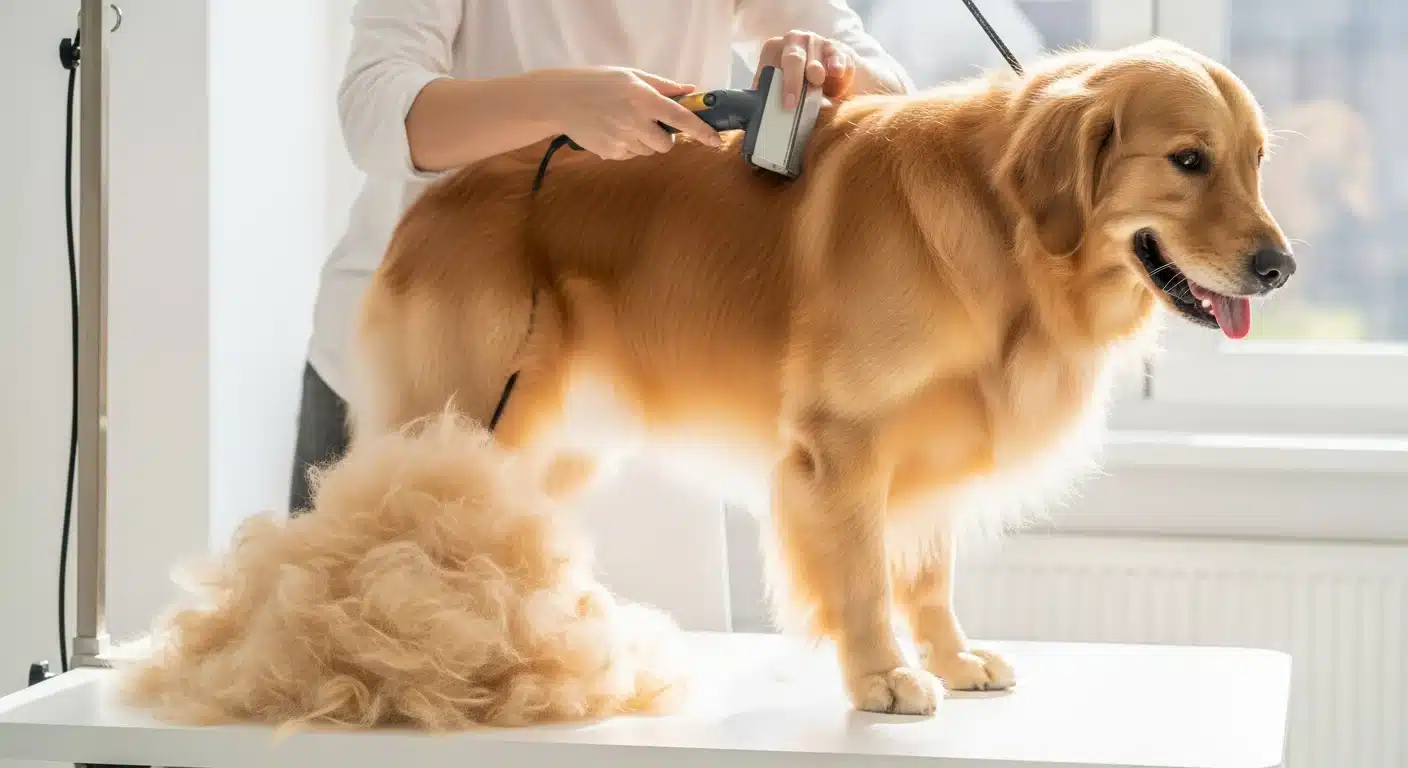
Do Deshedding Tools Actually Work?
The honest answer: yes, dramatically, for the right dog. But used on the wrong breed, or used too often, they cause real damage. Here’s exactly when they work, when to skip them, and how to use one safely.
Do deshedding tools actually work? Short answer: yes, but with important caveats that most product pages skip. A deshedding tool (like the FURminator) works by sliding a fine-toothed stainless-steel edge through the topcoat and pulling out the loose, dead undercoat before it falls out on its own. On a double-coated dog, a Labrador, Golden Retriever, Husky, German Shepherd, Corgi, or Malamute, the results in a single session can be genuinely dramatic: a large pile of fur that would otherwise end up on your floors, sofa, and clothes. Owners routinely report 60 to 80% less loose hair around the house after a few weeks of regular use. That said, these tools are only appropriate for dogs with an undercoat. Used on a single-coated or non-shedding breed, a deshedding tool strips healthy hair and irritates skin. Overused even on the right dog, it damages the topcoat. Technique matters too. This guide covers how they work, who should use one (and who shouldn’t), the right frequency, how they compare to alternatives like undercoat rakes and deshedding gloves, and what to realistically expect.
Our top deshedding tool pick
This is an explainer, not a full roundup, but if you’re ready to buy, the FURminator is the tool we’d put in most double-coated dog owners’ hands. Verified in stock. Tap through for the live price. For a full comparison of 4 tools across all coat types, see our best deshedding tool for dogs guide.
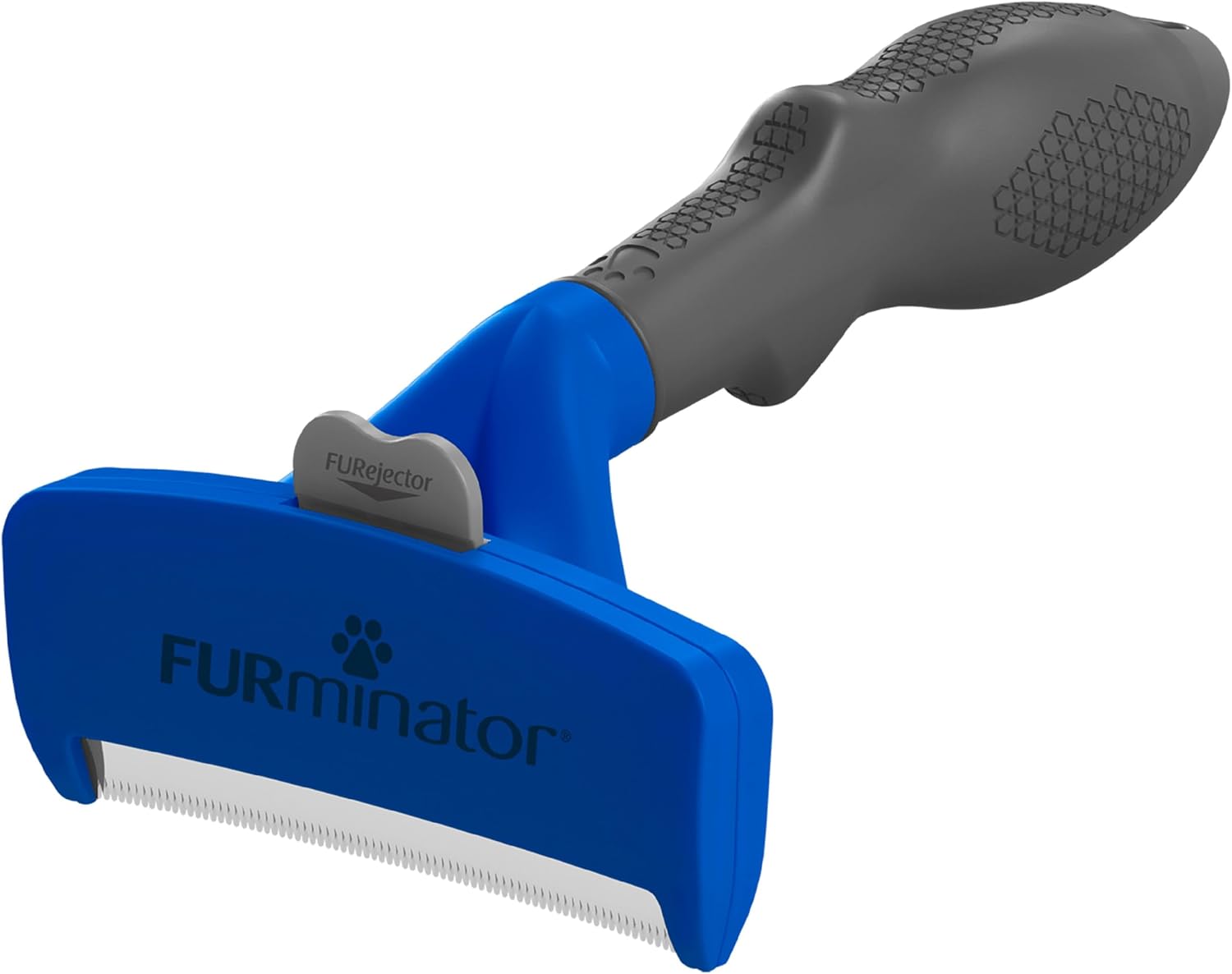
FURminator Undercoat deShedding Tool (Large, Long Hair)
The FURminator earns its reputation. The stainless-steel deShedding edge reaches through the topcoat and grabs the loose dead undercoat, the fur that’s about to end up on your sofa, without cutting guard hairs when used correctly. On a Lab, Golden, Husky, or GSD during coat-blow season the pile of fur you pull out in one 15-minute session is genuinely dramatic. The FURejector button clears the blade cleanly so you’re not picking hair out by hand after every pass. Used once or twice a week with light pressure, in the direction of coat growth, on a clean dry coat, it reduces household shedding noticeably, most owners see 60 to 80% less hair on floors and furniture within a few weeks.
What we like
- Reaches through the topcoat to pull loose undercoat without cutting guard hair (when used correctly)
- FURejector button clears the blade in one click, no picking hair out by hand
- Dramatically reduces household shedding on double-coated breeds in a few weeks of regular use
- Available in 8 size/coat-length combos so you can match exactly to your dog
The catches
- Useless, and potentially damaging, on single-coated or non-shedding breeds; do not buy for a Poodle or Maltese
- Overuse (more than 1 to 2x per week or pressing too hard) can strip topcoat and irritate skin
- Premium price versus a basic undercoat rake; the rake is gentler but slower
How a deshedding tool actually works
A deshedding tool isn’t a brush in the traditional sense. It’s a handle with a stainless-steel deShedding edge, a fine-toothed blade that’s sized and spaced specifically to slip between the coarser outer guard hairs and reach into the softer, denser undercoat beneath. As you drag it through the coat in the direction of growth, it grabs loose, dead undercoat hair, the stuff that hasn’t fallen out yet but will, and pulls it out before it sheds onto your home.
The key distinction is what it targets. Guard hairs (the topcoat) are the longer, coarser, weather-resistant outer layer. The undercoat is the shorter, softer, dense insulating layer underneath. In double-coated breeds, this undercoat grows in thick and sheds in cycles, a slow trickle year-round, with two heavy “coat blows” each year (typically spring and autumn) where the dog loses its undercoat rapidly. A deshedding tool accelerates that process in a controlled way: you pull the loose undercoat out during a grooming session rather than finding it on every surface of your house for the next three weeks.
The FURminator’s stainless-steel edge, for example, is engineered at a specific tooth spacing, fine enough to catch undercoat, wide enough to pass through most topcoats without snagging guard hairs. That’s why it works: it’s not pulling randomly, it’s filtering by hair type.
Who should use a deshedding tool (and who shouldn’t)
This is the most important thing to get right before you buy. Deshedding tools are only appropriate for dogs with a double coat, dogs that have both an undercoat and a topcoat. On these breeds, the results are real. On others, they’re either useless or actively harmful.
Dogs that benefit from deshedding tools
If your dog has a dense, fluffy undercoat and sheds visibly, especially seasonally, a deshedding tool is worth it. Common double-coated breeds include:
- Labrador Retriever, medium double coat, heavy seasonal shed
- Golden Retriever, longer double coat, especially heavy shedder
- German Shepherd, medium double coat, sheds year-round plus coat blows
- Siberian Husky & Alaskan Malamute, extremely dense undercoat, dramatic seasonal blows
- Pembroke and Cardigan Welsh Corgi, dense undercoat, heavy shedder
- Bernese Mountain Dog, Great Pyrenees, long outer coat over thick undercoat
- Border Collie, Australian Shepherd, medium-to-long double coat
Dogs that should NOT use deshedding tools
Never use a deshedding tool on these dogs, there’s no undercoat to target, and the blade just strips healthy hair and irritates skin:
- Poodle, Bichon Frisé, Maltese, Shih Tzu, single-coated, near-zero shedders
- Greyhound, Whippet, Italian Greyhound, single-coated, short fine coat
- Boxer, Vizsla, Weimaraner, very short single coat
- Hairless breeds (Xoloitzcuintli, Chinese Crested), no coat at all
- Any dog with skin irritation, open sores, or mats, never run a deshedding tool over damaged skin or tangled fur; detangle first or you’ll cause pain and skin trauma
What results to realistically expect
On a double-coated dog, especially during coat-blow season, the results of a deshedding session are immediately visible and genuinely impressive. You will pull out a large pile of fur in a single 15 to 20 minute session, fur that would otherwise have shed gradually over weeks. Most owners see:
- 60 to 80% reduction in loose hair on furniture, floors, and clothes with consistent weekly use
- Noticeably cleaner-looking coat, removing the dead undercoat lets the topcoat lie flat and look shinier
- Better airflow to skin, a congested undercoat can trap heat; clearing it helps your dog regulate temperature
- Reduced matting risk in longer-coated breeds, loose undercoat is a primary cause of mat formation
What deshedding tools do not do: they never stop shedding entirely. Dogs with undercoats shed continuously as part of a natural cycle, the tool removes the loose dead hair before it reaches your sofa, but new undercoat is always growing in. Think of it as maintenance, not a cure. Even with perfect weekly grooming, you’ll still see some loose hair. The goal is managing it to a tolerable level, which most owners find very achievable.
Results are most dramatic during coat-blow season (spring and autumn). During these periods, a dog with a dense undercoat can shed a startling volume of fur, groomers call it “blowing coat”, and a deshedding tool makes a big difference. Between seasons, a quick weekly pass maintains the coat and keeps shedding at a low, steady level rather than building up to a blow-out session.
How often to use a deshedding tool (and why overuse is a real risk)
This is where many owners go wrong: more is not better with deshedding tools. The correct frequency is once or twice per week, with sessions of 10 to 20 minutes depending on coat thickness. During heavy coat-blow season you can push toward the twice-weekly end; during low-shed months, once a week or even once every two weeks is plenty.
Overusing a deshedding tool, daily use, very long sessions, or pressing too hard, causes real problems:
- Topcoat damage. The deshedding edge can start cutting guard hairs if used too aggressively, leaving the topcoat looking thin, patchy, or “moth-eaten.” This is the most common complaint from owners who use the FURminator too frequently.
- Skin irritation. Repeated passes over the same area, or dragging the tool across bare skin, can cause redness, tenderness, or “brush burn.” Stop as soon as you see pinkness.
- Undercoat depletion. The undercoat is your dog’s insulation, stripping it too aggressively (especially in colder climates) can disrupt normal temperature regulation. The coat needs time to cycle normally.
The golden rule: stop when the fur stops coming out easily. Once you’re pulling individual hairs rather than clumps, the session is done. Working past that point is when you start damaging the topcoat instead of removing dead undercoat.
Deshedding tool vs undercoat rake vs deshedding glove vs slicker brush
All four tools target shedding, but they work differently and suit different situations. Here’s the honest comparison:
| Tool | How it works | Best for | Gentleness | Speed |
|---|---|---|---|---|
| Deshedding tool (e.g. FURminator) | Fine stainless-steel edge filters through topcoat to pull undercoat | Heavy-shedding double coats; peak coat-blow season | Moderate, aggressive if misused | Fast; removes a lot of fur quickly |
| Undercoat rake | Wide-spaced rotating or fixed pins reach undercoat without a cutting edge | Thick, longer double coats; dogs with sensitive skin; between-season maintenance | Gentler than a deshedding blade | Slower but less risk of overworking coat |
| Deshedding glove | Rubber nodules on a glove grab surface-level loose hair as you pet | Short-coated shedders; dogs that dislike grooming tools; quick wipe-down | Gentlest option | Slow; only removes what’s already loose on top |
| Slicker brush | Fine bent-wire pins remove tangles, loose hair, and debris from topcoat | All coat types; detangling before deeper grooming; longer coats prone to mats | Gentle if used correctly | Medium; great for finishing and detangling |
Our take: For a heavy-shedding double-coated large dog, the deshedding tool (specifically the FURminator in the right size and hair-length variant) removes the most undercoat the fastest. But it’s the most aggressive option, and the “can damage coat if overused” warning is real. For an anxious dog, a dog with sensitive skin, or an owner who prefers a more forgiving tool, the undercoat rake is the safer first choice, it’s slower but harder to over-do. The deshedding glove is great for very short-coated dogs or dogs that won’t tolerate a rigid tool at all, but it won’t move the needle much on a dense undercoat. The slicker brush is a finishing and detangling tool, not a primary deshedding tool, use it before and after, but don’t expect it to pull out serious undercoat volume on its own.
For a full side-by-side of specific products across all four categories, see our best deshedding tools for dogs guide.
Step-by-step: how to use a deshedding tool correctly
Good technique is the difference between a deshedding session that visibly transforms your dog’s coat and one that irritates skin and damages the topcoat. Follow these steps:
- 1. Bathe and dry the dog first. Deshedding tools work best on a clean, completely dry coat. Loose undercoat separates more easily when clean, and the tool glides without pulling. Never deshed a wet or damp coat.
- 2. Check for mats. Run your fingers through the coat. Any tangles or mats must be detangled (with a slicker brush or comb) before you run the deshedding tool, dragging a blade through a mat is painful and can tear skin.
- 3. Work in sections, in the direction of growth. Start at the neck and work toward the tail. Always stroke in the direction the coat grows, never against it. Use light, consistent pressure, the tool does the work; you’re guiding it, not scraping.
- 4. Short strokes in sensitive areas. Around the face, belly, legs, and armpits, use shorter, gentler passes. These areas have thinner skin and are easier to irritate.
- 5. Clear the blade frequently. Use the FURejector button (or your fingers on a rake) after every few passes. A clogged blade drags rather than filters and loses effectiveness fast.
- 6. Watch for signs to stop. If your dog’s skin looks pink, if the coat is thinning visibly, or if the fur coming out has switched from clumps to individual strands, the session is over. Stop there.
- 7. Finish with a slicker brush. A final pass with a soft slicker brush removes any remaining loose surface hair and smooths the topcoat down. Your dog’s coat should look noticeably flatter, shinier, and less fluffy than when you started.
For a complete walkthrough of the full at-home grooming sequence, bath, blow-dry, deshed, nail trim, and more, see our how to groom a dog at home guide.
Does the FURminator actually work? The honest assessment
The FURminator is the best-known deshedding tool on the market, and the short answer is: yes, it works, for the right dog, used correctly. In independent testing on double-coated breeds, the FURminator consistently removes 85 to 90% of the loose undercoat per session and reduces household shedding by 60 to 70% with twice-weekly use. That’s a meaningful, visible result that owners of Labs, Goldens, and Huskies notice immediately.
The legitimate criticisms of the FURminator are worth knowing:
- It’s aggressive. The deShedding edge is a cutting blade, not just a comb. Overuse, more than twice a week, very long sessions, or heavy pressure, can shred the topcoat rather than filter the undercoat. Some professional groomers recommend limiting it to once a week for most dogs, or alternating it with a gentler undercoat rake.
- Wrong breed = damage. Used on a Poodle, a Maltese, or any dog without a true undercoat, the FURminator will strip healthy hair and irritate skin. It’s not a universal grooming tool, it’s specifically for double-coated shedding breeds.
- It doesn’t solve all shedding. Dogs with double coats shed as a biological fact. The FURminator reduces that shedding significantly; it doesn’t stop it. Owners who expect zero loose hair will be disappointed. Owners who expect noticeably less hair than before will be satisfied.
The FURminator comes in eight variants matched by size (small/medium/large/giant) and coat length (short/long), so matching to your specific dog matters. A large-long-hair model on a Labrador Retriever gives much better results than a mismatched size. If your dog is a large breed with a longer outer coat. Golden Retriever, Bernese, GSD, Husky, the large long-hair version is the right pick. For short-coated large breeds like Labs, the large short-hair model.
Why deshedding won’t ever completely stop shedding, and what actually helps
It’s worth being honest about what deshedding tools can and can’t do. Shedding in double-coated dogs is governed by light cycles and hormones, it’s a natural biological process, not a problem to be engineered away. Even the best deshedding routine will not produce a non-shedding dog. What it does is front-load the shed into controlled grooming sessions so the random loose hair showing up on everything else is dramatically reduced.
For owners of heavy-shedding breeds, the most effective shedding management combines several elements together:
- Regular deshedding sessions (1 to 2x per week with the right tool for your dog’s coat type)
- Routine bathing, a bath loosens the undercoat dramatically, especially during coat-blow season; using a deshedding shampoo and conditioner before a grooming session can increase the volume of dead undercoat you remove
- A high-velocity dryer, professional groomers use force dryers to blast out the loose undercoat before it’s even touched with a brush, massively speeding up the deshedding process (see our best dog dryers guide)
- Diet quality, a coat in good condition sheds on a normal cycle; very poor coat quality or excessive shedding outside of normal season can sometimes signal a dietary or health issue worth raising with your vet
- A good pet vacuum, whatever you remove from the dog during grooming, you’ll still need to deal with what accumulated before you started. A vacuum designed for pet hair makes the house side significantly easier
No single tool solves the problem on its own. A deshedding tool as part of a consistent grooming routine? That’s genuinely effective. For a fuller look at the complete home grooming kit for large dogs, the dog grooming tools hub covers everything from brushes to nail grinders to dryers.
Keep reading: grooming guides
Deshedding tools: your questions answered
Do deshedding tools actually work?
Yes, for dogs with a double coat (undercoat + topcoat), deshedding tools genuinely work and the results are dramatic. A good deshedding tool like the FURminator reaches through the topcoat and pulls out the loose dead undercoat before it sheds onto your home, reducing household shedding by 60 to 80% with consistent weekly use. They do not work on single-coated or non-shedding breeds and will not eliminate shedding entirely on any dog, they reduce and control it significantly.
How often should I use a deshedding tool on my dog?
Once or twice per week is the correct frequency for most double-coated dogs. During heavy coat-blow season (spring and autumn) you can go twice weekly; during low-shed months, once a week or every two weeks is enough. Never use a deshedding tool daily, overuse damages the topcoat and irritates skin. Stop each session when the fur stops coming out easily in clumps.
Can a deshedding tool damage my dog’s coat?
Yes, if misused. A deshedding tool used on a single-coated or non-shedding breed will strip healthy hair and irritate skin. Even on the right breed, daily use, very long sessions, or pressing too hard can cut into the topcoat rather than just filtering out undercoat, leaving the coat looking thin or patchy. Limit use to 1 to 2 times per week, use light pressure, work in the direction of coat growth, and stop as soon as the fur stops coming out easily.
Does the FURminator work on double-coated dogs?
Yes. In independent testing, the FURminator consistently removes 85 to 90% of loose undercoat per session on double-coated breeds and reduces household shedding by 60 to 70% with twice-weekly use. The key caveats: it must be matched to your dog’s size and coat length (short vs long hair variant), used no more than twice a week, and never used on single-coated breeds. Overuse or heavy pressure can damage the topcoat over time.
What’s the difference between a deshedding tool and an undercoat rake?
A deshedding tool (like the FURminator) has a fine stainless-steel blade edge that filters through the topcoat to pull undercoat, it’s faster and removes more fur per stroke but is more aggressive. An undercoat rake has wider-spaced pins or rotating blades that also reach the undercoat but without a cutting edge, making it gentler and harder to overdo. For heavy shedders during coat-blow season, the deshedding tool is more effective. For dogs with sensitive skin or owners who prefer a more forgiving tool, an undercoat rake is the safer choice.
Should I use a deshedding tool on a single-coated dog?
No. Deshedding tools are designed specifically to target an undercoat, a dense secondary layer of softer fur beneath the outer guard hairs. Single-coated breeds (Poodles, Maltese, Greyhounds, Boxers, Vizslas, and many others) don’t have a true undercoat, so there’s nothing for the tool to filter. Running a deshedding blade over a single coat just strips healthy guard hairs and can irritate skin. Use a slicker brush or rubber curry brush instead.