 Dog Gear, Sized Right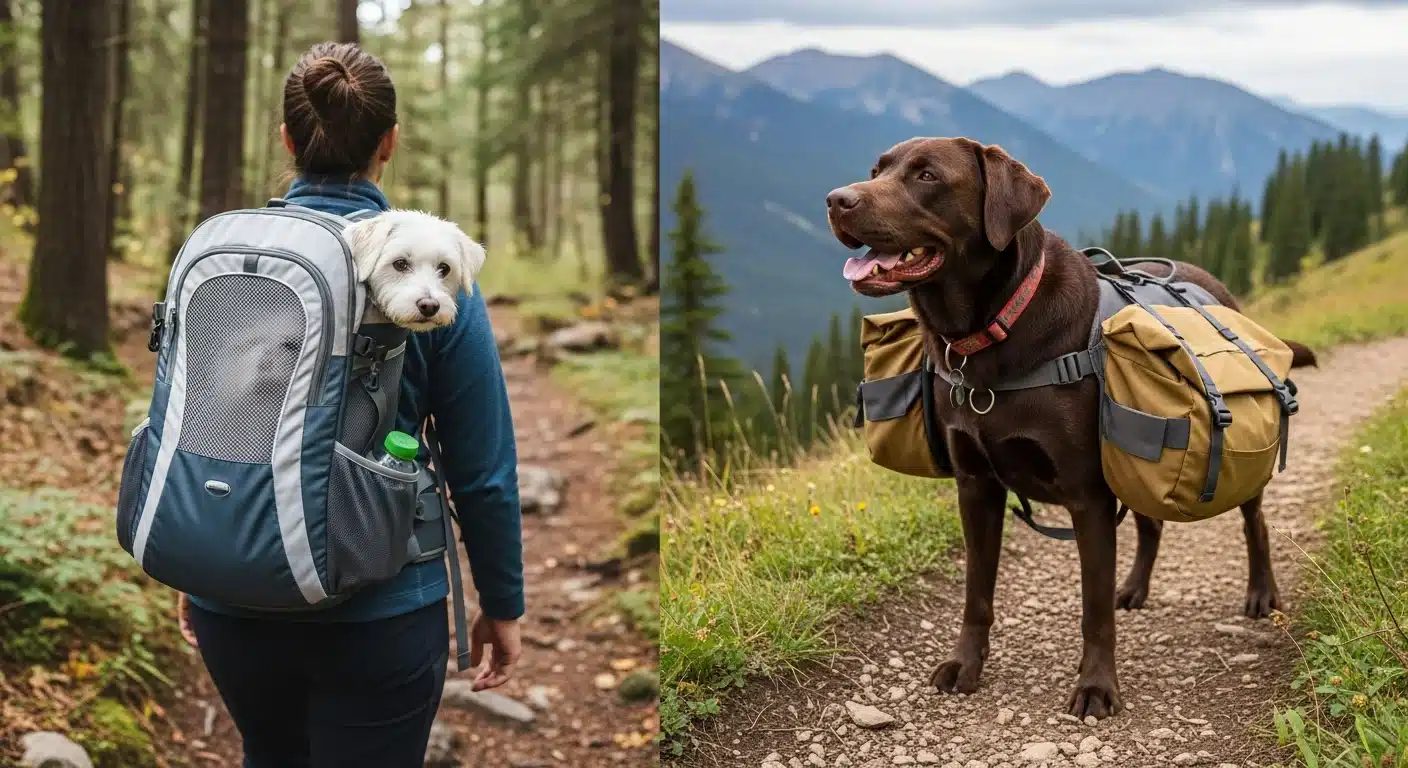
Dog Carrier Backpack vs Saddlebag: Which Do You Need?
Carrier backpack = dog rides inside. Saddlebag pack = dog carries gear. They solve opposite problems, here is how to tell which one you actually need.
There are two completely different things called a ‘dog backpack.’ A carrier backpack is worn by you, the dog rides inside while you carry them. A saddlebag pack is worn by the dog, they carry their own water and gear on trail. Search results mix the two constantly. Buying the wrong one means a pack that doesn’t work for your dog. Below is the clean distinction, a decision table by dog size and age, and links straight to our verified picks for each type.
The core distinction: one word separates them
Here is the only thing you need to know to choose: who is carrying the weight?
- Carrier backpack, you carry the dog. The dog sits inside a padded backpack you wear. The dog’s legs never touch the ground. This is for a small dog, a senior dog, an injured dog, or any dog who needs a rest mid-hike while still coming along for the adventure.
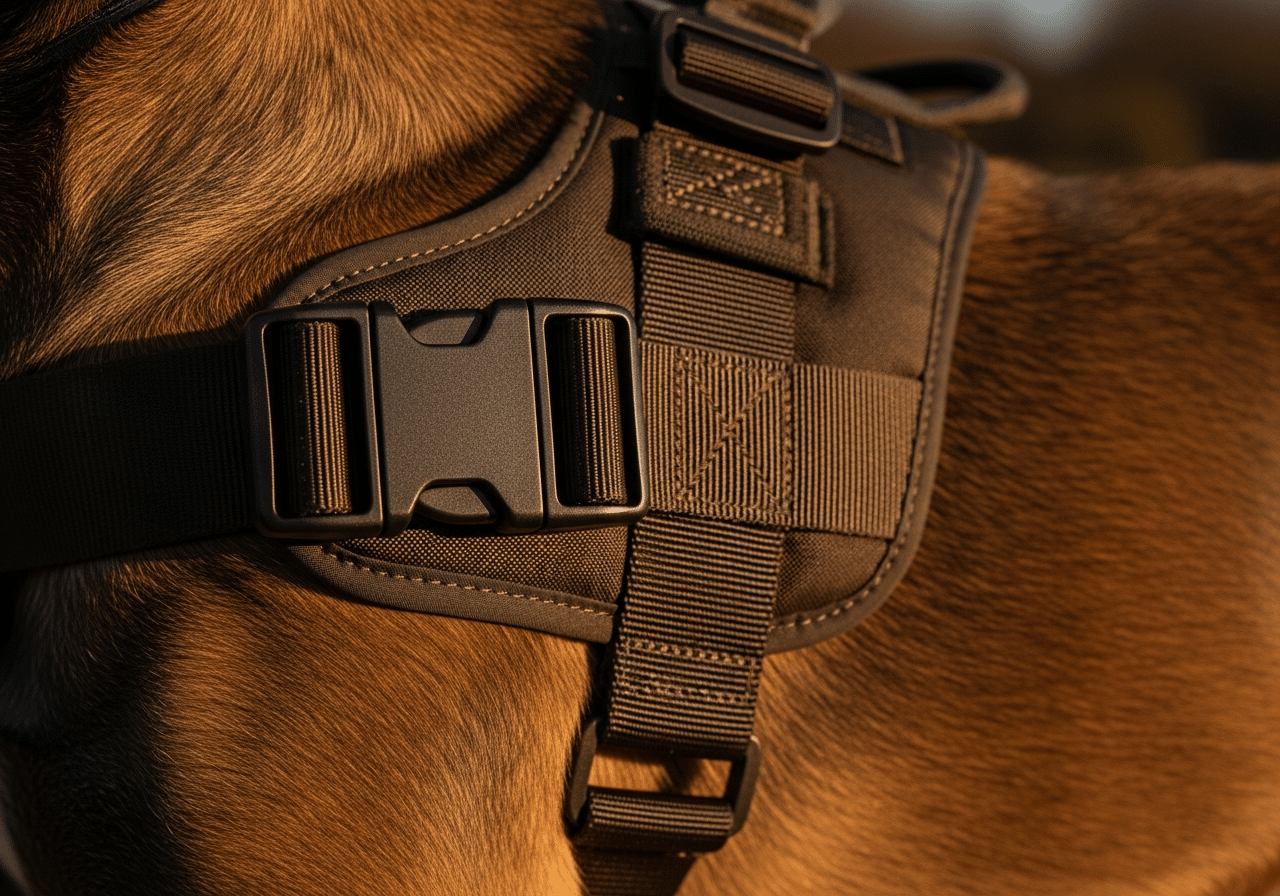
- Saddlebag pack, the dog carries the gear. The dog wears a vest-harness with panniers on each side and carries their own water, treats and supplies on trail. Your pack gets lighter. This is for a healthy, fit, medium-to-large dog who can cover the full route on their own four feet.
They look superficially similar, both are called “dog backpack” in search, but they solve opposite problems and work for very different dogs. Buying the wrong one means returning it, or more likely, a pack that lives in a cupboard.
Where to go from here
If you already know which type you need, jump straight to the guide:
- Carrier backpack (dog rides inside):Best Dog Carrier Backpack for Hiking, our top picks with sizing charts, ventilation guide and safety tether checklist.
- Carrier backpack for a small dog specifically:Best Dog Carrier Backpack for Small Dogs, includes airline-approved under-seat options.
- Saddlebag pack (dog carries gear):Best Dog Backpack for Hiking, top saddlebag picks with load-weight table and conditioning guide.
- Not sure how much weight your dog can carry?How Much Weight Can a Dog Carry in a Backpack?, the 10 to 15% rule explained by dog size and fitness level.
Decision table: carrier backpack or saddlebag pack?
Use this table to self-select. Find your dog in the left column; the recommendation follows.
| Your dog is… | Recommended type | Why |
|---|---|---|
| Small (under 20 lb) and healthy | Carrier backpack | Most saddlebag packs don’t fit small dogs, the back is too short for bags to sit level without rocking. A carrier lets the small dog come along for the whole hike without exhaustion. |
| Senior (7+ years), arthritic or post-surgery | Carrier backpack | A saddlebag adds lateral weight that strains joints. A carrier takes all the weight off the dog completely. |
| Puppy under 12 to 18 months | Carrier backpack | Puppies shouldn’t carry weight while growth plates are still forming. A carrier lets them come on the trail safely. |
| Recovering from injury or surgery | Carrier backpack | Any load on the dog’s back or torso is contraindicated during recovery. Carrier only, and check with your vet first. |
| Medium to large, fit, healthy adult (20+ lb) | Saddlebag pack | A healthy mid-to-large dog has the back length, muscle and stamina to wear a saddlebag comfortably for a full trail day. It also burns energy productively, they carry their own water, lightening your load. |
| Any size, dog can’t complete the route on their own | Carrier backpack | If the dog needs a carry at any point in the hike, you need a carrier backpack. A saddlebag only works for dogs covering the full distance. |
| Long-backed breed (Dachshund, Corgi, Basset) | Carrier backpack | Long-backed dogs are prone to spinal issues (IVDD). Lateral saddlebag weight can torque the spine. A carrier is the safer option, and their long backs often size out of many carrier packs anyway (measure first). |
| Flat-faced breed (Bulldog, Pug, French Bulldog) | Carrier backpack, monitor carefully | Brachycephalic dogs overheat faster in enclosed carriers. Prioritise ventilation, take frequent breaks, and avoid warm days. Don’t use a saddlebag unless the dog is fit and the load is very light. |
What is a carrier backpack? How it works and who it is for
A carrier backpack is exactly what it sounds like: a padded, structured backpack you wear, sized to hold your dog inside. The dog doesn’t touch the ground. You carry all the weight.
The two main designs
- Front-facing (open mesh panel). The dog faces forward, head out, looking in the direction you’re walking. The mesh panel at the front provides airflow directly to the dog’s face. This is the design most dogs adapt to fastest, being able to see where they’re going reduces anxiety significantly. Best for everyday use, city outings, and socialisation. The K9 Sport Sack Air 2 is the benchmark design in this category.
- Top-load (wide-hatch zip). The dog loads from a wide opening at the top and looks upward or forward through ventilated side panels. This design is faster to load and unload, important on a trail where you’re picking the dog up and putting them down repeatedly for stream crossings or scrambles. The Ruffwear Hitch Hiker is the go-to trail carrier in this category.
Sizing a carrier backpack
Carrier backpacks size by back length (collar base to base of tail), not by weight, breed name, or age. This matters because two dogs of the same breed at the same weight can have meaningfully different back lengths. Measure before you buy:
| Carrier size | Back length | Example breeds |
|---|---|---|
| XS | 9 to 12 inches | Chihuahua, Yorkshire Terrier, Pomeranian |
| Small | 13 to 16 inches | Maltese, Miniature Dachshund, Bichon Frisé |
| Medium | 17 to 19 inches | French Bulldog, Pug, Shih Tzu, Cavalier King Charles |
| Large | 20 to 22 inches | Cocker Spaniel, small Beagle, small Bulldog (up to ~25 to 30 lb) |
Safety checklist for any carrier
- Internal safety tether, clips to the dog’s harness (not collar) so the dog can’t bolt if the zip is accidentally opened.
- Ventilation, mesh panel, perforated foam interior, or open sides. Enclosed carriers trap heat; this is non-negotiable in any weather above cool.
- Secure zippers, dog-proof closures that can’t be nosed or pawed open from inside.
- Weight on your frame, padded shoulder straps and a sternum strap are essential for any carry over an hour. Most people can comfortably carry 15 to 20 lb of dog for a full day; a 25+ lb dog in a carrier is hard work over distance.
See the full guide: Best Dog Carrier Backpack for Hiking (all verified picks, sizing charts, ventilation comparison).
For small dogs or airline travel specifically: Best Dog Carrier Backpack for Small Dogs, includes under-seat dimension guidance.
What is a saddlebag pack? How it works and who it is for
A saddlebag pack (also called a dog hiking pack or dog trail pack) is a vest-harness with two side panniers. The dog wears it. The dog carries the weight. You carry nothing extra.
The key mental model shift: the dog is doing the carrying. This means the dog must be healthy enough to carry a load, fit, adult, no joint issues, no spinal conditions. The typical payload is the dog’s own trail supplies: water (split evenly between both panniers), treats, a collapsible bowl, and waste bags. For a large fit dog on an overnight hike, it might also carry a lightweight sleeping pad or shared camping supplies.
The 10 to 15% bodyweight starting rule
The commonly cited guideline is that a healthy adult dog can carry up to 25% of their own body weight in a saddlebag, but 10 to 15% is the practical starting point for most trail dogs, and the realistic daily carry for most day hikes. You don’t need to maximise the load for a saddlebag to be useful; a dog carrying 4 to 6 lb of water and snacks is meaningfully lightening your pack on a full-day outing.
Full breakdown by dog weight and conditioning: How Much Weight Can a Dog Carry in a Backpack?
Sizing a saddlebag
Saddlebags size by girth (chest circumference at the widest point behind the front legs). Measure with a soft tape and use the brand’s specific chart, sizing varies between Ruffwear, Outward Hound and other brands. The key fit checks:
- Bags hang level on both sides, if one drops lower than the other, adjust the strap or repack.
- Girth strap is snug (two-finger rule) but not restrictive of breathing.
- The pack clears the dog’s shoulder blades and elbow joints when walking.
- The dog’s gait is unchanged, no short-striding, stumbling, or repeated shaking of the pack.
Dogs that should not wear a saddlebag
- Any dog with joint issues, hip dysplasia, or back conditions, lateral load torques the spine.
- Long-backed breeds (Dachshund, Corgi, Basset Hound). IVDD risk is too high.
- Dogs under 15 to 20 lb, back is usually too short for bags to sit stable.
- Puppies and seniors, conditioning isn’t there or joint integrity is declining.
Full saddlebag picks, sizing and conditioning guide: Best Dog Backpack for Hiking.
Common questions when choosing between the two types
A few questions that come up when people are trying to decide:
Can my dog wear a saddlebag AND ride in a carrier on the same hike?
Yes, and this is a genuinely useful approach for a fit medium-sized dog on a long hike. The dog wears the saddlebag for the main trail miles, then rides in the carrier for the last tired stretch home or across a technical section. You carry the carrier empty (it folds flat or compresses), the dog carries their own water. Some trail runners and long-distance hikers do exactly this. You’d need a dog fit enough to wear a saddlebag and small enough to ride in a carrier, typically 18 to 25 lb.
I have a large dog. Can they use a carrier backpack?
Carrier backpacks are designed for dogs that the average adult human can carry for hours, so a 40 lb dog in a carrier becomes 40 lb on your back. For the occasional stream crossing or obstacle, a large dog can be lifted briefly without a carrier, but for genuine trail use, carriers are designed for dogs up to about 25 to 30 lb. A large fit dog is almost always a better saddlebag candidate anyway.
My dog is 22 lb. Which type?
It depends on health and fitness. A healthy 22 lb dog on a moderate trail can often wear a saddlebag (check the girth sizing, some packs start at XS for 20 lb dogs). The same dog with a joint condition, or on a demanding hike, belongs in a carrier. When in doubt, start with the carrier, it’s lower risk and you can always introduce a saddlebag later when you’ve confirmed the dog’s fitness level.
Are there backpacks that do both, carry the dog and let the dog carry gear?
Not credibly. A few novelty products claim to do both, but the designs compromise on both. A carrier has to hold the dog securely at chest height; a saddlebag has to distribute lateral weight at the dog’s flanks. These are engineering opposites. Own two packs if you need both functions, they’re different tools for different jobs. Start with the one that solves your immediate problem; add the second when the dog’s fitness and your hiking ambitions grow.
Where do I find the best picks for each type?
We’ve got both covered:
- Best Dog Carrier Backpack for Hiking, top carriers for trail use, with size charts and ventilation comparison. Full picks for dogs who need a ride.
- Best Dog Carrier Backpack for Small Dogs, small-dog specific guide, including airline-approved under-seat options for travel.
- Best Dog Backpack for Hiking, top saddlebag picks with load-weight tables, Ruffwear options and budget alternatives.
- Finding the Best Backpack for My Dog, our full overview of both types, all picks in one place.
Carrier backpack vs saddlebag: common questions
What is the difference between a dog carrier backpack and a saddlebag pack?
A carrier backpack holds the dog inside, the dog rides while the human carries. It is for small dogs, seniors, injured dogs or any dog that can’t complete the hike on their own legs. A saddlebag pack is worn by the dog like a vest harness with side panniers, the dog carries their own water, treats and supplies, and covers the full route on their own four feet. They solve opposite problems and work for different dogs. The only thing they share is the word ‘backpack’ in search results.
Which type of dog backpack is right for my small dog?
For a dog under about 20 lb, a carrier backpack is almost always the right choice. Saddlebag packs are sized by the dog’s back length and girth, most small dogs have a back too short for the panniers to sit level and stable. A carrier backpack lets your small dog come on a full hike without exhaustion, and many are airline-approved for cabin travel too. See our Best Dog Carrier Backpack for Small Dogs guide for sizing and top picks.
Can a large dog use a carrier backpack?
Carrier backpacks are designed for dogs the average adult can carry for hours, practically speaking, that means dogs up to about 25 to 30 lb. A 40 to 60 lb dog in a carrier is physically possible but exhausting, and no carrier is designed for that weight over distance. A large healthy dog is almost always a better saddlebag candidate, they can carry their own water and supplies comfortably, which is a much better use of their energy. See our Best Dog Backpack for Hiking guide for large-dog picks.
How much weight can a dog carry in a saddlebag pack?
The standard guideline is no more than 25% of the dog’s own bodyweight, and 10 to 15% is the safer, more comfortable starting point for dogs new to pack hiking. In practice: a 40 lb dog can carry 4 to 6 lb comfortably (a litre of water plus snacks is roughly that). Always load the panniers evenly, one side heavier than the other puts a lateral twist on the spine. Full weight table by dog size: How Much Weight Can a Dog Carry in a Backpack?
Can I use both a carrier and a saddlebag for the same dog?
Yes, and this is actually a practical approach for medium-sized dogs on long hikes. The dog wears the saddlebag for the main trail miles and carries their own water, then rides in the carrier for the last tired stretch or across technical terrain. You carry the carrier empty (it folds flat). This works best for dogs roughly 18 to 25 lb, big enough to carry some gear in a saddlebag, small enough to ride in a carrier when needed. Many experienced trail dog owners end up with both over time.
What dogs should not use a saddlebag pack?
Dogs that should not wear a saddlebag pack: any dog with joint issues, hip dysplasia or spinal conditions (including long-backed breeds like Dachshunds and Corgis where the lateral weight can worsen IVDD risk); puppies under 12 to 18 months (growth plates still forming); senior dogs with declining joint integrity; dogs under roughly 15 to 20 lb where the back length is too short for stable pannier fit. A carrier backpack is the right tool for these dogs.
Where can I find the best dog carrier backpack and saddlebag pack picks?
We cover both in detail: Best Dog Carrier Backpack for Hiking for top carrier picks with sizing and ventilation comparison; Best Dog Carrier Backpack for Small Dogs for small-dog and airline-travel specific options; Best Dog Backpack for Hiking for saddlebag picks including Ruffwear options and budget alternatives; and our full dog backpack overview which covers both types in one place.