 Dog Gear, Sized Right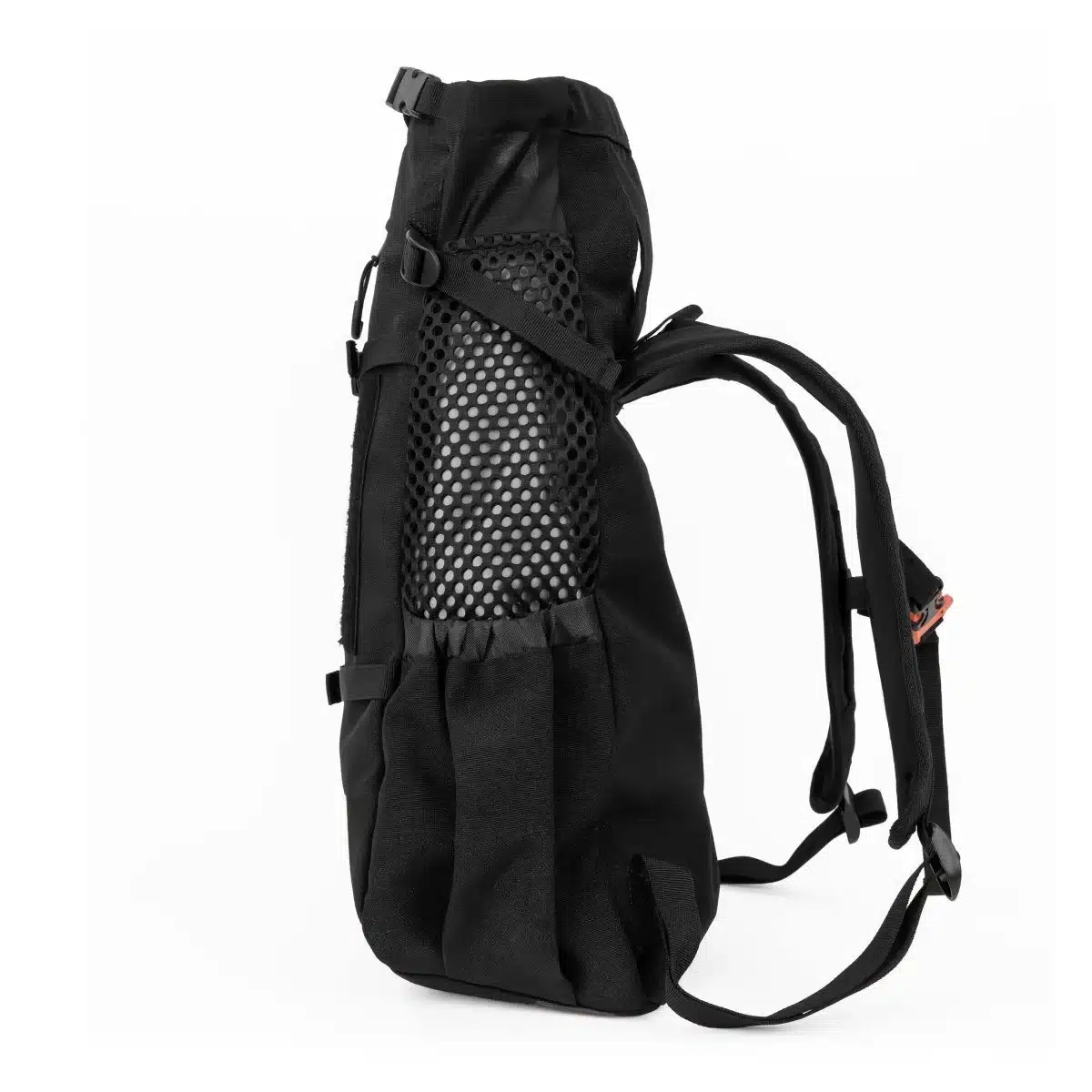
The Best Dog Backpack Carriers of 2026, Tested & Compared
Whether you need to carry your dog on a long hike or send your dog to carry the snacks, here are the best dog backpack carriers and saddlebag packs, with honest picks for both intents, real sizing guidance and exactly how to choose.
There are two completely different things called a ‘dog backpack.’ The first carries the dog, a carrier backpack you wear like any backpack, dog inside, which is what most people searching ‘best dog backpack carrier’ actually want. The second is a saddlebag pack worn by the dog, which lets a healthy hiking dog carry their own water and supplies on trail. Both are useful. Neither is a substitute for the other. Below we cover both, verified, in-stock picks, with carrier backpacks first because that’s the dominant search intent, and saddlebag packs after because many dog owners (and all the SERP competitors) cover both. Then we break down exactly how to size, fit, and use each type safely.
The best dog backpack carriers and saddlebag packs
Carrier #1 and #2 are carrier backpacks, the dog rides inside; you carry them. Saddlebag #1 to 3 are saddlebag packs, the dog wears the pack and carries their own supplies. All picks are verified in stock. Prices last-checked, tap through for live price.

K9 Sport Sack Air 2
The K9 Sport Sack Air 2 is the original front-facing dog carrier backpack and, for good reason, the one that turned up in almost every ‘best’ roundup we looked at. Your dog sits upright, facing forward, with head out, the design that dogs simply accept fastest because they can see where they’re going. The ventilated mesh front panel keeps airflow moving, the padded interior and adjustable bottom insert let you dial in the fit for your dog’s back length, and the carry handle plus padded shoulder straps mean you can run it as a backpack or hold it like a tote. It comes in six sizes from XS to L (fitted by back length: 9 to 22 inches from collar to tail) so it works for a 5 lb Chihuahua up to a 30 lb Cocker Spaniel, and in multiple colourways. The outer pockets carry treats, a folding water bowl, and your keys; a chest clip and internal safety tether keep your dog secure. For a dog that needs a ride, tired puppy, senior with joint trouble, injury recovery, or simply a small dog on a long hike, this is the carrier we’d buy first.
What we like
- Front-facing mesh lets the dog see out, the design dogs adapt to fastest, with the fewest refusals
- Six sizes cover dogs with 9 to 22 inch back lengths (XS = tiny up to L = ~30 lb Cocker Spaniel)
- Padded interior with adjustable insert; shoulder straps + carry handle for hands-free or hand-carry options
- Internal safety tether clips to a harness so the dog can’t bolt if the zip opens
- Outer pockets hold treats, a collapsible bowl, and essentials for a full day out
The catches
- Designed for small to medium dogs, check the back-length sizing chart carefully before buying
- In warm weather the enclosed fit is warmer than an open saddlebag; take water breaks for your dog
- Your dog sets the weight limit, not a kg rating, a larger, heavier dog in an L-size will fatigue you faster
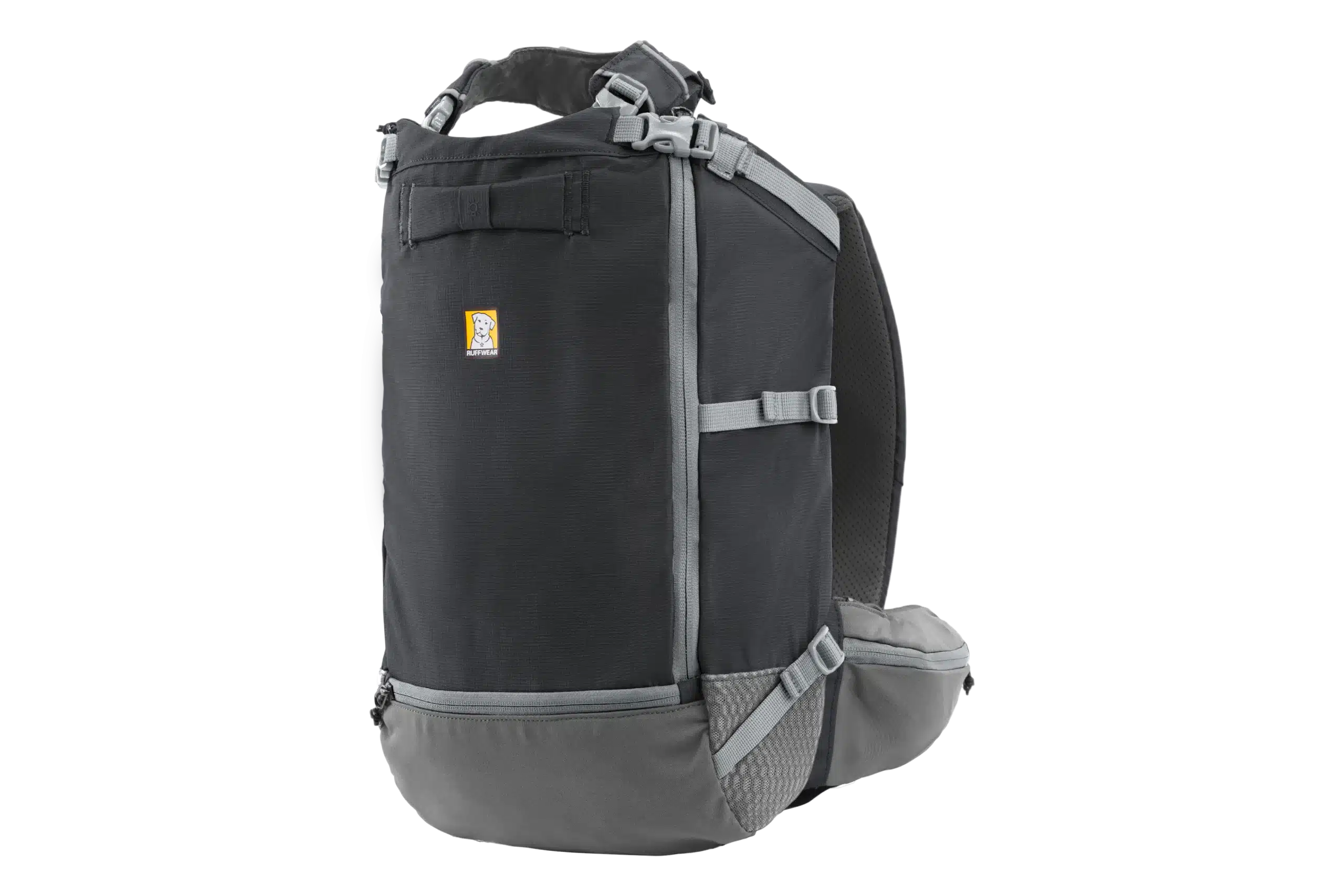
Ruffwear Hitch Hiker™ Dog Backpack Carrier
Ruffwear built the Hitch Hiker specifically for dogs who spend most of the hike on their own four feet but need a ride for a stream crossing, a steep scramble, or the last tired miles home. The dual locking zippers open the top into a wide hatch so the dog can drop in quickly without wrestling with a tight opening, the design is noticeably faster to load and unload than a front-zip carrier. Once zipped shut, a perforated foam back panel and ventilated sidewalls keep the dog comfortable, while the padded shoulder straps and sternum strap distribute the load properly across your frame for longer carries. An internal clip tethers to the dog’s harness. Ruffwear rates it for dogs up to 25 lbs / 11.3 kg. It’s the trail-hiker’s carrier: lightweight, fast to load, and built to Ruffwear’s rugged outdoor standard. If your dog is a true trail companion who mostly walks but needs lift-outs occasionally, this fits that use case perfectly.
What we like
- Dual locking top-load zippers create a wide opening, fastest to load and unload of any carrier here
- Ventilated perforated foam panel and mesh sides keep a dog comfortable inside for extended carries
- Padded shoulder straps and sternum strap distribute the weight across your frame properly for trail use
- Built to Ruffwear’s outdoor standard, durable hardware, quality stitching, matches their harness ecosystem
- Internal tether clip attaches to the dog’s harness so they’re secured even if the zip is opened
The catches
- Top-load is fast but the dog can’t see out as easily as the front-facing K9 Sport Sack, some dogs take longer to settle
- 25 lb weight limit, a good fit for small to medium dogs but rules out heavier breeds
- Premium Ruffwear price; if your dog only needs a carrier for a taxi across town, the K9 Sport Sack is the better value
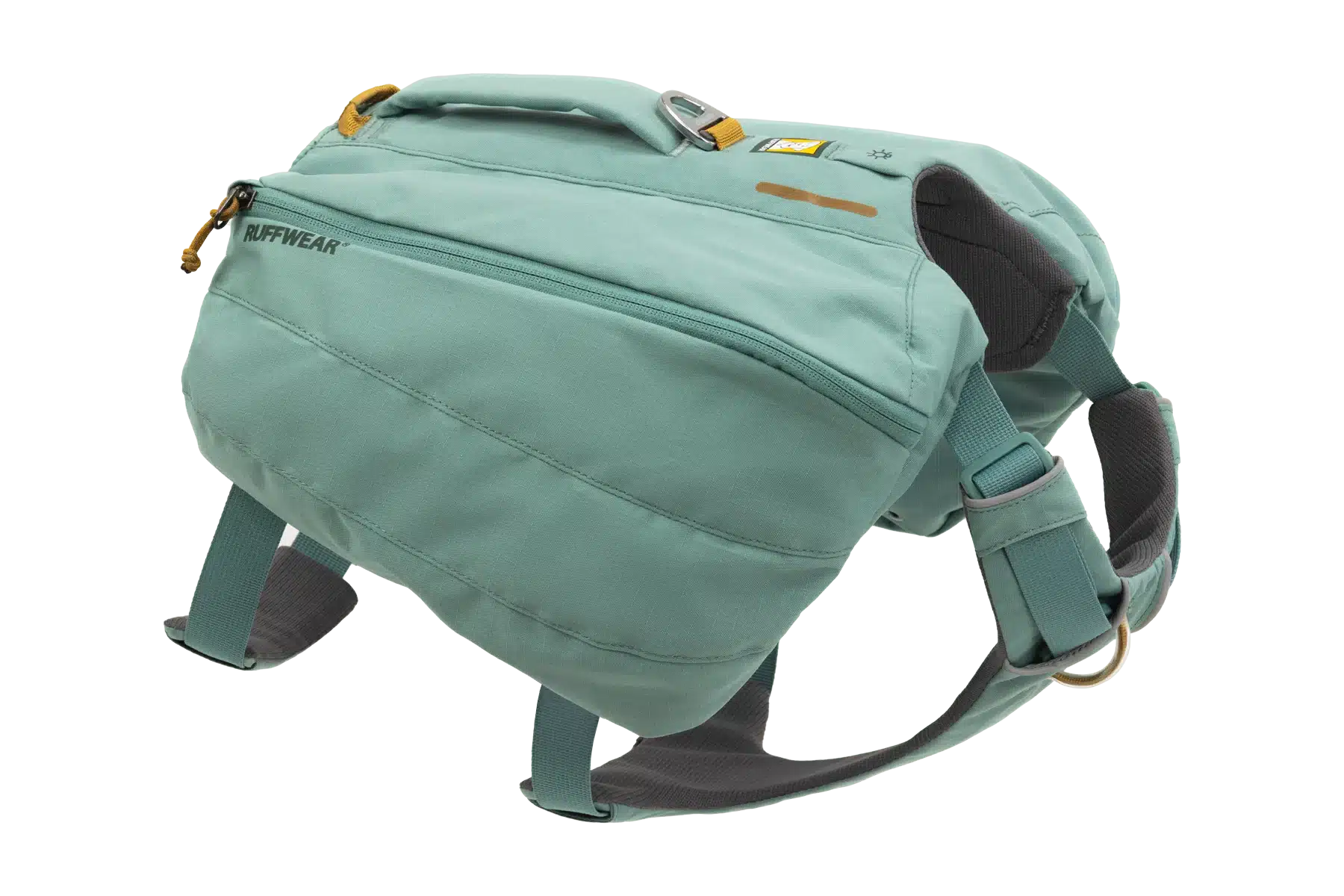
Ruffwear Front Range™ Day Pack
The Front Range Day Pack is built on Ruffwear’s most popular harness chassis, so it offers everything the Front Range harness already does, the padded chest and belly straps, the four adjustment points, the Ruffwear fit, plus a pair of radial-cut saddlebags that sit neatly on the dog’s flanks without swinging or catching on brush. The saddlebags are sized for a water bottle on each side, which is the most useful everyday load; if you need to carry more, step up to the Approach Pack (below). The belly strap keeps the bags snug so they don’t roll or slide on uneven ground, and a top handle lets you lift the dog over an obstacle without removing the pack. It’s available in sizes XS to XL to fit dogs from 13 to 42 inches of girth. At $79.99 it’s the most versatile daily-hiking saddlebag here: functional, well-fitting, and designed so the dog can move freely in it for a full day on trail.
What we like
- Radial-cut saddlebags sit flush against the dog’s flanks, don’t swing, snag or unbalance the dog on narrow trail
- Front Range harness base means four adjustment points and a genuinely comfortable, well-fitting chassis
- Top handle lets you lift the dog over stiles, stream crossings and obstacles without removing the pack
- Belly strap keeps the saddlebags snug on uneven terrain so they stay centred all day
- Sizes XS to XL suit a wide range of dogs, the size chart is girth-based and fits accurately
The catches
- The saddlebag volume is modest, a water bottle per side is the practical daily carry, not a full overnight kit
- At $79.99, it’s the mid-price option; the Outward Hound DayPak covers a tighter budget
- The harness-integrated design means you can’t easily swap to a different harness underneath
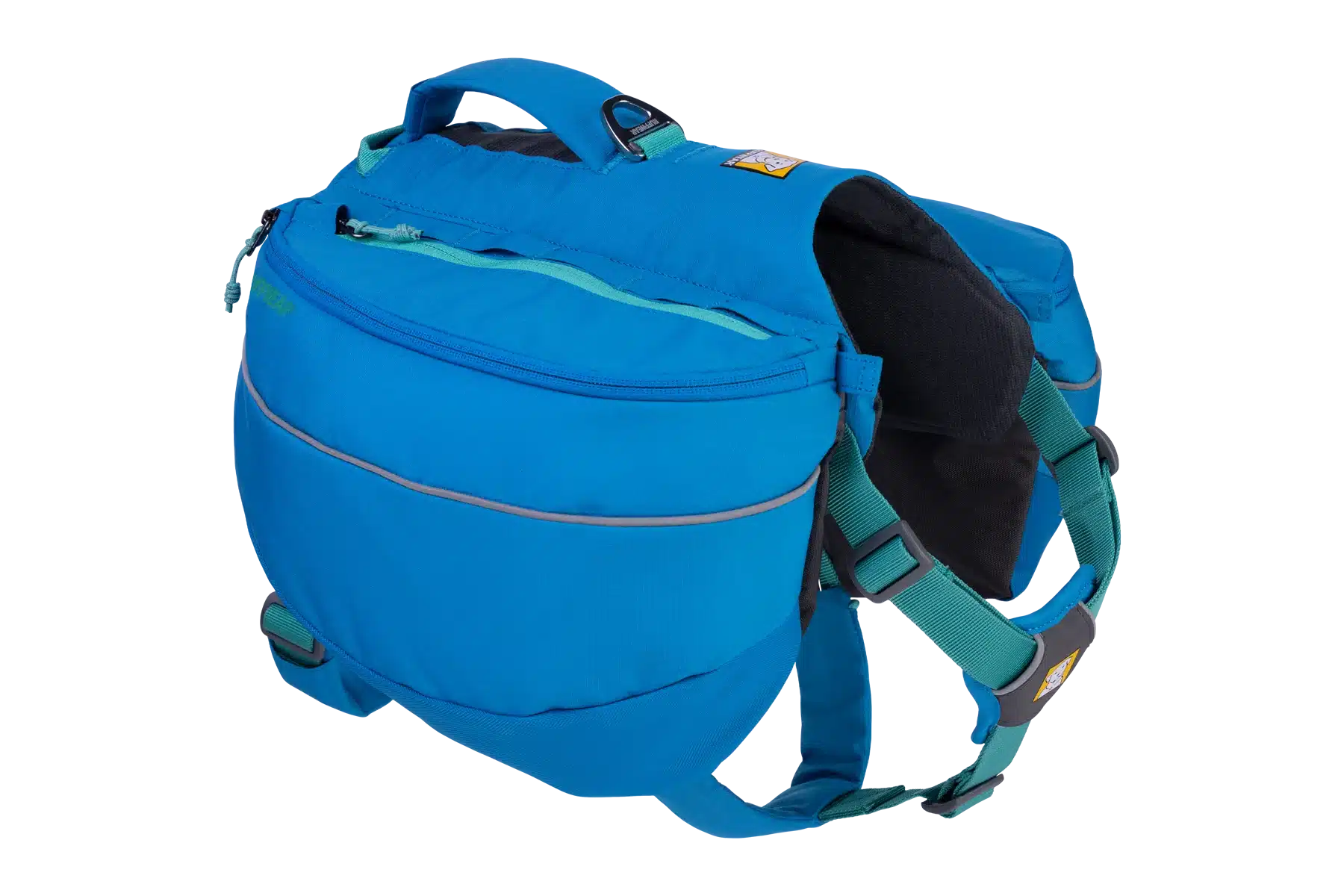
Ruffwear Approach™ Dog Backpack
The Approach Pack is the step up from the Front Range Day Pack: the same Ruffwear quality and radial-cut saddlebag geometry, but with more volume per bag, enough for a day hike’s worth of supplies (a water bottle, trail snacks, a first-aid kit) or a light overnight carry. The passive compression system means the bags cinch inward as they empty, so the load stays balanced rather than flopping once your dog drinks half the water. Four compression straps let you dial in the fit around the dog’s torso, and a padded sternum strap and belly strap lock the pack in place on rough ground. A top handle for quick lifts is standard, as is a leash attachment ring. The vet-recommended load for a healthy adult dog is no more than 25% of body weight, so a 40 lb dog can carry about 10 lb. At $59.99, it undercuts the Front Range Day Pack while giving you more capacity, making it the best-value hiking saddlebag in the range.
What we like
- Passive compression: saddlebags cinch in as they empty so the load stays balanced all day
- More bag volume than the Front Range Day Pack, suits a full day hike or a light overnight
- Four compression straps let you dial the fit tightly against the dog’s torso for stability on rough ground
- Top handle and leash attachment ring built in; sternum and belly straps lock the pack in place
- Best value in the Ruffwear pack range, more capacity than the Front Range but lower price
The catches
- The torso-harness fit is separate from the Front Range harness platform, dogs already fitted for Front Range may need re-measuring
- A bigger pack means slightly more weight on the dog’s back even when empty, worth noting for smaller dogs
- At $59.99 it doesn’t have the high-fashion colourways of the Front Range Day Pack
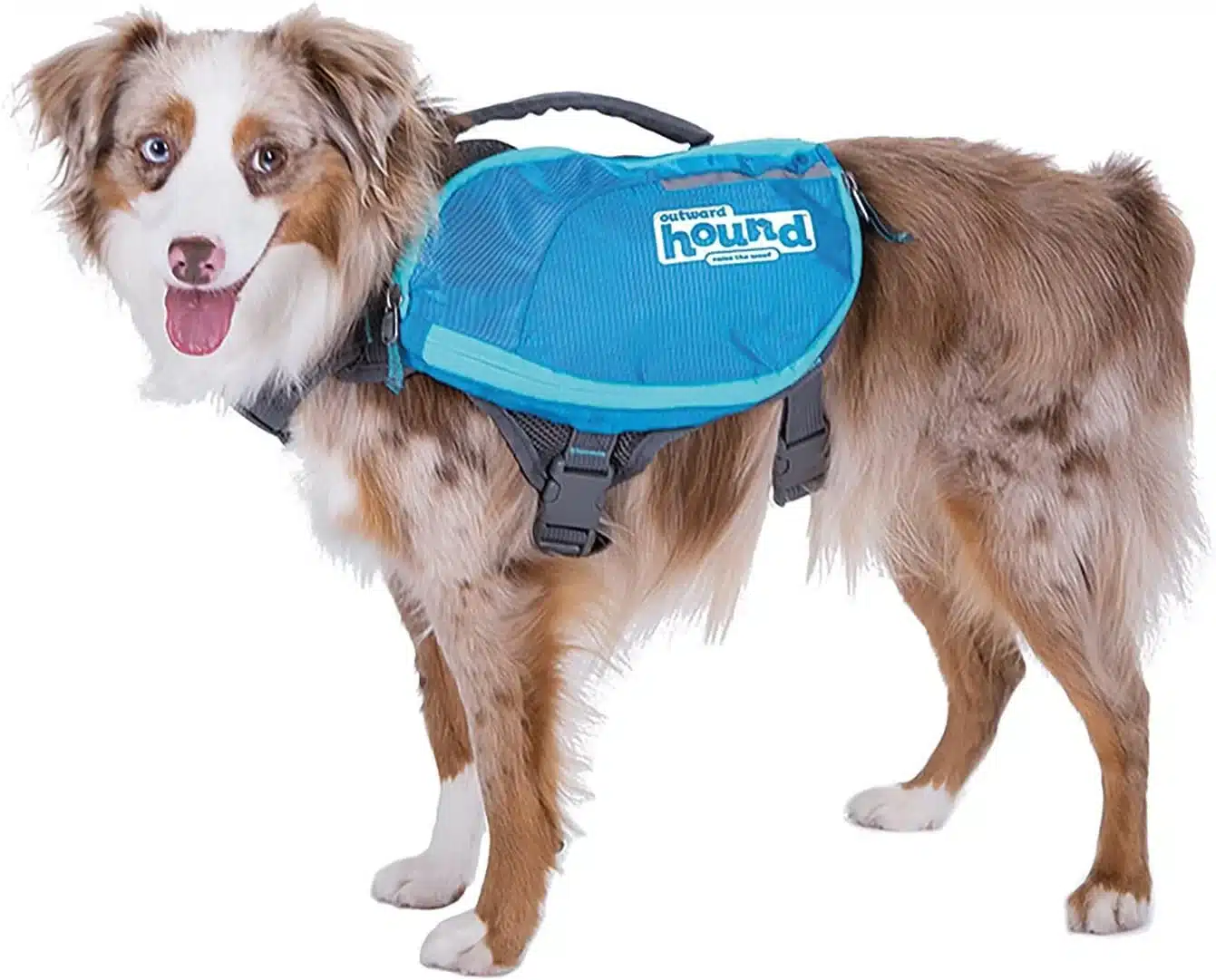
Outward Hound DayPak Dog Saddlebag
Not every hike needs premium gear, and the Outward Hound DayPak is the pick for owners who want their dog to carry a lightweight load on trail without spending $60 to 80 on a Ruffwear pack. It fits with an adjustable mesh body and a simple buckle system, no fiddly straps, and the two saddlebags are sized right for a dog’s daily kit: a small water bottle, some treats, a folding bowl, and a few waste bags. The mesh is lightweight and breathable, which matters on warm-weather hikes. It comes in Small, Medium and Large and fits dogs roughly 15 to 80 lbs depending on size. It won’t carry the volume of a Ruffwear Approach Pack, it won’t last as many years, and the compression system is absent, but at around $33, it’s a legitimate hiking pack for a dog who needs to carry their own essentials without a big outlay. An excellent starter pack for a dog new to wearing a backpack.
What we like
- Most affordable saddlebag here at ~$33, a genuine hiking pack for a dog, not a toy
- Breathable mesh body keeps the dog cooler than a solid-panel pack on warm-weather hikes
- Simple buckle adjustment is fast and intuitive, easy to put on and take off between trail sections
- Good starter pack for dogs new to backpacking: lightweight enough not to feel overwhelming
The catches
- Smaller total volume than the Ruffwear packs, a daily snack/water kit is the practical limit
- No compression system: as the bags empty they can shift slightly; adjust the buckle mid-hike
- Build quality is budget-level, it’ll do a season or two of regular hiking, not years of hard use
Carrier backpack vs saddlebag pack: understanding the two different intents
Search “dog backpack” and you’ll land on two completely different products that share a name. Getting this wrong means buying something your dog, and you, won’t use.
- Carrier backpacks (dog rides inside). The dog sits in the bag and you carry them on your back. They’re popular for small dogs on long hikes, dogs with joint trouble or injuries, elderly dogs who can’t cover the whole route on their own four feet, or puppies too young for full walks but old enough to want the adventure. Best known brands: K9 Sport Sack (front-facing mesh), Ruffwear Hitch Hiker (top-load trail carrier). Weight limit is the human’s, not the dog’s, but plan to be carrying 10 to 30 lbs of dog for hours if needed. These are the dominant SERP result and the reason most people land on “best dog backpack carrier.”
- Saddlebag packs (dog wears the pack). The dog wears the pack like a vest harness with two side bags. You carry nothing extra, the dog carries their own water, treats and waste bags, lightening your load. These are for healthy, fit dogs on trail, think medium to large breeds going on day hikes or light overnights. They don’t work for very small dogs (not enough back length), and they’re not suitable for dogs with joint problems or harness-sensitive skin. Ruffwear makes the gold-standard options (Approach Pack and Front Range Day Pack); Outward Hound’s DayPak is the budget entry point.
How to choose a carrier backpack: sizing, ventilation and weight limits
Carrier backpacks are sized by your dog’s back length (from collar to base of tail), not by weight, not by breed, and not by carrier size. A Dachshund with a short back and a Beagle of similar weight will need different sizes. Always measure first.
Sizing guide
- XS (9 to 12″ back): Chihuahua, Yorkshire Terrier, tiny toy breeds.
- Small (13 to 16″): Miniature Dachshund, small Poodle, Maltese, Bichon Frisé, Pomeranian.
- Medium (17 to 19″): Miniature Schnauzer, French Bulldog, Pug, Shih Tzu, Cavalier King Charles.
- Large (20 to 22″): Cocker Spaniel, Beagle, small Bulldog; up to roughly 25 to 30 lb.
Weight limits: it’s your back, not the carrier rating. A carrier backpack doesn’t have a weight “rating” the way a climbing harness does. What limits you is comfort and spinal load for the human, and the realistic answer is that most adults can comfortably carry up to about 20 to 25 lb for a full day’s hiking, and a 15 to 20 lb dog is the sweet spot for multi-hour carries. Heavier dogs get heavy fast.
Ventilation: front-facing vs top-load
- Front-facing (K9 Sport Sack Air 2): Mesh panel faces forward so the dog looks out at the world and can smell the trail. Dogs acclimate faster, being able to see reduces anxiety. Better airflow on the dog’s face. Preferred for city use, socialisation and nervous dogs.
- Top-load (Ruffwear Hitch Hiker): Wide hatch opening means faster, easier loading, you don’t have to fold or coax the dog in. The dog looks up or straight ahead through mesh panels. Preferred for trail use where you load and unload frequently (stream crossings, scrambles).
How to fit a saddlebag pack: load weight, back length and breed guide
A saddlebag pack fits like a harness, measured around the dog’s girth (the widest point behind the front legs) for the strap fit, and by back length for the bag length. Most brands (including Ruffwear) size by girth in inches; their charts are specific enough that you should take a proper measurement with a tape rather than guessing by weight.
Load weight guidelines (the 25% rule)
Vets generally recommend a healthy, fit dog carry no more than 25% of their own body weight in a saddlebag pack, and 10 to 15% is a safer starting point for dogs new to pack hiking, and the realistic carry for most day hikes (you don’t actually need to max it out to be useful).
| Dog weight | Max recommended carry | Practical day-hike load |
|---|---|---|
| 20 lb (9 kg) | 5 lb (2.3 kg) | 2 to 3 lb, treats, a small bottle, bags |
| 40 lb (18 kg) | 10 lb (4.5 kg) | 4 to 6 lb, a litre of water, snacks, first aid |
| 60 lb (27 kg) | 15 lb (6.8 kg) | 6 to 8 lb, full day-hike kit or lightweight overnight |
| 80 lb (36 kg) | 20 lb (9 kg) | 8 to 12 lb, full overnight kit for a strong, fit dog |
Which dogs suit a saddlebag pack?
The sweet spot is a healthy, mid-to-large, trail-fit dog: a Labrador, a Golden Retriever, a Vizsla, a German Shepherd, an Australian Shepherd, a Husky, a Border Collie, a Weimaraner. These dogs benefit from carrying their own weight, it burns extra energy, gives them a “job,” and reduces your pack weight on long days. Dogs under roughly 15 to 20 lb usually have a back too short for the bags to sit comfortably; use a carrier pack instead.
Hiking safely with a dog pack: conditioning and common mistakes
A dog who hikes with a saddlebag pack isn’t an automatic trail dog, they need the same gradual conditioning that vets recommend for any new activity. Putting a loaded pack on a dog for their first-ever 15-mile day is the formula for sore muscles and a dog that refuses the pack next time.
- Start empty, then add load. Introduce the pack as a vest with no weight in the bags for the first few walks. Let the dog move in it, get used to the feel, and confirm it fits without rubbing. Then add a small load, a third of the target weight, and watch for gait changes (stumbling, short-striding, leaning) that suggest discomfort.
- Load the bags evenly, side to side. Uneven loading puts a constant lateral pull on the dog’s spine. If you’re carrying a single water bottle, split the weight: half the water in each side bag. This matters more the heavier the total load.
- Watch for rub spots. The front-leg armpits and behind the elbows are the most common friction points on any saddlebag pack. Check after the first few hikes; a neoprene anti-chafe patch or a Ruffwear Brush Guard add-on stops a small rub from becoming a sore.
- Take the pack off for water and rest breaks. Even a well-fitted pack benefits from being removed for 10 minutes every couple of hours. Dogs don’t always show that they’re uncomfortable until they stop.
- Don’t pack a dog in heat. A saddlebag pack adds insulation and reduces airflow across the dog’s flanks. On warm or humid days, reduce the load or leave the pack at home.
Done correctly, a saddlebag pack adds years to a trail dog’s career: they contribute to the hike rather than just following, they burn extra energy that would otherwise require longer distances, and they wear out at the same rate you do, which is usually exactly what you want.
More dog gear guides
Dog backpack common questions
What size dog can go in a carrier backpack?
Carrier backpacks are sized by back length (collar to base of tail), not by weight or breed name. Most carrier backpacks comfortably fit dogs with a back length of 9 to 22 inches, typically small to medium dogs up to about 25 to 30 lb. The K9 Sport Sack Air 2 offers six sizes (XS to L) covering that full range. For context: a back length of 9 to 12 inches is a Chihuahua or toy breed; 17 to 19 inches is a French Bulldog or Pug; 20 to 22 inches is a Cocker Spaniel or small Beagle. Measure your dog, then check the brand’s size chart, the fit by back length is more accurate than any ‘up to X lb’ claim.
How do I know if a saddlebag pack fits my dog correctly?
A correctly fitted saddlebag pack should clear the dog’s elbows and shoulder blades, sit level on the back (bags hanging evenly on both sides), and not restrict the dog’s normal gait. The girth strap (around the belly) should be snug enough that the pack doesn’t slide side to side when the dog moves, but loose enough that you can slide two fingers underneath. After the first walk, check the front-leg armpits and behind the elbows for any rub marks, these are the most common friction spots. If the dog is short-striding, stumbling or shaking the pack off, the fit is wrong or the load is too heavy.
How much weight can a dog carry in a saddlebag pack?
The standard vet recommendation is no more than 25% of the dog’s body weight, and 10 to 15% is a safer, more comfortable starting point for dogs new to pack hiking. In practice: a 40 lb dog can carry 4 to 6 lb of gear comfortably (a litre of water plus snacks is roughly that); a 60 lb dog can carry 6 to 8 lb. Always load the bags evenly side to side to avoid lateral spinal load. Dogs with joint problems, hip dysplasia, or back issues (especially long-backed breeds) should not wear a saddlebag pack at all, a carrier backpack is the right alternative.
Are dog carrier backpacks safe?
Yes, when properly sized and used correctly. The key safety features to look for: an internal safety tether that clips to the dog’s harness (stops the dog bolting if the zip is opened), ventilation (mesh panels, perforated foam, or open sides) so the dog doesn’t overheat, and a secure zip or closure that can’t be nosed or pawed open from inside. Never leave a dog unattended in a carrier backpack. In hot weather, limit carrier time, an enclosed pack adds warmth and reduces airflow. For dogs with respiratory issues (flat-faced breeds in particular), extra care on warm days is important. Both packs above (K9 Sport Sack and Ruffwear Hitch Hiker) include safety tethers and are designed with ventilation as a core feature.
What is the difference between a dog carrier backpack and a saddlebag pack?
They solve opposite problems. A carrier backpack carries the dog, the dog rides inside the pack while you carry them on your back. It’s for small dogs, senior dogs with joint issues, injured dogs, or any dog who needs a rest mid-hike. A saddlebag pack is worn by the dog, like a vest harness with side bags, and the dog carries their own water, treats and supplies. It’s for healthy medium to large dogs who can hike the full distance. You carry nothing extra; the dog shoulders part of the day’s kit. Most people searching for ‘best dog backpack carrier’ want the first type (dog riding inside), that’s where we started this guide.
Can I use a dog carrier backpack for hiking?
Yes, that’s exactly what they’re designed for. The K9 Sport Sack Air 2 and the Ruffwear Hitch Hiker both have padded shoulder straps and a sternum strap for proper load transfer, and both are built for trail use. The practical limits are: (1) your own endurance carrying 15 to 30 lb on your back for hours at elevation, (2) heat management, the enclosed carrier gets warm, so factor in water breaks for the dog, and (3) your dog’s weight, beyond about 25 lb most people find an all-day carry in a dog backpack genuinely tiring. For very long or high-altitude hikes with a heavier small dog, a framed hiking carrier (the kind with a waist belt, like an infant carrier) distributes the weight better, but the packs above are excellent for trail use up to a full day.