 Dog Gear, Sized Right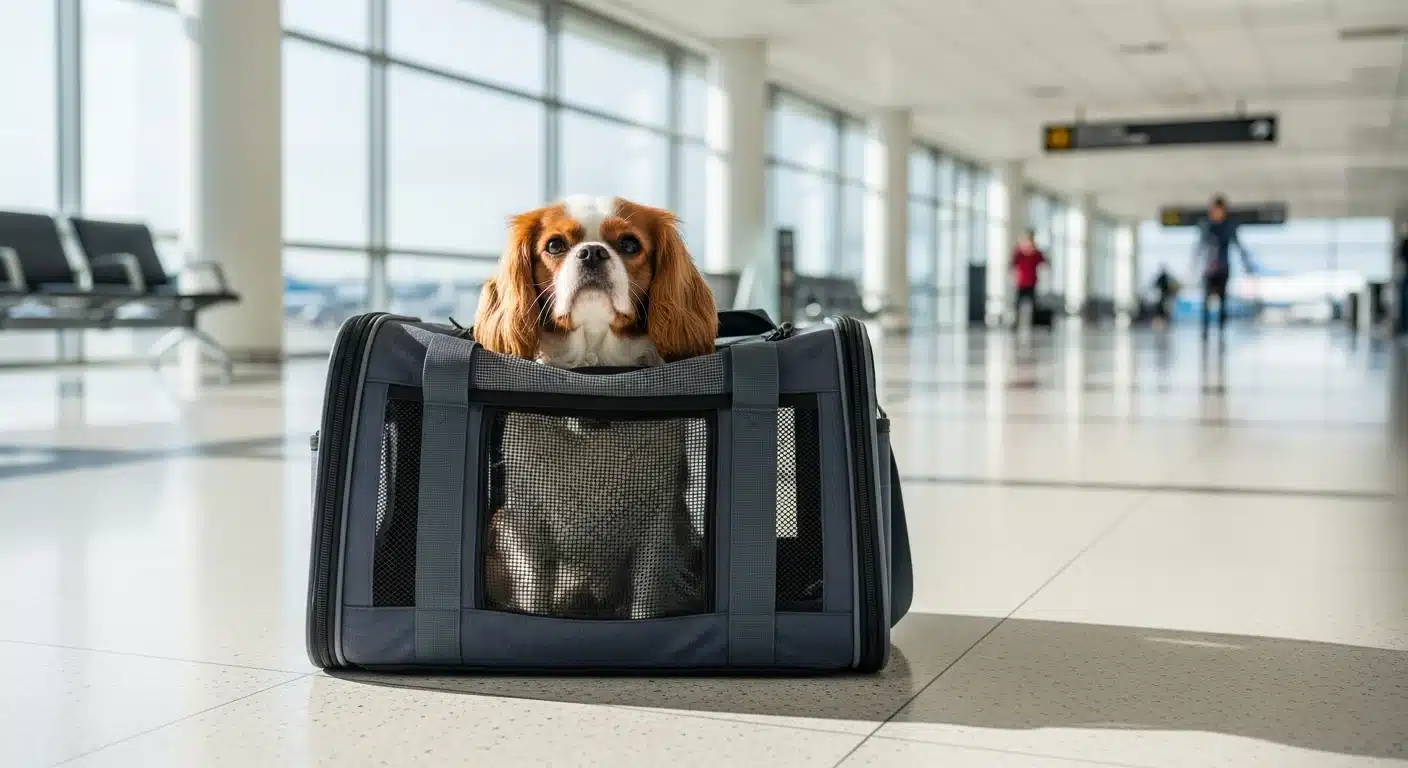
How to Fly With a Dog: In-Cabin, Cargo & Carrier Rules
Everything you need before booking: in-cabin vs. cargo, carrier sizing, health certificates, breed restrictions, fees, and day-of tips to keep your dog calm.
Flying with a dog takes planning, the right carrier, the right paperwork, and the right airline choice. Get it wrong and you’re at the gate with a non-compliant kennel or a dog that can’t board. Get it right and air travel is a safe, manageable option for dogs of almost any size. Here’s everything you need, from in-cabin basics to cargo requirements and day-of tactics.
In-Cabin vs. Cargo: Which Option Is Right for Your Dog?
The first decision when flying with a dog is whether your dog travels in the cabin with you or in the cargo hold as checked baggage. The answer usually comes down to size, and the distinction matters a great deal for your dog’s stress levels, safety, and the paperwork you’ll need.
| Factor | In-Cabin | Cargo / Checked |
|---|---|---|
| Dog size | Typically ≤20 lb combined (dog + carrier) | Any size (IATA-compliant hard kennel required) |
| Carrier type | Soft-sided, fits under seat (varies by airline) | Hard-sided, IATA Regulation 82 compliant |
| In-cabin with you? | Yes, carrier under the seat in front | No, loaded in temperature-controlled cargo hold |
| Typical fee (one-way) | $95-$150 USD | $150-$200 + oversize fees |
| Health certificate | Required by most airlines; USDA/APHIS for international | Required; often must be issued within 10 days of travel |
| Brachycephalic breeds | Permitted in cabin by most airlines (verify) | Often banned or restricted, breathing risk in hold |
| Advance booking | Book early, pet slots are limited (often 4 to 7 per flight) | Book early, cargo pet spaces fill up |
| Best for | Small dogs, anxious pets, owners who want visual contact | Large dogs, long-haul, no in-cabin alternative |
If your dog weighs around 20 lb or less in the carrier, in-cabin travel is almost always the better experience: you can see your dog, soothe it during turbulence, and avoid the variable conditions of the cargo hold. For dogs over that threshold, cargo is the only permitted option on most commercial airlines, so planning, paperwork, and kennel choice become critically important.
Flying Your Dog In-Cabin: What You Need to Know
Flying a small dog in the cabin is straightforward once you know the rules, but those rules vary by airline, and it pays to confirm every detail when you book, not at the gate.
- Weight limit (combined). Most US airlines set a combined in-cabin limit of around 20 lb (dog + carrier), but some cap it lower. Always check the current policy for your specific carrier.
- Carrier dimensions. Soft-sided carriers must fit under the seat in front of you. Typical under-seat clearances range from roughly 17 to 19 inches long, 11 to 13 inches wide, and 8 to 11 inches tall, but dimensions differ by aircraft model. Confirm the exact numbers with your airline and measure your carrier before buying a ticket.
- Pet slots per flight. Airlines limit the number of pets in the cabin, often 4 to 7 animals per flight, first-come, first-confirmed. Book your pet ticket immediately after booking your seat.
- The carrier stays closed. Your dog must remain in the closed, ventilated carrier for the entire flight. The carrier counts as your personal item or carry-on.
- In-cabin fee. Expect to pay roughly $95-$150 each way on US carriers. International flights can be higher.
- Health certificate. Many airlines require a health certificate issued by a licensed veterinarian, typically within 10 days of travel. International routes almost always require one plus destination-country documentation.
Flying Your Dog in Cargo: IATA Kennels, Temperature Embargoes & Safety
For large dogs, or any trip where in-cabin isn’t available, cargo travel is well-regulated and millions of dogs do it safely every year. The key is preparation: the right kennel, the right paperwork, and the right airline.
The IATA-compliant hard kennel
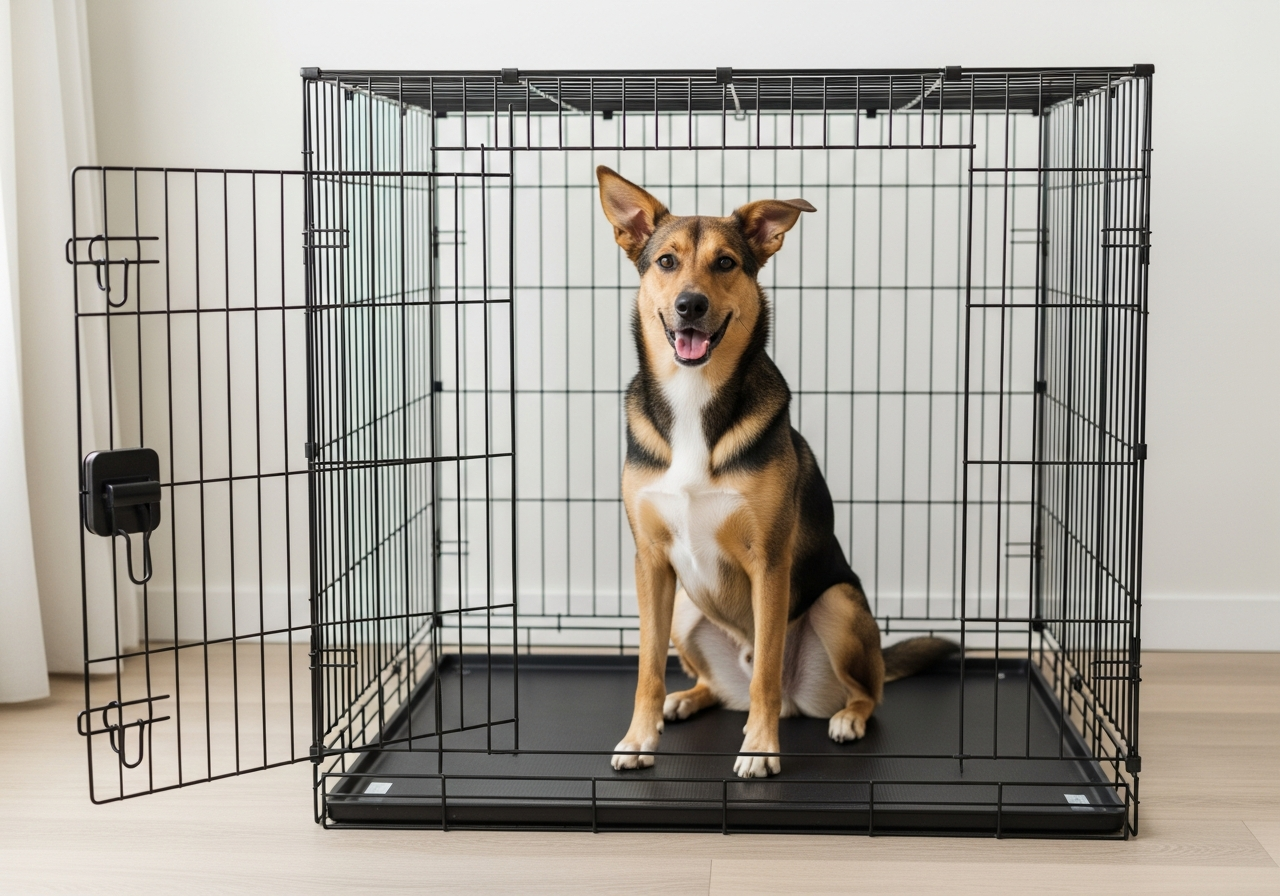
Your dog’s crate must meet IATA Live Animal Regulations (LAR, Regulation 82 for dogs). Key requirements:
- Hard-sided construction (rigid plastic or metal), no collapsible or soft-sided crates
- Ventilation on at least three sides, often all four, with no blockages
- Leakproof floor with absorbent bedding
- Secure door latches that can be opened in an emergency
- Your dog must be able to stand, turn around, and lie down naturally inside
- Food/water bowls attached inside the door accessible from outside for airport staff
Most major pet-crate brands (Petmate Sky Kennel, Vari Kennel, etc.) sell IATA-approved models. Check the label before buying, non-compliant kennels will be refused at check-in.
Temperature embargoes
Airlines will refuse to carry a dog in cargo when ground temperatures at origin, layover, or destination fall outside a safe range, typically when it’s forecast to be below 45°F (7°C) or above 85°F (29°C) on the tarmac. Summer travel can trigger heat embargoes mid-day; winter travel in cold-climate airports can trigger cold holds. This policy exists to protect your dog, but it can mean your flight goes without your pet. Choosing a direct, early-morning flight in moderate weather reduces the risk of an embargo.
Brachycephalic breed restrictions
Flat-faced (snub-nosed) breeds. Bulldogs, French Bulldogs, Pugs, Boston Terriers, Boxers, Shih Tzus, and others, have compressed airways that make breathing harder under stress and in reduced-oxygen cargo holds. Many airlines ban brachycephalic breeds from cargo entirely or restrict them to specific seasons. Some will still allow these breeds in-cabin if they meet size requirements. Check your airline’s banned-breed list before booking, not after.
Cargo alternatives: pet-shipping services
For a large dog or an international relocation, a professional pet-shipping service handles the entire logistics chain: IATA kennel sourcing, health certificates, import permits, cargo booking, and airport handling. Services like IPATA-member companies specialize in this and can be worth the premium for a complex or high-stakes move. Costs vary widely, from a few hundred dollars for domestic to several thousand for international, but the expertise reduces error risk significantly.
Health Certificate & Documentation: What You Actually Need
Every airline has its own documentation requirements, and international travel adds another layer on top. Here’s what most owners need to know:
- Vet-issued health certificate. Most airlines require a Certificate of Veterinary Inspection (CVI), a licensed vet’s statement that your dog is healthy and fit to fly. Many carriers require it to be dated within 10 days of your travel date, which means a vet visit just before the trip, not months ahead. Confirm the exact window with your airline.
- Vaccines. Rabies vaccine is standard; some destinations require additional vaccines. Make sure vaccine records are current and legible, some airlines and border agents check them.
- USDA/APHIS endorsement (international). For flights to many foreign destinations, your vet’s health certificate must be endorsed by your local USDA Animal and Plant Health Inspection Service (APHIS) office. This adds time and a fee, plan accordingly. More details at the USDA APHIS pet travel page.
- Destination-country import requirements. Some countries require microchipping, specific treatments (e.g. tapeworm treatment), or a quarantine period. This is entirely separate from the airline’s requirements, research it well in advance.
- Microchip. If your dog isn’t already microchipped, it should be, especially before any air travel. Update the registry with your current contact information.
How to Book a Flight With Your Dog (Step by Step)
Flying with a dog requires a few extra steps that can’t be skipped, and the order matters:
- 1. Research airlines. Compare in-cabin weight limits, carrier dimension requirements, per-flight pet allotments, fees, and breed restrictions before buying any ticket. A good deal on a fare means nothing if the airline won’t take your dog’s size or breed.
- 2. Book your flight first, then add your pet immediately. Call the airline (don’t just book online) to confirm and reserve a pet spot on your specific flight. The number of in-cabin pet spots is limited, reserving the seat and then calling to add the pet is the safest sequence.
- 3. Confirm the carrier dimensions. Ask for the exact under-seat dimensions for the aircraft on your specific route. Planes differ, a carrier that fits on one aircraft may be refused on another.
- 4. Schedule the vet visit. Book the health certificate appointment close to departure (usually within 10 days). Mention at booking that you’re flying so the vet can prepare the correct form and any required documentation.
- 5. Buy or source the carrier. Measure the dimensions against your airline’s confirmed specs before purchasing. If going cargo, confirm the kennel is IATA-compliant for that airline.
- 6. Practice with the carrier at home. Leave it open, feed treats inside it, and let your dog sleep in it before the trip. A familiar carrier dramatically reduces stress on travel day.
Day-of-Flight Tips to Keep Your Dog Calm and Safe
Even with perfect preparation, travel day has its own demands. These habits make a real difference:
- Exercise before you leave. A well-exercised dog settles more easily. Take a longer walk or play session in the morning, arrive at the airport with a tired dog, not an amped-up one.
- Limit food and water in the hours before the flight. A light stomach reduces the risk of motion sickness or an accident in the carrier. Offer water until about 2 hours before departure, then taper off. Don’t skip water entirely, hydration matters.
- Potty break right before security. Find a relief area before you go through the security checkpoint. Once inside the terminal, options narrow quickly.
- Remove the leash and collar before placing your dog in the carrier. Collars can snag on carrier zippers and wiring, use a plain ID tag or attach it to the carrier exterior. Keep your contact info on both the dog and the carrier.
- ID everything. Label the carrier clearly with your name, phone number, and destination address. For cargo, add a photo of your dog taped to the outside of the kennel.
- Skip sedation unless your vet specifically prescribes it. The old advice to sedate dogs before flying is now strongly discouraged, sedation can affect breathing at altitude and impair the balance needed in a moving crate. Talk to your vet if your dog is very anxious; there are safer alternatives.
- Arrive early. With a pet, bag-drop and check-in can take longer. Give yourself an extra 30 to 45 minutes over what you’d normally allow.
Service Animals and Emotional Support Animals: The 2021 Rule Change
If you’re wondering whether you can fly with your dog under a service-animal or emotional-support animal designation to avoid fees, it’s important to understand how the rules changed in 2021:
Trained service animals, dogs specifically trained to perform tasks for people with disabilities (guide dogs, hearing dogs, mobility assistance dogs, psychiatric service dogs), continue to fly free in the cabin under the Air Carrier Access Act (ACAA). Airlines may require documentation and advance notice (typically 48 hours).
Emotional support animals (ESAs), pets that provide comfort but are not individually trained to perform a specific task, no longer have a right to fly free in the cabin. The U.S. Department of Transportation (DOT) updated its rules in January 2021 permitting airlines to treat ESAs as ordinary pets. Every major US airline has now implemented this change. An ESA dog that doesn’t meet the airline’s standard pet requirements (size, fee) must travel as cargo or not at all.
Airline Pet Fees: What to Budget
Flying with a dog isn’t cheap, fees stack up quickly if you’re not prepared. Here’s a realistic budget breakdown for a typical domestic US round trip:
- In-cabin pet fee: $95-$150 each way with most major US carriers (United, Delta, American, Southwest). That’s $190-$300 round trip per dog.
- Cargo/checked pet fee: $150-$200 each way, plus possible oversize kennel surcharges. Budget $300-$400+ round trip.
- Health certificate: Vet visit cost varies, typically $50-$150 depending on your vet and whether it’s a standalone visit or bundled with an exam.
- IATA-compliant kennel (cargo): $50-$200+ depending on the size your dog requires.
- Soft-sided in-cabin carrier: $30-$100 for a quality airline-approved model.
International flights and routes through certain carriers (especially budget airlines) can have entirely different fee structures, and some international carriers don’t allow pets in the cabin at all. Always verify the current fee schedule directly with your airline before booking.
When NOT to Fly With Your Dog
Flying isn’t the right choice for every dog or every trip. Consider an alternative, driving, pet shipping, or leaving your dog with a trusted sitter, in these situations:
- Brachycephalic breeds traveling in cargo. Breathing difficulties at altitude in a cargo hold are a genuine risk. If your airline restricts your breed in cargo, take it seriously.
- Senior or unwell dogs. Air travel is stressful even for healthy dogs. A dog with heart disease, respiratory issues, or severe anxiety may be better served by ground transport or staying home with a sitter.
- Very young puppies. Most airlines require dogs to be at least 8 weeks old, some require 10 to 16 weeks. Check the minimum age policy.
- Extreme temperatures at origin or destination. If a temperature embargo is likely, your cargo booking can be cancelled the day of travel, plan a contingency.
- Short trips where driving is realistic. If the drive is under 6 to 8 hours, your dog will usually have a much better experience in a familiar car than navigating airports and pressurized cabins.
Plan your dog’s next adventure
Flying with your dog, your questions answered
Can dogs fly in the cabin?
Yes, small dogs that fit in an approved soft-sided carrier under the seat in front of you can typically fly in the cabin on most major US airlines. The typical combined weight limit is around 20 lb (dog plus carrier), though this varies by airline. You’ll pay an in-cabin pet fee (usually $95-$150 each way) and the number of pet spots per flight is limited, so book early. Confirm the current weight limit, carrier dimensions, and fee with your specific airline before purchasing any ticket.
What size dog can fly in the cabin?
Most US airlines set a combined weight limit of around 20 lb for the dog plus carrier together, though some airlines set the limit lower or use different measurements. In practice, this typically includes dogs up to about 15 to 17 lb on their own, depending on the carrier weight. The carrier must also fit under the seat in front of you, typical under-seat dimensions range from roughly 17 to 19 in long × 11 to 13 in wide × 8 to 11 in tall, but vary by aircraft. Always confirm the exact dimensions with your specific airline and aircraft before purchasing a carrier or ticket.
How much does it cost to fly with a dog?
For in-cabin travel on most major US airlines, expect to pay $95-$150 each way, that’s $190-$300 round trip. For a dog flying as checked cargo, fees run roughly $150-$200 each way plus possible oversize surcharges. Add a vet health certificate (typically $50-$150) and, if needed, an IATA-compliant hard kennel ($50-$200+). International fees and budget-carrier fees can differ significantly. Always verify the current fee schedule directly with your airline, it changes.
Do dogs need a health certificate to fly?
Yes, for most flights. Most US airlines require a Certificate of Veterinary Inspection (CVI), issued by a licensed vet and dated within a specific window before travel, usually within 10 days of your departure date. For international flights, the health certificate typically also needs USDA/APHIS endorsement, plus destination-country documentation (import permits, specific vaccine records, and sometimes additional treatments). Confirm the exact requirements, and the timing window, with your airline and check the USDA APHIS pet travel page for international routes.
Can large dogs fly on a plane?
Yes, but not in the cabin, large dogs must travel as checked cargo in the temperature-controlled hold. This requires an IATA-compliant hard-sided kennel large enough for your dog to stand, turn around, and lie down comfortably, a health certificate, and advance booking. Many airlines also place restrictions or full bans on brachycephalic (flat-faced) breeds in cargo due to breathing risks. Book a direct flight when possible to reduce your dog’s time in transit and avoid temperature embargo risk at connecting airports.
What airlines allow dogs in the cabin?
Most major US carriers, including United, Delta, American, Southwest, and Alaska Airlines, allow small dogs in the cabin. Policies differ on weight limits, carrier dimensions, fees, the number of pets per flight, and breed restrictions. Some budget or international carriers don’t allow in-cabin pets at all. Always check the current policy directly on your airline’s website or by calling, policies change and website information isn’t always current.
Should I sedate my dog before a flight?
No, sedation before flying is now strongly discouraged by the AVMA and most vets. Sedatives can impair your dog’s balance and ability to brace in a moving crate, affect breathing at altitude, and mask signs of distress that need attention. If your dog is genuinely anxious about travel, talk to your vet about safer options, some dogs do well with anxiety wraps or carrier conditioning; others may be candidates for vet-prescribed anti-anxiety medication that’s been tested at ground level first. Never give human medication to your dog.