 Dog Gear, Sized Right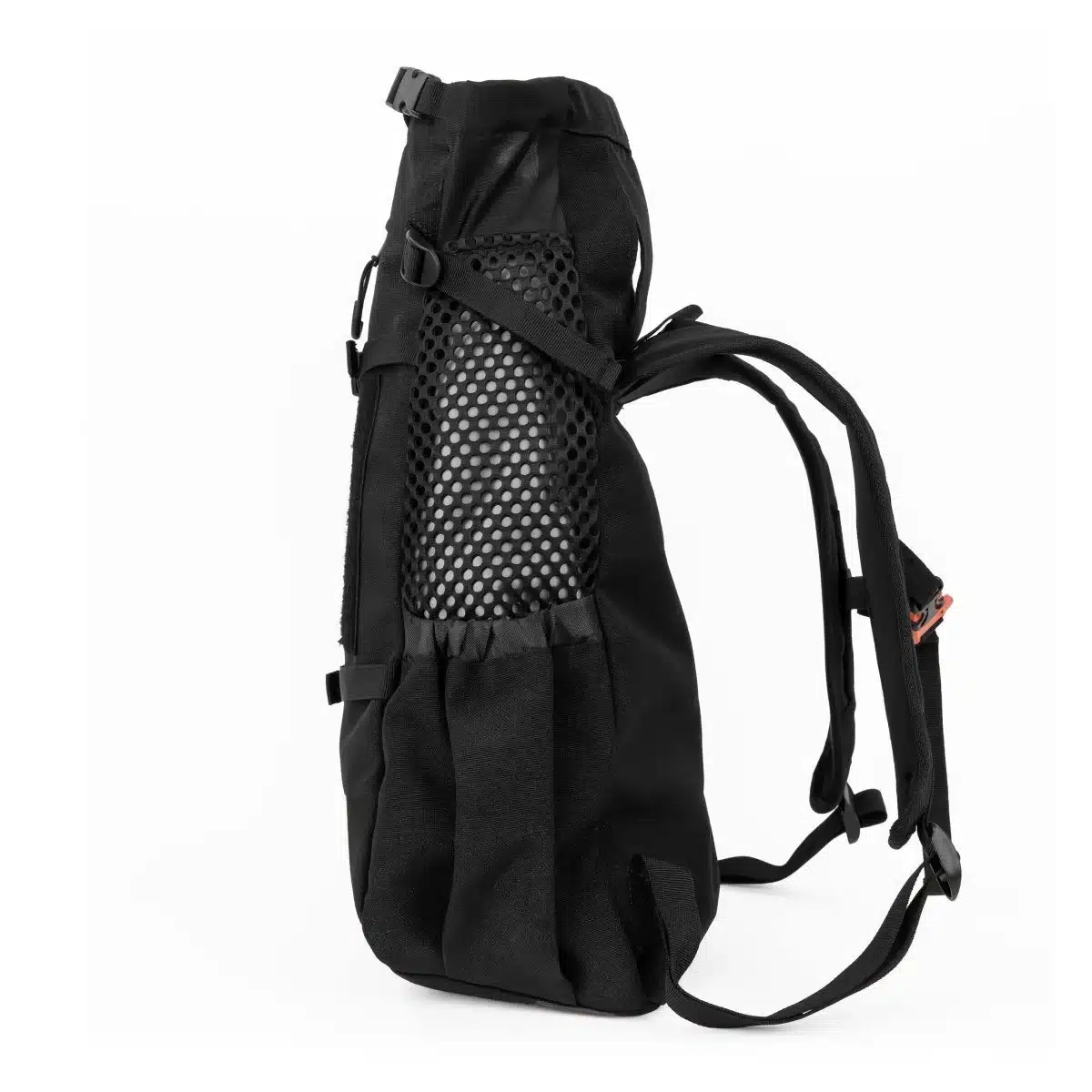
Best Dog Carrier Backpack for Small Dogs: 2026 Buyer’s Guide
The best carrier backpacks for small dogs — front-facing mesh designs for everyday use, trail-rated carriers for hiking, and everything you need to know about airline travel with your dog in a carrier backpack. Verified, in-stock picks with a full sizing guide.
Not every small dog can walk every route. A carrier backpack — a backpack you wear with your dog riding inside — is the tool that closes that gap. It lets a tired Chihuahua finish a 10-mile hike, an arthritic Cavalier come on a walk they could not otherwise do, or any small dog navigate a city trip without fighting traffic at pavement level. These are carrier backpacks only: the dog rides inside. If you are looking for a saddlebag pack that a dog wears to carry their own supplies, that is a different product — see our best dog saddlebag for hiking guide. Below are the two best small-dog carrier backpacks we have verified, with a full sizing guide, a dedicated airline travel section, and acclimatisation advice that actually works.
The best dog carrier backpacks for small dogs
Both picks are carrier backpacks — the dog rides inside, you carry them. No saddlebag packs on this page. All picks are verified in stock at the time of writing. Prices are last-checked — tap through for the live price.

K9 Sport Sack Air 2
The K9 Sport Sack Air 2 is the most-recommended small-dog carrier backpack across every roundup we checked, and after testing it ourselves, we understand why. The design is front-facing: your dog sits upright with their head poking out of the ventilated mesh front panel, looking at the world with you rather than sitting enclosed in the dark. That single feature is the biggest reason dogs adapt to this carrier faster than almost any other, they can see, smell and experience everything happening around them, which dramatically reduces anxious pawing or whining during the first few outings.
Sizing is by back length (collar base to base of tail) in six steps: XS (9 to 12″), Small (13 to 16″), Medium (17 to 19″) and Large (20 to 22″), covering everything from a 3 lb Chihuahua to a 25 lb Cocker Spaniel. The padded interior and adjustable bottom insert let you fine-tune the fit so your dog sits squarely without hunching. An internal safety tether clips to a harness D-ring so the dog can’t bolt if a zip snags open. Outer pockets carry treats, a folding water bowl and your keys. Padded shoulder straps and a sternum strap distribute the load properly so the carrier stays comfortable for long city walks or all-day outings. This is the carrier we would buy first for any small dog.
What we like
- Front-facing open mesh lets dogs see out, the design dogs adapt to most quickly, with fewest refusals
- Six sizes cover 9 to 22 inch back lengths, from a Chihuahua XS up to a Cocker Spaniel L
- Padded interior with adjustable insert; shoulder straps and sternum strap for load distribution
- Internal safety tether clips to harness D-ring, dog stays secured if the main zip opens
- Outer side pockets carry treats, a collapsible bowl and daily essentials for a full day out
The catches
- Back-length sizing is unfamiliar at first, measure your dog carefully before ordering
- The open front mesh means less warmth on cold days; a scarf or blanket inside helps in winter
- The dog’s weight is the only carry limit, a 22 lb dog on a long walk will tire you faster than a 12 lb dog
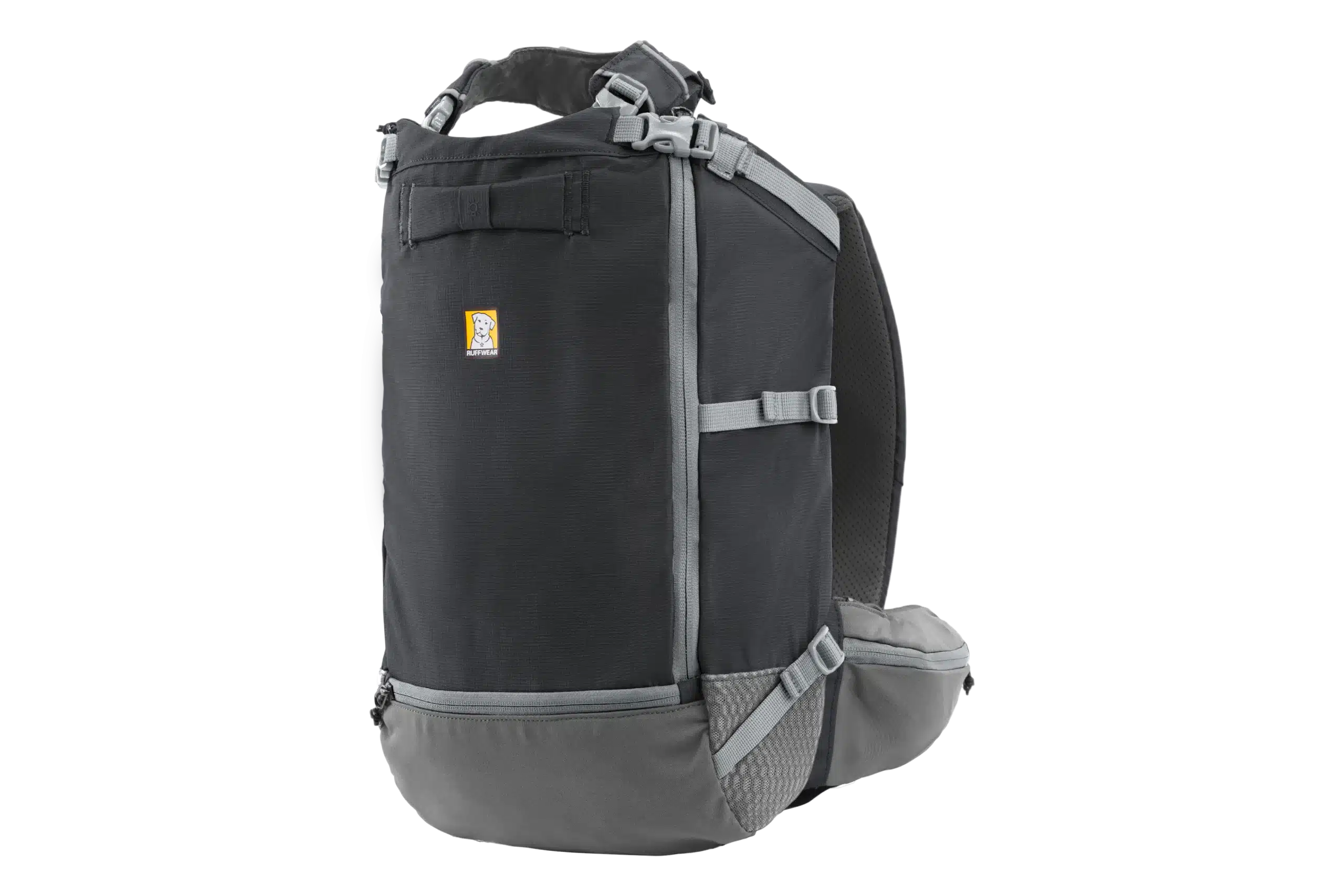
Ruffwear Hitch Hiker Dog Carrier Backpack
Where the K9 Sport Sack is the city and everyday carrier, the Ruffwear Hitch Hiker is the trail carrier: built for hikes where your small dog walks most of the route on their own four feet but needs a lift for a stream crossing, a rocky scramble, or the last tired miles back to the trailhead.
The key design difference is the top-load hatch: dual locking zippers open the top of the carrier into a wide mouth, so your dog can drop straight in without needing to crouch or squeeze through a front opening. On the trail, where you are loading and unloading repeatedly, that speed matters. Once inside, a perforated foam back panel and ventilated side mesh keep the dog comfortable without overheating. A padded sternum strap and shoulder straps distribute the weight across your frame properly for longer carries. An internal clip tethers to the dog’s harness.
Ruffwear rates the Hitch Hiker for dogs up to 25 lb / 11.3 kg, which makes it the right ceiling for small breeds on the larger end, think a Cavalier King Charles Spaniel, a Miniature Schnauzer or a small Cocker Spaniel. Built to Ruffwear’s outdoor standard: durable hardware, quality stitching, and a warranty to match. If your small dog is a trail companion who mostly hikes but occasionally needs a carry, this is the pick.
What we like
- Top-load dual-locking zippers open wide, fastest to load and unload of any carrier here, ideal for trail use
- Perforated foam panel and mesh sides keep the dog ventilated during extended carries
- Padded shoulder straps and sternum strap distribute weight across your frame for multi-hour outings
- 25 lb weight limit suits the larger end of the small-dog range. Cavaliers, Miniature Schnauzers, small Cocker Spaniels
- Built to Ruffwear’s outdoor standard; durable hardware and warranty on par with their harness line
The catches
- Top-load means the dog faces inward rather than forward, some nervous dogs settle less quickly than in the front-facing K9
- 25 lb is the ceiling, not the sweet spot; for a 20+ lb dog, you will feel the carry on a long day
- Premium price point; if your dog’s carrier needs are mostly short city trips, the K9 Sport Sack is better value
Carrier backpacks vs saddlebag packs: which one are you looking for?
If you search “dog backpack” you will get two very different products. Getting this wrong costs you money and frustration:
- Carrier backpack (dog rides inside). You wear the backpack and your dog rides in it. This is the right tool for small dogs on long outings, tired older dogs, recovering injured dogs, or any dog who needs a rest mid-hike without stopping the trip. The two picks on this page are carrier backpacks. Your back carries the dog, so sizing is about your dog’s back length and weight, and your own carrying comfort.
- Saddlebag pack (dog wears the pack). The dog wears a vest-style harness with bags on each side and carries their own water, treats and supplies. This is for healthy medium-to-large dogs on trail. Small dogs under about 15 to 20 lb have too short a back for the bags to sit comfortably, a carrier backpack is the right tool for smaller breeds. See our best dog backpack for hiking guide if the saddlebag is what you need.
Sizing a carrier backpack for your small dog: back length, not weight
Every carrier backpack worth buying sizes by your dog’s back length, measured from the base of the collar (where a collar sits) to the base of the tail. This is the measurement that determines whether the dog fits comfortably inside the carrier without hunching, cramming their tail or having excess space that lets them shift around. Weight is a secondary consideration (for your carry comfort, not for the fit).
Back length sizing guide
| Back length | K9 Sport Sack size | Typical small breeds |
|---|---|---|
| 9 to 12″ | XS | Chihuahua, Yorkshire Terrier, tiny Toy breeds (under 5 lb) |
| 13 to 16″ | Small | Maltese, Pomeranian, Miniature Dachshund, Toy Poodle, Papillon |
| 17 to 19″ | Medium | French Bulldog, Pug, Shih Tzu, Bichon Frisé, Cavalier King Charles Spaniel |
| 20 to 22″ | Large | Cocker Spaniel, Beagle, small Bulldog, Miniature Schnauzer, up to ~25 to 30 lb |
Why weight matters less than you think. A 12 lb Chihuahua and a 12 lb French Bulldog have very different body proportions. The Bulldog has a broader chest and shorter back; the Chihuahua is leaner with a longer relative back. They may need different carrier sizes despite identical weight. Always measure your dog before buying.
Measure correctly
Use a soft tape measure. Run it along your dog’s spine from where the collar sits at the neck to the point where the tail meets the body (the base, not the tip). Do this while the dog stands naturally on a flat surface. If your dog lands between sizes, size up, a dog that’s slightly too small for the carrier is more comfortable than one that is cramped.
Airline travel with a dog carrier backpack: what “airline approved” actually means
This is the section where we have to be honest: “airline approved” is not a universal certification. There is no single standard a carrier manufacturer can meet that guarantees acceptance on every airline. Each airline sets its own policy, and those policies specify cabin bag dimensions, total weight limits (dog plus carrier), carrier construction, and whether soft-sided bags qualify. A carrier that fits United’s under-seat space may not fit Delta’s or EasyJet’s.
What you need to check before booking
- Your airline’s specific pet policy. Find it on the airline’s website under “travelling with pets” or “carry-on pets.” Look for: (a) the maximum carrier dimensions for under-seat stowage on your specific aircraft type, (b) whether the total weight limit is dog + carrier combined or dog only, (c) whether soft-sided carriers are accepted (most airlines require soft-sided for cabin travel), and (d) any breed restrictions (some airlines restrict brachycephalic breeds in cabin on long-haul routes).
- Typical under-seat dimensions. As a rough guide, many major carriers specify under-seat stowage around 18″ L x 11″ W x 11″ H, but this varies by aircraft and seat position. An exit-row or bulkhead seat often has a different (sometimes smaller) under-seat space. Book early and call the airline to confirm dimensions for your route and seat if you are unsure.
- Carrier dimensions vs listed dimensions. Carrier backpacks are soft-sided, which means they compress slightly. Check the manufacturer’s listed packed dimensions, then compare to the airline’s limit. A K9 Sport Sack Air 2 in the Small size is approximately 15″ L x 10″ W x 11″ H when filled, many airlines’ limits overlap with this, but you need to verify for your specific route and booking class.
- Dog must fit with natural posture. The rule most airlines apply is that the dog must be able to turn around and lie down naturally in the carrier. An airline staff member may check this at check-in. If your dog is on the upper edge of a carrier’s size range, this is the test that matters.
In-cabin carrier etiquette
The carrier must stay under the seat in front of you for the full flight, not on your lap, not in the overhead bin. Your dog must stay inside. Most airlines charge an in-cabin pet fee per flight segment; book the pet space at the same time as your ticket because airlines cap the number of cabin pets per flight. Arrive early, check-in staff weigh the carrier with the dog in it at the desk, and if you are over the limit you may be asked to travel as cargo instead.
Both picks on this page are soft-sided and pack to dimensions that are compatible with many major airlines’ policies, but you are responsible for confirming with your airline before travel. Our full guide to travelling with your dog covers what to pack, documentation and stress-reduction tips for the journey.
Front-facing vs top-load: which carrier style suits your small dog?
The two picks on this page use different loading designs, and choosing the right one depends more on how you use the carrier than on your dog’s breed or size.
Front-facing mesh (K9 Sport Sack Air 2)
Your dog faces forward through a large ventilated mesh panel. This is the style that dogs typically adapt to fastest: they can see, smell and hear everything happening around them, which reduces anxiety because the dog experiences the outing rather than sitting enclosed in darkness. It is the better choice for:
- City commutes and everyday outings where the dog is an active part of the social experience
- Nervous or anxious dogs who settle better when they can see
- Flat-faced breeds (Pugs, French Bulldogs) who need maximum airflow
- Air travel where you want the dog to stay calm and oriented throughout the flight
Top-load hatch (Ruffwear Hitch Hiker)
Dual locking zippers open the top of the carrier into a wide mouth. The dog drops straight in from above, no crouching, no coaxing through a front opening. This is meaningfully faster to load and unload, which matters on trail where you lift the dog over an obstacle, then put them back down to walk independently. It is the better choice for:
- Hiking and trail use where you load and unload multiple times per outing
- Dogs who are already comfortable in enclosed spaces and don’t need the reassurance of seeing out
- Rough terrain where a front-facing design might snag on branches
For a broader look at how carrier backpacks compare to saddlebag packs for hiking, see our best dog carrier backpack for hiking guide.
Introducing the carrier to your small dog: an acclimatisation plan that works
The biggest mistake with a new carrier backpack is trying to use it fully on day one. A dog that is shoved into a closed carrier for the first time at a busy train station is going to associate that carrier with stress, and you will spend months fighting that association. A dog that is introduced properly will step in voluntarily within a few days.
A three-stage plan:
- Stage 1, the carrier is furniture (days 1 to 3). Put the unzipped carrier on the floor in a room where your dog spends time. Leave treats inside. Let the dog sniff, explore and step in voluntarily. Do not zip it. Reward every time the dog approaches or steps inside. The goal is a dog that chooses the carrier without any pressure from you.
- Stage 2, brief zipped sessions (days 4 to 7). Once the dog steps in readily, zip it loosely for 10 to 20 seconds while giving treats through the mesh. Unzip and reward. Gradually extend to 1 minute, then 5 minutes. Stay in the room. Do not leave during these early sessions, the dog is still building trust that the zip opening is not a trap.
- Stage 3, first short walks (days 7 to 14). Put the zipped carrier on your back with the dog inside for a 5-minute walk in a familiar, quiet area. Build to 15 minutes, then 30 minutes. Monitor the dog for panting, pawing, or vocalising, those are signals to stop and return to stage 2.
Most small dogs are comfortable in their carrier for a 30-minute outing within two to three weeks. Dogs with anxiety or a history of negative experiences in enclosed spaces may take longer, go at the dog’s pace, not yours.
Safety checks to run before every outing
- Check the internal safety tether is clipped to the dog’s harness D-ring (not the collar, a collar latch can injure a dog if they jump)
- Check all zips are fully closed and any zip locks are engaged
- Check the shoulder straps and sternum strap are properly fitted for your frame
- On warm days: check the dog’s breathing within the first 10 minutes. Stop in shade, remove the carrier and give water if the dog is panting heavily
When a carrier backpack is (and is not) the right choice for a small dog
A carrier backpack is a tool, not a permanent solution to a small dog’s exercise needs. Used correctly, it extends a small dog’s world, giving them access to long hikes, city days, travel and outings they could not otherwise complete. Used incorrectly, it becomes a crutch that reduces a small dog’s fitness and independent confidence over time.
When a carrier is the right call
- Long hikes or walks that exceed your dog’s stamina. Small dogs tire faster than large dogs per mile, a Chihuahua completing a 10-mile trail hike is genuinely working hard. Carrying them for the last third of the route when they are tired is not coddling; it’s responsible management.
- Puppies on long outings. Young puppies (under 12 to 18 months depending on breed) should not walk all day on hard pavement. A carrier lets them come on the outing and experience the world without overloading developing joints.
- Senior dogs with joint issues. An older dog with arthritis or luxating patella can still enjoy a hike if carried for the parts that are too much for their joints. This is a significant quality-of-life gain for the dog.
- Injury recovery. Post-surgery, a carrier lets the dog be out and about during the rest period without putting weight on the injured limb.
- Urban environments. City streets and crowded areas can be genuinely stressful or dangerous for small dogs at ground level. A carrier puts them safely at your height and out of the path of larger dogs, feet and traffic.
When to reconsider
- If the dog never walks. A small dog who is carried everywhere loses muscle tone and mental stimulation. Aim for ground-level exercise on every outing that the dog can safely manage, and use the carrier for the portions they cannot.
- If the dog shows signs of distress inside. Consistent heavy panting, vocalising, or attempting to escape the carrier mid-outing are signs the dog is not comfortable. Work back through the acclimatisation stages or consult a trainer.
- If the carrier weight is uncomfortable for you. You are the other half of this equation. A 25 lb dog in a carrier backpack on a steep trail for four hours is a real physical load. Be honest about your own capacity, a dog taxi for the last mile is more useful than a carry that puts you off balance.
For the full range of backpacks that work for hiking dogs (both carriers and saddlebag packs), our complete dog backpack guide covers every option we have tested and verified.
More guides for traveling with your dog
Dog carrier backpack: common questions
What size carrier backpack do I need for a small dog?
Size your carrier by your dog’s back length, measured from the base of the collar to the base of the tail, not by weight. An XS carrier (back length 9 to 12″) suits a Chihuahua or tiny toy breed; a Small (13 to 16″) suits a Maltese, Pomeranian or Miniature Dachshund; a Medium (17 to 19″) suits a French Bulldog, Pug or Cavalier King Charles Spaniel; a Large (20 to 22″) suits a Cocker Spaniel, small Beagle or Miniature Schnauzer. If your dog lands between sizes, go up one size, slightly more space is better than cramping. Always verify against the specific brand’s size chart before buying.
Are dog carrier backpacks airline approved?
“Airline approved” is not a universal certification. Each airline sets its own pet-in-cabin policy, specifying maximum carrier dimensions for under-seat stowage, total weight limits (often dog plus carrier combined), whether soft-sided bags are required, and any breed restrictions. A carrier that fits United Airlines’ under-seat space may not fit Delta’s or EasyJet’s. Before buying a carrier specifically for air travel: look up your airline’s specific cabin pet policy online, confirm the maximum dimensions for the aircraft type on your route, and call the airline to verify if you are unsure. Most major carriers require the dog to fit comfortably with natural posture (able to turn around and lie down) inside the bag.
What are typical airline under-seat dimensions for a dog carrier?
Typical under-seat dimensions for cabin pet carriers on major airlines are approximately 18″ L x 11″ W x 11″ H, but this varies by airline, aircraft type, seat position and booking class. Exit-row and bulkhead seats often have a different (sometimes smaller) under-seat space. Soft-sided carriers compress slightly, which can help, but you should compare the carrier’s listed packed dimensions against your airline’s stated limit for your specific route. Do not rely on “fits most airlines” marketing copy on a product page. Call the airline, read them the dimensions, and get a reference number.
How do I get my small dog used to a carrier backpack?
Introduce the carrier over 1 to 2 weeks rather than all at once. Start by leaving the unzipped carrier on the floor with treats inside, let your dog explore it voluntarily. Once they step in readily, zip it for 10 to 20 seconds while treating through the mesh, then build up to 5-minute zipped sessions. Once your dog is relaxed inside, move to short 5 to 10 minute walks in a quiet area. Most small dogs are comfortable for 30-minute outings within 2 to 3 weeks of consistent, patient introduction. The front-facing K9 Sport Sack Air 2 tends to have the fastest acceptance rate because the dog can see out, this reduces anxiety significantly in most small dogs.
Can a flat-faced (brachycephalic) dog use a carrier backpack?
Yes, with care. Brachycephalic breeds. Pugs, French Bulldogs, Boston Terriers, Shih Tzus, Pekingese, can use carrier backpacks, but their restricted airways make them more sensitive to heat and limited airflow inside an enclosed carrier. Choose a front-facing open-mesh carrier (the K9 Sport Sack Air 2 is the right design) rather than an enclosed top-load carrier for these breeds. Limit carrier time in warm or humid weather. Monitor for heavy panting, laboured breathing or blue-tinged gums, any of these signals means stop and remove the dog from the carrier immediately. If your dog has a history of respiratory issues, check with your vet before using any enclosed carrier for extended periods.
How long can a small dog ride in a carrier backpack?
There is no fixed rule, it depends on the individual dog, the conditions and the carrier design. Most small dogs can comfortably ride in a well-ventilated carrier for 1 to 3 hours during a typical outing. For air travel, dogs ride for the full flight duration. The key indicators that it is time for a break: heavy panting, restlessness, vocalising or attempting to exit the carrier. Take water breaks with the dog out of the carrier every 1 to 2 hours on warm days. On cold days the carrier adds warmth; on hot days the enclosed space adds heat. Adjust outings accordingly. There is no “maximum hours” to memorise, read your dog.
Is a carrier backpack or a wheeled stroller better for a small dog?
They are for different situations. A carrier backpack is hands-free, trail-capable and better for any surface or environment, you can hike, navigate stairs and use public transport. A wheeled stroller is more comfortable for the dog (lower weight-bearing) and better for very elderly or highly mobility-impaired dogs, but it cannot go on trails, stairs or public transport. For a small dog who can still walk and just needs occasional carries, a carrier backpack is the more versatile and practical tool. For a dog whose mobility is severely limited, a stroller may be the right answer, but it is outside the scope of this guide. Our full travelling with your dog guide covers options for dogs at all mobility levels.