 Dog Gear, Sized Right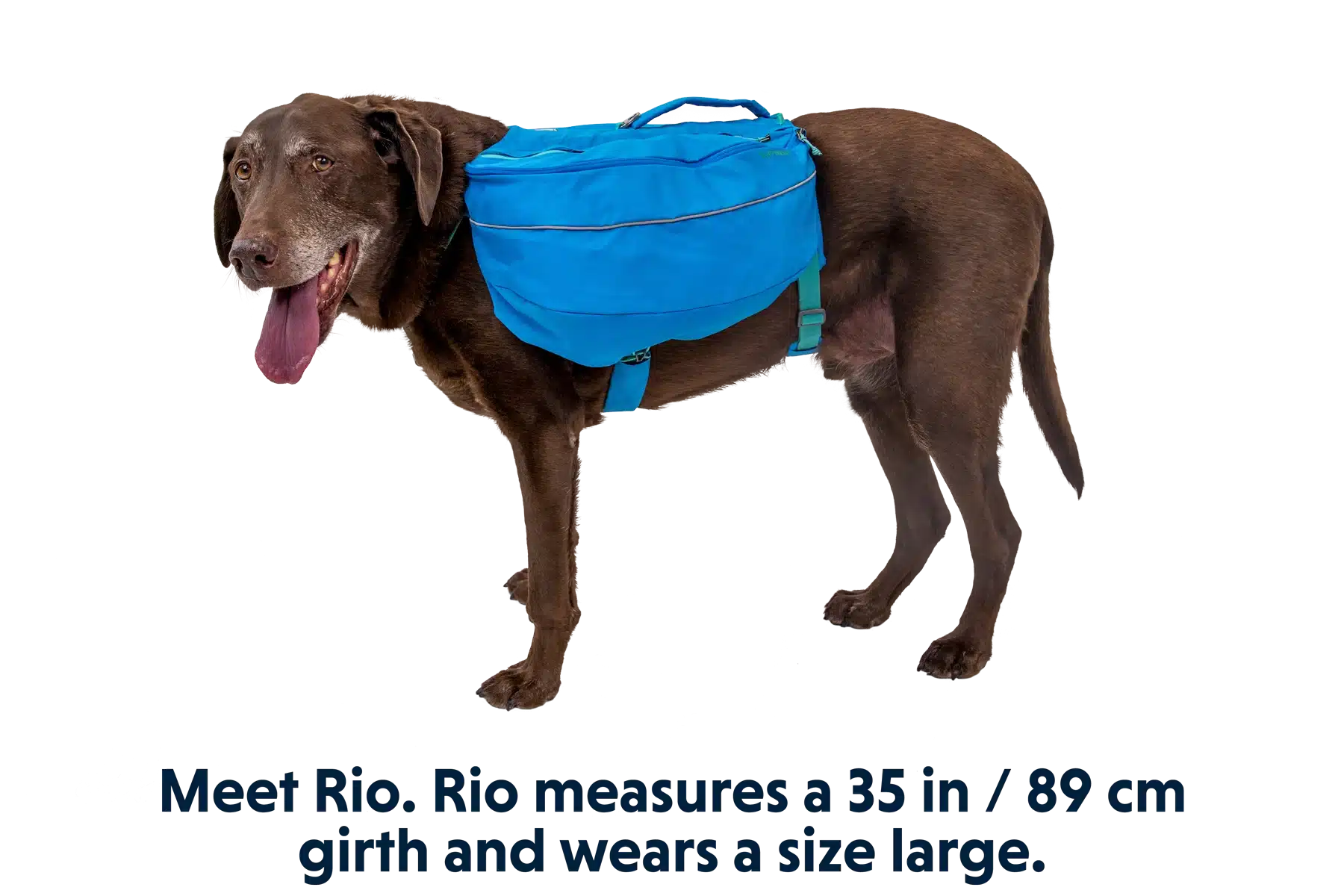
How Much Weight Can a Dog Carry in a Backpack?
The 10–15% bodyweight rule, a weight-by-breed-size table, balanced loading, conditioning steps, and the dogs who should not carry — everything you need to pack your dog safely for a day hike or overnight.
The question comes up on every trail where a dog is wearing a pack: how much weight is actually safe? The short answer is 10 to 15 percent of the dog’s body weight for most recreational hiking, and no more than 25 percent for a conditioned working dog. But the right number for your dog depends on more than a single percentage — breed, age, fitness, terrain, temperature, and how experienced the dog is with carrying a pack all shift the dial. This guide gives you the full picture: a practical weight table by breed size, balanced loading principles, a conditioning sequence, and a clear list of the dogs who should not carry a saddlebag pack at all.
The 10–15% bodyweight rule: where it comes from and how to apply it
The figure you’ll hear most at trailheads — and the one backed up by practical pack-hiking experience — is 10 to 15 percent of the dog’s body weight. That’s the range most healthy adult dogs can sustain for a multi-hour hike without gait change, excess fatigue, or sore muscles the next morning. At 10–15%, the pack is noticeable but doesn’t alter the dog’s stride, they recover normally overnight, and they’re typically happy to wear it again on the next outing.
The 25% ceiling exists separately, and it matters to understand the difference. Twenty-five percent is an absolute upper limit — not a target — and it applies specifically to conditioned working dogs: sled dogs, search-and-rescue animals, working livestock breeds that carry loads regularly and have built up the specific muscle and joint tolerance over months. For a family dog, even a large and highly active one, starting at 10–15% is the right call. There’s no meaningful benefit to pushing toward 25%.
Why the percentage limit exists
Carry capacity in a living animal isn’t simply a matter of raw strength. A dog carrying a heavy pack shifts its centre of gravity, changes the mechanics of its gait, and introduces lateral load on the spine — particularly through the lumbar and thoracic segments. For breeds already prone to disc disease (long-backed dogs especially), that lateral force is the exact kind of load that creates problems. A dog that looks strong enough to carry more isn’t always safe to load more.
How to calculate your dog’s safe carry weight
- 10% of body weight — starting point for first-time pack dogs and the recreational baseline for any dog on a moderate day hike.
- 15% of body weight — the comfortable working limit for a healthy, fit adult dog with several pack hikes already under its belt.
- 25% of body weight — absolute ceiling; conditioned working dogs only. Not a goal for the average trail dog.
Practical example: a 50 lb (23 kg) Labrador has a target carry of 5–7.5 lb and a hard ceiling of 12.5 lb. In practice, you’d load 5–6 lb (a litre of water split between the two saddlebags, some snacks, waste bags, and a basic first-aid kit) and never go near 12.5 lb unless you’re doing a structured working programme, not a weekend hike.
Don’t forget to subtract pack weight. A quality saddlebag pack typically weighs 0.5–1.5 lb on its own. Subtract that from your dog’s weight allowance before loading supplies. A Ruffwear Approach Pack at around 1 lb on a 50 lb dog means your usable load is roughly 4–6.5 lb, not the full 5–7.5 lb.
If you’re ready to choose a pack, our best dog backpack for hiking guide covers the top saddlebag picks for dogs of different sizes, with exact weight specifications.
Weight capacity by dog size: a practical reference table
The table below applies the 10–15% working range and the 25% ceiling to common dog weight classes. Use your dog’s current healthy body weight — not an idealised weight. An overweight dog carries more body mass per step already; loading them further compounds the joint and muscular demand.
| Dog size class | Dog weight | 10% (starter) | 15% (working limit) | 25% (absolute ceiling) | Practical day-hike load |
|---|---|---|---|---|---|
| Very small | 10–15 lb | 1–1.5 lb | 1.5–2.25 lb | 2.5–3.75 lb | Treats, a small bottle of water, waste bags (1–1.5 lb) |
| Small | 15–25 lb | 1.5–2.5 lb | 2.25–3.75 lb | 3.75–6.25 lb | Lightweight snacks, collapsible bowl, waste bags (1.5–3 lb) |
| Medium | 25–50 lb | 2.5–5 lb | 3.75–7.5 lb | 6.25–12.5 lb | Water bottle per side, treats, bags, basic first aid (3–6 lb) |
| Large | 50–80 lb | 5–8 lb | 7.5–12 lb | 12.5–20 lb | Full day-hike kit: water, snacks, first aid, rain layer (5–10 lb) |
| Extra-large | 80–120 lb | 8–12 lb | 12–18 lb | 20–30 lb | Light overnight supplies or a full day kit with spare water (8–15 lb) |
Notes on breed type and body shape
Body weight alone doesn’t tell the whole story. Two dogs at the same weight can have very different carrying comfort depending on build:
- Deep-chested, long-backed dogs (Greyhounds, Whippets, Dachshunds) have a shorter practical carry range than the table suggests. The saddlebag geometry doesn’t sit as comfortably, and the lateral torque on a long spine is a genuine concern. Stay near 10% or consider a carrier instead.
- Short-backed, compact dogs (Boxers, Bulldogs, American Staffordshires) often handle the mechanical fit of a saddlebag pack better than their body weight class suggests — but check that the bags don’t interfere with their elbows when they stride.
- Large herding and working breeds (German Shepherd, Belgian Malinois, Border Collie, Husky) are the archetypes for saddlebag pack use. Their build, rear-drive gait, and endurance make them the most natural candidates for a loaded pack at 10–15%.
- Brachycephalic breeds (French Bulldog, Pug, Shih Tzu) should not wear saddlebag packs at all. Reduced respiratory capacity + additional physical load is not a safe combination, especially in warm weather. See the section on who should not carry below.
How to load the bags: balance, placement, and what to carry
Getting the load right matters nearly as much as getting the weight right. An unbalanced pack at 12% is more likely to cause problems than a balanced pack at 15%, because uneven loading creates a constant lateral pull on the dog’s spine — the same mechanism as a person carrying a heavy shoulder bag on one side all day.
The side-to-side rule
Both saddlebags must carry equal weight. This isn’t a rough guideline — it’s the single most important loading principle. If you’re carrying a single one-litre water bottle, split it: half the water in each side bag. If you’re carrying dense items (a first-aid kit, a camera, food) that don’t divide neatly, use lighter items (waste bags, a rain jacket) in the opposite bag to restore balance. Weigh each side if you have access to a scale before the hike. After 20–30 minutes on trail, look at the dog from behind — the pack should sit level, with bags hanging evenly. If one side is lower, rebalance before continuing.
Load placement: keep heavy items low and centred
Within each saddlebag, the heaviest items should sit as low and as close to the dog’s body as possible. This lowers the centre of gravity and reduces the swinging effect that a top-heavy pack creates on uneven terrain. Water belongs at the bottom; waste bags and lightweight snacks can go on top. A top-heavy pack will rock noticeably side to side when the dog moves, which is both uncomfortable and a sign that the loading needs adjusting.
What to put in a dog’s saddlebag pack
- Water — the most useful and most common dog-pack load. A 500 ml soft flask or a split water bottle per side. Always bring enough for the dog to drink at each break.
- Collapsible water bowl — weighs almost nothing; fits in an outer pocket.
- Dog treats and trail snacks — lightweight and the dog will understand intuitively why they’re carrying them.
- Waste bags — ideal dog-pack cargo: lightweight, needed on every hike.
- Dog first-aid essentials — a small blister kit, a bandage, tweezers, and an emergency contact card. Keep it lightweight (0.3–0.5 lb).
- An emergency rain layer or space blanket — lightweight insurance on multi-hour hikes in changeable weather.
What not to put in a dog’s pack
- Breakable items (glass, hard tech gear)
- Sharp tools or items with edges that could shift and press against the dog
- Your own heavy gear — the dog’s carry weight limit is the dog’s, not yours
- Food with strong smells that might attract wildlife and distract or excite the dog
How to condition your dog for pack carrying: the start-empty method
A strong, trail-fit dog is not automatically ready to carry a loaded pack. The sensation of a saddlebag is genuinely novel — lateral weight on the flanks, a girth strap around the belly, restricted side-to-side movement through the bags — and loading immediately creates a negative association if the dog hasn’t had a chance to simply get used to the fit first. Start empty every time.
The conditioning sequence
- Session 1 (home, empty pack). Put the pack on at home with nothing in the bags. Let the dog walk around the house or garden for 15–20 minutes. Reward calm, relaxed movement with treats. Remove the pack, take a break, repeat. Goal: the dog is indifferent to wearing the pack.
- Session 2 (short familiar walk, empty). Take the dog on a well-known 20–30 minute walk with the empty pack. Watch how they move: any reluctance, short-striding, or attempts to shake the pack off mean the fit needs adjusting before you add weight. Confirm girth strap and sternum strap are snug but not tight.
- Session 3 (first loaded walk). Add roughly 25–30% of the target weight — for a 50 lb dog targeting 6 lb total, that’s about 1.5–2 lb total. Use familiar, flat ground. Watch for gait changes and rub spots at the front-leg armpits (the most common friction location). Remove the pack after 20–30 minutes and check the skin under the strap points.
- Sessions 4–5 (build to working weight). Increase load by 25–30% each session until you reach the 10–15% of body weight target. By session five, the dog should be carrying their full working load on a moderate trail without gait change, reluctance, or physical signs of discomfort.
- First real pack hike. Use a well-known, moderate trail. Start at the lower end of the weight range (closer to 10%). Take the pack off during water breaks. Check for rub spots and gait changes every 30–45 minutes. A dog that settles into a pack hike will show consistent gait, normal energy, and no repeated shaking or trying to brush the bags against trees to dislodge them.
Warning signs during early pack hikes
- Short-striding — steps noticeably shorter than normal, usually means the bags are too heavy, too wide, or rubbing the elbows.
- Stumbling or coordination loss — the pack is unbalanced or too heavy. Stop, rebalance, reduce load before continuing.
- Repeatedly shaking or twitching — usually a fit issue: girth strap too loose (bags swinging), front strap too tight, or a friction spot developing.
- Lying down on trail unexpectedly — overloading or overheating. Remove the pack, offer water and shade, and reassess. Don’t reload the same day.
- Reluctance to put the pack on at all — the negative association from a previous load-too-soon session. Go back to the empty pack for a session or two before reintroducing weight.
For a full comparison of saddlebag packs that are specifically designed for conditioning new pack dogs — particularly those with adjustable compression to keep a lighter load snug as you build up — see our best dog backpack for hiking roundup. And for a breakdown of the full backpack category (saddlebags vs carrier packs, sizing, and how to choose), our dog backpack guide covers both intents.
Day hike vs overnight: how the load and logistics change
The 10–15% rule applies on both a day hike and an overnight, but what you’re carrying changes the practical equation significantly.
Day hike loads (4–8 hours)
For a moderate day hike, a medium or large dog is typically carrying:
- Water: 500 ml–1 litre split between the two bags (the dominant weight on most day hikes)
- Snacks and treats: 0.25–0.5 lb
- Waste bags: negligible weight
- A compact first-aid kit: 0.3–0.5 lb
- A lightweight emergency layer: 0.2–0.3 lb
For a 50 lb Labrador, this totals roughly 3–5 lb — well inside the 10% starting limit. That’s the practical sweet spot for day hiking: the dog carries their share without being anywhere near their limit, you get a meaningful reduction in your own pack weight, and the dog is completely comfortable.
Overnight loads (multi-day)
Overnight hiking raises the complexity:
- Food: dogs on trail hikes burn significantly more calories than at rest. Plan for roughly 1.5–2 oz of dry kibble per day of hard hiking (above normal daily ration), per 10 lb of body weight. Pack this in the dog’s bags to offset your food weight.
- Additional water: source water from streams where possible to avoid carrying full loads of water for the next section. A filter bottle is a good addition to your own kit.
- Lightweight rain protection: a dog-specific rain cover for the pack bags, and possibly a dog jacket for high elevation or cold overnight temperatures.
Critical overnight rule: remove the pack at camp. A saddlebag pack should not be worn overnight. Even a well-fitted pack creates continuous low-level pressure on the girth points and sternum if worn for hours of rest. Take the pack off when you pitch your tent and only put it back on when you set off in the morning.
On multi-day hikes, front-load more of the shared supplies in the dog’s bags on day one (when they’re fresh) and transfer weight back to your pack as the dog’s energy reserves deplete on subsequent days. A dog who was sprinting on day one is slower on day three — adjust the load accordingly.
Dogs who should not carry a saddlebag pack
The 10–15% rule applies to healthy adult dogs. There are several categories where the answer to ‘how much weight can my dog carry?’ is simply zero — and where a carrier backpack (the dog rides in the pack, you carry them) is the right alternative instead. See our dog carrier backpack vs saddlebag comparison for the full breakdown of which type fits which situation.
Puppies under two years old
Growth plates in a puppy’s skeleton don’t close until the dog is physically mature — typically 12–18 months for medium breeds and up to 18–24 months for large and giant breeds. Loading a dog before the growth plates close creates physical stress on developing bone and cartilage. No saddlebag pack for puppies. An empty pack worn around the yard is fine for habituation from around 6 months; adding any meaningful load should wait until the dog is fully grown.
Senior dogs
There’s no universal cutoff — some 9-year-old Labradors are as fit as a 4-year-old — but as a practical guideline: large breeds at 7–8 years, small breeds at 10–11 years are at the age where carrying a pack warrants extra caution. Muscle mass declines, joints are less resilient, and recovery time extends. A light, empty pack is fine for habituation; any meaningful carry weight should be cleared with a vet who knows the specific dog.
Dogs with joint conditions
Hip dysplasia, elbow dysplasia, luxating patella, and arthritis — any of these conditions change the load distribution in the dog’s skeleton in ways that a saddlebag pack makes worse. The lateral bag weight creates exactly the kind of off-centre load that aggravates hip and elbow joints. If your dog has a diagnosed joint condition, don’t load them with a saddlebag pack. A carrier backpack — where the dog rides and you carry the weight — may still let them come on the hike.
Long-backed breeds
Dachshunds, Basset Hounds, Corgis, and Skye Terriers have disproportionately long spines relative to leg length and are at elevated risk for intervertebral disc disease (IVDD). Saddlebag packs create the exact spinal load (lateral torque, compression) that can trigger disc episodes in these breeds. Not worth the risk, regardless of the dog’s apparent fitness.
Brachycephalic (flat-faced) breeds
French Bulldogs, Pugs, Boston Terriers, Boxers, and Cavalier King Charles Spaniels have reduced respiratory capacity at baseline due to their anatomy. Physical exercise at altitude or in warm weather already pushes them harder than longer-muzzled dogs. Adding the extra metabolic demand of carrying a load compounds this. These breeds should not carry packs, particularly in anything above mild temperatures.
Dogs recovering from injury or surgery
A dog in rehabilitation is dealing with altered load paths through the musculoskeletal system as it compensates for the injury site. Adding external load — even a very light one — is unpredictable in a recovering animal. Wait until your vet clears the dog for normal exercise and introduces pack work as a separate progression.
Dog backpack and carrier guides
Dog backpack weight: common questions answered
How much weight can a dog carry in a backpack?
The practical guideline is 10 to 15% of the dog’s body weight for most recreational hiking. A 50 lb Labrador can carry roughly 5–7.5 lb; a 70 lb German Shepherd around 7–10.5 lb. The 25% ceiling is an absolute upper limit that applies to conditioned working dogs only — not a target for a family dog on a weekend hike. Always subtract the pack’s own weight (typically 0.5–1.5 lb) from the allowance before loading supplies. Start lighter on the first few pack hikes and build toward the 15% limit over several outings.
What is the 10-15% bodyweight rule for dog backpacks?
The 10–15% rule is the standard carry-weight guideline for saddlebag packs worn by dogs. At 10% of body weight, the load is light enough for most adult dogs to carry on a day hike without fatigue or gait change. At 15%, a fit dog is working harder but still well inside a safe range for regular trail use. The rule exists because carrying a weighted pack shifts the dog’s centre of gravity and introduces lateral spinal load — above 15–20%, these mechanical effects become significant for most dogs. The 10–15% range keeps the dog useful on trail without the physical stress of higher load-to-weight ratios.
Can small dogs carry a backpack?
Yes, with caveats. Dogs as small as 15–20 lb can wear saddlebag packs, but the practical load at 10–15% is very light — a 15 lb dog is looking at 1.5–2.25 lb of usable carry, which after subtracting pack weight is barely more than treats and waste bags. That’s fine and still useful. The more significant constraints for small dogs are back length (saddlebag bags need enough back length to sit without interfering with the dog’s rear legs), and breed type — short-backed breeds, long-backed breeds, and brachycephalic breeds all have specific limitations. Very small dogs under 10–12 lb are better served by a carrier backpack (the dog rides in the pack) than a saddlebag on their back.
How do I know if my dog’s pack is too heavy?
Watch for these signs during the hike: short-striding (steps noticeably shorter than usual), stumbling or loss of coordination, repeatedly trying to shake or brush off the pack, or lying down unexpectedly mid-trail. After the hike, a dog that’s sore or stiff the next morning (particularly in the shoulders and lower back) was carrying too much. A correctly loaded dog arrives at camp tired but recovers normally overnight and is ready to hike again the next morning. If in doubt, reduce the load by 2–3 lb and see whether the signs resolve. Most pack problems are solved by going lighter, not by adjusting fit.
When is a dog old enough to carry a backpack?
Growth plates in a puppy’s skeleton don’t close until the dog is physically mature: roughly 12–18 months for medium breeds and 18–24 months for large and giant breeds. Loading a dog before growth plates close risks damage to developing bone and cartilage. The safe rule: wear an empty pack for habituation from around 6 months; introduce any meaningful load weight only after the dog is fully grown and your vet is satisfied with their joint health. For large breeds like Labradors or German Shepherds, that means waiting until 18–24 months before carrying more than a token load.
Should both sides of a dog’s saddlebag be loaded equally?
Yes — equal weight on both sides is the single most important loading principle. An unbalanced pack creates a constant lateral pull on the dog’s spine (similar to a person carrying a shoulder bag on one side all day). If you’re carrying a single water bottle, split the water between both sides. For dense items that can’t be divided evenly, use lighter items in the opposite bag to restore balance. Check from behind after 20–30 minutes on trail: the pack should sit level with both bags hanging at the same height. A visibly tilted pack means something has shifted or was loaded unevenly — stop and rebalance before continuing.
What is the difference between a saddlebag pack and a carrier backpack for dogs?
They solve opposite problems. A saddlebag pack is worn by the dog — it fits like a harness vest with two side bags, and the dog carries their own water, treats and supplies on trail. It’s for healthy, fit dogs of medium to large size who can complete the hike on their own four feet. A carrier backpack is worn by the human — the dog rides inside the pack while you carry them on your back. It’s for small dogs, senior dogs, dogs recovering from injury, or any dog who needs a rest mid-hike. Many trail dog owners eventually own both. Our carrier vs saddlebag comparison covers the decision in detail.