 Dog Gear, Sized Right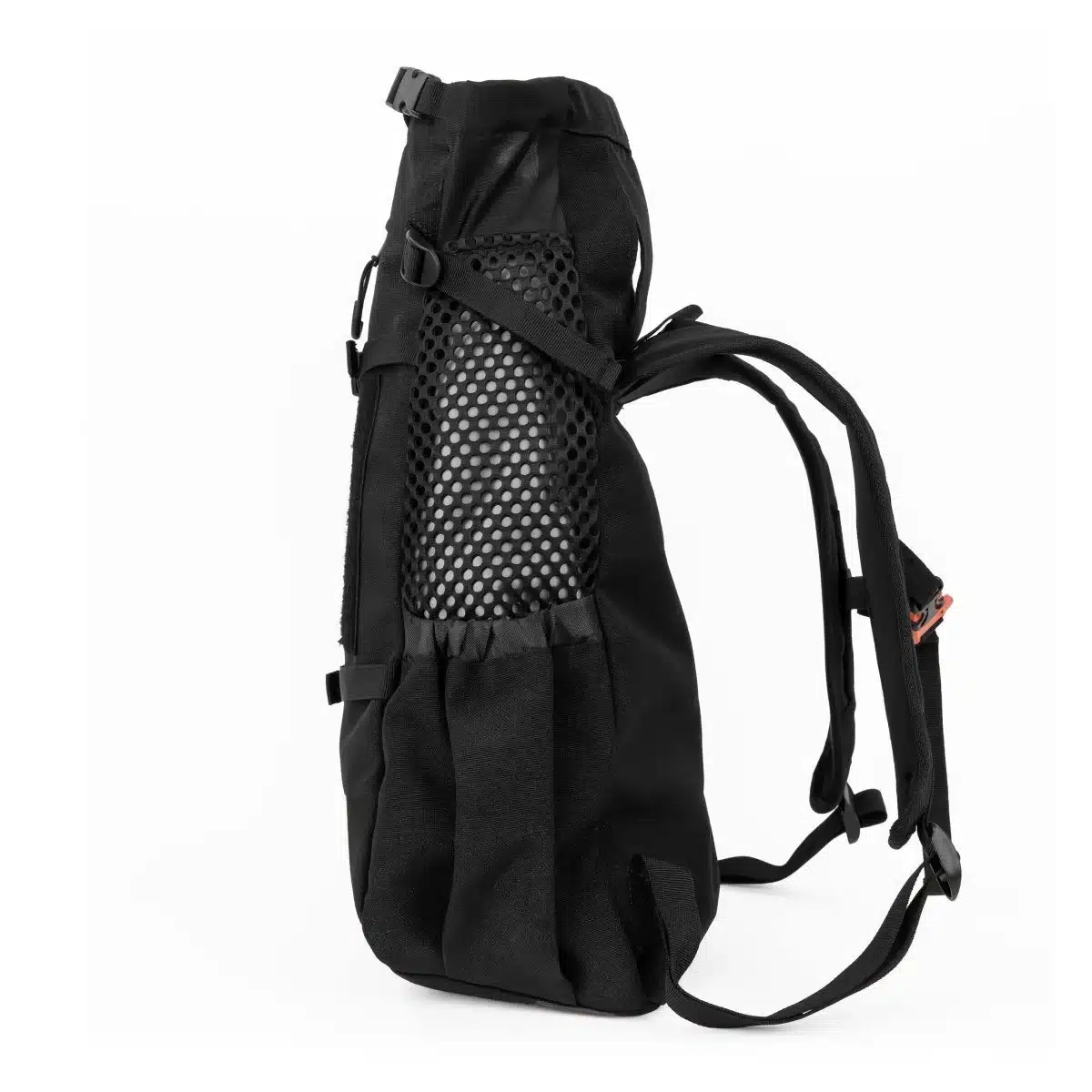
Best Dog Carrier Backpack for Hiking 2026 (Dog Rides Inside)
Your dog wants the big trail. A carrier backpack means they can have it, riding on your back for the miles they can’t cover on their own. Here are the two best dog carrier backpacks for hiking, sized and safety-tested for trail use, with a complete guide to choosing, fitting and acclimating your dog.
A dog carrier backpack is a backpack you wear with your dog riding inside. That’s the single sentence that separates this guide from every saddlebag guide on the SERP, saddlebags are packs the dog wears; a carrier backpack is a pack you carry your dog in. They’re for different dogs, different hikes, and different problems. This guide covers carrier backpacks only: verified picks for the small dogs, senior dogs, injured dogs and puppies who want the trail but can’t do the whole route on their own. If your dog can hike the full distance and you want them to carry the water, see our dog saddlebag backpack guide instead.
The best dog carrier backpacks for hiking
Both picks are carrier backpacks, your dog rides inside while you carry them on your back. These are not saddlebag packs (dog carries gear). All picks verified in stock. Prices last-checked, tap through for live price.

K9 Sport Sack Air 2
The K9 Sport Sack Air 2 is the benchmark front-facing dog carrier backpack, the one that appears in almost every ‘best’ roundup because it gets the core trade-off right: your dog faces forward, head out, able to see the trail and smell the air, which is the exact design dogs acclimate to fastest. Anxious dogs calm down faster when they can watch the world; experienced trail dogs love the vantage point.
The ventilated mesh front panel keeps airflow moving across the dog’s face even on a warm trail, the padded interior and adjustable foam bottom insert let you match the carrier depth to your dog’s back length, and the padded shoulder straps plus sternum clip distribute the dog’s weight properly so you’re not hunching forward on a steep climb.
It comes in six sizes from XS to L, fitted by back length (collar to base of tail) from 9 inches up to 22 inches, so it covers dogs from a 5 lb Chihuahua to a 25 to 30 lb Cocker Spaniel. Multiple colourways. Outer pockets carry treats, a collapsible water bowl and your keys. An internal safety tether clips to the dog’s collar or harness so if the zip is ever opened mid-hike the dog can’t bolt.
If you’re buying your first dog carrier backpack for hiking, or if you want the design dogs say yes to most often, start here.
What we like
- Front-facing mesh lets the dog see out, the design dogs adapt to fastest, with the fewest refusals on the trail
- Six sizes by back length (XS 9″ up to L 22″) fit dogs from toy breeds to a ~30 lb Cocker Spaniel, the size range is wider than most competitors
- Adjustable foam bottom insert lets you dial the interior depth to your specific dog’s proportions rather than relying on a fixed floor
- Internal safety tether clips to collar or harness, the dog is secured even if a zip opens
- Padded shoulder straps and sternum clip transfer weight correctly for multi-hour trail carries
The catches
- Sized for small to medium dogs, check the back-length chart carefully; bigger breeds won’t fit regardless of weight
- In warm or humid weather the enclosed front design is warmer than a top-open carrier; take water breaks and watch for panting
- No waist belt, for very long or high-elevation carries a framed infant-style carrier distributes weight better; the K9 Sport Sack is best for day hikes and shorter carries
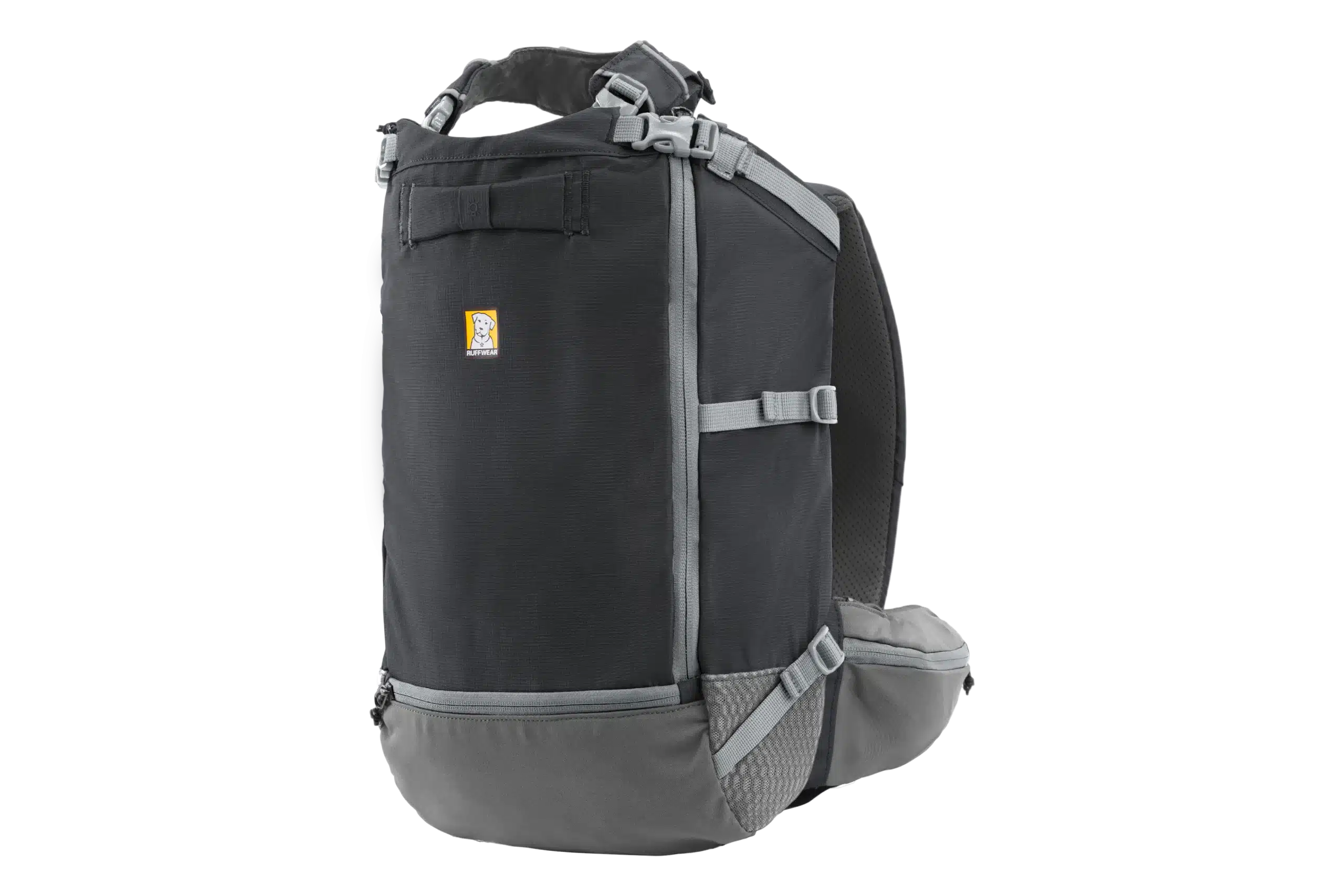
Ruffwear Hitch Hiker Dog Backpack Carrier
Ruffwear designed the Hitch Hiker for dogs who mostly hike on their own four feet but need a lift for a stream crossing, a steep rocky section, or the final tired miles back to the trailhead. The dual locking top-load zippers open the carrier into a wide hatch, you can drop the dog in and zip shut in seconds, which is noticeably faster than coaxing a dog into a front-loading carrier when you’re mid-hike and both of you are tired.
Inside, a perforated foam back panel and ventilated mesh sidewalls keep the dog comfortable during extended carries. The padded shoulder straps and sternum strap are cut for a proper load transfer across your frame rather than just hanging the weight from your shoulders. Ruffwear rates it for dogs up to 25 lb (11.3 kg). An internal clip tethers to the dog’s harness.
The dog looks forward or up through mesh openings rather than having the face-out view of the K9 Sport Sack, most dogs settle quickly, but a dog that needs to watch the world while riding may prefer the K9 Sport Sack’s front panel. The Hitch Hiker is the trail hiker’s carrier: fast to use, genuinely outdoor-grade, and built to Ruffwear’s standard for dogs who hike in it, not just ride in it.
What we like
- Dual locking top-load zippers create a wide hatch, fastest carrier to load and unload mid-hike, especially with a reluctant or tired dog
- Perforated foam panel and mesh sides keep a dog ventilated during extended trail carries better than a solid-backed carrier
- Padded shoulder straps and sternum strap are designed for proper weight distribution on trail, not just loops borrowed from a daypack
- Built to Ruffwear’s outdoor standard: durable hardware, quality stitching, compatible with the rest of the Ruffwear harness and leash ecosystem
- Internal tether clip attaches to the dog’s harness, the dog stays secured if a zip is opened at a checkpoint or rest stop
The catches
- Top-load hatch means the dog can’t look forward as freely as in the front-facing K9 Sport Sack, some dogs take a few more sessions to settle in
- 25 lb weight limit rules out heavier small dogs; a Cavalier King Charles or larger Beagle near that limit will make this a tiring carry on a long hike
- Premium Ruffwear pricing; if the dog only needs a carrier occasionally the K9 Sport Sack is better value for lighter use
Carrier backpack vs saddlebag: which does your dog actually need?
Search “dog backpack for hiking” and you hit two completely different products. Getting them confused means buying something that doesn’t fit either of your needs, and returning it. Here’s the one-sentence version:
- Carrier backpack (this guide): A human wears the backpack. The dog rides inside. Used for small dogs, senior dogs, injured dogs, puppies and any dog who can’t cover the full trail distance on their own. You carry the dog.
- Saddlebag pack , our separate guide: The dog wears the pack like a vest harness. The dog carries their own water, treats and trail gear. Used for healthy medium to large hiking dogs. You carry nothing extra; the dog pulls their weight.
The rest of this guide covers carrier backpacks only: the packs where your dog rides inside and you carry them on your back. See our full dog backpack guide for the complete picture across both types, and our traveling with your dog hub for every travel-gear category.
Who actually needs a dog carrier backpack for hiking?
A dog carrier backpack earns its keep in a specific and very common set of situations. It’s not a substitute for leash-training or conditioning, it’s a tool for the days when the trail and the dog’s condition don’t match up, which happens more than you’d think.
Small dogs on big trails
A Chihuahua, a Pomeranian, a Yorkshire Terrier, these dogs have the heart for a mountain hike but the leg length and stamina for about 3 to 5 miles on a normal day before they slow down significantly. A 10-mile trail with 2,000 feet of elevation isn’t small-dog territory. The carrier backpack is the gap-filler: the dog walks the easy sections and rides the rest, getting the full experience of the outdoors without being pushed past their limits. You still need to manage heat and water for a riding dog, but you cover the distance.
Senior dogs with joint issues
A 10-year-old Beagle or a 12-year-old Cocker Spaniel may still want to come, they just can’t keep up for a full day. Carrier backpacks make it possible. The dog starts on their own feet, rides when they tire, walks again on the descent if it’s easier on the joints. Arthritis and hip dysplasia don’t have to mean the dog stays home.
Injured or post-operative dogs
A dog recovering from a leg injury, a cruciate repair, or any condition that limits weight-bearing on a specific leg still needs fresh air and mental stimulation. A carrier lets the dog participate in the activity at zero physical cost. Always check with your vet that the carrier position doesn’t stress the specific injury, most post-op dogs do fine in an upright carrier, but the vet should sign off first.
Puppies under 12 to 16 weeks
Puppies need socialization, the window is roughly 3 to 16 weeks of age, but their joints aren’t ready for long walks. A carrier backpack is the safest way to take a young puppy on a trail: they experience the sounds, smells and environment without the joint stress. Many trainers recommend exactly this for puppies during the socialization window.
Rough terrain that small dogs can’t navigate
Rocky scrambles, root-tangled approaches, stream crossings with no stepping stones, sections of trail that a 10 lb dog simply can’t cross safely. The carrier handles the technical bits; the dog walks the rest.
Sizing a dog carrier backpack: measure back length, not body weight
The most common mistake when buying a dog carrier backpack is sizing by weight. Weight is nearly irrelevant. What matters is your dog’s back length, the distance from the base of the collar to the base of the tail. A stocky, heavy-boned Pug can have the same back length as a long-legged but lighter-framed dog of equal weight, and they’ll need the same carrier size despite different numbers on the scale.
How to measure back length
Stand the dog squarely and measure in a straight line from the back of the collar (where the collar sits around the neck) to the base of the tail (the point where the tail meets the body, not the tip of the tail). That number in inches is your sizing input.
K9 Sport Sack Air 2 sizing chart
| Size | Back length | Typical breeds |
|---|---|---|
| XS | 9 to 12″ | Chihuahua, Yorkshire Terrier, Toy Poodle, small Pomeranian |
| S | 13 to 15″ | Miniature Dachshund, Maltese, Miniature Poodle, Bichon Frisé |
| M | 16 to 18″ | Pug, French Bulldog, Shih Tzu, Cavalier King Charles Spaniel |
| L | 19 to 22″ | Cocker Spaniel, Beagle, small Bulldog, Miniature Schnauzer |
The Ruffwear Hitch Hiker also sizes by back length and uses a similar scale, check the current Ruffwear size guide at checkout as sizing may update between model years.
The weight-limit question
The weight limit is yours, not the carrier’s. A carrier backpack doesn’t have a structural weight rating the way a climbing harness does, the question is how much weight you can comfortably carry on your back for the duration of the hike. A reasonable benchmark: most adults can carry 15 to 20 lb comfortably for a 6 to 8 hour day hike. A 25 lb dog at elevation or over 10 miles starts to feel it. Plan the carry based on your own fitness and the trail profile, not just the dog’s weight.
Front-facing vs top-load: which carrier design works on trail?
Dog carrier backpacks come in two main loading designs, and the right one depends on how you’ll actually use it on trail, not which one looks better in a product photo.
Front-facing carriers (K9 Sport Sack Air 2)
The dog sits upright facing forward, head out through a ventilated mesh panel. This is the design dogs acclimate to fastest: they can see where they’re going, watch the trail, smell the environment, and react to sounds normally. The dog feels like a participant in the hike rather than being sealed inside a bag. Dogs that initially refuse other carrier types often accept this one within a few sessions because their sensory experience is so much richer.
The trade-off: loading is slightly slower, you need to guide the dog into the front opening and get their legs positioned correctly before zipping. If you’re loading and unloading frequently on a technical trail, the extra 15 seconds matters.
Top-load carriers (Ruffwear Hitch Hiker)
The zippers open the top of the carrier into a wide hatch. You can literally drop the dog in from above and zip shut, the fastest loading method of any carrier design. This is why trail dogs and their owners who are mid-hike, managing gear, or just need to get the dog in and out at a stream crossing gravitate toward top-load. The dog looks up or through side mesh panels rather than forward, which is perfectly comfortable, it’s just a different experience than the front-facing view.
Some dogs initially take longer to settle in a top-load carrier because they can’t see ahead. The solution is the same as with any carrier: gradual acclimation sessions before the first hike (see below).
Which design should you choose?
| Situation | Better choice |
|---|---|
| Nervous or reluctant dog who needs time to settle | Front-facing (K9 Sport Sack) |
| Dog who loads and unloads frequently on technical trail | Top-load (Ruffwear Hitch Hiker) |
| City walks, socialisation, or travel | Front-facing, more visual for the dog |
| True hiking use: scrambles, crossings, elevation | Top-load, faster at transition points |
| Dog’s first carrier backpack ever | Front-facing, acclimation is faster |
Safety on trail: heat, tether and acclimation
A carrier backpack is safe when it’s properly sized, ventilated and used within sensible limits. These are the situations where things go wrong:
Heat management
An enclosed carrier reduces airflow around the dog compared to walking freely. On a warm day, anything above about 20°C (68°F) in direct sun, a dog riding in a carrier needs more water and rest breaks than a dog walking. Watch for excessive panting, drooling, or restlessness inside the carrier: these are the first signs a dog is too warm. Take the dog out, offer water and shade, and wait until they’re calm before resuming. Flat-faced breeds (French Bulldogs, Pugs, Boston Terriers) are more heat-sensitive and need extra care in any carrier on warm days.
Internal safety tether
Both carriers in this guide include an internal tether clip that attaches to the dog’s harness (or collar, though harness is safer for the tug force). Always use it. If a zip is accidentally opened, by a child, another hiker or the dog nosing at it, the tether is the line between a startled dog in a backpack and a bolted dog on an unfamiliar trail. This is especially important in high-traffic areas like trailheads where other dogs are nearby.
Acclimating your dog to the carrier
A dog that accepts a carrier within the first session is the exception, not the rule. Most dogs need two to five short acclimation sessions before they’ll sit calmly inside for a full walk, and that’s completely normal. The method that works:
- Leave the carrier open on the floor for a day. Let the dog sniff it, step in for treats, rest near it. No pressure.
- On session one: put the dog in, feed treats, take the dog out. Repeat 3 to 4 times without zipping.
- Session two: put the dog in, zip briefly (5 to 10 seconds), unzip, treats. Gradually extend the zipped time.
- Session three: walk around the room with the dog inside. Short outdoor carry next.
- By session four or five, most dogs are comfortable for a short walk. Work up to trail carries from there.
Rushing the process, putting the carrier on for the first time and immediately hitting a three-hour hike, creates a dog that associates the carrier with stress. That association is hard to undo. Spend the week before the first hike doing acclimation sessions and you’ll have a dog that jumps in voluntarily.
Terrain and footing
The dog in a carrier affects your centre of gravity, especially front-facing models that put weight on your chest and shift your balance forward. Be more careful on uneven terrain, step deliberately on rocky sections, and tighten the sternum strap before technical bits. A dog shifting position mid-scramble can throw your balance more than you’d expect.
Other dog carrier backpacks worth knowing
Our two main picks cover the front-facing and top-load designs from the category’s leading brands. There are a few other options that come up in the SERP and are worth a line of honest comment:
- K9 Sport Sack Tour 2. K9 Sport Sack’s touring model with a wider open-top opening than the Air 2. If you like the K9 Sport Sack brand but want faster loading, the Tour 2 is their own answer to the top-load design. Available direct from k9sportsack.com and Amazon. We’d verify the current model and sizing at checkout before ordering.
- Kurgo G-Train Dog Carrier Backpack, a carrier that converts between backpack and shoulder bag. Useful for travel and city use; the Kurgo hardware is genuinely tough. For pure hiking use the K9 Sport Sack and Hitch Hiker are more purpose-built.
- Petsfit / Pawaboo / generic carrier backpacks. Amazon is full of sub-$40 carrier backpacks from brands with limited track record. They’re not necessarily bad, but the internal tether is often absent or flimsy, the mesh quality varies, and the shoulder straps are rarely designed for real hiking distances. We’re not recommending any specific model here without verification, but if budget is the hard limit, read the 1-star reviews carefully for ventilation and tether quality before buying.
For the complete picture of every dog backpack type, including saddlebags your dog wears on trail, see our best dog backpack carriers guide, that’s the head post this spoke sits under, and it covers both carrier and saddlebag picks with full comparisons.
More dog travel and gear guides
Dog carrier backpack common questions
What is a dog carrier backpack for hiking?
A dog carrier backpack for hiking is a backpack a human wears, with the dog riding inside the pack, facing forward, backward or upright depending on the carrier design. It is not a saddlebag or vest pack that the dog wears. The purpose is to let small dogs, senior dogs, injured dogs or puppies participate in longer hikes that they couldn’t complete on their own four feet. The human does the physical work; the dog gets the trail experience without the strain. The K9 Sport Sack Air 2 (front-facing) and Ruffwear Hitch Hiker (top-load) are the two most-recommended hiking-specific carrier backpacks.
What size dog fits in a hiking carrier backpack?
Carrier backpacks are sized by back length, the distance from the base of the collar to the base of the tail, not by body weight. Most hiking carrier backpacks fit dogs with a back length of 9 to 22 inches, which covers small to medium breeds: Chihuahua, Pomeranian, Pug, French Bulldog, Shih Tzu, Cavalier King Charles Spaniel, Cocker Spaniel and similar-sized dogs up to roughly 25 to 30 lb. Larger dogs generally have a back length beyond what most carriers support. Always measure your dog’s back length and check the brand’s current size chart before ordering, the fit by back length is more accurate than any ‘up to X lb’ claim.
Is it safe to carry a dog in a backpack while hiking?
Yes, when the carrier is properly sized, ventilated and used within reasonable limits. Key safety requirements: an internal safety tether that clips to the dog’s harness (so the dog is secured if a zip opens); adequate ventilation (mesh panels or perforated foam back panels); and sensible heat management on warm days, an enclosed carrier is warmer than walking freely, so water breaks and shade stops are more frequent. Never leave a dog unattended in a carrier backpack. Flat-faced breeds (Pugs, French Bulldogs, Boston Terriers) need extra care in warm conditions. The K9 Sport Sack Air 2 and Ruffwear Hitch Hiker both include safety tethers and are designed with ventilation as a priority.
How do I get my dog to be comfortable in a carrier backpack?
Gradual acclimation over three to five sessions is the approach that works consistently. Start by leaving the carrier open on the floor, let the dog sniff and investigate it freely. Next, put the dog in for short periods with treats, without zipping. Then zip briefly (five to ten seconds), reward, and unzip. Build up the zipped duration over sessions, then progress to carrying for short walks before attempting a full hike. Most dogs are comfortable for a 20 to 30 minute carry within five sessions. The front-facing design of the K9 Sport Sack Air 2 often shortens acclimation time compared to enclosed carriers, because the dog can see out and feels less confined. Rushing the process, putting the carrier on for the first time at a trailhead, creates a dog that associates the carrier with stress, which is hard to undo.
What is the difference between a dog carrier backpack and a dog saddlebag pack?
They solve opposite problems. A carrier backpack is worn by the human, the dog rides inside, and you carry them. It is for small dogs, senior dogs with joint issues, injured dogs, or any dog who can’t complete the trail. A saddlebag pack is worn by the dog, it looks like a vest harness with two side bags, and the dog carries their own water, treats and trail kit. It is for healthy, fit medium to large dogs who can hike the full distance. See our dog saddlebag backpack guide for saddlebag picks if that’s the type you need.
Can a carrier backpack be used for large dogs?
The honest answer is: generally no. Most carrier backpacks top out at a back length of 20 to 22 inches and a practical carrying weight of 25 to 30 lb, which already makes for a tiring carry on a long hike. A 60 lb Labrador or a 50 lb Border Collie is simply outside the sizing and carrying capacity of any standard dog carrier backpack. For larger dogs who need a rest on trail, a folding wagon or dog stroller (for flat trails) is a more practical answer. A carrier backpack is designed for the small-dog-on-a-big-hike problem specifically. If your large dog can’t hike the full distance, shortening the route or splitting it across two days is usually safer than trying to carry 50 lb of dog on your back for eight hours.
What should I look for in a dog carrier backpack for hiking specifically?
For hiking specifically (as opposed to city use), prioritise these features: (1) Ventilation, mesh panels or perforated foam back panels that maintain airflow, not solid fabric that traps heat. (2) Internal safety tether, clips to the dog’s harness; essential on trail where the dog could bolt if a zip opens. (3) Load transfer, padded shoulder straps plus a sternum strap that distribute the dog’s weight across your frame; basic loops work for city use but fail on multi-hour trail carries. (4) Fast loading, if you’re loading and unloading at stream crossings or scrambles, a top-load design (Ruffwear Hitch Hiker) is noticeably faster than a front-loading carrier. (5) Sized correctly for the dog, by back length, not weight, so the dog can sit upright with head out without the carrier compressing their spine.