 Dog Gear, Sized Right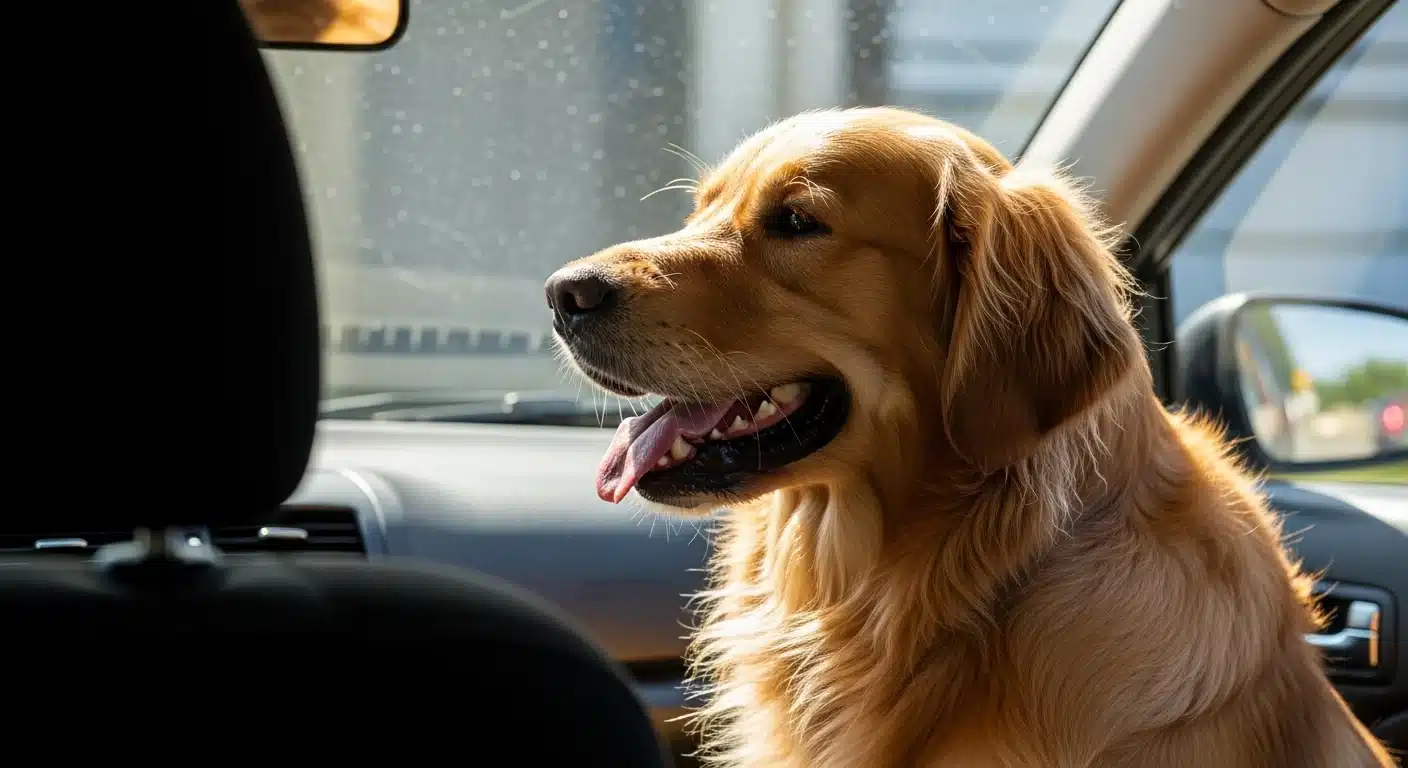
How Long Can You Leave a Dog in a Car? (Heat Safety Guide)
The honest answer: in warm weather, essentially never. Here is the science behind why.
You run into the grocery store for “just five minutes.” The sun is out but it does not feel that hot. Your dog seems fine when you left. This scenario plays out millions of times each summer, and it kills hundreds of dogs every year. The core problem: a parked car is not a warm room; it is a solar oven. Car interiors heat roughly 19°F in 10 minutes and 29°F in 20 minutes, regardless of whether windows are cracked, and dogs cannot sweat. This guide covers the temperature-rise math, heatstroke warning signs, cold-weather risks, state laws, and exactly what to do if you see a dog trapped in a hot car.
How Quickly Does a Car Heat Up? (The Numbers)
The landmark study published in the journal Pediatrics (McLaren et al.), widely cited by the AVMA and veterinary community, measured temperature rise inside vehicles across a range of outside ambient temperatures. The results are alarming precisely because they are consistent: it does not matter whether it is 70°F or 100°F outside, the temperature rise curve is nearly identical.
| Outside temp (°F) | + 10 min interior | + 20 min interior | + 30 min interior | + 60 min interior |
|---|---|---|---|---|
| 70°F | ~89°F | ~99°F | ~104°F | ~113°F |
| 80°F | ~99°F | ~109°F | ~114°F | ~123°F |
| 90°F | ~109°F | ~119°F | ~124°F | ~133°F |
| 100°F | ~119°F | ~129°F | ~134°F | ~143°F |
Source: Based on AVMA-referenced temperature-rise data (approximately +19°F at 10 min, +29°F at 20 min, +34°F at 30 min, +43°F at 60 min). Interior temperatures are additive on top of outside ambient temp.
Critically, cracking a window makes almost no measurable difference. Research shows the heating rate is virtually the same whether windows are fully closed or cracked several inches. The sun’s radiation heats the surfaces inside the car (seats, dashboard, steering wheel), which then radiate heat back into the air, ventilation has little effect on this process.
Why Dogs Overheat So Fast
Dogs are at a physiological disadvantage in heat. Humans cool themselves primarily by sweating, water evaporates from our skin across a large surface area, carrying heat away. Dogs do not sweat from their skin. They cool almost entirely by panting, exhaling hot air and inhaling cooler air to evaporate moisture from the tongue and respiratory tract.
Panting works reasonably well outdoors. In a sealed or poorly ventilated car, however, the air temperature quickly rises above the dog’s body temperature, making panting ineffective, the dog is inhaling air that is already hotter than its own body. At that point, core body temperature rises rapidly:
- Normal dog body temperature: 101 to 102.5°F
- Heat stress begins: ~103°F
- Heat exhaustion: 104 to 106°F
- Heat stroke (life-threatening): above 106°F
- Organ failure and death: can occur above 109°F
The progression from “uncomfortable” to “critical” can happen in under 15 minutes on a hot day. Certain dogs are at even higher risk: brachycephalic (flat-faced) breeds like Bulldogs, Pugs, French Bulldogs, and Boxers have restricted airways that make panting less efficient. Obese dogs, elderly dogs, puppies, and dogs with heart or respiratory conditions are also especially vulnerable.
Signs of Heatstroke in Dogs
Recognizing heatstroke early is the difference between a close call and a tragedy. Know these warning signs, they can appear quickly and escalate fast:
- Heavy, rapid panting, more intense than after normal exercise
- Excessive drooling, thick, ropy saliva
- Bright red or dark red gums and tongue (normal is pink)
- Glazed, unfocused eyes
- Weakness or difficulty standing
- Vomiting or diarrhea
- Stumbling, loss of coordination
- Collapse or unconsciousness
Heatstroke can cause irreversible organ damage, kidney failure, and neurological damage even if the dog initially appears to recover. A vet evaluation after any suspected heatstroke incident is not optional, it is essential.
Cold-Weather Car Risks: Not Just a Summer Problem
Most people focus on hot cars, but cold cars can be equally dangerous, and the risk is less widely understood.
A parked car in cold weather acts like a refrigerator, not an insulator. The interior temperature drops to ambient outdoor temperature quickly, especially in wind. Risks include:
- Hypothermia: Small dogs, short-coated breeds, elderly dogs, and puppies are susceptible at surprisingly mild temperatures (below 45°F for small/thin dogs, below 32°F for most others)
- Carbon monoxide poisoning: If you leave the car running for heat, a blocked exhaust, a cracked engine gasket, or simply an enclosed or semi-enclosed parking space can allow CO to build up inside the car to lethal levels, with no warning signs for the dog
- Psychological stress: Dogs left in a cold, quiet, dark car can experience significant anxiety, especially if they can hear or see activity outside
The Rare Lower-Risk Scenarios
To be honest rather than alarmist: there are conditions under which a very brief car stay carries substantially lower (though never zero) risk. These conditions are:
- Outdoor temperature 50 to 60°F, on a genuinely mild, overcast day with no direct sun, interior temperature rises slowly
- Parked entirely in shade, not partial shade that will shift in 10 minutes, but full, reliable shade
- Windows cracked or down significantly, more airflow is always better, though it is not a reliable safety guarantee
- Genuinely short stop: 2 to 3 minutes, and you can see the car the entire time
- Dog is healthy, adult, not brachycephalic, not overweight
Even in these “lower risk” conditions, the AVMA’s guidance is unambiguous: “Never leave your pet alone in a parked vehicle, no matter what the outdoor temperature.” We agree with that advice. The risk of misjudging the situation (the stop takes longer than expected, the shade shifts, an emergency delays you) is real and the consequences are severe.
If you must travel with your dog and cannot bring them into the destination, your safest options are: bring a travel companion who can stay with the dog, use drive-through services, or leave your dog at home for that trip.
Hot Car Laws: What the Law Says (General Overview)
Animal protection laws regarding dogs in hot cars vary significantly by state. As of 2026, at least 31 states have laws specifically addressing animals in unattended vehicles, either making it illegal to leave an animal in conditions that endanger their health, or providing explicit protection for people who intervene.
Key categories of state laws:
- Anti-cruelty vehicle laws: These make it illegal to leave an animal in a vehicle under conditions that could cause harm. Most states with animal cruelty statutes can apply them to hot car situations.
- “Good Samaritan” laws: A growing number of states explicitly allow private citizens (or in some cases only law enforcement/first responders) to break a vehicle window to rescue an animal in danger without civil liability. States with civilian rescue provisions include California, Florida, Colorado, Tennessee, and others, but the specific conditions vary. This is general information only, not legal advice. Check your state’s current law before acting.
- First responder rescue laws: Many states authorize law enforcement, animal control officers, or firefighters to break into a vehicle to rescue an animal.
The legal landscape evolves quickly. For current law in your state, check your state’s official legislative website or resources from the Animal Legal Defense Fund (aldf.org).
What to Do If You See a Dog in a Hot Car
You are in a parking lot. You spot a dog in a parked car, panting heavily, distressed. What do you do?
- Note the car make, model, color, and license plate.
- Go inside nearby stores immediately and ask staff to make an announcement, the owner may be 30 feet away and unaware of the danger.
- Call local non-emergency police, or 911 if the dog appears in immediate distress (vomiting, unresponsive, extremely distressed). Give them the plate number and location.
- Do not leave the scene, stay and monitor the dog and wait for authorities if time allows.
- If you believe the dog is about to die and no help is coming: In states with Good Samaritan laws, you may be legally protected to break the window after contacting authorities, but know your local law. In all other cases, wait for law enforcement who have unambiguous authority to act.
Once the dog is out of the car:
- Move to shade or air conditioning immediately
- Offer small amounts of water if the dog is conscious and can drink
- Apply cool (not icy) water to the dog’s paws, belly, and neck
- Transport to an emergency vet as fast as possible, even if the dog seems to recover, internal damage may not be immediately visible
For more on traveling safely with your dog, including restraint and car equipment, see our Traveling With Your Dog guide.
Keeping Your Dog Safe in the Car (When You Do Travel Together)
The best solution to the hot car problem is a simple one: plan your trips so your dog is never left alone in the car. But for the time your dog is in the car, driving, not parked, here are the key safety practices:
- Use a crash-tested restraint: An unrestrained dog in a collision becomes a projectile. Use a harness that has passed crash testing, or a secured, ventilated crate. See our best dog car barriers and best dog car seats guides for verified picks.
- Keep the car cool while driving: Air conditioning should be set to keep the back seat, where most dogs ride, as cool as the front. Car interiors heat fast when idling in traffic without movement of outside air.
- Avoid leaving the engine idling for cooling: Engine failures, AC malfunctions, or carbon monoxide build-up in semi-enclosed spaces make this unreliable as a safety strategy.
- Bring water and a portable bowl: Dogs need more frequent hydration when warm and stressed by travel.
- Plan stops with the dog in mind: Use pet-friendly rest areas, and identify a plan for every stop, who stays with the dog, or whether the dog comes inside.
Plan safe car travel for your dog
Hot car safety questions, answered
How long can a dog safely stay in a car?
In warm weather (above 70°F), dogs should not be left in a parked car for any length of time, even a few minutes. Car interiors heat approximately 19°F in 10 minutes and 29°F in 20 minutes, regardless of whether windows are cracked. On a 70°F day, the interior can reach over 100°F in just 20 minutes, well above the threshold for heat stress in dogs. In genuinely mild weather (50 to 60°F, full shade, overcast), the risk is lower, but the AVMA recommends never leaving pets unattended in a parked vehicle.
At what temperature is it unsafe to leave a dog in a car?
Any outside temperature above 60 to 65°F carries meaningful risk because car interiors can heat 20 to 30°F above ambient in under 20 minutes. A dog can begin experiencing heat stress at a body temperature of 103°F, and a car interior on a 70°F day can reach that threshold interior temperature within 30 minutes. There is no truly safe outside temperature above 65°F for leaving a dog unattended in a parked car.
What should I do if I see a dog in a hot car?
Note the car’s plate number, make, model, and color. Go inside nearby stores and ask staff to page the owner. Call non-emergency police or 911 if the dog is visibly distressed (vomiting, unresponsive, collapsing). Stay at the scene and monitor the dog. In some US states, Good Samaritan laws permit civilians to break a window after contacting authorities, but conditions vary by state and this is not legal advice. If you successfully rescue the dog, move it to shade or air conditioning, apply cool water to paws and belly, and get to a vet immediately.
Does cracking a window keep a car cool enough for a dog?
No. Research consistently shows that cracking windows has virtually no meaningful effect on the rate of interior temperature rise. The heating in a parked car is driven primarily by solar radiation heating interior surfaces (dashboard, seats, carpet), which then radiate heat into the air, ventilation from a cracked window cannot counteract this effect. The AKC and AVMA both note that cracked windows do not provide meaningful protection for dogs.
Is it safe to leave a dog in a car in winter?
Cold cars carry their own risks. A parked car in winter acts like a refrigerator, temperatures quickly drop to ambient outdoor levels. Dogs can experience hypothermia at temperatures below 45°F (especially small breeds, short-coated dogs, puppies, and elderly dogs) and below 32°F virtually any dog is at risk. Leaving the engine running for heat introduces carbon monoxide risk in enclosed or semi-enclosed spaces. The safest practice is to not leave dogs unattended in parked vehicles in cold weather either.
Which dog breeds are most at risk in a hot car?
All dogs are at risk in a hot car, the temperature physics apply equally regardless of breed. However, certain groups face elevated risk: brachycephalic (flat-faced) breeds like Bulldogs, French Bulldogs, Pugs, Boxers, and Shih Tzus have restricted airways that make panting less effective. Overweight dogs, elderly dogs, puppies, and dogs with heart or respiratory conditions are also more susceptible to rapid heat stress. Large dark-coated dogs absorb more radiant heat from sun exposure.
What are the signs of heatstroke in dogs?
Signs of heatstroke in dogs include: heavy rapid panting (more than after exercise), excessive thick drooling, bright red or very dark red gums and tongue (normal is pink), glazed or unfocused eyes, weakness or difficulty standing, vomiting or diarrhea, stumbling or loss of coordination, and in severe cases collapse or unconsciousness. If you observe any of these signs, move the dog to shade or air conditioning immediately, apply cool (not ice cold) water to paws, belly, groin, and armpits, and get to an emergency veterinarian right away. Heatstroke can cause permanent organ damage even after the dog appears to recover.