 Dog Gear, Sized Right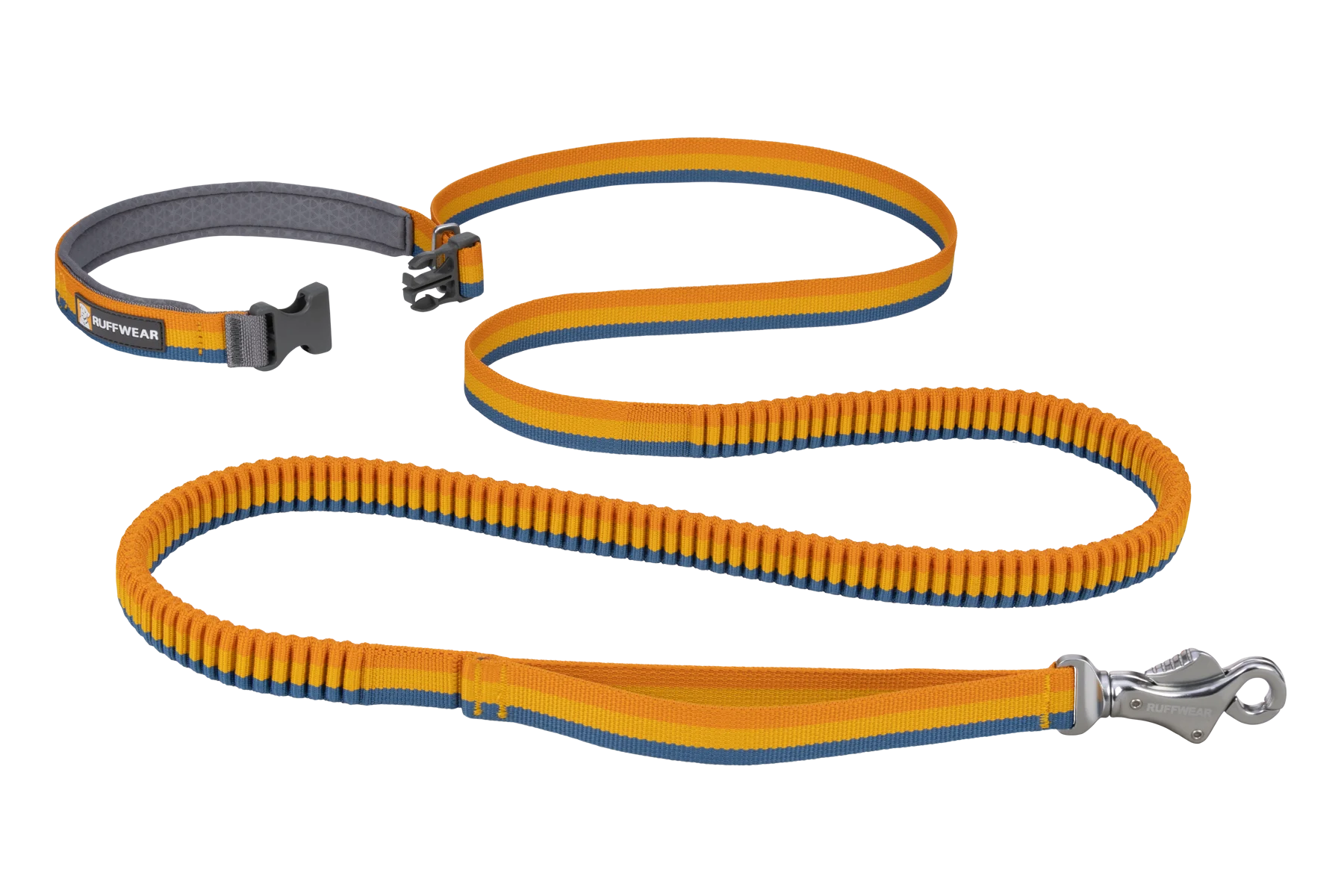
The Best Dog Leashes of 2026, Tested & Compared
The right leash is the one that suits your dog’s size, strength and activity level, and keeps both of you comfortable on every walk. Here are the best dog leashes tested and compared: four verified picks for everyday walking, training, running and night safety, with exactly how to choose.
A leash is the piece of gear you use more than anything else, every single day, every single walk. For a large or strong dog, the wrong leash means sore hands, a jerked shoulder or a clip that fails at the worst moment. And the best leash for a morning jog is not the same as the best leash for heel training, or for a late-night walk where a driver needs to see your dog. Below we rank our four top picks across those use cases, then walk through exactly how to choose, by material, length, hardware and activity, so you pick the right leash once instead of cycling through cheap ones that fail.
The best dog leashes: our top picks
Ranked for large and active dogs. Each pick is a real, verified in-stock product, prices are last-checked, tap through for the live price.
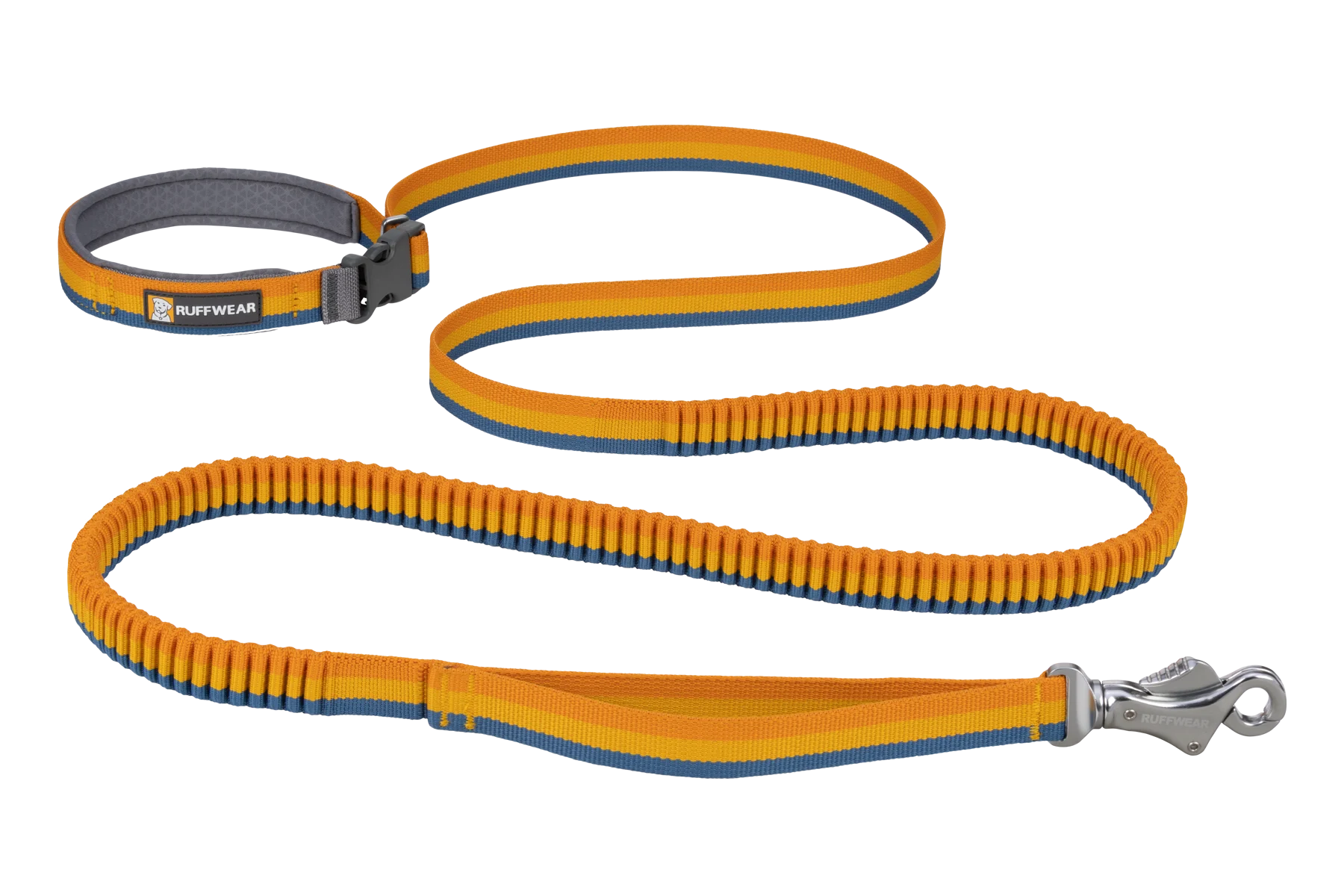
Ruffwear Roamer™ Bungee Dog Leash
If you walk, run or hike with a large, strong or energetic dog, the Roamer is the leash we’d buy first. It’s a bungee leash, the middle section stretches to absorb sudden lunges and tugs, so instead of a jerk to your shoulder when your dog darts after a squirrel, you feel a smooth pull. The length adjusts between 3.5 and 5 feet for different situations (heel work close, loose walking longer), and a waist belt loop turns it hands-free so you can run or hike without gripping the handle. It’s built from Tubelok webbing. Ruffwear’s reinforced nylon, with a Talon clip that’s far beefier than the wire-gate snaps on budget leashes and is rated to 800 lb. For a 60 to 120 lb dog who pulls, the bungee section and strong clip are genuinely useful safety features, not marketing. The padded handle is wrapped in EVA foam for comfort on long days. Backed by a lifetime warranty against defects.
What we like
- Bungee section absorbs lunges and sudden tugs, saves your shoulder on a big dog that reacts on a walk
- Hands-free waist clip lets you run, hike or use both hands without dropping the leash
- Adjustable 3.5 to 5 ft length suits everything from heel drills to a loose trail walk
- Talon clip is rated 800 lb, far stronger than the wire-gate clips on budget leashes
- Lifetime warranty: Ruffwear replaces it if it ever fails
The catches
- At ~$50 it’s the most expensive pick here, but built to last years, not months
- The bungee section means it isn’t the best choice for formal obedience work where a fixed length matters
- Waist belt sizing runs small; check the size chart before ordering
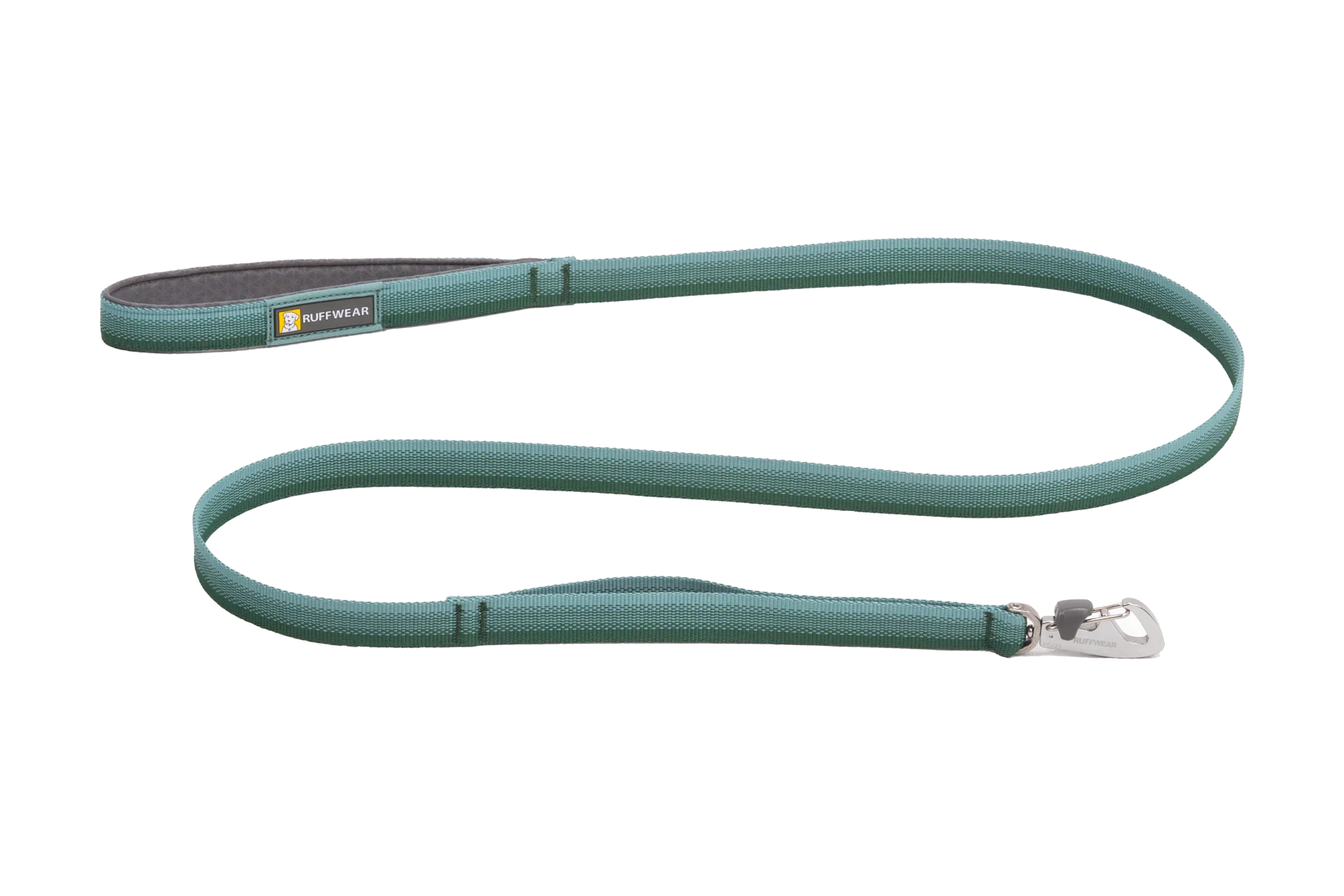
Ruffwear Front Range™ Dog Leash
Not every walk needs a bungee. For everyday outings, the morning walk, the vet, the park, the Front Range Leash is the cleaner, simpler tool. It’s a fixed 5-footnylon leash made from Tubelok webbing (the same reinforced nylon Ruffwear uses in their harnesses and climbing-rated gear), with a large, comfortable EVA-foam padded handle that doesn’t cut into your hand on a long walk. The aluminum V-ring on the handle doubles as a clip for waste bags so you’re not holding a bag in your walking hand. The Talon clip is the same beefed-up hook as on the Roamer, much stronger than a wire snap, and it opens wide enough to clip onto the thicker D-rings on big-dog harnesses and collars without fighting it. Available in seven colours, two widths (3/4″ for dogs under 42 lb, 1″ for big dogs). At $24.99 it’s the best-value daily leash from a brand that stands behind its products.
What we like
- Padded EVA handle is comfortable for long daily walks, no rope burns on a big dog’s pulling
- V-ring on the handle is a genuinely useful place to clip poo bags, not an afterthought
- Talon clip opens wide, clips smoothly onto the large D-rings on big-dog harnesses
- Tubelok webbing is far more durable than the cheap nylon used on budget leashes at the same price
- Made in two widths, get the 1″ for a dog over 42 lb
The catches
- Fixed 5 ft, can’t adjust length for running or heel drills (get the Roamer for that)
- No bungee section, so you’ll feel a sudden lunge directly through the handle
- Colours show on photos but may look slightly different in person (true of most leashes)
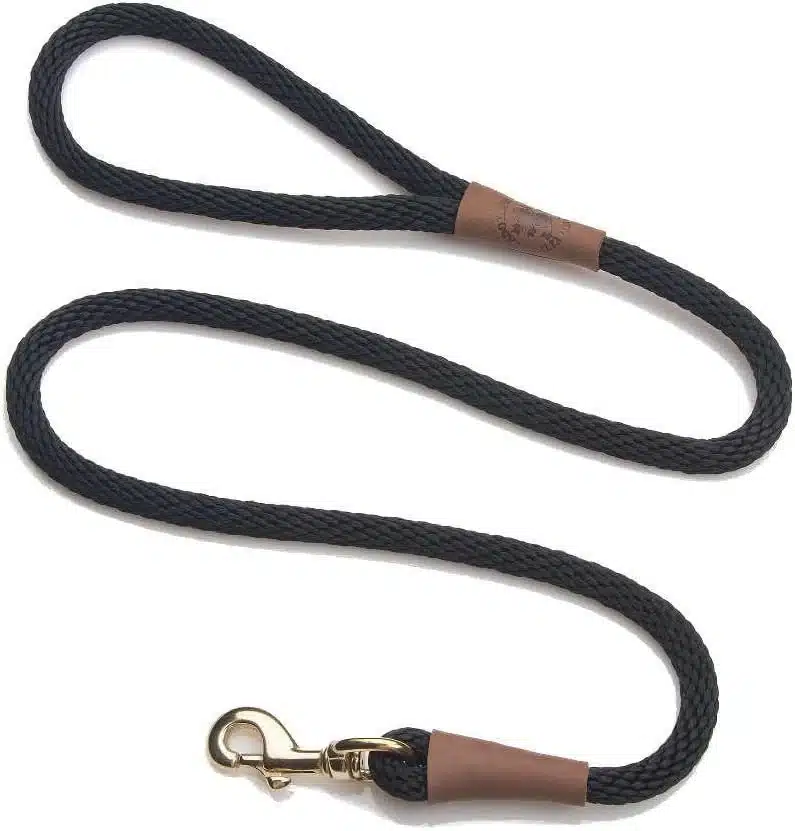
Mendota Pet Snap Leash (Large Breeds)
If you train with your dog, working on heel, recall or manners classes, the Mendota Snap Leash is the professional’s choice. It’s a British-style braided nylon lead, made in the USA, in a 1/2-inch diameter sized for large breeds (the rope feels like a show lead in your hand, not a strap). The snap clip is solid and sized for large dogs. At a 6-foot fixed length it’s the standard size for training work, long enough for a loose-lead walk, short enough to maintain control in a heel. The braided nylon is soft and grippy in the hand, it doesn’t coil or kink like rope leashes can, and it resists absorbing smell and moisture better than cotton. At $23.49 it’s exceptional value, a lead that lasts years and looks properly professional on a big dog. Available in a range of colours. Mendota has made these in Wisconsin since the 1970s.
What we like
- Braided nylon feels like a traditional show lead, grippy, soft, won’t kink or coil
- 1/2″ width is sized right for a large dog’s snap hardware, not flimsy string
- Made in Wisconsin since the 1970s: genuine quality, not an overseas copy
- Excellent value for a training-quality lead that will outlast a dozen budget leashes
The catches
- Fixed 6 ft only, not adjustable, no bungee, no waist clip
- Snap clip (not a locking carabiner), fine for a trained dog, but don’t use it as a tie-out
- Braided nylon absorbs water more than Ruffwear’s Tubelok webbing; air-dry after a wet walk
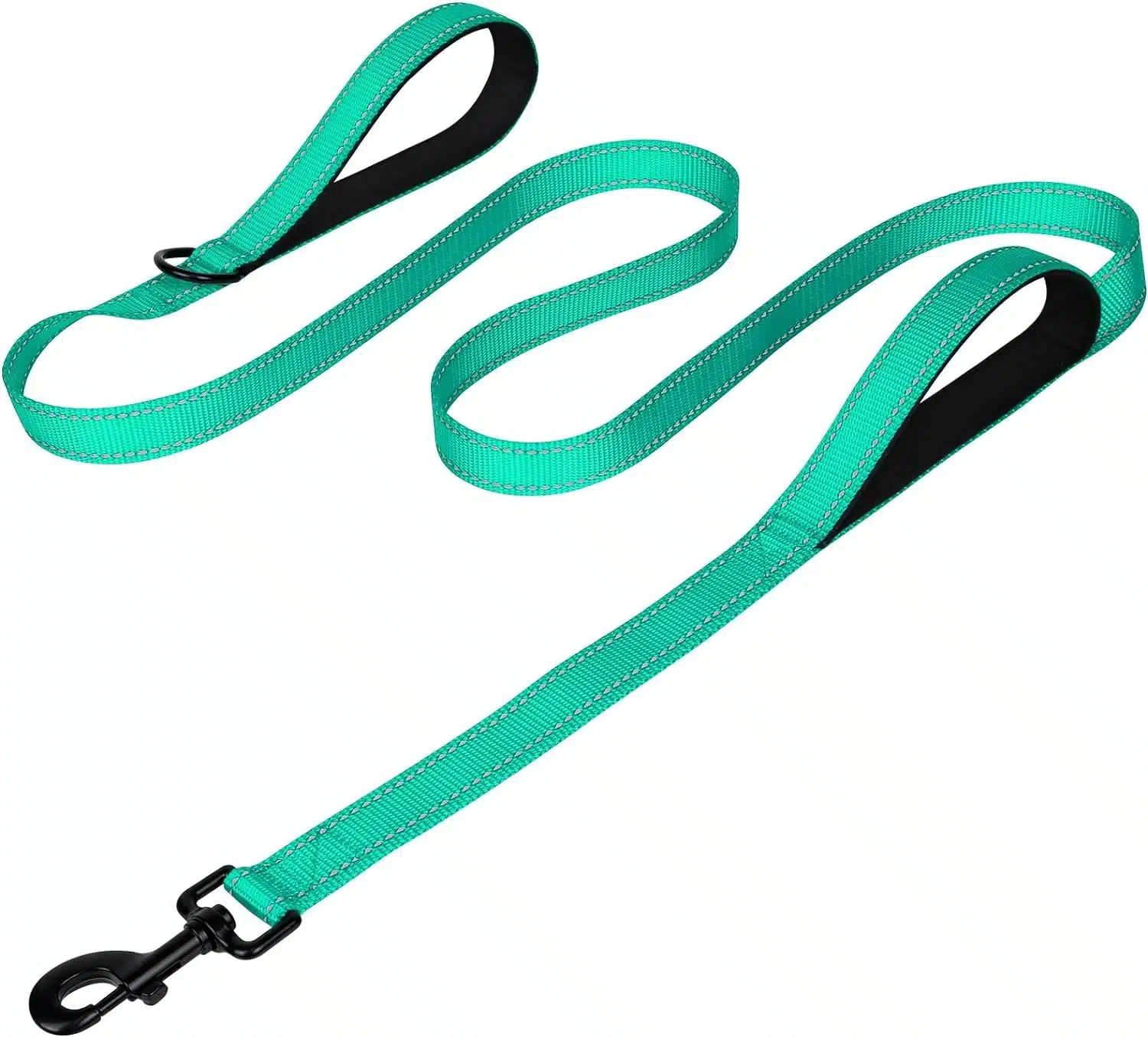
Joytale Double-Sided Reflective Dog Leash
When you need a reliable everyday leash that won’t break the bank, the Joytale ticks every practical box for a large, heavy dog. The double-handle design is the standout feature: the padded traffic handle near the clip lets you shorten the leash and grab your dog instantly when a cyclist passes or another dog appears, then you release it and go back to the main padded top handle for normal walking. Double-sided reflective stitching runs the full length so drivers see your dog in the headlights at night. The leash is heavy-duty nylon with a solid metal snap clip, not a sewing-thread nylon that shreds after six months. For a first leash, for a second leash, or for training without paying premium prices, this is the pick we’d put in the hands of a first-time large-dog owner.
What we like
- Two handles, shorten instantly for traffic control without wrestling with the leash
- Full-length double-sided reflective stitching makes your dog visible in headlights
- Heavy-duty nylon construction at a budget price, far more durable than it has any right to be
- Best starting leash for a first-time large-dog owner who wants reliability without the premium cost
The catches
- Budget build, the clip isn’t rated like the Talon on Ruffwear; fine for daily walks, not for a 120 lb escape artist
- No bungee section; you’ll feel large lunges directly through the handle
- The reflective stitching can fade faster than on more expensive leashes with woven-in reflective strands
Leash materials: nylon, rope, biothane and bungee
The material a leash is made from affects how it feels in your hand, how long it lasts and how it ” “handles wet conditions. For a large dog you’ll pull against this material constantly, so it matters:
- Nylon webbing. The default for most dog leashes, lightweight, affordable and available in every width. Standard nylon can feel rough in the hand when a big dog pulls. Quality nylon (like Ruffwear’s Tubelok webbing) is reinforced and much more comfortable. Best for: daily walking, training, most dogs.
- Braided nylon / rope. Twisted or braided nylon is softer and rounder than flat webbing, it sits in the hand more like a traditional show lead. The Mendota snap leash is this type. Best for: training, show walking, owners who prefer a rope feel over a flat strap.
- Bungee / shock cord. A stretchy section, usually in the middle, that absorbs the jerk from a sudden lunge. Hugely useful for a reactive or excitable large dog. It’s not for every leash (you want a fixed-length lead for formal heel work), but it saves shoulders and wrists on a powerful dog. The Ruffwear Roamer is our bungee pick. Best for: active dogs, running, hiking.
- Biothane. A waterproof, rubber-coated polyester webbing that looks like leather, cleans instantly, doesn’t smell and won’t rot. A premium choice for dogs that swim or wade through mud every walk. Best for: water dogs, muddy/wet climates.
- Leather. Traditional and durable, genuine leather softens with use and is comfortable. But it requires maintenance (conditioning), takes time to dry after wet walks, and good leather leashes are expensive. Best for: owners who want a premium traditional look and will care for it.
Leash length: 4 ft, 6 ft, long-line and hands-free
Leash length affects how much freedom your dog has and how much control you keep. Most everyday leashes are 4 or 6 feet, but different situations call for different lengths:
- 4 ft. Tighter control, good for hectic environments (city streets, crowded parks), dogs still learning to walk on a loose lead, or anywhere you want your dog close. It can feel short on a long-striding large dog but gives excellent control for training.
- 6 ft. The standard for a reason: long enough for your dog to explore, sniff and walk naturally; short enough that you can reel them in quickly. Use this for almost everything.
- Long-line (15 to 30 ft). For recall training, allowing free-form movement in an open field, or dogs being prepared for off-lead work. A long-line is not an everyday leash, it’s a training tool. Don’t use a long-line in traffic or on paths where it becomes a trip hazard for other people.
- Hands-free / running leash. Clips to a waist belt so you can run, hike or do anything with both hands free. Usually built with a bungee section (as on the Ruffwear Roamer) so your stride isn’t disrupted by a sudden lunge. Not ideal as an everyday leash unless you walk your dog at pace.
Double handles: the safety feature most leashes skip
A double-handle leash has two grips: the main handle at the top, and a shorter traffic handle near the clip. For a large dog, this is one of the most useful design features a leash can have, and most cheap leashes skip it.
The traffic handle lets you instantly shorten the leash to pull your dog tight to your side when a cyclist, car, child or other dog appears suddenly, then release it and return to the full length once the situation clears. For a 70 lb dog who reacts to other dogs, this is far safer than trying to reel in 6 feet of leash at a moment’s notice, or letting the dog bolt into traffic while you fumble. The Joytale pick in our list is the best budget example. If you have a large, reactive or powerful dog and you don’t have a double-handle leash, fix that before anything else.
Retractable leashes: when to use them (and when not to)
Retractable leashes are popular, but they’re not the right tool for every dog or every situation. The honest summary:
| Situation | Retractable? Verdict |
|---|---|
| Open park or field, well-trained small dog | Fine, it lets them explore a large area |
| City street or footpath with traffic | Not recommended, the thin cord can snap under a large dog’s sudden lunge; the reel mechanism adds delay before you can stop the dog |
| Large or strong dog anywhere | Not recommended, retractable leashes are typically rated to 60 to 100 lb; a 90 lb dog lunging at full extension generates far more force than that |
| Around cyclists, pedestrians or other dogs | Not recommended, the thin cord is a trip hazard and nearly invisible to approaching people |
| Training or heel work | No, constant reel tension teaches the dog to pull, not to walk loose |
For a large or strong dog, a standard fixed-length 6 ft leash (or a hands-free bungee for running) is safer, more durable and better for training than a retractable. If you want more freedom than 6 ft in open space, a long-line (15 to 30 ft) gives the same benefit without the fragile cord and reel mechanism.
Clip types: snap hooks, locking carabiners and Talon clips
The clip is the most critical safety part of a leash, it’s the single point that has to hold your dog every time. For a large, powerful dog, not all clips are equal:
- Wire-gate snap hook. The standard cheap clip. Light and easy to clip, but the wire gate can flex or fail under sudden lateral force, a big dog lunging sideways can sometimes open one. Fine for a calm small dog; for a powerful large dog, we’d rather have something stronger.
- Bolt snap hook. A beefier version, the gate slides rather than bends, and it’s rated to much higher loads. The Mendota uses this type. Solid and reliable for daily use on large breeds.
- Locking carabiner. Gates that require a deliberate twist to open, won’t open accidentally. Some specialist leashes and training leads use these. Overkill for most daily walks, but useful if your dog has learned to nose or paw the clip open.
- Talon clip (Ruffwear). Ruffwear’s proprietary clip, a solid-gate hook rated to 800 lb, wider than standard clips so it opens easily onto thick D-rings on big-dog harnesses and collars. Used on both Ruffwear picks above. Noticeably stronger than any budget snap clip.
Night safety: why reflective matters for big dogs
A large dog on a dark road is a serious hazard to drivers, and to themselves. Dark-coloured dogs (black Labs, dark Rottweilers, Dobermans) are particularly difficult to see in headlights. Reflective leashes and collars are one of the easiest, cheapest safety upgrades you can make.
Look for leashes with reflective stitching woven into the webbing, not just a strip glued on the outside (which peels). The Joytale double-handle leash in our list has double-sided reflective stitching on the full length of the leash, it shows up brightly in car headlights. Pair it with a reflective collar or harness for maximum visibility on early morning or evening walks.
The other option is a light-up collar or leash (LED models), actively lit rather than just reflective. These are more visible but require charging and are bulkier than a standard leash. For most owners, a high-quality reflective leash is the simpler, maintenance-free choice.
And once you have the right leash, train your dog to walk well on it, a dog that doesn’t pull is a calmer, safer dog for both of you. Our guide to how to stop a dog pulling on the leash walks through the key techniques that actually work without harsh corrections.
Build the rest of your dog's walking gear
Choosing a dog leash: common questions
What is the best leash for a large dog that pulls?
For a large dog that pulls, prioritise width (at least 3/4″, ideally 1″ for a dog over 60 lb), a padded handle so the leash doesn’t cut into your hand, and a strong clip (a bolt snap or rated carabiner, not a light wire-gate hook). A bungee section (like the Ruffwear Roamer) absorbs the jerk from a sudden lunge and is worth every penny on a powerful dog. A double-handle leash (like the Joytale budget pick) also helps, the short traffic handle lets you reel your dog in instantly when needed. Pair the right leash with a front-clip harness for the best pulling reduction.
What length leash is best for dog walking?
For most everyday dog walking, a 6-foot leash is the best length, long enough for your dog to sniff, explore and walk naturally, short enough to keep them safely under control in most situations. A 4-foot leash gives more control in crowded environments (busy streets, vets, markets). For recall training or letting a dog explore an open field, a 15 to 30 foot long-line works well. Avoid retractable leashes for large or powerful dogs, the thin cord can fail under a big dog’s force and the reel mechanism adds dangerous delay in an emergency.
Are bungee leashes good for large dogs?
Yes, a bungee leash is one of the best investments for a large, strong or reactive dog. The stretchy section absorbs the jolt when your dog lunges suddenly, so instead of a sharp jerk to your shoulder and wrist, you feel a smooth, gradual pull. This protects both you and the dog’s neck. The Ruffwear Roamer is our top bungee pick, it also adjusts between 3.5 and 5 feet and has a waist clip for hands-free use. The trade-off is that a bungee leash isn’t ideal for formal heel training (where a fixed length is better), keep a standard fixed leash for dedicated training sessions.
What type of leash is best for dog training?
For training, a fixed-length 6-foot nylon or braided leash is the classic choice, it gives you consistent feedback about where the dog is and doesn’t reward pulling with more rope (unlike a retractable). The Mendota Snap Leash is the trainer’s pick: braided nylon, a solid snap clip, 6-foot length, and the soft rope feel that’s standard in professional obedience classes. For recall training at distance, add a long-line (15 to 30 ft) to give the dog freedom while you still have control. Avoid retractable leashes during training, they teach the dog that tension = more rope, which is the opposite of what you want.
Are retractable leashes safe for large dogs?
In most situations, no, retractable leashes are not ideal for large dogs. The reasons: (1) The thin cord is typically rated to 60 to 100 lb, but a 90 lb dog lunging at full speed generates far more force at the end of the reel. Cord failures are common. (2) The reel mechanism adds a delay before you can stop the dog. (3) In traffic, the thin cord is nearly invisible to drivers and cyclists, and it’s a trip hazard. (4) Constant tension on the reel teaches the dog to pull, making loose-lead walking harder to train. For large dogs, a standard 6-foot leash is safer and more controllable for everyday walking; a long-line for open-space freedom.
Should I use a clip leash or slip lead?
Both have their place. A clip leash attaches to a collar or harness ring and is the standard for daily walking, the collar/harness absorbs pressure, not the dog’s throat. A slip lead (like a Mendota slip leash) combines a collar and lead in one: a loop that tightens when the dog pulls and loosens when they don’t. Trainers use them for quick, clean transitions between exercises, but for everyday use on a dog that pulls hard, a clip leash paired with a well-fitted harness gives better control without putting pressure on the throat. If you’re considering a slip lead, get proper guidance from a trainer on correct fit, a slip lead too low on the neck, pulled too long on a big dog, can cause injury.