 Dog Gear, Sized Right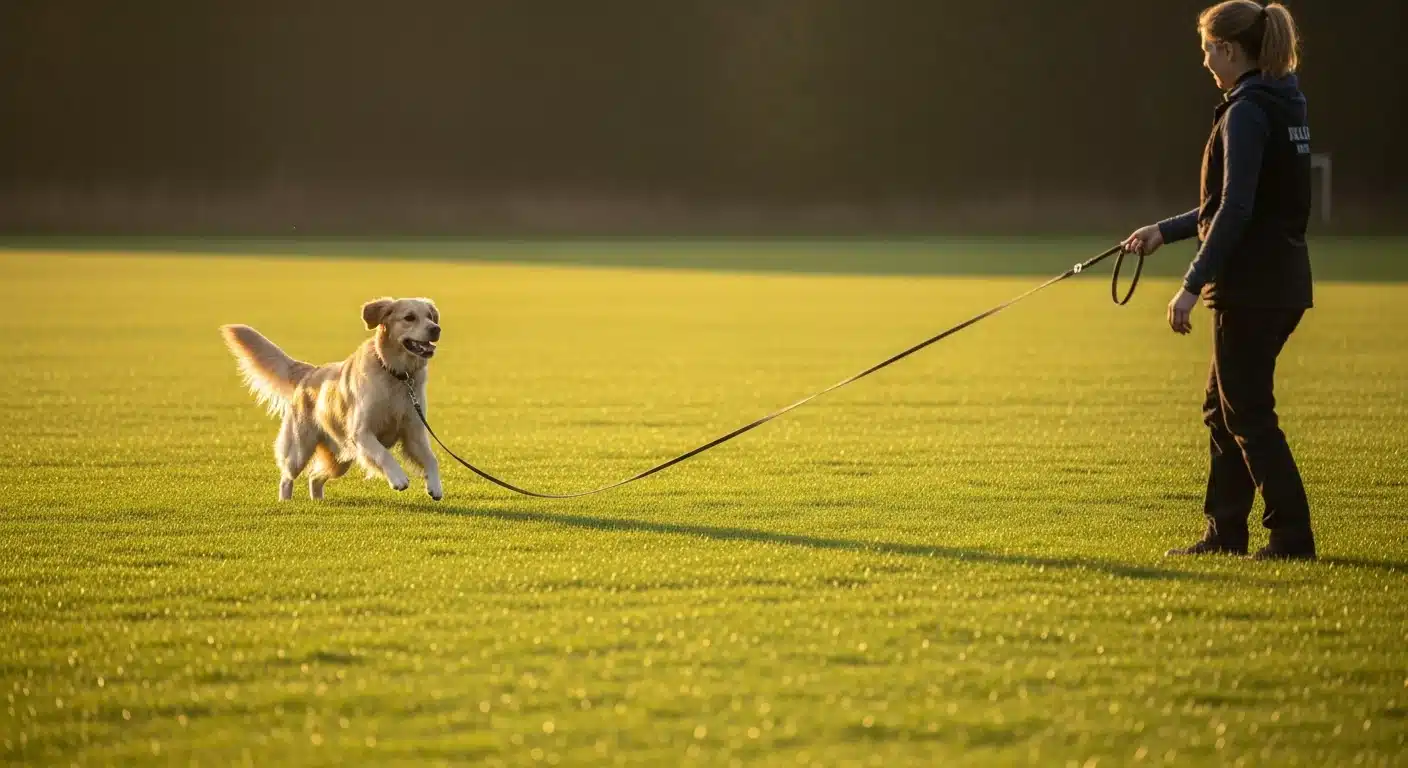
Best Long Line for Dog Training (2026): Recall Leads Reviewed
A long line is the bridge between on-leash obedience and reliable off-leash recall. Here are the best training leads for 2026, with a full guide to length, material, safety and how to actually use one to build a bombproof recall.
A long line is not a leash, and understanding that difference is the whole game. A long training lead (15 to 50 feet of nylon or biothane) is a temporary recall tool: it gives your dog the experience of freedom while keeping you connected long enough to make calling them back the most rewarding thing they’ve done all day. When it’s used correctly, dogs love the long-line phase of training. When it’s used wrong, in the wrong environment, without gloves, or with a line wrapped around your wrist, it becomes a tangle hazard or a hand injury. Below, we cover the two long lines we can currently verify and recommend, then give you the complete guide: right length by training stage, nylon vs biothane, the safety rules that every trainer follows without exception, and exactly how to run a recall session on the long line from start to finish. If you’re comparing everyday leashes alongside this, our guide to the best dog leashes covers the full category, this page is specifically for recall training leads 15 to 50 feet long.
What is a long line, and what it is not
A long line (also called a long lead, check cord or training lead) is a lightweight leash between 15 and 50 feet long, used specifically for distance training and recall work. It is not:
- Not an everyday leash. You do not walk your dog on a long line on a pavement, in a crowd, or anywhere there are other people, dogs or hazards nearby. A 30-foot trailing cord around cyclists, pushchairs or other dogs is a trip hazard and a safety emergency. The right environment is an open field or large park with good visibility and no nearby pedestrians.
- Not a tie-out or tether. Long lines are active, supervised training tools, you hold the other end, watch your dog, and manage the line throughout the session. Leaving a dog tethered unsupervised on a long line risks serious tangling injury and should never be done.
- Not a replacement for actual training. The long line buys you the time and space to reinforce recall at real distance, but the actual work is the reward game you run within that window. The line is the safety net, not the training method.
What a long line IS: the single most useful tool for building recall at distance before your dog is ready to be off-lead. It mimics freedom from the dog’s perspective while keeping you connected, and that connection lets you reward at exactly the right moment without your dog learning that recall ends the fun.
The practical difference between a long line and a standard 6-foot leash is purely distance. A 6-foot leash only lets you practice recall from 6 feet, which isn’t a real recall test at all. A 30-foot long line gives your dog 30 feet of sniffing and exploring room, then brings them back to you from genuine distance. The further the dog was engaged in sniffing or play before the recall, the more valuable the successful recall becomes, and the more the cue gets reinforced. For a full breakdown of everyday leash types, see our complete dog leash guide.
Our recommended long lines for 2026
Long training leads are a niche training-tool category, mostly Amazon-sold, from brands without Skimlinks merchant agreements in our local catalog. We verified two products via live Amazon product-page fetch before this guide published. Product photos aren’t available from our scraping pipeline due to JavaScript-rendered Amazon CDN images, so we’re linking inline rather than using product cards, following our own rule that we never use an unverified or fabricated product photo. Prices are last-checked; tap through for the live listing.
1. Hi Kiss Obedience Recall Training Agility Lead
Best for: everyday recall training in grass, parks or woodland
The Hi Kiss is the training lead most consistently recommended by professional pet-dog trainers as a solid, no-frills starting point. Available in 15 ft, 20 ft, 30 ft, 50 ft and 100 ft lengths in a flat woven nylon construction. The 30 ft version is the most practical all-rounder for recall training, far enough for genuine distance work, short enough to manage in a normal park session without trailing 50 feet into undergrowth. The flat webbing is 3/4 inch wide, gripable and durable, and lays flat on the ground rather than forming kinks and tangles like thin cord-style training lines. The snap clip is standard bolt-snap, appropriate for medium dogs and many large dogs; if you’re training a 90-pound dog with a strong prey drive, check the clip-load rating before use or substitute a rated bolt-snap end. Priced at roughly £10-£15 / $12-$18 depending on length, it’s the lowest-cost reliable entry point to long-line training. Check the Hi Kiss 30ft training lead on Amazon, choose the 30 ft black version first.
2. NIMBLE Waterproof Long Dog Leash Recall Training Lead
Best for: wet or muddy training environments, dogs that swim
The NIMBLE long line is a waterproof PVC-coated training lead, the biothane-style option for owners who don’t want a nylon line that soaks up mud, smells and needs washing after every session. Available in 5, 10, 16, 30 and 50 ft lengths. The rubber-coated construction wipes clean in seconds, run it through a damp cloth and it’s ready for the next session. The 360-degree swivel clip reduces twisting during active recall sessions where the dog is circling and changing direction, and the construction is heavier-duty than the Hi Kiss nylon, which makes it more appropriate for larger or stronger dogs where clip loading matters. Priced at roughly $15-$25 depending on length. The trade-offs: heavier and stiffer than nylon (doesn’t coil as naturally; can feel slightly rigid in cold weather), and the rubberised coating creates more ground friction when the line drags than a flat nylon line. For dogs that go in water every session, or if you train in mud and don’t want the weekly wash routine: check the NIMBLE waterproof long line on Amazon.
If you specifically need a biothane long line from a UK/EU specialist training-gear supplier (for in-person buying or to avoid Amazon entirely), look at tracking and gundog supply shops, these aren’t in our current Skimlinks merchant catalog, so we route to Amazon above. Our main leash guide covers Skimlinks-verified picks across the wider leash category including everyday and activity leashes from Ruffwear, EzyDog and Mendota.
Long-line length guide: 15 ft, 30 ft, 50 ft, which to buy first
Long lines come in a wide range of lengths. Here’s the practical breakdown of what each length is actually useful for:
| Length | Best use case | Who it suits |
|---|---|---|
| 15 ft | Early recall training; smaller open areas; dogs new to long-line work | Any size dog just starting out. Good for woodland paths or smaller parks where a 30-ft line would trail into undergrowth |
| 20 ft | General-purpose recall training; the most versatile all-rounder | Most dogs in most environments. Long enough for real distance training, short enough to manage without an assistant |
| 30 ft | Open-field recall; progressing through recall stages | Dogs with a solid foundation in 15 to 20 ft recall, working in open parks or fields |
| 50 ft | Dogs near the end of long-line training; tracking; working breeds | Experienced handlers; dogs with a strong 30-ft recall ready for more distance. Requires active line management to avoid tangles |
| 100 ft | Specialist tracking and gundog work only | Not recommended for pet-dog recall training, too much line to manage safely without a helper |
The most common beginner mistake is buying a 50-ft line when a 20 to 30 ft is the better tool. More length means more line to coil and manage, more opportunity to tangle or trip, and less precise control at the moment you need to gently guide the recall. Start with 20 to 30 ft, master the mechanics, then extend if your training environment warrants it.
For large or strong dogs: the right length is the same regardless of dog size, but the clip and construction rating change. A 30-ft nylon line with a light wire-gate clip is fine for a medium dog; for a 90-pound dog with a strong prey drive, make sure the clip is a rated bolt-snap or locking carabiner, not a light wire gate that can flex open under lateral force. The NIMBLE waterproof line is built more robustly for larger dogs. For the harness the long line clips to, see our guide to dog harnesses, particularly the back-clip options that are better suited to long-line attachment than front-clip designs.
Biothane vs nylon: which material is better for a long training lead
Long lines are made from two main materials, each with genuine trade-offs. Neither is universally better, the right choice depends on where you train and what your dog does:
Nylon (flat woven webbing)
The most common long-line material. Lightweight, soft, affordable, and available in every length. Flat nylon lays well on the ground, coils naturally, and drags with less friction than rubber-coated alternatives. The Hi Kiss lead above is woven flat nylon.
- Advantages: Lightweight (a 30-ft nylon line weighs very little, easy to manage throughout a session); soft in the hand with lower rope-burn risk than cord; affordable; available up to 100 ft without becoming impractically heavy
- Disadvantages: Absorbs water, mud and smell, needs air-drying after wet sessions and a wash if it picks up strong odours; can feel stiff in very cold weather; thin cord-style nylon (not flat webbing) tangles badly in long grass, choose flat woven nylon over cord
Biothane (rubber-coated polyester / PVC-coated)
A synthetic material that looks like a narrow leather strap, waterproof, wipe-clean, odour-resistant. The NIMBLE waterproof line above is biothane-style. Also widely used among working gundog and tracking trainers who need a line that survives daily water and mud exposure.
- Advantages: Fully waterproof, wipes clean with a cloth in seconds; no odour absorption over time; robust swivel-clip construction typically rated for heavier loads; longer lifespan in wet-use conditions
- Disadvantages: Heavier than nylon, a 30-ft biothane line is noticeably harder to coil and carry than the equivalent nylon; can kink or stiffen in cold weather; rubber coating grips the ground when dragged, creating more friction than flat nylon; more expensive per foot
The practical guide: For a first training lead in typical park or grass conditions, nylon at 20 to 30 ft is the right starting choice, lighter, more natural to manage, and significantly cheaper. For dogs that swim in every session, or if you train on muddy ground year-round and don’t want to wash and dry nylon weekly, biothane is worth the premium. Both materials work for recall training, this is a maintenance and environment preference, not a training-effectiveness difference.
Long-line safety: the rules that professional trainers follow every time
A long line in the wrong environment, or managed incorrectly, is a genuinely dangerous tool. These aren’t optional guidelines, they’re the rules experienced trainers follow without exception, every session:
- Open areas only, always. Never use a long line in a crowd, on pavements, near roads, around cyclists, or anywhere other people or dogs are nearby. A 30-foot trailing cord is nearly invisible to approaching walkers and cyclists, and becomes a trip hazard or wrapping hazard in an instant. The correct environment is an open field, a large park with clear sightlines, or private land where you have full visibility in all directions.
- Wear gloves. If a large dog hits the end of a 30-foot line at full sprint, the cord or webbing accelerates through your hand at speed. Rope burns and cuts happen fast, even with flat nylon. A pair of leather work gloves or training-specific dog-handling gloves costs a few pounds and prevents a painful injury that ends the session. This is non-negotiable for any dog over 30 to 40 lb.
- Never wrap the line around your hand or wrist. If the dog bolts and the line is wrapped around your wrist, you will be dragged, and on a large dog at full speed, you may be seriously injured. Always hold the handle or the coiled line loosely in your palm, ready to drop or pay out if the load becomes unsafe.
- Drop the line rather than grip under full load. If your dog locks onto a deer, rabbit or another dog and charges at full sprint, the right choice is sometimes to drop the line entirely rather than be dragged off your feet. A dropped long line drags behind the dog and creates friction that slows them; a person being pulled over by a large dog is a more dangerous outcome.
- Clip to the harness, not the collar. A dog hitting the end of a 30-foot line at speed generates a significant jolt force. That force directed through a collar onto the dog’s neck is a tracheal injury risk and can cause neck strain on a powerful lunge. A well-fitted back-clip harness distributes the same force across the chest and shoulders, a far larger, stronger surface area with no vulnerable anatomy in the impact zone. Back-clip harnesses are specifically better for long-line work than front-clip designs (front-clip can cause the dog to spin or lose balance on a hard end-of-line event).
- Track the line at all times. In wet grass, a 30-foot nylon line becomes nearly invisible at ground level. Keep continuous awareness of where the line runs from you to the dog, step over it, pay it out deliberately as the dog moves away, and reel it in as they return. Don’t let it accumulate in a pile at your feet.
- Never use as a tie-out. Leaving a dog on a long line unsupervised, even briefly, risks rapid entanglement and serious injury. Long lines are held, active tools only.
How to use a long line for recall training: step-by-step
Long-line recall training works by setting up the recall to succeed, so you can reward it heavily, at real distance, repeatedly. Here is the complete session structure that experienced trainers use:
Step 1: Set up the environment correctly
Choose an open area with good visibility and low distractions. Let your dog sniff, orientate and settle for a few minutes before starting any active training. Clip the long line to the back D-ring of a well-fitted harness, not a collar. Let the line trail on the ground behind the dog as they explore. You don’t need to grip it constantly at this point, the goal is for the dog to feel free while you hold the backstop.
Step 2: Verify the recall cue is already charged
If your dog doesn’t have a recall cue that reliably brings them back in a quiet, low-distraction environment, a long line won’t fix that, it will just prevent them running off while you build the association. Your recall cue (a word like “come”, a whistle signal, or your dog’s name used as a recall) should already be strongly paired with high-value reward (cooked chicken, cheese, or whatever your dog will happily sprint for) before you take it to long-line distance work. If the cue isn’t already charged in a garden or small area, start there.
Step 3: Call from genuine distance and genuine engagement
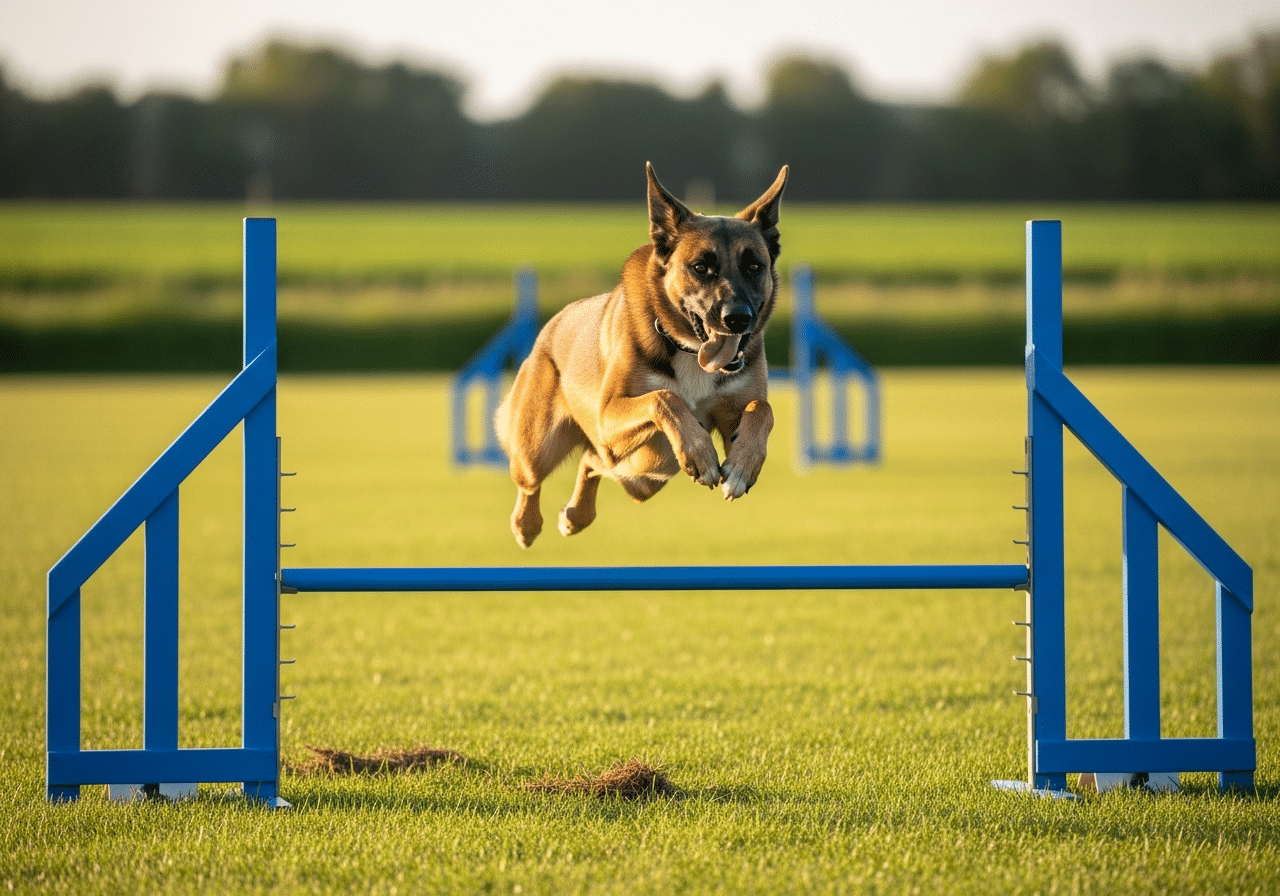
Let the dog get 20 to 25 feet away and genuinely engaged in sniffing or exploring before you call. This is the key training point: calling a dog who’s already looking at you from 5 feet is not recall practice, it’s just a name game. Call once, clearly, with your recall cue. If the dog moves toward you, reel in the line as they come (gather it in loops in your non-dominant hand; don’t let it pile at your feet), and reward heavily at your feet when they arrive, jackpot treat, enthusiastic praise, whatever your dog responds to most. Then release them immediately back to sniffing. The game the dog is learning: come back = jackpot + immediate freedom to go again. Recall should not end the fun.
Step 4: Use the line only as a backstop
The long line is your safety net, not your recall mechanism. If you call and the dog doesn’t respond after a few seconds, apply gentle increasing tension on the line, not a sharp yank, to remind them the cue has a consequence. Then reward generously when they arrive, even if the line assisted the return. Never punish the recall or make the return to you an unpleasant experience: a dog who learns that coming back means frustration or the end of their walk will stop coming back.
Step 5: Keep sessions short, frequent and progressing slowly
Five to ten minutes of active recall work in a session is enough, more than that and dogs start to find it tedious rather than a rewarding game. Daily short sessions build recall faster than weekly long sessions. Gradually increase the challenge: more distance between calls, slightly more distracting environments, competing smells or sounds nearby. But always increase distance and distraction separately, a dog doesn’t need to face maximum distraction at maximum distance on the same day.
Step 6: Progress to a trailing (dropped) line
When your dog has a reliable recall on a held 30-foot line in a quiet open field, the next step is trailing the line, drop it and let it drag on the ground behind the dog. You are no longer physically connected; the dragging line is now just a backstop you can reach for if needed. When recall on a trailing line is as reliable as on a held line, the dog is responding to the cue rather than to physical line tension. That’s when you’re approaching genuine off-lead readiness.
Long line vs retractable leash: why they are not the same tool
Retractable leashes and long training leads look like they solve the same problem, more distance between you and your dog, but they are fundamentally different tools with opposite effects on training behaviour:
| Feature | Long training line | Retractable leash |
|---|---|---|
| Purpose | Recall training and distance work | Everyday walking with more range for the dog |
| Training effect | No constant tension, dog learns to wait for recall cue, then is rewarded for returning | Constant reel resistance rewards the dog for pulling outward, teaches pulling, not recall |
| Length control | You choose how much line is out at every moment by paying out or coiling in | Dog chooses length within the reel range; you lock or unlock remotely |
| Cord type | Flat webbing or biothane, gripable, resistant to cuts, durable | Thin nylon cord, abrasive to skin, typically rated 60 to 110 lb; snap-failure risk at large dog loads |
| Reaction speed | You can apply or release line tension immediately | Reel lock requires a button press, adds reaction-time delay |
| Large dog suitability | Appropriate with correct clip, flat webbing construction, and gloves | Not suitable for dogs over ~40 to 50 lb, cord rating insufficient for large dog at full sprint |
| Trip hazard | Significant, open areas only; actively managed | Significant, thin cord at 26 feet is nearly invisible to approaching pedestrians |
For training purposes specifically: a retractable’s constant low resistance actually teaches the dog to pull outward, because pulling outward is always rewarded with more rope. A long training line has no reel tension; the dog can be 30 feet away with slack line, and recall becomes a behaviour the dog chooses in response to a cue, not a mechanical consequence of the reel. That’s a fundamentally different training environment.
For a large or strong dog specifically: retractable leash thin cord is a documented failure risk at large dog sprint forces. The right tool for giving a large dog more range in open space is a long training line managed actively, not a retractable. For the everyday heavy-duty leash that handles a large dog’s pulling on normal walks, our large-dog leash guide covers the picks that are actually built to the right hardware spec.
When is a dog ready to move from a long line to off-lead
The long line is a bridge, not a permanent fixture. The markers that a dog is genuinely ready to progress:
- 100% recall on a held 30-foot line in a quiet open environment. Not 80%. Not “usually”. A hundred percent, consistently, across multiple sessions over multiple days. If there is any doubt, you are not ready for the next stage. This is the trainer’s honest standard, not an aspirational one.
- Reliable recall on a trailing (dropped) line. When the dog can’t feel any line tension and still returns consistently on cue, the cue is doing the work, not the mechanical connection. This is when the training is actually ready to test at the next level.
- Recall past genuine distraction on the long line. A dog that will come back when there’s a squirrel running nearby, another dog sniffing at the fence, or an interesting scent trail, but only because of line pressure, not the cue, is not ready off-lead. The cue needs to win against competing motivation before the line comes off.
- Off-lead testing in a fully enclosed area first. The first off-lead trials should be in a fenced field or enclosed area where “almost” is still safe. Only after consistent enclosed success does unenclosed off-lead work become appropriate, and even then, only in environments where the specific distractions present are ones the dog has already recalled past on the long line.
The long-line phase for recall training runs from weeks to several months depending on the dog, the environment, and training frequency. Dogs with high prey drive or a history of rewarding self-directed running take longer. That’s normal and expected. A reliable recall built slowly and carefully on the long line is a skill the dog keeps for life. A recall “trained” too fast that breaks down at the first distraction is a safety risk.
Once the recall is solid and the long line is put away, the everyday leash you use for walks matters just as much. Our complete dog leash guide covers the everyday and activity options, from the Ruffwear Roamer bungee for active dogs to the Mendota braided snap lead that many trainers use for ongoing training and maintenance walking once a dog has graduated from long-line work.
Complete the training and walking setup
Long-line training leads: common questions
What length long line is best for recall training?
For most pet-dog recall training, 20 to 30 feet is the best starting length. A 30-foot long line gives your dog enough room to genuinely sniff, explore and feel free before you call, which makes the recall a real training event rather than a short-range name game. A 20-foot line is a solid first choice if your training area is smaller or you’re still building your line-management skills. Avoid starting with 50-ft or 100-ft lines, more line means more management complexity, more tangle risk, and less precise control at the key moment you need to guide the recall. Start with 20 to 30 ft, develop reliable recall at that distance, then extend if your training environment and the dog’s progression warrant it.
Should I clip a long line to a harness or collar?
Always clip a long line to a harness, never a collar, especially for medium and large dogs. If a dog hits the end of a 30-foot line at full sprint, the jolt is significant. That force landing on a collar around the neck creates a genuine tracheal injury risk and can cause serious neck strain on a very powerful lunge. A well-fitted back-clip harness distributes the same force across the chest and shoulders, a much larger, stronger surface area with no vulnerable anatomy in the impact zone. Back-clip harness designs are specifically better for long-line work than front-clip harnesses, which can cause the dog to spin or lose balance on a sudden end-of-line event.
Is biothane or nylon better for a long training lead?
For most pet-dog owners training in parks or grass fields, nylon is the better starting choice, it’s lighter, cheaper and easier to coil and manage throughout a session. A flat woven nylon long line like the Hi Kiss 30 ft is the lowest-cost, most widely-used option among pet-dog trainers. Biothane is better if your dog swims, you train on muddy ground regularly, or you want a line that wipes clean in 10 seconds with no washing required. Biothane (rubber-coated polyester) is fully waterproof and odour-resistant. The trade-off is weight and stiffness: a 30-ft biothane line is noticeably heavier and less flexible than the equivalent nylon, which makes it harder to manage actively during a recall session. For wet-environment training, the NIMBLE waterproof long line is our verified pick.
What safety rules should I follow with a long training line?
The three non-negotiable safety rules every trainer follows: (1) Open areas only, never in crowds, near roads, around cyclists or other dogs. A 30-foot trailing cord is a serious trip hazard and nearly invisible to approaching people. (2) Wear gloves, if a large dog hits the end of the line at full sprint, the cord will cut your hand without glove protection. Leather work gloves are sufficient. (3) Never wrap the line around your hand or wrist, if the dog bolts you will be dragged, and with a large dog that means potential serious injury. Hold the line loosely and be ready to drop if the load exceeds what you can safely manage. Additional rules: always clip to a harness not a collar; actively manage and step over the line throughout the session; never use as an unsupervised tie-out.
How do I stop a long line from tangling and getting underfoot?
Long-line management is a skill that becomes natural within a few sessions. The key techniques: (1) Pay the line out actively as your dog moves away, walk with them if needed so the line runs relatively taut rather than piling at your feet. (2) Coil the line in as the dog returns, gather it into loops in your non-dominant hand as they run toward you on a recall, rather than letting it trail behind them. (3) Step over the line, not under it, when the dog circles around you, step over the trailing line immediately so it doesn’t wrap your legs. (4) Choose flat webbing over cord, a flat woven nylon line lays flatter and tangles far less in long grass and undergrowth than a thin round-cord training line. The difference in daily handling is significant.
Can a long line be used for a large or very strong dog?
Yes, but the equipment specification matters more with a large dog. Clip type: use a bolt-snap or rated carabiner, not a lightweight wire-gate snap clip that can flex open under lateral force. Many affordable nylon training leads use light wire-gate clips that are appropriate for a 25-lb dog but marginal for a 90-lb dog at full sprint. The NIMBLE waterproof line uses a 360-degree swivel rated for higher loads. Gloves are essential with a large dog, the snap force at the end of 30 feet is significant. Harness attachment only, never collar on a large dog with a long line, as the end-of-line jolt risk to the neck is serious. The line length and training method are identical regardless of dog size; only the hardware specification changes.
When is a dog ready to move from a long line to off-lead?
A dog is ready to progress when they show 100% recall on a held 30-foot long line in a quiet environment, consistently, across multiple sessions, not as a one-off. After that, the next stage is trailing the line (dropped and dragging, not held). When recall on a trailing line is as reliable as on a held line, the cue is doing the work rather than line tension. First off-lead trials should happen in a fully enclosed area (a fenced field) before unenclosed public spaces. Unenclosed off-lead requires the same 100% reliability in that specific environment with all its distractions. There is no fixed timeline, dogs with strong prey drive or history of self-directed running may need months at each stage. A reliable recall built carefully is one the dog keeps for life.