 Dog Gear, Sized Right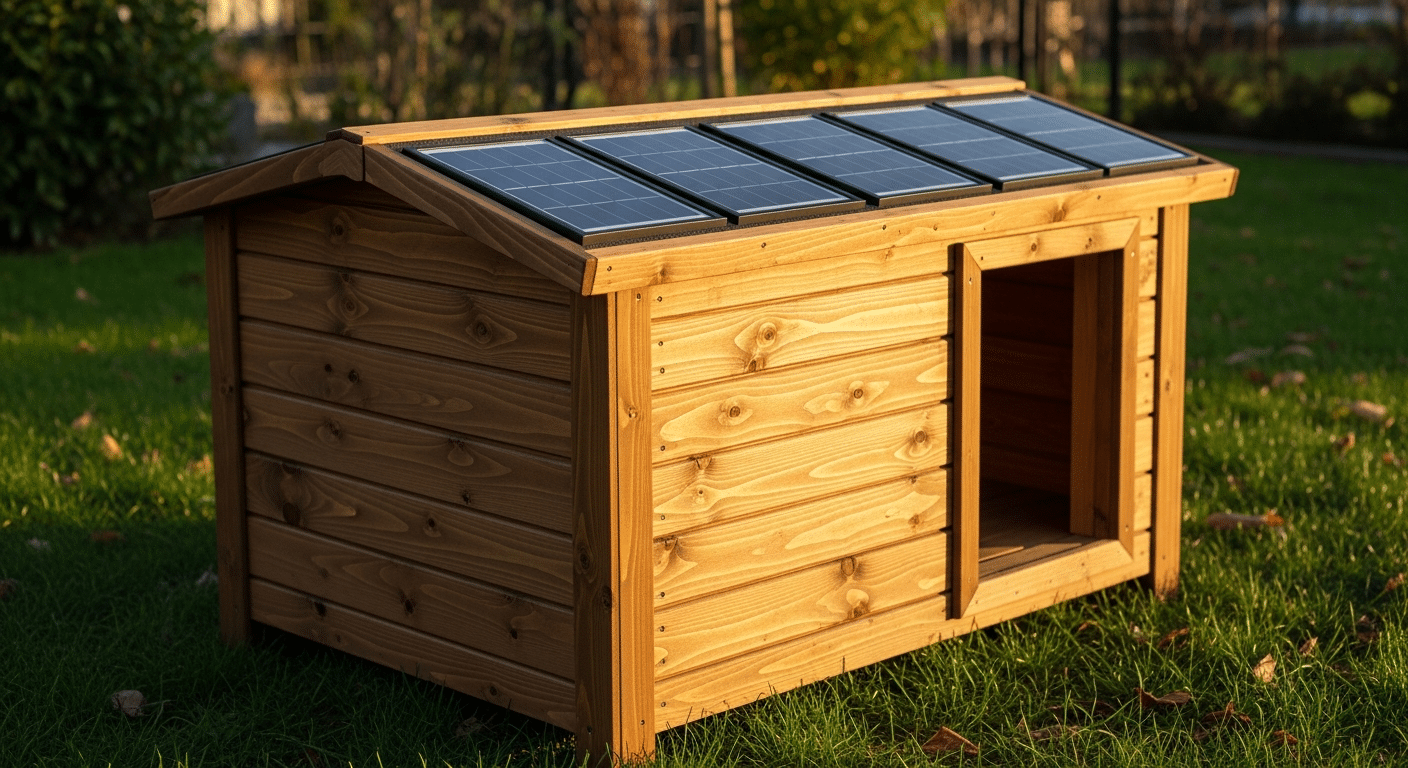
The Complete Guide to Solar Heated Dog Houses (2026)
Everything in one place: how solar dog-house heating works, what’s inside one, pre-made vs DIY, and how cold is too cold, then where to go deeper.
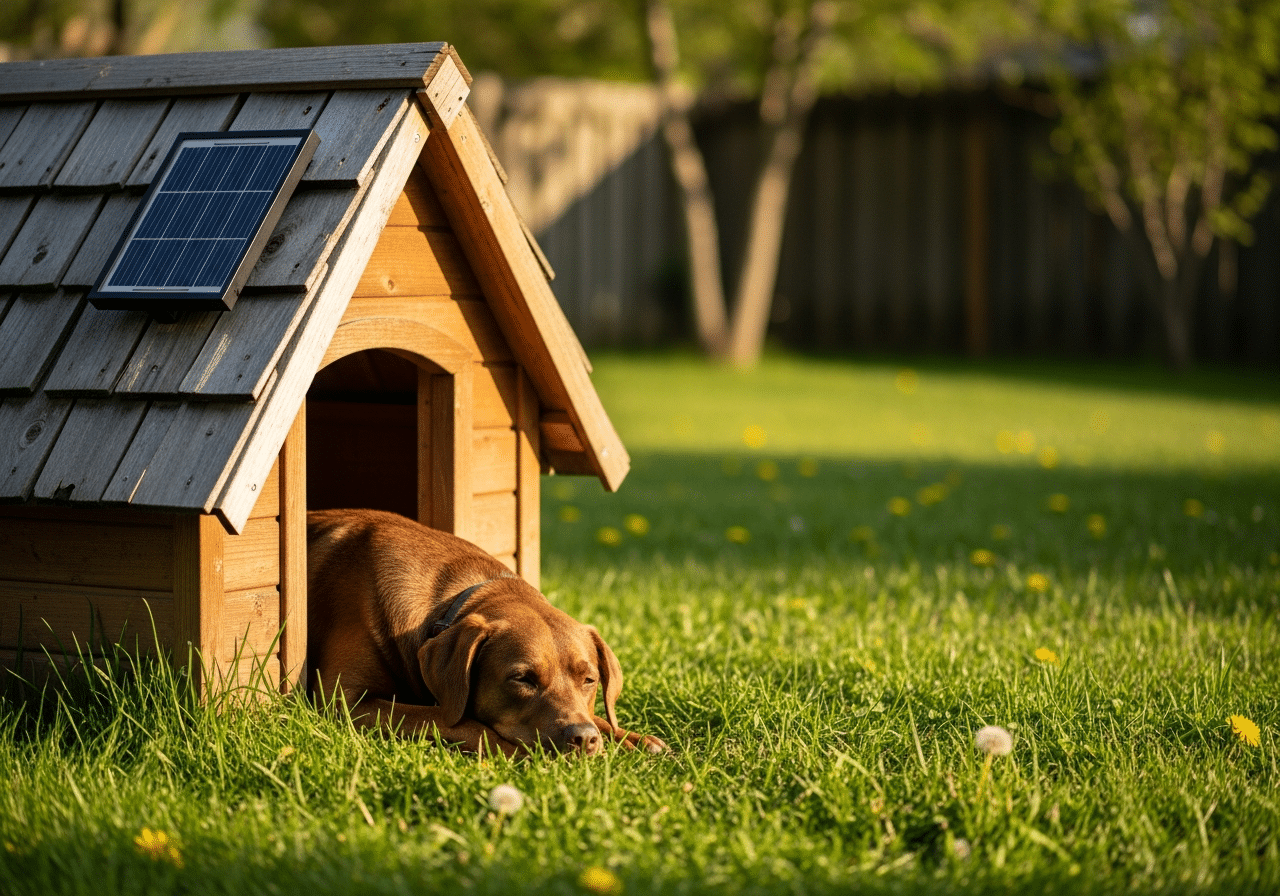
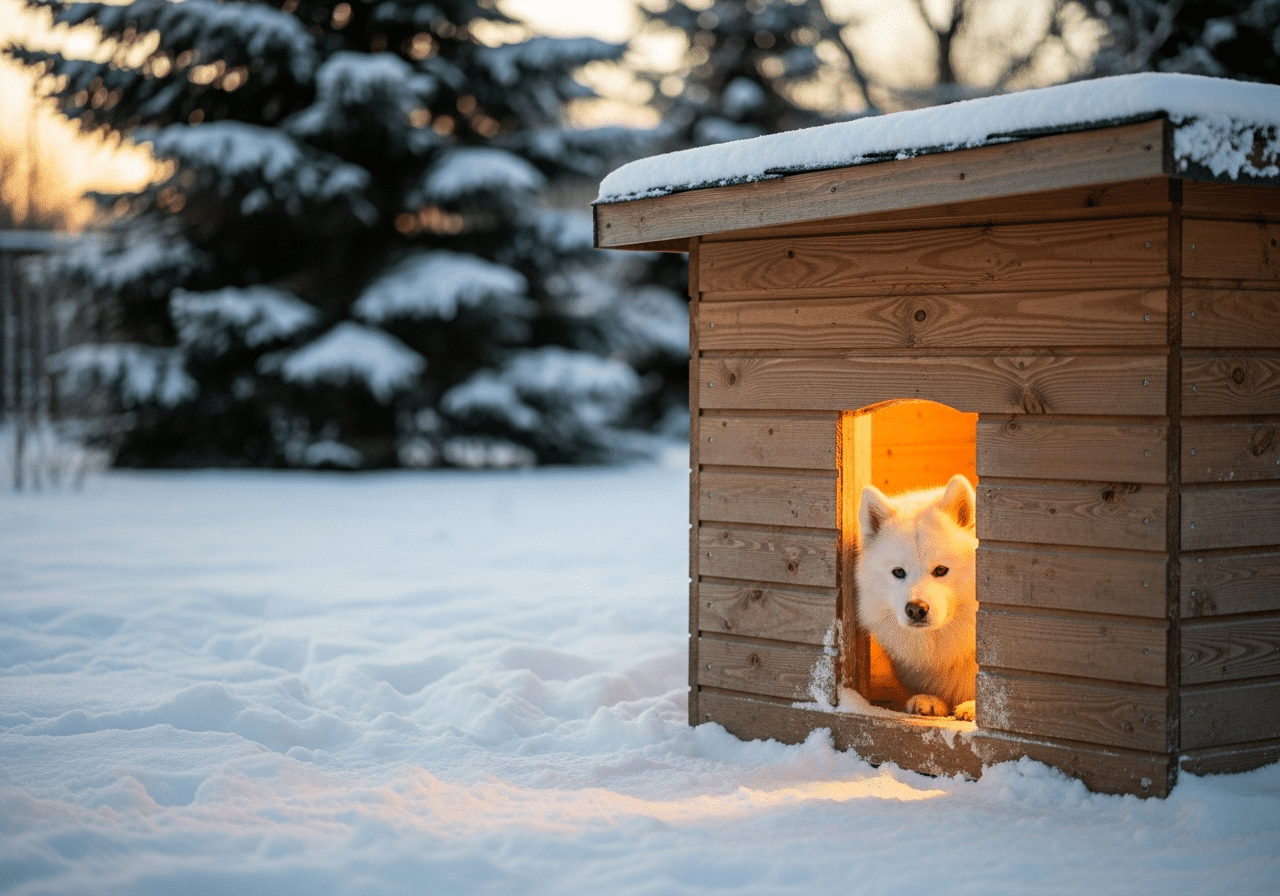
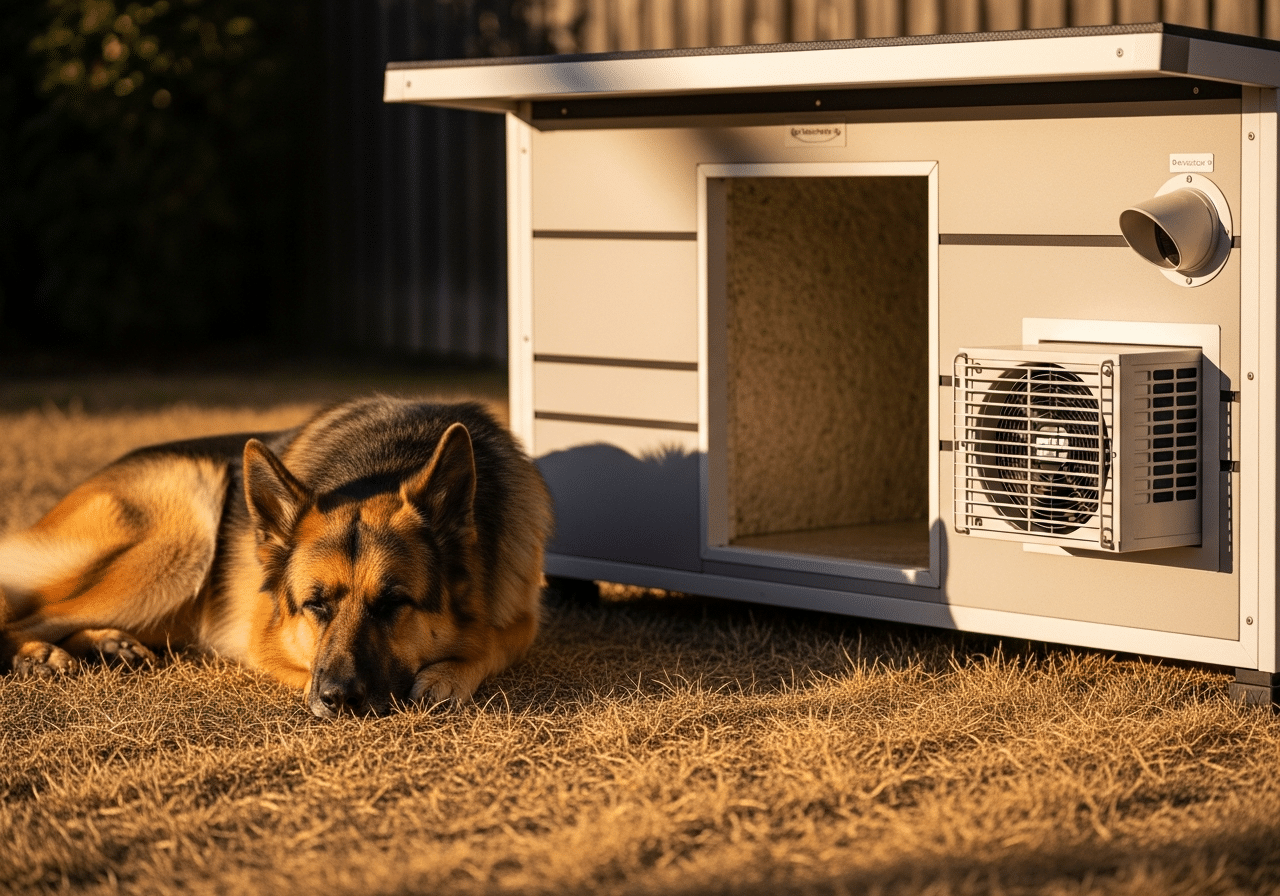
This is the complete solar heated dog house guide, the one page that ties the whole topic together. A solar heated dog house keeps a dog warm using sunshine instead of a power bill, and it does it one of two ways: active solar (a panel charges a battery that runs a low-watt heated pad or heater) or passive solar (a sun-facing window and dark thermal mass that soak up daytime heat and radiate it at night). Below we cover how each works, the components inside, whether to buy or build, the construction that makes any of it work, the safety rules, and the cold thresholds that tell you when heat is non-negotiable, then we point you to the deeper guides for buying, building, and the solar-vs-electric decision.
The two ways solar heating works: active vs passive
Every solar heated dog house runs on one of two approaches, and understanding the split is the foundation for everything else on this page.
| Approach | How it heats | Best for |
|---|---|---|
| Active solar | A solar panel charges a 12V battery through a charge controller; the battery runs a low-watt heated pad or 12V heater, usually on a timer/thermostat. | Reliable warmth on demand, including overnight and through cloudy spells, anywhere off-grid. |
| Passive solar | A south-facing clear or polycarbonate window/roof panel lets sun in; thermal mass (dark-painted rocks, a concrete floor) stores the day’s heat and radiates it back after dark. | Mild climates, supplemental warmth, and a zero-moving-parts, zero-cost-to-run setup. |
Most people picture active solar, the panel-and-battery kit, but passive solar is the quiet workhorse that boosts any dog house for free. The best builds use both: passive design to capture and hold daytime heat, active components to top it up when the sun isn’t doing the job. For the underlying principles, the U.S. Department of Energy’s solar energy basics explain how panels and passive solar design actually convert and store sunlight.
What’s inside an active solar heated dog house
An active system is a small off-grid power chain. Each part has one job, and sizing them to each other is what makes it reliable:
- Solar panel (≈100W mono): captures sunlight and generates DC power. Mono panels are the most efficient per square foot; size the wattage to your heating load.
- Charge controller: sits between panel and battery, regulating the charge so the battery isn’t overcharged or damaged.
- 12V deep-cycle (RV) battery: the heart of the system, it stores the day’s energy so heat is available at night and through cloudy stretches.
- 12V DC heated pad or low-watt resistive heater: the actual warmth, drawing from the battery. Low-voltage 12V pads are safest and most efficient.
- Timer / thermostat: cycles the heat so it only runs when needed, protecting the battery from being drained flat.
Passive solar: heat with no panel, battery or bill
Passive solar is the most overlooked part of this topic, and it costs nothing to run. The mechanics are simple physics:
- A sun-facing aperture: a clear or polycarbonate window (or a translucent roof panel) on the south side lets low winter sun pour in during the day.
- Thermal mass: dark-painted rocks, pavers, or a concrete floor inside absorb that heat slowly through the day, then release it for hours after sunset.
- A tight, insulated shell: holds the stored warmth in instead of letting it leak out overnight.
On its own, passive solar suits mild winters and acts as a free booster everywhere else. Its limit is obvious, a string of dark, snowy days stores little heat, which is exactly why serious cold-climate setups pair passive design with active components. Curious whether the whole approach holds up? We put it to the test in do solar heated dog houses actually work.
Pre-made vs DIY: which path is yours
You can buy the heating components off the shelf or build a full solar setup yourself. Most owners mix the two, a bought heated pad inside a well-built house is the sweet spot.
| Pre-made components | Full DIY solar | |
|---|---|---|
| What you get | Ready-made heated pads (K&H Lectro-Kennel / Lectro-Soft, ~$100), heaters (Hound Heater Deluxe Furnace, Briidea 400W, PETNF), built-in thermostatic control. | Panel + charge controller + deep-cycle battery + 12V pad/heater, sized and wired by you. |
| Upfront cost | Lower, a pad and a house | Higher, panel and battery add up |
| Effort | Plug-and-go (if you have power) | A weekend project; rewards research |
| Best for | On-grid yards, fast results | Off-grid, lowest long-run cost, full control |
If you’d rather buy the whole thing ready to go, start with our best solar heated dog houses shortlist, picked by dog size and climate. If you want to weigh solar against a plug-in option first, see the decision section further down.
Construction: the part that does the real work
Here’s the truth that surprises people: the house itself matters more than the heater. A great solar setup in a leaky, uninsulated box wastes most of its warmth. Get the construction right and even a modest heat source keeps a dog cozy. The efficiency multipliers:
- Insulation, R-10 to R-15: rigid foam board in the walls, floor and roof. This is the single biggest factor in holding heat.
- Elevate off the ground: a raised base stops cold and damp wicking up through the floor.
- Offset / baffled doorway: an entrance that doesn’t face straight into prevailing wind, ideally with an internal baffle, kills draughts.
- Heavy door flap: a thick vinyl or rubber flap traps warm air inside while still letting the dog in and out.
- Ventilation: a small, high vent stops condensation from a warm dog in a sealed box, counterintuitive, but essential.
Safety rules for any heated dog house
Solar’s low-voltage nature already makes it one of the safer ways to heat a kennel, but a few rules are non-negotiable whichever components you use:
- Protect every cord: run wiring inside chew-proof conduit or steel shielding so a bored dog can’t gnaw through it.
- Use pet-safe, thermostatically-controlled pads: they warm to body temperature and cut off, rather than running hot.
- Insist on an overheat/thermostat cutoff: any heater in a dog house should regulate itself and shut off automatically.
- Stay low-voltage where you can: 12V DC solar systems carry far less shock and fire risk than mains-powered 120V heaters.
These same principles apply if you ever compare solar to a plug-in setup, we cover the trade-offs in full in solar vs electric heated dog houses.
How cold is too cold? The thresholds that decide it
Heat is a comfort in mild weather and a life-or-death necessity in real cold. Use these thresholds to know which situation you’re in:
| Temperature | What it means |
|---|---|
| ~45°F | Caution zone for small, senior, or thin-coated dogs, start adding warmth. |
| 32°F (freezing) | Hypothermia risk rises for most dogs left out; a heat source is strongly advised. |
| 20°F and below | Life-threatening for the majority of dogs. Reliable heat is essential, not optional. |
In a mild climate, a well-built passive house or a small solar pad is plenty. As you push toward and below freezing, the active components and the insulation quality you chose earlier become what keeps your dog safe. Pair the thresholds above with the construction and heat source that match your winter, and lean on grid backup if your climate routinely sits in single digits.