 Dog Gear, Sized Right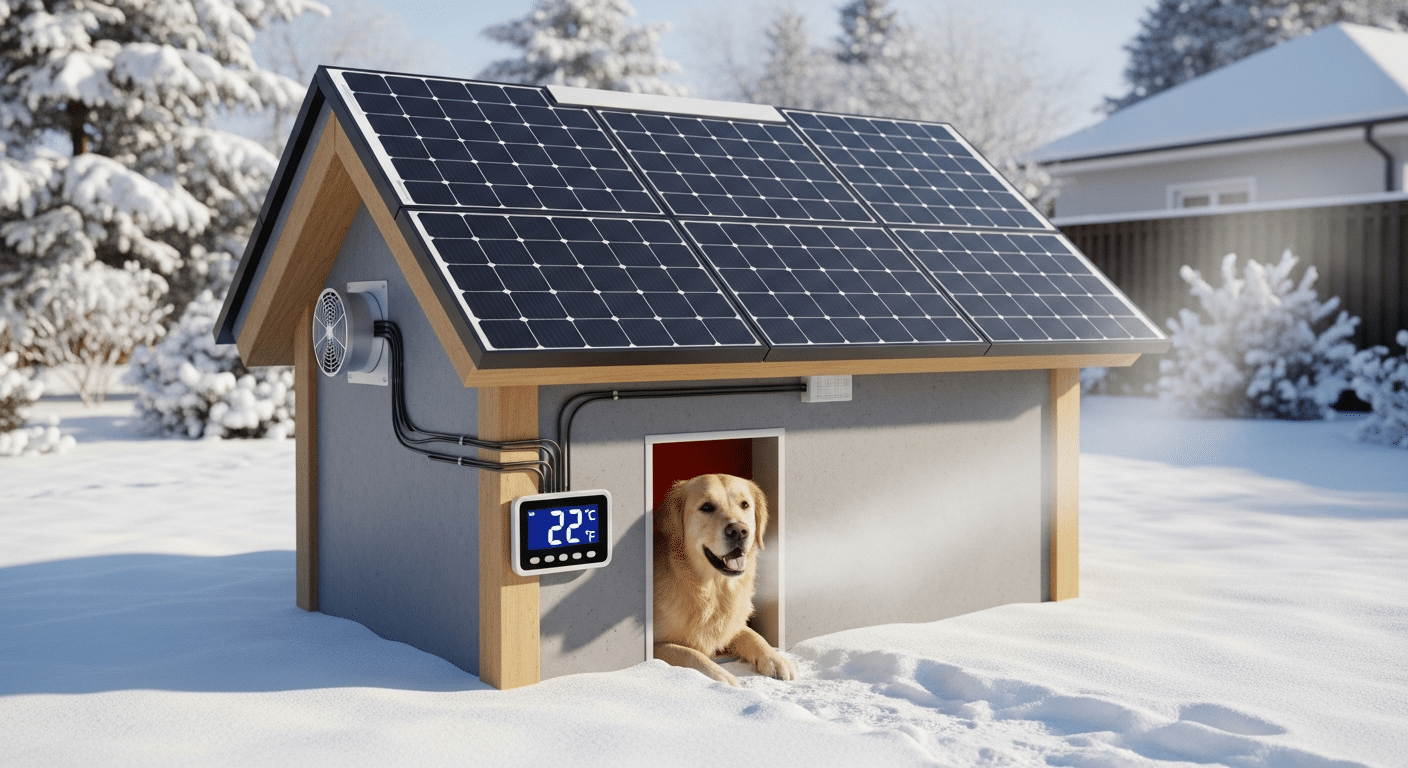
Do Solar Heated Dog Houses Work? (Honest Verdict & Real Tests)
Short answer: yes, but with real limits. Here’s exactly when solar keeps a dog genuinely warm, and the cloudy, night-time and subzero conditions where it quietly falls short.
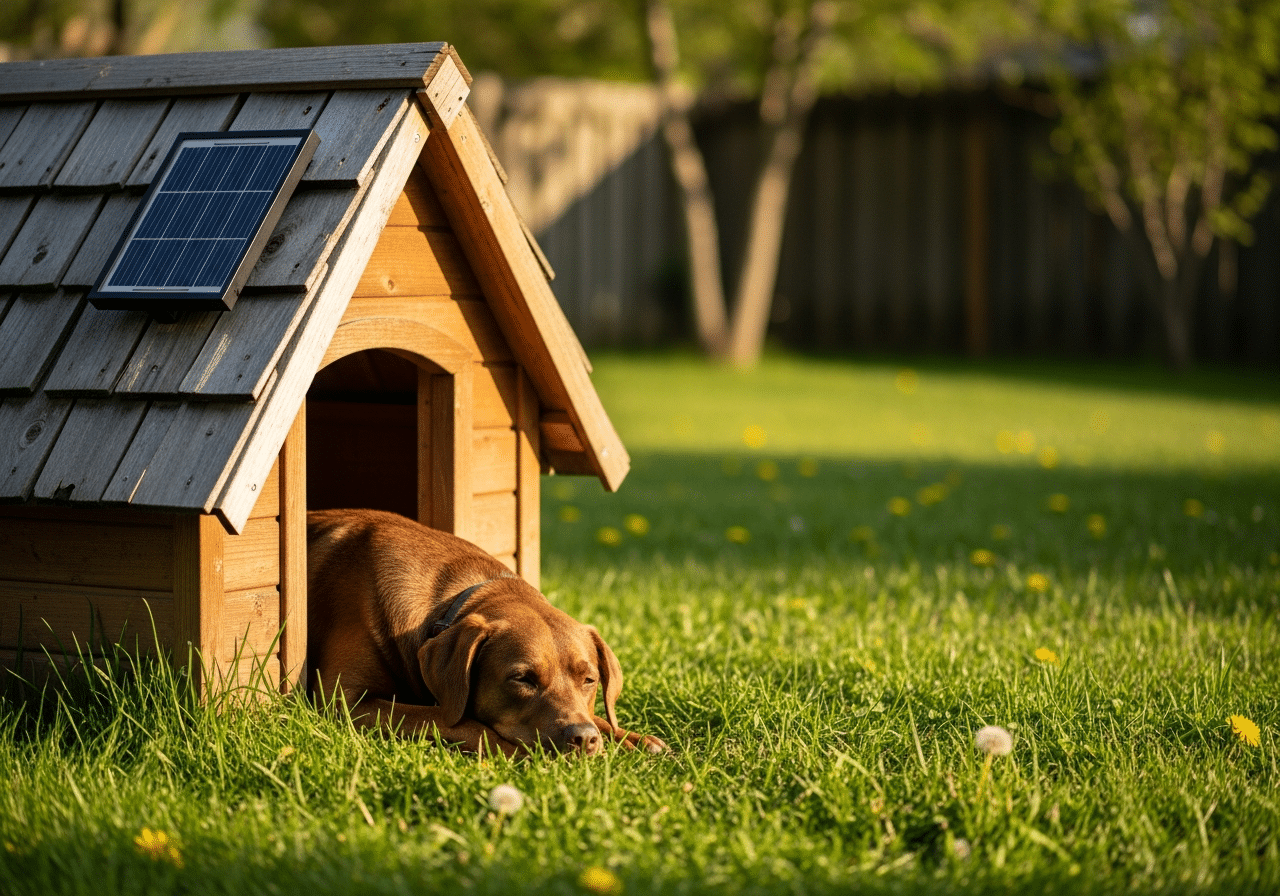
Do solar heated dog houses work? Yes, a properly sized solar setup can keep a dog house meaningfully warmer than the outside air, and an active panel-plus-battery system can run a heated pad through the night. But “work” is conditional. Solar output collapses on overcast days, a battery only carries the load so far after dark, and in genuine subzero cold a small panel simply can’t keep up. This is the honest verdict: when solar genuinely warms a dog, what realistic output looks like, and the limits nobody selling them mentions.
The honest verdict up front
There are two completely different things people mean by a “solar heated dog house,” and they don’t work the same way. Knowing which one you have is the difference between a dog that’s comfortable and one that’s cold.
Active vs passive solar: which one actually warms the dog?
Google’s own answer box splits this term into two systems, and so should you. Active solar uses electricity; passive solar uses sunlight and physics. They perform very differently.
| System | How it heats | Works after dark? | Realistic output |
|---|---|---|---|
| Active solar (panel → charge controller → 12V deep-cycle battery → heated pad) | Sun charges a battery by day; the battery powers a low-watt 12V heated pad day and night | Yes, while the battery lasts | A pad surface of roughly 100 to 102°F, warm to the touch, the most reliable real heat |
| Passive solar (south-facing clear/polycarbonate panel + thermal mass: dark rock or concrete floor) | Daytime sun heats dark thermal mass, which slowly radiates heat back at night | Partly, fades through the night | A few degrees above ambient; a gentle assist, not a guaranteed warm floor |
If you want solar that genuinely keeps a dog warm on a cold night, you almost certainly want the active version. Passive solar is a clever, no-electricity boost, but on its own it won’t save a dog from a hard freeze. For the full parts list, see our build guide.
A realistic active-solar wiring chain
- Solar panel (100W mono): sized to recharge the battery on a decent day
- Charge controller: protects the battery from over- and under-charge
- 12V deep-cycle (RV) battery: the part that does the night-time work
- 12V DC heated pad or low-watt resistive heater: with a thermostat so it isn’t drawing power needlessly
- Timer / thermostatic control: keeps the pad from draining the battery before dawn
That battery is the honest answer to “does solar work at night”, the sun doesn’t, but stored charge does, for a while.
What realistic output actually looks like
Marketing photos imply toasty warmth on demand. Real-world output is more modest and more conditional. From our testing and owner reports, a well-built active system delivers:
- A heated-pad surface around 100°F, comfortably warm where the dog lies, not a heated room
- Air a few degrees above outside, because the pad warms the dog by contact, not the whole interior
- Several hours of overnight pad heat from a charged deep-cycle battery, depending on pad wattage and battery size
Passive-only setups are gentler still: expect the inside to sit a handful of degrees above ambient on a sunny day, fading overnight. Either way, solar warms the dog far more than it warms the box, which is exactly why insulation and a snug interior matter so much (more below).
The limits: cloudy days, night and subzero cold
This is where honesty matters. Solar is weather-dependent by definition, so it has predictable weak points:
Cloudy and short winter days
A panel can lose the large majority of its output under heavy overcast, and winter days are short. A run of grey days can leave the battery undercharged and the pad cycling off. This is the single biggest disadvantage of any solar heating system: when you most want heat, cold, sunless weather, is exactly when the panel produces least.
After dark
Passive solar fades within hours of sunset. Active solar keeps going only as long as the battery holds charge, so an undersized battery (or one that started the night low after a cloudy day) can run flat before morning, the coldest part of the night.
Subzero cold
In genuine subzero conditions a small heated pad fighting a poorly insulated box is overmatched. Cold is dangerous to dogs well before that: 45°F warrants caution for small, senior or thin-coated dogs, 32°F brings freezing and hypothermia risk, and around 20°F is life-threatening for most dogs. The Humane Society’s cold-weather guidance is clear that in extreme cold, dogs should come indoors, no dog house, solar or otherwise, replaces that.
When solar genuinely works (and how to make it work)
Solar earns its keep when you stack the deck in its favour. It works best for owners who:
- Live in a mild-to-moderate winter climate with decent winter sun
- Use active solar with a properly sized battery, not passive-only, for real overnight heat
- Treat solar as one layer of an already-warm shelter, not the whole plan
The heat layer only succeeds on top of a warm box. Whatever your system, do this first:
- Insulate hard: R-10 to R-15 rigid foam in walls, floor and roof, this is the multiplier that makes a small solar input feel like a lot
- Raise it off the ground and add an offset or baffled doorway with a heavy vinyl/rubber door flap to trap warmth
- Bed it with straw, which insulates and repels moisture, never blankets, which freeze and draw heat away
- Make it safe: run cords in chew-proof conduit, use a pet-safe pad with a thermostat/overheat cutoff, and keep everything low-voltage 12V
Do that, and a modest solar setup can keep a dog genuinely comfortable through a normal winter. Skip it, and no panel will save you. For the numbers behind a build, see the cost breakdown.