 Dog Gear, Sized Right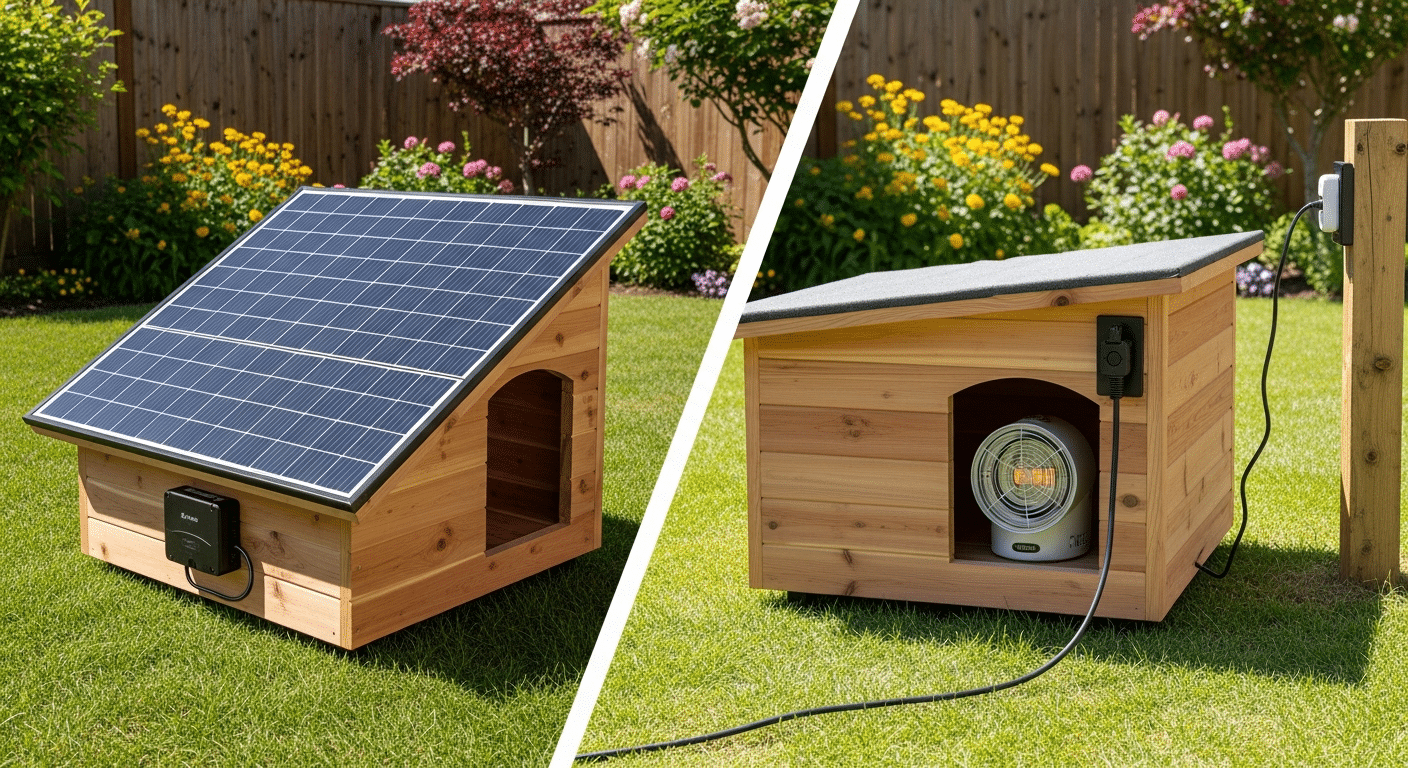
Solar vs Electric Heated Dog House: Which Is Best?
One runs off the sun, the other off your mains. Here’s exactly how solar and electric heated dog houses compare — warmth, reliability, cost and upkeep — so you can pick the right one in minutes.
Top Solar & Electric Heated Dog House Picks
Each pick is verified in stock. Prices are last-checked — tap through for the live price.
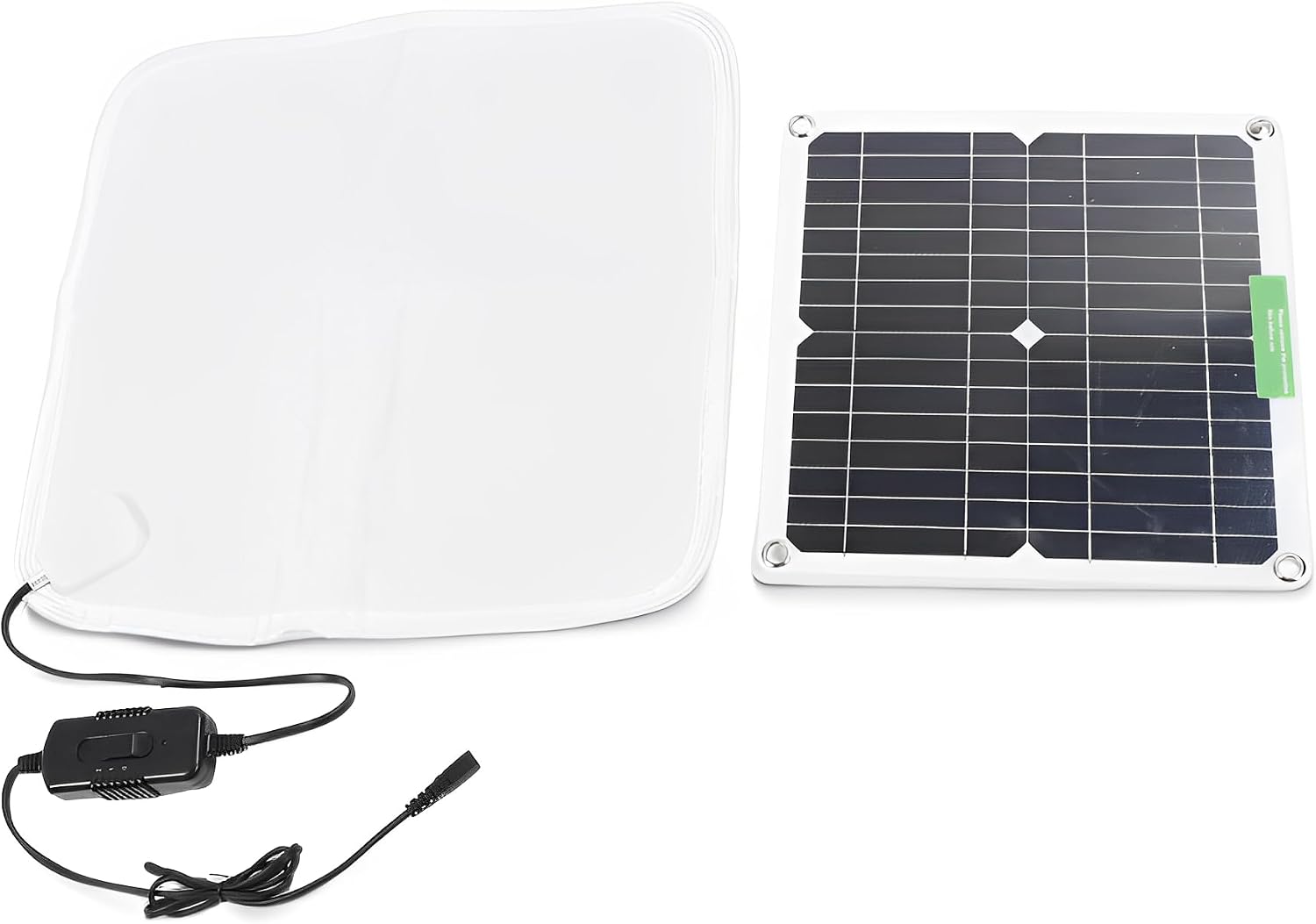
LICAEVEY Solar Heating Pad
A low-voltage heated pad with an included solar panel — the most direct, efficient way to add solar warmth.
What we like
- Safest low-voltage option
- Sips power
The catches
- Pad warmth only — pair with insulation
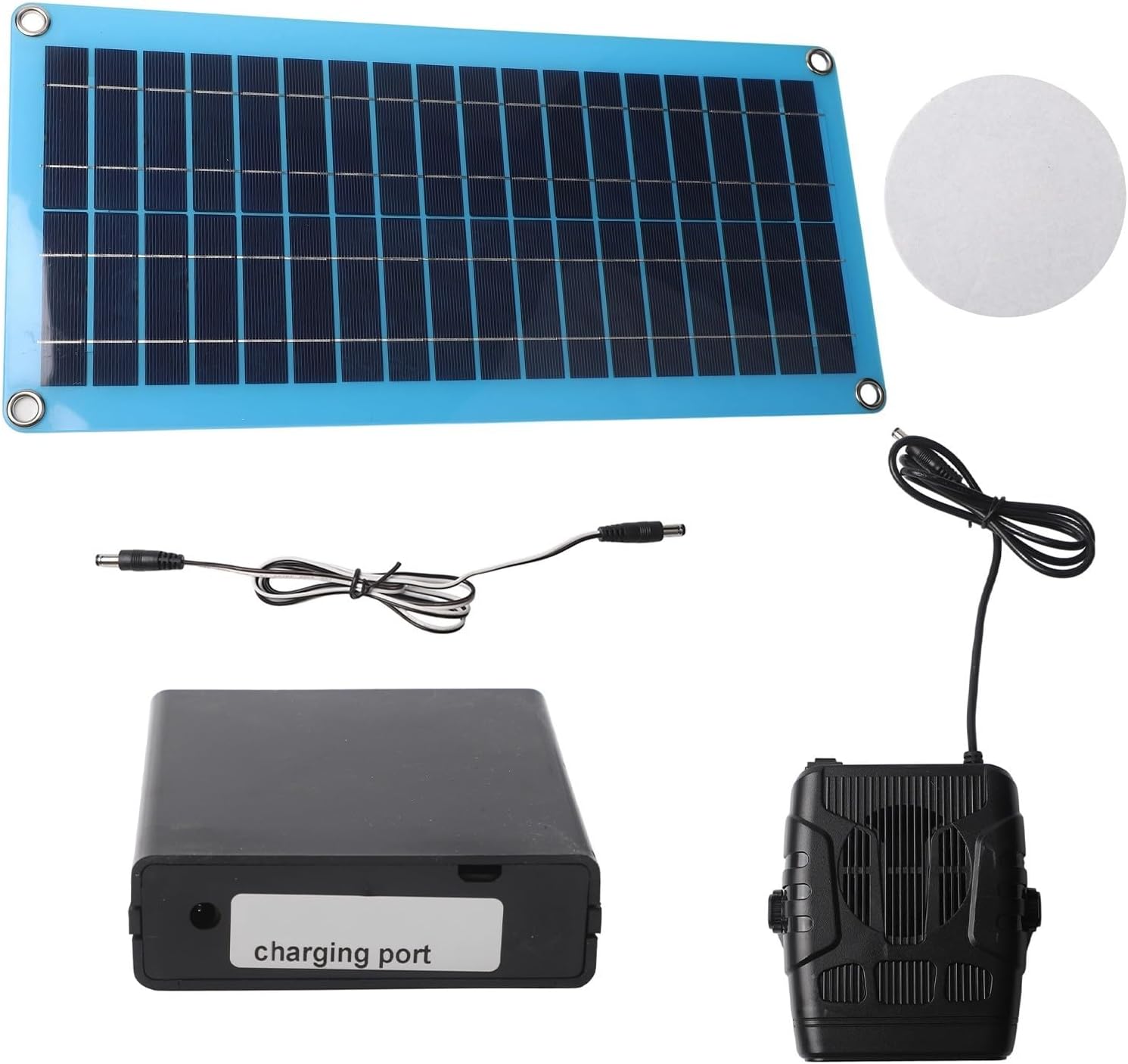
YobiLife Solar Heater Kit
Panel, battery and a small fan-heater so warmth keeps flowing after sundown — best in a small insulated house.
What we like
- Warmth past sundown
- Genuinely off-grid
The catches
- Modest output — small houses
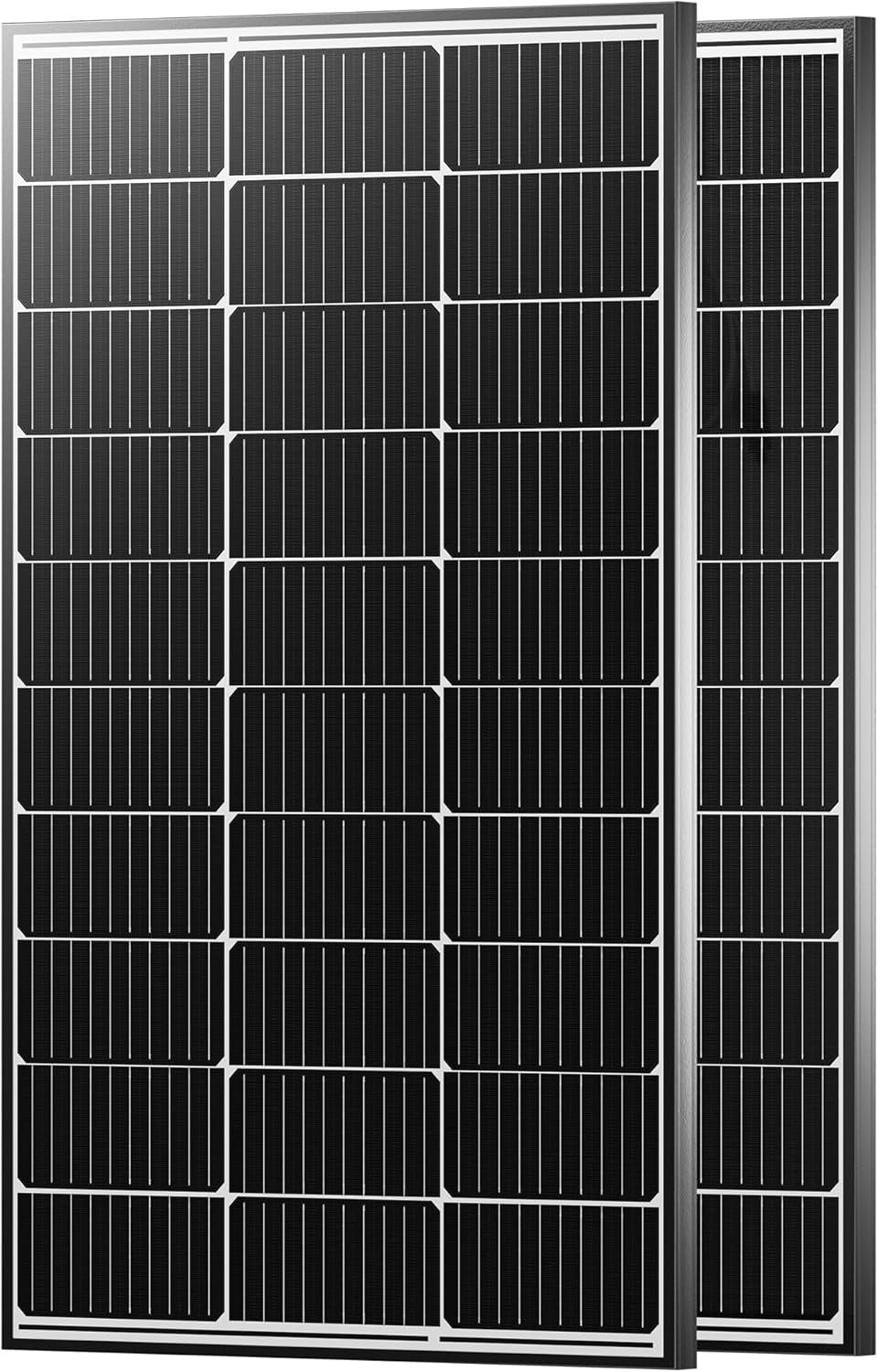
JJN 100W Solar Panel Kit
Real wattage to run a heated pad through a cold night with a battery — far more headroom than a trickle panel.
What we like
- Real cold-night power
- High-efficiency cells
The catches
- Needs a battery + controller
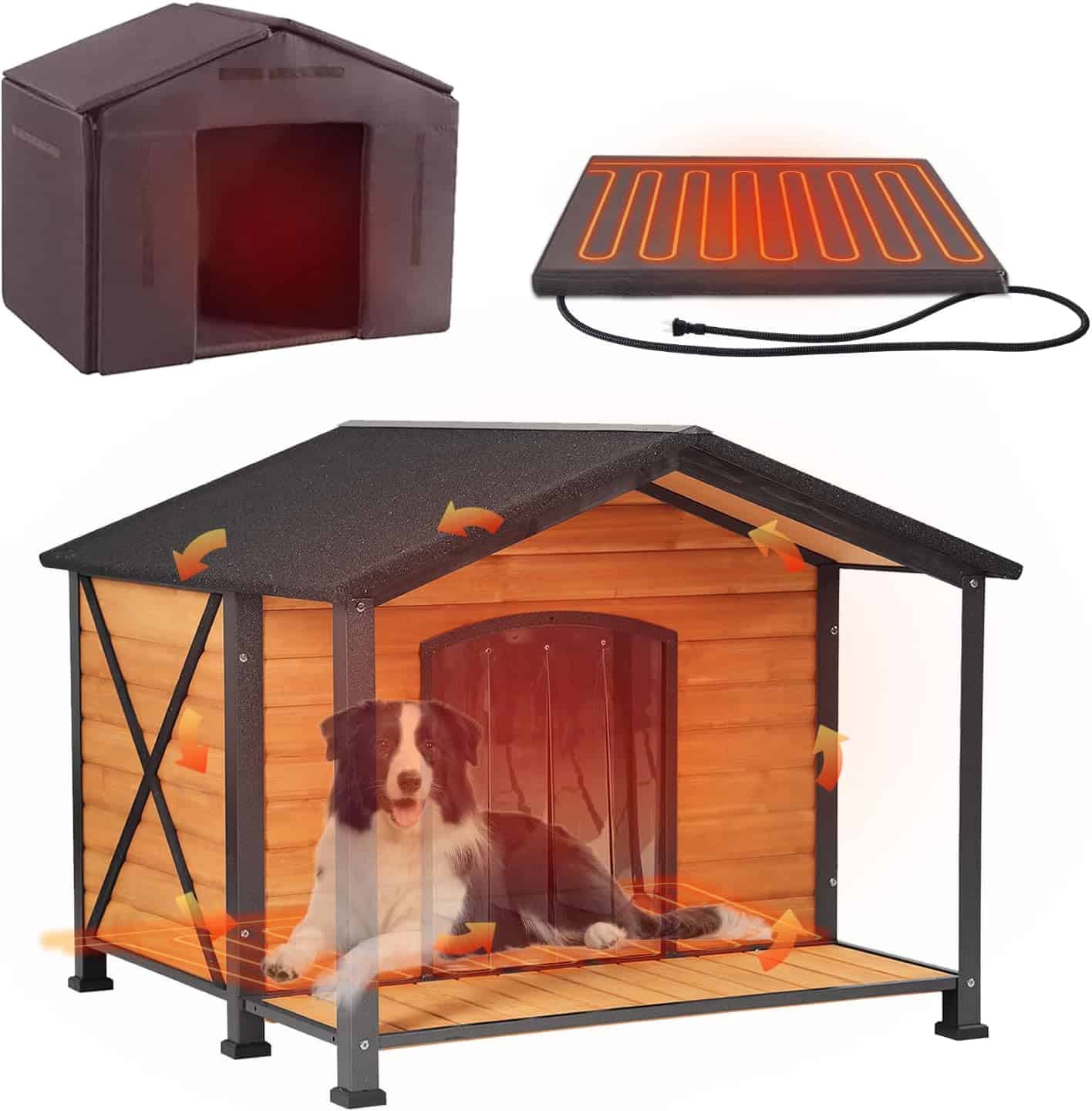
Aivituvin Heated Wood House
Fir wood with a heating pad, insulated liner and a covered porch — our top heated wood pick.
What we like
- Real winter warmth
- Chew-proof frame
The catches
- Premium price
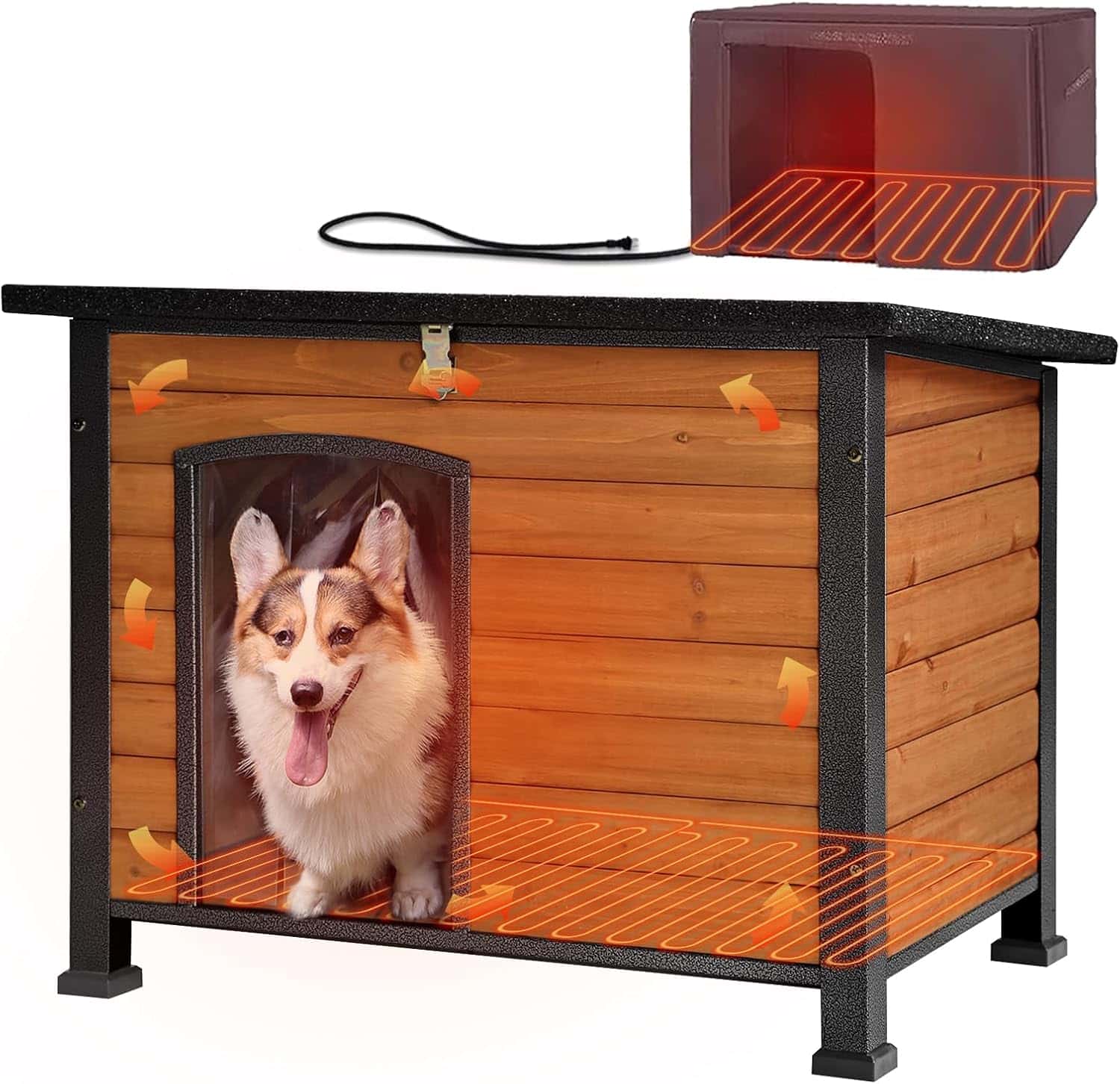
GUTINNEEN Heated House
The same thermostat warmth and chew-proof build as the XL, right-sized and lower-priced.
What we like
- Value heated house
The catches
- Smaller than XL
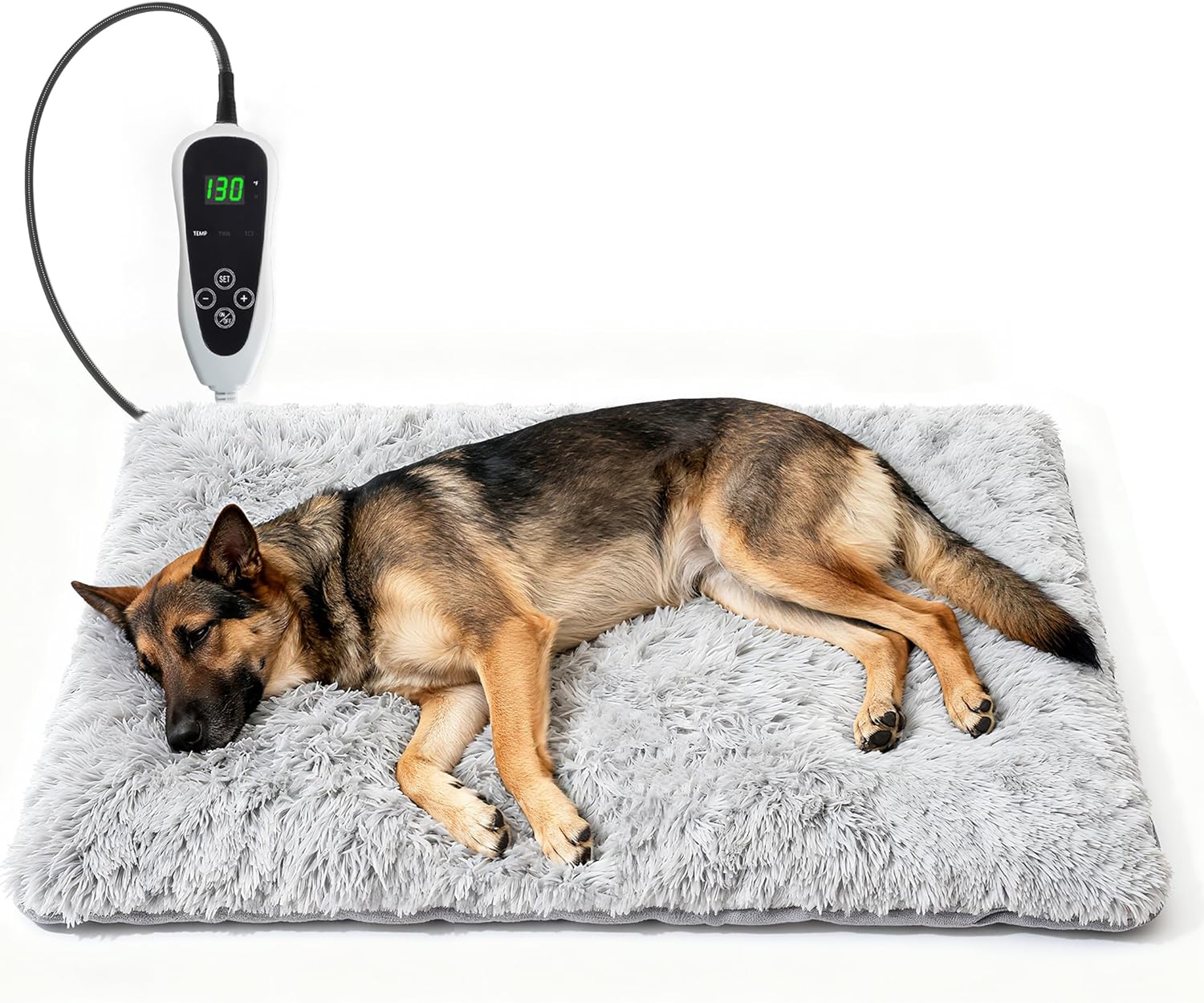
GOLOPET Heated Pad
A thermostat-controlled heated pad that turns any insulated house into a heated one for pennies a day.
What we like
- Cheapest heated route
- Prevents overheating
The catches
- Needs an outlet
It’s the question every owner asks before buying a heated kennel: solar or electric? Both keep a dog warm through winter, but they get there in completely different ways — and the “best” one depends on your climate, your wiring, and how cold your nights actually get. This is the head-to-head overview: how each system works, where each one wins, and a clear side-by-side table. For the deep dives on running costs and safety, we’ll point you to the companion guides as we go.
Solar vs. electric: the short answer
If you only have ten seconds, here’s the verdict at a glance:
| If you want… | Choose |
|---|---|
| Off-grid placement, no wiring, no power bill | Solar |
| Steady, guaranteed warmth on the coldest nights | Electric |
| Mild winters & sunny days | Solar |
| Hard freezes, snow, or long dark spells | Electric |
| Lowest long-term cost once installed | Solar |
| Simplest setup & lowest upfront price | Electric |
Now here’s the reasoning behind each of those calls.
How a solar heated dog house works
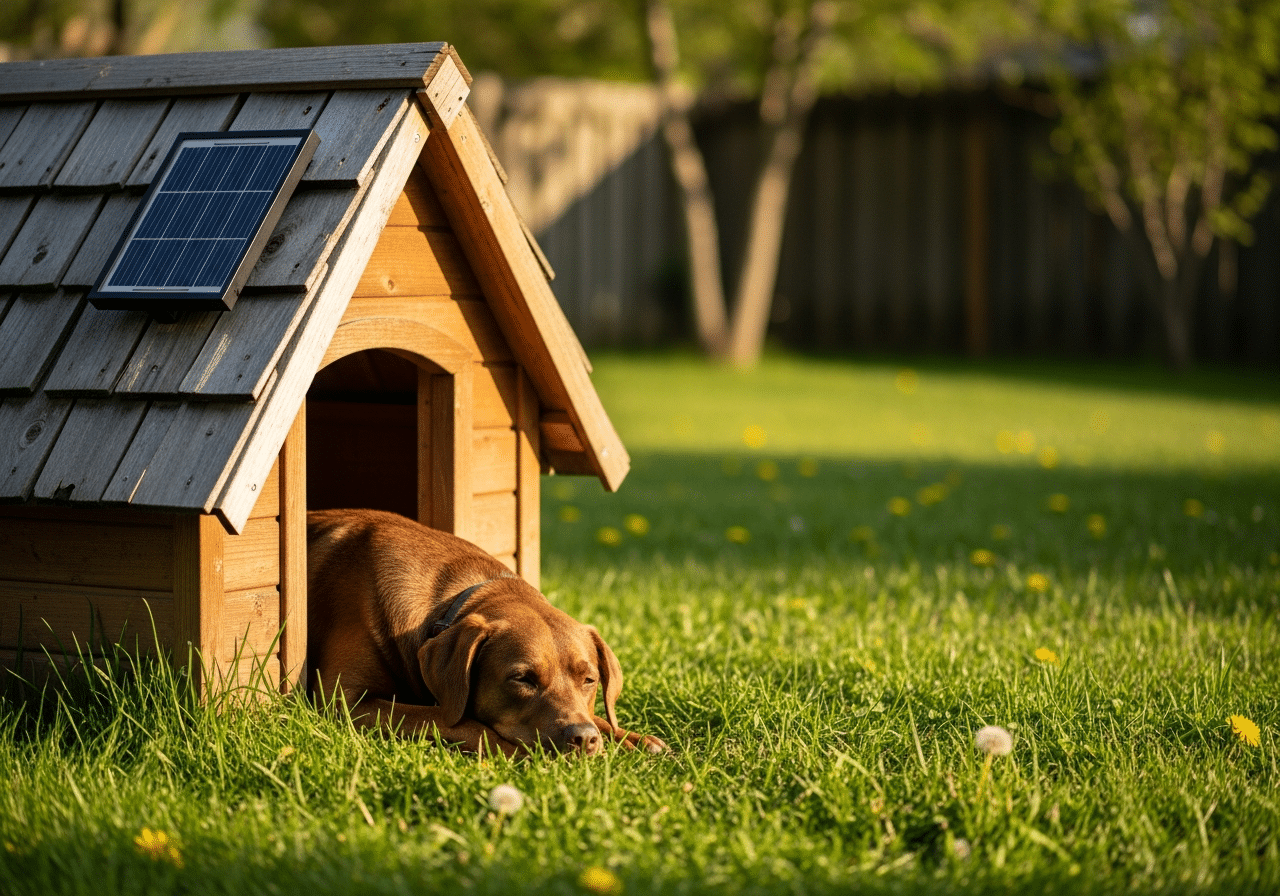
A solar setup pairs a small photovoltaic panel (usually roof-mounted) with a battery and a low-wattage heating element or heated pad. The panel charges the battery through the day; at night the stored energy warms the floor or interior. Because it makes its own power, it needs no outdoor outlet and no cord trailing across the yard — ideal for kennels far from the house. The U.S. Department of Energy’s solar energy guide is a good primer on how panels and battery storage actually capture and bank that sunlight.
The trade-off is the weather. Output drops on overcast days and short winter daylight, so a solar house leans heavily on its battery sizing. A well-specced system rides through a cloudy day or two; an undersized one runs flat exactly when you need it most.
How an electric heated dog house works
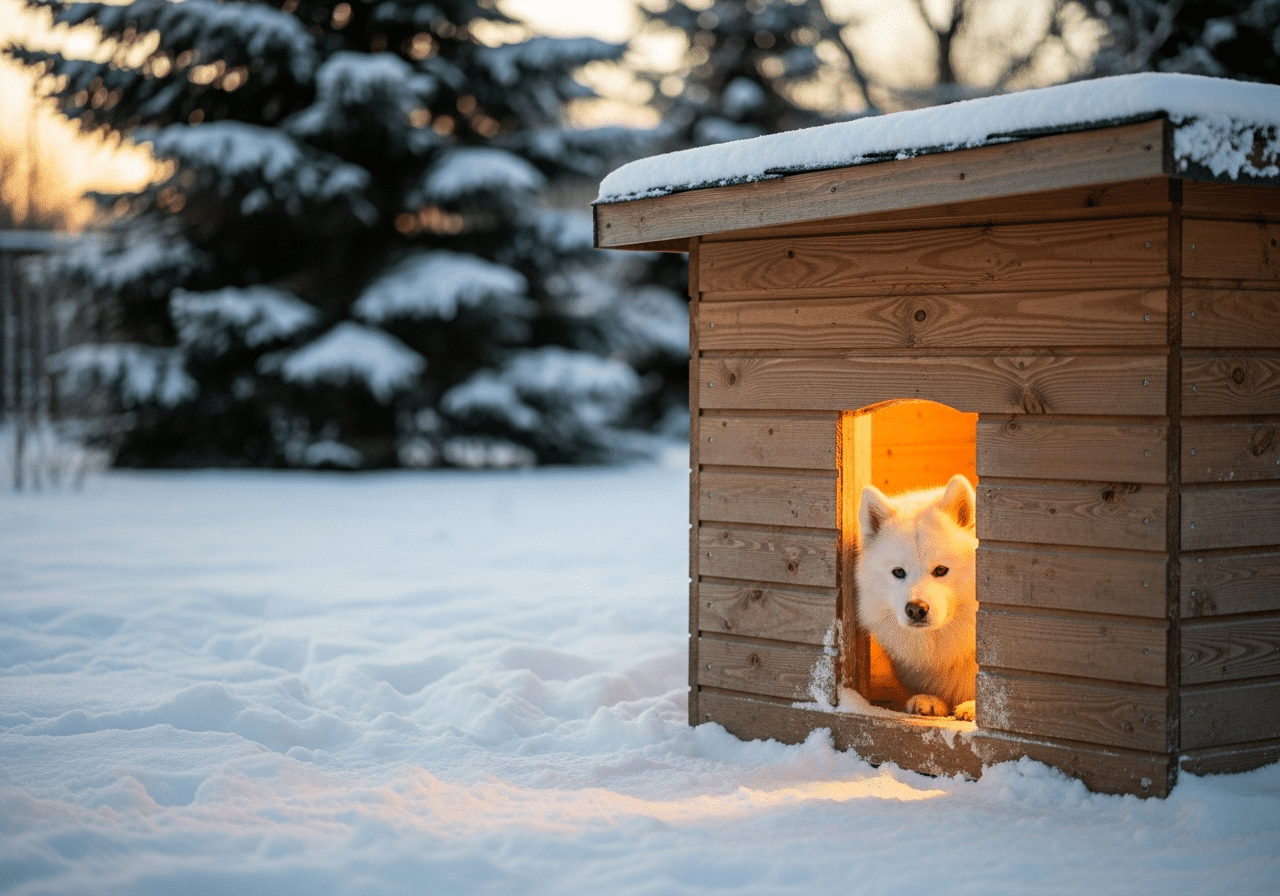
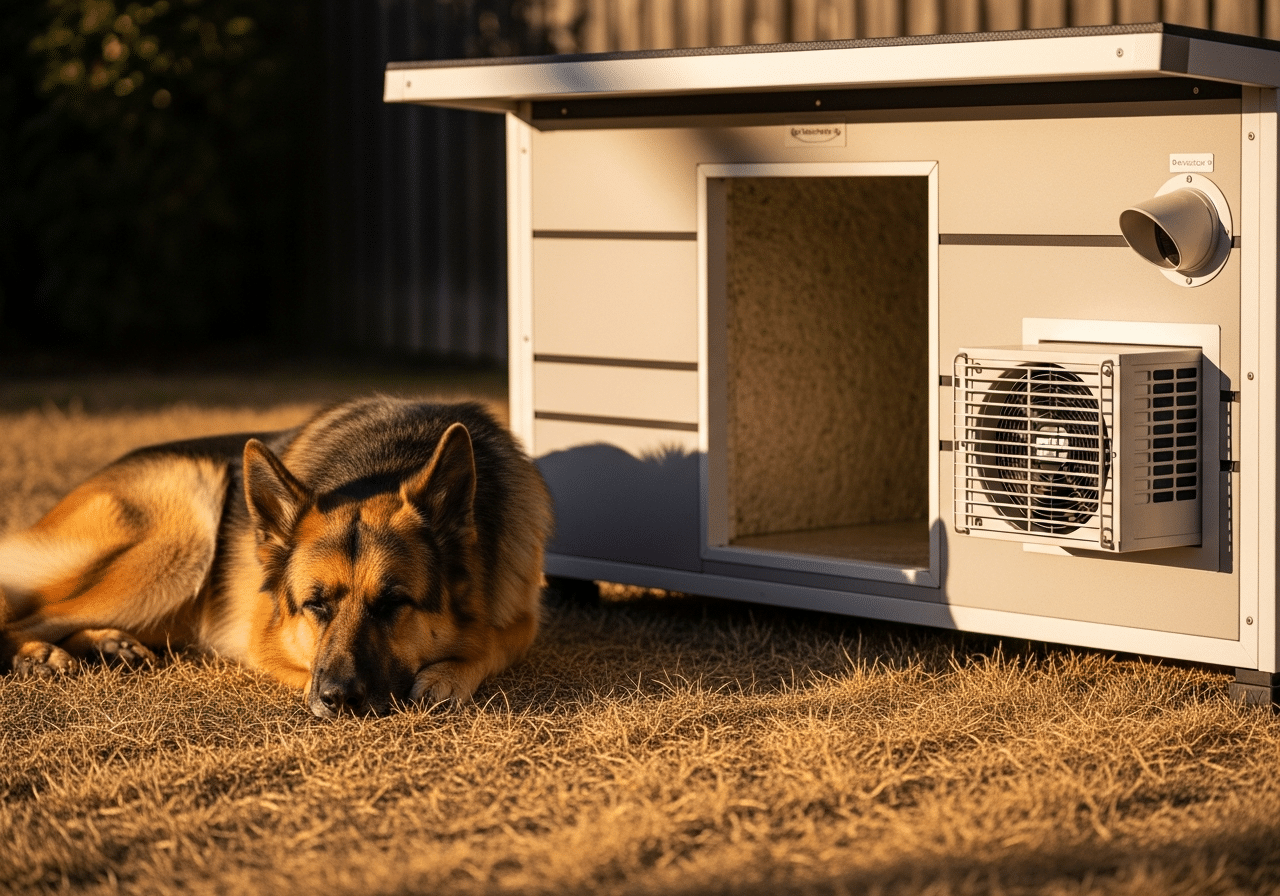
An electric house is the simpler machine: it plugs into a standard outdoor outlet and powers a thermostatically controlled heater or heated mat. Flip it on and it delivers constant, predictable warmth regardless of sun, clouds or season — the thermostat holds a set temperature 24/7.
That reliability is its biggest strength. The catch is infrastructure: you need a grounded, weatherproof outdoor outlet within reach, a safely routed cord, and you’ll see the warmth show up on your power bill. For most owners with mains nearby, that’s a fair trade for guaranteed heat on a sub-zero night.
Pros and cons, side by side
Here’s the full comparison across the factors that decide comfort and cost:
| Factor | Solar heated | Electric heated |
|---|---|---|
| Power source | Panel + battery (self-contained) | Mains outlet |
| Placement | Anywhere with sun — no wiring | Within cord reach of an outlet |
| Running cost | Near zero after purchase | Ongoing electricity use |
| Cold-night reliability | Depends on battery & recent sun | Constant, thermostat-held |
| Upfront price | Higher (panel + battery) | Lower |
| Setup | Mount panel, no electrician | Plug in (needs safe outlet) |
| Best climate | Mild, sunny winters | Harsh, freezing winters |
The pattern is clear: solar trades a higher purchase price and weather-dependence for freedom and near-zero running cost; electric trades a power bill and a tethered location for rock-solid reliability. For a full breakdown of the numbers, see our guide on solar vs. electric heating running costs.
Cost, reliability & safety at a glance
Three quick factors tip most decisions:
- Cost: electric is cheaper to buy but costs more over years; solar costs more upfront but is nearly free to run.
- Reliability: electric wins on the coldest, darkest nights because it never depends on sunshine; solar is excellent in mild, sunny regions.
- Safety: both are safe when set up correctly. Electric needs a weatherproof, GFCI-protected outlet and a chew-guarded cord; solar removes the outdoor-cord hazard entirely but relies on a sound battery and enclosure.
We dig into the safety and efficiency trade-offs — thermostats, cord routing, battery care — in the companion solar vs. electric safety & efficiency guide.
So which should you choose?
Match the system to your situation:
- Mild, sunny winters or an off-grid kennel: go solar — no wiring, no bill, plenty of sun to keep the battery topped.
- Harsh, freezing winters or long grey spells: go electric — you want guaranteed, thermostat-held warmth that never depends on the weather.
- Outlet is far from the kennel: solar saves you the trenching and cords.
- Lowest upfront spend: electric, every time.
Whichever you pick, the fundamentals still apply: an insulated, correctly sized house with a raised floor and a flapped doorway holds heat far better, so the heater (solar or electric) has less work to do. Ready to shop? Browse our best solar heated dog houses or the wider heated dog house picks.