 Dog Gear, Sized Right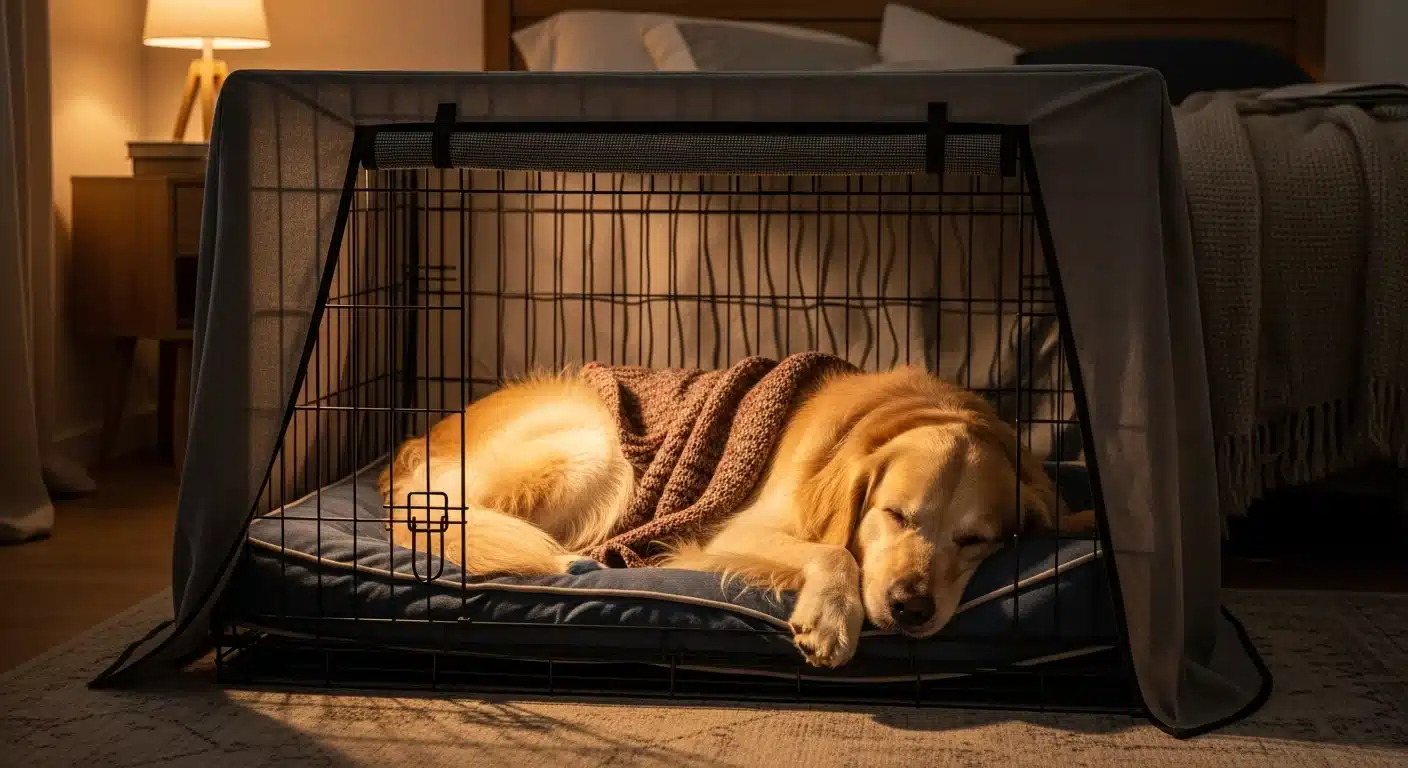
Should You Cover a Dog Crate?
For most dogs, a partial cover is a good idea, but the details matter: which sides to cover, what material to use, and when to skip the cover entirely.
Should you cover a dog crate? For most dogs, yes, a partial cover can create a calmer, den-like space that reduces visual stimulation, helps with sleep, and eases anxiety. But the answer isn’t universal. Some dogs feel more trapped than comforted by a cover, and covering a crate incorrectly, fully sealing it, using a thick blanket that blocks airflow, or ignoring heat, can turn a comfort measure into a safety risk. Below we walk through the honest case for covering, the safety rules that always apply, the dogs for whom a cover does more harm than good, and how to introduce one gradually so your dog actually benefits from it.
The crate we recommend for covered use
This is an advice post, not a product roundup, but if you’re choosing a crate to cover, wire construction matters for airflow. One pick, verified in stock; tap through for the live price.
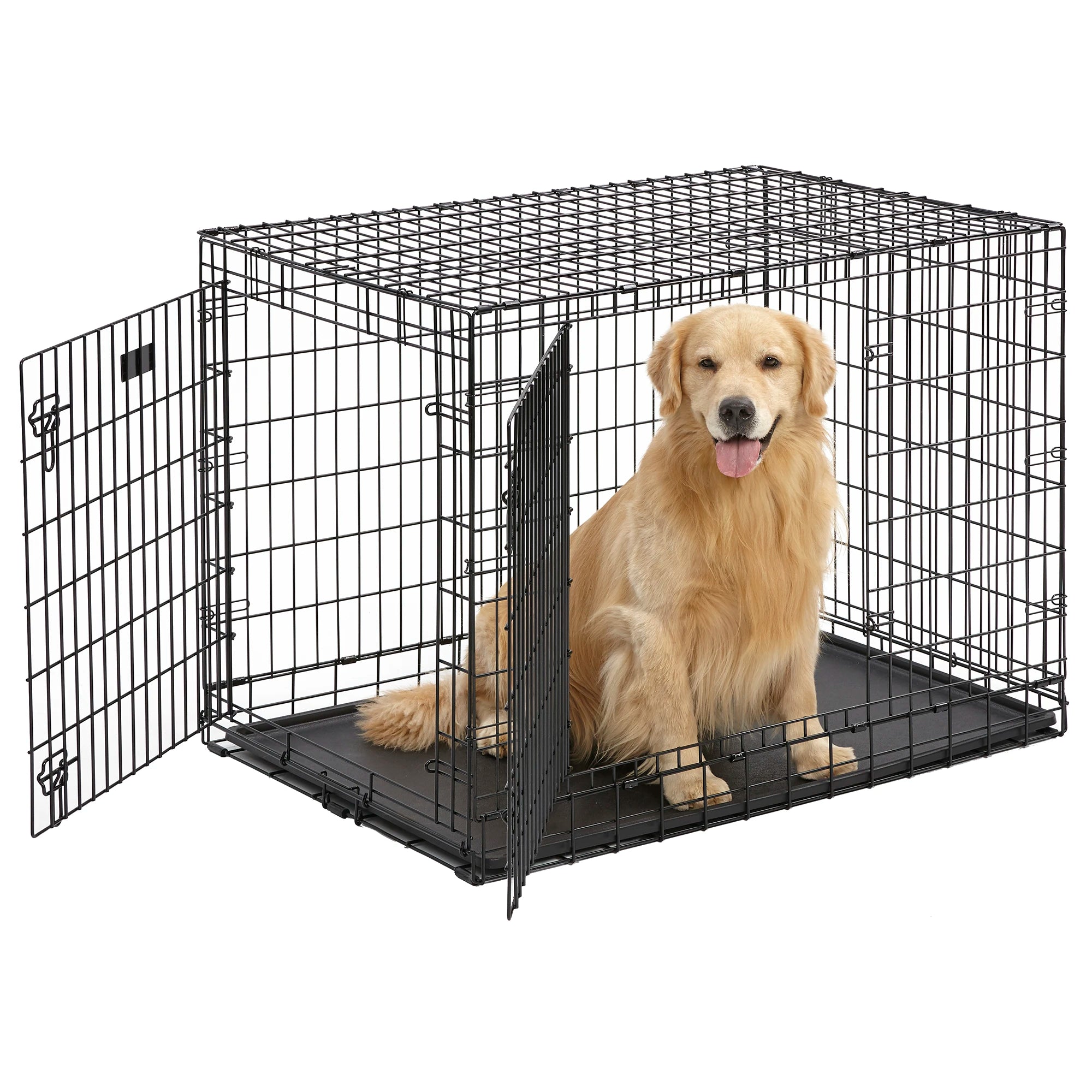
MidWest iCrate Folding Dog Crate
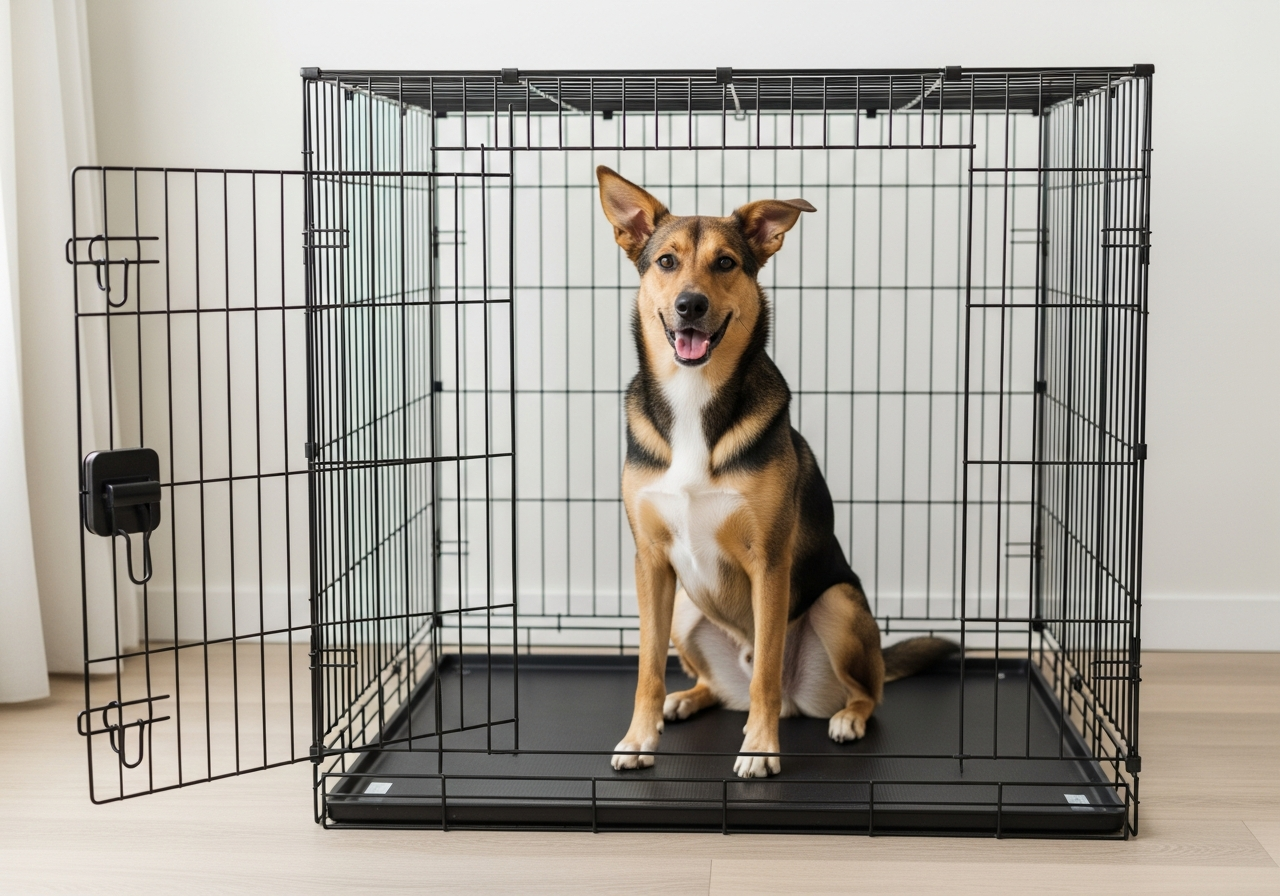
If you’re going to cover a crate, this is the one to do it on. The open wire walls still breathe through any fabric you drape over them, you can cover three sides and leave the front fully open and airflow is never an issue. The included divider panel lets you size the den correctly as a puppy grows, and the double-door design gives you flexibility on which side faces out when you cover the rest. Folds flat in seconds when not in use.
What we like
- Open wire sides breathe freely under a cover, no ventilation compromise
- Divider panel right-sizes the den space without buying a new crate
- Double door makes partial-cover setups flexible (door side stays open)
- Folds flat for travel or storage; leak-proof pan for accidents
The catches
- Wire can feel cold in winter, add a mat or pad inside
- Large sizes (48″+) are bulky even folded
- Cover not included, budget for a breathable crate cover or repurpose a blanket
The short answer: yes for most dogs, with conditions
Dogs are descended from den-dwelling animals. A small, semi-enclosed space triggers a natural calm instinct in most of them, it’s why a dog will often choose to sleep under a table or in a corner rather than the middle of an open room. Draping a cover over three sides of a wire crate mimics that enclosed-den feeling: it reduces the light and visual noise coming in from the sides, signals that this is a rest space rather than an alert post, and for many dogs makes settling down measurably faster.
Research and trainer consensus backs the principle: reducing visual stimulation at rest time lowers cortisol in anxious dogs, and a darker, quieter environment supports deeper sleep. The key word in all of this is partial. A cover across the top and three sides, with the door side open, is very different from sealing the crate completely, and that difference is the whole ballgame for safety.
The safety rules that never change
Cover a crate wrong and you introduce real risks. These rules apply regardless of the dog, the crate type, or the season:
- Never fully seal the crate. A completely enclosed cover blocks airflow and allows CO₂ to build up. Even a thick blanket draped over all four sides and the top can create dangerously warm, oxygen-depleted air on a warm day. Always leave at least one full side open, typically the door side.
- Ventilation is non-negotiable. The cover material must breathe or you must leave enough open area that fresh air circulates freely. Lightweight cotton, bamboo fabric, or a purpose-made mesh-panel crate cover work well. A heavy wool blanket on a hot day does not.
- Respect the heat. If the ambient temperature is above 75 to 78°F (24 to 26°C) and there’s no climate control in the room, think carefully before covering. A crate that feels cozy in winter can overheat a dog in summer. Check the crate interior temperature before you leave a covered crate unattended.
- Chewer precaution. A dog that chews or paws at the crate can pull a loose blanket through the bars. This is a choke risk, and in worst cases a strangulation hazard. If your dog is a chewer, use a purpose-built cover that attaches securely or doesn’t have fabric within reach of the bars, or skip the cover entirely until the chewing phase has passed.
- Check for overheating signs. Even with ventilation, some dogs run warm. Panting, restlessness, drooling, or lying pressed against the bars all mean the cover should come off.
Why covering helps: the benefits in plain language
When the safety conditions above are met, a partial cover delivers real benefits for most dogs:
- Reduces visual stimulation. A dog in an open wire crate sees everything happening in the room, other pets, people walking past, activity on TV. That constant input keeps the brain in alert mode. Covered sides remove most of it, and many dogs visibly relax within minutes of the cover going on.
- Supports the den instinct. The enclosed feeling of a covered crate matches what dogs instinctively look for when they want to feel safe and hidden. This is why dogs often choose to sleep under furniture, the crate cover recreates that feeling without the under-the-bed hazards.
- Improves nighttime sleep. Light exposure suppresses melatonin in dogs the same way it does in humans. A covered crate at night creates a darker microenvironment that cues the body to wind down faster and stay asleep longer. For dogs that wake at dawn, covering the east-facing side can meaningfully extend their sleep.
- Eases anxiety and separation distress. For anxious dogs, especially those that resource-guard their crate or feel overwhelmed in busy households, a covered crate functions as a genuine retreat, a place where they can decompress away from stimulation. This is particularly useful during parties, construction noise, or fireworks, where a covered crate plus a white-noise machine can be a meaningful anxiety intervention.
- Gives a “bedtime” cue. Once a dog learns the routine, putting the cover on becomes a signal that it’s rest time. The cover acts as an environmental cue that consistently predicts calm, which is why most dogs transition to a covered crate faster than owners expect once the habit is established.
For a deeper look at how long your dog should actually be in the crate, see our how long can a dog stay in a crate guide, the cover question is related but separate from the duration question.
When NOT to cover a dog crate
A cover isn’t right for every dog or every situation. Skip it (or use it very cautiously) in these cases:
- Dogs that panic in enclosed spaces. Some dogs, particularly those with a history of confinement trauma, or dogs not yet comfortable in a crate, find a cover threatening rather than comforting. Signs of this: vocalizing, pacing, panting, pawing at the cover, or attempting to escape. If covering makes these worse, take the cover off. The crate itself is the primary safe space; the cover is a modifier, not a requirement.
- Young puppies still learning the crate. A puppy that hasn’t yet accepted its crate as a safe space may feel trapped by a cover before it feels comforted. Introduce the crate first, then try a partial cover once the puppy is settled and napping in it willingly. Our crate training guide walks through the full sequencing.
- Hot weather without climate control. In summer, or in a warm room, a covered crate can trap heat faster than most owners realize. If the room temperature climbs above 78°F (26°C) and there’s no AC, leave the cover off or use an extremely lightweight, open-weave fabric on only one side.
- Chewer dogs. If your dog pulls fabric through the bars or has destroyed bedding before, a cover is a choking hazard until the behavior is addressed. Use an Impact or heavy-duty crate with a secure cover attachment, or wait it out.
- Dogs that don’t need it. If your dog settles quickly in an uncovered crate, sleeps through the night, and shows no signs of anxiety or overstimulation, a cover isn’t necessary. Some dogs genuinely prefer the open view. Follow your dog.
Crate cover vs blanket: what to use
You have two main options, and the right choice depends on your priorities:
| Option | Pros | Cons | Best for |
|---|---|---|---|
| Purpose-built crate cover | Fitted to the crate model; often has ventilation panels or mesh windows; attaches securely so dogs can’t pull it in; cleaner look | Costs $20-$50 extra; only fits the crate it’s designed for; fewer material choices | Most dogs; anyone who wants a secure, well-ventilated fit without guesswork |
| Lightweight breathable blanket | You likely already own one; versatile; easy to wash; can adjust coverage precisely by how you drape it | Can be pulled through bars by chewers; may slip; thicker blankets block airflow; not purpose-designed | Non-chewer dogs; owners who want flexibility and don’t want to spend extra |
If you go the blanket route, choose a thin, breathable fabric, lightweight cotton or a summer-weight fleece, not a thick duvet. Tuck or clip it so it can’t slide into the crate, and leave the door side uncovered. A purpose-built cover from the crate manufacturer is the safer choice for chewers or dogs that are especially active in the crate.
What not to use: heavy wool blankets, waterproof covers with no ventilation, or anything with loose fringe or strings that can unravel and become a hazard. And regardless of material, check inside the crate after the first few covered sessions to make sure the temperature isn’t climbing.
How to introduce a crate cover gradually
Throwing a blanket over a crate the first night often backfires, the sudden change can spike anxiety in a dog that wasn’t expecting it. A gradual approach works much better:
- Day 1 to 2: Cover just the top. Drape a light blanket or the crate cover across the top only. This adds a little shade without changing the visual openness of the sides. Watch your dog’s reaction, are they calmer, the same, or more agitated?
- Day 3 to 4: Add one side. Cover the back wall of the crate. This further reduces visual input from behind without boxing the dog in. Most dogs accept this step easily once the top cover is normal.
- Day 5 to 7: Cover both side walls. Top, back, and both sides covered, the door side open. This is the recommended end state for most dogs: three enclosed walls plus full ventilation from the front.
- Ongoing: Watch and adjust. Some dogs prefer three sides; some do better with just the top and back. Follow the dog, not the formula. If your dog is sleeping soundly and entering the crate willingly, you’ve found the right configuration.
One practical tip: pair the cover introduction with something your dog already loves, a Kong or a chew that’s only given when the cover goes on. The cover then predicts good things rather than confinement, and the conditioning happens quickly. Within a week most dogs are visibly calmer in a covered crate than they were without one.
Does covering help with crate training and anxiety?
Yes, with important nuance. A covered crate is a tool, not a fix, and it works best as part of a broader crate training approach rather than as a standalone anxiety solution.
For crate training, a cover helps by creating a more compelling den environment that the dog naturally wants to enter and stay in. Many owners report that previously reluctant crate dogs accept the crate faster once a cover is introduced. The cover reduces the “exposed” feeling of a wire box in the middle of a room and makes the crate feel more like the sheltered spots a dog would naturally choose.
For separation anxiety, a cover can reduce visual cues of departure (not seeing you leave) and provide a calmer environment for a dog that otherwise paces or vocalizes. But it’s not a substitute for proper separation anxiety training in dogs with serious cases, if your dog is destroying the crate or injuring itself trying to escape, a cover won’t fix the root problem. Talk to a veterinary behaviorist.
For general overstimulation and nighttime restlessness, the most common scenarios, a covered crate is a low-effort, low-cost intervention that helps the majority of dogs. It’s one of the first things we’d try with a dog that takes a long time to settle in its crate.
Also see our dog crate hub for crate type comparisons, and our crate size calculator if you’re not sure the crate is appropriately sized, a crate that’s too big won’t feel like a den even with a cover.
A quick note on crate size and cover effectiveness
A cover works best when the crate is correctly sized. A crate that’s too large gives the dog too much open space to feel den-like, covering it helps a little, but the fundamental problem is excess room. The general rule: the dog should be able to stand up, turn around, and lie down comfortably, with a few inches to spare, not a room they can pace around in.
Wire crates with a divider panel (like the MidWest iCrate) solve this neatly for puppies: you use the divider to create a smaller enclosed section when the dog is young, then expand it as the dog grows. Cover the smaller section and the den effect is strong even in a 42″ or 48″ crate. See our crate size calculator and the full escape-proof crate roundup if you’re shopping for a new crate to pair with a cover.
Covering a dog crate: common questions
Should you cover a dog crate?
For most dogs, yes, a partial cover (top and three sides, with the door side open) creates a calmer, den-like space that reduces visual stimulation and helps with sleep and anxiety. The key rules: never fully seal the crate, always maintain airflow, use a breathable material, and never cover without ventilation in warm weather. Some dogs, particularly those not yet comfortable in a crate, or those that feel trapped by enclosure, do better without a cover. Watch your dog’s reaction and adjust.
Should I cover my dog’s crate at night?
Yes, for most dogs. A partial cover at night blocks early morning light, reduces ambient noise, and cues the dog that it’s rest time. Cover the top and three sides, leave the door side open for airflow, and use a lightweight breathable fabric. If your dog sleeps through the night already and seems comfortable, you may not need one, but for dogs that wake early or take a long time to settle, a cover is usually one of the first things worth trying.
Is it safe to cover a dog crate with a blanket?
Yes, if the blanket is lightweight and breathable and you leave at least one full side open, typically the door. Never use a thick blanket that blocks airflow, never fully enclose the crate, and watch for overheating in warm weather. The risk with blankets specifically is that some dogs can pull them through the bars and chew them, which is a choking hazard. For chewer dogs, a purpose-built crate cover that attaches securely is safer than a loose blanket.
Do dogs like covered crates?
Most do, once they’re used to it, the covered, semi-enclosed space matches the den environment dogs naturally seek out. Dogs commonly settle faster and sleep longer in a partially covered crate than in an open one. However, some dogs, especially those with confinement anxiety or those still new to crate training, find a cover unsettling. Introduce it gradually, starting with just the top, and watch your dog’s behavior. If they relax and settle, the cover is helping. If they pace, pant, or vocalize more, take it off.
What should I use to cover a dog crate?
A purpose-built crate cover is the safest option, it’s fitted, often has ventilation panels or mesh windows, and attaches securely so dogs can’t pull it into the crate. If you use a blanket, choose a thin, breathable fabric (lightweight cotton, bamboo, or summer fleece) rather than a thick or heavy blanket. Drape it over the top and three sides, leaving the door front fully open. Avoid waterproof covers with no airflow panels, anything with loose fringe, or anything a chewer can pull through the bars.
Should you cover a dog crate in summer?
Carefully. In summer or any warm room above 75 to 78°F (24 to 26°C), a cover can trap heat and put your dog at risk of overheating. If you want to use a cover in warm weather, use only the most lightweight, open-weave fabric, cover as few sides as possible (top only, or top plus one side), and keep the room air-conditioned. Check the temperature inside the crate before leaving a dog unattended. In very hot weather without AC, skip the cover entirely.