 Dog Gear, Sized Right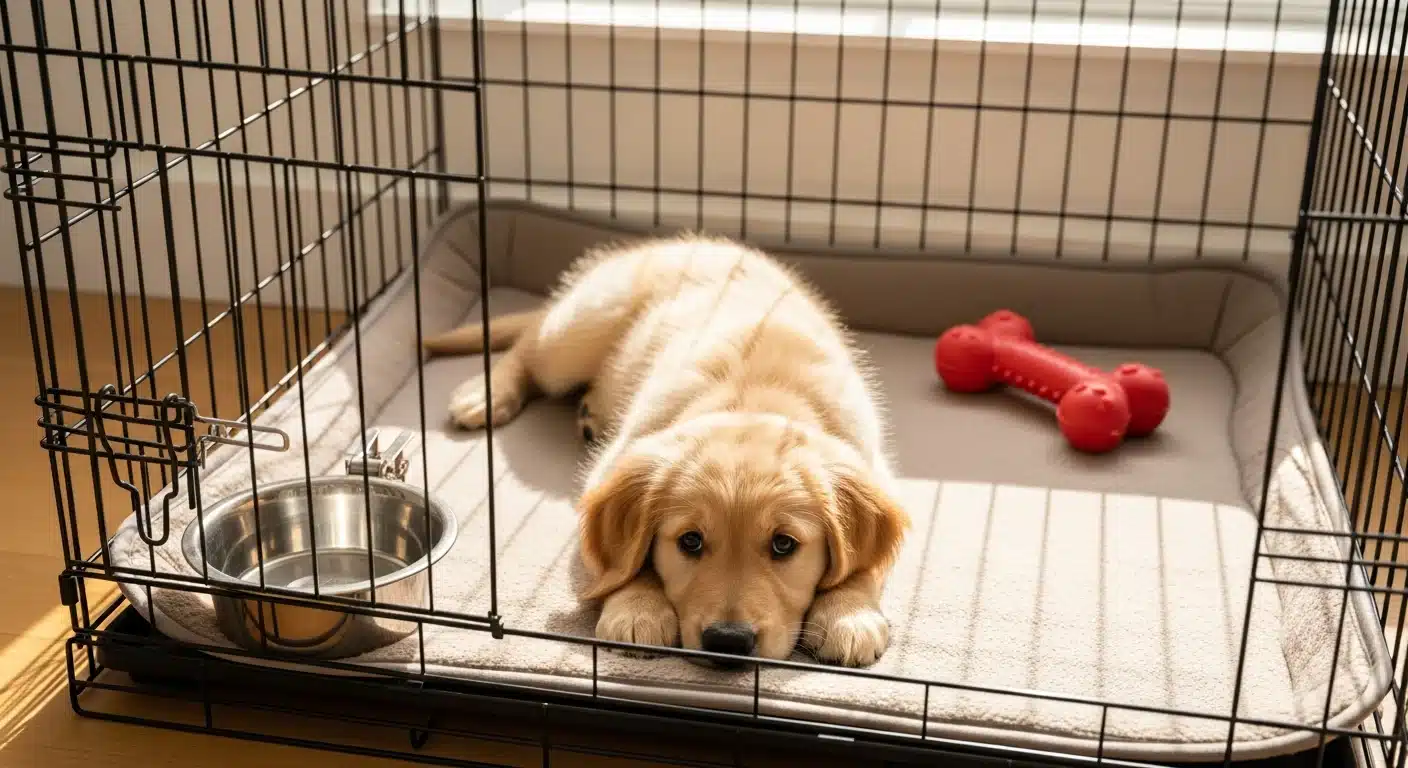
What to Put in a Dog Crate (and What to Leave Out)
The right stuff makes a crate a genuine safe haven. The wrong stuff makes it a hazard. Here’s the honest checklist, plus what vets and trainers say to leave out.
What should you put in a dog crate? The short answer: enough to make it comfortable and calming, not so much that it becomes a safety hazard. The real answer is a bit more nuanced, because what works for a calm adult dog with no destructive habits is not the same as what’s safe for a teething puppy, an anxious chewer, or a dog that’s still being house-trained. This guide covers each item in turn: the bedding question (and when the answer is ‘nothing yet’), safe enrichment that actually helps with positive crate association, water that doesn’t cause accidents or spills, covers and scent items that reduce anxiety, and a firm list of things that look harmless but aren’t. Every recommendation is grounded in what trainers and vets actually say, not what looks good in a product photo.
The crate that makes all of this easier
A well-designed crate makes the setup guide above much simpler to execute, leak-proof pan, included divider, easy clean-out. One pick, verified in stock. Tap through for the live price.
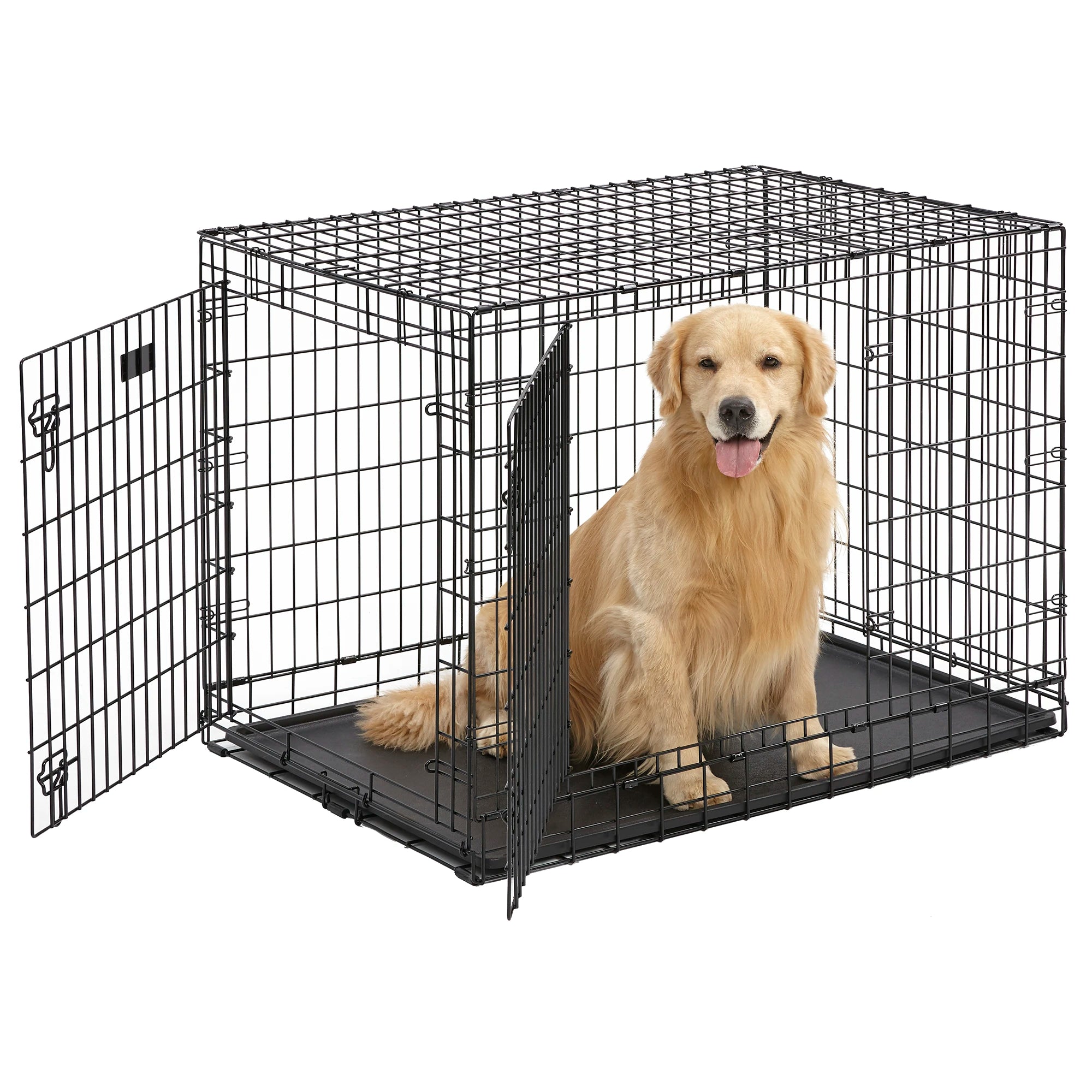
MidWest iCrate Folding Dog Crate
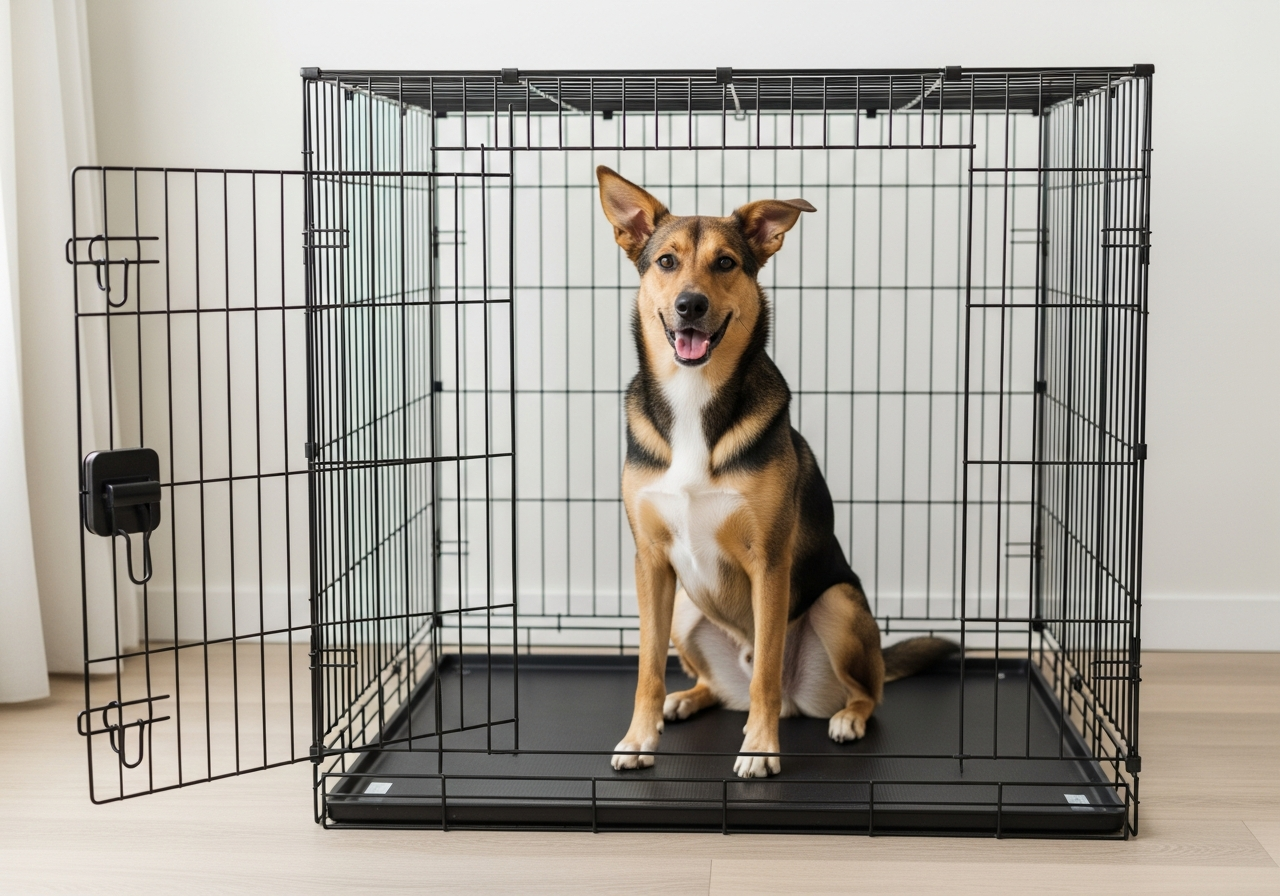
Everything in this guide, the mat, the clip-on bowl, the cover, the chew toy, works best when the crate itself is right. The MidWest iCrate gives you a removable leak-proof pan that’s easy to clean after accidents (no wrestling wet bedding out of a fixed tray), a divider panel to size the space correctly while your puppy grows, and double doors so you can position it against a wall but still reach in from the front. It’s the crate setup we’d buy first for almost any household.
What we like
- Removable leak-proof pan makes post-accident cleanup fast and odour-free
- Divider lets one crate last from puppy to adult without over-sizing the space
- Double doors give flexible placement and easy access without moving the crate
- Folds flat in seconds, genuinely useful if you travel or want it out of sight
The catches
- Wire bars feel industrial next to designer wood or furniture-style crates
- Latch can feel slightly loose on the largest (54-inch) size, check it after setup
- Heavier than soft-sided crates, so less ideal as the sole travel option
The quick do/don’t checklist
| ✓ Put IN the crate | ✗ Leave OUT of the crate |
|---|---|
| Washable, chew-resistant mat or pad (for dogs who don’t shred or soil bedding) | Collar and ID tags (strangulation risk on crate bars) |
| Stuffable rubber chew toy (Kong-style, size-appropriate) | Easily shredded blankets or pee pads for confirmed chewers |
| Clip-on water bowl for stays over 2 hours or in heat | Small toys that can be swallowed |
| A breathable crate cover (three sides, never the door) | Rope toys, squeaky plush with removable parts |
| A worn item of your clothing (for separation anxiety dogs) | Food bowls during unsupervised time |
| Appropriate chew, solid rubber only, sized to the dog | Leashes, cords, or anything with strings |
| Properly sized divider panel (for growing puppies) | Rawhide or nylon bones for unsupervised sessions |
Each item has a reason behind it. The sections below go through them one by one, including the “it depends” caveats that make all the difference.
Bedding: the most situation-dependent decision
Bedding is the item that generates the most owner confusion, because the right answer depends entirely on the individual dog. The general guidance is:
- Calm adult with no chewing history: an orthopedic foam mat or a washable fleece pad is fine and adds real comfort. Look for chew-resistant fabric with no accessible zippers or plastic pieces.
- Teething puppy (under 6 to 9 months): keep it minimal. Many trainers recommend nothing more than a thin washable crate mat or even just the leak-proof tray liner until the teething phase passes. A puppy that shreds bedding can ingest foam or fabric, and a soiled, soggy bed undermines potty training.
- Confirmed chewer of any age: same rule, strip it back to the mat or bare tray. You can reintroduce bedding gradually once the dog has demonstrated it leaves items alone.
- Dog who soils the crate: if a dog is still having accidents inside, bedding soaks up urine and makes it harder for the dog to signal that the crate is wet. The clean tray actually helps here: dogs generally dislike lying in a wet pan and will tell you.
If you’re not sure where your dog falls, err on the side of less. A dog lying on the crate pan is not being mistreated; a dog that eats its bedding is a vet visit waiting to happen. The MidWest iCrate’s removable leak-proof pan makes the “bare tray” option genuinely easy to maintain, pull it out, rinse it, slide it back.
When you do introduce bedding, washability is the non-negotiable feature. Dog bedding needs a hot wash at least weekly, any fabric that can’t go in the machine is the wrong choice for a crate.
Safe enrichment: the stuffable rubber toy that actually works
A crate should be associated with good things, not just confinement. The most consistently recommended tool for building that positive association is a stuffable rubber toy, a KONG or equivalent, filled with high-value food and, ideally, frozen ahead of time.
Here’s why it works:
- It takes time to finish. A frozen stuffed KONG can occupy a dog for 20 to 45 minutes, bridging the gap between “crate door closes” and “this is actually fine.”
- It redirects chewing to a safe object. A dog that needs to chew is going to chew, giving it an appropriate outlet protects bedding, crate tray, and crate bars.
- It creates a cue. Dogs learn quickly that “stuffed toy comes out when the crate opens”, many dogs start walking to the crate on their own when they see you preparing it.
Size the toy to the dog: too small and it can wedge in the throat. Too large and it’s uncomfortable to work. A good rule of thumb is a toy the dog can hold between its front paws without it touching the floor.
What to avoid in enrichment toys: squeaky plush toys with removable eyes or noses, rope toys (strands are ingested and can cause intestinal blockages), any toy rated for a smaller size class than your dog. Rawhide and compressed-starch chews are not safe for unsupervised crate time, they soften and can lodge in the airway.
For a dog that needs extra enrichment during longer stays, a lick mat with peanut butter (no xylitol) or spreadable cheese pressed flat and frozen is another safe option, nothing that could roll around the crate and become a choking hazard.
Water: when to include it (and how)
Water in a crate is a straightforward safety issue for long stays but a training complication for puppies. Here’s how to think about it:
- Stays over 2 hours: water should be available. Dehydration is a genuine welfare concern, especially in warm weather. The solution is a clip-on stainless bowl that attaches to the crate bars, not a free-standing ceramic bowl that will get knocked over.
- Overnight for a house-trained adult: a clip-on bowl is fine, an adult dog that doesn’t need to go out overnight can self-regulate without issue.
- Overnight for a puppy still in potty training: most trainers recommend pulling water 1 to 2 hours before crating for the night and not leaving it in the crate, because drinking at midnight means an accident at 2am. Offer water last thing before crating and first thing after you open the door in the morning.
- During the day for a puppy: if the puppy is crated while you’re at work, water needs to be available, the stay is too long to withhold it. The clip-on bowl is the only practical option; a loose bowl will be tipped, soaking bedding and triggering accidents.
Water bottles that clip to the outside of the crate (the small animal type) are sometimes recommended for puppies, but many dogs never learn to use them reliably, a bowl is usually a safer bet.
Crate covers: the den effect is real
Dogs are descended from den-dwelling animals and many (not all) are genuinely more relaxed in a darker, quieter, more enclosed space. A crate cover, either a commercial crate-fitted cover or a breathable blanket, can help by:
- Reducing visual stimulation: a dog that can’t see every movement in the room settles faster.
- Muffling ambient noise: thunderstorms, fireworks, traffic, a fabric layer takes the edge off.
- Reinforcing the “this is my den” feeling that makes crate training stick.
How to cover correctly: cover three sides and the top, but leave the door side open. Airflow is non-negotiable, a sealed crate in a warm room is dangerous. Check that the cover doesn’t sag into the crate where a dog can pull it in.
Not every dog benefits. Some dogs become more anxious with a cover, particularly if they’re already anxious and need to see their surroundings to self-soothe. Introduce the cover gradually and watch for panting, whining, or pawing at the cover after a few minutes. If the stress is worse, remove it.
Commercial crate covers (K9 Ballistics makes a tough ripstop version; the Diggs Revol has an integrated cover option) are more chew-resistant than a draped blanket, which matters if your dog can reach fabric through the bars. A regular blanket works fine for most dogs, just don’t use your best one for the first few months.
A worn item with your scent (for anxious dogs)
If your dog shows separation anxiety, whining, excessive barking, or distress when you leave, placing a recently worn item of your clothing in the crate can meaningfully reduce that stress. Your scent is genuinely calming for most dogs; studies on dog anxiety consistently find owner-scent items in the top tier of non-medicinal interventions.
What to use: an old T-shirt or a pillowcase you’ve slept on recently, placed under or next to the bedding so it stays in the crate and doesn’t become a toy. Don’t use something you mind losing, some dogs will chew it.
When not to use it: if your dog shreds fabric, a loose item of clothing is a choking hazard. In that case, skip it until the chewing phase is managed. There are commercial calming aids (DAP diffusers, Adaptil sprays) that can be used near the crate without leaving a physical item inside, a reasonable alternative for chewers who are also anxious.
The scent item is particularly helpful in the first weeks of crate training and after any disruption (moving, new pet in the house, change in routine). It’s not a substitute for a proper crate-training protocol, but it genuinely helps.
What to leave out, safety hazards you might not have considered
This is the section most guides skim, but it matters the most. Several items that seem harmless, or actively kind, in a crate are documented safety hazards.
Collars and ID tags
This is the most important item on the don’t list. Remove your dog’s collar before crating. Every year dogs die from collar strangulation in crates, the collar or ID tags catch on a crate bar or latch, the dog panics or struggles, and it cannot free itself. The risk is highest with chain-style and slip collars, but flat collars with metal rings and D-clips are documented in incidents too. Your dog’s ID is on its microchip, not its collar, crating without it is not a risk.
If you want visible ID on the crate (for emergencies), tape a card with your name and number to the outside of the crate door.
Easily shredded blankets and pee pads for chewers
A puppy or dog that shreds blankets can ingest fibres, foam, and synthetic fill, intestinal blockages from ingested bedding are a common emergency vet presentation. Pee pads are even more dangerous: many dogs treat them as chew toys, and the superabsorbent gel inside is not intended for ingestion. If your dog shreds anything, the crate goes bare until that habit is resolved.
Small toys
Any toy that can fit fully in the dog’s mouth is a choking hazard in an unsupervised crate. Squeaker balls, mini plush toys, and small rope lengths are all in this category. Size toys to the dog, and if in doubt, go bigger.
Rope toys
Rope toys unravel. The individual strands can be swallowed, tangle in the intestines, and cause a life-threatening linear foreign body obstruction. Rope toys are a supervised-play item only, never leave one in a crate.
Rawhide and compressed-starch chews
These soften as the dog chews, and a large softened piece can lodge in the airway. They’re also a source of significant GI upset. Not a safe crate chew for unsupervised time.
Anything with strings, cords, or elastic
Leashes, elastic hair ties, hoodie drawstrings, bungee cords, keep all of these out of arm’s reach. A dog bored in a crate will investigate anything it can reach through the bars.
Puppies vs adult dogs: the key differences
Most of the guidance above is dog-specific rather than age-specific, but there are reliable patterns by life stage worth calling out directly.
| Setup item | Puppy (under ~9 months) | Adult dog |
|---|---|---|
| Bedding | Minimal or none until teething done and no soiling. Thin washable mat only. | Full orthopedic or fleece pad fine if no chewing history. |
| Enrichment toy | Puppy-sized stuffed rubber toy (frozen). Start with 10-min sessions. | Appropriate-sized stuffed rubber toy. Adult dogs can manage longer alone. |
| Water | Clip-on bowl for day; remove 1 to 2 hours before overnight crating until reliably house-trained. | Clip-on bowl for stays over 2 hours. Most adults fine overnight without. |
| Crate cover | Introduce gradually. Not all puppies want a darker space initially. | Most adults benefit, especially in busy households. |
| Scent item | Useful in early training. Remove if the puppy chews it. | Helpful for anxious dogs. Lower chew risk for most adults. |
| Divider panel | Essential, size the space to “just enough to stand, turn, and lie down.” Too much space = accidents. | Full crate space is fine once fully house-trained. |
The single biggest mistake with puppies is giving them too much crate space. An over-sized crate lets the puppy designate one end as a toilet, which undermines the whole point of crate training. The MidWest iCrate’s included divider panel is exactly the tool for this, slide it to the right position now and shift it as the dog grows. Our crate training for puppies guide walks through the full protocol step by step.
Daytime vs overnight: does the setup change?
For a fully trained adult dog, the setup doesn’t change much between daytime and overnight. The main adjustments are practical:
- Overnight: most adults don’t need a water bowl unless the room is warm. Pull the stuffed toy if it’s the type of toy that can make a mess overnight and disturb sleep, a simple chew-resistant mat is enough.
- Daytime (short stay, under 2 hours): enrichment toy is the priority; water optional if the stay is short and the room is cool.
- Daytime (long stay, over 2 to 3 hours): clip-on water bowl is non-negotiable. Enrichment toy helps. If the stay is regularly longer than 4 hours, revisit the how long can a dog stay in a crate guidance, extended daily confinement has welfare implications.
For puppies: overnight without water (last drink 1 to 2 hours before bed) and with a scent item is the standard trainer recommendation. During the day with water and a stuffed toy. And short sessions at first, puppies should not be crated for hours on end in the early weeks.
A good crate is an investment in both directions: it protects your home and keeps your dog safe. But it does both jobs only when it’s set up right. Get the basics down and the crate becomes the one spot in the house where your dog genuinely relaxes, not somewhere it’s just waiting out the clock.
What to put in a dog crate: common questions
What should I put in my dog’s crate?
For most dogs: a washable chew-resistant mat, a stuffable rubber chew toy (frozen if possible), and a breathable crate cover over three sides. Add a clip-on water bowl for stays over 2 hours. For anxious dogs, a worn item of your clothing helps. Remove the collar before crating, it’s a strangulation hazard. What you leave out depends on the dog: chewers and potty-training puppies should have minimal or no bedding until those issues are resolved.
Should I leave water in the crate?
For stays over 2 hours, yes, use a clip-on stainless bowl attached to the crate bars so it can’t tip. For puppies overnight that are still potty training, most trainers recommend pulling water 1 to 2 hours before crating to reduce accidents, then offering water first thing in the morning. For house-trained adults overnight, a clip-on bowl is fine but not always necessary if the room is cool and the stay isn’t unusually long.
Should I put a collar on my dog in the crate?
No. Remove your dog’s collar, including ID tags, before crating. Collar hardware can catch on crate bars and the dog cannot free itself; strangulation fatalities from collars in crates are documented. Your dog’s ID is on its microchip. If you want visible ID on the crate for emergencies, tape your name and number to the outside of the door.
Can I put a blanket in a puppy’s crate?
Only if the puppy doesn’t chew it. Many puppies in the teething phase (up to 6 to 9 months) will shred blankets, and ingested fabric or foam can cause intestinal blockages. For a teething or chewing puppy, stick to a thin washable crate mat, or nothing but the tray liner, until the phase passes. For a puppy that doesn’t chew, a thin blanket is fine and adds comfort.
Should I cover my dog’s crate?
For most dogs, yes, covering three sides and the top (never the door) creates a darker, quieter den-like environment that helps dogs settle. Leave the door side open for airflow. Introduce the cover gradually and watch for signs of increased anxiety (panting, whining, pawing at the cover). Some dogs prefer no cover, particularly anxious dogs that need to see their surroundings to self-soothe. Remove the cover if it makes things worse.
What toys are safe to leave in a crate?
The safest option is a stuffable solid rubber chew toy (Kong-style), sized to the dog, ideally with food stuffed inside and frozen. Avoid rope toys (strands can be swallowed), squeaky plush with removable parts, small toys that can fit fully in the mouth, and rawhide or nylon chews. The rule of thumb: if the dog could swallow it or a piece of it while unsupervised, it doesn’t belong in the crate.