 Dog Gear, Sized Right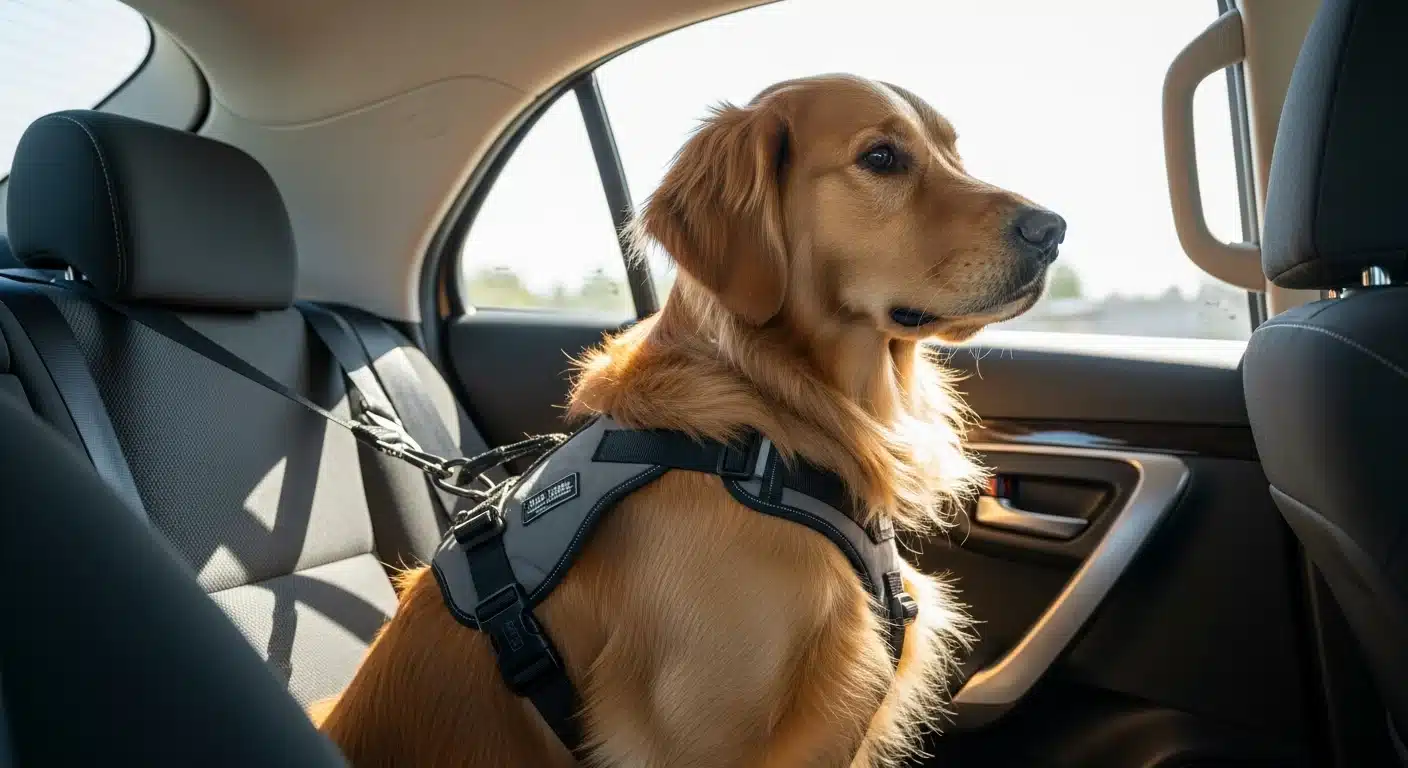
Do Dogs Need to Be Restrained in the Car? Laws & Safety
The physics are alarming, the laws are patchy, here’s what actually protects your dog (and you) in a crash.
Most dogs ride loose in the car. They sit in the front seat, sprawl across laps, or roam the cargo area, and most of the time, nothing bad happens. But in a crash, an unrestrained dog becomes a projectile: a 50-pound dog at 30 mph generates roughly 1,500 pounds of force. That’s enough to kill the dog, injure every passenger in its path, and cause the driver to lose control. Below we cover the crash physics, the US state laws you actually need to know, and the three restraint options that hold up, plus what doesn’t work, even if it looks safe at the pet store.
Our top pick for car safety
Independently crash-tested and verified in stock, the only sport harness to earn a 5-star CPS certification.
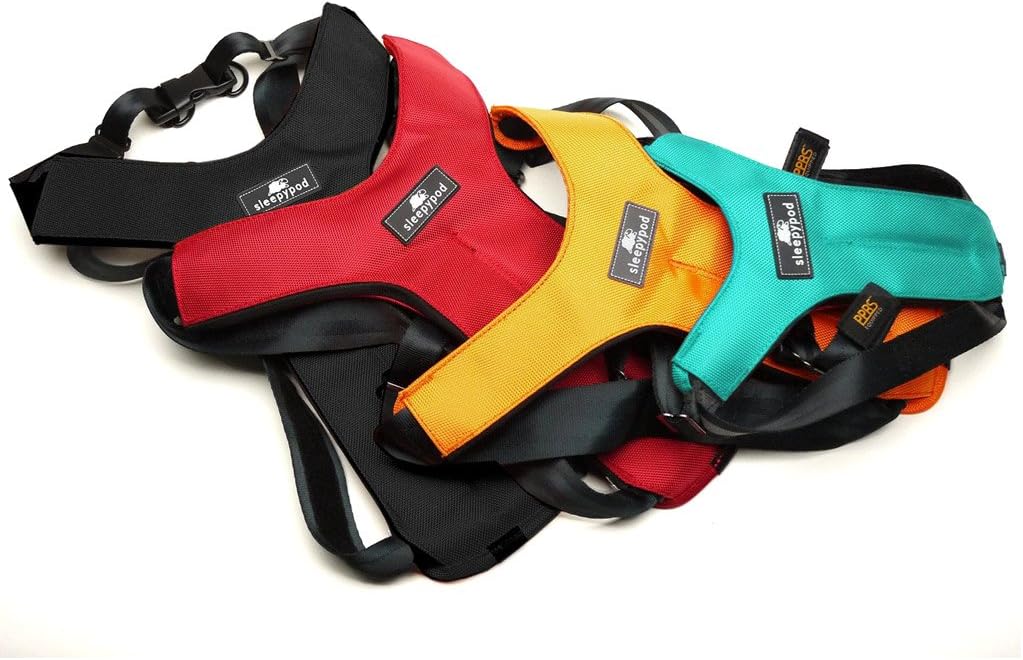
Sleepypod Clickit Sport
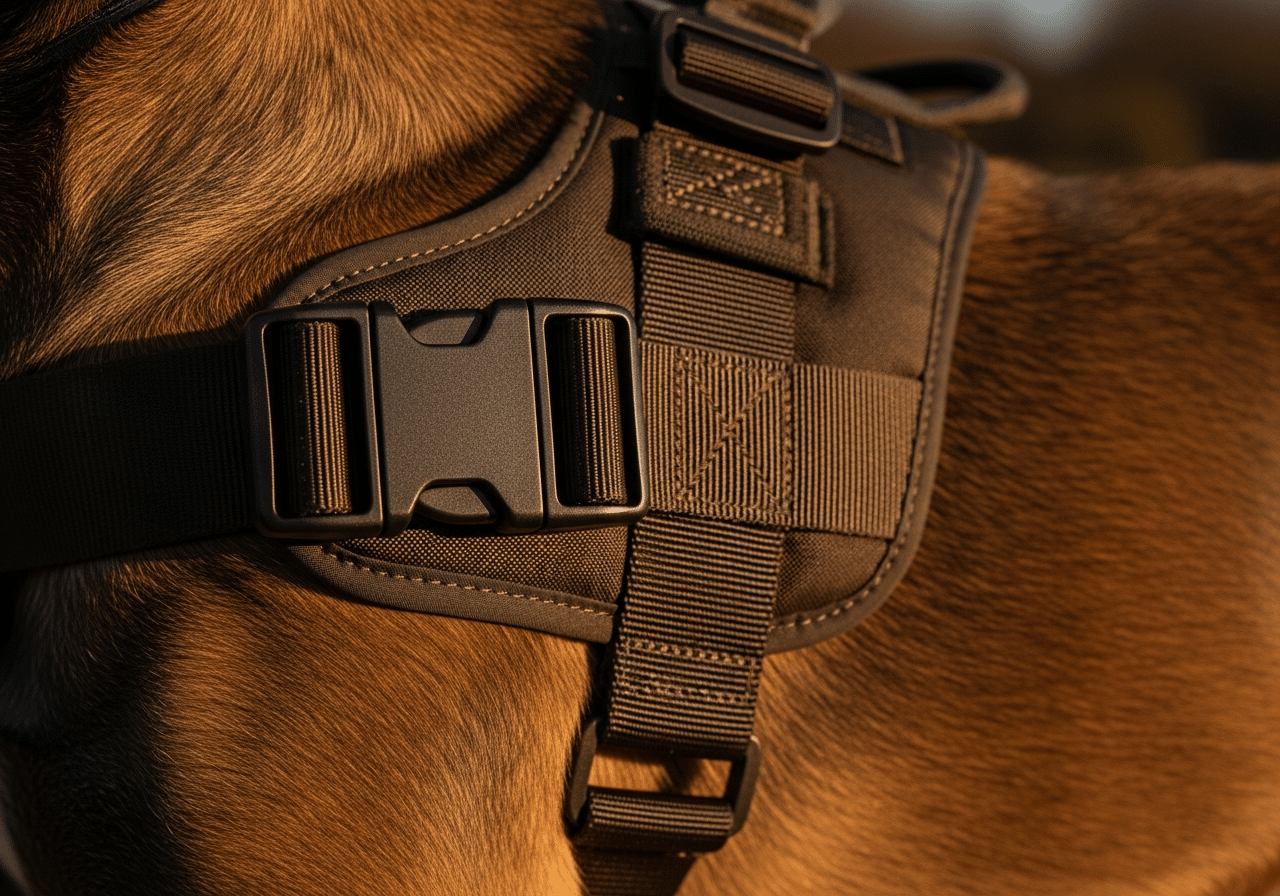
If you only buy one piece of dog car safety gear, make it this. The Sleepypod Clickit Sport is the only sport harness with an independent five-star CPS certification, tested to the same FMVSS 213 sled standard as child seats. Its Infinity Loop webbing and padded vest spread crash forces across the chest and shoulders; it anchors to your car’s existing three-point seatbelt with no extra hardware. Large size covers 75 to 90 lb dogs.
What we like
- Only sport harness with independent 5-star Center for Pet Safety certification
- Padded vest + Infinity Loop webbing distributes crash forces across chest, not neck
- Clips to your car’s existing seatbelt, no additional hardware
- Doubles as a daily walking harness so your dog is comfortable with it before a trip
The catches
- Pricier than a non-certified harness, but it’s the one independently proven to work
- Sizing runs snug; measure girth carefully (Large = 75 to 90 lb)
- Deep-chested giant breeds may fit the Clickit Range or Terrain better
Why an Unrestrained Dog Is a Genuine Danger
Newton’s first law doesn’t care how much your dog weighs or how short the trip is. When your car decelerates suddenly, your dog keeps moving at the car’s previous speed. The numbers tell the story quickly:
| Dog weight | Speed at crash | Effective force |
|---|---|---|
| 10 lb | 30 mph | ~300 lb of force |
| 30 lb | 30 mph | ~900 lb of force |
| 50 lb | 30 mph | ~1,500 lb of force |
| 70 lb | 60 mph | ~8,400 lb of force |
That force lands wherever the dog travels, into the back of the front seat, through the windshield, or into passengers. A loose large dog in the cargo area is essentially an unsecured heavy object.
The second hazard is driver distraction. A dog climbing into the front seat, pawing at the driver, or sticking its head out of a front window is a classic distracted-driving scenario, the same category as texting. Several states specifically address this under distracted-driving statutes even when they have no explicit dog-restraint law.
US State Laws: Who Has Specific Dog Restraint Rules?
There is no federal law requiring dogs to be restrained in vehicles. As of 2026, only a handful of US states have enacted specific statutes, but many more can charge drivers under broader distracted-driving or animal-cruelty laws. This is general information, not legal advice, always verify your state’s current law.
| State | Specific requirement | Potential fine |
|---|---|---|
| New Jersey | Pets in moving vehicles must ride in a carrier or wear a seat belt | $250-$1,000 |
| Rhode Island | Pets must be under physical control (not the driver) or restrained by crate, harness, or seat belt | Up to $200 |
| Hawaii | No holding a pet in your lap or allowing one in the driver’s immediate control area; loose animals also prohibited | $57-$97 |
Broader enforcement in other states: Arizona, Connecticut, California, and several others can cite drivers under distracted-driving or reckless-driving laws if a loose dog impairs control of the vehicle. A handful of states also restrict dogs in open truck beds under animal-cruelty statutes.
The 3 Options That Actually Protect Your Dog
Not all restraints are equal. The Center for Pet Safety (CPS), the non-profit that conducts independent crash testing of pet products to the same FMVSS 213 dynamic sled standard used for child safety seats, has found that the majority of pet restraints on the market fail to protect in a real crash. Here are the three options that work:
Option 1. Crash-Tested Harness + Seatbelt Tether
A crash-tested, independently certified harness is the closest equivalent to a dog seatbelt. It fits like a vest across the dog’s chest and shoulders (not just the neck), then clips to your car’s existing three-point seatbelt. In a crash, the harness distributes force across the broad chest rather than concentrating it on the throat.
The key word is independently crash-tested. Look for CPS certification, products like the Sleepypod Clickit Sport (rated to 90 lb, five-star CPS) and the Sleepypod Clickit Terrain/Range (certified to 110 lb) have been through independent sled testing. Most harnesses on Amazon that say ‘crash-tested’ in their own marketing copy have not passed independent testing. Check the CPS certified products database before buying.
Option 2. A Secured Crate
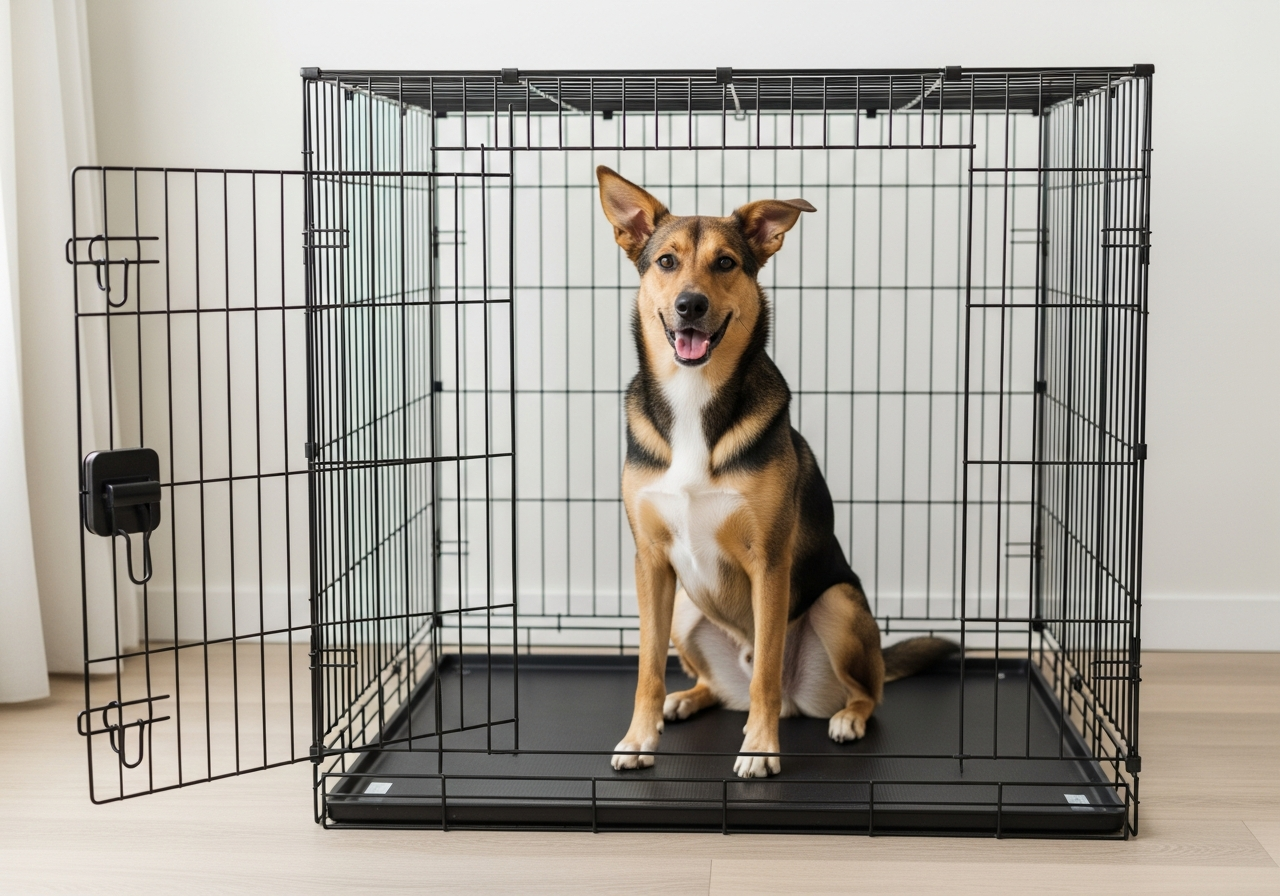
A rigid crate that is anchored to the vehicle protects your dog and keeps the crate itself from becoming a projectile. The crate must be secured with straps or cargo anchors, an unsecured crate slides, tips, and crushes in a crash. High-impact aluminum crates (like the aluminum Gunner Kennels or Impact Dog Crates) offer a higher protection level than plastic crates in side impacts. Soft-sided crates offer essentially no crash protection and should not be used for vehicle safety.
Option 3. A Dog Cargo Barrier
A cargo barrier installed between the cargo area and the passenger cabin prevents a large dog from becoming a projectile into the rear of the front seats. It does not prevent the dog from being thrown around within the cargo area, but it does protect human passengers. Barriers work best in SUVs and wagons for larger dogs. For maximum protection, combine a barrier with a crate or a crash-tested harness.
What Doesn’t Work (Even If It Looks Safe at the Store)
The CPS has crash-tested a wide range of pet products sold as safety gear. Several popular product categories have failed, sometimes spectacularly:
- Dog booster seats: These are bucket-style seats that clip to your car seat. They elevate the dog so it can see out the window, which dogs love. But CPS crash testing found that booster seats routinely fail: they break, detach, or allow the dog to be ejected on impact. A booster seat that clips a leash to the dog’s collar concentrates all crash force on the neck, potentially causing fatal cervical injury. The CPS recommends harnesses over booster seats specifically for this reason.
- Hammock-style backseat covers: These keep dog hair off the upholstery and make car cleanup easier, but they provide zero restraint. A dog in a backseat hammock is still a projectile in a crash.
- Riding in a driver’s lap or front seat: Besides being illegal in several states, a dog in the driver’s lap or front passenger seat is in the path of a deploying airbag. Side-curtain and frontal airbags deploy at 100 to 200 mph and can injure or kill a dog (or a small child). Always put your dog in the back.
- Leash clipped to collar: Never clip a leash or seatbelt tether to a collar for car travel. In a crash, all force concentrates on the neck. A well-fitted harness is mandatory if you’re using a tether.
- Unsecured soft-sided crates: Collapsible fabric crates look convenient but offer no structural protection and will collapse under load.
Crash-Tested vs. ‘Crash-Tested’: Reading the Marketing Fine Print
“Crash-tested” on a product box means almost nothing without a third-party certification behind it. Any manufacturer can conduct their own internal test and call the product crash-tested. The standard that matters is independent CPS testing against FMVSS 213, the same dynamic sled test used for child restraint systems.
As of 2026, the CPS-certified harness list is short. The Sleepypod Clickit Sport, Clickit Terrain, and Clickit Range are the most widely available certified options for dogs up to 110 lb. The ZuGoPet Rocketeer Pack has also earned CPS certification. The Kurgo Journey Air Harness and Kurgo Tru-Fit Smart Harness with Seatbelt Tether are popular and often recommended, verify their current certification status at centerforpetsafety.org before purchasing, as certification status can change.
How to Choose the Right Restraint for Your Dog’s Size
The right option depends on your dog’s size, your vehicle type, and how often you travel. Here’s a quick guide:
| Dog size | Best option(s) | Notes |
|---|---|---|
| Under 20 lb | Certified carrier or certified harness | Small dogs fit CPS-certified soft carriers for airline-style containment; harness works too |
| 20 to 60 lb | Crash-tested harness (e.g. Sleepypod Clickit Sport) | Most CPS-certified harnesses are designed for this range; always measure girth, not just weight |
| 60 to 90 lb | Crash-tested harness (Large sizing) or secured rigid crate | Sleepypod Clickit Sport covers up to 90 lb; a secured impact crate is a strong alternative |
| 90 lb + | Sleepypod Clickit Range/Terrain or secured heavy-duty crate + barrier | Very few certified harnesses cover giants; a secured crate + barrier is the most practical combo |
Whatever restraint you use, introduce it at home before a trip. A dog that has never worn a harness will fight it; a dog that associates the harness with “car adventure” will settle in quickly. Start with short trips and reward calm behavior.
Best Practices for Dog Car Safety (Beyond the Restraint)
A crash-tested harness is the foundation. These habits compound the protection:
- Back seat only: Always put your dog in the rear of the vehicle, away from frontal airbags. Side-curtain airbags are a secondary concern, a well-fitted harness keeps the dog centered in the seat.
- Windows up or partially cracked: Dogs hanging their heads fully out of windows are at risk of debris strikes, and an excited dog near an open window can slip a harness or jump. Crack the window for air, but keep the head in.
- ID tags and microchip: In a crash, doors can open and a frightened dog can bolt. Current ID tags and a registered microchip mean a lost dog has a path home.
- No food or water while moving: Motion sickness risk aside, a sudden stop with a full bowl creates a mess and a distraction. Water breaks at rest stops only.
- Check restraint before every trip: A harness that works today can develop a frayed clip or loose webbing by next month. Give it a 30-second check before buckling in.
- Never leave a dog in a hot car: A car interior can reach 120°F on a 70°F day within 20 minutes. No errand is worth that risk.
The Short Answer: Do You Legally Have to Restrain Your Dog?
If you’re in New Jersey, Rhode Island, or Hawaii, yes, it’s required by explicit statute. In most other US states, there’s no specific dog-restraint law, but you can still be cited under distracted-driving laws if your dog impairs your ability to control the vehicle, or under animal-cruelty statutes in some jurisdictions if an unrestrained animal is injured.
But the more important frame is the safety one. Laws reflect the minimum, what’s required so you don’t get a ticket. The crash physics don’t care about state lines. A 60-pound Labrador riding loose is a 60-pound projectile regardless of which state you’re passing through. The three legitimate options, crash-tested harness, secured crate, cargo barrier, cost $50-$200 and offer real protection. That’s a much smaller number than an ER visit for a human passenger struck by a dog, or a vet emergency bill after an ejection crash.
The safest and simplest solution for most dogs in most vehicles is a CPS-certified crash-tested harness clipped to the rear seatbelt. It’s the option that’s been independently tested to the same standard as a child seat, and for large dogs, the Sleepypod Clickit line is the place to start.
Shop travel safety gear
Dog car restraint questions, answered
Is it illegal to drive with an unrestrained dog?
It depends on your state. As of 2026, only three US states have explicit pet-restraint statutes: New Jersey (pets must be in a carrier or wear a seat belt; fines $250-$1,000), Rhode Island (pets must be restrained or under physical control by a non-driver; up to $200 fine), and Hawaii (no pets in the driver’s lap or control area; $57-$97). However, drivers in many other states, including Arizona, Connecticut, and California, can be cited under distracted-driving laws if a loose dog impairs vehicle control. This is general information, not legal advice; check your state’s current traffic statutes.
What is the safest way for a dog to travel in a car?
The three options with real safety evidence are: (1) a crash-tested, independently certified harness (such as the Sleepypod Clickit Sport or Terrain) clipped to the rear seatbelt, this is the closest equivalent to a child seatbelt and the most independently validated option; (2) a rigid crate anchored to the vehicle, which prevents the dog and crate from becoming projectiles; and (3) a cargo barrier in an SUV or wagon, which protects passengers even if the dog moves freely in the cargo area. For most dogs, a CPS-certified harness in the back seat is the most practical combination of safety and comfort.
Do dog seatbelts actually work?
It depends entirely on whether the harness has been independently crash-tested. The Center for Pet Safety (CPS), a non-profit that tests pet restraints to the same FMVSS 213 dynamic sled standard used for child seats, has found that the majority of dog seatbelt products on the market fail crash testing. Many products market themselves as ‘crash-tested’ based on manufacturer’s own internal tests, which don’t meet the same standard. Products that have passed independent CPS testing, such as the Sleepypod Clickit line, do provide meaningful protection. Always verify a product’s certification status at centerforpetsafety.org.
Are dog booster seats safe?
Generally, no, not for crash protection. Dog booster seats are popular because dogs love the elevated view out the window, but CPS crash testing has found that most booster seats fail catastrophically under crash forces. They break apart, detach from the seat, or eject the dog on impact. Worse, if the booster clips a leash to the dog’s collar, all crash force concentrates on the neck, which can cause fatal cervical injury. The CPS specifically recommends harnesses over booster seats. Booster seats are fine for keeping a small dog from wandering, but should not be relied on for safety.
Can I use any harness as a car harness?
No. A regular walking or hiking harness is not designed to withstand crash forces. Most harnesses are built to handle a dog pulling forward on a leash, which might generate 50 to 100 lb of force at most. A crash at 30 mph can subject the same dog to 900 to 1,500+ lb of force. Walking harnesses will typically shatter, deform, or allow the dog to be ejected in a real crash. Only harnesses specifically crash-tested and certified for vehicle use, like the Sleepypod Clickit line, should be used as car restraints.
Where in the car should a dog ride?
Always the back seat or cargo area, never the front seat or driver’s lap. Frontal airbags in the front passenger seat deploy at 100 to 200 mph and can injure or kill a dog (or a small child) in even a minor crash. For cargo areas in SUVs, a barrier prevents the dog from becoming a projectile into the passenger cabin. Pair a cargo barrier with a secured crate or crash-tested harness for the highest protection level.
How do I get my dog comfortable wearing a car harness?
Introduce the harness at home, not in the car. Put it on for short periods during positive activities, meal time, play time, short walks, so the dog associates it with good things. Once the dog accepts the harness calmly at home, try clipping it into the car while the car is parked, then start with very short trips. Most dogs adapt within a week or two. Avoid letting a dog fight or panic in the harness, go back a step and slow the introduction down if needed. A dog that’s calm in its harness is a safer passenger than one thrashing in a tight clip.