 Dog Gear, Sized Right
What Happens If My Dog Escapes a GPS Dog Fence?
If your dog crosses the line, here’s exactly what the collar does, what you should do, and the tracking features that get them back, plus how to stop it happening again.
What happens if my dog escapes a GPS dog fence? First, the reassuring part: with a good system it’s rare. SpotOn reports a 99.28% containment rate, meaning only about 0.72% of sessions end in a boundary breach. But “rare” isn’t “never,” so here’s the honest, system-by-system version: what the collar does as your dog approaches and crosses the line, what actually happens the moment they’re out, the breach-alert and live-tracking features that help you find them, why dogs run through in the first place, and the training and setup that prevent it. Crucially, a GPS fence behaves very differently from a buried wire once a dog is loose, and that difference is the whole reason to care which system you own.
The systems that help you get an escaped dog back
This is an explainer, not a roundup, but escape recovery comes down to accuracy plus live tracking, and these are the two systems that do both. Each is verified in stock; tap through for the live price.
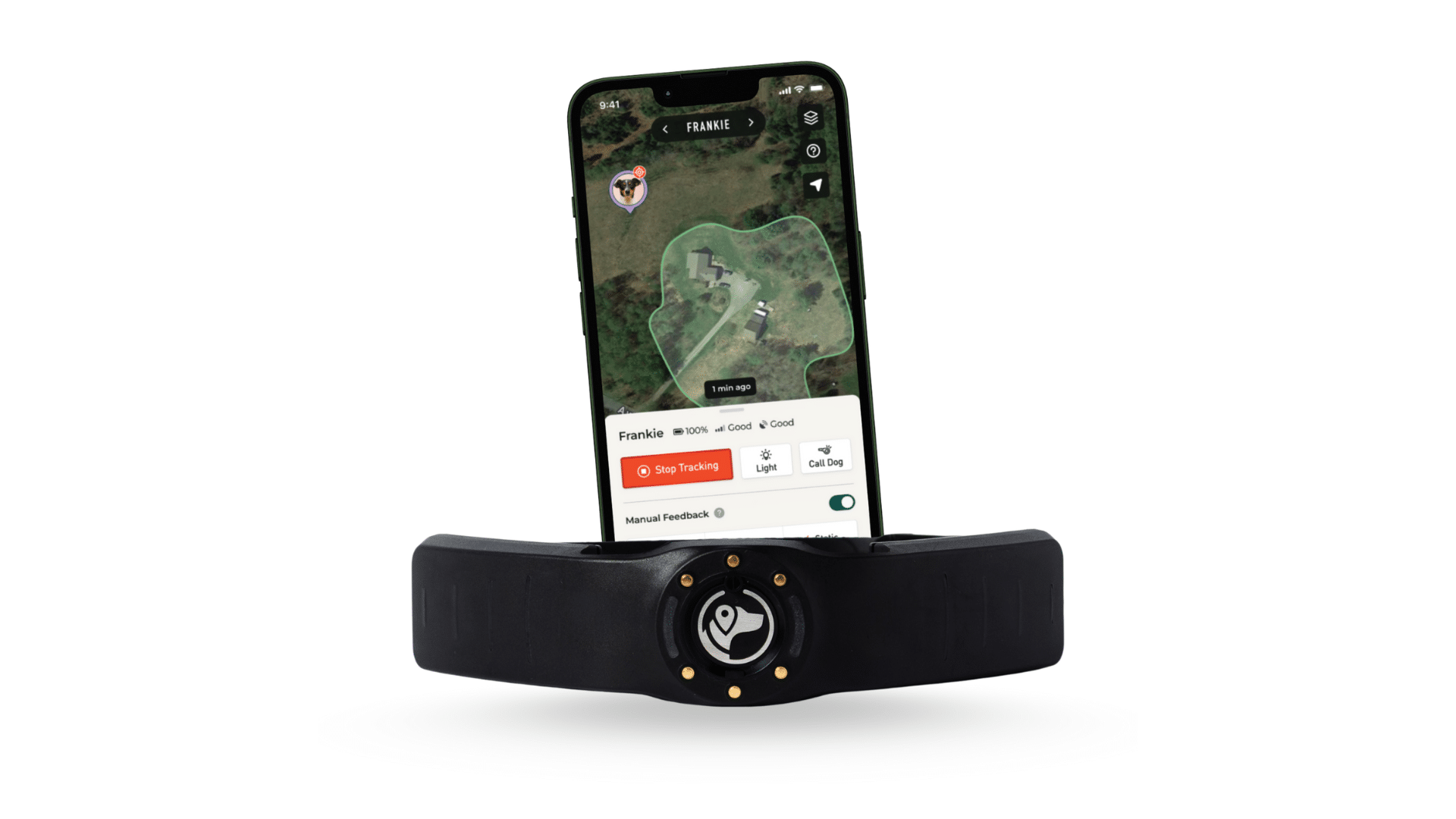
SpotOn GPS Dog Fence (Nova)
The escape-artist’s safety net. SpotOn holds the tightest real-world boundary (~2 to 5 ft), which shrinks the gap a sprinting dog can clear in the first place, and if one does get out, the app switches to real-time GPS tracking so you can see exactly where they are and walk them home. No buried wire, no monthly fee to keep the fence (or the tracking) running.
What we like
- Tightest accuracy (2 to 5 ft), smallest escape window of any system we’ve tested
- Real-time tracking to locate a dog that does get out, no extra fee
- Correction stops the instant the dog re-enters, so it never punishes a return
- Free 30-minute certified-trainer session to build a reliable boundary
The catches
- Highest up-front price ($999 Nova / $899 Omni)
- Large collar, built for medium-to-large dogs, not toy breeds
- ~22 hr battery, charge it nightly so tracking is never dead when you need it

Halo Collar
A more affordable smart collar that also sends a breach alert and offers live tracking to find an escaped dog, plus a slick app and Cesar Millan training program. The catch to know before you rely on it: the fence and its safety features only work while you pay the Pack Membership (from ~$9.99/mo).
What we like
- Lower up-front price than SpotOn
- Breach alerts + live tracking to locate an escaped dog
- Longest battery life, up to 48 hours of tracking
The catches
- Pack Membership is mandatory, tracking and fence stop if you stop paying
- Accuracy can drift more (3 to 10 ft), widening the escape window near trees
- Base plan caps you at 5 saved fences
The short answer: what actually happens
When a dog crosses a GPS fence boundary, three things happen in quick succession on a quality system: the collar delivers its warning (tone, then vibration or static), the system logs a boundary breach and pings your phone, and the app flips into live GPS tracking so you can watch where your dog goes and walk straight to them. On the best systems the correction is time-limited, it lasts only a few seconds, not continuously, and it stops the moment the dog comes back inside, so the collar never punishes a dog for returning.
That last detail is the one most owners worry about and get wrong: a well-designed GPS fence is built to make coming home easy, not scary. The escape itself is usually brief. SpotOn’s data shows 61% of dogs are back within 10 seconds, 81% within a minute, and 92% within five minutes of crossing the line. The rest of this guide walks through each stage, what to do in the moment, and how to make escapes vanishingly rare.
The boundary response, step by step
Every reputable GPS fence is progressive, it escalates only as far as the dog forces it to. Using SpotOn’s protocol as the model (Halo and other premium systems work the same way, with their own numbers):
- ~10 feet from the line: a gentle alert tone tells the dog “you’re getting close, turn around.” A trained dog stops here and never feels anything else.
- ~5 feet from the line: a faster, more urgent tone, the last warning before the boundary.
- At the boundary: the dog gets the feedback you chose, vibration, or a static correction adjustable across many levels (SpotOn offers 30, Halo 15) so you can set the gentlest setting that works.
- Crossing the line: on a good system the correction is time-limited (about 10 seconds on SpotOn), then stops, it will not zap a dog endlessly while it’s outside.
- The instant tracking kicks in: the breach is logged and live GPS location starts so you can find the dog.
- Coming back in: feedback stops immediately on re-entry, reinforcing that inside is safe.
The takeaway: the system is designed so a dog hears two warnings before anything happens, the consequence is brief and adjustable, and returning home is always the “off switch.” That’s very different from the buried-wire systems people picture.
How often do dogs actually escape a GPS fence?
Less than most people fear, on a good system. SpotOn publishes a 99.28% containment rate across its sessions, i.e. about 0.72% of sessions include any boundary breach at all, and when a dog does cross, the data shows fast returns: 61% within 10 seconds, 81% within a minute, 92% within five minutes. Those are the maker’s own figures, so weigh them accordingly, but they line up with what reviewers and acreage owners report: a trained dog on a well-set boundary rarely tests it, and usually comes right back when it does.
The number that matters more than any stat is your own dog’s tone-response reliability. A dog that consistently turns at the warning beep almost never reaches the boundary; a dog that’s been rushed through training, or that will take a correction to chase a deer, is the one that escapes. Accuracy matters too, a tighter boundary (2 to 5 ft) gives a sprinting dog less room to clear the line before the correction lands than a budget collar drifting 15 to 30 feet. We break down which systems hold which numbers in our best GPS dog fence roundup and the do GPS fences actually work explainer.
Why dogs run through an invisible fence
If a dog escapes, it’s almost always one of these, and every one is fixable:
- Prey drive beat the boundary. A squirrel, deer, rabbit or another dog can flip a high-drive dog into chase mode where it’ll take a quick correction and keep going. This is the number-one real-world cause.
- Training was rushed. The dog was trusted off-line before it truly understood the boundary. Most “the fence doesn’t work” stories are really “the training wasn’t finished.”
- A dead or low battery. No charge, no fence. A collar left uncharged overnight can be flat by afternoon.
- Fear and panic. Thunder, fireworks or gunshots can send even a well-trained dog bolting through a boundary it normally respects.
- The boundary was too tight or drifting. A cheap collar drifting tens of feet, or a line set with too small a buffer, can let a dog cross before the warning even fires.
- A flat-out sprint. Because position refreshes every couple of seconds, a dog already at top speed can clear the line in the gap between refreshes. The fence depends on the dog respecting the tone, before it’s committed to running.
Notice that most of these are about training, setup and the dog, not a broken collar. Match the fix to the cause and escapes drop close to zero.
What to do the moment your dog gets out
Stay calm and work the system, panicking and chasing is what turns a 30-second breach into a lost dog. The playbook:
- Open the app and look at the live location first. On SpotOn or Halo you’ll see where the dog actually is in real time, don’t run blind.
- Don’t chase. Call them to you. A happy, excited recall (“here! treats!”) and crouching or even running the other way triggers the come-back instinct; chasing triggers the flee instinct.
- Trust the re-entry design. The collar stops correcting once the dog is out, and stops again when it re-enters, your dog will not get “trapped” or zapped for crossing back in.
- Reward the return hard. Whatever state they come back in, reward it, never scold a dog that comes home, or you teach it that returning is punished.
Will the collar shock my dog when it comes back in?
No, and this is the most common fear, so it’s worth being clear. On a properly designed GPS fence, the correction is tied to crossing outward, it’s time-limited (a few seconds), and it stops the instant the dog re-enters the boundary. Coming home is always safe. The systems are deliberately built this way: if returning triggered a correction, dogs would learn to stay out, which is the opposite of what a containment system wants.
What you should avoid is a cheap or misconfigured collar with continuous correction, no time limit, or a badly drifting boundary that mistakes “inside” for “outside.” That’s a setup problem, not a property of GPS fences, and it’s one more reason the accuracy and design of the system you buy genuinely matters. On the premium systems, a dog that bolts after a squirrel can run home and walk back through the line without consequence.
How to prevent escapes in the first place
Containment is mostly won before an escape ever happens. The checklist that keeps a dog inside:
- Finish the training. Do the full one-to-two weeks of boundary work on a long line before any off-leash trust. This single step prevents most escapes. SpotOn includes a free certified-trainer call; Halo ships an in-app Cesar Millan program.
- Charge it on a schedule. Top the collar up nightly and enable low-battery alerts so the fence is never quietly dead.
- Fit the collar snugly. Too loose and the contact points lose touch with the skin, so the dog never feels the warning. You should fit two fingers under the strap, no more.
- Set a sensible buffer. Draw the boundary a comfortable margin inside your real property line so even a little drift or a fast approach still leaves room.
- Manage prey-drive triggers. Supervise during high-temptation times (dawn/dusk wildlife, neighborhood cats), and don’t rely on the fence alone for a dog that’s proven it’ll chase through it.
- Have a storm plan. Bring panic-prone dogs inside for fireworks and thunderstorms, no boundary system reliably holds a terrified dog.
- Back up the escape artist. For a determined bolter, pair the GPS fence with a physical fence or supervised time rather than trusting software alone.
Do these and the 0.72% breach rate gets even smaller in practice. For escape-prone or large properties specifically, our large & wooded property guide goes deeper on setup.
GPS vs wired fence for an escape artist: which is safer?
If containment-when-it-counts is your priority, here’s the honest comparison. A wired in-ground fence gives the sharpest, most consistent boundary, it doesn’t care about sky or trees, so for a small, defined yard it can be marginally harder to drift across. But the moment a dog does get past it, you’re blind: no alert, no location, nothing.
A GPS fence trades a little boundary sharpness for two things that matter enormously with an escape risk: a breach alert the second it happens, and live tracking to find the dog. For acreage, irregular land, or any dog you genuinely worry about getting loose, that visibility is the safer setup, you’re not just trying to prevent the escape, you’re equipped to recover from one. A determined bolter, of course, can clear either system, which is why the real answer for those dogs is a physical fence plus tracking. We lay out the full trade-offs in our GPS vs wireless vs wired comparison and the head-to-head SpotOn vs Halo breakdown.
Keep researching GPS containment
Dog escaping a GPS fence: common questions
What happens if my dog escapes a GPS fence?
The collar delivers its warning as the dog crosses, logs a boundary breach, and, on premium systems, sends an alert to your phone and switches to live GPS tracking so you can locate the dog. The correction is time-limited (about 10 seconds on SpotOn) and stops the instant the dog re-enters, so it never punishes a return. SpotOn’s data shows most dogs are back within a minute. The collar will not trap or repeatedly shock a dog that’s outside the boundary.
Will the collar shock my dog when it comes back inside?
No. On a properly designed GPS fence the correction is tied to crossing outward, is time-limited, and stops the moment the dog re-enters the boundary, coming home is always safe. Systems are built this way on purpose, because punishing a return would teach dogs to stay out. Only a cheap or misconfigured collar with continuous correction or a badly drifting boundary would correct a returning dog, which is a setup problem, not a property of GPS fences.
How do I find my dog if it runs through the fence?
Open the app first, premium GPS systems like SpotOn and Halo show your dog’s live location in real time after a breach, so you can walk straight to them instead of searching blind. Don’t chase; call the dog to you with an excited, happy recall and reward the return. This live-tracking ability is the big advantage GPS fences have over wired in-ground fences, which give you no location at all once the dog is past the wire.
Why does my dog run through the invisible fence?
Usually one of six reasons: prey drive (chasing a squirrel or deer overrides the correction), rushed training, a dead battery, fear from storms or fireworks, a boundary set too tight or drifting on a cheap collar, or a flat-out sprint that clears the line between position refreshes. Almost all are fixable with finished training, a snug collar fit, reliable charging, a sensible buffer, and supervision during high-temptation times.
Can a determined dog escape a GPS dog fence?
Yes, no learned boundary, GPS or wired, will reliably hold a dog that’s willing to take a correction to get through. A high-prey-drive or panic-prone dog at full sprint can clear any invisible fence. That’s why, for a proven escape artist, the safest setup is a physical fence (or supervised time) paired with a GPS tracker so you can find the dog if it does get out. For the average well-trained dog on suitable land, though, escapes are rare.
Does SpotOn track my dog if it escapes the fence?
Yes. When a dog crosses the boundary, SpotOn logs the breach and the app provides real-time GPS tracking of the dog’s location, and because SpotOn has no subscription, that tracking doesn’t cost a monthly fee. Halo offers breach alerts and live tracking too, but its fence and tracking only work while you keep paying the Pack Membership. Either way, the live location is the feature that turns an escape into a quick recovery.