 Dog Gear, Sized Right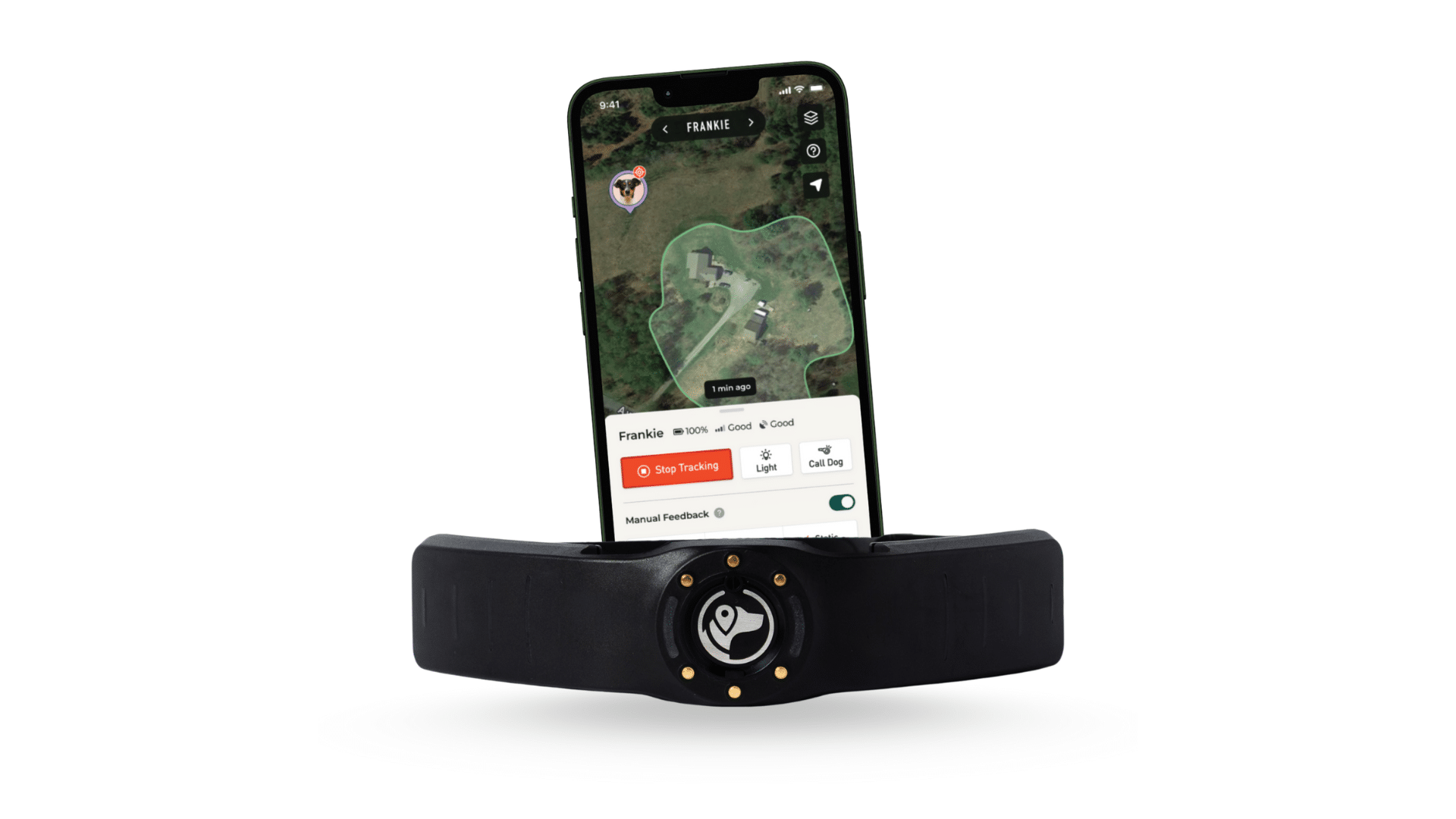
SpotOn GPS Dog Fence. Nova Edition
The SpotOn Nova is the most accurate, most flexible GPS dog fence you can buy, and the only premium GPS system with no monthly fee to run the fence itself. You pay a steep $999 up front and you live with a chunky collar, but for big dogs on open or rural land, nothing contains a trained dog more reliably.
SpotOn GPS Dog Fence. Nova Edition at a glance
| Price | $999 (Nova Edition, one collar), direct from SpotOn |
|---|---|
| Subscription | NONE to run the fence · optional live-tracking add-on ~$9.95/mo |
| Range / acreage | No acreage limit · custom boundary from ~1/3 acre · up to 20 saved fences |
| Battery life | ~22 hr typical use (8 to 24 hr by mode) · full charge in ~1 hour |
| GPS accuracy | True Location™ + ~128 satellites · ~3 ft normal, ~5 ft in Forest Mode |
| Dogs supported | One collar per dog · add collars for a multi-dog home |
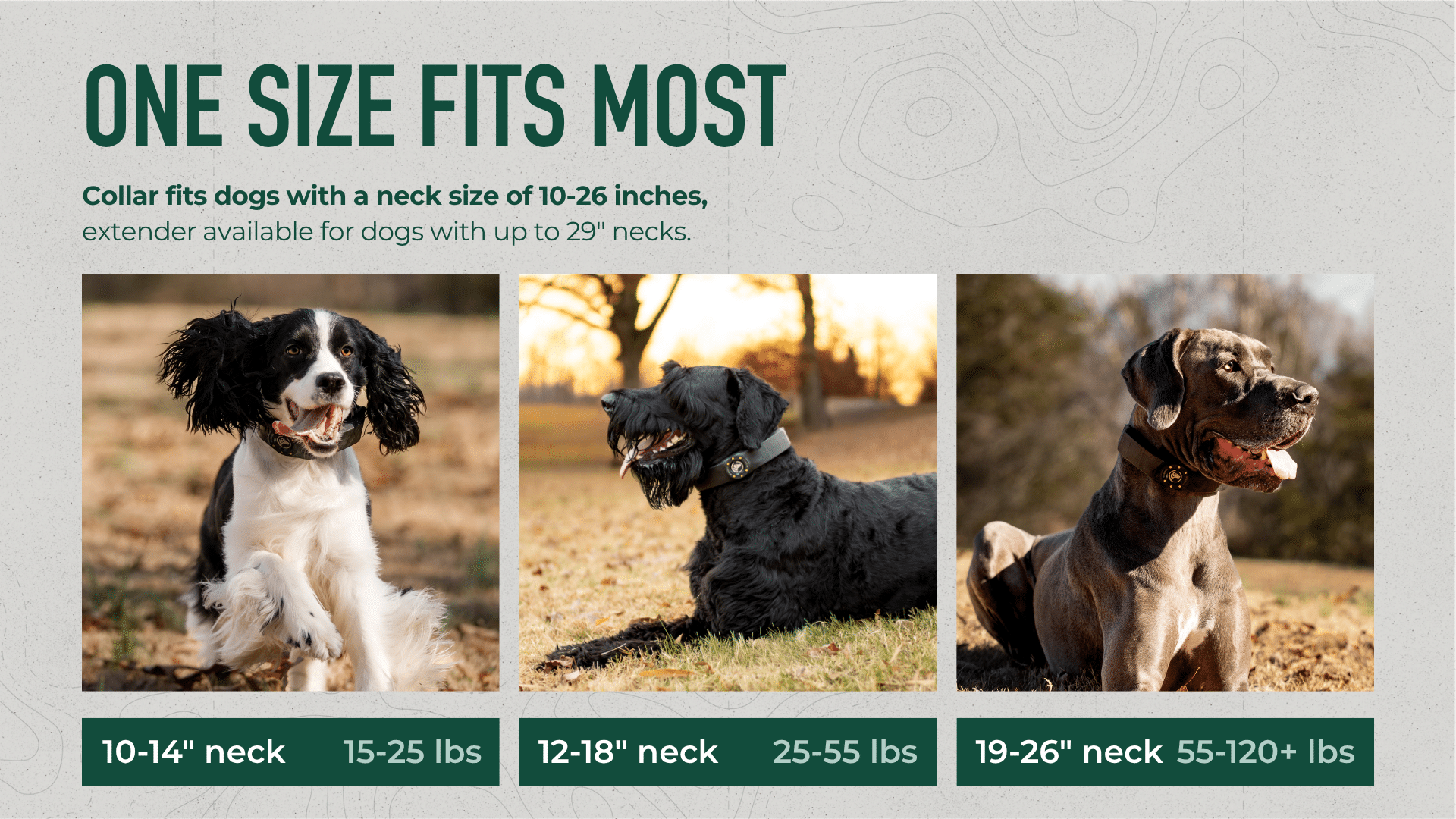
| Collar fit / weight | Fits necks ~10″ and up · large, chunky housing · IP67 waterproof |
| Warranty | 1-year warranty · 90-day return policy |

Who the SpotOn Nova is for (and who should skip it)
If you have landed on this SpotOn GPS fence review asking the obvious question, is SpotOn worth it?, here is the short answer: for the right dog on the right land, yes, and it is not close. The SpotOn GPS Dog Fence Nova Edition is built for owners with open or rural property, acreage, a farm, a wooded lot, a cabin, a rental you can’t dig up, who want to contain a large, trainable dog without burying a single foot of wire or planting a transmitter on the porch. Because the boundary lives in software on the collar and in the SpotOn app, you draw it by walking your own property line, save it, and reshape or relocate it whenever you like.
It is the right tool when three things are true: you have a clear-ish view of the sky (open fields, scattered trees, or canopy you can manage with Forest Mode), you have a dog with a stable temperament that already takes basic direction, and you have the patience to train to the boundary over a week or two. Match those and the Nova does something no wired or radio fence can: it gives you any shape, any size, anywhere, and it travels with you.
Who should skip it? Anyone fencing a small city yard, you are paying premium money for capability you’ll never use, and a budget radio fence or an in-ground wire will be cheaper and tighter. Owners of a dog that bolts at any cost regardless of correction. And anyone on a tight budget: at $999 the Nova costs three to five times a conventional containment system, and that price is the single biggest reason people walk away. If money is the deciding factor, read our SpotOn vs Halo comparison before you buy, the Halo is cheaper up front but charges a mandatory monthly fee, which changes the math completely.
How the SpotOn GPS fence actually works (True Location™, no wire, no base station)
A SpotOn fence is a true virtual fence, and it is worth being precise about what that means, because the category is full of look-alikes that work very differently. There is no buried wire, like an in-ground system. There is no plug-in transmitter throwing a circular radio bubble, like a cheap wireless fence, and so there is no shrinking circle near walls and metal, and no fixed shape. And there is no base station at all. The collar itself is the entire system: it carries a GPS receiver, the correction hardware, the battery, and the boundary you drew.
To set a fence you open the app, stand at your land, and walk the perimeter you want, or drop a center point and dial a radius. The collar then constantly compares its own satellite position against that saved boundary. As your dog approaches the edge it gets a warning tone; ignore the tone and it escalates to vibration and then static, each at levels you set. Step back inside and everything stops.
What separates the Nova from every budget GPS collar is True Location™, SpotOn’s patented positioning tech, paired with a receiver that locks onto roughly 128 satellites. Cheap GPS collars read a raw, jittery position that drifts several feet at random, fine for a tracker, dangerous for a fence, because false drift means false corrections. True Location™ filters and corrects that jitter so the boundary stays put. In independent GPS-performance testing, SpotOn has posted the highest containment success rate of any GPS fence tested, and it shows in use: the line is stable, repeatable, and, critically, it does not require cell service to enforce the fence. The collar contains your dog whether or not it has a signal to your phone. See where it fits among the field in our best GPS dog fence guide.
GPS accuracy, drift & Forest Mode, the real-world story
Accuracy is the whole ballgame for a GPS fence, so let’s be honest about it. Under open sky, SpotOn holds the boundary to roughly three feet, genuinely impressive, and tight enough to fence close to a road or a property line. Add heavy tree canopy and raw GPS would normally fall apart; SpotOn answers with Forest Mode, which changes how the collar weighs its satellite data and keeps accuracy to around five feet even under cover. That is the feature that lets the Nova work on the wooded lots where most GPS collars are useless.
It is not magic, and reviewers who tested it hard found the edges. The collar refreshes its position roughly every five seconds rather than truly continuously, so a fast dog at a dead sprint can cross the line before the next position check fires a tone, meaning a determined runner can occasionally get out without a correction. Standing right against a tall building or in a deep ravine can still nudge the position by five to ten feet. The practical takeaway: give yourself a buffer when you draw the fence (don’t run the line right up to a busy road), keep the boundary clear of the densest canopy where you can, and understand that GPS containment is excellent but not the inch-perfect, instantaneous wall that a buried wire gives you. For most big-dog owners on real acreage, that trade is more than worth it, wire simply can’t cover the land.
Battery, charging, fit & durability (IP67)
SpotOn quotes an 8-to-24-hour battery window depending on how hard the collar is working, fence-only sips power, while constant live tracking drains it fast. In real-world use most owners land around twenty-two hours of typical mixed use per charge, and a few heavy-tracking testers reported closer to half that. The saving grace is fast charging: a full top-up takes about an hour, so a quick charge over breakfast covers a normal day. Plan to charge nightly and you’ll never think about it; forget for two days and the dog is unprotected, which is the one battery habit you have to build.
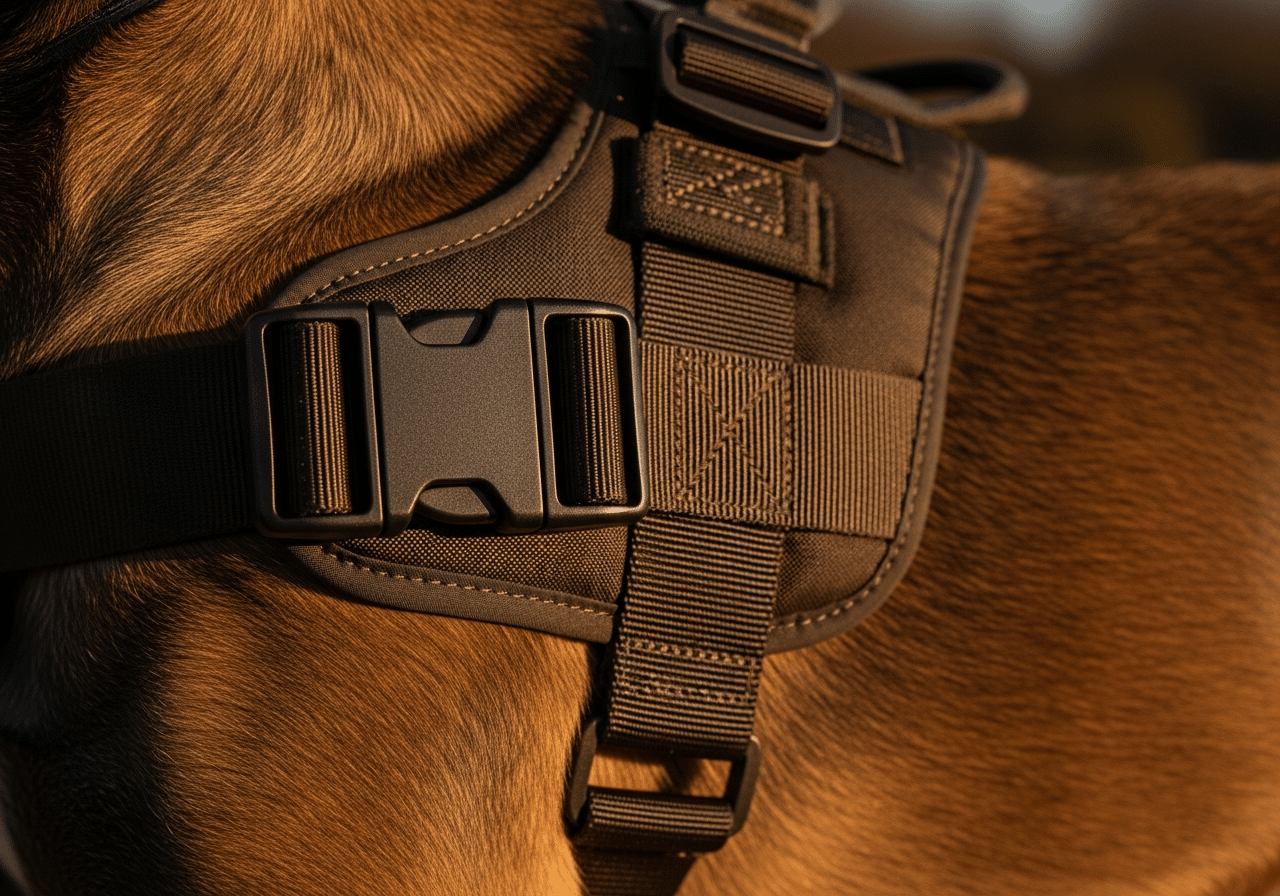
The collar is rated IP67 waterproof, fully submersible for short periods, so rain, mud, ponds and creeks are non-issues. Build quality is excellent and the strap and buckle hold up to genuine abuse. The honest catch is the size: this is a large, chunky housing, noticeably bigger than a normal collar, because it packs a GPS antenna and a real battery. On a Lab, a shepherd, a retriever or any big dog it looks proportionate and sits fine; it fits necks from about ten inches up. On a small dog it is simply too much hardware, another reason the Nova is squarely a big-dog product. Nobody buys SpotOn for looks, but the bulk is the price of the antenna that makes the accuracy possible.
No subscription for the fence, the SpotOn vs Halo cost difference
Here is the line that matters most for shoppers comparing premium GPS fences, and it is the reason SpotOn keeps winning the “no monthly fee” searches: the SpotOn fence has no subscription. You pay $999 once and the containment fence runs forever, no cellular plan, no membership, no recurring charge to keep your dog safe. The only optional cost is a live GPS tracking add-on at roughly $9.95 a month if you want to watch your dog’s location and breadcrumb trail on a map from anywhere. That subscription is entirely optional and the fence works fully without it.
Contrast that with the Halo Collar, SpotOn’s main rival. Halo is cheaper up front, around $524, but it requires a paid membership to function, so the fence stops being a one-time purchase and becomes a perpetual bill. Over two or three years of ownership the “cheaper” Halo can cost as much as or more than SpotOn, while a SpotOn owner who skips tracking pays nothing after day one. That is the whole case for SpotOn on price: it is expensive once instead of forever. We break the head-to-head down spec by spec in SpotOn vs Halo, and if avoiding any recurring fee is your top priority, SpotOn is the clear answer.
SpotOn backs the hardware with a one-year warranty and a 90-day return window, so you can put it on your dog, train for a few weeks, and send it back if it doesn’t fit your land, a meaningful safety net at this price.
Setup, training & the app
Physical setup is genuinely fast: charge the collar, open the app, and walk your property line to draw a custom fence, or drop a pin and set a radius. You can save up to about twenty fences, your house, the in-laws’ farm, the lake cabin, and switch between them, which is what makes the Nova a travel-friendly system rather than a fixed install. The app also handles keep-out zones (a pool, a garden, a chicken run) carved inside the main boundary, plus optional live tracking with a breadcrumb trail if you add the subscription. There is no plug-in transmitter to position, no wire to trench, and nothing to splice, for an owner who has wrestled with an in-ground install, the difference is night and day, and it’s a big part of why people willing to pay the price rarely regret it.
The work that actually makes the fence succeed is training, and SpotOn helps more than most: every purchase includes a free 30-minute virtual session with a certified trainer. The method is standard and humane, flags on the boundary, a long line, and walking the dog toward the edge so it learns the tone means “turn around” well before any static is ever used. Keep sessions short and positive, reward the retreat, and use the lowest correction level that gets a response. Most dogs respect the line reliably after one to two weeks of consistent practice. Rush it and you’ll get an anxious dog or a runner; do it patiently and the boundary becomes second nature. SpotOn is honest about this in its own marketing, the system is a trained, learned boundary, not a physical wall, and the training is on you.
A fair criticism reviewers raise is that the in-app training content is thinner than what a rival like Halo bundles, which leans on a structured, guided program. SpotOn’s answer is the live trainer call plus a library of short videos, enough to get a motivated owner through it, but if you want your hand held step by step every day, you’ll feel the gap. For most experienced big-dog owners that’s a non-issue; for a true first-timer it’s worth weighing.
SpotOn vs wireless and in-ground fences, which boundary type wins
Stepping back from the brand fight, it helps to place SpotOn against the two older containment technologies, because the right answer genuinely depends on your land. An in-ground wire fence is the most precise option ever made: you bury a wire, the boundary is razor-sharp, it holds right up to a property line, and it works perfectly under the densest trees because it doesn’t rely on the sky at all. The price you pay is labor, trenching the whole perimeter, and permanence: once the wire is down, the shape is fixed and the fence can’t travel with you. For a small, wooded, or tightly bounded suburban yard, in-ground is still the value king.
A traditional radio (wireless) fence needs no digging, but it only projects a circular bubble around a plug-in transmitter, that circle shrinks and warps near walls and metal, and it tops out at roughly half an acre. It’s cheap and quick, and for a flat round backyard it’s fine, but it can’t do shapes, can’t cover acreage, and can’t leave the house.
The SpotOn GPS fence is the only one of the three that gives you any shape, any acreage, anywhere, with nothing to install, and, with True Location™ and Forest Mode, it’s the only GPS system accurate and tree-tolerant enough to actually trust on real land. Its weaknesses are the flip side of that freedom: it’s the priciest, it isn’t inch-perfect, and the ~5-second refresh leaves a sliver of risk with a sprinting dog. The clean rule of thumb: pick in-ground for a small or wooded yard where you’ll never move, a radio fence for a small flat circle on a budget, and SpotOn when you have acreage, irregular land, multiple properties, or simply can’t dig, which is exactly the situation most large-breed owners on rural land find themselves in.
Is the SpotOn Nova worth $999? For a big, trainable dog on open or rural land, yes, it is the most accurate GPS fence on the market, the only premium one with no fee to run the fence, and the most flexible way to contain a dog where wire can’t go. Go in clear-eyed about the price, the chunky collar, the ~5-second refresh, and the training you’ll have to do. Get those right and nothing else comes close.
Pros & catches
What we like
- Most accurate GPS fence tested. True Location™ + ~128 satellites holds ~3 ft (5 ft in Forest Mode)
- NO subscription to run the fence, a one-time $999, unlike the membership-locked Halo
- Any shape, any acreage, anywhere, walk your own boundary, save up to ~20 fences, travels with you
- Works under tree cover via Forest Mode and contains the dog even with no cell signal
- IP67 waterproof, tough build, fast ~1-hour charge, free trainer session + 90-day returns
The catches
- Expensive, $999 up front is 3 to 5× a conventional containment system
- Large, chunky collar; too much hardware for small dogs (big-dog product)
- ~5-second position refresh means a flat-out sprinting dog can occasionally beat the tone
- Real-world battery (~22 hr typical) needs near-nightly charging; heavy tracking drains it faster
SpotOn GPS Dog Fence. Nova Edition FAQs
Is the SpotOn GPS fence worth it?
For a large, trainable dog on open or rural land, yes. SpotOn is the most accurate GPS fence available, it works under tree cover with Forest Mode, and it has no monthly fee to run the fence, you pay $999 once. It is not worth it for a small city yard (a cheaper radio or wired fence is better) or for a dog that bolts regardless of correction. The 90-day return policy lets you test it on your own land before committing.
Does the SpotOn fence require a subscription?
No, the containment fence has no subscription. You pay for the collar once and the fence runs forever with no membership or cellular plan. The only optional cost is a live GPS tracking add-on at about $9.95 a month if you want to watch your dog’s location on a map; the fence works fully without it. This is the key difference from the Halo Collar, which requires a paid membership to function.
How accurate is the SpotOn GPS fence?
Under open sky SpotOn holds the boundary to about three feet, thanks to its patented True Location™ technology and a receiver that reads roughly 128 satellites. Under heavy tree canopy, Forest Mode keeps accuracy to around five feet. The one limitation is that the collar refreshes its position about every five seconds rather than continuously, so a dog sprinting flat-out can occasionally cross the line before a tone fires. Drawing the boundary with a buffer from roads solves this in practice.
How long does the SpotOn battery last?
SpotOn quotes an 8-to-24-hour range depending on use, fence-only mode lasts longest, constant live tracking drains it fastest. In typical mixed use most owners get around twenty-two hours per charge. A full charge takes about an hour, so charging nightly keeps the dog protected without thinking about it. If you run live tracking all day, expect to charge more often.
Is SpotOn better than Halo?
They win on different things. SpotOn is more accurate, works better under trees, and, most importantly, has no monthly fee to run the fence, so it is a one-time $999 cost. Halo is cheaper up front (around $524) and adds built-in training content, but it requires a paid membership to function, so over a few years it can cost as much as or more than SpotOn. Choose SpotOn for accuracy and no recurring fee; consider Halo if the lower entry price and guided training matter more. See our full SpotOn vs Halo comparison for the spec-by-spec breakdown.