 Dog Gear, Sized Right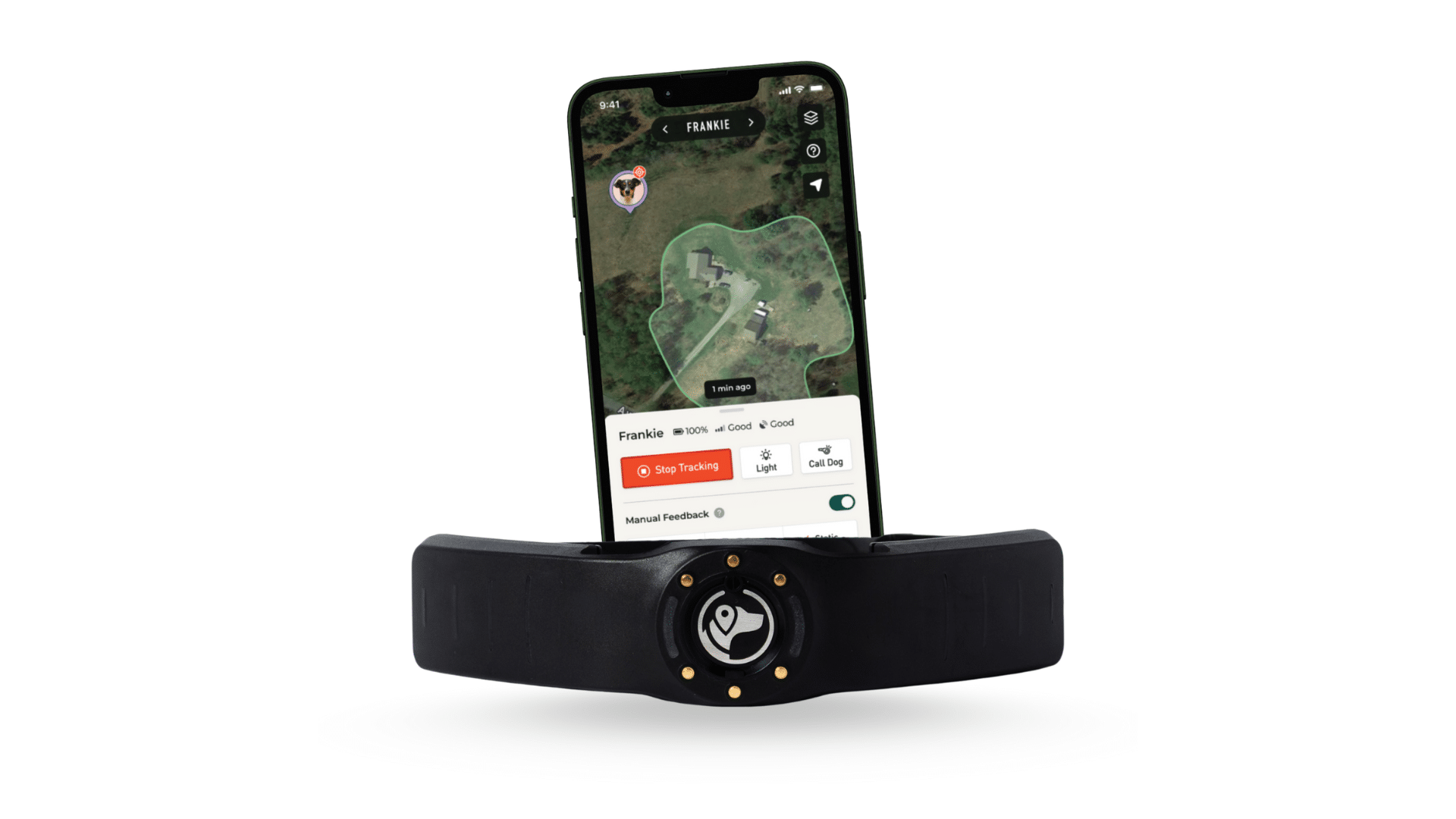
GPS vs Wireless vs Wired Dog Fence: Which Type Is Best?
Three ways to fence a dog without a real fence, satellite GPS, plug-in wireless, and buried in-ground wire. Here’s how they actually differ, and which one fits your yard, your dog and your budget.
If you’re weighing GPS vs wireless dog fence, or wondering how either compares to an old-school buried in-ground (wired) fence, the honest answer is that all three contain a dog, but they trade off three things differently: accuracy, how hard they are to install, and how much land and what shape they can cover. A wired fence is the most precise but you have to dig. A wireless fence is the easiest to set up but only makes a fixed circle. A GPS fence is the most flexible, any shape, any size, anywhere, and it’s quietly become the best-of-class for big, open or irregular yards. Below we put all three side by side, then help you match the right type to your situation so you only buy once.
Our picks: a GPS fence and a wireless fence worth buying
We rank a GPS fence first for flexibility on real property, with a classic wireless fence as the budget pick for a small flat yard. Each is verified in stock, tap through for the live price.
SpotOn GPS Dog Fence (Nova)
The modern best-of-class. A satellite (GPS) fence that needs no digging and no plug-in box, you walk any shape boundary on any size land, and there’s no monthly fee to keep it running. The pick for big, open, wooded or irregular yards where a wire is impractical.
What we like
- No digging and no transmitter box, set the fence by walking it on your phone
- Any shape, any size, anywhere; reshape it or take it to a second property
- Tightest GPS accuracy (~2 to 5 ft) with a Forest Mode for wooded land
- No monthly fee to run the fence, you own it outright
The catches
- Highest up-front price of the three fence types
- Collar is large, best for medium-to-large dogs, not toy breeds
- Needs reasonably open sky; charge the collar daily
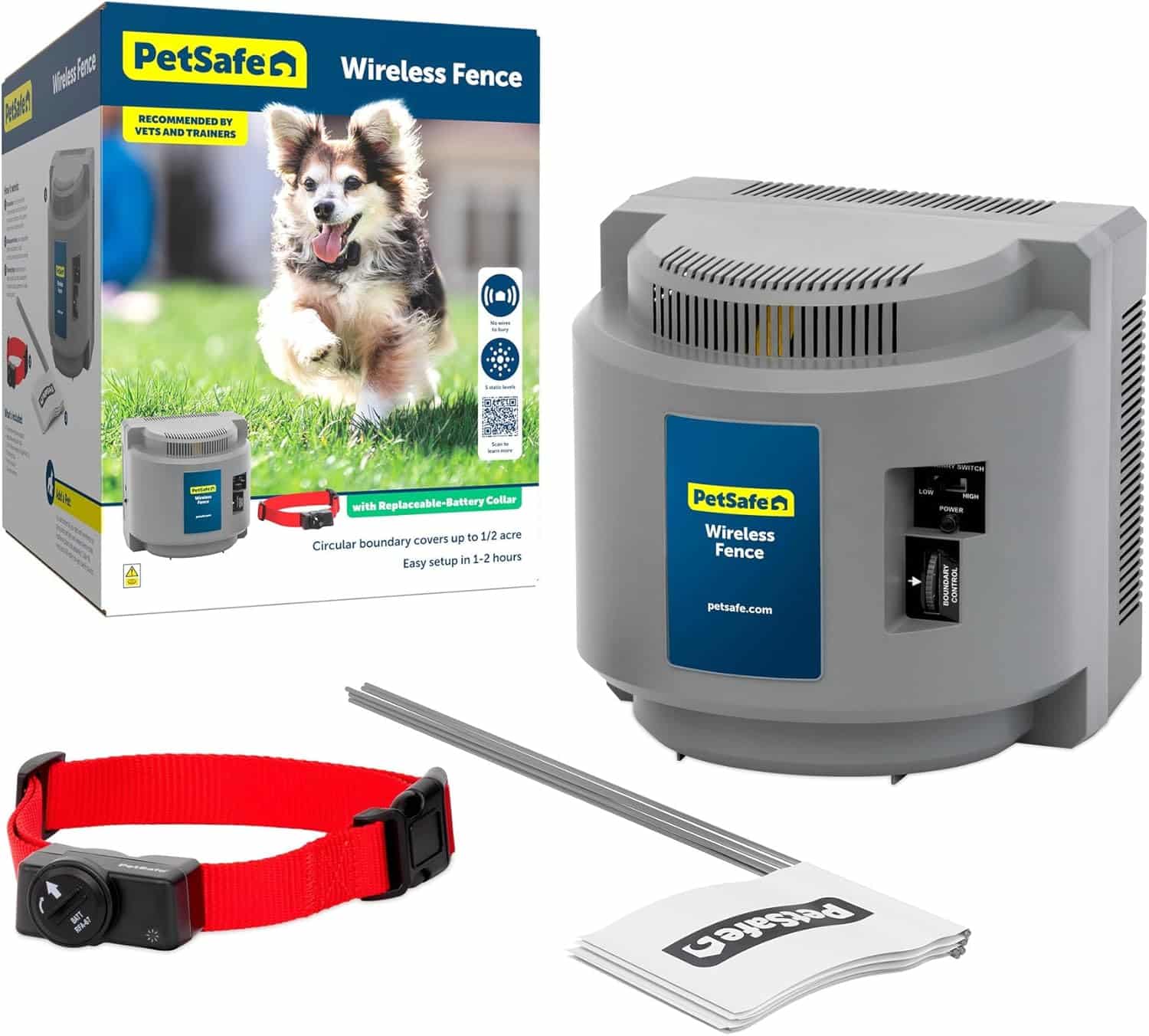
PetSafe Stay & Play Compact Wireless Fence
A classic wireless (radio) fence: a plug-in transmitter makes a circular boundary up to ¾ acre with no wire to bury. The cheap, fast, portable pick for a small, flat, simple yard or a rental, just know the boundary is a fixed circle and can wobble near walls and metal.
What we like
- Easiest install of all, plug in the base, set the radius, done in minutes
- Portable: unplug it and take it to a new home or the cabin
- Light collar fits dogs from 5 lb and up, including smaller breeds
The catches
- Boundary is a fixed circle you can’t reshape to your lot
- Signal wobbles near walls, metal and slopes; wants flat, open ground
- Caps out around ¾ acre, no good for large or irregular property
GPS vs wireless vs wired dog fence at a glance
Here’s the head-to-head on the five things that actually decide which type of dog fence is best for you: how accurate the boundary is, how much work it is to install, how much land and what shape it covers, what it costs, and whether you can pack it up and move it. All three are “invisible” fences, there’s no physical barrier; the dog wears a collar that warns it as it nears the line, but they create that line in completely different ways.
| Wired (in-ground) | Wireless (radio) | GPS (satellite) | |
|---|---|---|---|
| Boundary | Buried wire, any shape you dig | Fixed circle around a plug-in box | Any shape, drawn in software |
| Accuracy | Best, razor-sharp, inches | Wobbly near walls/metal/slopes | ~2 to 16 ft; ~2 to 5 ft on premium gear |
| Install effort | High, trench & bury wire | Lowest, plug in, set radius | Low, walk or draw the line |
| Land size | Any size; expandable to 25+ acres | Small, ~⅓ to ¾ acre circle | Any size, large acreage, no upper limit |
| Best terrain | Any, works under trees, to the line | Flat & open only | Open sky; premium units handle trees |
| Cost | Cheap hardware; install labor adds up | Low to mid (~$150-$350) | High up front ($500-$999) |
| Portable? | No, it stays in the ground | Yes, unplug and move | Yes, reshape or relocate anytime |
| Collar / dog size | Lightest collar; fits small dogs & cats | Light; dogs ~5 lb and up | Larger collar; dogs ~20 lb and up |
| Subscription | None | None | None on SpotOn; Halo requires one |
The short version: choose wired for inch-perfect edges on any yard if you don’t mind digging; choose wireless for the cheapest, fastest fence on a small flat lot; choose GPS for large, open, wooded or irregular land where flexibility matters more than a razor edge. The rest of this guide explains why.
How each type of dog fence works
The three fences solve the same problem, keep a dog inside a line without a physical barrier, using three different technologies. Understanding the mechanism is the fastest way to see which one fits your land.
Wired (in-ground) fence
A wired fence, the original “invisible fence”, works by burying a thin wire around the perimeter of your yard. That wire carries a radio signal, and the dog’s collar beeps as it nears the wire, then delivers a static correction if it keeps going. Because you lay the wire, the boundary can be any shape: around flower beds, along a property line, through woods. It’s the most precise of the three, the line is exactly where the wire is, down to a few inches, and it works under tree cover and right up to the edge of your land. The trade-off is the install: you dig a shallow trench (or use a lawn edger) and bury the wire all the way around, which is real labor and sometimes a job for a pro.
Wireless (radio) fence
A wireless fence skips the digging entirely. You plug a transmitter into an outlet, and it broadcasts a radio signal in a circle around itself; the collar corrects the dog when it leaves that circle. Setup takes minutes, set the radius and you have a fence. The catch is baked into the physics: the boundary is always a circle centered on the box, so you can’t shape it to an L-shaped lot or square yard, and the signal gets distorted by walls, metal sheds, cars and slopes, making the real-world edge fuzzy. Most cover up to about ¾ of an acre. It shines on a small, flat, open yard and for renters who’ll take it with them.
GPS (satellite) fence
A GPS fence replaces both the wire and the radio box with satellites. The collar knows where it is from GPS, and you set the boundary in an app, usually by walking the perimeter or drawing it on a map. There’s nothing to bury and nothing to plug in, you can make any shape at any size, and you can save several fences for different locations. The trade-off is precision: GPS isn’t inch-perfect, and a cheap unit’s boundary can drift several feet (competitors cite up to ~16 ft) under heavy tree canopy or near tall buildings. Premium systems like SpotOn tighten that to roughly 2 to 5 feet with multi-satellite positioning. We dig into the realism of the tech in our do GPS dog fences actually work explainer.
Wired (in-ground) fence: pros and cons
The buried-wire fence is the old reliable. It’s the most precise containment you can get without a physical fence, and the hardware is cheap, the cost and effort are all in the install.
Where it wins:
- Pinpoint, custom boundary, the line is exactly where you bury the wire, so you can hug a property line, wrap a garden bed, or follow an irregular lot edge to the inch.
- Works anywhere, under trees, on slopes, near buildings; signal interference that breaks a wireless or GPS fence doesn’t faze a wire in the ground.
- Any size, expandable, covers tiny yards up to many acres (PetSafe’s in-ground systems expand to 25+ acres with more wire).
- Lightest collar & long battery, the receiver is small enough for cats and toy breeds, and many systems carry long or lifetime warranties; owners report 20-year lifespans.
Where it falls short:
- You have to dig, trenching and burying wire around the whole perimeter is labor-intensive and may need a contractor.
- Fixed and not portable, once it’s in the ground, the shape is set and it stays with the house if you move.
- Wire breaks, a cut or damaged wire takes the whole fence down until you find and splice the break.
Wireless (radio) fence: pros and cons
The wireless fence is the convenience play. It’s the cheapest and fastest fence to stand up, with the big asterisk that you’re stuck with a circle.
Where it wins:
- Easiest install, period, plug in the transmitter, dial in the radius, done in minutes. No digging, no wire, no tools.
- Portable, unplug it and take it to a rental, a new home, a campsite or grandma’s place.
- Affordable, typically the lowest total cost, and a light collar that fits dogs from about 5 lb up.
Where it falls short:
- Circle only, the boundary is always a circle around the box; you can’t shape it to a square yard or an irregular lot, so part of your usable space is always wasted or out of bounds.
- Signal wobble, walls, metal, cars, electronics and slopes distort the radio field, so the real edge moves around and the fence performs best on flat, open ground.
- Size cap, most top out near ¾ acre, ruling out large property.
Our pick here is the PetSafe Stay & Play Compact Wireless Fence, a proven, no-dig circle up to ¾ acre that fits dogs 5 lb and up. It’s the right tool for a small, flat, simple yard, not a large or oddly shaped one.
GPS (satellite) fence: pros and cons
The GPS fence is the flexible, modern option, and for big-dog owners on real land, often the only practical one. It trades a little precision for the freedom to fence any shape, any size, anywhere, with nothing to install.
Where it wins:
- Any shape, any size, anywhere, walk or draw the boundary in an app; fence a half-acre or large acreage, in whatever shape your land takes.
- No digging and no box, the satellites are the system, so setup is fast and there’s nothing buried to break.
- Portable & multi-location, reshape the fence anytime, and save separate fences for the cabin, the in-laws’ place or a move.
- Scales to property a wired or wireless fence can’t, the natural choice for rural, wooded or large open land.
Where it falls short:
- Least pinpoint. GPS isn’t inch-perfect; budget units can drift several feet under canopy or near buildings (premium units like SpotOn hold ~2 to 5 ft).
- Needs open sky, heavy tree cover or tall structures degrade the signal.
- Bigger collar, higher price, daily charge, the collar suits dogs ~20 lb and up, costs the most up front, and needs charging daily.
- Watch for subscriptions, some brands (Halo) require a monthly membership for the fence to work; SpotOn charges no fee at all.
For the GPS slot we rank SpotOn first: it has the tightest accuracy of any GPS fence, no upper limit on property size, a Forest Mode for wooded land, and, crucially, no subscription. If you’re cross-shopping the two big GPS brands, see our SpotOn vs Halo comparison.
Which type of dog fence is best for your yard?
There’s no single best dog fence, there’s a best fence for your land, your dog and your budget. Match yourself to the situation below:
- Small, flat, simple yard on a budget → wireless. If your usable area is a roughly round patch under ¾ acre with no big slopes or metal structures, a wireless fence is the cheapest, fastest answer, and you can take it with you.
- Tight, wooded or oddly shaped lot where edges matter → wired (in-ground). If you need the boundary to hug a property line, wrap beds, work under heavy trees, or fit a small dog or cat, a buried wire is the most precise and the cheapest hardware, as long as you’ll do the digging.
- Large, open, rural or irregular land → GPS. If you have acreage, a wooded or rural property, or a yard a wire can’t practically cover, GPS is the flexible choice: any shape, any size, set up by walking it. It’s also the pick for anyone who wants to fence a second location or hates the idea of trenching.
- Renter or frequent mover → wireless or GPS. Both are portable; wireless is cheaper for a small flat space, GPS is better if your rentals vary in size and shape.
For the full ranked field of GPS options, see our best GPS dog fence guide.
What’s better than an invisible fence?
When people say “invisible fence,” they usually mean the classic buried-wire system, and the most common question we get is whether anything has improved on it. For the right yard, yes: a GPS fence is the modern upgrade to the wired invisible fence. It gives you the same wire-free containment without the two things people dislike most about the in-ground version, the digging and the permanence.
Here’s the practical comparison. A wired invisible fence forces you to trench and bury wire around your whole perimeter, locks the shape in once it’s down, leaves it behind if you move, and can fail when the wire breaks. A GPS fence has nothing to bury, no wire to cut, any shape you like, and you can reshape it or take it with you. It also fences land far larger than a typical wire job and can be moved to a second property in minutes.
The one place the old invisible fence still wins is raw precision and small-dog fit: a buried wire is inch-perfect and uses a tiny collar, while GPS holds a few feet and uses a bigger one. So if you have a tiny lot, a toy breed, or you genuinely need the boundary on the inch, the wire still has a place. But for most owners with real yard space who want freedom from digging, a quality GPS fence like SpotOn is the better answer to “what’s better than an invisible fence”, and there’s no monthly fee to run it. If a wireless circle would cover your yard and budget is the priority, that’s the other no-dig alternative; just remember it can’t be shaped to your lot.
GPS vs wireless vs wired: the bottom line
All three keep a dog home, so the decision is really about your land and how much install work you’re willing to do:
- Buy a wired (in-ground) fence if you want inch-perfect edges on a tight, wooded or irregular yard, you have a small dog or cat, and you don’t mind digging once.
- Buy a wireless fence if your yard is small, flat and simple, you want the cheapest fence you can set up in minutes, or you’re a renter who needs to take it along.
- Buy a GPS fence if you have large, open, wooded or irregular property, you want any shape without digging, or you want a fence you can reshape and move. For most big-dog owners on real acreage, it’s the only practical choice, and SpotOn is our top pick because it’s the most accurate GPS fence and charges no subscription.
Whichever direction you lean, start with our best GPS dog fence roundup, then read the full SpotOn review or the SpotOn vs Halo comparison before you commit. And whichever type you pick, plan on one to two weeks of patient training, that, more than the technology, is what makes any invisible fence reliable.
Keep comparing the GPS-fence field
GPS vs wireless vs wired: common questions
Which is better, a wired or wireless dog fence?
It depends on your yard. A wired (in-ground) fence is more precise and far more flexible, you bury the wire in any shape, it works under trees and on slopes, and it covers any size of property. A wireless fence is easier to install and portable, but it only makes a fixed circle (up to about ¾ acre) and its signal wobbles near walls, metal and uneven ground. Choose wired for an irregular, wooded or larger yard where you want a precise boundary; choose wireless for a small, flat, simple yard or if you rent and want to take the fence with you.
What’s better than an invisible fence?
For most owners with real yard space, a GPS fence is the modern upgrade to the classic buried-wire invisible fence. It gives you the same wire-free containment with nothing to dig or bury, lets you make any shape at any size, and can be reshaped or moved to a second property, none of which a wired fence can do. The old invisible fence still wins on raw precision and small-dog fit, so it’s the better pick for a tiny lot or a toy breed. But for a larger or irregular yard, a quality GPS fence like SpotOn is generally the better answer, with no monthly fee to run it.
Do GPS dog fences need a subscription?
Some do, some don’t, it depends on the brand. SpotOn has no subscription: you buy the collar once and the fence works forever (it sells an optional live-tracking plan, but the fence runs without it). Halo requires a paid Pack Membership for the fence to function, stop paying and the containment stops. Wired and wireless fences never have a subscription. If avoiding a recurring fee matters to you, SpotOn is the GPS pick; see our SpotOn vs Halo comparison for the full breakdown.
Are GPS dog fences as accurate as a wired fence?
No, a buried-wire fence is the most accurate type, holding the boundary to within inches because the line is literally where the wire sits. A GPS fence is less pinpoint: budget units can drift several feet (some sources cite up to about 16 feet) under heavy tree cover or near tall buildings, while premium systems like SpotOn tighten that to roughly 2 to 5 feet with multi-satellite positioning. For most open or large yards the GPS margin is fine; if you need the boundary on the inch, say, right against a road or a small lot, the wire is safer.
Can I use a wireless or GPS fence on a large or wooded property?
For a large property, GPS is the answer, a quality GPS fence has no real upper size limit and can be drawn in any shape, whereas a wireless fence caps out around ¾ acre and a wired fence would need an enormous amount of buried wire. Heavily wooded land is harder: dense canopy degrades GPS signal, so budget units drift and a wired fence (which works under trees) can be more reliable. Premium GPS systems like SpotOn add a Forest Mode that holds accuracy under tree cover better than most. See our large-property GPS fence guide for the details.