 Dog Gear, Sized Right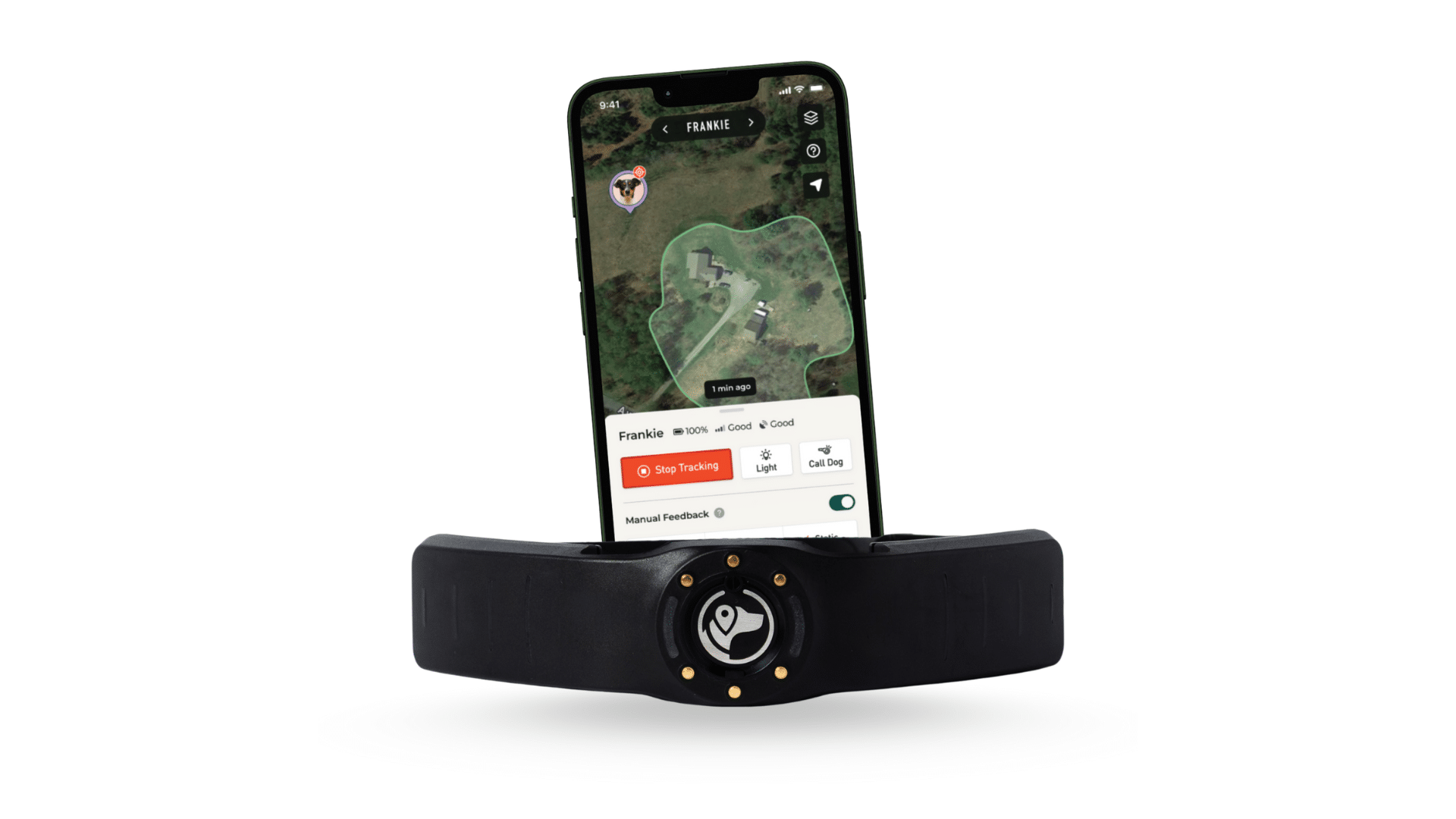
SpotOn vs Halo: Which GPS Dog Fence Wins?
Two premium GPS dog fences, two very different deals. We compare price, subscription, accuracy, range, battery and training to settle which one actually wins.
If you’re choosing between SpotOn vs Halo, you’ve narrowed it to the two best wireless GPS dog fences on the market, and the right answer comes down to one number you won’t see on the box: the cost of ownership over time. SpotOn costs far more up front but charges nothing to keep the fence running. Halo is cheaper to buy but requires a paid Pack Membership for the fence to work at all. Below we put them head to head on price, subscription, GPS accuracy, range, battery, training and the app, with a clear verdict and a use-case guide so you buy the right one the first time.
Our verdict at a glance: the two GPS fences ranked
We rank SpotOn first for cost of ownership and accuracy, with Halo a strong value runner-up. Each pick is verified in stock, tap through for the live price.
SpotOn GPS Dog Fence (Nova)
The only premium GPS fence with no monthly fee to keep the boundary working, plus the tightest real-world accuracy (True Location™, 128+ satellites) and no upper limit on land size. Costs more up front, costs nothing to own.
What we like
- No monthly fee to run the fence, you own it outright
- Tightest accuracy (2 to 5 ft) and best performance under trees (Forest Mode)
- No upper limit on property size; walk any shape boundary
- Free 30-minute call with a certified trainer included
The catches
- Highest up-front price ($999 Nova / $899 Omni)
- Battery is shorter than Halo’s (~22 hr typical)
- Collar is large, better suited to medium-to-large dogs

Halo Collar (5 / 4)
Lower entry price and a slicker health-tracking app, but the fence only works while you pay the Pack Membership (from ~$9.99/mo). Great in open suburban yards; the recurring cost adds up over the collar’s life.
What we like
- Lower hardware price than SpotOn
- Longest battery life, up to 48 hours
- Polished app with activity & health tracking, indoor beacons
The catches
- Pack Membership is mandatory, the fence stops without it
- Base plan limits you to 5 saved fences
- Accuracy can drift more (3 to 10 ft) than SpotOn near trees
SpotOn vs Halo at a glance
Here’s the head-to-head on the specs that actually decide it. Both are true wireless GPS fences, no buried wire, no plug-in transmitter box, but they differ most on the two things that hit your wallet: the up-front price and whether you pay a monthly fee to keep the fence working.
| Spec | SpotOn (Nova) | Halo (5 / 4) |
|---|---|---|
| Price (hardware) | $999 (Nova) / $899 (Omni) | ~$524 (Halo 4), $599 (Halo 5) |
| Subscription | None to run the fence. Optional live-tracking ~$7.49-$9.95/mo | Required. Pack Membership from ~$9.99/mo (~$8.49/mo annual), fence stops without it |
| GPS accuracy | ~2 to 5 ft (True Location™, 128+ satellites, 4 GNSS); best under tree cover (Forest Mode) | ~2 to 10 ft (Precision+ GPS); best in open/suburban yards |
| Range / property size | No upper limit; ~⅓-acre minimum boundary; 30+ saved fences | Works down to small (~0.2-acre) yards; 5 fences (base) up to unlimited (top plan) |
| Battery life | ~22 hr typical (33 to 40+ hr in lighter use); ~1 hr charge | Up to 48 hr; ~1 hr charge |
| Correction levels | 30 levels (tone, vibration, static) | 15 levels (tone, vibration, static) |
| Dogs supported | 1 collar per dog; add collars, app monitors all | 1 collar per dog; add collars |
| Training | Free 30-min call with a certified trainer; flag & long-line method | In-app program co-developed with Cesar Millan |
| App | Walk-your-own boundary, keep-out & home zones, breadcrumb trail, heatmaps, works off-grid | 20 location checks/sec, indoor Bluetooth beacons, activity & health tracking |
| Waterproof | IP67 | Waterproof (IP-rated) |
| Warranty / returns | 1-year warranty + 90-day return | 1-year warranty + 90-day trial |
The short version: SpotOn wins on accuracy, property size and total cost of ownership; Halo wins on up-front price and battery life. If you’ll keep the collar for more than a year or two, SpotOn is usually the cheaper choice once you add up the membership. See the best GPS dog fence roundup for where each lands against the rest of the field.
Who each GPS fence is for
Before the spec sheet, match the system to your situation, it decides the winner more than any single feature. These are the two most capable GPS fences sold, but they’re tuned for different owners.
SpotOn is built for serious, permanent containment on real land. If you own a big lot, acreage, a wooded or rural property, or a yard that backs onto a road or a neighbor’s line, SpotOn’s tighter boundary and unlimited property size are exactly what you need. It also suits the owner who hates recurring fees and wants to buy a fence once and be done, there’s no subscription to keep it running, ever. Because the collar is large, it pairs best with medium-to-large dogs, which happens to be the audience we build for here at My Little & Large.
Halo is built for the suburban yard and the budget-conscious buyer. If you have a smaller open lot, down to about a fifth of an acre, which SpotOn can’t fence. Halo fits where SpotOn won’t. It’s the better pick when the up-front price is the deciding factor, when you want the longest battery, or when you’d actually use the activity and health-tracking features its app layers on top of containment. It’s also the more sensible buy if you only need a fence for a season, a single move, or a rental you’ll leave.
Neither is right for a tiny city yard or a dog that bolts at any cost. A GPS fence is a learned, software boundary, not a physical wall, it needs a dog with a stable enough temperament to respect a warning tone, and open enough sky for a clean signal. If that doesn’t describe your situation, an in-ground wire or a real fence is the safer tool. With that framing set, here’s how the two compare feature by feature.
How each GPS fence works
Both fences replace a buried wire or a plug-in radio bubble with a software boundary the collar enforces from satellite positioning. You open the app, walk or draw your boundary on a map, and the collar warns the dog with a tone as it approaches the line, escalating to vibration or static if it keeps going. There’s no trenching and no base station, and because the fence lives in software, you can reshape it any time and take it anywhere. That portability is the headline advantage both share over a traditional invisible (wired) fence: no digging, any shape, and you can save a second boundary for the cabin or grandma’s house.
The difference is in the radio. SpotOn uses its patented True Location™ system, pulling from 128+ satellites across four GNSS networks and cross-checking positions so the boundary holds tight even under tree canopy, it ships a Forest Mode specifically for wooded land, and it can keep working off-grid where there’s no cell coverage. Halo uses Precision+ GPS with dedicated Wi-Fi and Bluetooth chips and adds indoor Bluetooth beacons so the collar behaves sensibly inside the house, where GPS alone struggles. Halo also checks the dog’s position up to 20 times per second for fast response.
In an open suburban yard both feel similar, the dog learns the line, hears the tone, turns back. The gap shows up at the edges: near trees, walls and metal, where reflected and blocked signal causes position “drift.” That’s where SpotOn’s dual-feed positioning pulls ahead and Halo, while improved with its latest hardware, is more prone to wander. Understanding that drift behavior is the key to the accuracy section below, because it dictates how much buffer you have to leave inside your property line.
Accuracy & containment reliability
This is the whole job of a GPS fence, and it’s where SpotOn earns its premium. In normal open conditions both hold the line to within a couple of feet. The separation appears in hard conditions:
- SpotOn: ~2 to 5 ft accuracy, holding to roughly 5 ft even under heavy canopy thanks to Forest Mode and its dual-feed True Location™ positioning. Reviewers consistently rate it the most reliable GPS fence for wooded and rural land.
- Halo: ~2 to 10 ft in good conditions, but independent testers have logged larger drift (tens of feet) near dense trees or tall structures. It’s excellent in open and suburban yards and improved again with the Halo 5 hardware.
If your land is mostly open, either contains a trained dog well. If it’s wooded, rural, or you need the boundary to run close to a road or property edge, SpotOn’s accuracy advantage is the deciding factor.
It’s also worth being honest about what no GPS fence does well: pinpoint containment in a tight urban yard surrounded by buildings, or instant enforcement for a dog already in full sprint. Position refreshes every few seconds, so a determined sprinter can clear a few feet before the correction lands. SpotOn’s faster, tighter fix shrinks that window; Halo’s 20-checks-per-second sampling helps on its side. But for either, the dog respecting the tone is what makes the system reliable, the hardware just buys you a smaller margin of error. We cover the realism of the technology in depth in our do GPS dog fences actually work explainer.
Subscription & true cost over time
This is the trap that flips the price comparison. Halo looks far cheaper, until you read that the fence only functions while you pay the Pack Membership. Stop paying and the containment features stop. SpotOn has no subscription to run the fence; you buy it once and own it. (SpotOn does sell an optional live-tracking plan, but the fence works fully without it.)
| Cost over time | SpotOn (Nova) | Halo (membership required) |
|---|---|---|
| Up front | $999 | ~$524-$599 |
| Year 1 (with sub) | $999 | ~$625-$720 (hardware + ~$100/yr) |
| Over 5 years | $999 | ~$1,025-$1,100+ (5 yrs of membership) |
Around the 4 to 5 year mark the lines cross: Halo’s recurring fee catches and passes SpotOn’s one-time price. The exact crossover depends on which Halo membership tier you choose, the base Bronze plan is cheapest but caps you at five saved fences, while Silver and Gold cost more for more fences, activity reports and live training. Step up a tier and the lines cross even sooner.
There’s also a difference that doesn’t show up in dollars. With SpotOn you own a functioning fence forever; with Halo, the containment is a service you rent, lapse the membership and the fence features switch off, so a missed payment or a cancelled card can leave your dog unfenced. For a safety device, a lot of owners value not having that dependency, regardless of the math.
So the cost verdict is genuinely use-case dependent. If you only need containment for a season or a single move, Halo’s lower entry cost wins outright. If this is your dog’s everyday fence for years, SpotOn is usually cheaper in the long run, and it’s never one missed payment away from going dark. We break the math down further in our Halo monthly fee explainer and our guide to the best GPS dog fence without a subscription.
Range, yard size & boundary setup
The two are built for opposite ends of the property spectrum, and matching the fence to your land matters more than the brand.
- SpotOn has no upper limit on property size, owners fence everything from a yard to large acreage, but it wants a minimum boundary of roughly a third of an acre, so it’s overkill for a tiny lot. You walk the perimeter with the collar in hand to set it, and you can save 30+ fences for different locations.
- Halo comfortably handles small yards down to about 0.2 acres, which SpotOn can’t, making it the better fit for a typical suburban lot. The catch is that the base membership tier limits you to 5 saved fences; you need a higher plan for 20 or unlimited.
For setup, SpotOn’s “walk it yourself” mapping is intuitive on irregular land; Halo lets you draw fences on the map and place indoor beacons. Both are dramatically faster than burying wire. For large or wooded acreage specifically, see our large-property GPS fence guide.
Battery life & daily ownership
This is Halo’s clearest win. The Halo 5 collar runs up to 48 hours on a charge, so for a dog that’s in and out all day it can stretch toward two days between charges. SpotOn is more modest, figure ~22 hours of typical use (more in lighter, passive use), so most owners charge it nightly. Both top up in about an hour, and both are waterproof for rain, mud and swimming.
In daily ownership, the practical difference is the routine: SpotOn slots into a “charge it overnight like a phone” habit, while Halo can skip a night. Neither is a dealbreaker, but if you have a dog that lives outdoors for long stretches or you’re forgetful about charging, Halo’s battery is genuinely more forgiving. A few real-world notes: turning on live tracking, running active GPS continuously, or cold weather all shorten either collar’s runtime, so treat the headline numbers as best-case. Both collars warn you in the app as the battery gets low, and both charge fully in roughly an hour, so even SpotOn’s nightly habit is quick.
Training & app experience
Both treat training as the part that actually makes the fence work, and both teach a tone-first method where the dog learns to turn back at the beep long before any static is involved. They differ in how they coach you:
- SpotOn includes a free 30-minute virtual session with a certified trainer and a flag-and-long-line program. Its app focuses on containment: walk-your-own boundary, keep-out and home zones, a breadcrumb activity trail, location heatmaps, and it works off-grid where there’s no cell signal.
- Halo ships an in-app training program co-developed with Cesar Millan, and its app leans into the lifestyle side: activity and health tracking, 20 location checks per second, and indoor Bluetooth beacons so the collar behaves indoors.
If you want hand-held, human training help, SpotOn’s live trainer call is the stronger offer. If you want a polished daily app with health and activity data baked in, Halo’s is more feature-rich. Expect one to two weeks of consistent practice with either before letting the dog off-line.
Build quality, fit & warranty
Both are rugged, IP-rated waterproof collars built to live outside, and both carry a 1-year warranty plus a 90-day trial / return window so you can test containment on your own dog and land risk-free. Fit is where size matters: SpotOn’s collar is notably large and chunky, engineered for medium-to-large dogs and not ideal for toy breeds, while Halo’s is a bit sleeker and fits a wider range of necks. SpotOn offers 30 correction levels to Halo’s 15, giving you a finer ramp from gentle tone to static for sensitive dogs.
For a deeper hands-on look at each unit, see our full SpotOn GPS fence review and our Halo Collar review.
SpotOn vs Halo: which should you buy?
There’s no single winner, there’s a winner for your situation. Here’s the buyer’s cheat sheet:
- Buy SpotOn if you have wooded, rural or large property, you want the tightest accuracy near roads or property lines, you’ll keep the collar for years (so the no-subscription model saves money), or you simply never want a fence that can be switched off by a missed payment. It’s our overall pick.
- Buy Halo if you have a smaller open suburban yard (down to ~0.2 acre), you want the lowest up-front price, you value the longest battery and the health-tracking app, or you only need containment short-term.
Our verdict: for most owners building a permanent fence, especially on bigger or wooded land, SpotOn is the better long-term buy. It costs more today but nothing to own, holds a tighter boundary, and scales to any property. Halo is the smart value pick for a small open yard or a short horizon. Either way, both beat burying wire. Whichever you lean toward, read our full SpotOn review or Halo review before you commit, and use the 90-day trial, set the fence up on your own dog and land, and let the results decide.
Is a GPS fence even the right choice?
SpotOn and Halo are both GPS fences, so it’s worth a beat to confirm GPS is the right category for you before you spend hundreds either way. There are three ways to fence a dog without a real fence, and each trades off precision against flexibility:
- In-ground (wired) fence: the most precise and the cheapest hardware. A buried wire makes a razor-sharp boundary that works under trees and right to a property line. The catches: you have to dig to install it, the shape is fixed once it’s down, and you can’t take it with you.
- Wireless (radio) fence: no digging, but it only makes a circle around a plug-in transmitter, and that circle shrinks and warps near walls and metal. Fine for a simple round yard, useless for an irregular lot.
- GPS fence (SpotOn / Halo): the only option that gives you any shape, any size, anywhere, with nothing to install. The trade-off is that it’s the least pinpoint-precise and needs reasonably open sky.
Rule of thumb: choose in-ground for a small, heavily-wooded, or tightly-bounded yard where inch-perfect edges matter; choose GPS for large, open, irregular or temporary land where flexibility wins. For most big-dog owners on real acreage, GPS is the only practical option, and that brings you right back to SpotOn vs Halo. We compare all three approaches in our GPS vs wireless vs wired fence guide.
Compare the rest of the GPS-fence field
SpotOn vs Halo: common questions
Is SpotOn better than Halo?
For accuracy, property size and long-term cost, yes. SpotOn is the better fence for most owners, especially on wooded, rural or large land, because it holds a tighter boundary (True Location™) and charges no monthly fee to run. Halo is the better value for a small open suburban yard or short-term use, thanks to its lower up-front price and longer battery. It comes down to your land and how long you’ll keep the collar.
Does the Halo collar have a monthly fee?
Yes. Halo requires a paid Pack Membership for the fence to function, it starts at about $9.99 per month (roughly $8.49/mo if you pay annually), with higher tiers for more saved fences and live training. If you stop paying, the containment features stop. This is the key difference from SpotOn, whose fence works with no subscription at all.
Which GPS fence has no subscription?
SpotOn has no subscription to run the fence, you buy the collar once and own it, with no monthly fee for containment. (It sells an optional live-tracking plan, but the fence works fully without it.) Halo, by contrast, requires its Pack Membership. If avoiding a recurring fee is your priority, SpotOn is the answer; see our no-subscription GPS fence guide for more options.
Why is SpotOn so expensive?
SpotOn costs $899-$999 because the price is all up front with no subscription, and it packs premium hardware: patented True Location™ positioning across 128+ satellites for the tightest accuracy, no limit on property size, 30 correction levels, Forest Mode for wooded land, and a free certified-trainer session. Halo spreads its cost into a cheaper collar plus an ongoing membership; over four to five years the two end up at a similar total, so SpotOn’s high sticker is really pre-paid ownership. More in our why is SpotOn so expensive explainer.