 Dog Gear, Sized Right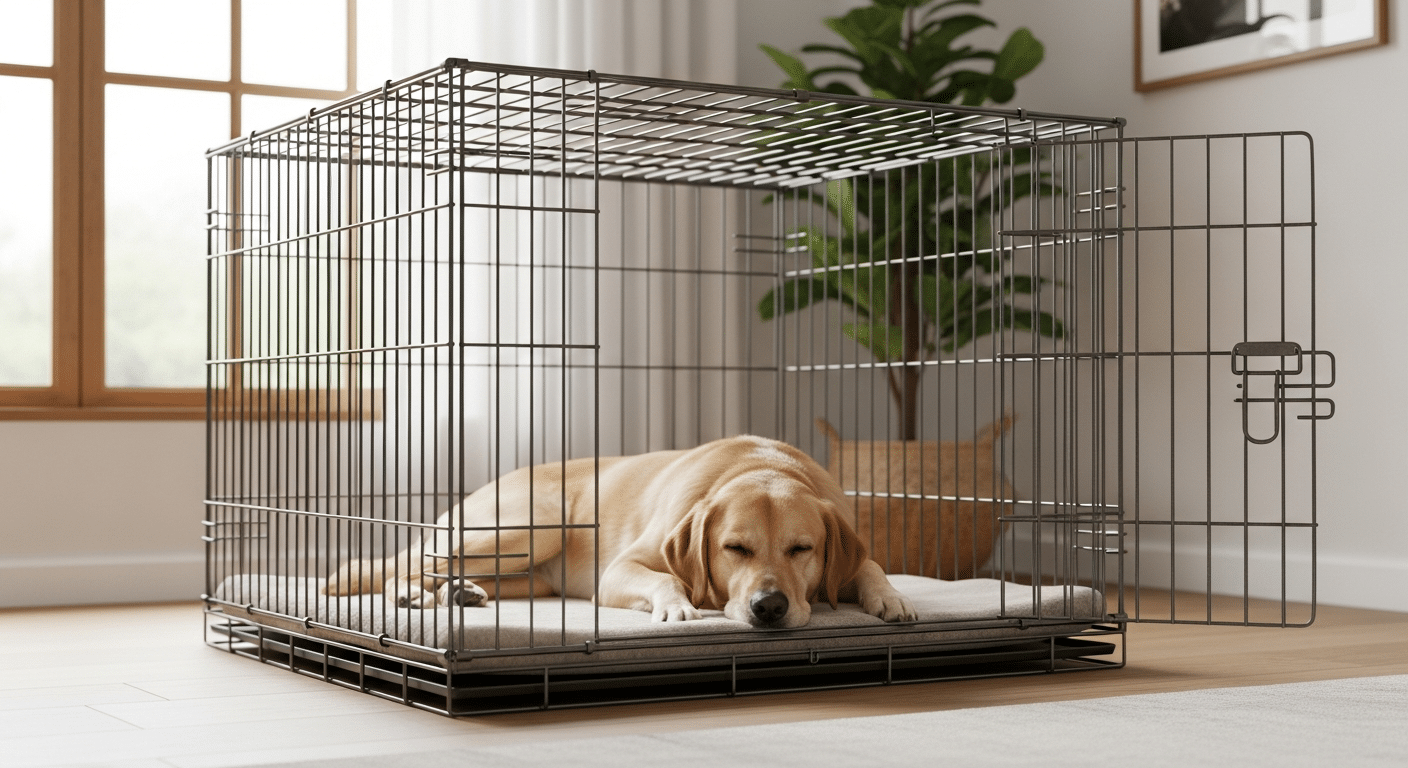
Is It Bad If a Dog Crate Is Too Big?
Short answer: yes, a crate can be too big, and during potty training it’s one of the most common reasons house-training stalls. Here’s exactly what goes wrong, when extra room is actually fine, and the simple divider fix.
If you’re asking “is a dog crate too big?” the honest answer is yes, it can be, and during potty training it’s a real problem. A crate that’s too roomy gives your dog space to potty in one corner and sleep in the other, which quietly sabotages house-training and removes the snug, den-like security that helps a dog settle. So does crate size matter? Absolutely, but the fix is easy and cheap: you don’t downsize the crate, you divide it down with an adjustable panel and open the space back up as your dog grows or finishes training. Below we explain exactly what happens if a dog crate is too big, the one rule for getting the size right, when extra room is perfectly fine, and the divider trick the trainers use. When you’re ready, our dog crate size calculator gives you the exact number for your dog.
The fixes for a too-big crate, ranked
The honest answer is rarely “buy a smaller crate”, it’s “divide the one you have (or will need) down to size.” Each pick is verified in stock; tap through for the live price.
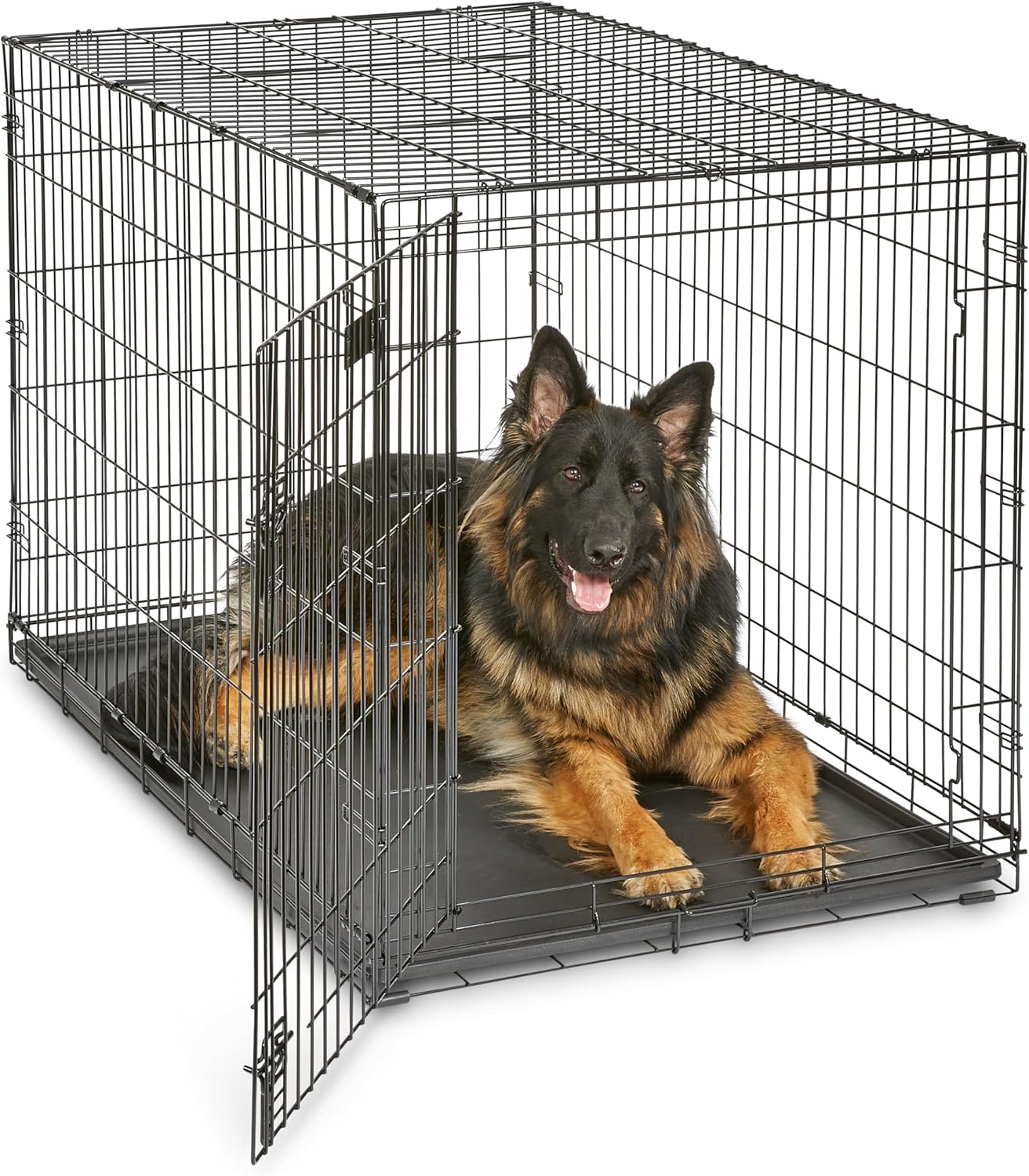
MidWest iCrate Folding Crate (with divider)
The single smartest answer to “is my crate too big?” Buy the crate your dog will need full-grown, then use the included divider panel to shrink the usable space to the right size right now, and slide it back as your puppy grows. You buy one crate instead of three, and the space is always potty-training-correct.
What we like
- The divider solves “too big” instantly, shrink it now, expand as the puppy grows
- One crate covers the whole growth curve, so you don’t re-buy
- Folds flat for travel and storage; sets up with no tools
- Slide-out plastic tray makes the inevitable early accidents easy to clean
The catches
- Standard wire crate, fine for most dogs, not for true escape artists
- Bigger sizes are heavy and a bit bulky to move room to room
- You’ll want a crate cover for the calmest, most den-like feel
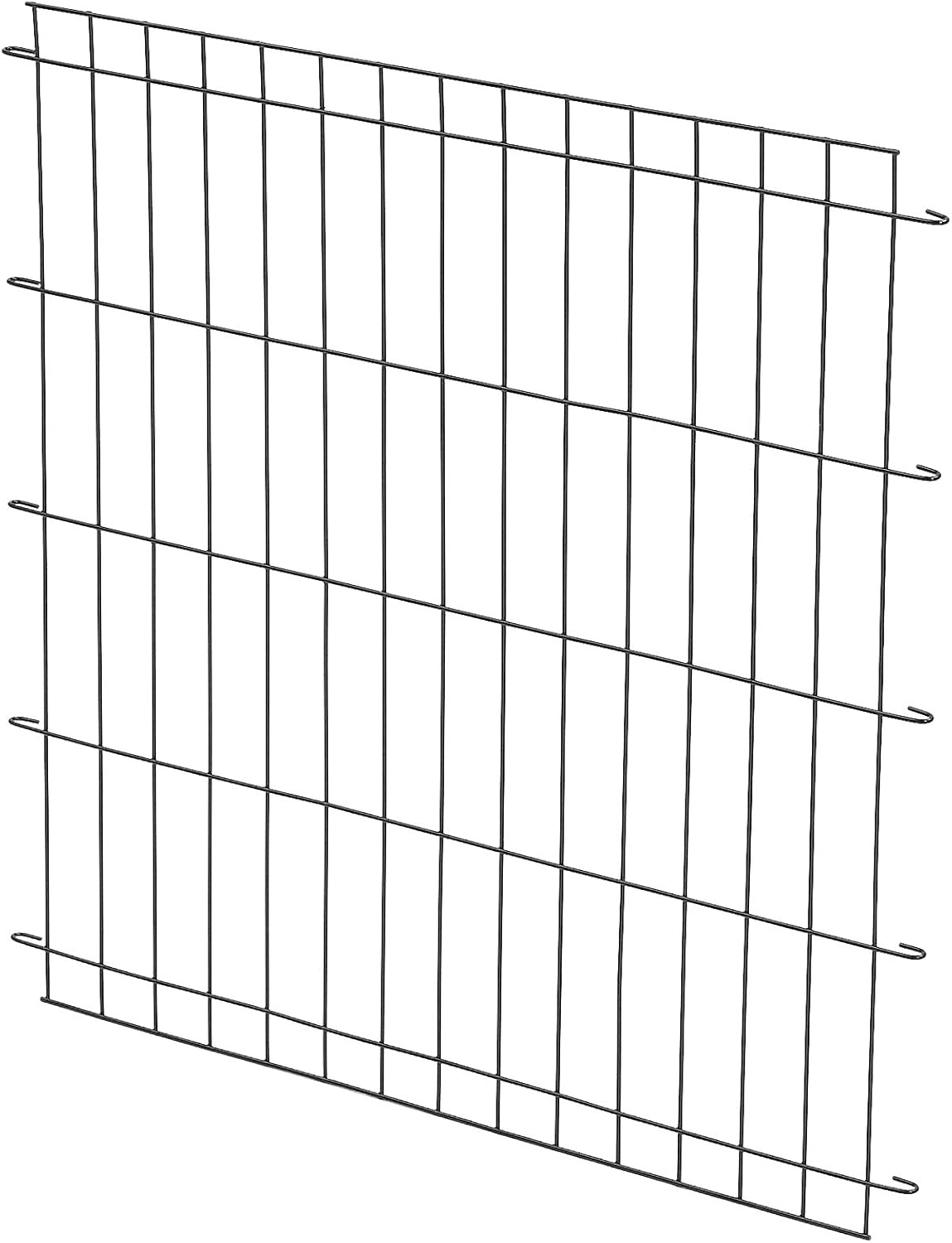
MidWest Divider Panel (retrofit kit)
If your crate is already too big and your dog is having accidents in it, you don’t have to buy a new crate, you have to shrink the one you own. A drop-in divider panel partitions off the extra space so your dog only has room to stand, turn and lie down, which is exactly what restarts potty training. Check the panel fits your crate’s model and width before buying.
What we like
- Fixes a too-big crate for a fraction of the price of a new one
- Recreates the snug, den-like space that stops in-crate accidents
- Easy to slide and re-position as the dog grows or training advances
- Reversible, remove it once your dog is fully trained and settled
The catches
- Model- and width-specific, confirm it fits your exact crate first
- Only helps wire/folding crates with the right frame to clip onto
- A determined chewer may work at the edge of a clipped-in panel
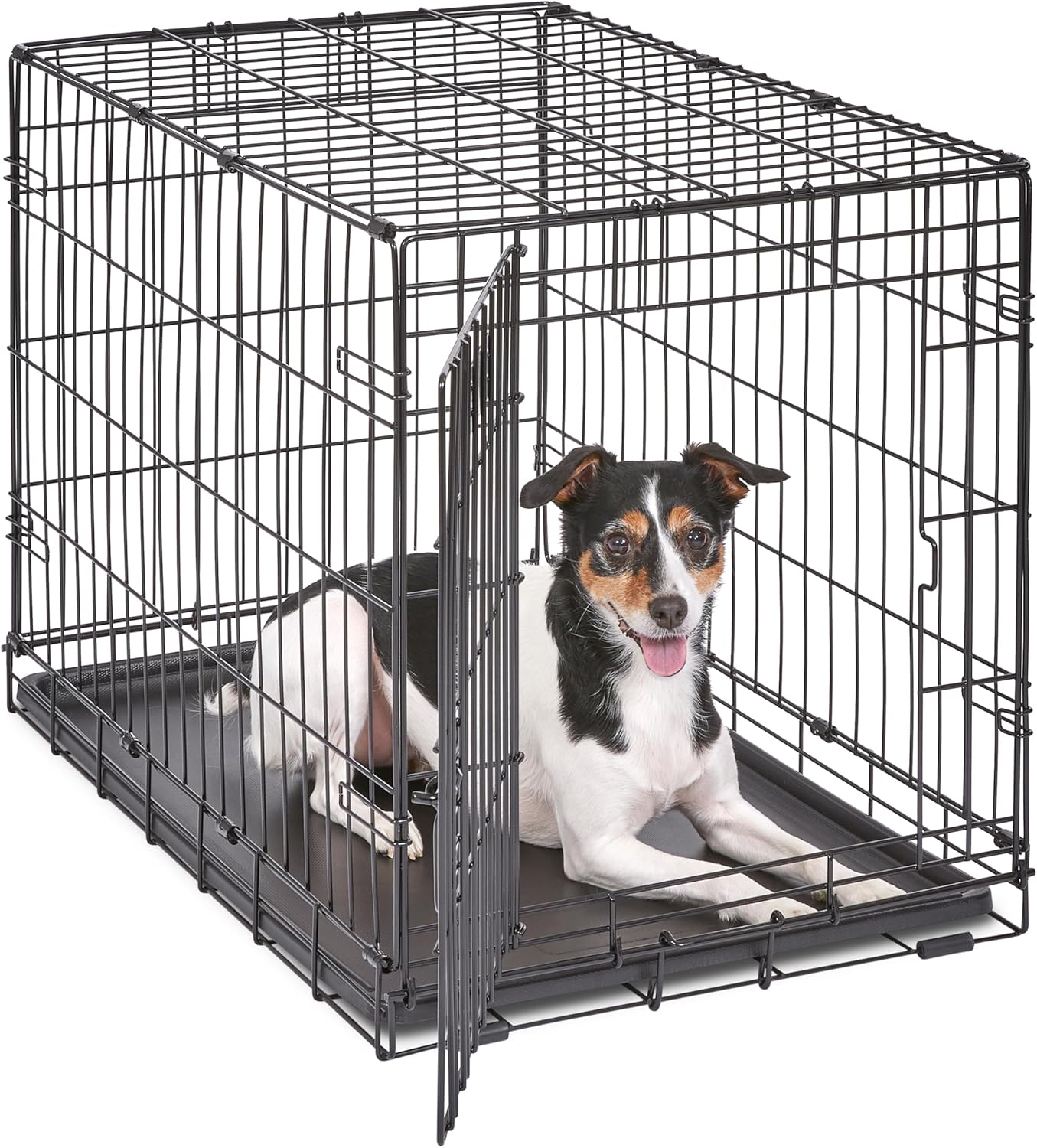
MidWest iCrate 30″ (with divider), medium breeds
If your dog will top out around 21 to 40 lb, a 30-inch iCrate is the correct adult size, and it ships with the same divider so the space is right while the puppy is small. The honest move for most owners is to size to the grown dog and divide down, rather than guessing big and ending up with a crate that’s too roomy to house-train in.
What we like
- Correctly sized for medium adults, no guessing too big
- Divider keeps a young puppy’s space snug for fast house-training
- Inexpensive, foldable, and easy to live with day to day
- Same trusted iCrate build in a small-dog-friendly footprint
The catches
- Too small for large breeds, size up using our calculator first
- Single door is less flexible for placement than a double-door size
- Wire build, so add a cover for shy or easily-stimulated dogs

Impact Stationary Crate, for anxious dogs
Sometimes a dog acts up in a too-big crate because it feels exposed, not just over-roomed. Impact’s solid aluminum walls create a genuinely den-like, low-stimulation space that calms an anxious dog, and it’s the only crate here that’s also escape-proof and crash-tested. It’s the premium answer for a dog whose “too big” problem is really an anxiety problem.
What we like
- Solid walls give the security a too-big wire crate can’t, cutting anxiety
- Genuinely escape-proof aircraft-grade aluminum, no bars to bend
- Crash-tested, so it doubles as car-travel protection
- Backed by a 10-year warranty against dog damage
The catches
- By far the most expensive option, overkill for a calm, trainable dog
- Heavy and not collapsible; it stays where you put it
- Sized to the dog like any crate, solid walls don’t replace correct sizing
What happens if a dog crate is too big?
A crate works because of one simple instinct: dogs don’t like to soil where they sleep. A correctly sized crate is just big enough for the dog to lie down, so going to the bathroom means lying in it, which the dog won’t do. That instinct is the entire engine of crate-based potty training. A crate that’s too big breaks the engine.
When there’s too much room, your puppy does the obvious thing: it pees or poops at one end and curls up clean at the other. Now nothing about the crate teaches it to “hold it,” because it never has to, there’s always a dry corner to retreat to. The result is a puppy that has accidents inside the crate, the one place that’s supposed to be accident-free, and house-training that drags on for weeks longer than it should.
Beyond potty training, an oversized crate causes a few more problems worth knowing:
- It feels less secure. Dogs are den animals, a snug, enclosed space lowers arousal and helps them settle. Too much open room can leave an anxious dog feeling exposed, so it takes longer to calm down and may pace, whine or bark.
- It invites movement and injury. A dog with room to bounce, spin or get a running start can jump into the walls or door and hurt itself, especially a young, excitable puppy.
- It can slow crate acceptance. Instead of becoming a cozy “bedroom,” a cavernous crate can feel like just another room, which undercuts the whole point of using a crate to teach calm, contained downtime.
Does crate size matter? The one sizing rule
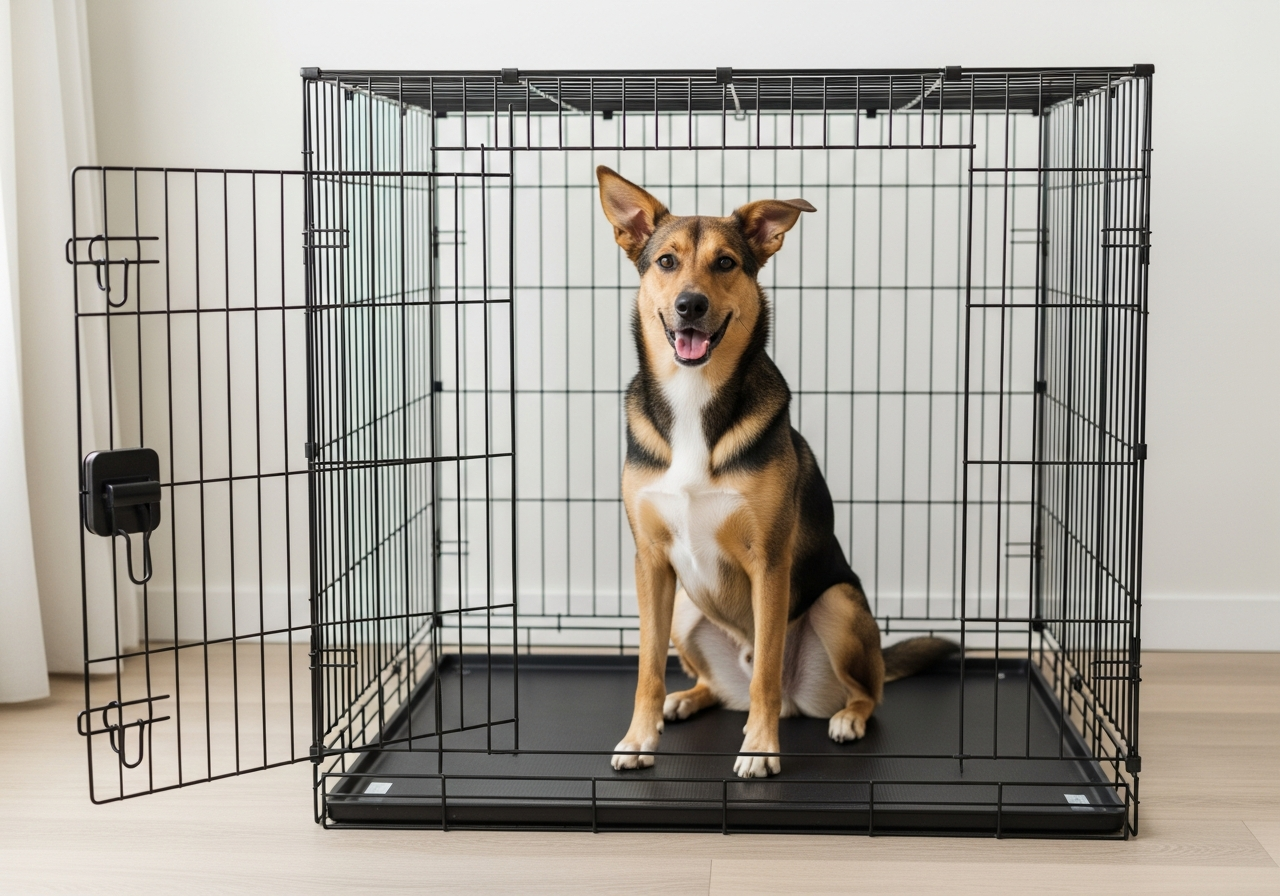
Yes, crate size is the single most important factor in whether crate training works. The good news is the rule is short. Your dog should be able to do exactly three things in the crate, and not much more:
- Stand up without crouching, with roughly 2 to 4 inches of clearance above the head/ears.
- Turn around completely in a full circle without squeezing.
- Lie down stretched out on its side with legs extended, not curled into a ball.
That’s it. If your dog can do all three comfortably, the crate is big enough. If it can also walk several steps, have a clear “bathroom corner,” or play, it’s too big for the training phase. To size it yourself, measure your dog two ways: nose-to-base-of-tail (length) and floor-to-top-of-head while sitting (height), then add about 2 to 4 inches to each. Match that to the crate’s interior dimensions, not the outside box.
This is also where the most common mistake happens. Owners of large- and giant-breed puppies see how big the dog will get and buy a 48-inch crate on day one, then wonder why an eight-week-old puppy keeps soiling it. The crate isn’t wrong; it’s just years too big for now. The answer isn’t a smaller crate. It’s a divider (next section). For a full walk-through by breed and weight, see our what size dog crate do I need guide, or skip the math with the size calculator.
The divider fix: buy big, size down, grow into it
Here’s the trick experienced owners and trainers use, and it neatly resolves the whole “is it too big?” question: buy the crate your dog will need fully grown, then use an adjustable divider panel to shrink the usable space to the correct size right now. As the puppy grows, you slide the divider back to open up more room. You buy one crate for the dog’s whole life, and the space is always potty-training-correct.
It works because a divider re-creates the snug, den-like compartment a small puppy needs inside a large crate, the dog only has room to stand, turn and lie down, so the don’t-soil-where-I-sleep instinct kicks back in. Most quality wire crates (like the MidWest iCrate) include a divider in the box.
Two scenarios:
- Buying new? Get the adult size and start with the divider set tight. This is almost always the right call for a growing puppy, see our top pick above.
- Already own a too-big crate? You don’t need a new one. Add a drop-in divider panel (confirm it fits your crate’s model and width) to partition off the excess space, or in a pinch block off the back with a sturdy box. This is the cheapest fix there is.
When is a bigger crate actually fine?
It’s important to be fair here, because “never get a big crate” is bad advice. The too-big rule is really a potty-training rule, and once a dog is past that phase, extra room shifts from a liability to a comfort. A crate that’s “too big” for an eight-week-old puppy can be perfectly fine for the same dog at two years old.
Extra space is generally okay, even nice, when:
- Your dog is fully house-trained. A reliably potty-trained adult isn’t going to start soiling a roomy crate; the instinct still holds, it just no longer needs to be enforced by tight space.
- Your dog is calm and settled in the crate. If the crate is already a relaxed, happy place, more room reads as comfort, not anxiety.
- It’s a large or senior dog that wants to stretch out. Big breeds and older dogs with stiff joints often appreciate the extra room to sprawl and reposition.
- You’re using the crate for safe containment, not training. For an adult who’s just resting or being kept safe while you’re out, comfort outranks snugness.
What to still avoid even for an adult: a crate so cavernous the dog feels exposed and won’t settle, or one with so much room that an anxious dog paces or can get a running start and hurt itself. The sweet spot for a trained adult is “comfortably roomy,” not “empty warehouse.” If your dog’s real issue is feeling unsafe in open space, a solid-walled, den-like crate like the Impact often calms it far more than a bigger or smaller wire crate would.
Too big vs. too small: how to read your dog
You don’t have to guess whether the size is off, your dog will show you. Here’s how to tell which way you’ve missed, and what each fix is:
| What you see | Likely problem | The fix |
|---|---|---|
| Pees/poops at one end, sleeps clean at the other | Too big (classic sign) | Add or tighten a divider so there’s no spare corner |
| Restless, paces, won’t settle, whines in a roomy crate | Too big (feels exposed) | Divide down + add a cover for a den-like feel |
| Has to crouch; head touches the top; can’t stand | Too small | Size up, needs 2 to 4″ head clearance |
| Can’t turn around or lie fully stretched out | Too small | Size up to the next crate size |
| Stands, turns, and stretches out, no spare “room” | Just right | Leave it; this is the target |
If you’re between sizes, size up and use the divider, it’s far easier to shrink a big crate than to stretch a small one, and you won’t have to re-buy when the puppy grows. A crate that’s too small is genuinely unkind (the dog can’t stand or turn), so that’s the one error you never want to make in the name of “snug.” When in doubt, our crate size calculator settles it in seconds, and our dog crate buyer’s guide shows which crates come with a divider built in.
So, is it bad if a dog crate is too big?
Pulling it together: during potty training, yes, a too-big crate is a real problem, it lets a puppy soil one end and sleep in the other, stalls house-training, and removes the den-like security that helps a dog settle. Does crate size matter? More than almost anything else in crate training. But “too big” is almost never a reason to buy a smaller crate.
The right move is to buy the size your dog will need full-grown and divide it down with an adjustable panel, or add a divider to the too-big crate you already own. Set the space so the dog can just stand, turn and lie down, and open it up as the puppy grows or finishes training. Once your dog is reliably house-trained and calm, extra room is comfort, not a problem. Size it right, use the divider, and the crate becomes exactly what it’s meant to be: your dog’s favorite, safest room in the house. Get your dog’s exact number from the size calculator, then pick a divider-equipped crate from our buyer’s guide.
Get the size right in two clicks
Is a dog crate too big? Common questions
Does crate size matter for potty training?
Yes, it’s the single biggest factor. Crate potty training works because dogs won’t soil where they sleep, but that only holds when the crate is just big enough to stand, turn and lie down in. If the crate is too big, your puppy will potty in one corner and sleep clean in the other, so it never learns to hold it and house-training stalls. The fix isn’t a smaller crate, it’s an adjustable divider that shrinks the usable space to the right size while the puppy is small, then opens up as it grows.
Can a crate be too big for a puppy?
Definitely. A too-big crate is the most common reason puppy potty training fails. With extra room, the puppy uses one end as a bathroom and the other to sleep, which defeats the den instinct that makes crate training work. Don’t buy a tiny crate, though, buy the size the puppy will need full-grown and use a divider panel to keep the space snug now, sliding it back as the puppy grows. That way you buy one crate, and the space is always the right size.
Should I get a divider for my dog’s crate?
For a growing puppy, yes, it’s the smartest setup there is. A divider lets you buy the full adult-size crate once and shrink the usable space to the correct potty-training size right now, then expand it as the dog grows. Many quality wire crates (like the MidWest iCrate) include a divider in the box. If you already own a crate that’s too big, you can buy a drop-in divider panel separately rather than replacing the whole crate, just confirm it fits your crate’s model and width.
Can an adult dog’s crate be too big?
Much less so. The “too big” rule is really a potty-training rule. A fully house-trained, calm adult dog won’t start soiling a roomy crate, so extra room becomes comfort rather than a problem, especially for large or senior dogs that like to stretch out. The exceptions: a crate so cavernous that an anxious dog feels exposed and won’t settle, or one roomy enough that the dog can get a running start and injure itself. For a trained adult, aim for “comfortably roomy,” and if anxiety is the issue, a solid-walled, den-like crate calms better than simply changing the size.
How do I know what size crate my dog needs?
Measure your dog two ways: nose to base of tail for length, and floor to top of head while sitting for height. Add about 2 to 4 inches to each, then match those numbers to the crate’s interior dimensions. The crate is right when your dog can stand without crouching, turn around fully, and lie down stretched on its side, and no bigger than that during training. The fastest way to get an exact answer is our dog crate size calculator, which turns your dog’s breed or measurements into a recommended crate size.