 Dog Gear, Sized Right
What Size Dog Crate Do I Need? (Size Chart by Weight & Breed)
The simple answer: measure your dog, add a few inches, and match it to a size. Here’s the chart, the exact way to measure, and the two mistakes that catch most owners.
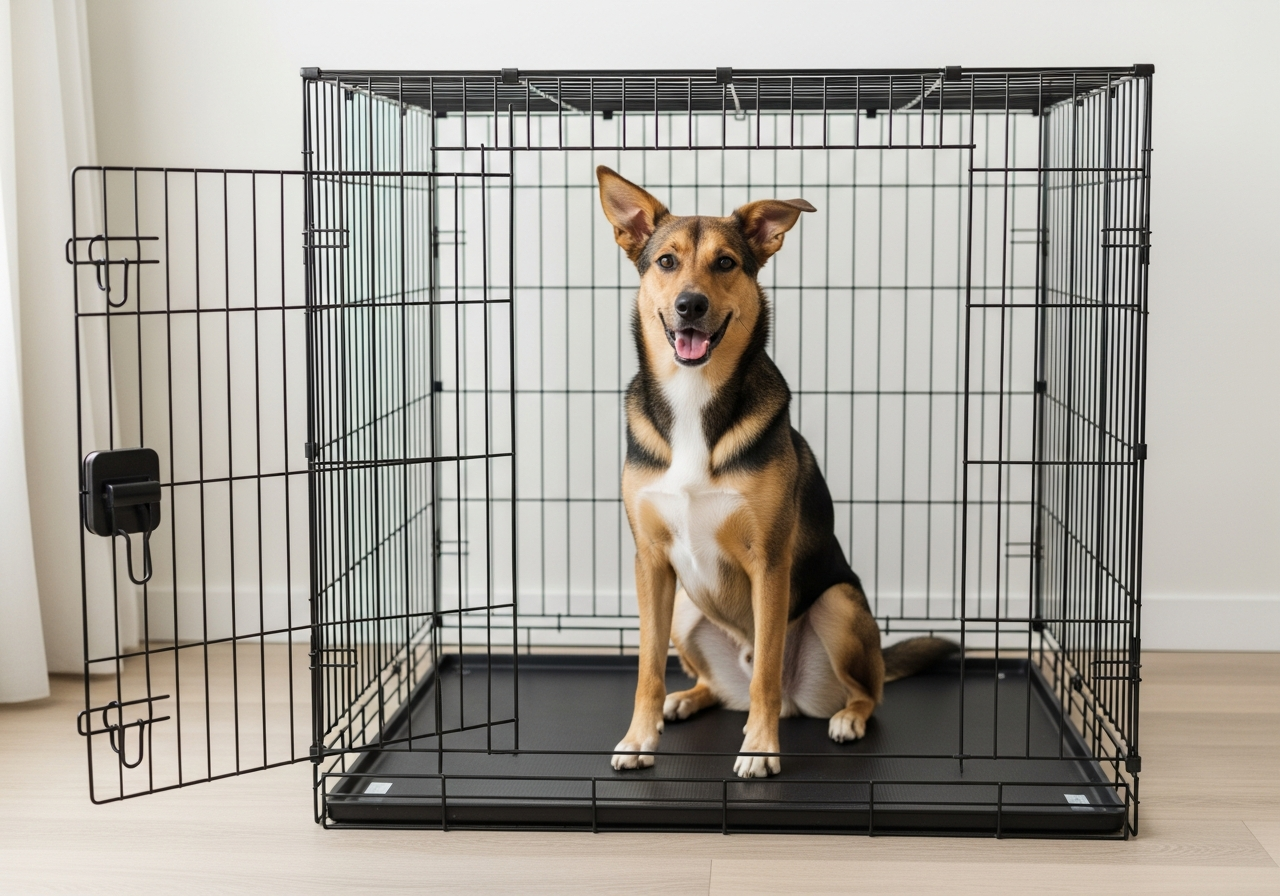
If you’re asking what size dog crate you need, the rule is short and it almost never changes: the crate should be just big enough for your dog to stand up without ducking, turn all the way around, and lie down flat on their side, and no bigger. That’s it. Everything else on this page is the easy way to turn that rule into a number: how to measure your dog in two minutes, a dog crate size chart by weight and breed, and how to handle the two situations that trip people up, buying for a puppy, and worrying the crate is too big. If you’d rather skip the tape measure, our dog crate size calculator turns your dog’s breed and measurements into the exact size to buy.
Crates that make sizing easy
A light shortlist, each comes in the right sizes (and the first two include a divider for a growing puppy). Find your size in the chart first, then pick the build that suits your dog.

MidWest 48″ iCrate (with Divider)
If you only learn one sizing trick, it’s this crate’s whole pitch: buy the adult size and use the included divider so the space is right at every stage. The 48″ fits 90 to 110 lb dogs, but the divider lets you start a Lab or Shepherd puppy in it today without sabotaging house-training. Over 100,000 reviews, folds flat, leak-proof pan, the default first crate for a reason.
What we like
- Divider panel solves the puppy sizing problem, buy once, grow into it
- Comes in every mainstream size (24″-48″), so you can match the chart exactly
- Leak-proof slide-out pan and double doors; folds flat for storage
- The most-reviewed crate on the market, easy, proven, cheap
The catches
- Light-duty wire, not for serious chewers or escape artists
- 48″ is the top size; a Great Dane needs the 54″ instead
- Powder coat can scratch over years of heavy use

Diggs Revol Collapsible Crate
Same sizing logic, nicer object. The Revol ships with a divider for a growing puppy, uses rounded diamond-mesh steel (safer than straight bars), and has a slide-out tray and wheels. Sizes run small through large (large tops out around a 90 lb dog), so check the chart below before you pick, it’s a design buy, not a giant-breed buy.
What we like
- By far the most attractive crate here, built for the home
- Included divider grows with a puppy, same as the iCrate
- Rounded anti-pinch mesh is safer than straight wire bars
- Slide-out tray and wheels make cleaning and moving easy
The catches
- Large size tops out around 90 lb, not for a Dane or Mastiff
- Pricey for the size; you pay for the design
- Packs down tall; mind small cars
Impact Stationary Dog Crate (48″ / 54″)
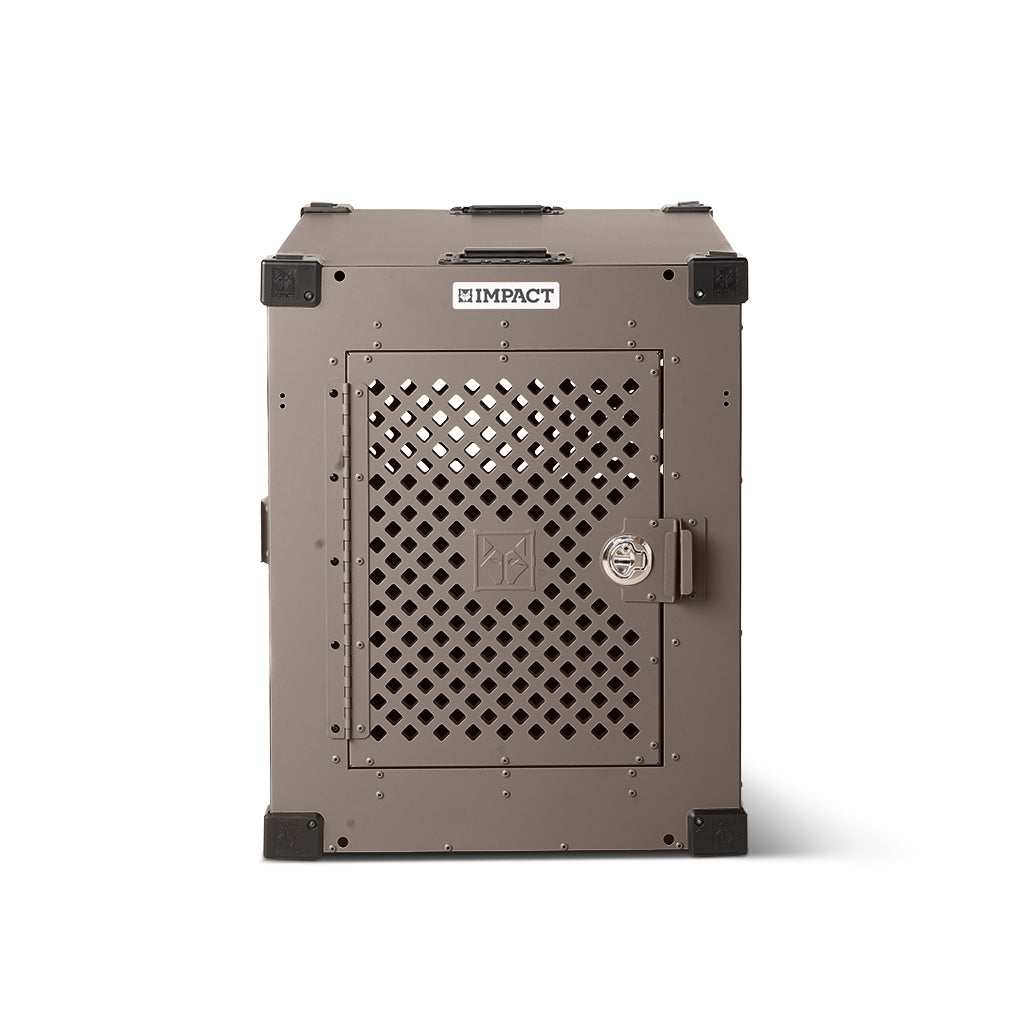
Getting the dimensions right doesn’t help if your dog bends the bars. For a strong, anxious or escape-prone dog, especially a big one, the Impact comes in the large 48″ and 54″ sizes built from aircraft-grade aluminum with multi-point latches. It’s the crate you buy once instead of replacing wire crates a determined dog destroys.
What we like
- Genuinely escape-proof, for the dogs that destroy wire crates
- 48″ and 54″ sizes cover large and giant breeds
- Aluminum is far lighter than steel for the same strength
- Handmade in the USA with a strong warranty; lasts the dog’s life
The catches
- Premium price, the investment pick, not the budget one
- Solid-sided, so less airflow than open wire
- No tiny sizes, built for medium dogs and up
The one rule: stand, turn, lie down
A correctly sized crate is one your dog can do exactly three things in: stand up without their head ducking or touching the roof, turn around in a full circle, and lie down stretched out on their side. When they sit, you want at least 2 inches of clearance above their head. That’s the whole standard, the same one veterinary sources like the Cornell Riney Canine Health Center use.
The mistake most people expect to make is buying too small. In practice, the more common and more damaging mistake is buying too big, we’ll cover why below. So the goal isn’t “as much room as possible.” It’s just enough. Get the length right and the height usually follows; for tall breeds, check height separately.
How to measure your dog for a crate
Two measurements, two minutes, one tape measure. Do it while your dog is calm and standing or sitting square, treats help.
- Length (the important one): measure from the tip of the nose to the base of the tail, where the tail meets the body, not the tip of the tail. Then add 2 to 4 inches. That gives the minimum crate length.
- Height: measure from the floor to the top of the head while your dog is standing (use the top of the head, or the ears if they sit higher). Add 2 to 4 inches. That’s the minimum interior height. Tall, upright breeds. Danes, Dobermans, Greyhounds, often need the next size up for height even when the length fits.
Buy the crate that satisfies both numbers. If length points to a 42″ but your dog is unusually tall, step up to the size that gives the height, interior height climbs with crate length, so the bigger footprint solves it. For a dog still growing, measure later (see the puppy section), or use the crate size calculator to project the adult size.
Dog crate size chart by weight and breed
Here’s the shortcut if you don’t want to measure. Crate sizes track closely with weight and length, so this chart gets most owners to the right size on the first try. The “crate” column is the standard nominal length you’ll see sold (24″, 30″, 36″, 42″, 48″, 54″); the length column is your dog’s nose-to-tail-base measurement it’s built to fit. When you’re between two sizes, size down unless your dog is still growing.
| Dog weight | Crate size | Fits dog up to (length) | Example breeds |
|---|---|---|---|
| Up to 12 lb | 22″ | ~16″ | Chihuahua, Maltese, Yorkshire Terrier, Pomeranian |
| 13 to 25 lb | 24″ | ~18″ | Shih Tzu, Bichon Frise, Cavalier King Charles, mini Dachshund |
| 26 to 40 lb | 30″ | ~24″ | Beagle, French Bulldog, Welsh Corgi, Miniature Schnauzer |
| 41 to 70 lb | 36″ | ~30″ | English Bulldog, Pit Bull, Border Collie, Australian Shepherd |
| 71 to 90 lb | 42″ | ~36″ | Labrador, Golden Retriever, Boxer, smaller German Shepherd |
| 90 to 110 lb | 48″ | ~42″ | German Shepherd, Doberman, Rottweiler, Bernese Mountain Dog |
| 110 lb+ | 54″+ | ~48″+ | Great Dane, Mastiff, St. Bernard, Newfoundland, Irish Wolfhound |
A note on weight: it’s a guide, not gospel. A long, low dog (a Dachshund, a Corgi) needs more length than its weight suggests, and a tall, lean dog (a Greyhound) needs more height. When weight and your tape measure disagree, trust the tape measure. Buying for a big dog specifically? Our best dog crate for large dogs guide breaks down the 48″ and 54″ picks by breed.
Not sure which row is yours?
What size crate for a puppy? (size for the adult)
This is where the chart flips. You size a puppy crate for the dog they’ll become, not the dog you have today. A Lab puppy that’s 15 lb now will be 70 lb in a year, buy the 42″ crate now, not a tiny puppy crate you’ll outgrow in eight weeks.
But an adult-sized crate is far too big for a puppy today, and that causes a real problem: with too much room, a puppy will sleep at one end and use the other end as a toilet, which directly sabotages house-training. The fix is a divider panel. Wall off just enough space for the puppy to stand, turn and lie down right now, then slide the divider back as they grow. One crate, every stage, no second purchase.
- Buy the projected adult size from the chart (look up your breed’s adult weight).
- Use the divider to keep the usable space “just right” while they’re small, it should fit snug across the width of the crate.
- Move it back every few weeks as the puppy fills the space.
Is it bad if the crate is too big?
Yes, a crate that’s too big is a more common mistake than one that’s too small, and it works against you in two ways:
- It breaks house-training. The reason crate training works is that dogs won’t soil where they sleep, if the space is just their bed. Give them a spare room’s worth of crate and they’ll happily potty in the far corner and curl up away from it. This is the single biggest reason “my crate-trained dog has accidents.”
- It removes the sense of security. A crate is meant to feel like a den, snug and safe. Too much open space makes an anxious dog feel more exposed, not less, which can make crating harder rather than calming.
The exceptions: a fully house-trained adult who just hangs out in their crate can have a little extra stretch room with no harm. And you never want too small, a dog that can’t stand or turn is in an inhumane crate. The target is the narrow band in between, which is exactly what the stand-turn-lie-down rule (and a divider for puppies) keeps you in.
Does crate type change the size you need?
A little, the build affects how much of the footprint your dog actually gets, so it’s worth knowing before you order:
- Wire crates (MidWest iCrate), the most common. Great airflow and visibility, fold flat, almost always include a divider, and come in every size on the chart. Wire crates also tend to run a touch roomier inside for the nominal length. Cover one with a blanket to give an anxious dog a more den-like feel.
- Plastic / airline crates (Petmate-style), solid walls feel more den-like out of the box and are required for air travel (look for IATA compliance). They run a bit tighter inside than a wire crate of the same labeled size, so size up if your dog is borderline.
- Heavy-duty aluminum / steel (Impact, escape-proof crates), for strong, anxious or escape-prone dogs. Sizing is the same stand-turn-lie-down rule; you’re choosing these for strength, not space. See our best escape-proof dog crate guide.
- Soft-sided / fabric, light and packable, but only for small, calm, already-trained dogs. A chewer or a puppy will destroy one. Not a primary training crate.
Whatever the type, the size question is the same: stand, turn, lie down, then choose the material for your dog and your home. For the full lineup of reviews and comparisons, start at our dog crate hub.
Get the size right, then pick the crate
So, what size dog crate do you need? Measure your dog (nose to tail base, plus 2 to 4″; floor to head standing, plus 2 to 4″), find your row in the chart, and buy the crate that meets both numbers. For a puppy, buy the projected adult size and use a divider. When in doubt between two sizes, size down, a too-big crate causes more problems than a snug one.
Once you know your size, the MidWest 48″ iCrate (with divider) is the easy, proven pick for most dogs and the best choice for a growing puppy; the Diggs Revol is the one to buy if the crate lives in your living room; and the Impact Stationary is the answer when “the right size” also has to mean escape-proof. Still on the fence about the number? Run it through the dog crate size calculator, it does the measuring math and projects adult size for you in a few clicks.
Dog crate sizing: common questions
What size crate does a 50 lb dog need?
A 50 lb dog (a smaller Lab, a Boxer, a Pit Bull, an Australian Shepherd) needs a 36″ crate as a starting point. Measure nose to base of tail and add 2 to 4″ to confirm, if your dog is long or tall, step up to a 42″. The 36″ gives a 50 lb dog room to stand, turn and lie out flat without being so big that it undermines house-training.
What size crate does a 70 lb dog need?
A 70 lb dog (a full-size Labrador, Golden Retriever or smaller German Shepherd) needs a 42″ crate, stepping up to 48″ if the dog is tall or long-bodied. Measure nose to base of tail and add 2 to 4″, and floor to head standing and add 2 to 4″, buy the crate that satisfies both. Tall breeds often need the larger size for height even when 42″ covers the length.
What size crate does a 100 lb dog need?
A 100 lb dog should be in a 48″ crate, or step up to a 54″ if the dog is especially tall, long or still growing. At 90 to 110 lb you’re into German Shepherd, Doberman, Rottweiler and Bernese Mountain Dog territory. A strong or anxious dog this size is far better in a heavy-duty 48″ crate than light-duty wire, see our large-dog crate guide.
Is it bad if the dog crate is too big?
Yes. A too-big crate is the most common sizing mistake. With too much space a dog, especially a puppy, will sleep at one end and use the other end as a toilet, which breaks house-training. An oversized crate also feels less den-like and secure, which can make an anxious dog harder to crate. Aim for just enough room to stand, turn and lie down; for a puppy, use a divider to keep the space snug.
Should I size the crate for my puppy now or for the adult dog?
Size for the adult dog, then use a divider to fit it to the puppy today. Buying a small puppy crate means buying again in a few months as the dog grows, while an undivided adult crate is too big and sabotages house-training. The divider walls off just enough space now and slides back as the puppy grows, one crate for the whole journey. Look up your breed’s adult weight on the chart above, or use the size calculator.
How do I measure my dog for a crate?
Take two measurements. Length: from the tip of the nose to the base of the tail (where the tail meets the body, not the tip), then add 2 to 4″. Height: from the floor to the top of the head while your dog is standing, then add 2 to 4″. Buy the crate that meets both numbers. The length usually decides the crate size; check height separately for tall breeds like Danes and Greyhounds.
Do wire and plastic crates use the same sizing?
Roughly, but not exactly. The stand-turn-lie-down rule is the same for both. Wire crates tend to run a touch roomier inside for the same labeled length and come in every size with a divider; plastic and airline crates run a bit tighter inside, so if your dog is borderline between two sizes, choose the larger plastic crate. For air travel you need an IATA-compliant plastic crate regardless of the chart.