 Dog Gear, Sized Right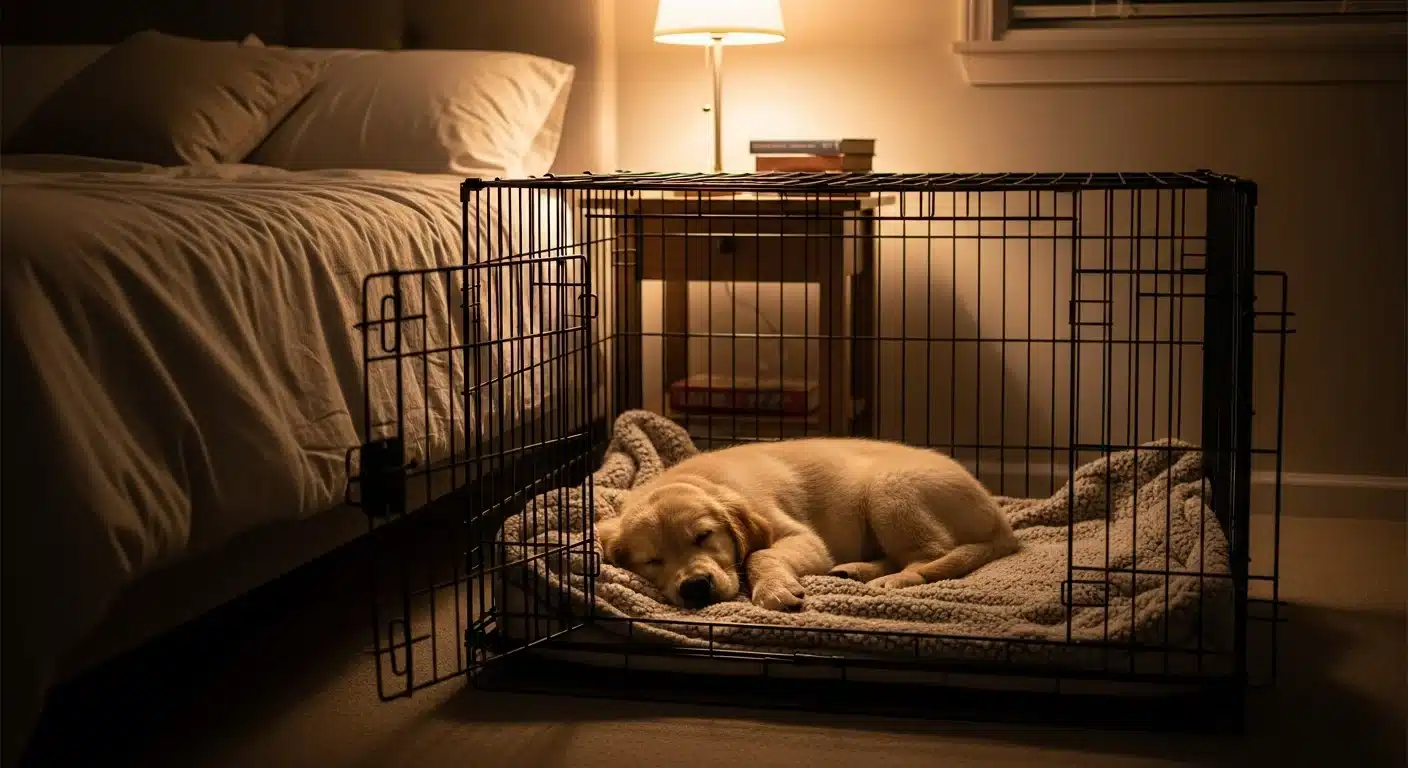
How to Stop a Dog Crying in the Crate at Night
Why your dog or puppy is crying in the crate, and the honest, step-by-step plan to fix it. No overnight miracles, but most dogs settle within one to two weeks.
A dog crying in the crate at night is one of the most common, and most exhausting, problems new owners face. The good news: in nearly every case it’s fixable. The honest news: it takes a few days to two weeks of consistent work, not one magic trick. This guide starts with why the crying is happening (because the fix depends entirely on the cause), then walks through the practical steps, what to do tonight, what to do over the next week, and how to tell a genuine potty cry from an attention-seeking whine so you respond correctly every time. Covered: puppies and adults, the bedroom vs. other-room debate, and a concrete night-by-night routine.
The crate that makes the process easier
Most crying is about the dog, not the crate, but the wrong crate makes everything harder. One pick, chosen because it solves the two most common crate-setup mistakes (wrong size, wrong placement). Verified in stock; tap through for the live price.
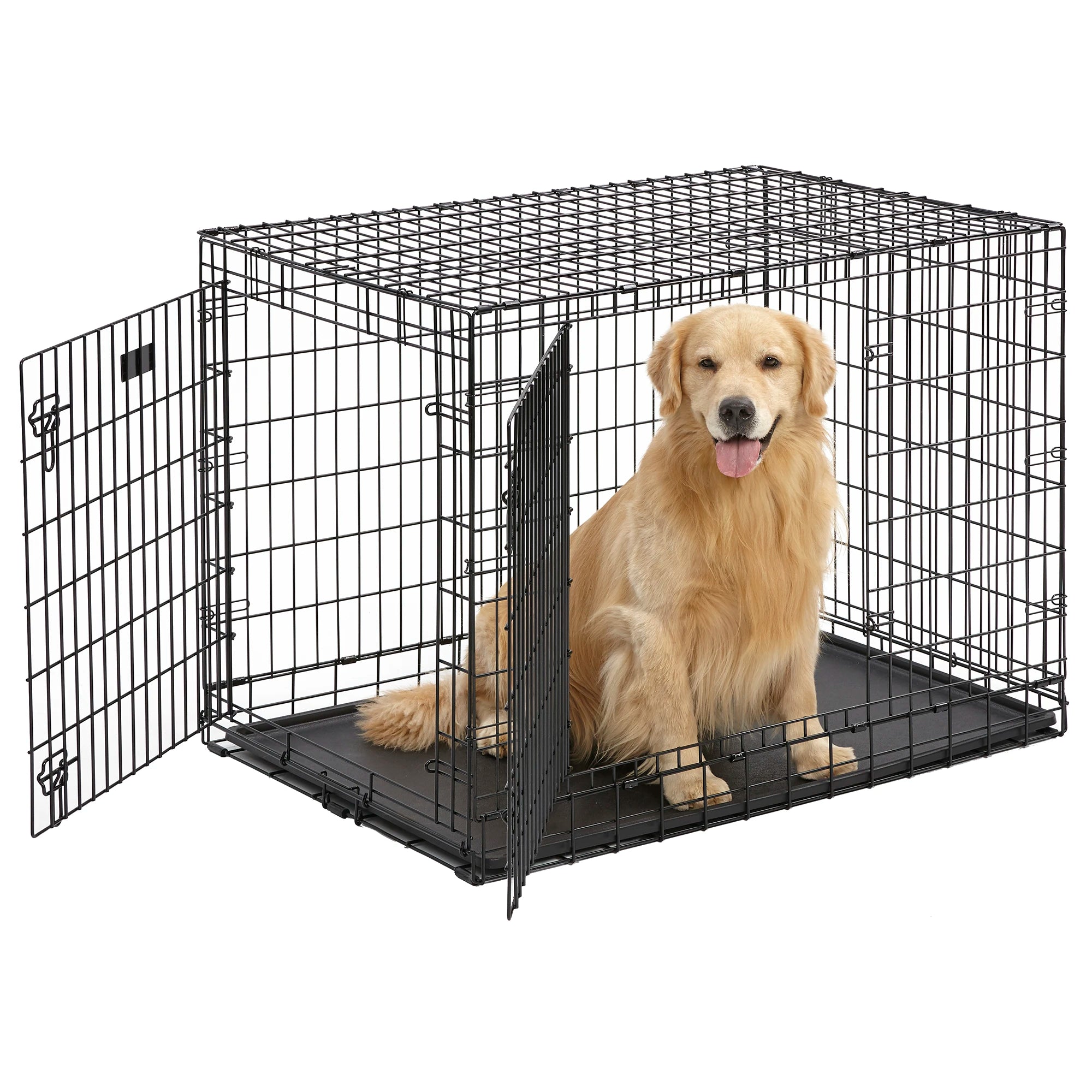
MidWest iCrate Folding Dog Crate
A crying dog often hates its crate because the crate is wrong for them, too big, too dark, too exposed. The iCrate fixes the two most common culprits: the divider panel lets you shrink the sleeping space so a puppy can’t pace and panic, and the double-door design lets you position the crate in your bedroom without rearranging furniture. At under $60 it’s the most practical first investment before you try anything else.
What we like
- Divider panel sizes the space down for puppies, removes the ‘too much room to panic’ problem
- Double door makes bedroom placement easy, which is the single biggest first-night fix
- Leak-proof pan for the inevitable puppy accidents without ruining the crate
- Folds flat so you can move it bedside at night and back to the living room by day
The catches
- Wire sides mean more ambient noise/light than a plastic travel crate, add a crate cover if the dog is sensitive
- Latches feel lightweight on the largest sizes; not suitable for a determined escape artist (look at Impact or Diggs Revol for that)
- Heavy breeds may find the floor pan less cushioned than a solid-bottom crate
Step one: diagnose WHY your dog is crying
The fix for a dog that needs to potty is completely different from the fix for a dog performing for attention, and applying the wrong response makes things worse. Before anything else, match the crying to one of these five root causes:
| Cause | Who it usually affects | The tell | Fix direction |
|---|---|---|---|
| Needs to potty | Puppies under 5 to 6 months; any dog new to a night routine | Crying starts 2 to 4 hours after going to bed; becomes urgent | Scheduled potty breaks + last trip very late |
| Loneliness / isolation | New puppies just separated from their litter; socially bonded adults | Starts within minutes of lights out; steady, plaintive whine | Move crate to your bedroom |
| Too much energy | Young adult dogs, working breeds, under-exercised dogs | Restless, shifting, doesn’t settle even when quiet | Harder exercise earlier in the evening |
| Fear / under-acclimated | Any dog new to crating; rescues; dogs pushed too fast | Panics, drools, paws at the door, not just crying but distress | Gradual desensitization from scratch |
| Learned crying = release | Dogs who were let out when they cried in the past | Crying is confident, not desperate; stops and starts strategically | Consistent non-response to noise |
Most puppies under 12 weeks hit two or three causes at once. Most adult dogs crying in a crate that previously worked are in the fourth or fifth bucket. Narrow it down before you pick a strategy.
The single biggest first-night fix: move the crate to your bedroom
If you do only one thing tonight, do this. Isolation is the number-one trigger for nighttime crying, especially in a new puppy that just left its mother and littermates. Moving the crate next to your bed doesn’t spoil the dog; it removes an unnecessary stressor so crate training can actually work. Your breathing, scent and proximity are powerful calming signals.
You don’t have to keep the crate in your bedroom forever. Most trainers recommend starting bedside, then gradually moving the crate a few feet per night toward wherever you want it long-term once the dog is consistently quiet. That transition takes a week or two, not months.
How to tell a potty cry from an attention cry, and why it matters
This is the most important judgment call in nighttime crate training. Getting it wrong in either direction causes problems: ignore a real potty cry and you get an accident and a traumatized dog; rush to every whine and you teach your dog that crying opens the door.
Signs it’s a genuine potty cry:
- Starts suddenly, 2 to 4 hours after the last trip out, not immediately when you turn off the lights
- Escalates quickly and doesn’t stop or “reset”, urgent, not strategic
- Dog is clearly uncomfortable, not just restless
- Puppy age supports it: under 3 months, puppies physically cannot hold it more than 2 to 3 hours overnight
Signs it’s attention-seeking:
- Starts within minutes of crating, before any bladder pressure could build
- Pauses, then restarts, the dog is checking whether you responded
- Stops when you enter the room or make noise; resumes when you go quiet
- Your dog has already been out recently and the timing doesn’t add up
The rule: If in doubt and your puppy is under 16 weeks, assume potty. Take them out quietly, no play, no praise, no eye contact beyond what’s necessary, straight out, straight back, no reward for waking you. If it’s clearly attention-based, wait it out. The crying will escalate before it stops (extinction burst, this is normal), then taper off. Do not go in mid-cry.
The tired-dog principle: exercise and the last-potty window
A dog that isn’t physically tired will not settle. Full stop. If your dog or puppy hits the crate with energy to burn, no amount of comfort items or crate training will fix the restlessness. The goal is to have the dog physically ready to sleep at the same time you are.
Evening exercise timing that works:
- Main exercise session 1.5 to 2 hours before crate time, enough time to wind down but not so early that energy rebounds
- A short 10-minute mental exercise session (sniff walk, scatter feeding, a training session) 30 minutes before bed, tiring and calming
- No high-energy rough play in the 30 minutes before crating, this amps dogs up, not down
The last-potty window:
- Main bathroom trip: 30 to 60 minutes before bed, give the dog a full chance to empty out
- Quick final trip: right at crate time, even if the dog doesn’t seem to need it, get in the habit
- Restrict water 90 minutes before crating for young puppies (not adult dogs) to reduce overnight urgency
Puppies under 4 months will need a middle-of-the-night trip regardless. Set an alarm for 3 to 4 hours after bedtime and take them out proactively, before the crying starts. A proactive trip is calm and unrewarding. A reactive trip (you went out because they cried) is a lesson in “crying = outside.”
Build a positive crate association before expecting quiet nights
Crying at night is often the result of a crate that’s been used as a place of confinement without any positive history. If your dog dreads the crate, nighttime is just the most obvious symptom. Daytime work is the fix.
What builds a good crate association:
- Feed meals in the crate. Start with the bowl just inside the door, then move it fully inside over a few days. The crate becomes the source of good things.
- Stuffed chews and frozen Kongs. A Kong filled with peanut butter or wet food and frozen gives 20 to 30 minutes of calm, happy crate time daily. Rotate the chews so they stay novel.
- Never use the crate as punishment. Not even once. “Go to your crate” needs to stay neutral or positive, the moment it becomes “bad dog, get in your box,” you’ve set back weeks of work.
- A worn-scent item. A T-shirt or pillowcase you’ve slept in, placed in the crate, gives younger dogs something familiar to settle against. Don’t use anything with loose threads that could be swallowed.
- Crate games during the day. Toss treats inside randomly throughout the day without closing the door. The dog starts going in voluntarily. That’s the association you want.
See our full crate training guide for puppies for the step-by-step desensitization protocol from first introduction through overnight stays.
What NOT to do: the responses that make crying worse
The instinct to comfort a crying dog is completely understandable. The problem is that some forms of comfort teach the dog that crying is the correct behavior. Here’s what to avoid:
- Don’t let them out while they’re crying. If you open the door in response to noise, you’ve trained “crying = freedom.” The crying will get louder and longer next time. Wait for even a two-second pause before the door opens, ever.
- Don’t yell or punish the crying. Punishment doesn’t teach a dog what you want; it adds stress to an already-stressful situation and can make the fear or anxiety that’s driving the crying significantly worse.
- Don’t flood a genuinely panicking dog. Ignoring attention-seeking whining is correct. Ignoring a dog in full panic, panting, drooling, clawing at the crate, unable to stop for even a moment, is not. That’s a dog that needs desensitization work, not a tougher night. Pushing through panic doesn’t teach resilience; it deepens the fear.
- Don’t rush the process with too-long sessions too soon. Expecting a dog to spend a full night in a crate before they’ve been comfortable for 30-minute daytime sessions is like skipping to the final exam on day one.
Puppies vs. adult dogs: different timelines, different approaches
Puppies and adult dogs cry in the crate for overlapping but distinct reasons, and the approach differs in important ways.
Puppies (8 weeks to 6 months):
- Bladder control is genuinely limited, a 10-week puppy cannot hold it 8 hours, full stop. Build your expectations around 2 to 3 hours maximum for very young puppies, extending by roughly one hour per month of age.
- The first three nights are almost always the hardest, the puppy is grieving its litter. Most puppies make substantial progress by night 5 to 7 if the setup is right.
- A heartbeat toy (like a Snuggle Puppy) in the crate mimics sleeping next to a sibling and genuinely helps some puppies settle faster. It’s worth trying for the first two weeks.
- The crate size matters more than most owners realize, a puppy in a crate that’s too large will use a corner as a bathroom, which makes housetraining and crate comfort much harder. Use the divider panel.
Adult dogs:
- An adult dog that has never been crated needs the same gradual introduction as a puppy, don’t assume age equals readiness.
- An adult dog that was previously fine in a crate and suddenly isn’t often has a medical explanation (pain, UTI, cognitive changes in older dogs), a vet check is warranted before assuming it’s behavioral.
- Rescue dogs may have crate trauma from previous living situations. Go slowly, keep sessions very short initially, and treat every voluntary entry as a success.
If your dog is waking more than twice per night at 6+ months of age and has been crate trained for more than two weeks, there may be an underlying anxiety issue worth discussing with a certified trainer or veterinary behaviorist rather than continuing to push through on your own.
The step-by-step night routine (copy this)
This is the actual protocol, run it the same way every night, because dogs settle faster when the pre-sleep sequence becomes predictable.
- 6:00 to 7:00 PM. Main exercise. A real walk, fetch, or off-leash run. Tire the dog out physically. Adjust timing so your dog is winding down 1 to 2 hours before bed, not amped up.
- 8:00 PM. Feeding (if on two meals). The last meal 2 to 3 hours before bed gives time for digestion and one more bathroom cycle.
- 9:00 PM. Mental calm-down. 10 to 15 minutes of quiet sniff time, a lick mat, or a light training session. No rough play.
- 9:30 PM. Last substantive potty trip. Leash walk, not just door-open. Give the dog 5 to 10 minutes to fully empty out. Mark and reward if you want to reinforce the habit.
- 9:45 PM. Frozen Kong or chew into the crate. The dog goes in for the chew voluntarily. Close the door once they’re settled with it.
- 10:00 PM. Lights low, crate covered, you settle. Minimal stimulation. Crate should already be bedside if the dog is new to this.
- 2:00 AM. Proactive potty trip for puppies under 4 months. Set an alarm. Out quietly, no play, straight back. This prevents the urgent cry, not responds to it.
- Morning. Release on your schedule, not on crying. Get up, get dressed, then open the crate. If you open it while the dog is whining, you’ve done the same damage as at 2 AM. Wait for quiet.
For sizing guidance, because a crate that’s too big or too small makes settling harder, our dog crate size calculator takes the guesswork out. And if you’re wondering how long the crate should be used during the day as well, see how long a dog can stay in a crate for safe daily limits by age.
Keep reading: crate training resources
Dog crying in the crate: common questions
How do I stop my dog from crying in the crate at night?
Start by diagnosing the cause, the fix is different depending on whether the dog is crying because it needs to potty, is isolated and lonely, has too much energy, is under-acclimated to the crate, or has learned that crying gets results. The most impactful first step is moving the crate to your bedroom. From there: make sure the dog is physically tired before crating, do a late potty trip, give a frozen chew inside the crate at bedtime, and do not respond to attention-seeking crying (but always answer a genuine, escalating potty cry). Most dogs settle within 7 to 14 nights of consistent work.
Should I let my dog cry it out in the crate?
It depends on why they’re crying. Attention-seeking whining, which starts immediately when you leave, pauses to check your reaction, and stops when you appear, should not be rewarded with release or attention. Let it pass, and wait for quiet before you do anything. But a dog in genuine panic (drooling, clawing, non-stop frantic, not strategic), or a puppy that physically needs to potty, should not be left to ‘cry it out.’ Flooding a panicking dog entrenches the fear; ignoring a real potty cry leads to accidents and distress. Know which situation you’re in before you decide.
How long should a puppy cry in the crate before I go to them?
There’s no universal answer, it depends on age, the cry’s character, and timing. For puppies under 12 weeks, if the crying is urgent and it’s been more than 2 hours since the last trip out, treat it as a potty cry and go to them. For older puppies whining at the start of the night (clearly attention-based, not urgent), wait out the escalation, which can last 20 to 45 minutes on rough nights in week one. The rule is: never open the door while the crying is happening. Wait for even a two-second lull, then move. That lull is what you’re rewarding, not the crying.
Why is my dog suddenly crying in the crate at night when he didn’t before?
A sudden change in a previously-settled dog is worth investigating before assuming it’s behavioral. Common causes: a medical issue (pain, UTI, gastrointestinal upset, especially if there are also daytime changes), a change in routine or household that’s raised anxiety, a noise or external stressor that’s now part of the night environment, or cognitive changes in older dogs (canine cognitive dysfunction). Rule out medical causes with a vet check, then look at what’s changed in the environment or routine before concluding it needs retraining.
How long does it take for a puppy to stop crying in the crate at night?
Most puppies make significant progress within 5 to 7 nights if the setup is right: crate in the bedroom, proactive late-night potty trips, a positive crate association built during the day, and no door-opening during crying. Expect the first two or three nights to be the hardest, the puppy is still adjusting to being away from its litter. Full, consistent overnight quiet usually comes by 10 to 14 nights. If you’re past three weeks with significant crying still happening every night, revisit the cause, something in the setup or the approach needs adjusting.
Is it OK to put a blanket over a dog crate at night?
Yes, for most dogs, covering three sides of the crate with a blanket makes it darker, quieter, and more den-like, which actively helps them settle. Leave the door side uncovered for airflow. The exception is a dog that’s hot, anxious about being enclosed, or one that might chew and ingest fabric. Start with a light drape and check that the dog is settling rather than getting more agitated. Crate covers designed for this purpose (ventilated, chew-resistant) are safer for chewers than a regular blanket.