 Dog Gear, Sized Right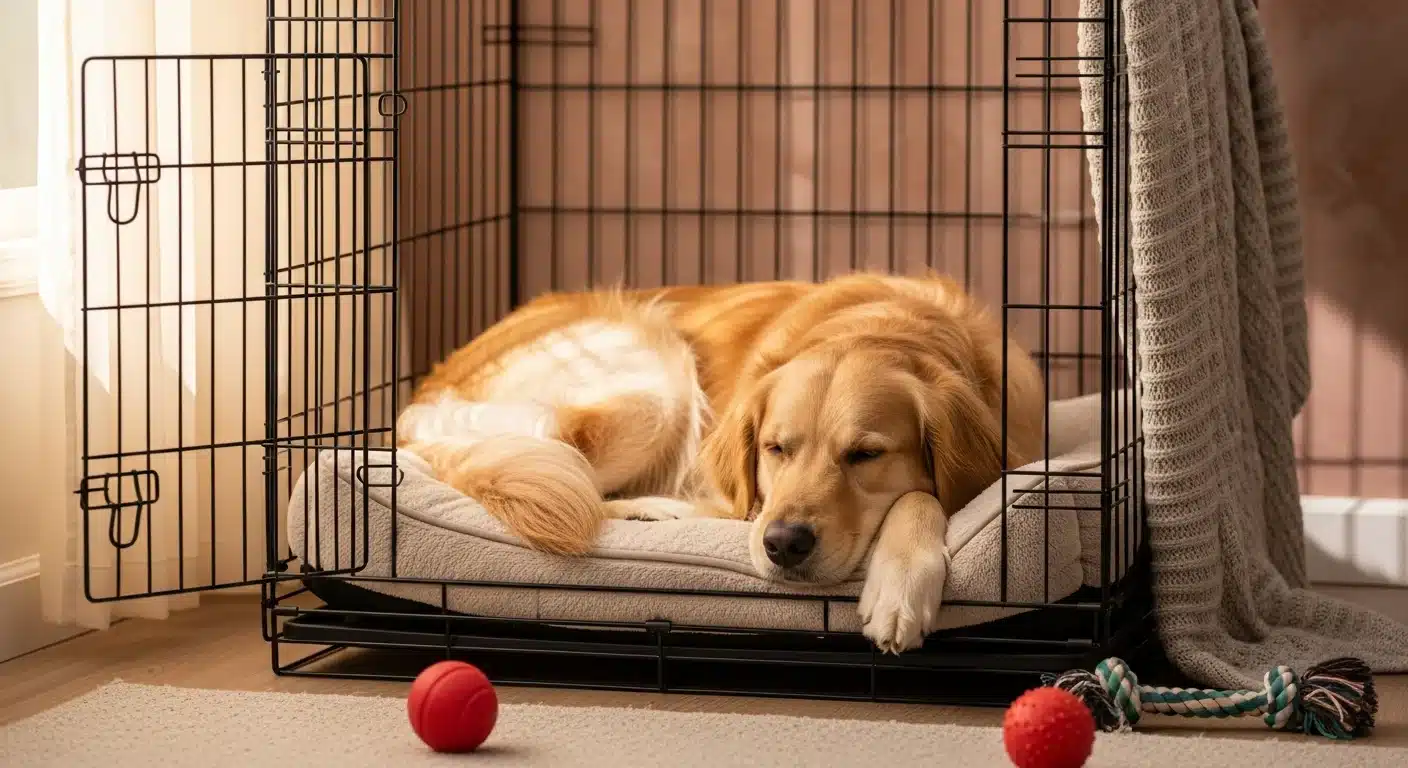
Are Dog Crates Cruel? An Honest Answer
The short answer: no, when used correctly. The longer answer covers the science, the real welfare rules, and where crating genuinely does cross the line.
Are dog crates cruel? It’s one of the most searched questions in dog ownership, and it deserves a straight answer rather than a defensive lecture. The honest version: a crate is not cruel by nature, dogs are not humans, and most dogs that are introduced to a crate gradually and correctly come to treat it as a retreat they choose on their own. At the same time, crating can become cruel when it’s misused: left in for too many hours, used as punishment, sized too small to stand and turn around, or forced on a dog who was never taught to like it. This guide covers the science behind why crates work, the legitimate benefits they offer, the welfare rules that separate humane use from misuse, what the critics get right, and the alternatives for dogs that don’t take to crating at all.
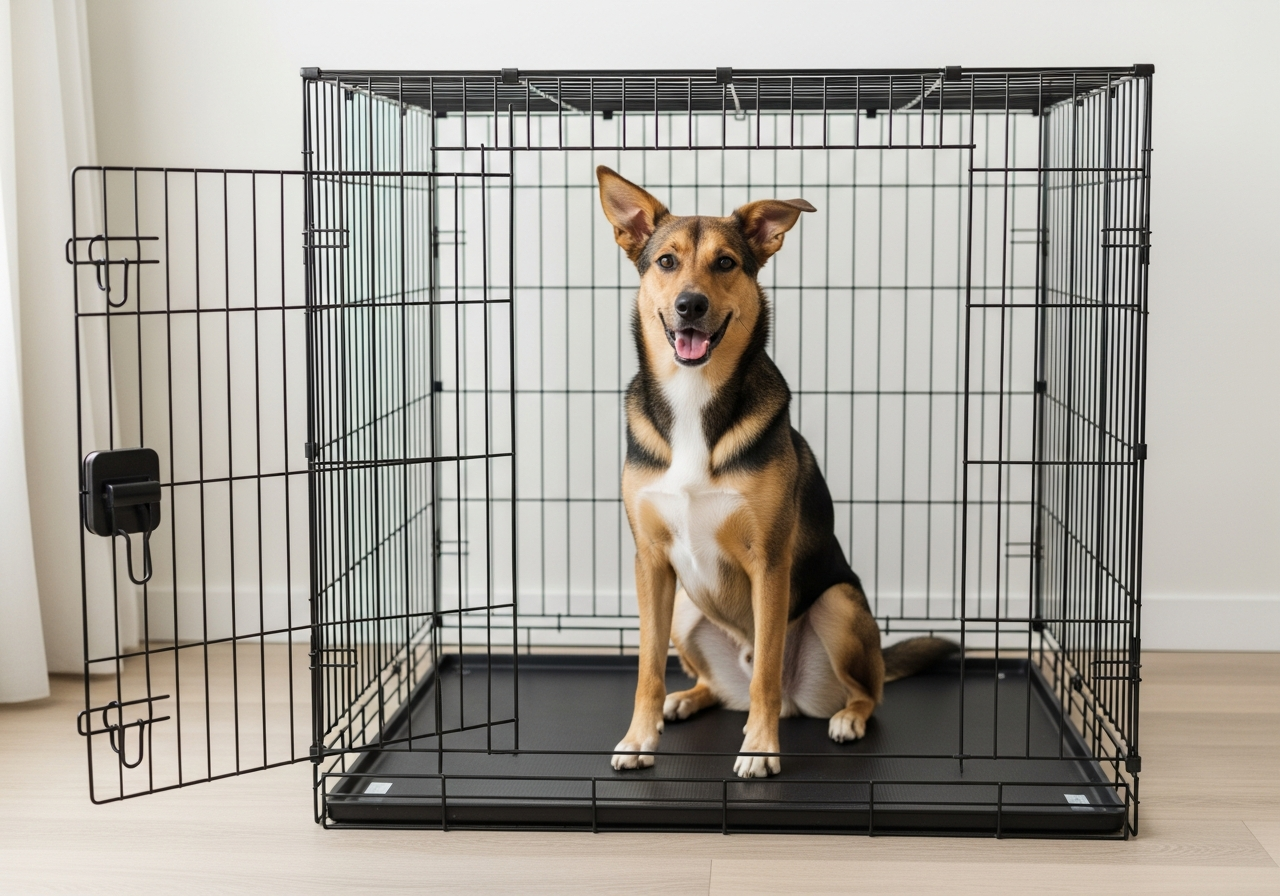
A correctly-sized crate that follows every welfare rule
We only feature one buy button here because this is an explainer, not a roundup. The MidWest iCrate is the right pick for most owners because it gets the welfare fundamentals right out of the box. Verified in stock, tap through for the live price.
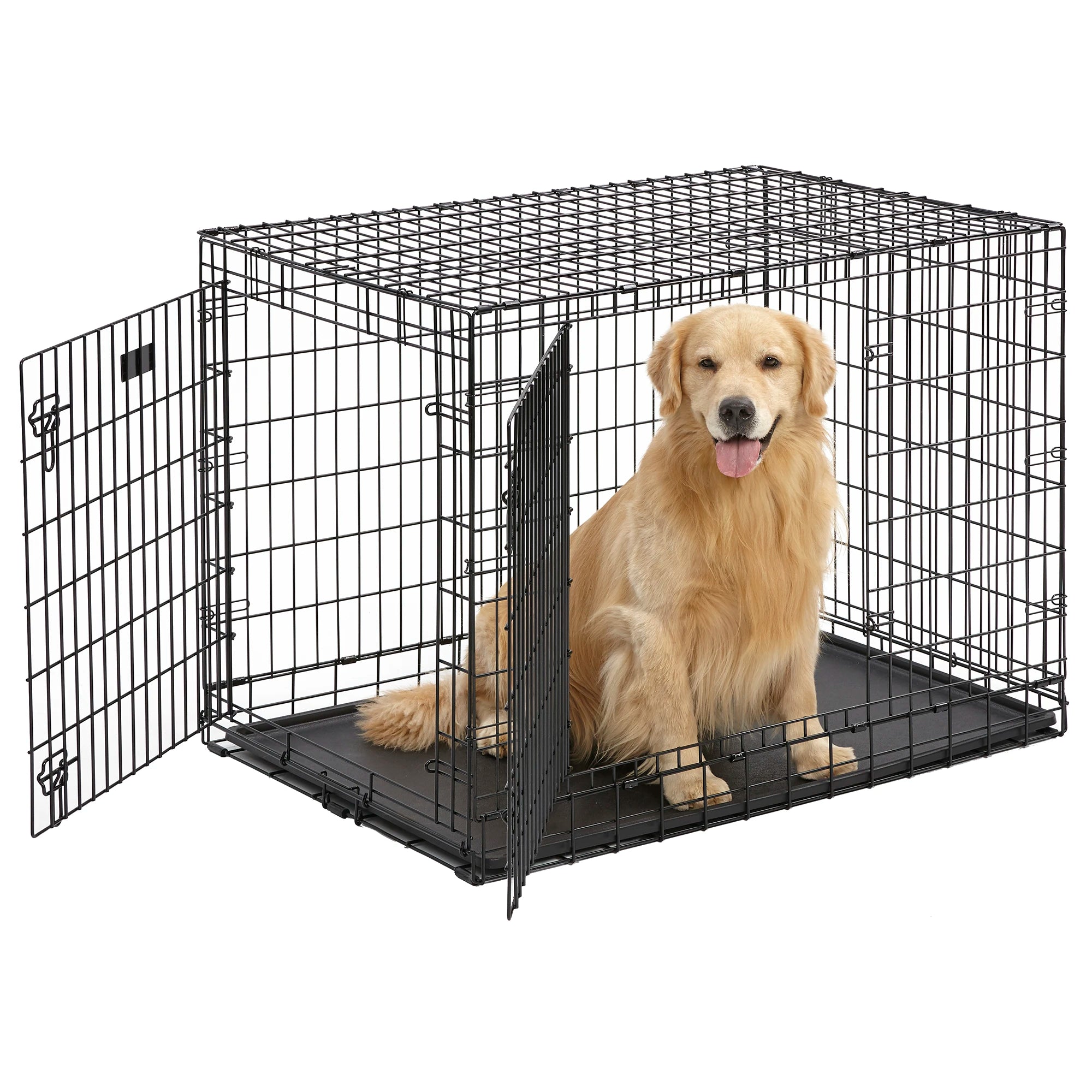
MidWest iCrate Folding Dog Crate
If a crate becomes cruel when it’s the wrong size, used as punishment, or impossible to set up correctly, the MidWest iCrate is the antidote. The included divider panel lets you start small for a puppy and expand as they grow, so the space is always just right. Double doors, a leak-proof pan, and a fold-flat design make daily use genuinely easy, which means dogs get in and out on a relaxed routine rather than being crammed in out of frustration.
What we like
- Divider panel grows with your dog, no buying a second crate mid-training
- Double doors give flexible placement in any room layout
- Folds flat in seconds for travel or storage
- Available in 7 sizes from 18″ (XS) to 54″ (XXL), every dog fits
The catches
- Wire construction is open, dogs that want visual seclusion need a crate cover
- Latches can rattle for light-sleeping dogs; a bungee cord fixes it
- Not escape-proof for truly determined dogs (Impact or Gunner are for that use case)
What the science actually says about dogs and dens
You’ll often hear that dogs are “den animals” and therefore love crates. The reality is a bit more nuanced, and worth understanding before you buy into the oversimplified version either way.
Wild canids do use dens, but mainly for whelping and nursing pups, and occasionally for shelter. Dens are not locked, the animal can leave whenever it wants. Domestic dogs aren’t the same as their wild cousins, and you shouldn’t assume any dog will automatically find a box comforting. What the research does consistently show is that dogs are den-capable: they can learn to feel safe in a small, enclosed, predictable space, and many actively seek out tight spots on their own, under beds, behind sofas, in corners. That seeking behavior is real even if the “instinct” label is a slight oversimplification.
The practical takeaway: a crate is not a magical comfort zone a dog will love the moment you set it up. It’s a space that can become a comfort zone through calm, positive introduction. When that’s done well, many dogs develop a genuine attachment to their crate, going in voluntarily, relaxing when the door is open, retreating there during fireworks or visitors. When it’s done badly, crate the dog, shut the door, ignore the panicking, you’re creating a stress box, not a safe haven.
The science on confinement stress is clear too: dogs forced to stay confined for long periods without enrichment, exercise, or social contact show measurable stress hormones, anxiety behaviours, and in some cases depression. It’s not the crate that causes this, it’s the isolation and duration.
The legitimate benefits of crate training
Dismissing crates entirely ignores real, evidence-backed benefits. These are the cases where a crate serves the dog, not just the owner’s convenience:
| Benefit | How the crate helps |
|---|---|
| Housebreaking | Dogs instinctively avoid soiling where they sleep. A correctly sized crate accelerates house-training by teaching bladder and bowel control, one of the most cited reasons vets and trainers recommend crates for puppies. |
| Safety | A puppy or new dog loose in a house unsupervised will chew, ingest, or get into something dangerous. A crate keeps them safe during the hours you genuinely cannot watch them. |
| Anxiety refuge | A dog that has a positive crate association will seek it out during thunderstorms, fireworks, parties, or any high-stimulation event. It’s their off-switch, a place where nothing scary can reach them. |
| Post-surgery recovery | Vets regularly prescribe “crate rest” after surgeries, restricted movement prevents re-injury. A dog already comfortable with its crate will rest calmly; a dog that has never been crated will fight it, which risks the surgical site. |
| Travel and emergencies | Dogs that are crate-trained travel safely in cars and planes, and can be contained quickly during emergencies or evacuations. A panicked dog that has never learned to tolerate a carrier is a safety risk to itself. |
| Separation anxiety management | For dogs with mild separation anxiety, a crate provides a predictable, enclosed environment that can reduce the distress of being alone, especially when combined with a calming Kong or chew. |
These benefits are real whether you crate a puppy long-term or just for the first few months. Many owners phase crating out once a dog is reliably house-trained and trusted alone, by which point the dog has developed a positive association and often chooses to go in anyway.
When a crate becomes cruel: the 5 misuses that cause real harm
The critics of crate training are not wrong about everything. Here are the five specific situations where crating genuinely crosses into welfare harm, and that every responsible crate advocate should acknowledge:
- Too small to stand, turn, or lie flat. A dog that cannot stand at full height, turn around, or stretch out in its crate is being physically restricted in a way that causes muscular stress and significant discomfort. Crate size is not optional, it’s a welfare minimum. The rule: your dog should be able to stand without ducking, turn a full circle, and lie fully stretched. For large dogs especially, this means checking the size chart carefully and sizing up if in doubt. Our crate size calculator takes the guesswork out of it.
- Too many hours without a break. The most common misuse: crating a dog for 8, 10, or 12 hours while the family is at work and school. Dogs crated this long regularly develop anxiety, destructive behaviour, and bladder problems. Puppies physically cannot hold their bladders long enough, forcing them to soil their crate undoes house-training and causes distress. Even adult dogs should not be crated for more than 4 to 5 hours at a stretch during the day. For longer days, a dog walker, pet sitter, or doggy daycare is not a luxury, it’s a welfare requirement. See our full guide on crate time limits.
- Used as punishment. Sending a dog to its crate as discipline is one of the fastest ways to destroy its crate association. The crate must remain a neutral-to-positive space, the moment it becomes associated with correction or anger, the dog will resist going in, and the benefits evaporate. Never shout a dog into its crate, never use it after scolding, and never put them in when you are visibly frustrated.
- No positive introduction. Throwing a dog into a crate, shutting the door, and leaving, with no gradual introduction, produces panic, not calm. Dogs need to build positive associations incrementally: door open and treats tossed in, then door closed briefly, then a few minutes, then longer. Skipping this step is what produces the horror-story “my dog cried for hours” experience, and it’s the owner’s mistake, not a flaw with crates.
- Inappropriate for the individual dog. Some dogs genuinely do not do well in crates regardless of how carefully they’re introduced, particularly dogs with severe separation anxiety (where confinement can escalate panic to self-injury), claustrophobia-adjacent fear responses, or dogs that have been previously traumatized by confinement. Forcing crate training on a dog that is clearly distressed by it is cruel. Alternatives exist and we cover them below.
The welfare rules: what humane crating looks like in practice
Apply these consistently and crating is a welfare-positive tool. Skip any of them and you’re drifting toward the misuse column:
- Size it right. Use a crate large enough for your dog to stand, turn, and lie stretched, but not so large that one end becomes a bathroom. Use a divider for puppies and expand it as they grow. If you’re unsure, our crate size calculator gives you the exact dimensions for your dog’s measurements.
- Introduce it gradually and positively. Leave the door open. Toss treats in. Let the dog explore. Feed meals near or inside the crate. Only close the door once the dog is relaxed inside, starting with 30 seconds, building to a few minutes, then longer over days or weeks. Never rush this. Our full crate training guide walks you through every stage.
- Respect time limits. A rough rule: puppies can hold it roughly one hour per month of age (a 3-month-old = ~3 hours, maximum). Adult dogs: 4 to 5 hours during the day is the comfortable limit; up to 8 hours overnight when most dogs sleep. If your workday is longer than this, arrange a midday break.
- Never punish in the crate. The crate is neutral ground. Good things happen near it and in it. No exceptions.
- Give exercise before and after. A dog exercised before crating rests; a dog crated before a walk will be frustrated and restless. A good walk before the crate makes the difference between a dog that settles and a dog that paces.
- Make it comfortable. A soft bed or blanket, a familiar-smelling item, and, for dogs that are anxious, a chew or stuffed Kong make the crate a place dogs want to be. Cold, bare wire is not a rest space.
- Leave the door open when you’re home. A crate that is sometimes locked and sometimes open gives the dog agency. Dogs with positive associations will choose to go in on their own, which is the goal.
Crate time limits: the numbers, by age
The single most common welfare failure with crates is not size or training, it’s duration. Here are the evidence-based guidelines:
| Age | Max daytime crate session | Notes |
|---|---|---|
| 8 to 10 weeks | 1 hour | Bladder control is minimal; this age needs breaks constantly |
| 2 to 3 months | 2 to 3 hours | Month + 1 rule: age in months, add 1 = max hours |
| 3 to 6 months | 3 to 4 hours | Gradually improving bladder control |
| 6 to 12 months | 4 to 5 hours | Adolescent, can handle longer with pre-crate exercise |
| Adult (1 to 7 years) | 4 to 6 hours | Up to 8 hours overnight (sleeping); midday break for work-day crating |
| Senior (7+) | 4 to 5 hours | Bladder capacity can decline, treat more like a younger dog |
These are maximums, not targets. Shorter is always better. And overnight crating at the longer end is different from daytime crating, most dogs sleep 8 to 10 hours anyway, and overnight crating at adult stage is broadly accepted by veterinary guidance as fine for a dog that’s comfortable in its crate.
If your situation genuinely requires longer crate time than these guidelines allow, the responsible answer is to arrange a dog walker, ask a neighbour, try doggy daycare, or look at the alternatives below, not to stretch the limits.
What the critics get right (and where they overreach)
PETA’s position is that crates are always cruel. Most veterinary and trainer organisations disagree, but dismissing the critics entirely misses what they’re often responding to. Here’s a fair breakdown:
What they get right:
- Crates are massively overused in the US. Leaving a dog crated for a full working day, day after day, is a genuine welfare issue, and it happens constantly.
- Some people use crates to avoid addressing real issues (separation anxiety, destructive behaviour) instead of actually training the dog. The crate becomes a permanent management tool rather than a temporary aid.
- Crates can mask separation anxiety, a dog that is quiet in a crate isn’t necessarily calm; it may simply be frozen in anxiety. Video monitoring your dog during crating is the only way to know.
- Not every dog is a candidate. Forcing a crate on a dog that is genuinely phobic of confinement is cruel, full stop.
Where they overreach:
- Conflating misuse with inherent harm. A tool that causes harm when misused is not inherently harmful. Cars, medications, and harnesses all cause harm when misused.
- Applying human psychology to dogs. Dogs are not children. The experience of temporary, comfortable confinement is not the same for a dog as it would be for a person.
- Ignoring the legitimate welfare scenarios, recovery from surgery, safe travel, house-training, where a crate-comfortable dog is genuinely better off.
The sensible position is in the middle: crate training done correctly is humane and often beneficial; crate training done badly or used as a permanent warehouse is a welfare failure.
Alternatives to crating: when the crate isn’t right for your dog
If your dog is genuinely distressed by crates, panicking, injuring themselves, unable to settle even after a slow and careful introduction, forcing it is the wrong call. These are the main alternatives:
- Exercise pen (X-pen). A folding metal playpen gives the dog a contained space without the enclosed feel of a crate. Dogs with mild claustrophobia often do much better with an X-pen than a crate. Still provides confinement and safety, just more open.
- Dog-proofed room. A single room, kitchen, laundry room, utility space, with all hazards removed (cables, toxic plants, bins, shoes). A baby gate on the door keeps them contained without locking them in a small space. Better for dogs that need more room to pace or settle.
- Tether. A fixed tether in a safe location keeps a dog from roaming freely without crating. More suitable for short periods with supervision nearby than for full work-day confinement.
- Doggy daycare / dog walker. Not an alternative to confinement so much as an alternative to the situation that makes all-day confinement necessary. For dogs that don’t suit any form of confinement, this is the honest solution.
- Do nothing (for some dogs). Some dogs are simply trustworthy loose in the house from a young age, usually calmer breeds that were never destructive, or dogs whose owners were home consistently during the puppy stage. Not every dog needs to be crated; it depends on the individual.
There is no shame in concluding that crating is not right for your specific dog. The goal is a safe, calm dog, however you get there.
Should you crate your dog at night?
Night-time crating is one of the most common questions, and the welfare math here is different from daytime. Most adult dogs sleep 8 to 10 hours overnight. A dog in a comfortable crate during those hours is essentially resting in its preferred spot, provided it has been properly introduced to the crate and isn’t using the overnight hours as an extension of all-day crating.
Where overnight crating becomes a problem is when it’s stacked on top of long daytime crating, a dog that has been crated 8 hours during the day should not also be crated 8 hours at night. The total confinement adds up, and a dog needs significant off-crate time for movement, interaction, and mental stimulation to stay healthy.
For puppies, overnight crating almost always means nighttime waking and a trip outside, puppies 8 to 16 weeks old simply cannot hold their bladder all night. Setting an alarm and taking them out is part of the deal; leaving a young puppy to soil its crate overnight is not acceptable and sets back house-training.
The short version: overnight crating in a properly sized, comfortable crate is fine for most adult dogs. Just make sure it’s their only crated period, not a second shift after a full day inside.
Crate training: your questions answered honestly
Are dog crates cruel?
No, not when used correctly. A crate introduced gradually and positively, sized right, and used within sensible time limits is not cruel; many dogs come to treat their crate as a safe retreat they choose voluntarily. Crating becomes cruel when the crate is too small to stand or turn, used for too many hours without breaks, used as punishment, or forced on a dog with no positive introduction. The tool is neutral, the use makes the difference.
Is crate training cruel for puppies?
Not if it’s done right. Crate training is widely recommended by vets and trainers as part of puppy house-training because puppies avoid soiling their sleeping area. The keys for puppies specifically: the crate must be sized with a divider so it’s not too large; sessions must be short (a puppy can only hold its bladder roughly one hour per month of age); and nighttime crating means accepting that you will need to take a young puppy out once or twice during the night. Rushing any of these steps is where owners run into trouble.
How many hours can a dog be in a crate?
For adult dogs, 4 to 6 hours is the comfortable daytime maximum; up to 8 hours overnight (when the dog is sleeping) is broadly accepted. Puppies have much shorter limits: roughly one hour per month of age during the day (a 3-month-old = ~3 hours). These are maximums, not targets, shorter is always better, and dogs that are regularly crated at the upper limits should have significant off-crate exercise and interaction time to compensate. A full working day of 8 to 10 hours in a crate is too long for most adult dogs.
Is it cruel to crate a dog while you’re at work?
It depends on how long the workday is and what the rest of the dog’s day looks like. A 4-hour crate period while you work from home or while a dog walker covers the middle of a longer day is fine. A dog crated from 7am to 6pm with no break, that’s 11 hours, and yes, that’s a welfare problem regardless of how nice the crate is. If your hours require that kind of crating, the right solution is a dog walker, a neighbour who can help, doggy daycare, or reconsidering whether the dog’s lifestyle is sustainable.
Can crate training cause separation anxiety?
Crate training itself does not cause separation anxiety, but it can mask it. A dog that is silent in its crate may be frozen in anxiety rather than calm, and that anxiety doesn’t disappear; it just isn’t visible. Video monitoring your dog for the first 10 to 15 minutes after you leave is the only reliable way to tell whether they’re relaxed or distressed. Crating can actually help some dogs with mild separation anxiety by providing a predictable, enclosed space, but dogs with severe separation anxiety often do worse in a crate and need a different approach plus professional trainer support.
What can I use instead of a dog crate?
The main alternatives are an exercise pen (X-pen), which gives more space and is better for dogs with claustrophobia; a dog-proofed single room with a baby gate; or a tether in a safe area for short supervised periods. For dogs that don’t suit any confinement, doggy daycare or a dog walker during working hours is the responsible answer. Some dogs are simply trustworthy loose in the house from a relatively young age and never need crating at all, it depends on the individual dog.