 Dog Gear, Sized Right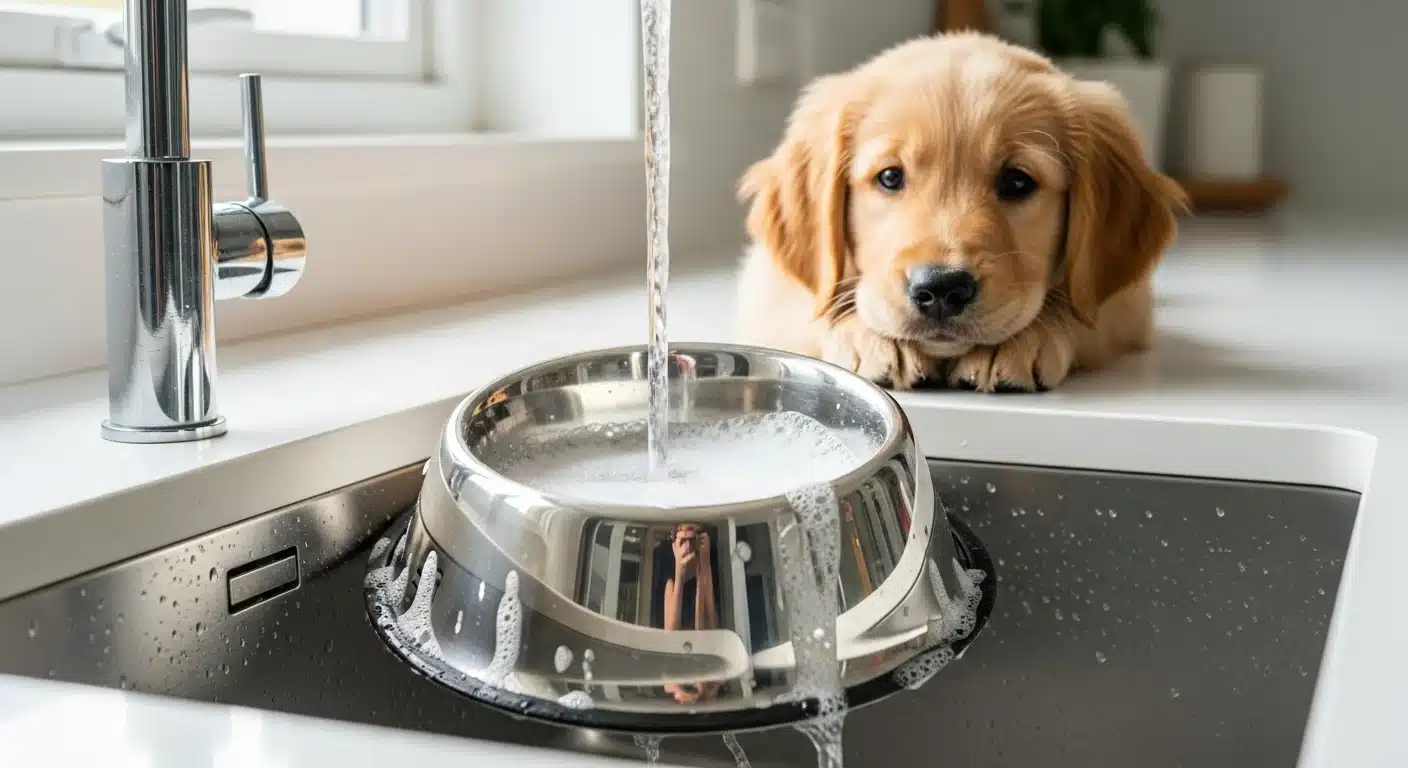
How Often Should You Wash a Dog Bowl? (More Than You Think)
The NSF ranks pet bowls among the germiest household items, here’s how often to wash yours (and why most people get it wrong).
Here’s an uncomfortable truth: your dog’s food bowl is probably one of the most bacteria-laden objects in your home. The NSF, a global public health and safety nonprofit, found that pet food bowls rank in the top ten germiest household items, behind only dish sponges, kitchen sinks, and toothbrush holders. The culprit? A slimy, invisible microbial film called biofilm. It forms within hours on any moist surface that touches food. The fix is simple, but the frequency surprises most dog owners.
The Quick Answer: How Often to Wash a Dog Bowl
The short version, backed by the FDA and the veterinary community:
| Bowl Type | Minimum Wash Frequency | Ideal |
|---|---|---|
| Food bowl (kibble or wet) | Once daily | After every meal |
| Water bowl | Every 1 to 2 days | Daily rinse + wash |
| Raw-fed dog’s bowl | After every meal (non-negotiable) | Hot soapy water + weekly sanitize |
| Slow-feeder maze bowl | Daily | After every use; brush the crevices |
| Automatic feeder reservoir | Weekly at minimum | Every 3 to 4 days; disassemble fully |
Why Pet Bowls Get So Dirty So Fast
Every time your dog eats or drinks, bacteria from their mouth transfer to the bowl surface. Leftover moisture, food residue, and saliva create a perfect breeding ground. Within hours, these microorganisms form biofilm, a structured community of bacteria protected by a sticky, slimy matrix. You’ve probably felt it: that slightly slippery feeling inside a bowl that hasn’t been washed for a day or two. That’s biofilm.
Biofilm is not just aesthetically unpleasant. It’s biologically dangerous. The matrix structure protects bacteria from disinfectants and makes them significantly harder to dislodge with a casual rinse. Research published in Veterinary Evidence confirmed that pet food bowls carry substantial microbial loads, including pathogens capable of infecting both pets and people.
The risk is highest with:
- Wet or canned food, leaves nutrient-rich residue that feeds bacteria rapidly
- Raw diets. Salmonella and Listeria contamination from raw meat can survive on bowl surfaces for hours
- Slow-feeder bowls, maze-like grooves trap food particles that a sponge can’t reach
- Plastic bowls, even small scratches harbor bacteria in micro-fissures, impossible to fully sanitize
The Real Risks: Salmonella, Listeria, and MRSA
The bacteria that colonize unwashed dog bowls aren’t harmless. Studies have detected Salmonella, Listeria, E. coli, and in some cases MRSA (methicillin-resistant Staphylococcus aureus) on pet dish surfaces. These aren’t just a threat to your dog, they’re a household hazard.
Dogs fed raw diets shed Salmonella in their feces and can deposit it on bowl surfaces even if they show no symptoms. Children, elderly adults, pregnant women, and anyone immunocompromised are at heightened risk of serious illness from cross-contamination, touching the bowl, the floor around it, or the dog itself after feeding.
For your dog, chronic exposure to a contaminated bowl can cause recurring gastrointestinal upset, skin issues (from licking contaminated surfaces), and, if severe, systemic illness. Vets often trace mystery digestive problems back to inadequate bowl hygiene before any other cause.
Stainless Steel vs. Ceramic vs. Plastic: Which Is Easiest to Keep Clean?
Bowl material matters enormously for hygiene, not all bowls are equally easy to sanitize.
Stainless Steel
The gold standard. Stainless steel is non-porous, so bacteria can’t work their way into micro-scratches the way they do with plastic. It’s dishwasher-safe (even on hot/sanitize cycles), odor-resistant, and durable enough to last years without replacement. Vets and nutritionists consistently recommend it. One caveat: low-grade stainless can rust if not dried promptly, look for 18/8 (304-grade) stainless.
Ceramic
Glazed ceramic is non-porous and easy to clean, until it chips. Even hairline cracks in the glaze trap bacteria in the same way scratched plastic does. If your ceramic bowl shows any chips or crazing, replace it immediately. Choose food-safe, lead-free glazes; some decorative pottery is not safe for daily food contact.
Plastic
Cheapest upfront, most expensive in the long run hygienically. Plastic scratches easily, from dishwashers, abrasive sponges, or even a dog’s nails, and those scratches become permanent bacterial harbors. Multiple studies confirm that plastic pet bowls carry significantly higher bacterial loads than stainless or ceramic. Plastic can also leach BPA or other chemicals when heated. If cost is a barrier, inexpensive stainless steel bowls are widely available for under $10.
How to Wash a Dog Bowl Properly
A quick cold rinse does not wash a dog bowl. Here’s what actually works:
Daily Wash (Hand or Dishwasher)
- Rinse the bowl to remove loose food debris first
- Wash with hot water and dish soap, using a dedicated sponge or brush (not the one you use on your own dishes, cross-contamination risk)
- Scrub all interior surfaces, including the base where food pools
- Rinse thoroughly, soap residue can upset sensitive stomachs
- Air dry completely, or dry with a clean towel. Biofilm needs moisture; a dry bowl resets the microbial clock
Dishwasher Use
For stainless steel and dishwasher-safe ceramic, the dishwasher is actually more effective than hand-washing. High-heat cycles (140°F+) and sanitize settings kill bacteria that hot soapy water alone may miss. NSF studies confirm lower bacterial counts in dishwasher-cleaned bowls vs. hand-washed. Place bowls on the top rack to protect them from warping on the heating element.
Weekly Deep Sanitize
Even with daily washing, a weekly sanitize step removes persistent biofilm:
- Mix 1 tablespoon of unscented household bleach per gallon of water
- Soak the clean bowl for 2 minutes
- Rinse very thoroughly with clean water (multiple times)
- Air dry completely before use
Slow Feeders and Automatic Feeders: Extra Care Required
Standard bowl-washing routines don’t cover every feeding setup. Two types need special attention:
Slow-Feeder Maze Bowls
Slow-feeder bowls are fantastic for dogs that eat too fast, they reduce bloat risk, extend mealtime, and provide mental enrichment. But those ridges and channels are biofilm traps. Food particles compact into corners that a flat sponge never reaches. Wash slow feeders after every single use with a bottle brush or cleaning brush that can get into the maze geometry. If the bowl is dishwasher-safe (most silicone and many plastic slow feeders are), run it on a hot cycle daily.
Automatic and Gravity Feeders
Automatic feeders are convenient, but the reservoir and dispensing mechanism can develop biofilm and mold, especially in humid climates. Disassemble fully at least once a week, wash all components in hot soapy water, rinse thoroughly, and let dry completely before reassembling. The same applies to gravity water dispensers, the reservoir bottle and the base bowl both need regular attention.
Don’t Forget the Bowl Mat and Floor Area
The hygiene perimeter extends beyond the bowl itself. Every dog spills. Food and water land on the mat and floor, where bacteria from the bowl can colonize too.
- Silicone or rubber mats: Wipe down daily, deep-clean weekly. Silicone is non-porous and dishwasher-safe, the easiest option.
- Fabric mats: Machine-wash weekly at hot temperature. Fabric absorbs spills and stays moist, making it an ideal bacterial habitat if neglected.
- Hard floor area: Mop or wipe with an appropriate disinfectant at least every couple of days. Kids and toddlers crawl on these surfaces.
Signs Your Dog’s Bowl Needs Replacing (Not Just Washing)
Some bowls can’t be cleaned back to safe, they need to go. Watch for these signs:
- Persistent smell even after hot washing, bacteria are embedded in the material, not just on the surface
- Visible scratches or scoring on plastic or ceramic bowls
- Chips, cracks, or crazing in ceramic glaze
- Rust spots on low-grade stainless (replace with 18/8 grade)
- Warping or discoloration in plastic after repeated dishwasher cycles
A good stainless steel bowl properly cared for can last 10+ years. Plastic bowls should ideally be replaced every 6 to 12 months even without visible damage, because micro-scratching accumulates invisibly over time.
Find the Right Bowl for Easy Cleaning
The easiest bowl to keep hygienic is the one that fits your dog and your routine. Whether you want a stainless workhorse, a slow-feeder maze, or an elevated option for a large breed, our tested picks below cut through the noise.
Explore our bowl guides
Dog bowl hygiene, answered
How often should I wash my dog’s bowl?
Wash food bowls after every meal, or at a minimum, once daily, with hot soapy water. Water bowls should be refreshed and washed every one to two days. All bowls benefit from a weekly deep sanitize (bleach soak or dishwasher sanitize cycle) to remove biofilm that daily washing alone may not fully eliminate.
Do dog bowls need to be washed every day?
Yes, food bowls should be washed daily at minimum, and ideally after each meal. Water bowls need at least a daily rinse and a full wash every one to two days. Biofilm starts forming within hours on a moist, food-exposed surface, so leaving a bowl unwashed overnight allows significant bacterial buildup.
What happens if you don’t wash a dog bowl?
Unwashed bowls develop biofilm, a protective slime layer of bacteria including Salmonella, Listeria, E. coli, and even MRSA in some cases. For your dog, this can cause recurring digestive upset, skin irritation from licking, and in severe cases systemic illness. For humans in the household, especially children and the immunocompromised, contact with contaminated bowls poses a real cross-infection risk. The NSF ranks pet food bowls among the top ten germiest household items.
Is it safe to wash dog bowls in the dishwasher with human dishes?
If your dog is healthy, yes, it’s generally safe to wash dog bowls in the same dishwasher load as your own dishes, provided the bowls are dishwasher-safe (stainless steel and most ceramic are; most plastic is not). The dishwasher’s high-heat sanitize cycle is actually more effective at killing bacteria than hand-washing. If you prefer, run dog bowls in a separate load, but it isn’t strictly necessary for a healthy dog.
What is biofilm and why does it matter?
Biofilm is a structured community of bacteria that adheres to moist surfaces and secretes a protective slimy matrix, that’s the slippery feeling you notice inside an unwashed bowl. The matrix protects bacteria from many disinfectants and makes them much harder to remove with a simple rinse. Biofilm on pet bowls can harbor pathogens including Salmonella and Listeria. Hot soapy water and scrubbing physically disrupts and removes biofilm, a rinse alone does not.
Which bowl material is most hygienic for dogs?
Stainless steel, specifically 18/8 (304-grade) stainless, is the most hygienic option. It’s non-porous, won’t scratch deeply, and is fully dishwasher-safe including on high-heat sanitize cycles. Glazed ceramic is a good second choice if unchipped. Plastic is the least hygienic option: even small scratches from normal use create permanent bacterial harbors that can’t be cleaned out.
How do I clean a slow feeder dog bowl properly?
Slow feeder mazes need a dedicated cleaning brush, a bottle brush or old toothbrush, to reach into every groove and channel where food compacts. A flat sponge will miss most of the high-risk areas. If your slow feeder is dishwasher-safe (check the manufacturer label, most silicone models are), run it on a hot cycle after every use. Soak in warm soapy water for a few minutes first to loosen stuck food before brushing.