 Dog Gear, Sized Right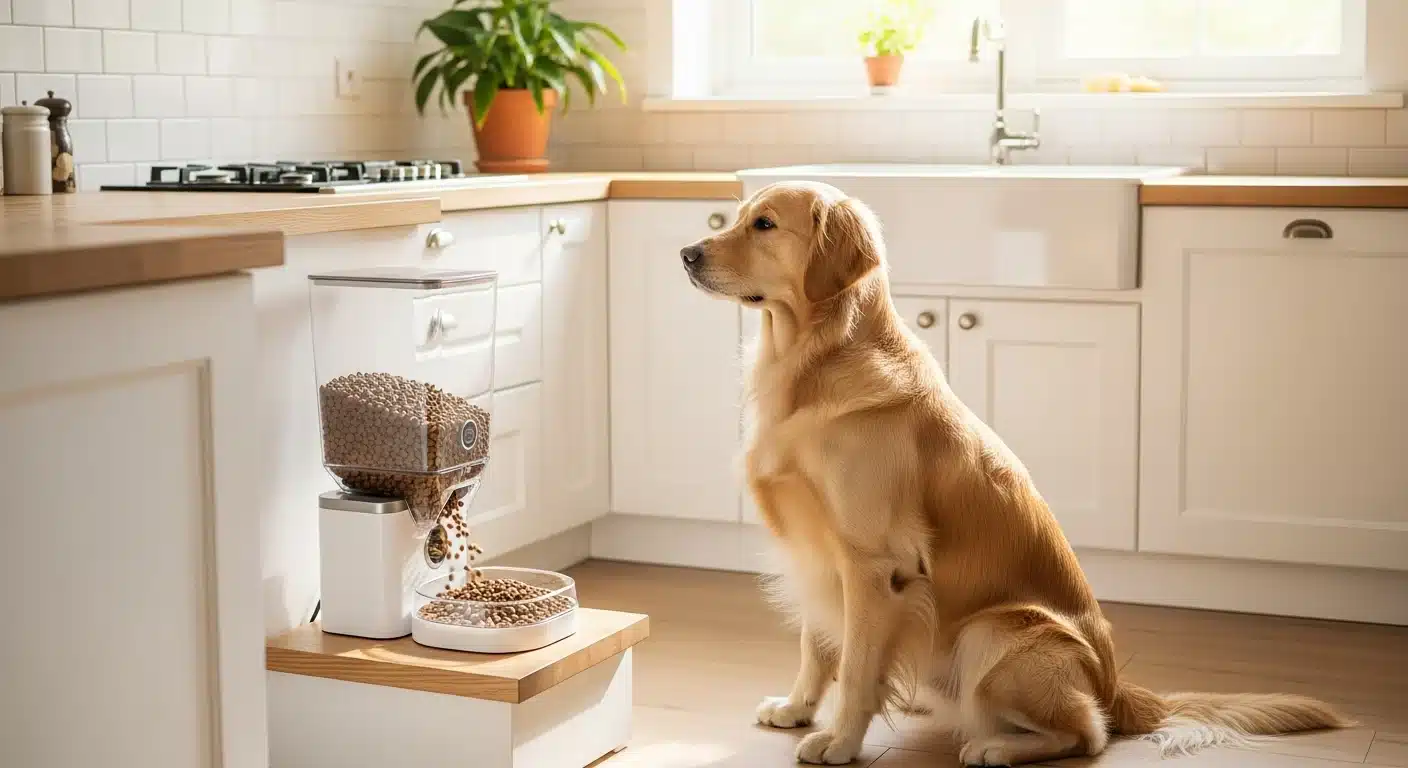
Do Automatic Dog Feeders Work? Pros, Cons & Safety
A clear-eyed breakdown of how they work, what they’re great at, where they fall short, and how to use them safely.
Automatic dog feeders promise to take the stress out of mealtimes, and for the right household, they genuinely deliver. But they’re also sold with a lot of hype, and plenty of owners buy one only to find it jams, gets raided by the wrong dog, or gives them a false sense of security when they’re away for too long. Here’s an honest look at how they actually work, what they do well, where they fall short, and whether one is right for your dog.
Our top-rated automatic dog feeder
Verified in stock. Tap through for the current price, it changes more often than we update.
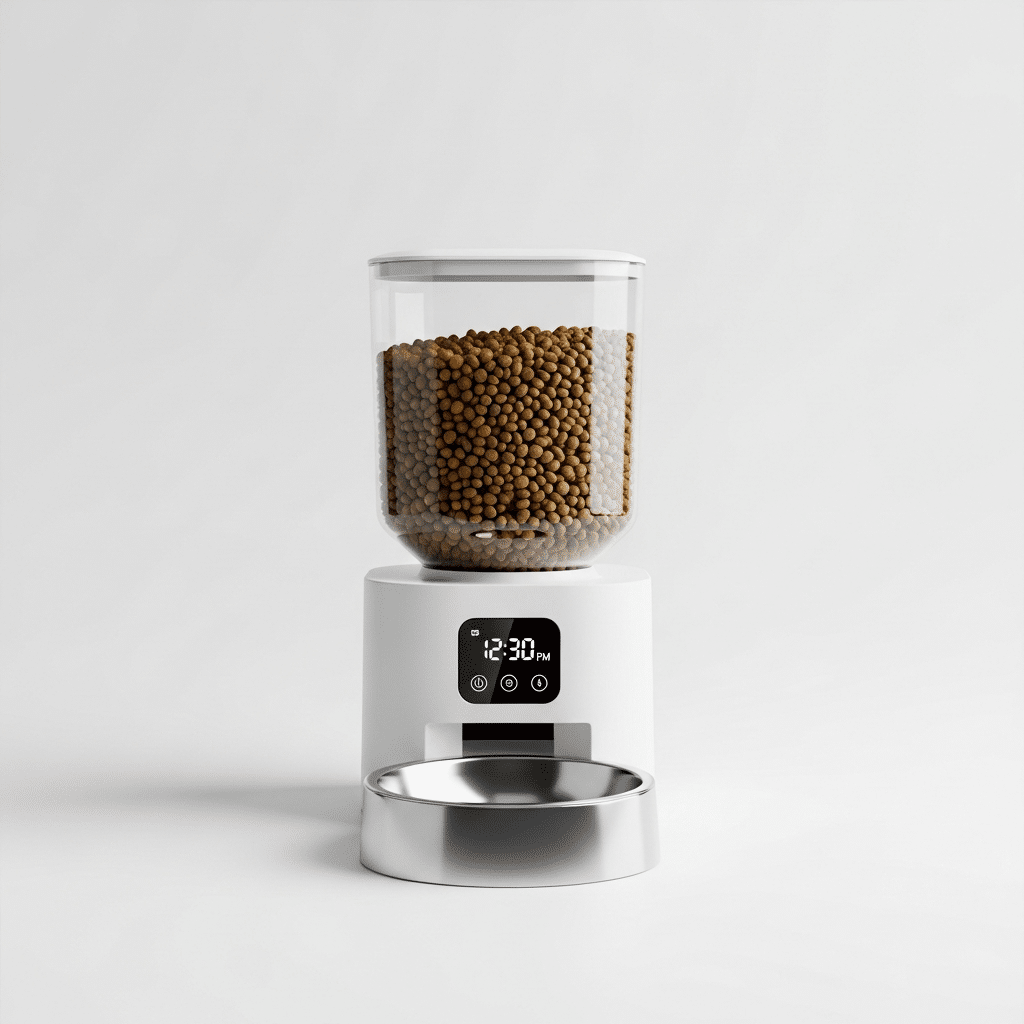
PETLIBRO Granary 5L Wi-Fi Automatic Feeder
If you want one automatic feeder to point a dog owner to, it’s the PETLIBRO Granary 5L Wi-Fi. It connects over both 2.4 GHz and 5 GHz Wi-Fi, lets you set up to 10 meals a day with 1 to 48 portions each, plays a 10-second recorded voice call at every feed, and runs on both mains and 3 D-cell batteries so a power cut won’t skip dinner. The infrared anti-jam sensor detects a kibble bridge and retries, the single most important safety feature in a feeder.
What we like
- App control on both 2.4 GHz and 5 GHz, adjust schedule or trigger a meal from anywhere
- Fine portion control (1 to 48 portions per meal, ~1/12 cup each) to hit a vet-set daily amount
- Dual power: mains adapter plus 3 D-cell battery backup for power cuts
- Infrared anti-jam sensor, low-food alert, 10-second voice meal-call; airtight tank
The catches
- 5 L tank refills every 2 to 3 days for a giant breed eating 4+ cups daily
- Best with kibble under ~12 to 15 mm, very large or irregular shapes can still occasionally bridge
- Wi-Fi pairing requires a 2.4 GHz-capable setup step; a few owners find first pairing fiddly
The 3 Types of Automatic Dog Feeder (and How Each Works)
Walk into any pet store and you’ll find feeders labelled ‘automatic’, but that word covers three very different mechanisms. Knowing the difference saves you from buying the wrong one.
1. Gravity (Continuous-Flow) Feeders
A gravity feeder is the simplest design: a hopper sits on top of a bowl and kibble slides down by gravity as the dog eats. There’s no timer, no motor, no schedule. As long as there’s food in the hopper, it refills the bowl. These are cheap, silent, and never need batteries, but they’re almost never the right choice for a dog that isn’t already on strict owner-managed portions, because the food is always available. A dog that self-regulates will be fine; a food-motivated dog will eat until the hopper is empty.
2. Programmed Timed Dispensers
These feeders have a motor and a digital timer. You set meals (time + portion size) and the feeder rotates a tray or auger at the scheduled moment, dropping a measured amount of kibble. No Wi-Fi required, they work even offline. Most mid-range models let you program 3 to 6 meals a day with portion sizes measured in ‘portions’ (usually roughly 1/12 cup per unit). They run on mains power but most take batteries as backup. This is the most common type and the one most pet owners mean when they say ‘automatic feeder.’
3. Smart / Wi-Fi App Feeders
These build on the timed dispenser with a Wi-Fi or Bluetooth connection to an app on your phone. You can adjust the schedule remotely, trigger an extra meal, get low-food alerts, and on some models see a live camera feed. Premium versions (like the PETLIBRO Granary) support both 2.4 GHz and 5 GHz Wi-Fi, record voice meal-calls, and have infrared anti-jam sensors that detect bridging kibble and retry the dispense. They’re the most feature-rich option and the best fit for owners who travel or work irregular hours, but they’re also the most expensive and the most likely to have connectivity frustrations on first setup.
Feeder Type Comparison
| Feeder Type | How It Dispenses | Portion Control | Needs Power | Best For | Skip If |
|---|---|---|---|---|---|
| Gravity | Continuous flow, no timer | None, bowl is always full | No | Self-regulating dogs, multi-day top-up | Food-motivated or overweight dogs |
| Timed Dispenser | Motor + clock, scheduled drops | Yes, measured portions per meal | Mains + battery backup | Consistent daily schedules, weight management | Need remote access; smart-home setups |
| Smart / Wi-Fi | Motor + app + optional camera | Yes, adjustable from anywhere | Mains + battery backup | Remote workers, irregular schedules, travelling | Spotty Wi-Fi; owners who won’t use the app |
What Automatic Dog Feeders Are Actually Good At
When matched to the right situation, a good timed or smart feeder does its job reliably for months without incident. These are the genuine strengths:
- Consistent portion control. A feeder dispenses exactly what you program, no rounding up ‘just a little extra’ and no forgetting. For dogs on a vet-set daily calorie target, this is genuinely useful. Studies on companion-animal obesity consistently point to inconsistent portion sizes as a key driver, and removing human guesswork helps.
- Fixed schedule, every day. Dogs are creatures of routine. A feeder that drops kibble at 7 am and 5 pm, seven days a week, even when your alarm doesn’t go off or you work late, removes meal-time anxiety for dogs that are clock-watchers.
- Early-morning or late-night feeds without waking you. A dog that needs breakfast at 6 am but you start work at 9 am? Set the feeder. This is one of the most practically useful applications, especially for puppies or senior dogs with smaller, more frequent meal needs.
- Slowing down the ‘beg loop.’ A food-motivated dog that begs before meals can redirect that energy toward the feeder rather than you, particularly useful when you’re working from home and being stared at through every video call.
- Short-term alone time. For a standard 8 to 10 hour workday, a feeder paired with fresh water and appropriate mental enrichment is a solid setup for most adult dogs.
Where Automatic Dog Feeders Fall Short
The limitations are real and worth knowing before you buy:
- Gravity feeders and overweight dogs are a bad mix. A hopper that’s always full is an all-you-can-eat buffet for a dog that doesn’t self-regulate. If your vet has mentioned your dog’s weight, a gravity feeder will make the problem worse.
- They can’t replace a person for more than about a day. A feeder keeps meals on schedule. It doesn’t check that your dog is eating, notice that they seem unwell, give them water (most feeders don’t include a water dispenser), provide exercise, or spot an emergency. Leaving a dog alone with a feeder for 24+ hours regularly is not a substitute for a dog walker, sitter, or doggy daycare.
- Power and battery failure. A mains-only feeder goes dark in a power cut. Even feeders with battery backup will fail if the batteries run out unnoticed. Check battery status weekly and keep spares on hand.
- Multi-dog households. One dog eating the other’s meals is almost inevitable without supervision. If your dogs are on different diets (e.g., one is on a prescription kidney diet), a standard feeder creates a real health risk. Microchip-activated feeders exist but significantly raise the price.
- Not a health monitor. One of the earliest signs that a dog is unwell is a change in appetite, eating less, eating slower, leaving food. A feeder dispenses the meal but can’t tell you whether your dog actually ate it.
Are Automatic Dog Feeders Safe? The Honest Answer
A quality automatic feeder, set up correctly and used within its limits, is safe for daily use. The safety concerns are real but manageable, here’s each one addressed:
Kibble Jamming
Most timed feeders use an auger or rotating drum to dispense kibble. Very large kibble (over 12 to 15 mm diameter), irregular shapes, or soft semi-moist food can bridge the chute and jam. Better feeders have an infrared sensor that detects a jam and retries. Check your feeder’s listed kibble size range and match your food accordingly, this is the single most common cause of missed meals.
Battery and Power Backup
Always buy a feeder with dual power: mains adapter and battery backup. Test the battery backup before you rely on it. Set a monthly calendar reminder to replace batteries, even if the indicator light hasn’t warned you.
A Determined Dog Breaking In
Some dogs, especially large, clever breeds, will tip a feeder over, pry off the lid, or knock it until food falls out. If your dog has done this to any food container, look for a feeder with a lock-lid design and consider placing it inside a crate or pen when you’re away.
Wet Food and Spoilage
The vast majority of automatic feeders are designed for dry kibble only. Wet food left at room temperature for more than two hours risks bacterial growth (Salmonella, Listeria). There are a small number of refrigerated or ice-compartment feeders designed for wet or raw food, but they’re expensive niche products. If your dog eats wet food, stick to manual feeding.
Multi-Dog Food Safety
If one dog is on a prescription or special diet, don’t rely on a standard feeder in a multi-dog home, use a microchip feeder or feed separately in different rooms.
How to Get the Best Results from an Automatic Feeder
Getting the most out of your feeder is mostly about setup and habit:
- Calibrate the portion first. Every feeder’s ‘portion’ unit is approximate. Fill it with your actual kibble, run a few test dispenses, and weigh the output. Adjust until you hit your dog’s vet-recommended daily amount across the number of meals you want.
- Introduce gradually. Don’t leave a dog alone with an unfamiliar feeder on day one. Let them watch it dispense while you’re home for a few days so the motor noise and mechanism aren’t startling.
- Clean weekly. Kibble dust and oil coat the chute and hopper over time, providing a substrate for bacteria. Most feeders have removable bowls and hoppers, wash them with warm soapy water once a week.
- Keep it paired with monitoring. If you have a smart feeder with a camera, use it. Even a cheap Wyze-style camera near the feeder gives you a 30-second check: did the meal drop, did my dog eat it, are they behaving normally?
- Don’t extend absence past ~24 hours without a human check-in. A feeder is a tool for a working day or a short trip where someone else provides water and exercise. It’s not a full pet-sitting solution.
The Bottom Line: A Tool for Routine, Not a Substitute for You
Do automatic dog feeders work? Yes, reliably, for the right job. A quality timed or smart feeder will dispense consistent, measured meals on a fixed schedule day after day. That’s genuinely valuable for portion control, weight management, and keeping a dog’s routine intact during a normal working day.
What they don’t do: monitor health, provide water reliably, handle wet food safely, prevent a food-thieving housemate, or replace human care beyond about 24 hours. Used within those limits, they’re a solid, low-drama addition to any dog owner’s setup. Used as an excuse to leave a dog alone for days, they’re a welfare risk.
The hierarchy by use case: smart feeder if you travel or have irregular hours and want remote control; timed dispenser if your schedule is consistent and you want simplicity; gravity feeder only if your dog has been vet-confirmed as a stable free-feeder. When in doubt, the timed dispenser is the safest all-round choice for most households.
Shop automatic feeders & related gear
Automatic feeder questions, answered
Are automatic dog feeders safe?
Yes, a quality automatic feeder is safe for daily use when used correctly. The main risks are: kibble jamming if the food doesn’t match the feeder’s size spec, power failure if there’s no battery backup, a determined dog breaking into the hopper, and spoilage if wet food is used in a dry-only feeder. Buy a model with dual power, match kibble size to the feeder’s spec, and use a lock-lid model if your dog is food-motivated. Used within these guidelines, automatic feeders are a reliable daily tool.
Do automatic feeders work for wet food?
Most do not. The vast majority of automatic feeders are designed for dry kibble only, wet food would clog the auger or drum and spoil quickly at room temperature. There are a small number of refrigerated or ice-compartment feeders designed for wet or raw diets, but they are expensive niche products. If your dog eats wet food, stick to manual feeding or look specifically for a refrigerated automatic feeder.
Can I leave my dog alone with an automatic feeder?
For a standard 8 to 10 hour workday, yes, a feeder paired with fresh water and appropriate enrichment is fine for most healthy adult dogs. For longer periods (24+ hours), a feeder is not a substitute for a person: it doesn’t check if your dog is eating, notice signs of illness, provide water reliably, or handle emergencies. For trips longer than a day, arrange a dog walker, sitter, or daycare alongside the feeder.
How many times a day should I set an automatic feeder?
Most vets recommend two meals a day for adult dogs, split roughly 12 hours apart. Puppies typically need 3 to 4 smaller meals. Dogs prone to bloat (GDV), especially large deep-chested breeds like Great Danes, Standard Poodles, and German Shepherds, benefit from at least two meals rather than one large meal, and many specialists recommend three. Set your feeder to match your vet’s recommendation rather than defaulting to whatever the box says.
Will an automatic feeder work during a power cut?
Only if it has battery backup. Many mid-range and premium feeders include a battery compartment that kicks in automatically when mains power drops, this is one of the most important features to check before buying. Test it when you first set up the feeder: unplug it and confirm a scheduled meal still dispenses on battery power. Check and replace batteries monthly even if no warning light has appeared.
Can a dog break into an automatic feeder?
Yes, determined dogs, especially large or clever breeds like Labradors, Border Collies, and Huskies, have been known to tip feeders over, knock them until kibble falls out, or pry open poorly secured lids. If your dog raids food containers, look for a feeder with a lock-lid or twist-lock hopper, and consider placing it inside a pen or crate when you’re away. A heavy base also helps with tipping.
Do automatic dog feeders work for large dogs?
Yes, but check the hopper capacity and kibble size compatibility. A large breed eating 4 to 6 cups a day will drain a 5 L hopper in 2 to 3 days, so you’ll refill more often than you might expect. More importantly, large-breed kibble is often 15 to 20 mm in diameter, check that your feeder’s chute width accommodates it, otherwise jamming is likely. Some feeders list a maximum kibble size in their specs; others don’t, so look for reviews specifically from large-dog owners.