 Dog Gear, Sized Right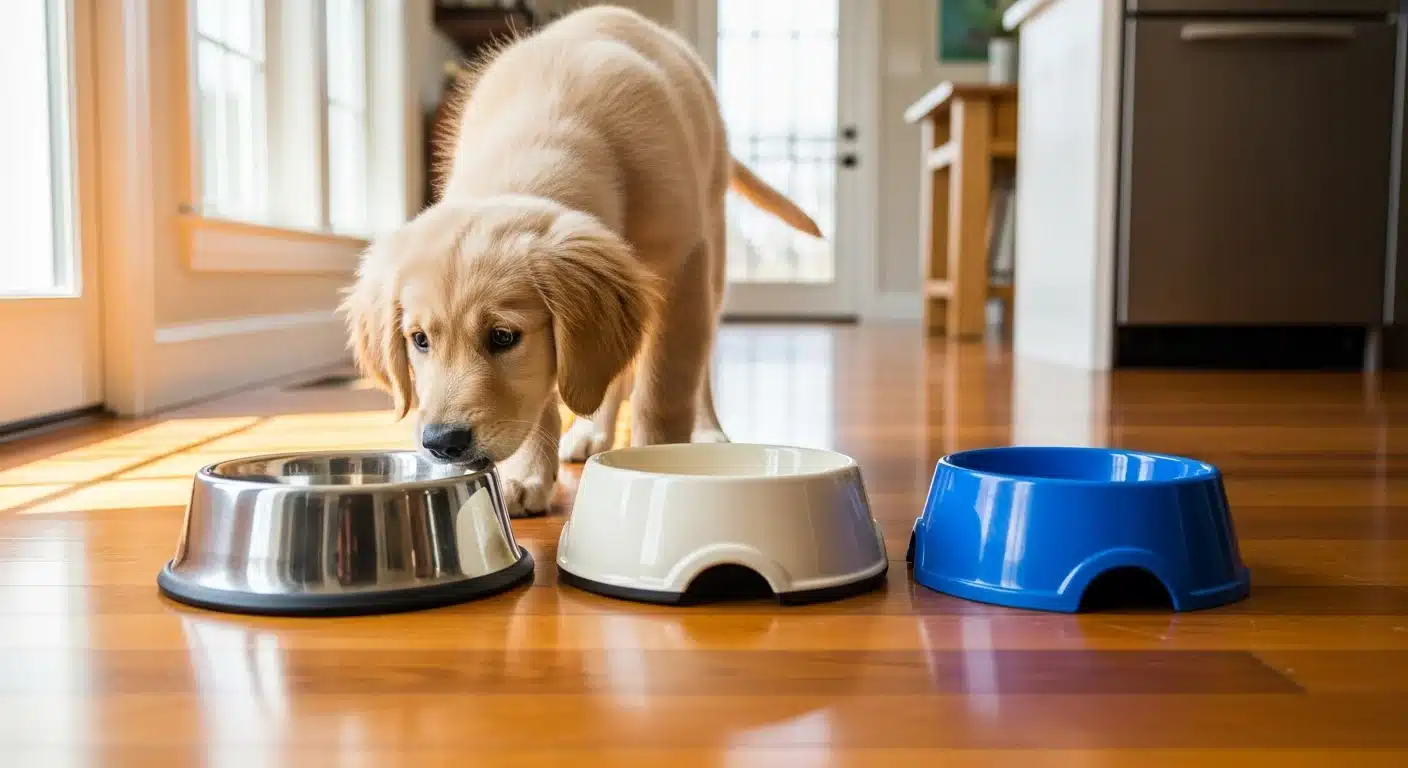
Stainless Steel vs Ceramic vs Plastic Dog Bowls: Which Is Best?
Find out which bowl material is actually safest, most hygienic, and best for your dog, with a straight-talking breakdown of every trade-off.
Your dog eats from the same bowl twice a day, every day. Yet most owners pick a bowl based on colour or price and never think about it again. The material matters more than most people realise: it affects bacterial load, chemical exposure, chip-and-crack hazards, and even whether your dog ends up with a mysterious rash on their chin. This guide cuts through the marketing noise and tells you exactly what stainless steel, ceramic, and plastic each offer, and when one actually beats the others.
Why Bowl Material Matters More Than You Think
It’s tempting to treat a dog bowl as a trivial purchase. But vets, dermatologists, and canine nutritionists have been sounding alarms about plastic bowl use for years, and the research backs them up. Here’s why material choice has real consequences:
- Bacterial colonisation. Microscopic scratches on any bowl surface create hiding places for bacteria and yeast. Materials that scratch easily, especially plastic, accumulate biofilm faster than even vigorous washing can remove.
- Chemical leaching. Some plastics and low-quality ceramic glazes can leach bisphenol A (BPA), phthalates, or heavy metals like lead into food and water, particularly as they age or are exposed to heat and UV light.
- Allergic reactions. Certain dogs develop contact hypersensitivity to plastic polymers, leading to a condition commonly called plastic dish dermatitis, presenting as chin acne, muzzle rash, or depigmentation of the nose and lips.
- Physical hazards. Chipped ceramic and chewed plastic can produce sharp shards or ingested fragments that cause mouth injuries or intestinal damage.
None of this means you need to panic about your current bowl, but it does mean the choice is worth making deliberately.
Stainless Steel Dog Bowls: The Gold Standard
Ask any vet what bowl they recommend and the answer is almost always the same: stainless steel. It has earned this reputation because it ticks every practical box.
The case for stainless steel
- Non-porous surface. Food-grade stainless steel (usually 304 or 18/8 grade) has no micro-pores for bacteria or yeast to colonise. Even biofilm wipes off cleanly.
- Dishwasher-safe. It survives daily high-temperature dishwasher cycles indefinitely, the most reliable sanitisation method available at home.
- No chemical leaching. Properly finished stainless steel does not leach BPA, phthalates, or heavy metals. It is chemically inert in contact with food and water.
- Virtually indestructible. A good stainless bowl can last a decade or more. It won’t chip, crack, or shatter when dropped.
- Allergy-safe. True nickel sensitivity is rare in dogs; almost no dog develops contact dermatitis from stainless steel.
- Recyclable. At end of life it’s fully recyclable, a lower environmental footprint than single-use or short-lived plastic bowls.
The downsides of stainless steel
- Noise. Lightweight bowls slide and clatter on hard floors. A silicone-rimmed or rubber-based bowl solves both problems.
- Plain look. If aesthetics matter, stainless is utilitarian. Some owners pair them with decorative elevated stands to get the best of both worlds.
- Sunlight reflection. Outdoors, a shiny bowl left in direct sunlight can heat water faster than ceramic, worth noting for summer.
Ceramic Dog Bowls: Beautiful but Fragile
Ceramic bowls, typically high-fired stoneware or porcelain, occupy an interesting middle ground. Done right, they are nearly as hygienic as stainless steel and considerably more attractive. Done wrong (cheap imports with unknown glazes), they are the most dangerous material in this comparison.
When ceramic works well
- Heavy and stable. Ceramic’s weight is a genuine advantage for enthusiastic eaters who send lighter bowls skidding across the floor.
- Smooth glaze surface. A high-quality, lead-free, food-safe glaze creates a non-porous surface that resists bacterial adhesion and staining, comparable to stainless when intact.
- Keeps water cool. Ceramic is a natural insulator; it keeps water noticeably cooler in warm rooms than metal bowls.
- Aesthetics. The widest range of colours and styles. Many owners choose ceramic for visible water stations in living areas.
The risks of ceramic you must know
- Lead-glaze risk on cheap imports. Some low-cost ceramic bowls, particularly those imported without food-safety certification, use glazes that contain lead or cadmium. Always choose bowls explicitly labelled as food-safe and lead-free, ideally with third-party certification.
- Chips and cracks. Drop a ceramic bowl once and it may crack or chip. A chipped glaze exposes the porous clay beneath, which harbours bacteria readily, discard any chipped bowl immediately.
- Not all are dishwasher-safe. Hand-painted or lustre-finish pieces should be hand-washed; check the manufacturer’s guidance. Unglazed bottoms can absorb moisture and mould in the dishwasher.
- Breakage hazard. Ceramic shards are sharper than plastic shards. A dropped, broken bowl is a foot and paw hazard.
Plastic Dog Bowls: Convenient but Risky
Plastic bowls are everywhere, cheap, lightweight, available in every colour, and often given away free with puppy starter kits. But vets and dermatologists consistently rank them as the worst choice for everyday feeding. Here’s why.
Why plastic is the least recommended material
- Plastic dish dermatitis. A significant subset of dogs develops contact hypersensitivity to plastic polymers and the dyes used to colour cheap bowls. The result: chin acne, muzzle rash, and sometimes depigmentation of the nose and lip margins. Switching to stainless or ceramic usually resolves the condition within weeks.
- Bacterial biofilm in scratches. Even gentle washing scratches plastic surfaces over time. These micro-grooves host bacterial and yeast biofilm that regular washing cannot reach, raising the risk of gastrointestinal upset, especially for immunocompromised or senior dogs.
- Chemical leaching. Lower-quality plastics, and even higher-quality ones that are scratched, old, or exposed to UV, can leach BPA, phthalates, and other compounds. These are associated with hormone disruption in mammals.
- Chewing hazard. Dogs that chew the bowl rim can ingest plastic fragments, causing intestinal irritation or blockage.
- Short lifespan. Plastic bowls that look fine may be contaminated internally. Most should be replaced every 6 to 12 months, which over a dog’s lifetime costs more (and wastes more) than buying one stainless bowl that lasts forever.
When plastic is acceptable
- Travel. A collapsible silicone or BPA-free plastic bowl is fine for a hiking trip or road journey, occasional use, rinsed clean after each use.
- Puppy play dishes. A shallow, unbreakable dish for a supervised puppy treat session is low risk, provided it’s replaced promptly when scratched.
Head-to-Head Comparison: Stainless Steel vs Ceramic vs Plastic
Here’s the full picture across every practical dimension:
| Criterion | Stainless Steel | Ceramic | Plastic |
|---|---|---|---|
| Hygiene | Excellent, non-porous, biofilm-resistant | Excellent when glaze intact; poor if chipped | Poor, scratches harbour bacteria |
| Durability | Excellent, decade+, no chips | Moderate, chips/cracks on impact | Low, scratches quickly, needs replacing |
| Chemical safety | Excellent, no leaching | Good if food-safe certified; risky if not | Variable, leaching risk increases with age |
| Dishwasher-safe | Yes, high-temp cycles, indefinitely | Usually, check manufacturer guidance | Sometimes, top rack only; degrades faster |
| Cost | Low to Mid (£8-£25) | Mid to High (£12-£40+) | Very low (£3-£10) |
| Weight / stability | Light (add rubber base to prevent sliding) | Heavy, naturally stable | Very light, slides easily |
| Allergy risk | Minimal (rare nickel sensitivity) | Low if lead-free; hazardous if not | Moderate, plastic dermatitis is common |
| Best for | Daily feeding: all dogs | Home water station; calm eaters | Travel / occasional use only |
When Each Material Actually Wins
Rather than a blanket ‘always buy stainless,’ here’s a genuinely honest take on when each material earns its place:
Choose stainless steel when…
- You want a daily food or water bowl that will outlast your dog
- Your dog has skin sensitivities or a history of chin acne
- You prioritise hygiene and want dishwasher sanitation
- You have a large or active dog who pushes the bowl around (pair with a rubber-ring base)
- Budget matters long-term, one £15 stainless bowl beats buying plastic three times a year
Choose ceramic when…
- Aesthetics matter, a ceramic bowl doubles as a piece of décor
- You want a naturally heavy bowl that stays put for an enthusiastic eater
- You prefer cool water naturally, great for summer use indoors
- You buy from a verified food-safe, lead-free brand (not an unverified online import)
Choose plastic only when…
- You’re hiking, camping, or travelling, a collapsible plastic or silicone bowl is genuinely convenient and low-risk for occasional use
- You need a temporary bowl until a stainless or ceramic one arrives
Cleaning and Maintenance: Keeping Any Bowl Safe
Even the best bowl becomes a hygiene hazard if it isn’t cleaned properly. Here’s how to keep each material in peak condition:
- Stainless steel: Dishwasher on the hottest cycle daily or every other day. Between cycles, rinse immediately after meals to prevent dried food from creating biofilm. Periodically inspect the rim seam for rust spots (a sign of lower-grade steel); replace if any rust appears.
- Ceramic: Dishwasher-safe most of the time (verify on the base). Inspect after every wash for chips or crazing (fine surface cracks in the glaze). A crazed or chipped bowl must be replaced immediately, the porous clay beneath is impossible to sanitise properly.
- Plastic: Hand-wash with hot water and mild dish soap; run a thumbnail across the surface regularly, if you feel grooves, replace the bowl. Even BPA-free plastic degrades over time and should be replaced every 6 to 12 months regardless of visible condition.
Elevated Feeders, Slow Feeders, and Other Bowl Upgrades
The material is the foundation, but there are other bowl features worth considering depending on your dog’s needs:
- Elevated feeders. Raised bowl stands reduce neck and joint strain for large, giant, and senior breeds. Look for stainless steel inserts in a wooden or metal frame, avoid all-plastic elevated feeders for the same hygiene reasons above. Note: the evidence on elevated feeders and bloat (GDV) in large breeds is mixed; consult your vet if your dog is at GDV risk.
- Slow feeders. Maze-pattern or ridged bowls slow down speed-eaters, reducing gulped air and the risk of bloat. Stainless steel slow feeder bowls exist and are the safest choice, they’re harder to clean than flat bowls but worth it for fast eaters.
- Non-slip bases. A silicone ring on the underside of any bowl eliminates sliding on hard floors without adding chemical risk. Many stainless bowls include this as standard, check before buying.
For our full vetted recommendations on elevated and slow-feeder options, see the guides below.
Our Verdict: The Default Answer Is Stainless Steel
For the vast majority of dogs and households, the right answer is stainless steel. It is the most hygienic, the most durable, the safest from a chemical standpoint, and, when you account for its lifespan, one of the cheapest options per year of use.
Ceramic earns an honourable mention for owners who care about aesthetics or need a heavy, self-stabilising bowl, but only from verified, food-safe, lead-free brands. A cracked or chipped ceramic bowl is worse than plastic and should go straight in the bin.
Plastic belongs in the camping bag, not in the kitchen. The combination of bacterial biofilm risk, chemical leaching, and dermatitis potential makes it a poor everyday choice, even when budget is tight. A single stainless bowl bought once will cost less than replacing plastic every year.
Shop dog bowls by type
Dog bowl questions, answered
What is the safest material for a dog bowl?
Food-grade stainless steel (18/8 or 304 grade) is the safest material for dog bowls. It is non-porous, does not harbour bacteria or biofilm, does not leach chemicals into food or water, and is dishwasher-safe for high-temperature sanitisation. It is also the most durable option and virtually never triggers allergic reactions. Vets consistently recommend it over ceramic and plastic for daily use.
Are plastic dog bowls bad for dogs?
Plastic dog bowls carry real risks that most owners aren’t aware of. The main concerns are: (1) bacterial biofilm, even regular washing can’t fully clean the micro-scratches that develop in plastic surfaces, allowing bacteria and yeast to colonise; (2) plastic dish dermatitis, a contact allergic reaction to plastic polymers or dyes, presenting as chin acne, muzzle rash, or nose depigmentation; (3) chemical leaching. BPA, phthalates, and other compounds can leach from ageing or scratched plastic into food and water. For occasional travel use, a BPA-free plastic bowl is acceptable; for daily feeding, switch to stainless steel.
Is stainless steel or ceramic better for dogs?
For most dogs, stainless steel is the better choice. It matches ceramic on hygiene when both are intact, but stainless never chips or cracks, is almost always dishwasher-safe, and poses no lead-glaze risk. Ceramic earns its place when aesthetics matter or you need a heavier, self-stabilising bowl, but only from a verified food-safe, lead-free brand. A chipped ceramic bowl is immediately unhygienic and must be replaced, whereas a stainless bowl is essentially self-correcting (biofilm wipes off). Bottom line: stainless steel for daily use; ceramic as a considered secondary choice for calm, non-destructive dogs.
Can plastic dog bowls cause chin acne?
Yes. Plastic dish dermatitis is a well-recognised condition in dogs. It occurs when a dog develops a contact allergic reaction to plastic polymers or the dyes in coloured bowls. Symptoms include small raised bumps or pustules on the chin and lower muzzle, sometimes spreading to the lip margins, and occasional depigmentation of the nose. Many cases resolve completely within a few weeks of switching to a stainless steel or food-safe ceramic bowl. If your dog has unexplained facial acne, their bowl is one of the first things to change.
How often should I replace my dog’s bowl?
It depends on the material. Stainless steel bowls rarely need replacing, inspect the rim seam for rust and replace if any appears. Ceramic bowls should be replaced immediately if they chip or crack (the exposed clay harbours bacteria). Plastic bowls should be replaced every 6 to 12 months, or sooner if you feel any surface scratches, even invisible micro-grooves compromise hygiene. All bowl types should be washed daily, ideally in a dishwasher.
Are ceramic dog bowls safe?
Ceramic dog bowls are safe when made from high-fired stoneware or porcelain with a food-safe, lead-free, certified glaze, and when kept in perfect condition (no chips or cracks). The safety risk comes from low-cost imports that may use glazes containing lead or cadmium, and from chipped bowls where the porous clay beneath the glaze is exposed. Always buy ceramic bowls that explicitly state they are food-safe and lead-free, ideally with third-party testing. Inspect the bowl after every wash and discard at the first sign of damage.
What size dog bowl do I need?
Bowl size should match your dog’s daily food volume with room to spare. As a rough guide: small breeds (under 10 kg) do well with a 1 to 2 cup (250 to 500 ml) bowl; medium breeds (10 to 25 kg) suit a 2 to 4 cup (500 ml to 1 litre) bowl; large and giant breeds (25 kg+) typically need a 4 to 8 cup (1 to 2 litre) bowl, especially for water. When in doubt, go slightly larger, a bowl that’s too big is never a problem; a bowl that’s too small means spilled food and a frustrated dog.