 Dog Gear, Sized Right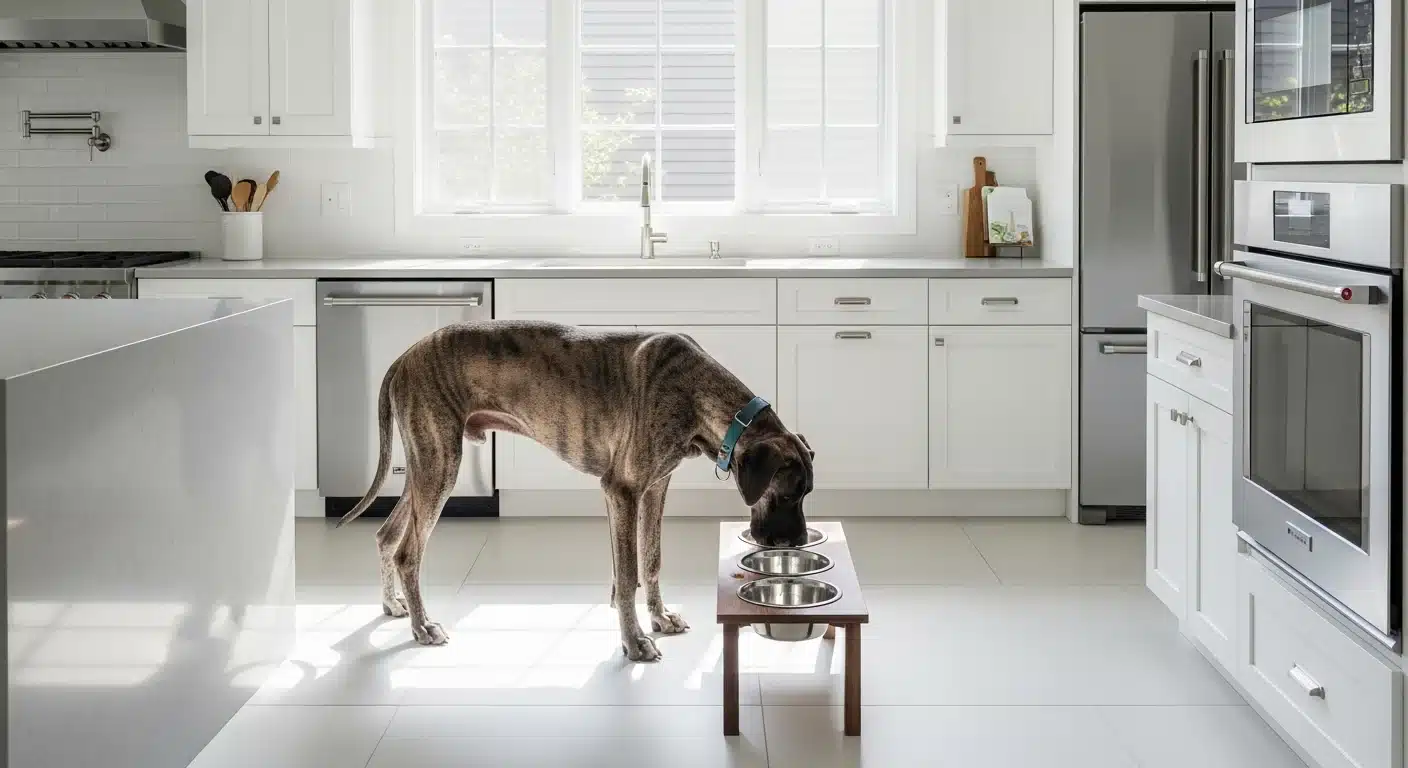
Are Elevated Dog Bowls Good or Bad? The Honest Answer
The research is nuanced, the answer depends on your dog, here’s everything you need to know.
If you’ve been Googling ‘are elevated dog bowls good or bad,’ you’ve probably found a swamp of contradictory opinions, some pet-product sites insisting raised feeders are a must-have, and some veterinary sources flagging a genuine health concern. Both camps have a point. The honest answer: it depends entirely on your dog’s size, breed, and health status. This guide walks through the science (including the often-misquoted 2000 Purdue study), who genuinely benefits, who should be cautious, and how to pick the right height if you decide to go raised.
Our top elevated feeder pick
Verified in stock, tap through for the live price. We re-check on every update.
Neater Feeder Deluxe (Large Dog)
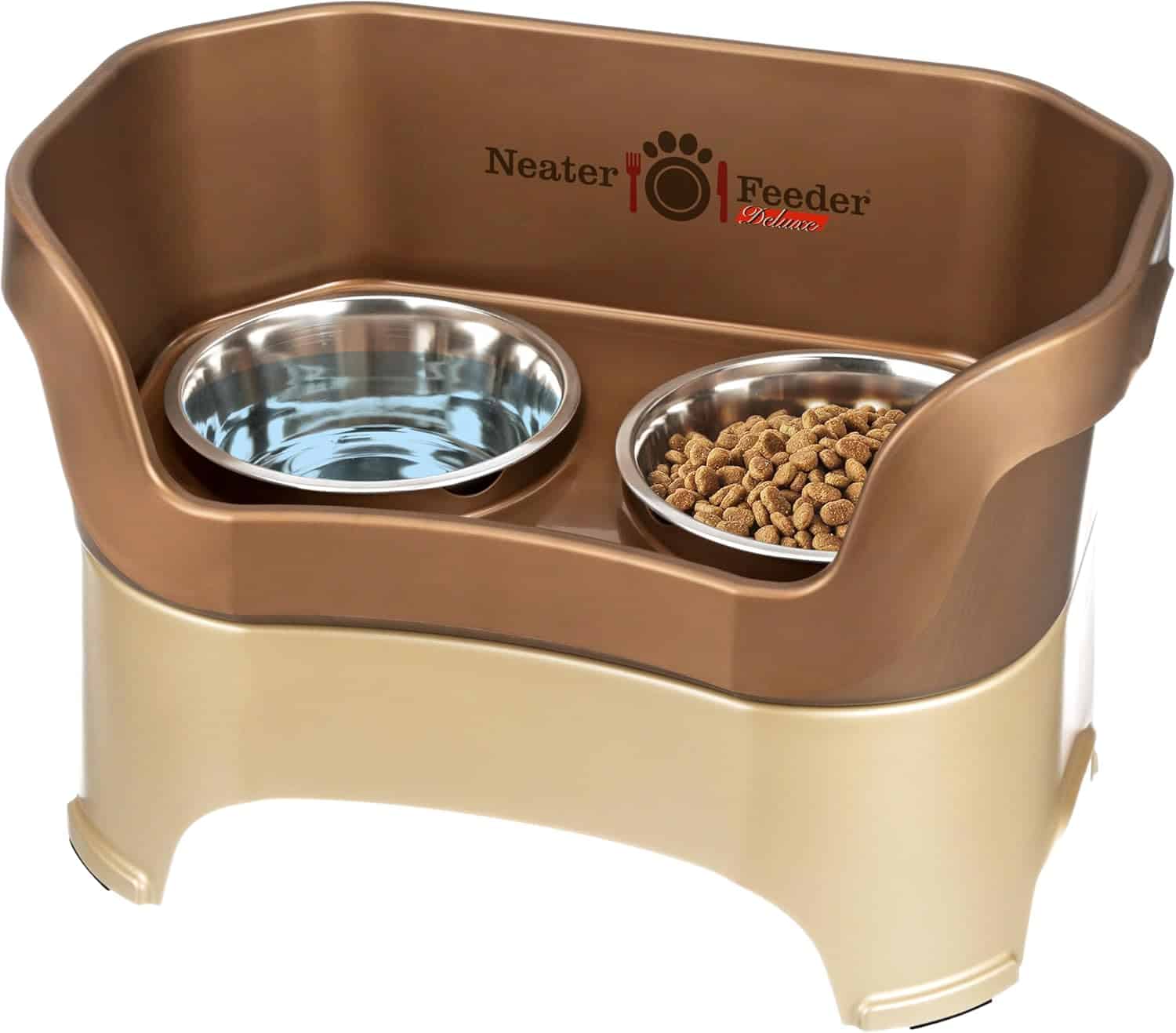
If you have a big, enthusiastic eater who turns the floor around the bowl into a swamp, this is the elevated feeder we’d buy. The Neater Feeder Deluxe is built for dogs over 40 lb and pairs a raised feeding deck with a clever two-tier reservoir: splashed water drains down into a lower trough and spilled kibble stays in the upper tray, so it never ends up soggy on the floor. The two stainless-steel bowls (a 7-cup food bowl and a 9-cup water bowl) lift out for the dishwasher, the molded base has non-slip feet that keep a determined Lab from shoving it across the kitchen, and the stock 8-inch feeding height suits most large dogs. For a tall dog at the top of the range, leg extensions (sold separately) raise it to about 11 inches.
What we like
- The two-tier reservoir genuinely contains spilled water and kibble, the best mess control of any feeder here
- Heavy, non-slip base stays put even when a big dog pushes into it
- Stainless bowls lift out for the dishwasher; the rest wipes clean
- Optional leg extensions raise it to ~11″ for a taller large breed
The catches
- Pricier than a bare stand, you’re paying for the mess-containment design
- At 8″ stock height it’s right for large dogs, not giant breeds (size up to a tall stand for a Dane)
- Leg extensions for the tallest dogs are an extra purchase
The GDV / Bloat Debate. What the Research Actually Says
The concern about elevated feeders centres on gastric dilatation-volvulus (GDV), commonly called bloat, a life-threatening condition in which the stomach fills with gas and twists. GDV is fast-moving and almost always fatal without emergency surgery.
The most-cited study is a 2000 paper by Dr. Larry Glickman and colleagues at Purdue University, published in the Journal of the American Veterinary Medical Association. The researchers tracked 1,637 large and giant-breed dogs and found that eating from a raised feeder was associated with roughly double the risk of GDV compared to eating from floor-level bowls. That finding got wide veterinary attention and prompted many vets to advise against raised bowls for deep-chested large breeds.
Here’s the nuance the pet-product marketing skips:
- The elevated-feeder association was found specifically in large and giant breeds, not small or medium dogs.
- The proposed mechanism is that an elevated position encourages faster eating and more air swallowing (aerophagia), a known GDV precursor.
- A second large study found no statistically significant association between raised feeders and GDV, so the evidence is not settled science, but it hasn’t been refuted either.
- Veterinary consensus currently leans toward caution for deep-chested, high-risk breeds.
IMPORTANT: Nothing in this article is veterinary medical advice. If your dog has a health condition or is a high-risk breed, consult your vet about feeding setup.
Which Dogs Genuinely Benefit from an Elevated Bowl
Despite the bloat concern, raised feeders have real, documented benefits for certain dogs. Here are the cases where an elevated feeder is commonly recommended, often by vets themselves:
Senior and Arthritic Dogs
Dogs with arthritis in the neck, shoulders, or front legs can find it genuinely painful to bow their head repeatedly down to floor level. An elevated bowl at the right height reduces the angle the neck must flex, making every meal and water visit more comfortable. This is one of the most widely accepted therapeutic uses.
Dogs with Megaesophagus
Megaesophagus is a condition where the oesophagus loses normal motility and can’t push food down to the stomach efficiently. Vets frequently prescribe a Bailey chair or a steeply angled elevated feeder so gravity assists swallowing. This is a vet-directed therapeutic use, not a general lifestyle choice.
Very Tall and Large Breeds (With Caveats)
A Great Dane eating from a floor bowl must fold its front legs or stoop dramatically, an awkward posture. Many owners and some vets believe a moderate raise (enough to level the neck, not raise it above shoulder height) reduces neck-and-shoulder strain over a lifetime of eating. The catch: Great Danes are also among the highest-risk breeds for GDV. This is exactly the category where a vet conversation matters most.
Mess Reduction and Cleanliness
Elevated feeders, especially splash-catching stations like the Neater Feeder, dramatically reduce the water and kibble mess that enthusiastic eaters scatter across the kitchen floor. This is a lifestyle benefit, not a health one, but it’s real and worth considering for the right setup.
Dogs Recovering from Neck or Cervical-Spine Surgery
Post-surgical rehabilitation sometimes includes elevated feeding to keep the neck in a neutral or slightly raised position during recovery. Always follow the specific guidance of the treating vet or rehab specialist.
Which Dogs Should Be Cautious (or Skip Elevated Bowls Entirely)
The GDV-risk concern is real for a specific group. The breeds most associated with GDV risk in the Purdue research and in veterinary literature are:
- Great Dane, arguably the highest GDV risk of any breed
- Weimaraner
- Irish Setter / Gordon Setter
- Standard Poodle
- Rottweiler
- German Shepherd Dog
- Other large, deep-chested breeds with a narrow chest-to-abdomen ratio
If your dog is on this list, the Purdue findings are directly relevant to your situation. Floor-level feeding, slow-feeder bowls, and multiple smaller meals per day are the typical vet-advised steps for reducing GDV risk, not elevated feeders.
Small and medium dogs generally face negligible GDV risk and are unlikely to see a measurable benefit from elevation (no postural strain at floor level). For them, the decision is mostly about aesthetics and convenience.
How to Pick the Right Height
If you decide an elevated feeder makes sense for your dog, getting the height right matters. Too high forces the head up (potentially increasing air swallowing and neck strain), too low defeats the purpose.
The standard method: Measure from the floor to your dog’s elbow joint (the bend in the front leg). The rim of the bowl should sit at or just slightly below that measurement, roughly 2 to 4 inches below the elbow is the commonly cited sweet spot. This keeps the neck in a relaxed, near-neutral position.
| Dog Size | Approximate Weight | Typical Elbow Height | Suggested Bowl Rim Height |
|---|---|---|---|
| Small | Under 20 lb | 4 to 8 in | 2 to 5 in |
| Medium | 20 to 50 lb | 8 to 13 in | 5 to 10 in |
| Large | 50 to 90 lb | 12 to 18 in | 8 to 14 in |
| Extra-Large / Giant | 90 lb+ | 17 to 28 in | 12 to 22 in |
Note: These are starting-point ranges. Measure your individual dog, breed standard heights vary widely even within size categories. Adjustable-height feeders are ideal because you can fine-tune as puppies grow or as seniors’ needs change.
Material Matters: What to Put in the Elevated Stand
The feeder stand is only half the story, the bowl material matters too. Most elevated stations use either stainless steel or ceramic inserts, and that’s a good thing:
- Stainless steel: Dishwasher-safe, doesn’t harbour bacteria in micro-scratches, doesn’t leach BPA. The gold standard for hygiene. Heavy enough that it doesn’t slide around inside the stand.
- Ceramic: Heavier than plastic, non-porous when un-chipped, and often prettier. Check that any ceramic bowl is lead-free and food-safe, cheaper imports vary.
- Plastic (avoid for primary use): Micro-scratches accumulate bacteria and biofilm over time. Plastic inserts in elevated stands are common but worth replacing with stainless if the option exists. Also linked to some cases of canine acne in dogs prone to facial contact with the bowl.
If you’re buying an elevated station specifically because your dog is a messy eater, look for a design with a spill-catching reservoir or tray built into the base, it makes a dramatic difference to daily kitchen clean-up.
Elevated Bowls vs. Slow Feeders vs. Puzzle Feeders
These three product categories often get conflated in search results, but they solve different problems:
- Elevated feeders address ergonomics and posture, reducing neck flex angle, reducing mess, improving comfort for mobility-limited dogs. They do nothing to slow a fast eater and may (per the Purdue data) slightly increase air swallowing in some dogs.
- Slow feeder bowls address eating speed, the ridges, mazes, and raised centres force the dog to work around them, extending meal time and reducing the gulping that’s a precursor to bloat. These are floor-level solutions that complement or replace elevated feeders for fast-eating, bloat-risk dogs.
- Puzzle feeders address mental enrichment, they slow eating as a side effect but the primary goal is cognitive stimulation. Good for high-drive working breeds that benefit from “food as a job.”
For a deep-chested large breed that eats too fast, the better investment is often a slow-feeder bowl on the floor rather than an elevated station, it tackles the root cause more directly.
For a senior arthritic dog who eats calmly but has joint pain, an elevated feeder is likely the right call.
The two solutions aren’t mutually exclusive: some elevated feeder stations accept slow-feeder-style insert bowls.
Signs an Elevated Feeder Is (or Isn’t) Working for Your Dog
After switching to a raised feeder, watch for these positive signs over the first two weeks:
- Dog approaches the bowl with less hesitation or stiffness
- Neck and shoulders remain more relaxed during eating (no dramatic bowing or straining)
- Less bloating or gassiness after meals (in mild cases, severe gas/bloat symptoms need a vet)
- Reduced mess around the bowl area
Red-flag signs that an elevated feeder isn’t right, or the height is off:
- Dog seems to eat faster or more gulpily than before
- Unproductive retching or visible belly distension after meals, seek vet help immediately, this is a GDV emergency
- Dog is straining or craning the neck upward to reach the bowl (stand is too high)
- Dog is still bowing low to reach the bowl (stand is too low, defeats the purpose)
Our Verdict: Depends on the Dog
Here’s how we break it down:
- Senior dogs with joint issues → Yes, very likely to help. The therapeutic benefit is well-supported and the risk profile is low for smaller and medium breeds.
- Dogs with megaesophagus → Yes, but follow vet guidance on exact angle and height.
- Very tall large breeds with mobility concerns → Possibly, but discuss with your vet. This is the group where benefits and risks are most evenly balanced.
- Deep-chested giant breeds (Great Dane, Weimaraner, Setter) with no joint issues → Caution. The Purdue data is a real signal. Floor feeding with smaller, more frequent meals is the safer default.
- Small and medium dogs with no health issues → Probably unnecessary, though low-profile elevated feeders can help with mess.
- Fast eaters of any size → Consider a slow-feeder bowl first. Slowing eating pace directly reduces GDV risk factors more than an elevated feeder does.
The bottom line is that elevated feeders are not universally good or universally bad, they’re a tool that fits certain dogs well and others poorly. When in doubt, ask your vet. That advice costs you nothing and could matter a great deal for a high-risk breed.
Shop elevated feeders and related gear
Elevated dog bowl questions, answered
Are raised dog bowls bad for dogs?
Not for all dogs, but they carry a meaningful risk for large and giant breeds prone to GDV (gastric dilatation-volvulus, or bloat). A 2000 Purdue University study found that raised feeders roughly doubled the GDV risk in large and giant-breed dogs. For senior dogs with arthritis, dogs with megaesophagus, or very tall breeds with posture/joint concerns, raised bowls can be genuinely beneficial. The answer depends on your dog’s size, breed, and health, when in doubt, ask your vet.
Do elevated bowls cause bloat?
The 2000 Glickman/Purdue study associated elevated feeder use with a roughly doubled risk of GDV (bloat) in large and giant-breed dogs. The proposed mechanism is that an elevated position encourages faster eating and more air swallowing, a known GDV precursor. However, a second large study found no statistically significant link, so the science isn’t fully settled. Veterinary consensus currently advises caution for deep-chested, high-risk breeds. If your dog is at GDV risk, discuss the feeding setup with your vet.
What dogs should not use elevated bowls?
Dogs most commonly advised against elevated feeders are large and giant deep-chested breeds with no specific medical need for elevation, particularly Great Danes, Weimaraners, Irish Setters, Gordon Setters, Standard Poodles, Rottweilers, and German Shepherd Dogs. These breeds are already at higher GDV risk, and the Purdue research found raised feeders compounded that risk. For any of these breeds, floor feeding with smaller, more frequent meals and a slow-feeder bowl is the recommended approach.
What height should an elevated dog bowl be?
Measure from the floor to your dog’s elbow (the bend in the front leg) when standing normally. The rim of the elevated bowl should sit approximately 2 to 4 inches below that measurement. For a rough guide: small dogs (under 20 lb) typically need a 2 to 5 inch rim height; medium dogs (20 to 50 lb) around 5 to 10 inches; large dogs (50 to 90 lb) around 8 to 14 inches; and giant breeds 12 to 22 inches. Adjustable-height feeders are best because you can fine-tune.
Are elevated dog bowls good for large dogs?
It depends on the individual dog. Large dogs with arthritis, joint pain, or neck stiffness can benefit from reduced bending. However, large deep-chested breeds (Great Danes, Weimaraners, Setters) face an elevated GDV risk that may outweigh posture benefits. For large dogs without a specific mobility issue, floor feeding is generally the safer default. For those with joint problems, a moderate raise at the right height, with vet guidance, can meaningfully improve comfort at mealtimes.
Can puppies use elevated dog bowls?
Elevated feeders for puppies are generally unnecessary and can be risky if sized incorrectly. Puppies grow fast, and a bowl at the wrong height can create awkward posture habits rather than fix them. If you want an elevated feeder for a large-breed puppy, choose an adjustable-height model and re-measure every 8 to 12 weeks. Standard floor feeding is perfectly fine for healthy puppies of all sizes.
Are slow feeder bowls better than elevated bowls for bloat prevention?
For dogs at GDV/bloat risk, slow-feeder bowls are generally the better choice. They directly address a key GDV risk factor, eating speed and air swallowing, by making the dog work around ridges and obstacles to get their food. Elevated feeders do not slow eating and may, per some research, slightly increase air swallowing. You can use a slow-feeder bowl inside an elevated stand if posture is also a concern, but if you have to choose one, the slow feeder wins for bloat-risk dogs.