 Dog Gear, Sized Right
What’s Better Than an Invisible Fence? 5 Honest Alternatives
If you’re not sold on a buried-wire invisible fence, you’ve got better options, and the right one depends on whether you want a real wall, more freedom, or just no gear at all. Here’s the honest rundown.
What’s better than an invisible fence? It depends what “better” means to you. If you want the most secure, no-training, no-doubt option, the honest answer is a physical fence, nothing contains a dog as reliably as a real wall. If you liked the idea of an invisible fence (no ugly fencing, freedom to roam) but not the buried wire, a GPS fence is the modern upgrade: any shape, no trenching, live tracking, and far more flexible than the old wired kind. And if you want no hardware at all, boundary training and long-line setups can work for the right dog. Below we rank every alternative by what it’s actually best at, and we’ll tell you straight when an invisible fence is still the wrong call.
(Already decided you want the invisible-style freedom? Skip to the GPS section, it’s the alternative most people in this search end up choosing.)
Our pick if you want the invisible-style option
A physical fence is the most secure alternative but isn’t something we sell, so the one buy button here is for the GPS option, the modern replacement for a wired invisible fence. Verified in stock.
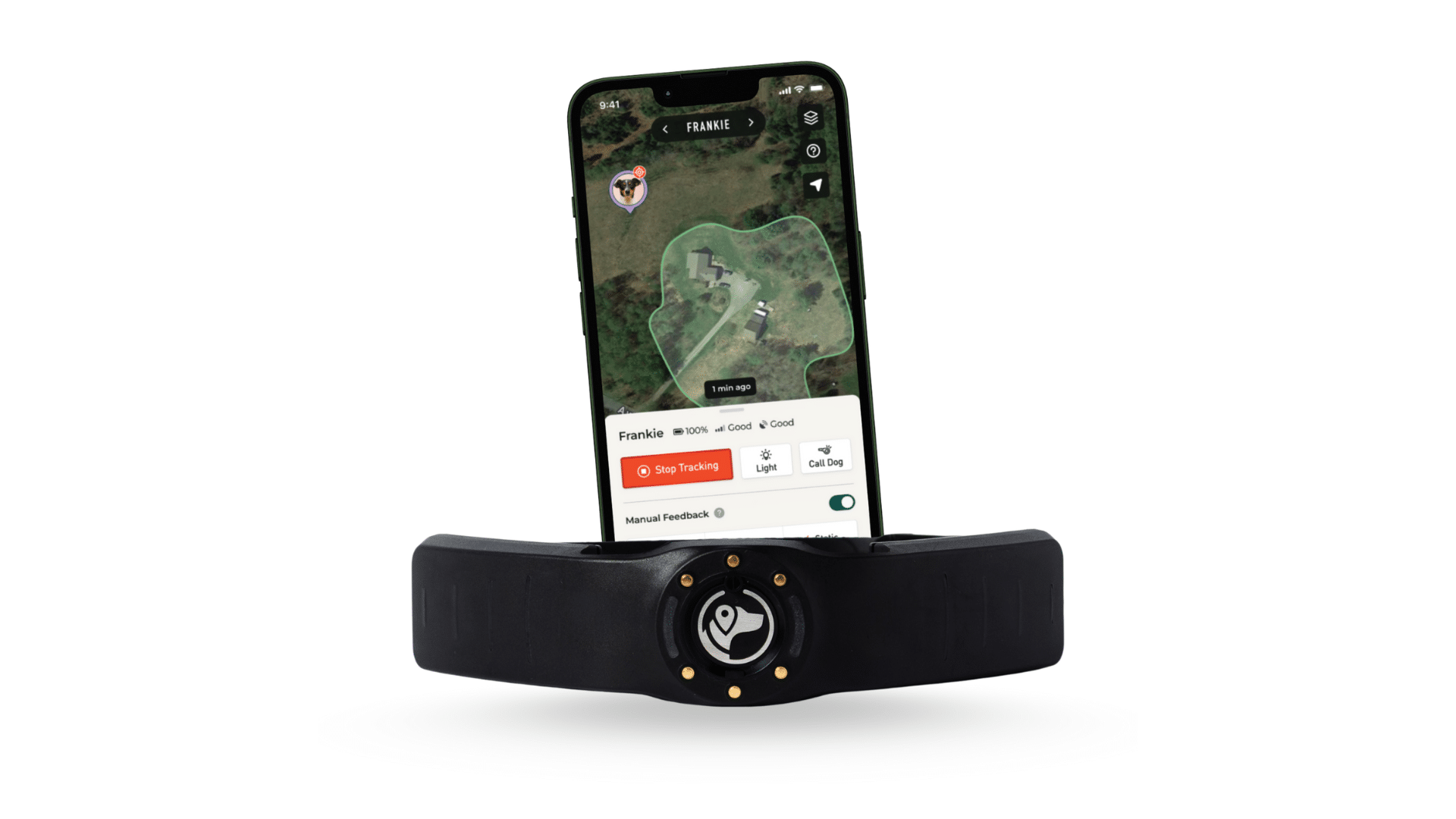
SpotOn GPS Dog Fence (Nova)
If what you actually want is invisible-fence freedom without the downsides of a buried wire, a GPS fence is the upgrade, and SpotOn is the one that delivers. No wire to trench, draw any shape boundary on a map, move it whenever you want, and get live tracking if your dog ever crosses it. Accuracy holds to roughly 2 to 5 ft even under trees, with no subscription.
What we like
- No trenching, set the boundary by walking or drawing it on a map
- Fences large, irregular or wooded land a wired fence can’t reach
- Live GPS tracking if the dog ever crosses the line
- No monthly fee; 90-day money-back trial to test on your own land
The catches
- Up-front price ($999) is higher than a wired kit or a budget collar
- Still a learned boundary, not a physical wall, needs training
- Large collar; needs reasonably open sky to hold tight accuracy
The honest short answer
There’s no single “better”, there’s a better tool for each goal:
- Most secure, zero training: a physical fence. A real barrier doesn’t depend on the dog choosing to respect it.
- Invisible-style freedom, done better: a GPS fence. All the upside of an invisible boundary (no fencing, roam freely, any shape) without the buried wire, plus live tracking.
- No hardware at all:boundary training or a long line, for the right dog and the right yard.
- Cheap and temporary:portable fence panels.
If you’re here because a buried-wire invisible fence feels like a hassle or a worry, you’re not wrong, but the fix usually isn’t “no boundary,” it’s “a better boundary.” Here’s each option in plain terms.
1. A physical fence, the most secure alternative
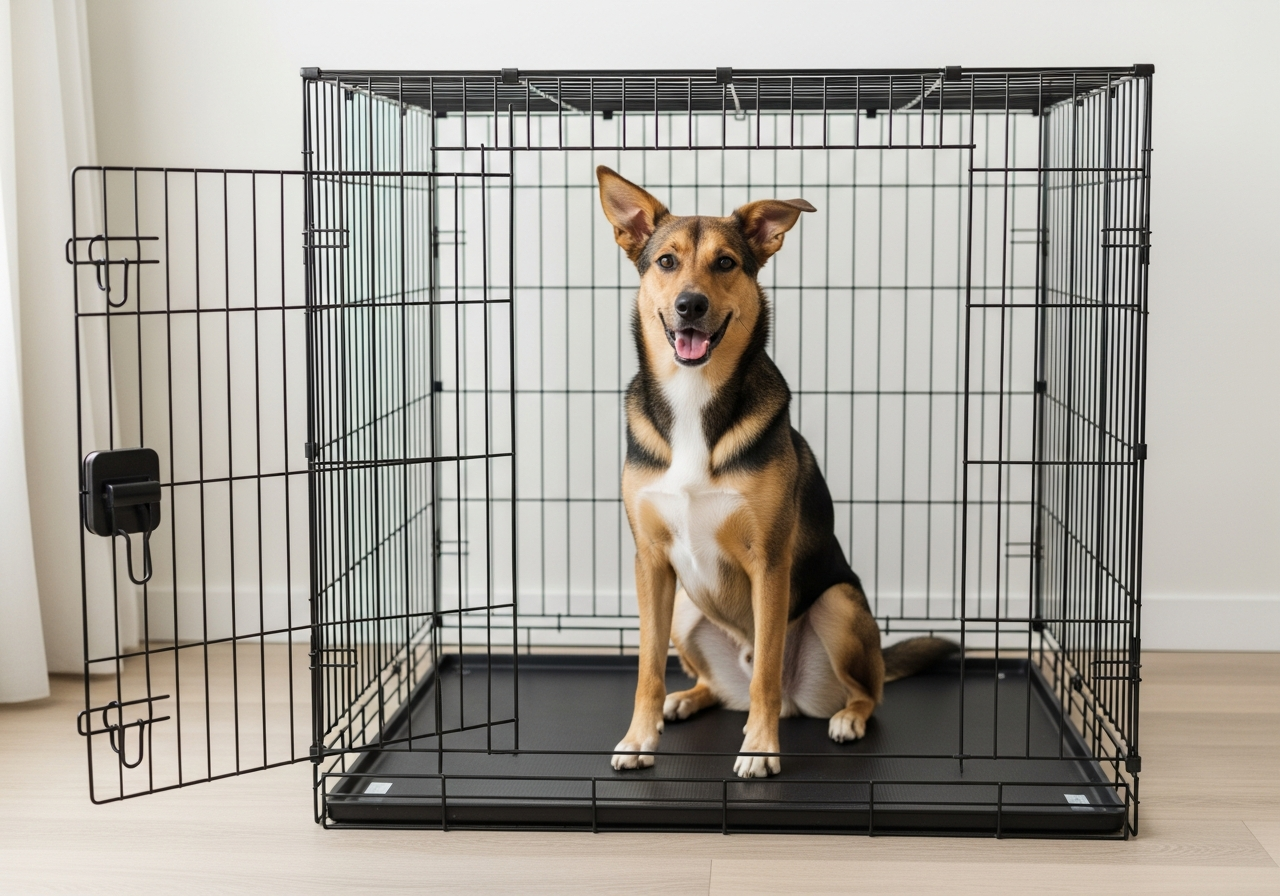
Let’s say the honest thing first: nothing contains a dog as reliably as a physical fence. It’s a visible, tangible wall the dog understands instantly, no training period, no learned boundary, no escape-when-motivated problem. Wood and vinyl give privacy, chain-link is cheap and low-maintenance, and metal/iron is sturdy and looks sharp.
The catches are cost, effort and feasibility: real fencing is expensive, takes installation, may need permits or violate HOA rules, and simply can’t enclose large acreage affordably. It also can’t move with you. For a normal suburban yard and a dog you don’t want to think twice about, a physical fence is the gold standard, and if you have a digger or a jumper, it’s often the only thing that truly works. But for big, irregular or rural land, the cost gets prohibitive fast, which is exactly where the next option earns its place.
2. A GPS fence, the invisible fence, done right
Here’s the key insight most people miss: a GPS fence is an invisible fence, just a far better version of one. If the part you liked about an invisible fence was the freedom (no ugly fencing, a dog that can roam a big yard) and the part you didn’t like was the buried wire, a GPS fence keeps the first and deletes the second.
Instead of trenching a wire around your property, you draw the boundary on a map in an app. That means you can fence any shape and almost any size of land, reshape it whenever you want, take it to the cabin, and, the big one a wired fence can’t do, get a breach alert and live GPS tracking if your dog ever crosses the line. The best systems hold accuracy to roughly 2 to 5 feet even under tree cover. The trade-offs are real: it’s a learned boundary that needs one-to-two weeks of training, it wants reasonably open sky, and good systems cost more up front than a wired kit. But for owners who wanted invisible-fence freedom without the wire, it’s the natural answer. We rank the field in our best GPS dog fence guide, and explain how well they really work in do GPS dog fences work.
3. Boundary training, no hardware, real skill
The most underrated alternative is teaching the boundary itself. With consistent positive-reinforcement training, many dogs learn to respect a property line, a doorway, or a “this far and no further” edge on cue, no collar required. It’s free, it’s the most humane option, and it gives you a better-trained dog as a bonus.
The honest limits: it takes real time and consistency, it’s never 100% against a strong distraction (a squirrel can still win), and it’s not a substitute for a barrier with a young, impulsive, or high-prey-drive dog. Think of training as something you do alongside any fence, and as a genuine standalone option only for a mature, reliable, low-flight-risk dog on a yard where the stakes of a slip are low.
4. Long lines, tie-outs & supervised time
For controlled outdoor time without any fence, a long line (a 20 to 50 ft training lead) lets a dog explore and sniff while you keep physical control, far safer and more engaging than it sounds, and great for recall practice. A fixed tie-out can work for short, supervised stretches, though it’s not a containment solution to leave a dog on unattended.
These shine as supplements: the long line is the exact tool you use during GPS-fence or boundary training, and supervised long-line time is a perfectly good answer for an apartment dog or anyone who just needs safe outdoor freedom on walks. As a full-time containment method on their own, though, they require you to be present, so they’re a complement to a fence, not a replacement for one.
5. Portable & modular fence panels
If you want a real barrier but not a permanent build, portable fence panels or modular pens are affordable, non-electric, and quick to set up, handy for a camp site, a rental, a deck, or sectioning off part of a yard. They give a dog a defined safe space without trenching or a contract.
They won’t contain a determined jumper or a large powerful dog leaning on them, and they don’t cover much ground, so they’re best for small or medium dogs and modest areas. As a low-commitment, move-anywhere option, though, they fill a real gap between “no boundary” and “install a full fence.”
So which is better than an invisible fence, for you?
| If you want… | Best alternative |
|---|---|
| The most secure containment, no training | Physical fence |
| Invisible-style freedom without the buried wire | GPS fence (e.g. SpotOn) |
| To fence large, wooded or irregular land | GPS fence |
| No gear, and a mature reliable dog | Boundary training |
| Safe outdoor freedom while supervised | Long line |
| Cheap, temporary, move-anywhere | Portable panels |
For most people who searched this, the real decision is between a physical fence (if your yard suits it and you want zero doubt) and a GPS fence (if you want freedom, flexibility and tracking without the wire). If you lean GPS, start with our best GPS dog fence roundup and the honest GPS vs wireless vs wired comparison, and if you’re weighing the older wired kind, our invisible dog fence guide covers it in full.
Keep researching containment
Invisible fence alternatives: common questions
What’s better than an invisible fence?
For pure security with no training, a physical fence is better, it’s a real barrier the dog can’t simply choose to ignore. If you want invisible-fence freedom without the buried wire, a GPS fence is better: any shape, no trenching, live tracking, and it works on large or wooded land. Boundary training and long lines are good no-hardware options for the right dog. The best choice depends on your yard, your dog, and your budget.
Is a GPS fence better than a wired invisible fence?
For most owners, yes. A GPS fence does everything a wired invisible fence does but without burying a wire, you draw the boundary in an app, can make it any shape or size, reshape or move it freely, and get live tracking if the dog crosses it. A wired fence is slightly more pinpoint-precise and works under any tree cover, so for a small, heavily-wooded lot it can edge ahead. For large, open or irregular land, GPS is the better tool.
Is there a more humane alternative to an invisible fence?
Yes, a physical fence and boundary training are the most humane options because neither relies on a static correction. A physical fence contains with a visible barrier; training teaches the dog to respect a line for praise and treats. Modern GPS and invisible fences can also be used humanely (they’re tone-first, with adjustable and optional static), but if avoiding any correction is the priority, a real fence plus training is the way.
What can I use instead of an invisible fence for a large property?
A GPS fence is usually the answer for acreage. Physical fencing a large property is enormously expensive, and a wired invisible fence means trenching the entire perimeter; a GPS fence lets you draw a boundary of almost any size and shape with nothing to install, and adds live tracking for peace of mind on open land. See our best GPS dog fence guide for systems built for big, rural lots.