 Dog Gear, Sized Right
Indoor vs Outdoor Dog Kennels: Which Is Right? (2026)
Climate, breed, time alone, security, space, five variables decide this. Work through the framework below and you will know before you finish reading.
Whether you are setting up a first kennel or upgrading an old one, the indoor vs outdoor question trips up almost every owner. Both options can be exactly right, for the right dog, in the right situation. This guide gives you the framework to decide, backed by specific numbers and real-world scenarios.
What “Indoor” and “Outdoor” Actually Mean
The terminology gets muddled in product listings and advice threads. For the purpose of this guide:
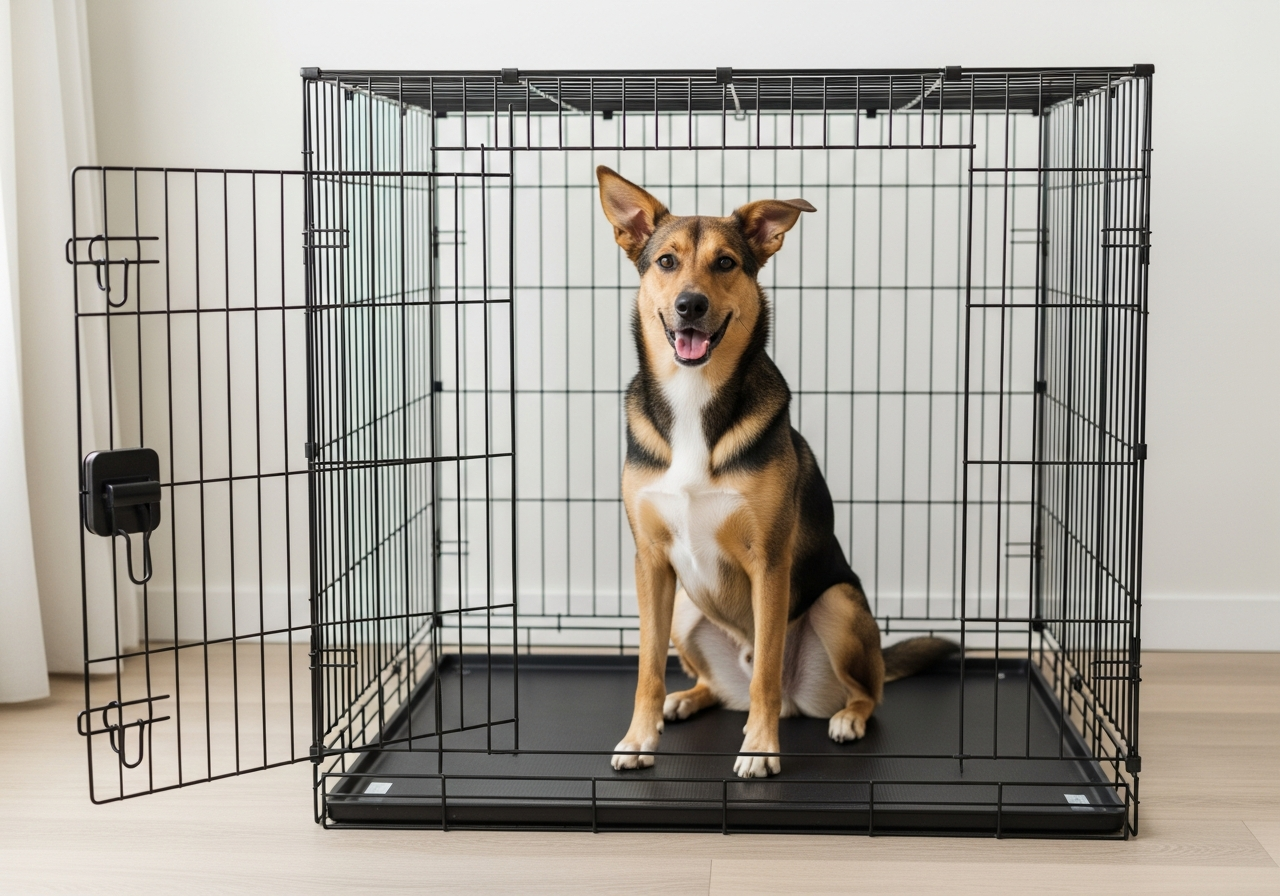
- Indoor kennel, a metal wire crate, heavy-duty plastic airline crate, or folding panel enclosure used inside your home. The dog sleeps and rests there; you are nearby or in the same building. These are often called crates, cages, or indoor kennels interchangeably.
- Outdoor kennel, a welded-wire or chain-link panel run, modular enclosure, or custom-built pen placed in a yard, on a patio, or in an outbuilding. The dog may spend hours there while you are at work, running errands, or working outside.
There is real overlap. Some indoor crates are rugged enough for a covered porch in mild weather. Some outdoor panel runs get moved into garages for winter. What actually changes between categories is the environment your dog faces, temperature swings, weather exposure, noise levels, proximity to people, and whether you can notice a problem quickly.
That distinction, managed environment vs exposed environment, is what every decision below comes back to.
The 5 Decision Factors
Most owners get this decision wrong because they start with price or aesthetics. The right order is to work through these five factors first, then shop for what fits. Miss one and you end up with a setup that is wrong for your dog’s breed, your climate, or your schedule.
1. Climate and Temperature Range
This is the most objective factor, it comes down to local temperature extremes and how well-insulated your setup is.
Safe range for most dogs outdoors: 45°F to 85°F (7°C to 29°C) with shade and fresh water. Outside that range you need active management: insulation plus a heat source below 45°F, shade plus ventilation above 85°F.
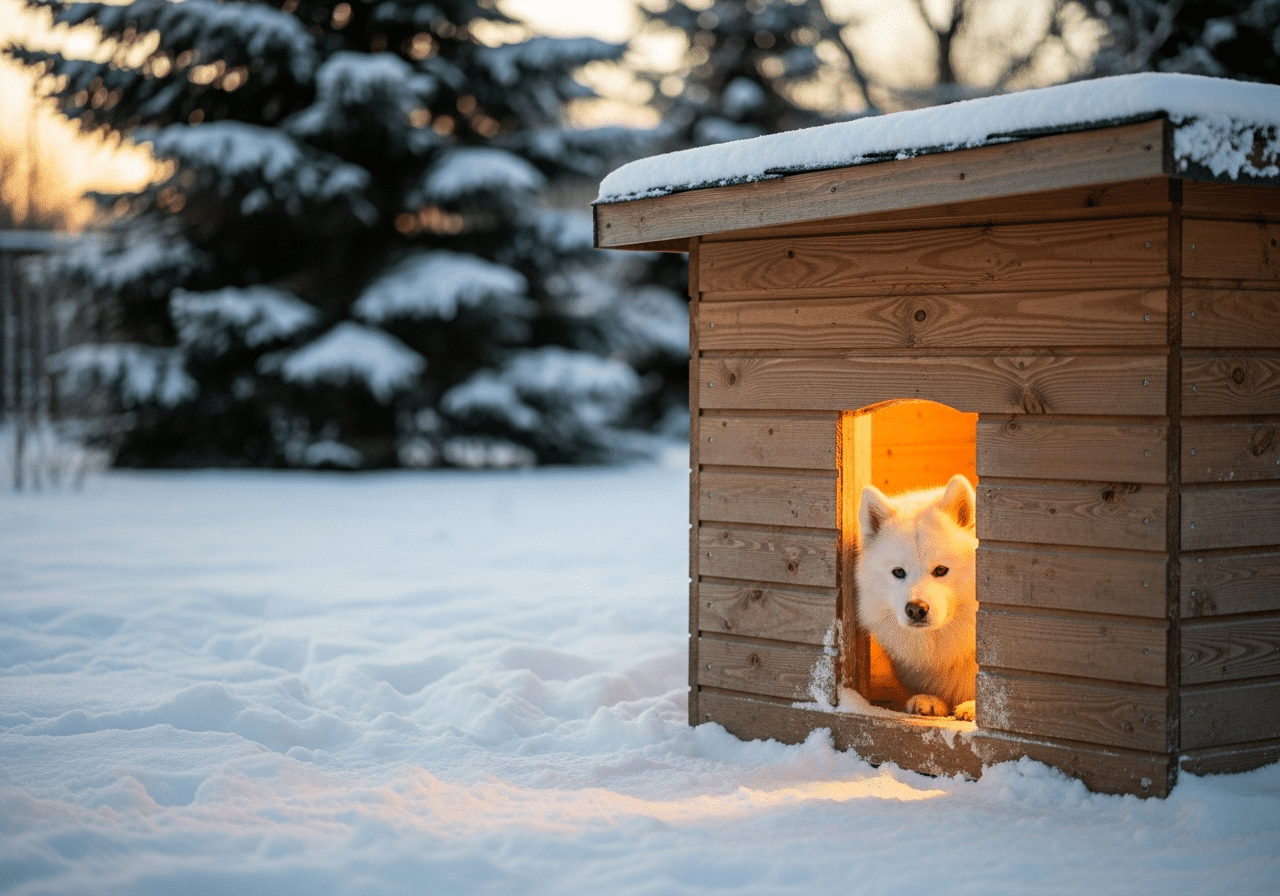
Below freezing (under 32°F / 0°C): Only dogs bred for cold. Huskies, Alaskan Malamutes, Bernese Mountain Dogs, Newfoundlands, can safely stay in an unheated outdoor kennel with proper shelter. Every other breed needs to be indoors or in an actively heated insulated structure once temperatures drop that far.
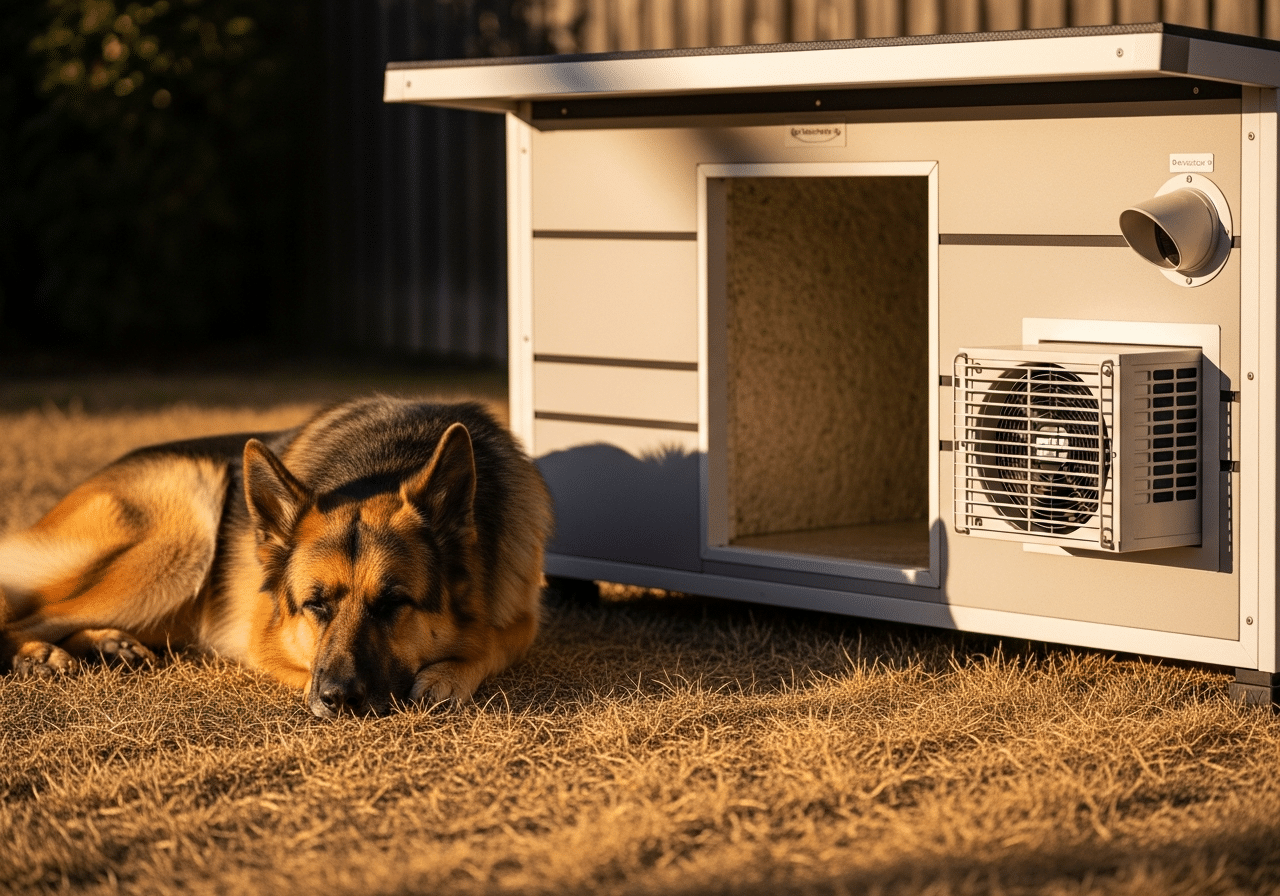
Hot humid climates. Southeast US, Texas summers, Gulf Coast: Outdoor kennels with shade can work in the morning and evening, but temperatures above 85°F in a metal or chain-link run become dangerous fast. Heat builds inside a metal-panel run in direct sun and can exceed ambient temperature by 10 to 15°F. If your summers regularly hit the 90s, an outdoor kennel requires a dog house with serious ventilation or air conditioning. See our guide to air-conditioned dog houses for when that step is warranted.
2. Breed, Coat Type, and Physical Tolerance
Coat type predicts temperature tolerance far better than size alone. A 90-lb Siberian Husky and a 90-lb Weimaraner have almost nothing in common when it comes to cold weather suitability.
| Coat type | Cold tolerance | Heat tolerance | Outdoor suitability (temperate climate) |
|---|---|---|---|
| Double-coat, Nordic (Husky, Malamute, Samoyed) | Excellent | Fair, shade essential | Good if summer temps stay below 80°F |
| Double-coat, dense (Golden, Lab, German Shepherd) | Good | Moderate, shade and ventilation required | Good in most temperate climates year-round |
| Short single-coat (Pointer, Weimaraner, Greyhound, Doberman) | Poor | Good | OK in warm climates; needs indoor option in winter |
| Brachycephalic (Bulldog, Pug, Boxer, French Bulldog, Mastiff) | Poor | Very poor | Strongly prefer indoor, these breeds overheat and chill faster than almost any other |
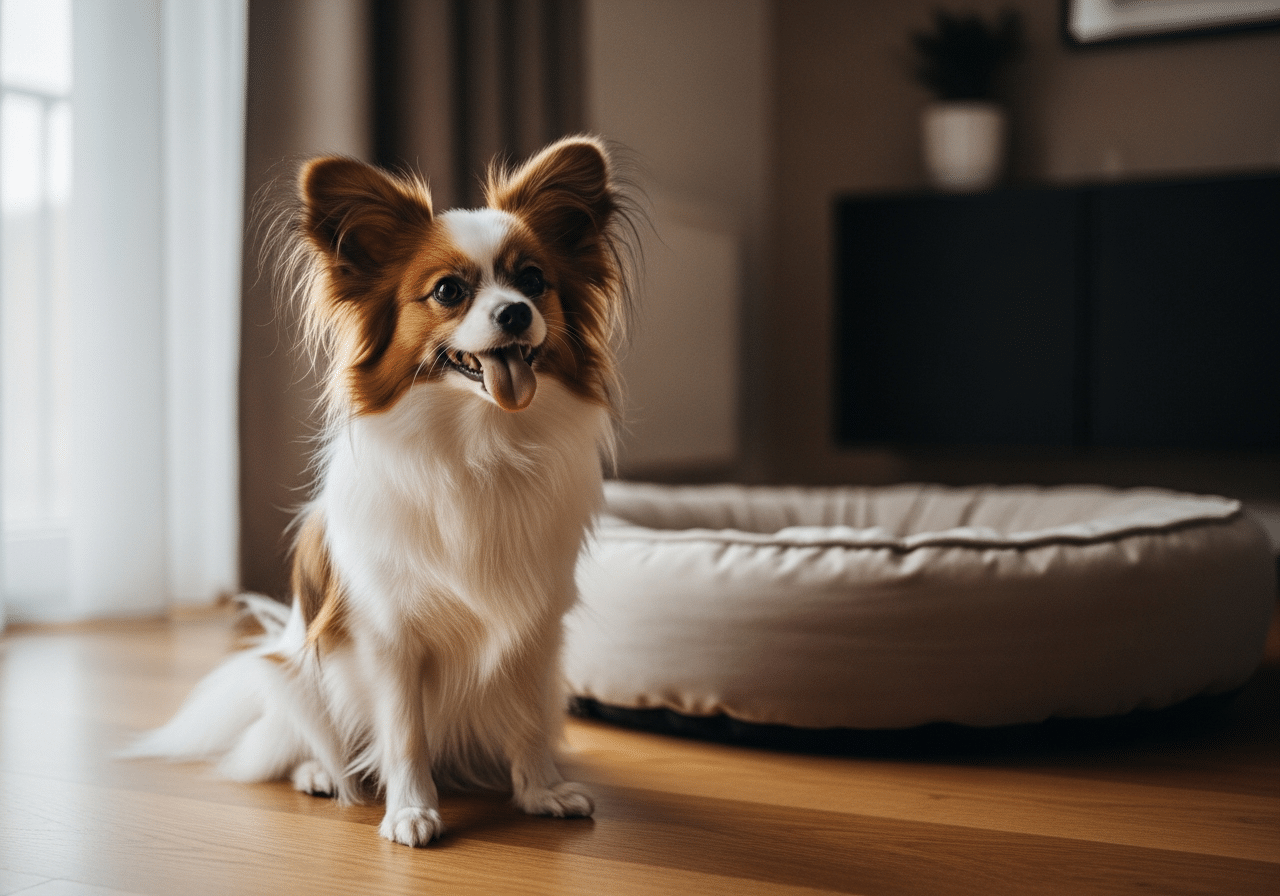
| Toy and miniature breeds | Poor | Moderate | Primarily indoor, body mass too low to thermoregulate effectively |
Age is a secondary factor. Puppies under 6 months and seniors over 10 years regulate temperature less efficiently than healthy adult dogs. Both groups do better with indoor kennels even when the breed would otherwise be outdoor-tolerant.
Health conditions: Dogs on certain medications (some anti-seizure drugs, heart medications) can have impaired thermoregulation. If your dog has a cardiac condition, hypothyroidism, or Cushing’s disease, check with your vet before putting them in any outdoor enclosure during temperature extremes.
3. Time Left Alone, and What Happens During That Time
How long your dog is unsupervised shifts the calculus more than almost any other factor.
- Under 4 hours: Either option works in reasonable weather. An indoor crate handles short-term confinement; an outdoor kennel gives space and backyard access during the day.
- 4 to 8 hours (full workday): Outdoor kennels need to be robust, escape-proof, weather-protected, with fresh water, shade, and ideally an attached dog house for shelter. Indoor crates at this duration are fine for adult dogs with a midday bathroom break built in.
- 8+ hours or overnight: This is outdoor kennel territory if you go that route. A dog confined to a small indoor crate for 8+ hours without access will develop anxiety, accidents, and muscle stiffness from immobility. An adequately sized outdoor run with shelter, water, and space to move is more humane for long-duration confinement, if the climate allows.
One nuance: large-breed indoor crates can serve as a long-duration indoor option when sized correctly. A 48-inch wire crate gives a Labrador or German Shepherd room to stand fully, turn around, and lie fully outstretched. That is not exactly spacious, but it is different from the cramped plastic airline crates people often picture. If the dog has had a morning walk and knows what to expect, it can work for a full workday. But if your dog has never been crate-trained, do not jump straight to 8-hour confinement, build up duration gradually.
4. Security: Containment, Escape, and Theft Risk
Outdoor kennels carry security risks that indoor kennels simply do not have.
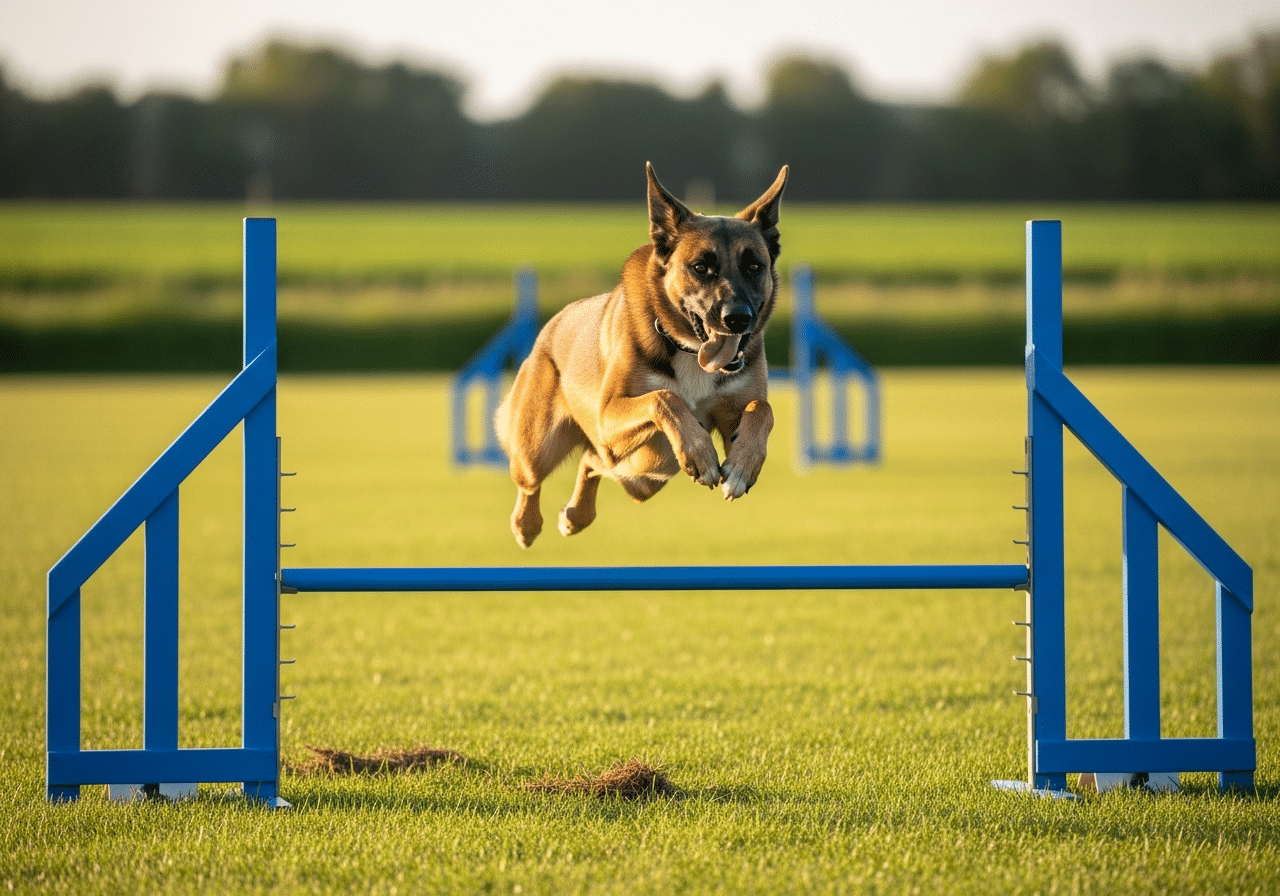
Escape: Chain-link and welded-wire outdoor panels range from 4 ft to 8 ft height. A motivated German Shepherd or Husky will clear a 4 ft fence, they have a vertical leap of 5 to 6 ft. If your dog is a climber, specify 6 ft panels with a coyote-roller top or a solid roof section. Diggers need a concrete base or an apron of hardware cloth buried 12 inches out from the perimeter and bent flat underground. Escape attempts escalate dramatically when the dog is anxious or bored, long unsupervised days without enrichment create both.
Theft: High-demand breeds. French Bulldogs, Huskies, Golden Retrievers, Doodle mixes, are stolen from yards. An outdoor kennel left unattended without a padlock on a visible entry gate is a real risk in suburban and urban settings. Position the kennel where it is visible from inside your home, add a keyed padlock to the gate latch, and consider whether your fence line provides enough concealment from the street.
Wildlife and predator pressure: In rural and semi-rural areas, coyotes, raccoons, foxes, and birds of prey can stress, injure, or kill dogs in outdoor kennels, especially smaller breeds or dogs in large-mesh runs. Hardware cloth (half-inch or quarter-inch welded mesh) resists predator reach through the wire far better than standard chain-link. A solid roof removes the risk of overhead attack entirely.
Indoor kennel security: A wire crate inside your home exists within the home’s existing security perimeter. Escape risk is minimal for a properly sized, correctly latched crate. Theft risk is essentially zero. This is one of the strongest arguments for indoor crates in urban and suburban environments where you do not have a secure fence line.
5. Available Space. Home Layout and Yard
Indoor crates require floor space inside your home. A 48-inch crate for a large dog is 4 ft long and about 30 inches wide, roughly the footprint of a large armchair. Most homes accommodate this comfortably in a bedroom corner, a hallway alcove, or a utility room. A 54-inch crate for a giant breed (Great Dane, Saint Bernard, Irish Wolfhound) is substantially larger and may dictate placement options.
Outdoor kennels run from compact 4×6 ft panel sets up to 10×20 ft or larger custom runs. You need level ground, access to fresh water, at least some natural shade, and enough clearance from property lines to satisfy local ordinances. Many municipalities require a 5 to 10 ft setback from fences and neighboring property, check your zoning code before you pour a concrete pad.
If you live in an apartment or have a postage-stamp yard, an outdoor kennel is simply not viable regardless of how weather-tolerant your dog is. If you have a quarter-acre yard with good shade and a solid fence line, an outdoor run can give your dog more space, fresh air, and mental stimulation than any indoor crate, which matters a lot for working breeds that need activity to stay psychologically balanced.
The space question usually answers itself. The other four factors determine which option is best for your dog. Space determines which ones are possible.
Indoor Kennels: Full Pros and Cons
| Advantages | Limitations |
|---|---|
| Temperature-controlled, no weather exposure risk | Limited floor space in most homes |
| Easy monitoring, you can check in immediately | Dog has no outdoor access unless you add a flap door to an exterior wall |
| No predator, theft, or serious escape risk | Can feel confining for high-energy breeds on long unsupervised days |
| Ideal crate-training environment; dogs learn fast in familiar spaces | Dog vocalizing disturbs the household |
| Works for every breed in every climate | Cleaning accidents happens inside your living space |
| Generally lower upfront cost than a quality panel run | Heavy-duty escape-proof models for strong chewers cost significantly more |
| Portable, moves with you if you relocate | Not practical for dogs over roughly 200 lbs without specialist enclosures |
When indoor kennels are the right call
Brachycephalic breeds, toy and miniature breeds, puppies under 6 months, senior dogs over 10 years, dogs with health conditions, dogs in apartments or small homes, dogs in climates with extreme cold winters or brutal summer heat, and any situation where frequent check-ins matter (post-surgery recovery, reactive dogs that bark at outdoor stimuli).
For the full breakdown of wire crates, heavy-duty panels, and plastic options, plus exact sizing for breeds from 30 lbs to 200+ lbs, see our guide to the best dog crates for large dogs.
Outdoor Kennels: Full Pros and Cons
| Advantages | Limitations |
|---|---|
| Substantially more floor space, most runs are 6×8 ft or larger | Exposed to temperature extremes without active management |
| Fresh air, natural light, outdoor sights and sounds | Higher escape risk without appropriate height, base, and roof |
| Dog can relieve itself without you being present | Theft and predator risk in many environments |
| Better for high-energy and working breeds during long days | Requires regular maintenance, rust inspection, gate hardware, structural checks |
| Scales to very large dogs and multi-dog households | Zoning restrictions on placement, setback, and size in many municipalities |
| Pairs naturally with a dog house inside the run for all-weather shelter | Higher upfront cost for quality galvanized or powder-coated runs |
When outdoor kennels are the right call
Weather-tolerant breeds (Labrador, Golden Retriever, German Shepherd, hound breeds, working dogs), homes with adequate secure yard space, dogs that need extended outdoor time and enrichment, multi-dog households, and climates with genuinely mild year-round temperatures. Pacific Northwest, upper Midwest (with a shelter), much of the mid-Atlantic.
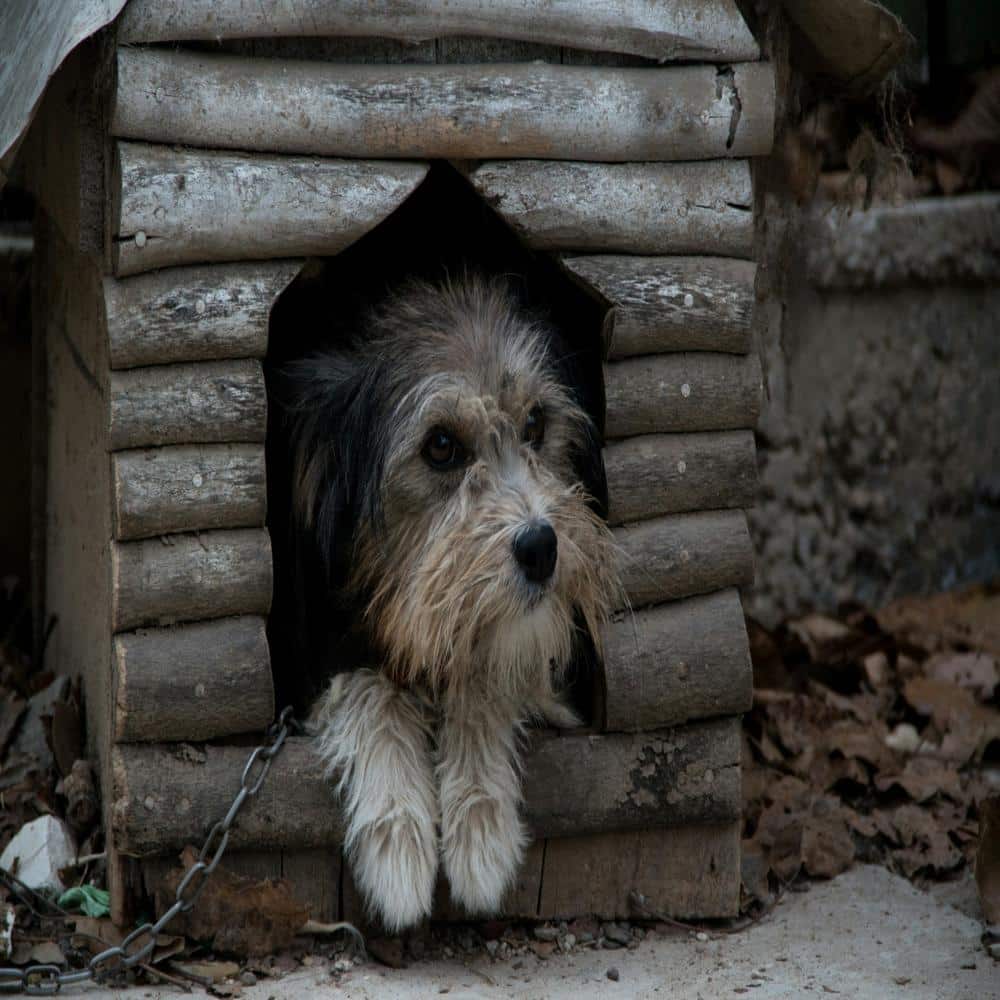
Outdoor kennels pair directly with a proper dog house inside the run. Our guide to the best dog houses covers insulation, ventilation, sizing, and materials, the features that make the shelter functional in both summer and winter, not just a box to tick. For climates with serious summer heat, see when an air-conditioned dog house is actually worth it vs shade and ventilation alone.
For the full range of outdoor kennel panel systems, brands, and run configurations, the dog kennels hub has everything compared side by side.
The Hybrid Setup. Why Most Experienced Owners End Up Here
The framing of “indoor vs outdoor” implies a single permanent choice. In practice, most experienced dog owners end up with both, used at different times of day and at different points in the year.
A typical hybrid setup works like this:
- Indoor crate: Used overnight and for short-duration confinement when you are home. Sized so the dog is comfortable for 6 to 8 hours, enough room to stand, turn, and lie outstretched. The dog treats it as a den and settles willingly.
- Outdoor kennel or run: Used during the day when you are at work or otherwise away for extended periods. Attached to or includes a dog house with shade. The dog has space to move, go outside, and get fresh air.
This solves the two biggest individual limitations at once: the outdoor kennel provides daytime space and fresh air; the indoor crate handles nighttime, bad weather, and any situation where you want the dog contained but inside the house.
Seasonal switching: Some owners flip the primary setup seasonally. In a Pacific Northwest winter, cold, dark, wet, the dog might shift to sleeping indoors in the crate and spending outdoor run time only during the dry parts of the day. In a Northern California summer, dry heat, long days, the outdoor run gets morning and evening use while the dog comes inside during the hot afternoon hours.
Sizing: How Much Space Does Your Dog Actually Need?
Both kennel types need to exceed basic welfare minimums. “Fits the dog” is not the right bar. The right bar is: enough space to stand at full height, turn around in a full circle, and lie completely outstretched on one side. Anything less creates musculoskeletal stress over time and increases anxiety.
Indoor crate sizing by dog weight
| Dog weight | Crate size | Approximate internal dimensions |
|---|---|---|
| Under 25 lbs | 24 to 30 inch | 24×18×19 in to 30×21×24 in |
| 25 to 50 lbs | 36 inch | 36×23×25 in |
| 50 to 80 lbs | 42 inch | 42×28×30 in |
| 80 to 110 lbs | 48 inch | 48×30×32 in |
| Over 110 lbs | 54 inch or extra-large | 54×37×45 in, verify internal dims on the specific model |
Measure, don’t guess: Measure from nose to tail base and add 4 inches for crate length. Measure from floor to top of the head (ears relaxed) and add 4 inches for crate height. When in doubt, go one size up, a crate that is slightly too large causes no problems. One that is too small creates anxiety, accidents, and joint stiffness.
Puppies are the exception: you want to size to their adult weight, not their current size, but use a divider panel to reduce the internal space during crate training. Too much space too early slows housetraining.
Outdoor kennel sizing by dog count and type
| Setup | Minimum run size | Notes |
|---|---|---|
| 1 small dog (under 30 lbs) | 4×6 ft | Minimum; 4×8 ft preferred for all-day use |
| 1 medium dog (30 to 60 lbs) | 6×6 ft | 6×8 ft preferred; allows proper movement |
| 1 large dog (60 to 100 lbs) | 6×10 ft | 10×10 ft for working breeds that pace or need high activity |
| 1 giant-breed dog (100+ lbs) | 10×10 ft | Include a properly sized dog house; 10×20 ft is better for all-day use |
| 2 dogs, same size | Add 50% to single-dog minimum | Or two side-by-side single runs with a divider panel between them |
Height: Most adult Labs and Shepherds stand 23 to 25 inches at the shoulder. A 4 ft (48-inch) panel run is adequate height for non-climbers. A 6 ft run covers almost all breeds. For confirmed climbers. Huskies, athletic working breeds, any dog that has already escaped a 4 ft fence, go 6 ft with a lean-in top section or full solid roof panel. Roof panels also solve the problem cleanly and give weather protection as a bonus.
Materials and Features That Actually Matter
For indoor crates the choices are wire (best airflow, collapsible, most common), heavy-duty steel (escape-proof, built for dogs that destroy wire), and plastic airline crates (quieter, den-like, good for anxious dogs). Wire wins for most dogs in most situations.
For outdoor kennels, material quality has a far larger impact on long-term performance and your dog’s safety:
- Galvanized steel tubing + welded wire mesh: The strongest combination for permanent outdoor use. Galvanized zinc coating resists rust for 10 to 15 years in most climates. Welded mesh is significantly stronger than chain-link woven wire, a dog that can slowly unweave chain-link connections will not make progress on welded mesh. Look for 12 to 16 gauge mesh, lower gauge number means heavier wire, means stronger panel.
- Powder-coated steel: Common on modular panel systems and good-looking in most yard settings. Durability is solid, 5 to 10 years before chips appear. Inspect annually for chips where rust can start and touch up with rust-inhibiting paint immediately.
- Standard chain-link woven wire: The traditional option at lower cost. It works, but a determined dog with leverage can unweave links at connection points over time. Fine for most dogs; galvanized welded wire outperforms it for strength and longevity.
- Wood frame with wire panels: Looks good in a yard context. The risk is rot, untreated wood exposed to rain and soil contact degrades in 3 to 5 years. Cedar naturally resists decay but still needs annual sealing. Good for aesthetic setups if annual maintenance is done; not good for set-it-and-forget-it owners.
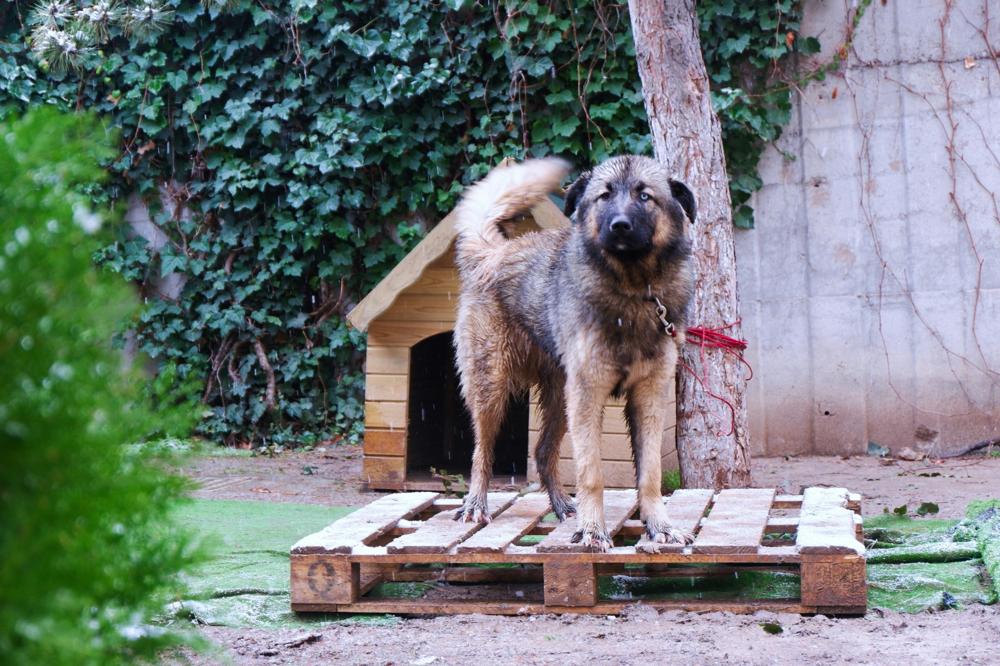
Roof: A solid or shade-cloth roof on an outdoor kennel is near-mandatory for three reasons. It blocks direct overhead sun in summer, significantly reducing internal temperature. It prevents rain pooling in the kennel and soaking your dog and bedding. And it removes the climbing-out escape route, the most common way athletic dogs exit a correctly-tall run. Most modular panel systems offer a matching roof kit.
Floor: Concrete is easiest to clean and most escape-proof (stops diggers cold). Pea gravel drains well but harbors bacteria if not raked regularly. Decomposed granite is a good middle ground, drains well, easy to maintain, harder to dig. Avoid bare soil, drainage problems in wet climates, digging risk everywhere. If you are building on concrete, add rubber mat sections for joint comfort, especially for large and giant breeds.
Quick Decision Table: Indoor vs Outdoor by Scenario
Work down the table to find your situation. Use the recommended setup as a starting point, not a hard rule, your specific dog, yard, and schedule may shift the answer.
| Your situation | Recommended setup |
|---|---|
| Apartment or home without a usable yard | Indoor crate, only realistic option |
| Brachycephalic breed (Bulldog, Pug, Frenchie, Boxer) | Indoor crate, always, in every climate |
| Puppy under 6 months | Indoor crate, temperature control and close supervision matter |
| Senior dog (10+ years) or dog with health conditions | Indoor crate, easier to monitor, no outdoor exposure risk |
| Dog left alone up to 6 hours in mild weather | Either, indoor crate or well-equipped outdoor run |
| Dog left alone 8+ hours regularly with no midday check-in | Outdoor kennel with shelter, shade, and water, more humane at that duration |
| High-energy working breed in temperate climate | Hybrid, outdoor run for daytime, indoor crate overnight |
| Cold climate with winters regularly below 32°F | Indoor, or outdoor with a heated insulated shelter, only for cold-adapted breeds |
| Hot climate with summers above 90°F | Shaded outdoor run with a dog house that has ventilation or AC, or indoor |
| Multi-dog household with outdoor space | Outdoor panel run (scale up); individual indoor crates for overnight |
| High theft or predator risk in your area | Outdoor kennel with 6 ft walls, solid roof, padlock, and sightline from home, or indoor |
| Dog is a confirmed climber or escape artist | Outdoor kennel with 6 ft panels plus roof panel, or reinforced indoor crate |
Still deciding? The main hub covers every type of outdoor kennel panel system on the market, with size, gauge, and build-quality comparisons: dog kennels buying guide. For indoor options, the large dog crate guide covers wire, heavy-duty, and plastic options with full sizing charts.
Shop the right kennel for your setup
Indoor vs Outdoor Dog Kennel: Common Questions
Can a dog live in an outdoor kennel full-time?
Some breeds can with the right setup, but most companion dogs do better with at least partial indoor access. Cold-tolerant working breeds like Alaskan Malamutes and Siberian Huskies can thrive in a well-insulated outdoor kennel in most temperate climates. Short-coated breeds, brachycephalic breeds, toy breeds, puppies, and seniors should not live exclusively outdoors. Even for tolerant breeds, full-time outdoor living requires a properly insulated dog house, non-freezing water in winter, shade and ventilation in summer, and enough daily social interaction to prevent anxiety and behavioral problems from isolation.
What size outdoor kennel does a large dog need?
One large dog in the 60 to 100 lb range needs a minimum 6×10 ft outdoor run for all-day use, 10×10 ft is better for working breeds that pace. A giant-breed dog over 100 lbs needs 10×10 ft minimum, with 10×20 ft preferred for extended confinement. Always include a properly sized dog house inside the run for shelter. Two dogs need roughly 50% more floor area than a single dog, or two side-by-side runs with a divider panel.
How cold is too cold for a dog in an outdoor kennel?
Below 45°F (7°C) is the threshold where most medium and large companion dogs need active shelter, an insulated dog house with draft-free bedding, a heated mat, or indoor access. Below 32°F (0°C), only cold-acclimated working breeds with proper insulated shelter and adequate caloric intake should remain outdoors. Short-coated breeds, brachycephalic breeds, puppies, seniors, and small dogs should come inside once temperatures drop below 50°F. If your outdoor kennel lacks a properly insulated, draft-proof shelter, bring your dog inside at 45°F regardless of breed.
Are indoor kennels the same as dog crates?
Yes, the terms are used interchangeably. A crate is an indoor kennel. In most product listings, “crate” implies a single-dog enclosure, wire, plastic, or heavy-duty steel, used for crate training and short-to-medium duration confinement inside a home. “Indoor kennel” sometimes describes larger panel-based setups used inside a home or garage. The function is identical. Our large dog crate guide covers sizes, materials, and top picks with breed-specific recommendations.
What is the best material for an outdoor dog kennel?
Galvanized steel tubing with welded wire mesh is the most durable combination for permanent outdoor use. The galvanized zinc coating resists rust for 10 to 15 years in most climates, and welded mesh is significantly harder to damage than chain-link woven wire. Look for 12 to 16 gauge mesh, lower gauge number means heavier, stronger wire. Powder-coated modular panel systems are a close second and offer easier configuration and a cleaner look. Avoid bare uncoated steel (rusts quickly outdoors) and untreated wood frames (rot risk). Whatever the material, invest in a roof panel, it adds weather protection and removes the climbing escape route.
Can I use an indoor wire crate outdoors temporarily?
Yes, with limitations. Wire crates are not weatherproof, the wire will rust in damp conditions within a season of regular outdoor exposure, and the open mesh provides minimal shade or wind protection. On a covered porch in mild weather, a wire crate with a crate cover added works fine for a few hours. For anything longer, in rain, heat, or cold, use a proper outdoor kennel designed for external conditions. Do not leave a standard wire crate outdoors permanently, even one full wet season will degrade the welds and surface coating.
Do I need a roof on an outdoor dog kennel?
In most climates and for most dogs, yes. A roof serves three distinct functions: it blocks direct overhead sun in summer, reducing the internal temperature by 10 to 20 degrees compared to an unshaded run; it keeps rain and snow from accumulating in the kennel and soaking your dog and bedding; and it removes the climbing-out escape route, which is how many athletic dogs exit correctly-tall runs. Shade-cloth roofs are lightweight and cut 60 to 80 percent of direct UV. Solid panel roofs give full rain protection. For breeds known to climb. Huskies, most working dogs, any dog that has already cleared a fence, a roof is essential rather than optional.