 Dog Gear, Sized Right
New Puppy Checklist: Everything You Need (2026 Gear Guide)
Everything a new puppy owner actually needs, vetted gear picks and the guides to help you choose wisely.
Getting a new puppy right means getting the gear right from the start. The wrong crate size sets back house-training by weeks. The wrong harness lets a puppy back out and bolt. The wrong leash teaches pulling before you even know it is happening. This checklist covers everything you need before your puppy comes home, with links to our tested, large-dog-focused buying guides for each category so you can skip the guesswork and land on the right pick the first time.
At-a-Glance Checklist: What You Need Before Your Puppy Comes Home
Here is the full list in priority order. Each item links to the section below with the detailed guidance, and each section links to our tested buying guide for that category.
| Category | What You Need | Priority |
|---|---|---|
| Crate | Correctly sized crate for adult weight with divider panel | Essential. Day 1 |
| Bed | Orthopedic foam mat or crate pad (waterproof cover) | Essential. Day 1 |
| Harness + Leash | Adjustable front-clip harness + 4 to 6 ft training lead | Essential. Day 1 |
| Bowls | Stainless steel food + water bowls, size for adult portion | Essential. Day 1 |
| Collar + ID tag | Breakaway collar with phone number engraved | Essential. Day 1 |
| Toys | Durable rubber chew toy + tug toy + stuffable food dispenser | High. Week 1 |
| Grooming | Brush matched to coat type + nail clippers | High. Week 1 |
| Containment/Tracking | Fence check + GPS tracker for larger properties | High. Month 1 |
| Travel | Secured crate or crash-rated car harness | As needed |
| Outdoor shelter | Dog house if dog will spend time outside | As needed |
If you are getting a breed that will grow large. Labrador, Golden Retriever, German Shepherd, Rottweiler, Great Dane, Bernese Mountain Dog, Husky, pay close attention to the sizing guidance in each section. Buying for the adult dog, not the puppy, is the recurring theme here and it saves you money and frustration across almost every category.
1. Crate. Your Puppy’s First Safe Space
The crate is the single most important piece of puppy gear. A correctly sized, well-introduced crate accelerates house-training, prevents destructive behaviour when you cannot supervise, and gives your dog a calm, predictable space that travels with them for life.
Size for the Adult Dog, Not the Puppy
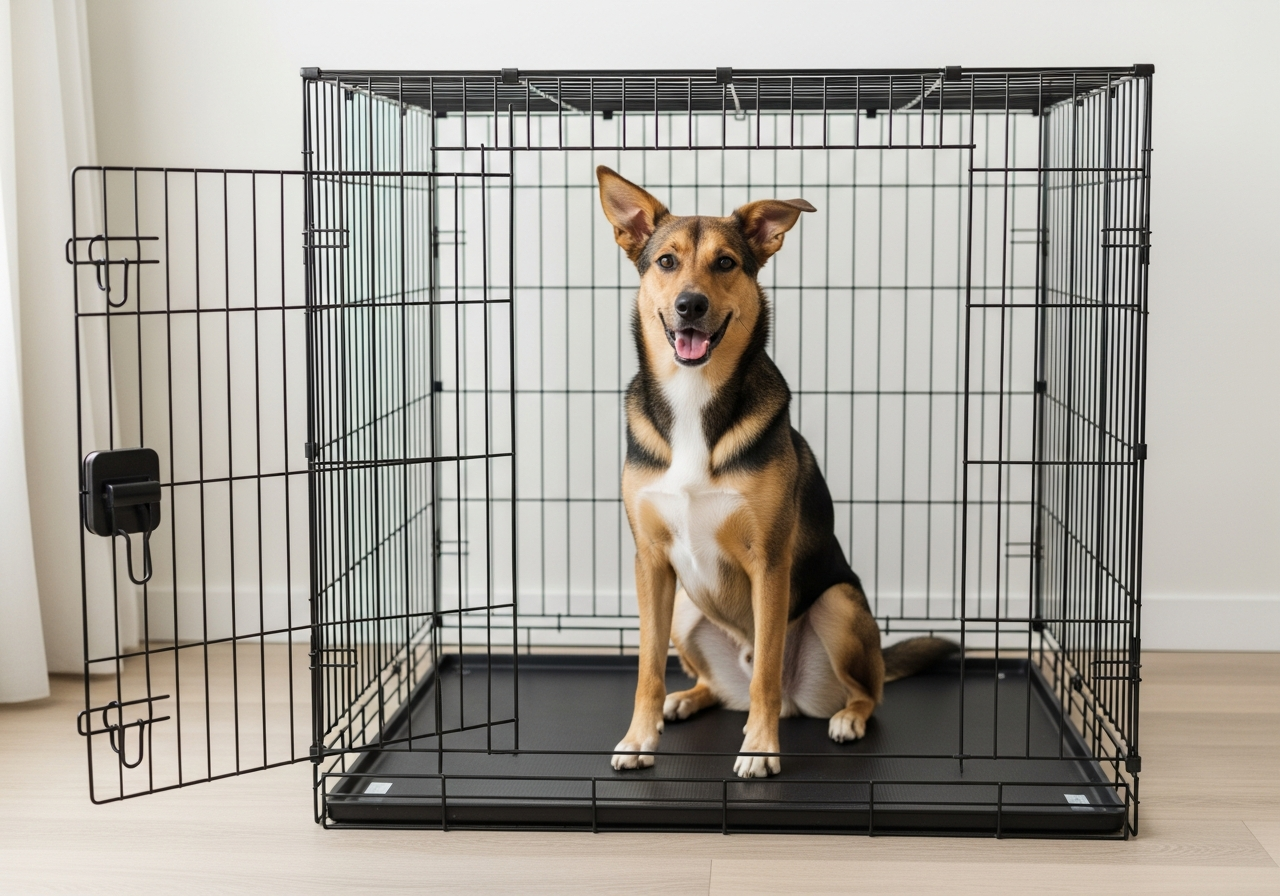
This is the most common mistake new puppy owners make. A crate sized for an 8-week-old Labrador puppy will be outgrown in six weeks. Buy for the adult weight. A 70 to 80 lb adult dog needs at least a 42-inch crate; a 90 to 120 lb dog needs 48 inches; giant breeds (Mastiff, Great Dane, Saint Bernard) typically need 54 inches.
For house-training a puppy in an adult-sized crate, use a divider panel to block off the back section until the puppy grows into the full space. Most quality crates include a divider, confirm before buying. Without it, the puppy can sleep in one end and use the other end as a toilet, which defeats the house-training purpose entirely. The divider moves forward as the puppy grows.
Wire vs Plastic vs Soft-Sided
- Wire crates, best airflow, fold flat, include divider panels, durable long-term. The right choice for most large dogs. They are noisier when the dog moves, but this reduces as the puppy settles in.
- Plastic airline crates, required for air travel; darker and more den-like; some dogs prefer the enclosed feeling. Heavier, no divider option, harder to clean. Not the best choice as a primary training crate for large dogs.
- Soft-sided crates, appropriate only for calm, already crate-trained dogs who need a lightweight travel option. Not suitable for a chewing puppy.
For a full breakdown of wire crates sized for large breeds, including tested picks by size tier, see our best dog crate for large dogs guide.
2. Beds and Sleep Surfaces. More Important Than Most People Think
Where your puppy sleeps matters beyond comfort. Large and giant-breed puppies grow fast, and their joints, hips, elbows, shoulders, are under constant load during growth phases. A flat, hard sleeping surface is not a neutral choice; it contributes to joint stress in developing dogs. This is not scare-mongering: it is the same reason orthopedic mattresses exist for people with growing musculoskeletal systems.
Orthopedic Foam for Large Breeds
A quality orthopedic foam bed distributes body weight across a larger surface, reducing point pressure on developing joint surfaces. For any breed that will exceed 50 lbs. Labrador, Golden, German Shepherd, Bernese, Husky, Boxer, Rottweiler, an orthopedic foam base is worth the investment from the start. Covers should be waterproof or water-resistant for puppies still house-training, and removable and machine-washable so the bed is actually usable during the first year when accidents are guaranteed.
Our tested picks sorted by size and foam quality are in the best orthopedic dog beds for large dogs guide.
In-Crate Bedding
For the first few weeks, prioritise washable and replaceable over premium. An old blanket that smells like the litter (if the breeder sends one) is a better crate mat for week one than an expensive ortho pad that will be soiled and need washing daily. Once your puppy is reliably house-trained, usually by 16 to 20 weeks, upgrade to a proper orthopedic bed that will serve them for years.
Cooling Beds for Hot Climates
If you live somewhere with a genuine summer. Gulf Coast, Southwest, South-East US, a cooling mat is worth having for daytime use outside the crate. Puppies, especially flat-faced breeds (Bulldogs, Pugs, French Bulldogs), overheat more easily than adult dogs. A gel or water-fill mat placed in a shaded spot gives your puppy a cool surface without running the AC constantly.
Our best cooling dog beds guide covers options tested specifically for large breeds, from gel mats to elevated cots. The full overview across all bed types, orthopedic, cooling, elevated, pillow, is in our dog beds hub.
3. Harness and Leash. Walk-Ready From Day One
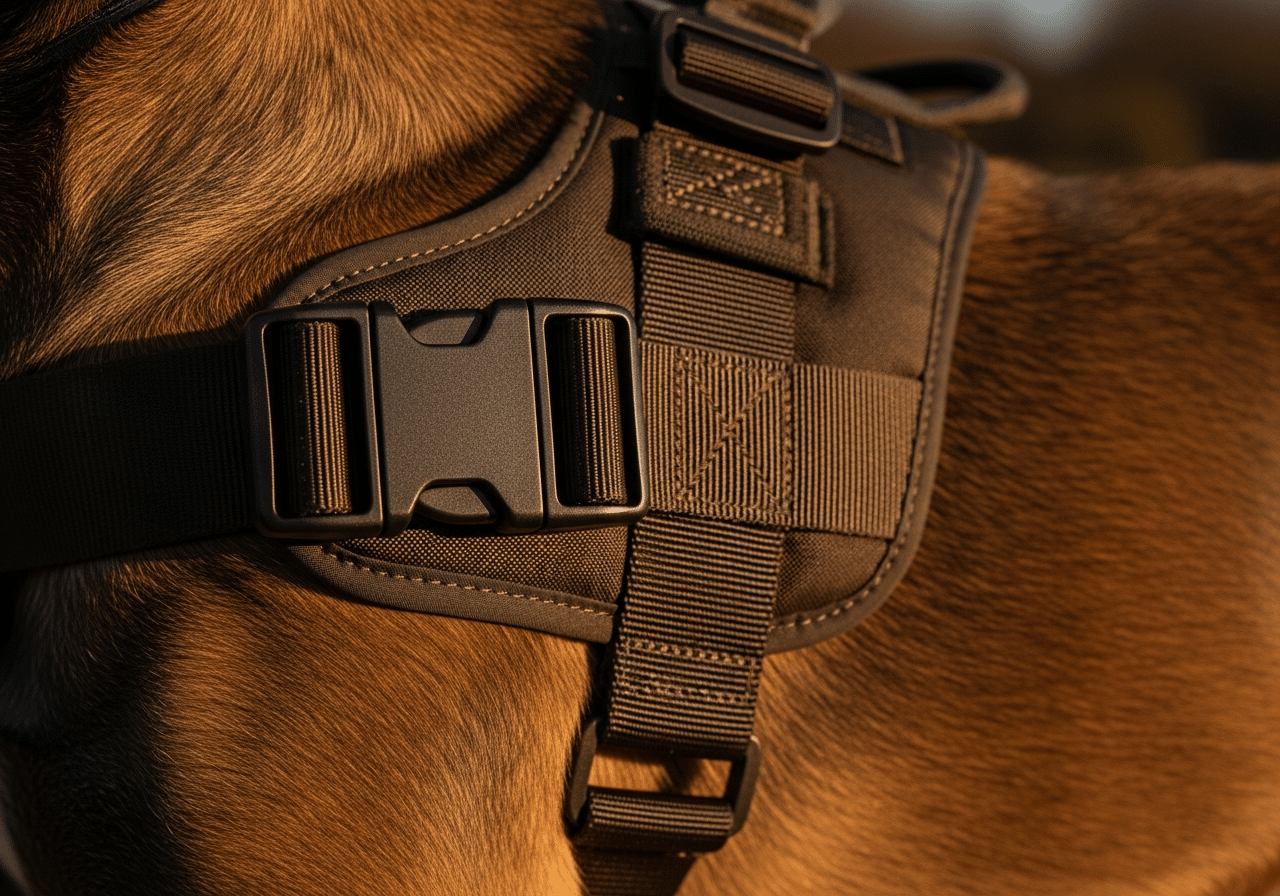
A collar and leash is not the right setup for a puppy learning to walk on lead. Puppy necks are fragile and puppies lunge, pull, and change direction without warning. A collar transfers that sudden force directly to the cervical spine. A front-clip or dual-clip harness distributes the load across the chest and shoulders and gives you steering control without choking, it is the correct tool for the job at any age.
Getting the Harness Right
For puppies that will grow large, you will go through at least two harness sizes before the dog is fully grown. Rather than buying an expensive permanent harness now, get a quality mid-range adjustable harness that fits the first six months, then upgrade to your permanent adult harness at 12 to 18 months when growth is more stable.
Two things to confirm on any harness fitting:
- Two-finger rule. You should be able to slide two fingers under any strap at any point on the harness. Tighter than that will restrict movement and cause abrasion as the coat grows.
- Axilla clearance. The straps must not press into the armpits. Lift each front leg and check that the harness does not bunch up into the armpit when the leg extends forward. A strap that rubs here on every stride causes pain and inflammation.
Our dog harness guide covers the full range from puppy-adjustable to adult large-breed options, with fit instructions and the specific picks our team has tested on large dogs.
Getting the Leash Right
For a new puppy in training, a 4 to 6 foot flat lead in biothane or nylon with a sturdy clip is the right tool. Retractable leashes teach pulling, the constant tension rewards the dog for moving away from you, and should be avoided during training. For large breeds, clip strength and handle quality matter more than they do for a 15-lb dog. A clip that holds a Beagle will snap under the force of a startled German Shepherd mid-lunge.
Our dog leash buying guide covers what to look for at each size and strength tier, and our best leash for large dogs review covers specific tested picks for the breeds where clip and stitching strength actually matter.
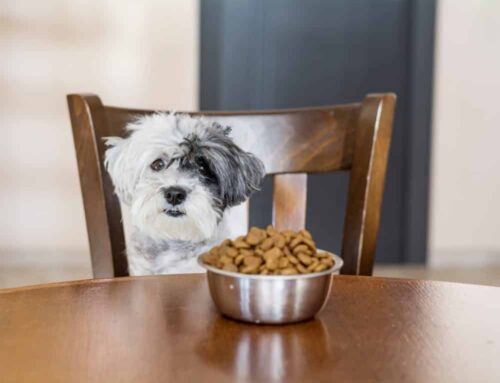
4. Food and Water Bowls. The Basics Done Right
Stainless steel. This is not a preference, it is the correct material for a dog bowl. Stainless is dishwasher safe, does not retain odour, does not leach plasticizers, and does not scratch and harbour bacteria the way plastic does over time. It is also impossible for a bored puppy to chew into fragments and ingest, which is a real risk with thin plastic bowls in the first year.
Size the Bowl for the Adult Portion
Match bowl size to the adult portion you will feed. A 32-oz bowl is appropriate for a medium breed eating 2 to 3 cups of kibble per meal. A large breed (70 to 100 lb adult) typically needs a 64-oz or larger bowl. An oversized bowl is not a problem; an undersized bowl that overflows at every meal is.
Slow Feeder Inserts for Fast Eaters
If your puppy bolts food in under 90 seconds, which Labradors, Beagles, and most herding breeds will, a slow feeder insert or lick mat used as a food surface slows the pace and reduces air ingestion. Fast eating increases gas, and in deep-chested breeds (Great Dane, Irish Setter, Standard Poodle, Weimaraner, Rottweiler), gas is a GDV risk factor. A slow-feeder insert is a genuinely useful $12 purchase for any fast eater.
Water Access Rules for Puppies
Fresh water should be available at all times except during the final two hours before bedtime for a puppy still house-training at night. Restricting water overnight reduces the number of times you need to get up for a toilet trip without creating any dehydration risk. A heavy stainless bowl that does not tip is better than a travel bottle or dispenser for home use, simpler to clean and harder for the puppy to knock over and flood the crate area.
5. Toys and Enrichment. Chewing Is a Need, Not a Nuisance
Puppies chew. This is developmentally normal and necessary. Puppy teeth are replaced by adult teeth between 12 to 16 weeks and during that process the gums itch and ache. An appropriate chew outlet saves your furniture, your shoes, and your sanity. The goal is not to stop chewing but to redirect it onto things that are safe and durable enough to last.
The Core Three for Any Puppy
- A durable rubber chew toy. Rubber chew toys, the classic Kong shape being the category standard, handle the pressure of a puppy mouth and can be stuffed with food to extend engagement time significantly. For large-breed puppies, size up from the start: a toy sized for a 20-lb dog is too small for a German Shepherd puppy by 12 weeks and becomes a choking hazard. Our tested picks for dogs that chew hard are in the durable dog chew toy guide.
- A tug toy. A braided rope or rubber tug is the primary interactive play tool for most dogs and nearly all puppies. It builds drive, reinforces engagement with you, and provides the physical outlet that solo chewing does not. Replace rope tugs when they fray to the point where strands can detach, swallowed rope fibres cause GI obstruction.
- A stuffable food dispenser. A stuffed rubber toy placed in the freezer (frozen Kong or equivalent) gives a puppy 20 to 45 minutes of focused, calm activity. This is one of the most effective crate-settling tools available. A puzzle feeder, where the puppy manipulates a slider or lever to release kibble, builds problem-solving engagement and tires the brain more effectively than physical exercise alone at this age.
What to Avoid in the First Year
- Rawhide, it softens with chewing and can detach as a large piece that obstructs the oesophagus.
- Antlers for puppies under 6 months, puppy teeth are softer than adult teeth and antlers fracture them at a rate vets consistently flag as preventable.
- Toys sized for smaller dogs, a large-breed puppy’s jaw force exceeds the design limits. Parts detach and become choking hazards.
- Squeaky toys unsupervised, many puppies disembowel them in minutes and eat the squeaker.
6. Grooming Gear. Start Early, Make It Routine
Grooming is not just about appearance, it is handling desensitisation. A puppy comfortable being touched around the ears, paws, mouth, and tail grows into a dog that can be groomed, vetted, and handled by strangers without stress. The earlier you start short, positive grooming sessions, the easier every veterinary exam, grooming appointment, and handling situation becomes for the life of the dog.
Brush Matched to Coat Type
- Short, smooth coats (Labrador, Boxer, Beagle, Pointer, Dalmatian, Greyhound), a rubber curry brush or a rubber grooming mitt is enough. These coats do not tangle. The brush removes loose hair and massages the skin. Use it weekly.
- Double coats with a dense undercoat (Husky, Malamute, German Shepherd, Golden Retriever, Bernese Mountain Dog, Corgi, Border Collie), this is where a de-shedding tool is essential. Double-coated dogs blow their undercoat seasonally and shed year-round. A standard brush sits on top of the guard coat; a de-shedding tool reaches the undercoat and removes loose hair before it ends up on every surface in your home. Our tested picks, including the Furminator vs alternatives comparison that most first-time Husky and Malamute owners want, are in the best de-shedding tool for dogs guide.
- Long, silky or curly coats (Doodles, Spaniels, Setters, Poodles, Afghan Hounds), a slicker brush plus a stainless steel comb. These coats matt. Skipping brushing for a week creates tangles that require professional grooming to remove.
Nail Maintenance From Week One
Long nails change gait biomechanics. A large dog walking with overgrown nails for months develops compensatory posture that stresses the hips and lower spine, this is well documented and entirely preventable. Trim nails every 3 to 4 weeks or get them trimmed at each vet visit. A grinding tool (Dremel-style) is gentler than clippers for puppies that react badly to the snap of the blade, and produces smooth edges that do not catch on carpets and bedding.
Start nail handling in week one: touch each paw, then each nail, without any tools. Then progress to touching the clipper or grinder to each nail (without cutting) over the next few days. This desensitisation takes 10 minutes spread over a few sessions and prevents nail-trim fear for the life of the dog.
Ear and Dental Care
Drop-eared breeds (Spaniels, Basset Hounds, Bloodhounds, some Doodles) need weekly ear checks and cleaning, the ear canal of a drop-eared dog traps moisture and is prone to infection. Prick-eared dogs (Husky, German Shepherd, Malinois) rarely need ear cleaning unless they are swimmers.
Start tooth brushing with puppy toothpaste (never human toothpaste, xylitol) from 8 weeks. Periodontal disease affects over 80% of dogs by age 3 when brushing is skipped. A two-minute daily brushing habit started at 8 weeks is worth years of dental health for your dog.
7. Containment and ID. Set This Up Before Your Puppy Comes Home
A puppy can be through an open door and gone in three seconds. Containment planning and ID setup are not things to do eventually, they need to be ready before the puppy arrives.
Physical ID: Collar Tag + Microchip
Every puppy should have a collar with your phone number engraved (not a printed tag that fades) from day one home. Microchipping, done by your vet at or before first vaccination, is the permanent backstop when the collar is off, during a bath, swimming, or sleep. The tag gets the casual finder home; the microchip gets the rescue shelter or vet clinic home when the tag is missing.
Use a breakaway collar rather than a standard buckle collar for a young puppy. Puppies catch buckle collars on crate wires, fencing, and furniture and can injure themselves pulling free. A breakaway releases before that force becomes dangerous.
Fence and Yard Safety Check
Walk the full perimeter of your yard before the puppy comes home. Look for gaps at the base of the fence (puppies compress to surprisingly small openings, a 6-inch gap is enough for most puppies under 20 lbs), gates that do not latch securely, and sections where the fence is low enough for an adolescent dog to scramble over. A 4-foot fence that holds an adult Beagle will not hold a motivated 6-month-old Labrador.
GPS Tracking and Virtual Fencing for Larger Properties
If your property is large, unfenced, or borders a road or water, a GPS containment and tracking system adds a meaningful safety layer. Modern GPS dog fences use a virtual boundary rather than buried wire, your phone shows you where the dog is in real time and alerts you when they approach or cross the boundary line. This is not a substitute for physical fencing, but on rural properties or acreages where perimeter fencing is not practical, it provides a level of oversight that nothing else matches.
Our best GPS dog fence guide covers the leading options. Halo, SpotOn, and Fi, with an honest breakdown of which one suits which property size and what level of boundary training the dog needs to use each system reliably.
A GPS collar also functions as a live tracker during the puppy training period: you can see on your phone whether your puppy is at the fence line, in the garden, or somewhere they should not be, without physically checking every time. For large properties this is a quality-of-life improvement that pays for itself in peace of mind during the first year.
8. Travel Essentials. Safe Car Trips From the First Vet Visit
Your puppy will travel to the vet in the first week home. They may need to travel frequently through the first year for vaccinations, training classes, socialisation outings, and everything else that puppy ownership entails. Setting up safe car travel from the first trip, rather than just loose on the seat, prevents a dangerous habit from forming and keeps your puppy safe during sudden stops.
Crate vs Car Harness
The safest option for a puppy is a secured crate in the car, boot or trunk of an estate or SUV, or behind a dog guard. A crate prevents the puppy becoming a projectile in a crash and eliminates the distraction of a loose puppy trying to climb over the driver’s seat. If you already have a wire crate at home, lay it flat in the boot and add a familiar-smelling blanket inside. Done.
A car-specific dog harness clipped to the seatbelt anchor is the alternative when crating is not practical for your vehicle. Not all dog harnesses are crash-rated; look for Center for Pet Safety (CPS) tested options if crash performance matters to you. A standard walking harness used as a car restraint provides no crash protection but is better than no restraint at all.
Dog Travel Backpack for Owners
A small bag that holds water, a collapsible bowl, waste bags, a spare lead, and an emergency snack is worth keeping in the car from week one. Our dog travel backpack guide covers options including packs designed to carry small puppies as well as owner-carried dog-gear bags for day trips and hikes.
Longer Trips With a Dog
Our traveling with your dog guide covers everything from road trips to flying, which airlines allow dogs in cabin, how to prepare a dog for their first flight, and what to pack for a week away. Most of that content is more relevant at 6+ months once your puppy is vaccinated and socialised, but the car safety section applies from day one.
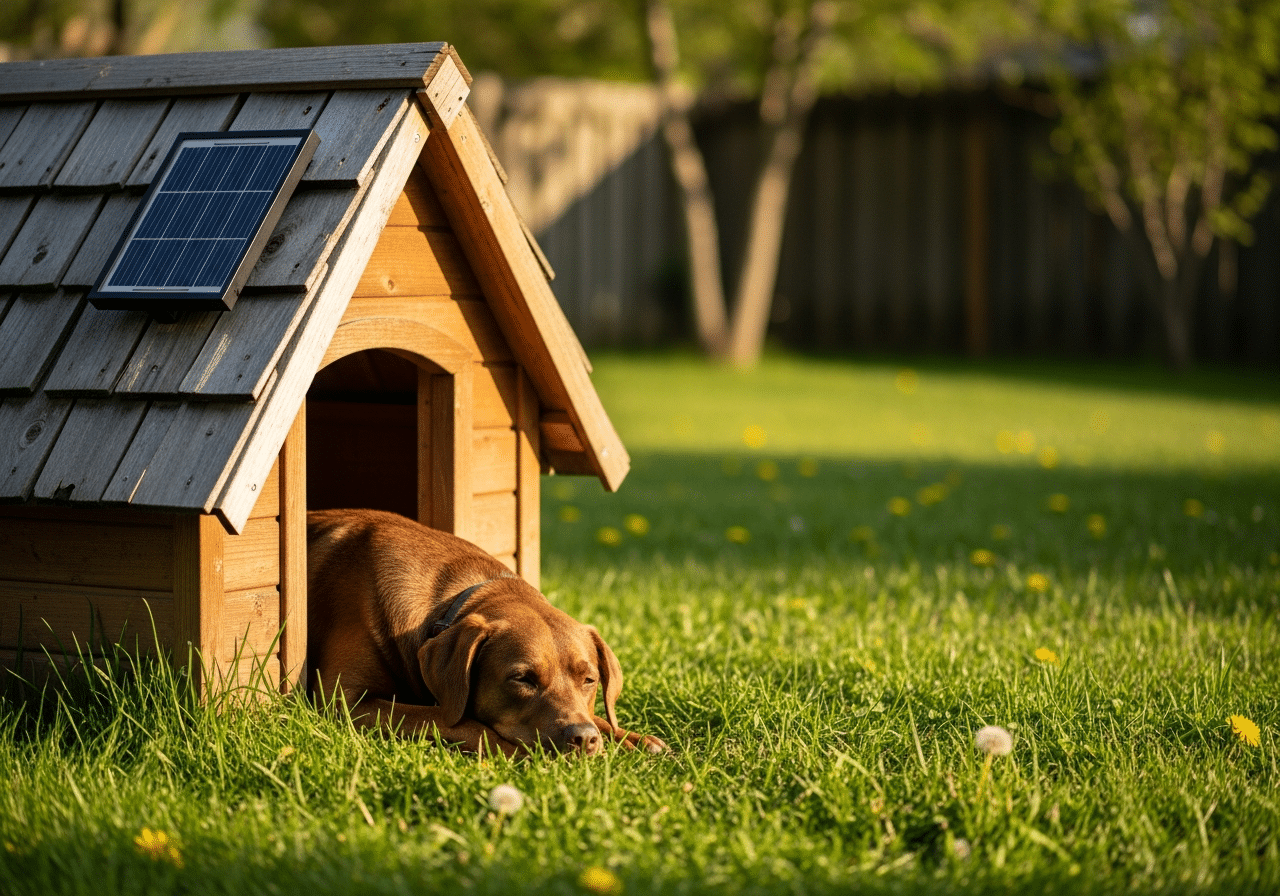
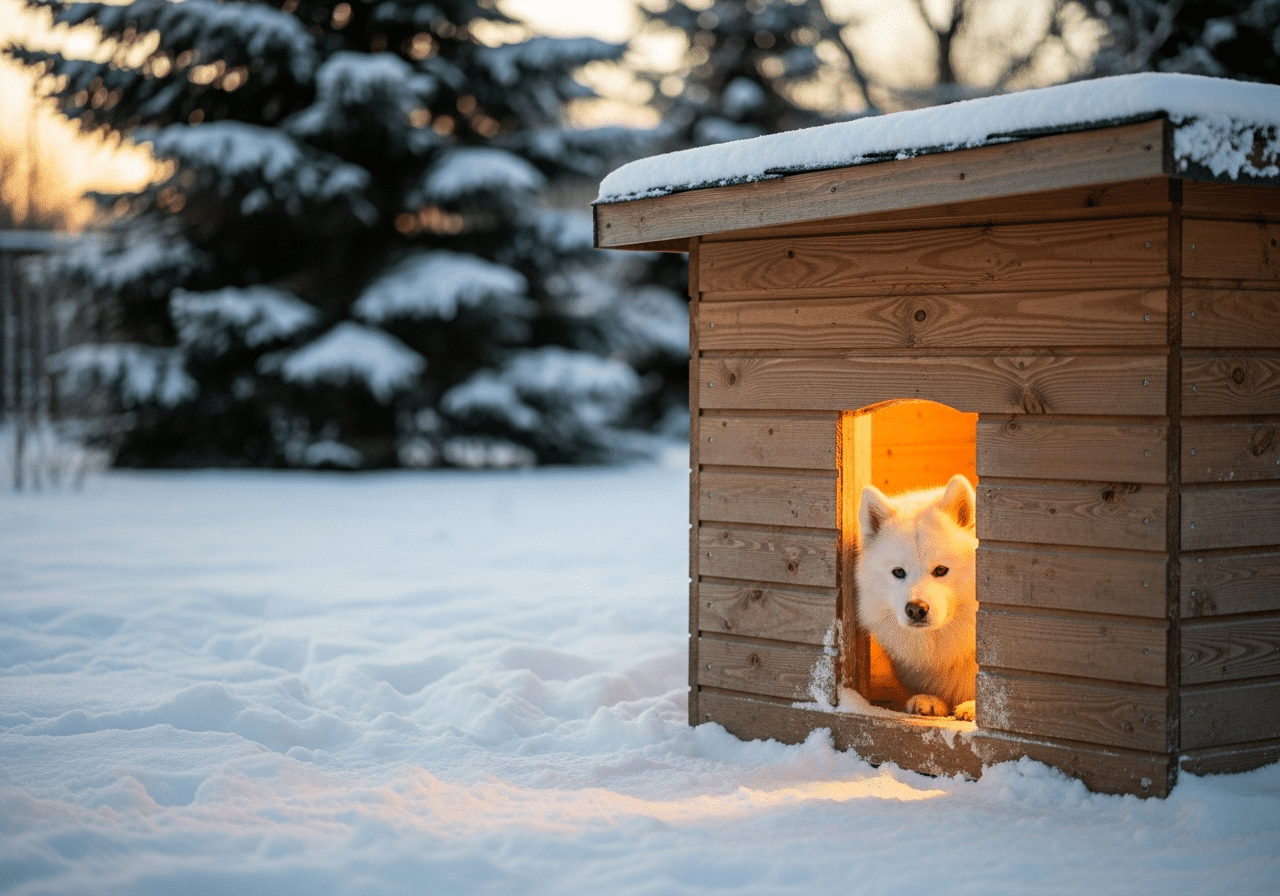
9. Outdoor Shelter. If Your Puppy Will Spend Time Outside
Not every puppy needs a dog house, many dogs live entirely indoors and that is fine. But if your dog will spend meaningful time in the garden unsupervised, proper outdoor shelter is a welfare requirement. Dogs left outside without shelter cannot regulate their body temperature the way a dog with shade and a windbreak can, and the consequences range from discomfort to genuine danger depending on conditions.
What Good Outdoor Shelter Provides
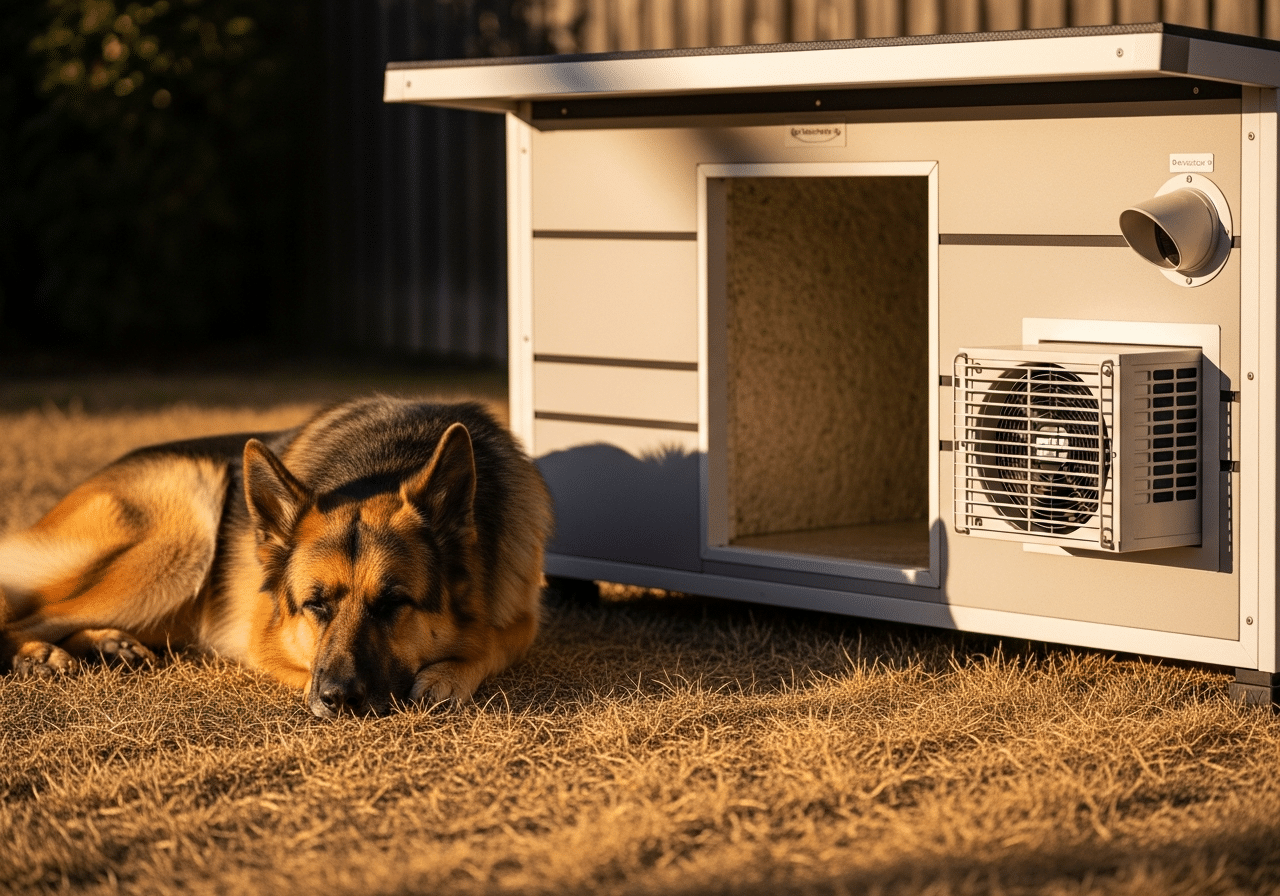
- Summer: shade from direct sun, ventilation to prevent heat buildup inside the structure, and a raised floor for airflow underneath the dog. Afternoon sun on a dark plastic roof can heat a dog house interior to 110°F or above, which is acutely dangerous. Proper ventilation and insulation keep interior temperatures within a few degrees of shaded outdoor ambient.
- Winter: a windbreak and a floor off the cold ground. A dog with a proper winter coat in a sheltered, dry, well-bedded dog house handles outdoor temperatures significantly below freezing. A dog without shelter loses body heat to wind, rain, and cold ground contact rapidly.
- Rain and wind: a dog that gets wet and cannot dry out is at risk for hypothermia in cool temperatures, skin infections in warm ones, and chronic stress that affects behaviour.
Choosing the Right Dog House
Size for the adult dog: the house should allow the adult dog to stand up, turn around, and lie fully stretched out, but not so large that it cannot warm the interior with body heat on a cold night. A house twice the dog’s body volume loses heat faster than the dog can generate it.
Our best dog houses guide covers picks at every size and price tier, from basic weatherproof plastic for mild climates to fully insulated large-breed houses designed for dogs in genuine winters. We test for interior temperature differential, structural durability, and ventilation quality, not just appearance.
First-Week Priorities: The Order of Operations
When your puppy arrives home, the gear is set up and ready. Here is the order of priority for the first seven days.
Day 1: Establish the Crate Routine
Put the crate where it will live long-term, your bedroom or a central room, not isolated. Feed the first meal in the crate with the door open. Let the puppy explore and enter voluntarily before you close the door. The first night may involve crying; this is normal. Keep the crate next to your bed so the puppy can hear and smell you. Most puppies settle within 3 to 5 nights when this is done consistently from night one.
Days 1 to 3: House-Training Protocol
Take the puppy outside every 30 to 45 minutes while awake, immediately after waking from a nap, and immediately after every meal. Reward outdoor eliminations immediately, not when you come back inside, which is too delayed for a puppy’s learning. Clean up indoor accidents with an enzymatic cleaner; standard multi-surface cleaners do not eliminate the urine odour signals that bring puppies back to the same spot.
Week 1: Vet Visit
Book a vet appointment within the first week. Your vet confirms health, schedules vaccinations, microchips (if the breeder did not), and advises on deworming and regional flea/tick prevention. Bring vaccination and health records from the breeder.
Weeks 1 to 4: The Socialisation Window
The primary socialisation window closes at approximately 12 to 16 weeks. During this period, positive exposure to sounds, surfaces, people of different appearances, other animals, vehicles, and environments builds a dog that handles novel situations calmly for life. This is more important than any piece of gear. Carry your unvaccinated puppy to safe places (vet car park, a friend’s garden, a quiet street) if they cannot be on the ground yet.
Month 1: Enrol in a Puppy Class
A force-free puppy class, positive reinforcement only, no punishment-based methods, does two things simultaneously: structured socialisation with vaccinated puppies and the early foundations of the obedience behaviours (sit, down, name recognition, loose-leash walking, recall) that every large dog absolutely must have. A 70-lb dog that does not respond reliably to sit and come is dangerous regardless of how gentle their temperament is. Start early and commit to the full course.
New Puppy Gear Questions Answered
What do I absolutely need before my puppy comes home?
The non-negotiables before your puppy arrives: a correctly sized crate with a divider panel (size for the adult dog, not the puppy), a washable crate mat, a front-clip adjustable harness, a 4 to 6 foot training lead, stainless steel food and water bowls, a breakaway collar with an engraved ID tag, one durable rubber chew toy, and enzymatic cleaner for accidents. Everything else, cooling mat, grooming tools, travel bag, can wait until week two.
What size crate do I need for a large-breed puppy?
Size for the adult dog, not the puppy. A 70 to 80 lb adult needs at least a 42-inch crate; a 90 to 120 lb adult needs 48 inches; giant breeds (Mastiff, Great Dane) need 54 inches. Use a divider panel to block off the back section for the puppy, this preserves the house-training value of the crate. Never buy a puppy-sized crate for a large breed; you will need a new one in six weeks. Our large-dog crate guide covers the right pick at each adult size tier.
Should I get a harness or a collar for my puppy?
Use a harness for all leash walking with a puppy. Puppy necks are fragile and sudden lunges transfer directly to the cervical spine with a collar. A front-clip adjustable harness gives you steering control and distributes load across the chest and shoulders. Keep a breakaway collar for the ID tag only. Our harness guide covers the best adjustable options for growing dogs.
Do I need an orthopedic bed for a large-breed puppy?
Yes, for any breed that will exceed 50 lbs at maturity. Large-breed puppy joints are under significant load during growth phases and an orthopedic foam bed distributes body weight more evenly than a flat mat or stuffed pillow bed. Start with a washable, waterproof-covered pad for the crate and upgrade to a full orthopedic bed once house-training is reliable. See our orthopedic dog bed guide for size-matched picks.
How do I stop my puppy getting out of the yard?
Check the perimeter for base gaps (puppies compress to surprisingly small openings, 6 inches is enough for most puppies under 20 lbs), unsecured gate latches, and sections low enough to scramble over. For large or rural properties without full perimeter fencing, a GPS containment system provides real-time boundary alerts. Our GPS dog fence guide covers the leading virtual fence options. Also microchip and collar-tag from day one as the fallback when containment fails.
What grooming tools does a new puppy need?
A brush matched to coat type: rubber curry mitt for smooth coats, slicker brush for silky or curly coats, and a de-shedding tool for double-coated breeds (Husky, Malamute, German Shepherd, Golden Retriever, Bernese). Nail clippers or a grinding tool. Start handling paws, ears, and mouth from week one, desensitisation done early prevents grooming stress for the life of the dog. See our de-shedding tool guide for double-coated breed picks.
Do puppies need toys and what types are best?
Yes, chewing is a developmental need. The core three: a durable rubber chew toy (sized for the adult mouth, not the puppy mouth), a braided rope or rubber tug for interactive play, and a stuffable food dispenser (frozen Kong) for crate-settling. Avoid rawhide, antlers for puppies under 6 months, and toys sized for smaller dogs. Our durable chew toy guide covers the best options for powerful chewers at every age.