 Dog Gear, Sized Right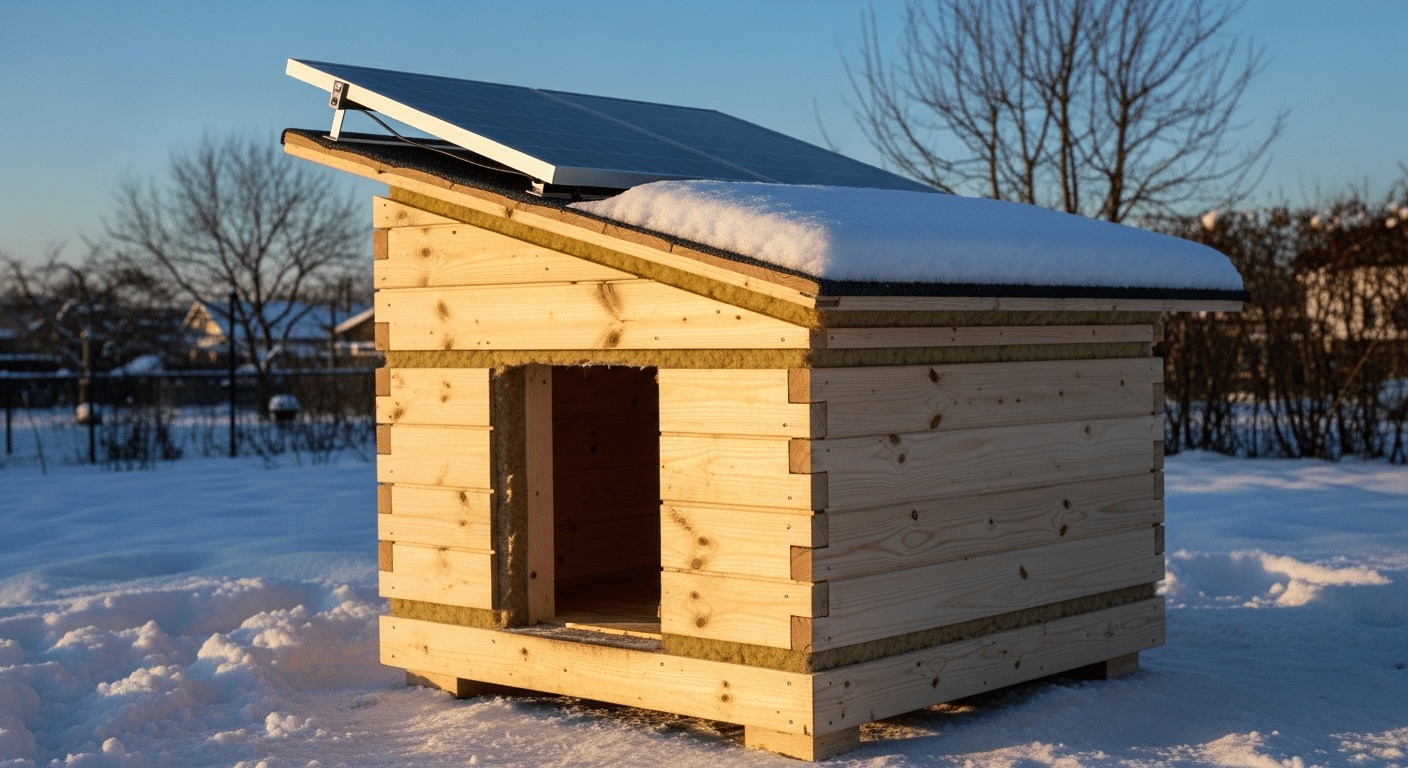
Solar Heated Dog Houses for Cold Climates
A solar dog house can absolutely work in a cold climate, but only if the panel, battery and insulation are sized for short, low winter sun. Here’s how to plan it by climate zone.
A solar dog house in a cold climate lives or dies on one thing: whether the system is sized for winter, not summer. Shorter days, a low sun that skims the horizon, snow on the panel and longer cloudy spells all cut how much power you actually harvest in December, exactly when your dog needs the heat. The good news is that with the right panel angle, a battery sized for short days, and insulation matched to your climate zone, solar keeps a dog comfortably warm through mild-to-moderate winters. This guide shows you which climates solar suits, how to size and aim the system for low winter sun, how much insulation you need by zone, and where a hybrid backup makes more sense than fighting the weather.
Which cold climates does solar actually suit?
Solar isn’t all-or-nothing in the cold, it scales with how harsh your winter is. The deciding factors aren’t just temperature: they’re how many usable sun-hours you get in midwinter and how long your cloudy or snowy stretches run. Use the climate-zone table below to set realistic expectations before you buy.
| Climate zone | Typical winter low | Midwinter sun | Is solar a good fit? |
|---|---|---|---|
| Mild cold (Pacific NW valleys, mid-Atlantic, upper South) | 20–40°F | Short but frequent clear spells | Excellent. A modest panel + battery + low-watt pad keeps a dog warm with margin to spare. |
| Moderate cold (Midwest, interior West, New England coast) | 0–20°F | Short days, regular cloud & snow | Good, if sized up. Bigger panel, larger battery and R-13+ insulation carry it through cloudy spells. |
| Hard cold (northern Plains, Mountain West, interior Canada) | −10 to 0°F | Very short days, long overcast runs | Marginal — go hybrid. Solar offsets cost, but pair it with a grid or generator backup for cold snaps. |
| Subzero / extreme (interior Alaska, far-north prairie) | Below −10°F for days | Minimal usable winter sun | Not as a sole source. See our subzero warmth guide — mains heat leads, solar assists. |
The honest rule: solar is a confident yes through moderate cold and a planning project through hard cold. Below that, treat it as a supplement to grid power rather than the heat source.
Panel angle & placement for low winter sun
The same panel that’s plenty in July can underperform in January simply because the sun is lower and the days are shorter — so the single most valuable cold-climate tweak is aiming the panel at the winter sun.
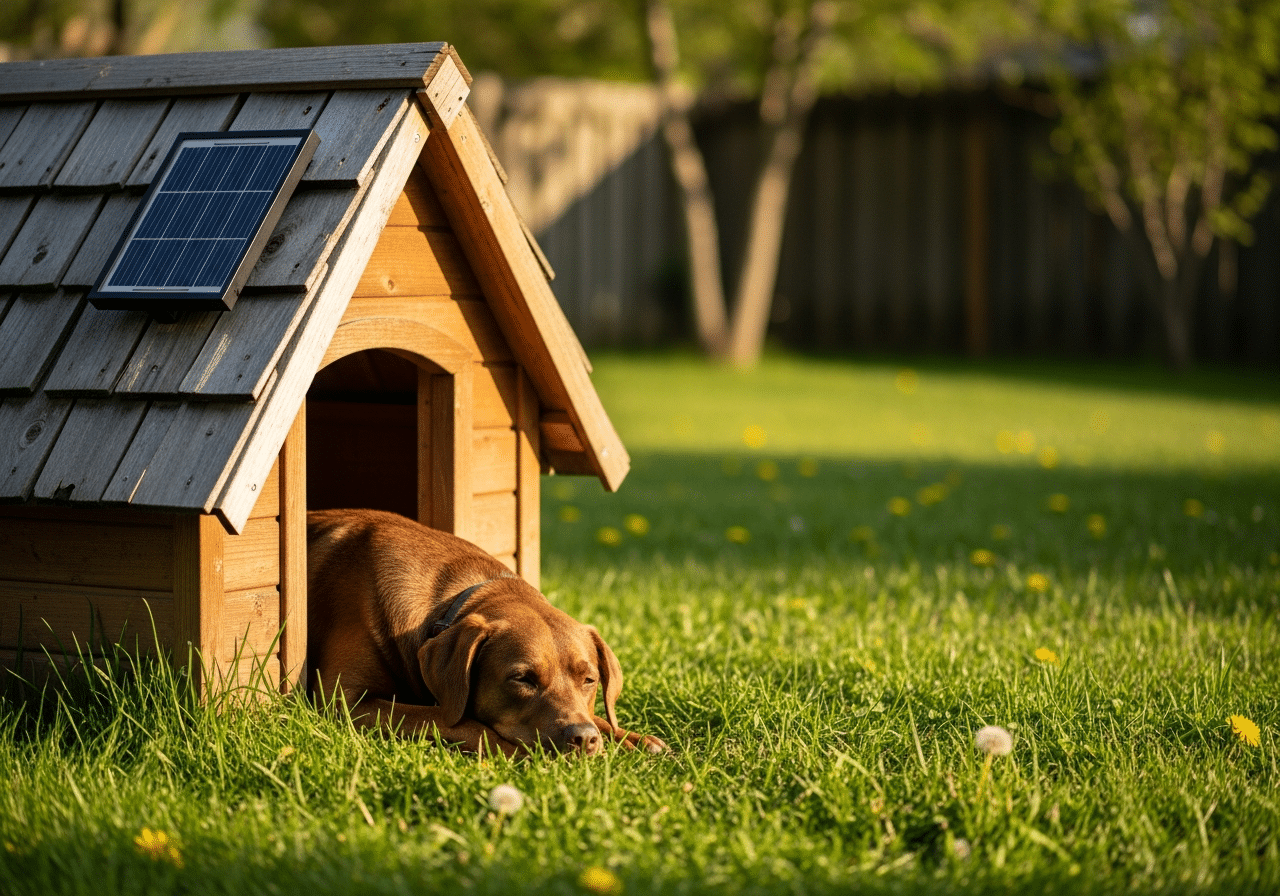
- Tilt steeper than you think. For winter output, set the panel angle to roughly your latitude + 15°. At 40°N that’s about a 55° tilt — far steeper than a summer setting, so the low midday sun hits the panel closer to head-on.
- Face true south (Northern Hemisphere), not magnetic south, and keep the southern sky clear of fences, sheds and evergreens that cast long winter shadows.
- A steep tilt sheds snow. Mount the panel on the roof at that winter angle and most snow slides off on its own; a near-flat panel buries under an inch of snow and stops producing entirely.
The U.S. Department of Energy’s primer on active solar heating explains why orientation and tilt drive output more than raw panel size — a well-aimed smaller panel often beats a poorly-aimed bigger one in winter.
Sizing the system for short winter days
Cold-climate sizing means planning for your worst solar week, not your average. Two numbers matter: how much power the heat pad draws, and how many cloudy days the battery must bridge.
- Match the panel to winter sun-hours. A summer day may give 6 useful sun-hours; a cloudy midwinter day can give 1–2. To harvest the same energy, a cold climate wants more panel — step up from a 100W to a 150–200W panel in moderate-cold zones.
- Oversize the battery for autonomy. The battery is what carries a dog through a run of dark, snowy days. Size a 12V deep-cycle battery for 2–3 days of reserve, not one, so a cloudy spell doesn’t leave the pad cold.
- Run a low-watt, thermostatic pad. A 12V heated pad on a thermostat that only draws power when the dog is inside stretches the battery dramatically — it’s the difference between days of reserve and hours.
- Add a charge controller. An MPPT controller squeezes more out of weak winter light and protects the battery from over-discharge in a long overcast stretch.
If you’d rather build the whole panel-battery-pad chain yourself, our build-a-solar-heated-dog-house walkthrough sizes each component step by step.
Insulation requirements by climate zone
Here’s the part most owners underestimate: in a cold climate, insulation does more for warmth than the heater does. Every watt your solar system harvests is wasted if it leaks straight out through thin walls. The colder the zone, the thicker the rigid foam you need in the walls, floor and roof.
| Climate zone | Target wall/floor insulation | Other must-haves |
|---|---|---|
| Mild cold (20–40°F) | R-7 to R-10 rigid foam | Raised floor, door flap |
| Moderate cold (0–20°F) | R-10 to R-13 | Offset/baffled doorway, heavy vinyl flap, straw bedding |
| Hard cold (−10 to 0°F) | R-13 to R-15+ | All of the above + sealed seams, tight ventilation to stop condensation |
Three rules hold in every zone: insulate the floor (most heat is lost downward into frozen ground), raise the house off the ground on feet or a pallet, and use a baffled or flapped doorway so wind can’t blow the warmth out. Bed it with straw, never blankets — straw insulates and repels moisture, while a blanket freezes and wicks heat away from the dog.
Realistic expectations — and when to go hybrid
Set honest expectations and solar will not let you down. In mild and moderate cold, a properly aimed, well-insulated solar house with a battery sized for cloudy spells keeps a dog comfortably warm all winter — with near-zero running cost. That’s the sweet spot.
Solar’s one genuine weakness is a run of dark, snow-covered days that out-paces what the battery stored — which tends to coincide with the deepest cold. In hard-cold and subzero zones, don’t ask solar to be the sole heat source. Instead go hybrid:
- Solar as the everyday source, grid as backup. The solar system handles normal winter days; a thermostatically-controlled mains pad kicks in only when the battery runs low.
- Solar to cut running cost on an electric setup. If you’re mostly grid-powered, a panel still offsets the power bill on sunny days.
Not sure which way to lean? Our solar vs electric comparison walks the trade-off, and the best solar heated dog houses guide picks options by dog size and climate. Whatever you choose, watch the thresholds: 32°F brings freezing and hypothermia risk, and 20°F is life-threatening for most dogs left without reliable heat — a margin you don’t gamble on a cloudy forecast.