 Dog Gear, Sized Right
Best Harness for a Labrador
Labradors are strong, enthusiastic pullers with a broad, deep chest, so the right harness is a no-pull harness, fitted to a Lab’s chest. Here are the best no-pull and adventure harnesses for a Lab, plus the chest-girth sizing chart every other guide leaves out.
The best harness for a Labrador has one job above all others: stop the pulling without hurting your dog. A Labrador Retriever is a powerful, exuberant 55 to 80 lb dog with a broad, deep chest, and, especially as a young adult, an enthusiastic puller that leans into the leash out of pure joy, not bad manners. Clip that to a flat collar and every lunge drives force into the throat. The fix is a no-pull harness with a front (chest) clip that redirects a lunging Lab back toward you, and a wide, padded chest plate sized to a Lab’s broad build. On top of that, a Lab is a born water dog that loves the outdoors, so the right harness should shrug off a lake swim and a muddy trail, and the best ones double as a hiking harness. Below we rank the best harness for a Lab, an everyday no-pull pick that also handles the trail, a best-value no-pull option, and a well-padded do-everything harness, then give you the thing competing guides skip: a real chest-girth sizing chart so you order the right size the first time.
The 3 best harnesses for a Labrador
Ranked for a strong, enthusiastic 55 to 80 lb puller with a broad, deep chest, an everyday no-pull harness that also hikes, a best-value no-pull pick, and a well-padded do-everything harness. Each is verified in stock, tap through for the live price. Measure your dog’s chest girth against the chart below before you order.
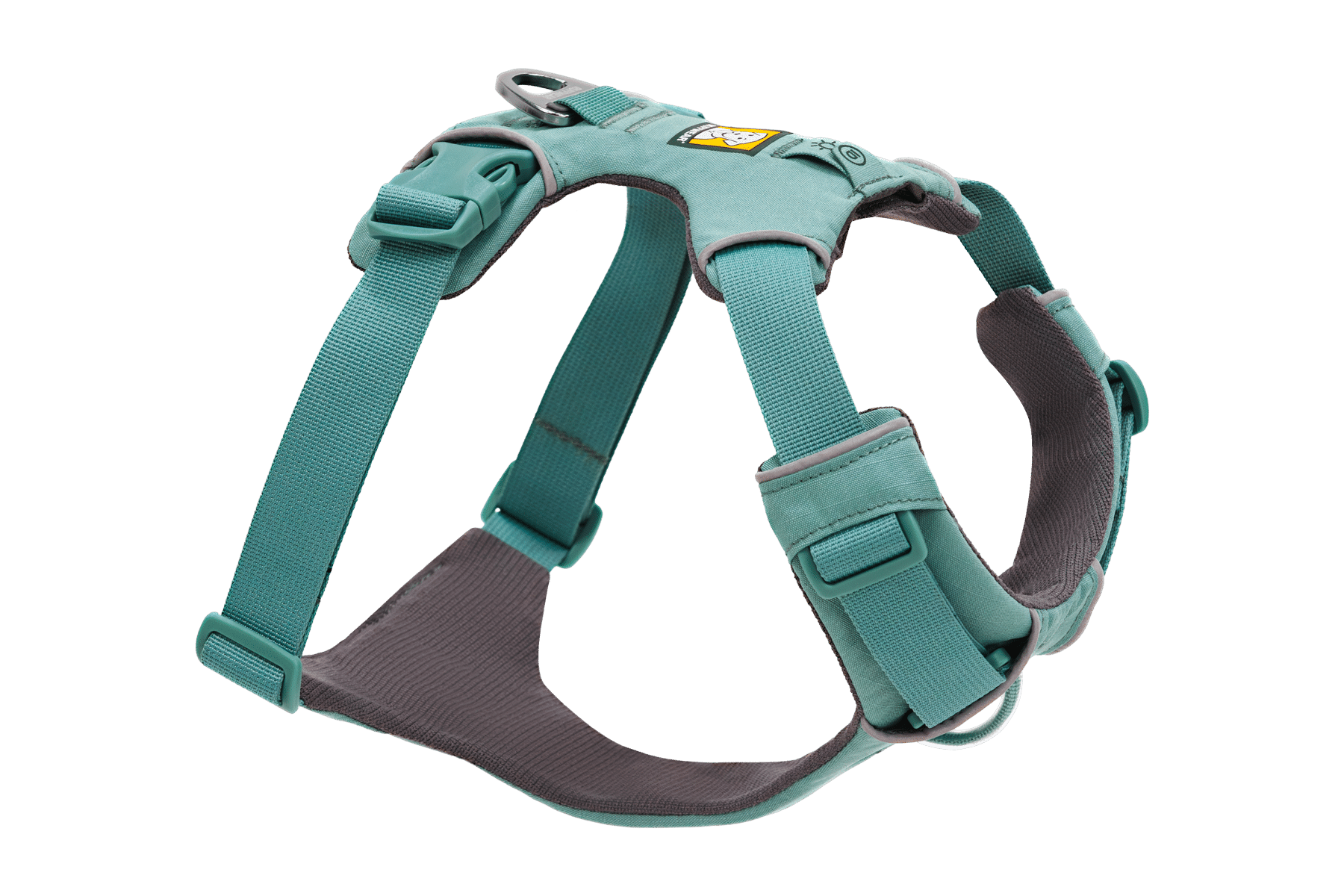
Ruffwear Front Range Dog Harness
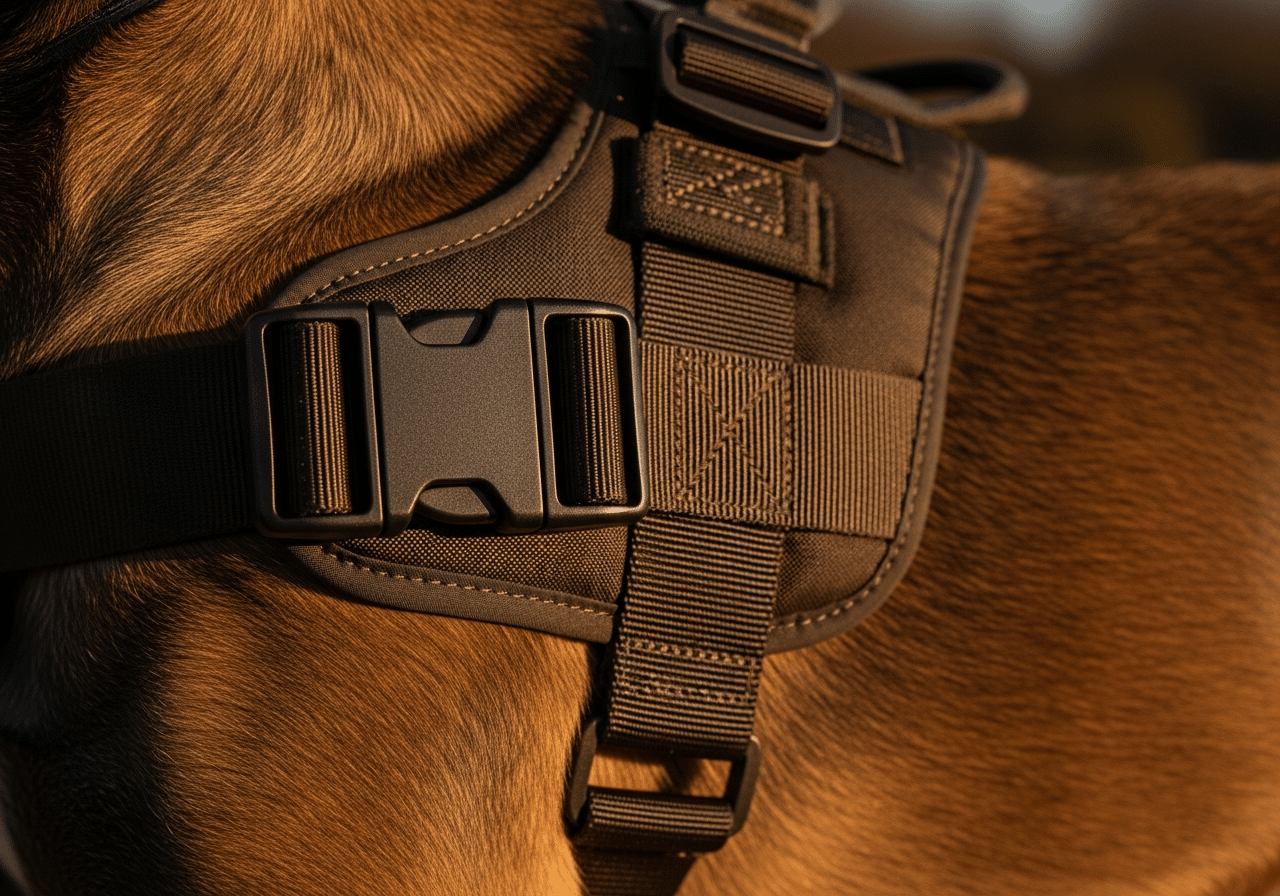
For a Labrador this is the harness we reach for first, because it does the two things a Lab needs most. It pairs a front no-pull clip on the chest, the single most effective tool for an enthusiastic puller, especially a young Lab that hits the end of the leash like a freight train, with a back clip for relaxed walks. Its wide, padded Y-front panel spreads a strong Lab’s pull across that broad, deep chest instead of crushing it into the throat. Four adjustment points dial the fit onto a barrel-chested Lab so it sits snug and doesn’t shift. And because it’s a trim, durable, fast-drying build rather than a heavy fleece vest, it’s also the harness we’d take hiking with a water-loving Lab, it sheds a lake swim and a muddy trail far better than a bulky padded vest.
What we like
- Front clip genuinely curbs pulling, the everyday tool for a strong, enthusiastic Lab
- Wide padded chest plate spreads a Lab’s pull off the trachea across the broad chest
- Trim, durable, fast-drying build doubles as the hiking and adventure harness for an outdoorsy Lab
- Skimlinks merchant: routes to ruffwear.com, the highest-paying source for this brand
The catches
- Premium price versus a basic Amazon harness (you’re paying for fit, padding and durability)
- No grab handle on the standard Front Range, for a control handle, see the rabbitgoo or Kurgo below
- A big, broad-chested male Lab may need the L or XL, measure chest girth before ordering
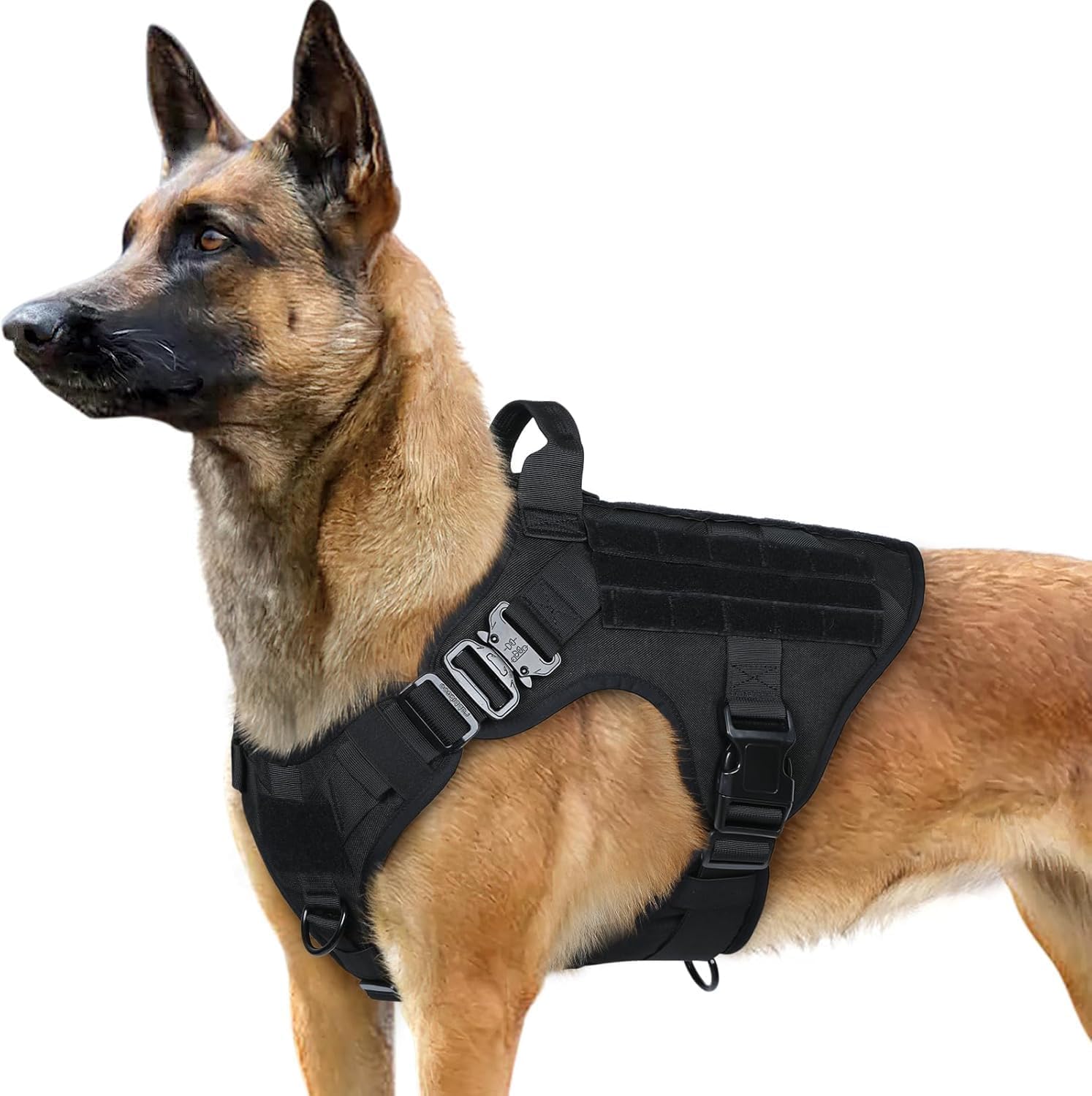
rabbitgoo No-Pull Dog Harness (Large)
The best-value way to get a real no-pull setup on a Labrador. It pairs a front chest clip for training with a back clip for everyday walks, two metal leash rings, not plastic, plus a padded vest body and a top grab handle for close control near roads, other dogs, or loading into the car. Four adjustment points cinch the wide vest snug on a Lab’s broad, deep chest, and the wide panels keep a strong dog’s pull off the throat. For owners who want the same front-clip no-pull mechanism and a control handle as the pricier picks, at a fraction of the cost, this is the smart everyday buy for a Lab.
What we like
- Front clip curbs pulling at a budget price, effective for a driven, leash-keen Lab
- Two metal leash rings and a control handle for under thirty dollars
- Wide padded vest cinches snug on a broad, deep Lab chest for a secure fit
- Four adjustment points dial in fit on a growing or barrel-chested Lab
The catches
- Plastic quick-release buckles (fine for most Labs; the leash rings themselves are metal)
- Heavier and warmer than the minimalist Front Range, more vest than hot-weather hiking harness
- Holds more water than a trim harness, so it dries slower after a swim
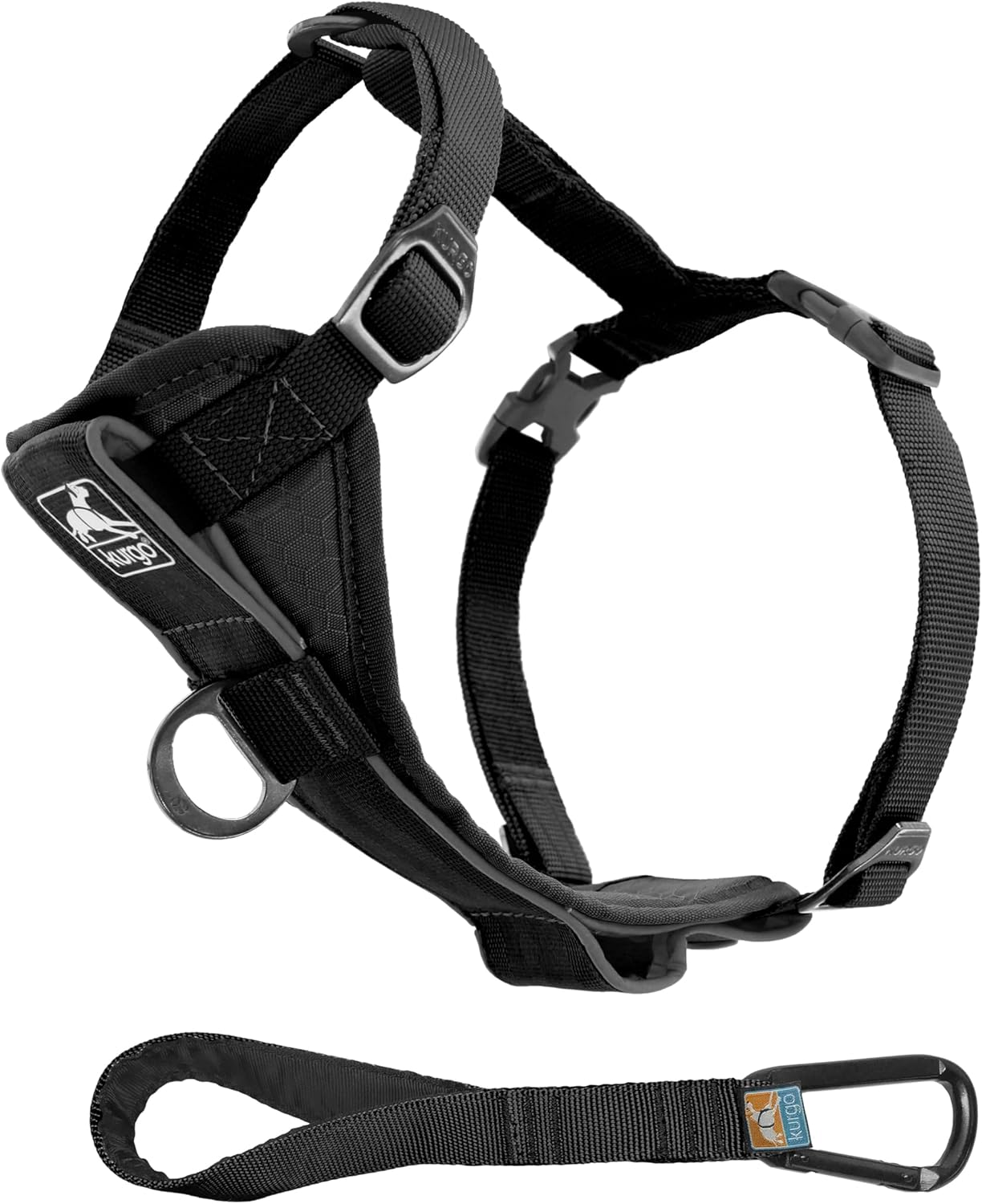
Kurgo Tru-Fit Smart Harness (Large)
If your Lab’s walks include a lot of car trips, and with a Lab they usually do, this is the everyday no-pull harness to buy. A broad, padded chest plate spreads a strong dog’s pull comfortably across the chest, front and back leash attachments give you a no-pull training ring plus a casual-walk ring, and five adjustment points lock the fit onto a deep-chested Lab. The built-in seat-belt loop turns the same harness into a car restraint, the ripstop fabric is tough and machine washable (handy for a muddy, water-loving dog), and reflective trim covers low-light walks. A genuinely well-padded, do-everything harness at a very fair price.
What we like
- Broad padded chest plate spreads a Lab’s pull comfortably and protects the airway
- Five adjustment points fit a deep, barrel-chested Lab snugly
- Doubles as a car restraint via the included seat-belt loop, built for a Lab that travels
- Machine washable ripstop fabric shrugs off mud and lake water
The catches
- Front-clip no-pull is good, not quite as sharp as the Ruffwear at redirecting a hard puller
- No grab handle (the rabbitgoo above adds one)
- Routed via Amazon (Kurgo isn’t a Skimlinks-direct brand here)
Why a Labrador needs a no-pull harness
If you own a Labrador, you already know the feeling: you open the door, your Lab spots a squirrel, a jogger, or simply the great outdoors it adores, and suddenly you’re being towed down the street. This isn’t disobedience, it’s a Labrador being a Labrador. Labs are strong, athletic, endlessly enthusiastic dogs that were bred to work all day, and young Labs in particular pull hard out of sheer excitement. That single fact decides the whole harness question.
For a powerful, enthusiastic puller, the answer is a no-pull harness with a front clip. Here’s why that beats every other option:
- The front clip redirects the pull. A leash clipped to a ring on the chest turns a lunging Lab gently back toward you instead of letting it lean into a back clip and pull like a sled dog. It works with the dog’s body, which is why trainers reach for it first.
- A wide chest plate protects the airway. A Lab pulls with real force; a harness spreads that load across the broad chest and shoulders, keeping it off the trachea, unlike a flat collar, which drives every pull straight into the windpipe.
- It fits a Lab’s build. A Labrador’s broad, deep, barrel-shaped chest needs a harness with enough width and adjustment to wrap it properly, not a thin strap that digs in.
For background on the breed’s working drive and temperament, the AKC Labrador Retriever breed profile is a good primer, but the practical takeaway is simple: a Lab pulls because it’s a Lab, and a front-clip no-pull harness, fitted to a broad chest, is how you walk one comfortably.
Harness or collar for a Labrador? (the airway issue)
Before the picks, the question every Lab owner asks: harness or collar? For walking a dog that pulls as readily as a Labrador, the answer is clearly a harness, and here’s the honest reasoning, not a blanket rule.
A Lab leans into a leash without a second thought. Clip that leash to a flat collar and every pull drives force straight into the trachea (windpipe) and throat. On a strong dog that pulls this readily, repeated neck pressure can mean coughing, gagging, or tracheal irritation over time, and choke, prong, or slip collars used carelessly on a determined puller carry a real risk of neck injury. A well-fitted harness moves all of that load onto the chest and shoulders, keeps the airway clear, and, with a front clip, gives you a steering point that actually curbs the pulling.
One honest caveat: a front-clip harness fitted too tightly across the shoulders can restrict a dog’s natural front-leg movement, which matters for an athletic dog that loves to run, swim and hike. The fix isn’t to avoid front clips, they’re the most effective no-pull tool there is, it’s to fit the harness correctly (snug at the chest and girth, not binding across the shoulder) and to treat the front clip as a training tool you’ll wean off as your Lab learns loose-leash manners, not a permanent crutch.
What to look for in a Labrador harness
Four features separate a great Labrador harness from one that fails this particular breed, a strong, broad-chested, water-loving dog:
- A front (no-pull) clip, non-negotiable for a Lab. A chest ring redirects a pulling Lab back toward you. The best harnesses are dual-clip: a front ring for training and a back ring for relaxed walks once your Lab has learned its manners.
- A wide, padded chest plate. A Lab pulls hard, so padding spreads that force off the throat and keeps wide straps from digging into the broad chest. Wide, smooth panels beat thin straps for a strong dog.
- Enough adjustment for a deep, barrel chest. A Labrador’s chest is broad and deep, so look for four or more adjustment points to wrap it snugly. A loose harness lets a strong Lab shift and lean into the pull, and a too-shallow harness rides up toward the throat.
- A build that handles water and the trail. Labs swim, wade and roll in mud. A harness with quick-drying webbing and a design that doesn’t trap water beats a thick fleece vest that stays soggy and starts to smell. If you hike, a padded handle on the back helps you steady or lift your dog over obstacles.
To compare the full no-pull field across all breeds, start at the large-dog harness hub; for handle-equipped control builds, see the tactical dog harness guide.
What size harness for a Labrador? (chest-girth chart)
This is the step every other Labrador harness guide skips, and the one that drives the most returns and the most chafed, escaping dogs. Harness size is set by chest girth, not weight. Measure the widest part of the ribcage, just behind the front legs, with a soft tape pulled snug; also measure the neck at the base. Because a Lab is broad and deep-chested, most adult Labradors land between 28″ and 36″ of chest girth, males larger, females leaner, with a neck of roughly 18 to 24″. That puts most Labs in a Large or Extra-Large. Here’s how that maps to the picks above:
| Chest girth | Typical Labrador | Size to order |
|---|---|---|
| 26 to 32″ | Female / leaner or younger adult Lab | Large (Ruffwear Front Range L, rabbitgoo L, Kurgo L) |
| 31 to 38″ | Most adult male Labs / broad-chested females | Large to XL (Ruffwear Front Range L/XL, rabbitgoo L, Kurgo L) |
| 36 to 42″ | Big, blocky English-type / heavily built males | XL (Ruffwear Front Range XL; size up if between) |
Because chest girth ranges overlap between sizes, and because every brand’s chart is slightly different, always check your measured girth against the specific brand’s size chart before ordering, don’t guess from your dog’s weight. A 70 lb Lab and a 70 lb Lab can take different sizes depending on how broad and deep each one is built.
Getting the rest of your Lab’s gear sized right matters just as much, if you’re kitting out a new dog, our what size crate for a Labrador guide uses the same measure-first approach, and the best dog bed for a Labrador guide covers sizing a bed to a big, active dog. The full Labrador gear guide ties the whole kit together.
What size harness for a Labrador puppy?
Lab puppies grow fast, and they pull early, so a harness matters from the start. The mistake owners make is buying a tiny puppy harness the dog outgrows in six weeks. Instead:
- Buy an adjustable harness with a wide size range and re-measure monthly. A Lab puppy’s chest girth changes constantly through the first year; a harness with four or more adjustment points stretches across several months of growth before you size up.
- Start the front clip and loose-leash training young. The easiest time to teach a Lab not to pull is before it weighs 70 lb. A no-pull harness with a front clip on an eight-month-old puppy pays off for the dog’s whole life.
- Expect to buy at least one mid-size harness, then the adult size. Many Lab owners use a Medium or Large during the gangly puppy stage, then move to the adult Large or XL once the chest fills out around 12 to 18 months.
Can a Labrador swim in its harness? (the water-loving angle)
Labs are water dogs, they were bred to retrieve from cold water, and most will fling themselves into any lake, river or puddle they find. So a Lab’s harness needs to handle water, and this is something almost no “best harness” guide addresses.
Can your Lab swim in its harness? Short, supervised swims, yes, a well-fitted harness won’t hinder a strong swimmer, and the back handle can actually help you guide a dog out of the water. But two things matter:
- Choose a quick-drying build. A trim harness with quick-dry webbing rinses clean and dries fast. A thick, padded fleece vest soaks up water, stays heavy and cold against the skin, can chafe, and starts to smell, exactly why we rank the trimmer, faster-drying Ruffwear Front Range as the best all-round Lab harness.
- Take a swim-specific harness off for serious swimming. For long open-water swims or boating, a regular walking harness is not a flotation device, use a proper dog life jacket. A walking harness is for getting to and from the water and short paddles, not for keeping a tired dog afloat.
Because a Lab’s love of water and the outdoors comes with a big appetite for chewing and play, give that energy a legal outlet too, see our best chew toys for a Labrador guide.
The best harness for a Lab that pulls hard
If your Lab is a serious puller, the kind that has you water-skiing down the pavement, the harness alone won’t fix it, but the right one makes training possible. Here’s the approach:
- Use the front clip every walk. Clip the leash to the chest ring, not the back. When your Lab surges, the front clip turns it back toward you, which both stops the forward progress and gives you a moment to reward calm walking.
- Pair the harness with loose-leash training. Stop when the leash goes tight; move when it’s slack. A no-pull harness is a tool that makes consistency easier, it isn’t a magic off-switch for a breed bred to work hard.
- Pick a harness that can’t shift under load. For a hard puller, fit matters more than features. A snug, four-or-five-point harness on a broad chest won’t twist or ride up when your Lab leans in; a loose one just teaches it that pulling still works.
For an outright hard puller, our top pick the Ruffwear Front Range has the crispest front-clip redirect of the three; the rabbitgoo‘s control handle helps you manage a strong dog in tight spots; and the well-padded Kurgo keeps a hard puller comfortable across the chest. All three are dual-clip, so you graduate to the back ring as your Lab learns.
How we chose these Labrador harnesses
A harness being popular doesn’t make it right for a Labrador. We ranked on the things that actually matter for a strong, broad-chested, water-loving puller:
- No-pull effectiveness. A front clip that genuinely redirects a strong, enthusiastic Lab, the breed’s #1 need, and our first filter.
- Fit for a broad, deep chest. Wide chest plates and four or more adjustment points that wrap a Lab’s barrel chest snugly without binding the shoulders.
- Comfort and the airway. Padded, smooth panels that spread a strong dog’s pull off the trachea over long, active outings.
- Water and trail readiness. Builds that shrug off a swim and a muddy hike, quick-drying or machine-washable, because that’s how Labs actually live. We didn’t default to the heaviest vest.
- Value across the range. A premium do-it-all pick, a sub-$30 no-pull value pick, and a well-padded mid-price harness with a car restraint built in.
How to fit and introduce a harness to a Labrador
Even the best harness fails if it’s fitted loose or rushed onto a wary dog. Two things make the difference on a Lab:
- Fit it snug, then re-check under load, every time. Tighten every point until you pass the two-finger test, then walk the dog and watch for the harness shifting, twisting, or the chest piece riding toward the throat, all signs it’s too loose or the wrong size. Because a Lab leans into the leash with real force, err on the snug side at the chest, and confirm it doesn’t bind across the shoulders so an athletic dog can move freely.
- Introduce it with food and a walk. Most Labs are food-motivated and eager to please, so this is easy: let the dog sniff the harness, feed treats through the head opening, clip it on, and immediately do something the dog loves, a walk or a trip to the water. A Lab that associates the harness with good things will practically dress itself.
Once the harness is dialled in, clip a standard leash to the front ring for training and the back ring once your Lab walks politely. And because a strong, well-exercised Lab is a happy Lab, build the harness into a real outdoor routine, long walks, hikes and swims are exactly what the breed was made for. The full Labrador gear guide covers the rest of the kit.
Our verdict: the best harness for a Labrador
For most Labrador owners, the Ruffwear Front Range is the best harness: a wide, padded no-pull harness with a front clip that redirects an enthusiastic puller, four adjustment points to fit a broad, deep chest, and a trim, fast-drying build that doubles as a hiking and adventure harness for a water-loving dog. If you want a no-pull setup on a budget, the rabbitgoo gives you a front clip, a back clip, two metal D-rings and a control handle for under thirty dollars. And if your Lab travels a lot by car, the well-padded Kurgo Tru-Fit Smart Harness adds a broad padded chest plate, five adjustment points and a built-in seat-belt loop, and it’s machine washable for a muddy, lake-loving dog.
Whichever you choose, measure the chest girth first and fit it snug, with a strong, broad-chested Lab, the fit is the difference between a calm walk and being towed down the street. For the rest of the lineup, browse the large-dog harness hub and the full Labrador gear guide.
More Labrador & active-dog gear
Labrador harnesses: common questions
What size harness for a Labrador?
Size a Labrador harness by chest girth, not weight. Measure the widest part of the ribcage just behind the front legs; most adult Labs run 28 to 36″ of girth (males larger, females leaner) with an 18 to 24″ neck. Because Labs are broad and deep-chested, that puts most in a Large or Extra-Large. Leaner females and younger adults take a Large, most adult males a Large to XL, and big blocky English-type males an XL. Because girth ranges overlap between sizes and every brand’s chart differs, always check your measured girth against the specific brand’s size chart, and fit it snug at the chest so it can’t ride up toward the throat.
What is the best no-pull harness for a Lab?
The best no-pull harness for a Lab is one with a front leash clip on the chest, which turns an enthusiastic puller back toward you instead of letting it lean into the pull. Our overall pick is the Ruffwear Front Range, a front-and-back-clip harness with a wide padded Y-front that spreads the load across a broad chest and four adjustment points to fit it snugly. For value, the rabbitgoo gives you the same front-clip no-pull design plus two metal D-rings and a control handle for under thirty dollars. Pair either with consistent loose-leash training and wean off the front clip as your Lab learns, a no-pull harness is a tool, not a magic off-switch for a breed bred to work hard.
What is the best harness for a Lab that pulls?
For a Lab that pulls hard, use a front-clip no-pull harness and clip the leash to the chest ring every walk, when your Lab surges, the front clip turns it back toward you and stops the forward progress. The harness must fit snug on the broad chest so it can’t twist or ride up when the dog leans in. Our top pick the Ruffwear Front Range has the crispest front-clip redirect; the rabbitgoo adds a control handle for tight spots. Pair the harness with loose-leash training, stop when the leash is tight, move when it’s slack, and be patient, because most Labs pull hardest as adolescents (about 6 to 18 months) and settle with consistency.
Is a harness better than a collar for a Labrador?
For walking, yes. A Labrador leans into a leash readily, and a flat collar drives every pull straight into the trachea and throat, which can cause coughing, gagging or tracheal irritation, and choke, prong or slip collars carry a real risk of neck injury on a strong puller. A well-fitted harness spreads that force across the broad chest and shoulders, keeps the airway clear, and gives you a front-clip steering point that actually curbs the pulling. Keep a flat collar with ID tags and a microchip on your Lab for identification, but clip the leash to a harness.
Front clip or back clip for a Lab?
For a Labrador, use the front clip for training and everyday control of pulling, and the back clip for relaxed walks once your Lab has learned its manners. The front (chest) ring is the no-pull tool: it redirects a lunging dog back toward you. The back ring is more comfortable and natural for a dog that already walks politely, but on its own it doesn’t discourage pulling, clip a strong Lab to the back ring and it can lean into it like a sled dog. That’s why we recommend dual-clip harnesses for Labs: train on the front, graduate to the back.
Can a Labrador swim in its harness?
For short, supervised swims, yes, a well-fitted walking harness won’t hinder a strong swimmer like a Lab, and a back handle can help you guide the dog out of the water. But choose a quick-drying harness: a thick padded vest soaks up water, stays heavy and cold, can chafe and starts to smell, while a trimmer build (like the Ruffwear Front Range) rinses clean and dries fast. A walking harness is not a flotation device, so for long open-water swims or boating, use a proper dog life jacket instead. After any swim, rinse the harness and let it dry fully before the next outing to prevent chafing and odour.
What size harness for a Lab puppy?
Lab puppies grow fast, so buy an adjustable harness with a wide size range and re-measure the chest girth every few weeks rather than buying a tiny puppy harness it outgrows in a month. Fit it snug now, don’t buy oversized for “growing room,” because a loose harness lets a puppy back out or chafe and teaches nothing about leash manners. Many owners use a Medium or Large during the gangly puppy stage and move to the adult Large or XL once the chest fills out around 12 to 18 months. Start the front clip and loose-leash training young, while your Lab is still light, it pays off for the dog’s whole life.
How do I stop my Lab pulling on the harness?
Use a no-pull harness’s front clip and pair it with consistent loose-leash training. Clip the leash to the chest ring so a surge turns your Lab back toward you; then stop walking whenever the leash goes tight and move forward only when it’s slack, rewarding the calm position. Make sure the harness fits snug so it can’t shift or ride up when the dog leans in. Most Labs pull hardest as adolescents (about 6 to 18 months), so be consistent through that window, it sets up a calm adult dog. The harness makes training possible, but it isn’t a substitute for the training itself; a Lab is a working breed that needs the lesson and plenty of exercise.