 Dog Gear, Sized Right
Best Dog Bed for a Labrador (Orthopedic & Chew-Resistant)
A Labrador is a 55 to 80 lb dog that’s genetically prone to hip and elbow dysplasia, famously obesity-prone (double the joint load), loves water and sheds heavily, and a fair few chew. So the right bed is a supportive L/XL orthopedic memory-foam bed with an easy-clean, washable cover and enough durability to last. Here are the three we’d actually buy, ranked, in stock, sized right.
Looking for the best dog bed for a Labrador? Start with the breed. A Labrador Retriever is a 55 to 80 lb large dog with two health realities that should decide the bed: it’s genetically prone to hip and elbow dysplasia and arthritis, and it’s one of the most obesity-prone breeds there is, and a heavier dog loads those already-vulnerable joints even harder. That makes a supportive orthopedic memory-foam bed the single most important feature for this breed: a thick, high-density foam surface that keeps a heavy Lab off the hard floor, cushions the hips and elbows, and doesn’t bottom out. After that come the things that are distinctively Labrador: these dogs love water and shed heavily, so the cover needs to be waterproof-lined and machine-washable; many Labs (especially in the puppy and adolescent years) chew, so durability and a tough cover matter; and they’re big enough that getting the L/XL size right keeps the dog comfortable and the joints protected. Below we explain why a Labrador needs an orthopedic bed, how to size it for a 55 to 80 lb dog, how to handle the chewing and the water-and-mud, which bed styles suit the breed, and then the three beds we’d actually buy, a best-overall washable orthopedic, the clinically-studied joint bed for seniors, and a tough water-resistant pick. For everything else your dog needs, see our Labrador gear guide.
The best dog beds for a Labrador, ranked
Every pick is a Labrador-appropriate bed we’d put under a 55 to 80 lb dog, orthopedic support first, then the right L/XL size and an easy-clean cover. Verified in stock; tap through for the live price.
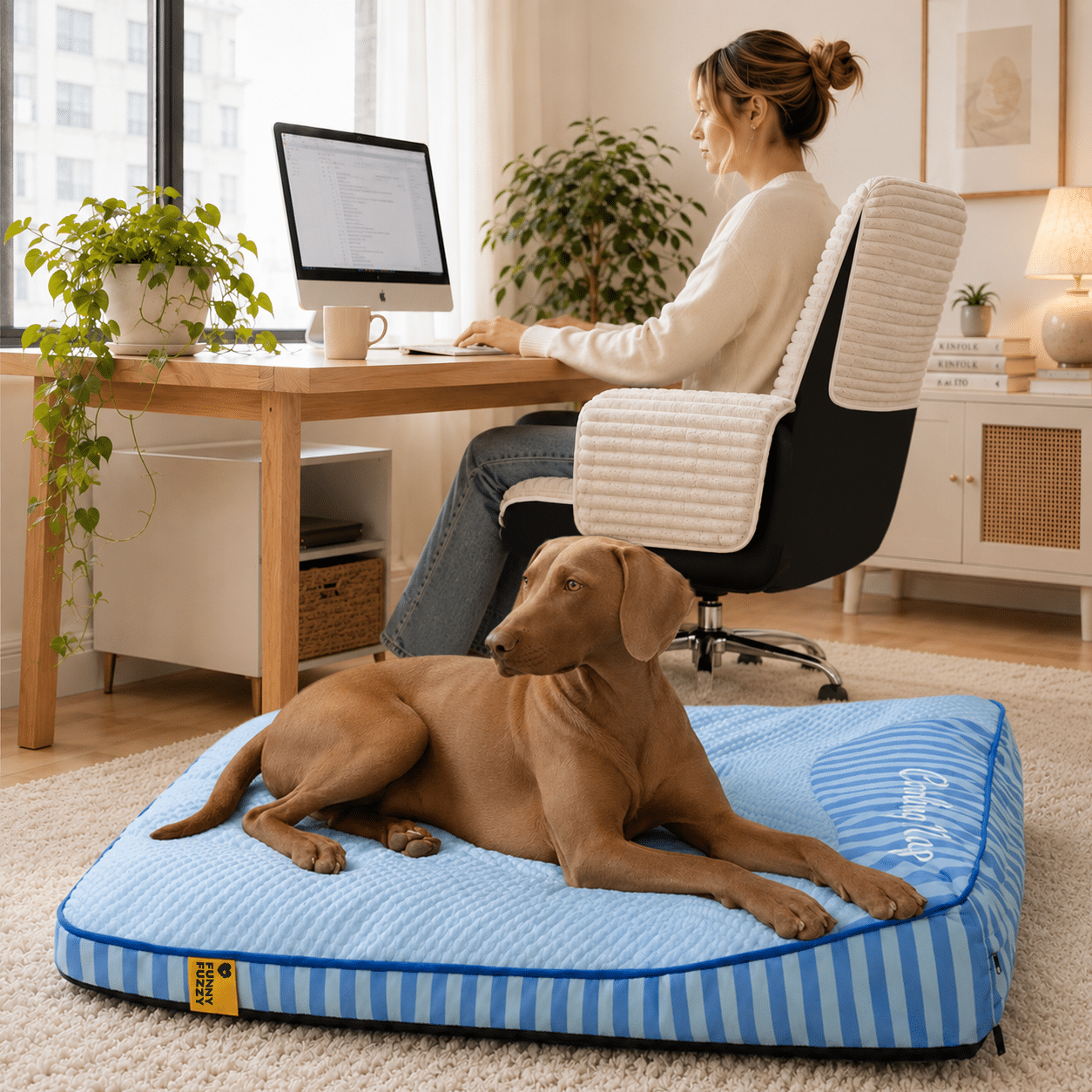
FunnyFuzzy L/XL Orthopedic Washable Dog Bed
This is the bed we’d put under most Labradors. A Lab needs three things at once, orthopedic joint support for hips and elbows it’s genetically prone to, the correct L/XL size for a 55 to 80 lb dog, and an easy-clean cover for a breed that swims, sheds and tracks in mud, and this nails all three for well under a hundred dollars. It’s a supportive orthopedic foam mattress with a fully removable, machine-washable cover, generously sized so an adult Lab can stretch right out. The L (about 79.99) suits a typical 55 to 70 lb female; size up to the XL (about 99.99) for a big 70 to 80 lb male. It badly undercuts the boutique orthopedic beds while still keeping a heavy, joint-prone dog genuinely off the hard floor.
What we like
- Supportive orthopedic foam keeps a heavy, joint-prone Lab off the floor and cushions hips and elbows
- Entire cover zips off and machine-washes, built for a Lab that swims, sheds and tracks in dirt
- Sized right for the breed: L for a 55 to 70 lb female, XL for a 70 to 80 lb male
- A fraction of the price of the boutique orthopedic beds without skimping on support
The catches
- Not a chew-proof bed, fine for a settled adult, not a determined puppy-stage chewer (see the K9 pick)
- A heavy senior Lab with advanced arthritis may want the thicker 7-inch slab of the Big Barker
- Plush cover shows dirt sooner than a dark ballistic fabric on a very muddy water dog
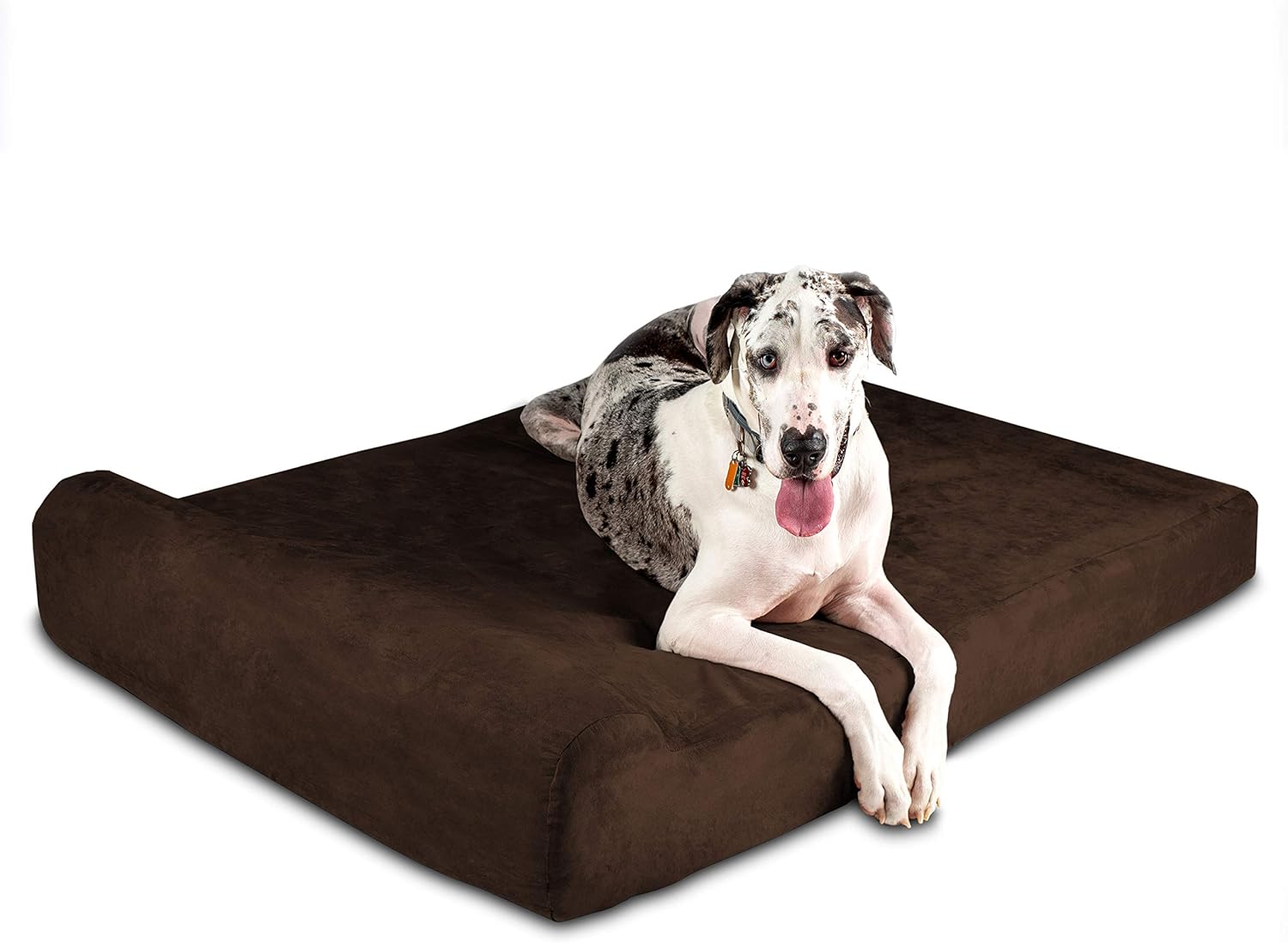
Big Barker 7″ Pillow Top Orthopedic Bed
If your Labrador is older, heavy, or already showing stiffness, this is the bed to buy. The Big Barker is the orthopedic bed with actual peer-reviewed evidence behind it, a University of Pennsylvania study found it measurably improved joint health, reduced stiffness and improved sleep in large dogs versus an ordinary bed. It uses 7 inches of American-made therapeutic foam in three layers (soft comfort top, support core, firm base) that won’t bottom out under a 70 to 80 lb Lab the way a thin pad does, backed by a 10-year guarantee it won’t flatten. For the dysplasia and arthritis a Labrador is prone to, this is the most genuinely therapeutic surface here. The Large fits most Labs; choose the Giant only for a very big male.
What we like
- The only bed here with a peer-reviewed UPenn study showing real joint-health and sleep benefits
- 7 inches of three-layer therapeutic foam genuinely supports a heavy Lab’s hips and elbows
- Will not bottom out or flatten, the firm base keeps an 80 lb dog off the floor for years
- Ideal for a senior or dysplastic Lab where joint support is the whole point
The catches
- Premium price, it’s the most expensive pick by some margin (but cheapest per year over its lifespan)
- Cover is washable but the foam is not chew-proof, not for a destructive chewer
- A tall 7-inch profile is supportive but less easy to step onto than a low bed for a frail senior
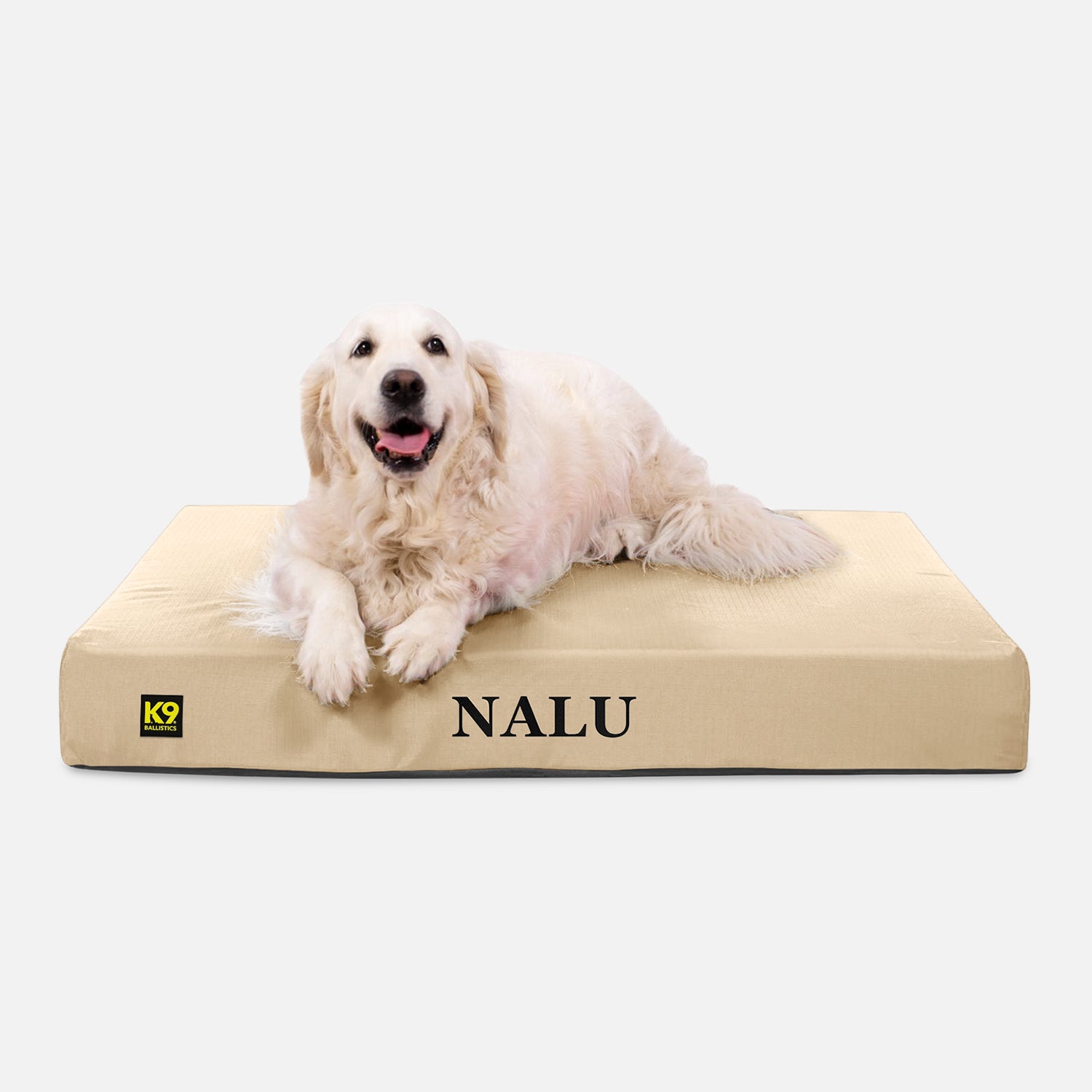
K9 Ballistics Tough Ripstop Rectangle Bed
For the Lab that destroyed its last bed, or simply lives a wet, muddy, outdoorsy life, this is the tough pick. It wraps a supportive foam core in heavy-duty ripstop ballistic fabric that’s water-resistant (rated 8/10) and machine-washable, exactly what a water-loving, heavy-shedding Labrador needs, and it shrugs off the digging and light-to-mild chewing that shreds a plush bed. It’s honestly rated for light-to-mild chewers, not relentless destroyers: if your Lab is still in a determined puppy-chewing phase, a soft-foam bed of any kind will lose, and you want an elevated metal cot instead. But for the typical Lab that’s tough on bedding without being a true shredder, this is the most durable, easiest-to-clean bed of the three. Size Large for a typical Lab, XL for a big male.
What we like
- Tough ripstop ballistic cover survives the digging and light-mild chewing that destroys plush beds
- Water-resistant (8/10) and machine-washable, ideal for a Lab that swims and lives muddy
- Supportive foam core still keeps the dog off the floor, not just a thin mat
- Removable cover handles the heavy shedding and dirt a Labrador brings home
The catches
- Rated for light-to-mild chewers only, a relentless destroyer needs an elevated metal cot, not this
- Pricier than the FunnyFuzzy and firmer/less plush than a microsuede bed on day one
- Less therapeutic for a senior than the 7-inch Big Barker if joints are the main concern
Why a Labrador needs an orthopedic bed (hips, elbows & weight)
If you only get one thing right when buying a bed for a Labrador, make it orthopedic support, and the reason is the breed’s joints. Labradors are genetically prone to hip dysplasia and elbow dysplasia, two of the most common inherited orthopedic conditions in the breed, and to osteoarthritis as they age. These are conditions where the joint doesn’t sit or wear correctly, and the result is pain, stiffness and reduced mobility, exactly the things a supportive bed helps with.
Two breed traits stack the deck:
- Genetic joint risk. Hip and elbow dysplasia run in Labrador lines. Even a well-bred Lab can develop them, and a supportive surface that distributes weight and cushions the joints is genuine preventive care, for a young dog it slows wear, for an older one it relieves pain.
- Obesity. The Labrador is one of the most food-motivated, weight-prone breeds there is (a genuine genetic appetite quirk has been identified in the breed). Every extra pound loads those vulnerable hips and elbows harder, accelerating arthritis. A heavier Lab needs more support, not less, and a thin bed that bottoms out under a 75 lb dog leaves it effectively on the floor.
What “orthopedic” actually needs to mean for a dog this size and heavy:
- Thickness: aim for at least 4 inches of supportive foam for an adult Lab, and step up toward 7 inches for a heavy, senior or arthritic dog. Thin 1 to 2 inch pads compress flat under a Lab’s weight.
- Density: look for high-density foam (around 4 to 5 lb/cu ft) in a solid core, not loose shredded fill, which packs down and goes flat. Density, not just thickness, is what stops a bed bottoming out under a heavy dog.
- Multi-layer construction: the best orthopedic beds layer a soft contouring top over a firm support base, so the dog gets pressure relief on the elbows and hips without sinking to the floor. The Big Barker’s three-layer 7-inch build is the clearest example.
- CertiPUR-US-certified foam: a third-party standard confirming the foam is made without certain harmful chemicals, worth having for a dog spending half its life on it.
What size dog bed for a Labrador? (sizing a 55 to 80 lb dog)
A Labrador is a genuinely large dog, most adults weigh 55 to 80 lb and stand 21.5 to 24.5 inches at the shoulder, with a body 36 to 42 inches long, so the great majority of Labs need a Large or XL bed, roughly 42 to 48 inches long. The most common mistake is buying too small: a Lab that can’t fully stretch out ends up with its joints hanging off the edge onto the hard floor, which defeats the point of an orthopedic bed.
Ignore the brand label (one company’s “Large” is another’s “Medium”) and size to your dog. The rule: your Lab should be able to lie fully stretched out on its side, legs extended, without any part hanging off the edge. Measure from nose to base of tail while the dog is lying stretched, then add 6 to 12 inches for the minimum bed length. For most adult Labs that lands squarely in L/XL territory.
| Labrador | Typical weight | Recommended bed size | Approx. bed length |
|---|---|---|---|
| Smaller / young-adult female | 55 to 65 lb | Large (minimum) | ~42″ |
| Average female | 65 to 75 lb | Extra Large (XL) | ~44 to 46″ |
| Average male | 70 to 80 lb | XL to XL+ | ~46 to 48″ |
| Large male | 80 to 90 lb+ | Giant / XXL | ~48 to 52″ |
| Labrador puppy (still growing) | varies | Buy for the adult size | size to grown dog |
Two more sizing notes for this breed:
- Check the foam thickness, not just the footprint. A bed can be the right length and far too thin, a 75 lb Lab presses a 2-inch pad flat. Pair the right length with at least 4 inches of supportive foam (7 for a heavy senior) so the dog is genuinely lifted off the floor.
- Buy a puppy’s bed for the adult dog. A Lab puppy will reach 55 to 80 lb, so size the bed for the grown dog rather than re-buying as it grows, just expect to protect it from puppy chewing in the meantime (more below).
Do Labradors chew their beds? Durability & chew-resistance
Plenty do, especially in the puppy and adolescent years. Labradors are oral, mouthy dogs bred to carry things in their mouths, and a bored or teething Lab will happily reduce a plush bed to a snowstorm of stuffing. So while orthopedic support is the priority, durability is a close second for many Lab owners, and for a determined chewer it can override everything else.
Here’s how to read the durability claims honestly:
- Ripstop ballistic fabric. The most useful durability feature. Ballistic nylon woven in a ripstop grid (as on our K9 Ballistics pick) resists tearing, digging and light-to-mild chewing far better than ordinary microsuede or canvas. It dramatically slows a chewer and survives the scratching-and-digging a Lab does before lying down.
- Reinforced seams & hidden zippers. Most bed failures start at a seam, a dog gets a tooth into a stitched edge and unzips the whole thing. Tougher beds use heavy-duty seams and hidden, chew-resistant zippers so there’s no easy edge to start on.
- Chew-proof warranty. The honest tell of how confident a brand is. K9 Ballistics, Gorilla and Bully Beds back their tough beds with chew warranties (typically 120 to 125 days). A real warranty means the company expects the bed to survive, and replaces it if it doesn’t.
- Be honest about your dog. No fabric bed is truly indestructible against a relentless chewer. Our K9 Ballistics Tough pick is rated for light-to-mild chewers, great for the typical Lab that’s hard on bedding, but a determined puppy-stage destroyer will defeat any soft-foam bed. For that dog, the only thing that survives is an elevated aircraft-grade metal cot (K9 Ballistics armored, Kuranda, Coolaroo): there’s nothing soft to grab, and it hoses clean.
And remember the real cure: most bed destruction is boredom, under-exercise or anxiety, not malice. A Labrador is a high-energy working breed, a well-exercised, mentally-tired Lab with good chew toys destroys far less. Pair the right bed with proper exercise and our chew toys for a Labrador, and even a soft orthopedic bed has a fighting chance.
Labs love water: waterproof, washable & easy to clean
This is the factor most generic “best dog bed” guides under-serve, and it’s a defining one for a Labrador. Labs were bred as water-retrieving gun dogs, they have a water-resistant double coat, webbed feet, and an almost compulsive love of swimming, puddles, mud and lakes. They also shed heavily year-round. The practical result: a Labrador’s bed gets wet, muddy and hairy faster than almost any other breed’s, so easy cleaning isn’t optional, it’s a core requirement.
What to look for:
- Waterproof inner liner. A waterproof membrane under the cover stops a damp dog, drool, spills and the occasional accident from soaking into the foam and turning the bed into an odor sponge. This is the single most important easy-clean feature for a Lab, foam that gets wet inside is almost impossible to dry and quickly smells.
- Removable, machine-washable cover. Non-negotiable for this breed. A cover that zips off and goes in the washing machine beats “spot clean only” every time when you’re dealing with a heavy shedder that swims. All three of our picks have washable covers.
- Water-resistant outer fabric. A tightly-woven or coated outer (like the ripstop on our K9 Ballistics pick, rated 8/10 for water resistance) sheds water and wipes down between washes, handy for a dog that comes in wet daily.
- Quick-dry / hose-clean options. For a really wet, outdoorsy Lab, an elevated mesh cot hoses clean in seconds and dries fast, a great secondary or outdoor bed even if the main bed indoors is orthopedic foam.
One more practical point: a heavy-shedding Lab means the cover comes off for a wash often, so check that it’s genuinely easy to remove and refit. A bed with a fiddly cover that you dread wrestling back on simply won’t get washed as often as a Lab’s bed needs. If your Lab is also a crate dog, match the bed to the crate footprint, our what size crate for a Labrador guide has the dimensions to size against. And to keep the shedding off your floors and furniture in the first place, a good de-shedding routine helps as much as the washable cover does.
Bed styles compared: orthopedic mattress vs. bolster vs. elevated
“Best bed” depends on how your Labrador likes to sleep and how hard it is on bedding. Here’s how the main styles stack up for a heavy, joint-prone, water-loving breed:
| Style | Best for | Watch out for |
|---|---|---|
| Orthopedic foam mattress (flat) | Most Labs, maximum joint support and stretch-out room; seniors and dysplastic dogs; sprawlers, our top-pick style | No raised sides for dogs that like to rest their head; pick high-density foam, not shredded fill |
| Bolster / sofa orthopedic | Labs that like to rest their head and feel secure; nesters; dogs that curl as well as sprawl | Make sure the usable flat area is still big enough for a 55 to 80 lb dog to stretch out on the supportive foam |
| Tough ripstop orthopedic | Labs that chew, dig, swim or live muddy, durability and water-resistance with real foam support | Firmer and less plush than microsuede; rated for light to mild chewers, not relentless destroyers |
| Elevated aluminum/steel cot | Relentless chewers, hot climates, outdoor/yard use, very wet dogs, hoses clean, effectively chew-proof | No orthopedic foam, so no joint cushioning; chilly in winter; best as a secondary/outdoor bed |
For most Labradors we’d start with an orthopedic foam mattress or a supportive bolster, joint support is the priority, and a Lab is big enough to want room to stretch. Choose the tough ripstop version if your dog chews, digs or lives wet and muddy. Reserve the elevated cot for true destroyers, hot climates or outdoor use, ideally alongside a foam bed indoors. Many Labs are happy with a bolster for the head support and the sense of security a raised edge gives, just confirm the flat supportive area is large enough for the dog to actually stretch out on.
Health & behaviour notes every Labrador owner should know
A few breed realities make the right bed more than a comfort purchase:
- Hip & elbow dysplasia. These inherited conditions are common in the breed. A supportive orthopedic surface won’t cure them, but it reduces joint loading and the morning stiffness an affected dog gets from lying on a hard or bottomed-out bed. Ask your breeder about hip and elbow scores, and your vet about early signs.
- Obesity & weight management. Labradors are exceptionally food-driven and gain weight easily, and extra weight directly worsens joint problems. Keeping a Lab lean is the most powerful thing you can do for its hips and elbows, and a comfortable, supportive bed encourages the proper rest and recovery an active dog needs between exercise.
- Arthritis with age. Most older Labs develop some arthritis. A thicker (7-inch) orthopedic bed becomes more valuable as the dog ages, it’s the difference between a senior Lab rising stiffly and rising comfortably.
- Heavy shedding. A Lab’s double coat sheds year-round and blows out seasonally. A washable cover and a regular de-shedding routine keep the bed (and your home) manageable.
- High energy & chewing. Labs are working dogs that need real daily exercise and mental work. An under-exercised Lab gets destructive, much bed-chewing is boredom. Good exercise, enrichment and chew toys protect both the bed and the dog’s sanity.
How we picked these beds
We started from the breed, not the bed. A Labrador’s inherited hip and elbow dysplasia risk and strong tendency to gain weight set the first requirement, orthopedic support, followed by correct L/XL sizing for a 55 to 80 lb dog, an easy-clean, waterproof, washable cover for a breed that swims and sheds, and enough durability for a dog that may chew. We only considered beds that meet those needs and are actually in stock right now, then ranked for the three most common Labrador situations:
- Best overall for most Labs: the FunnyFuzzy L/XL Orthopedic Washable Dog Bed, real orthopedic foam, a fully machine-washable cover, correct L/XL sizing, and excellent value.
- Best for joints & seniors: the Big Barker 7″ Pillow Top, the clinically-studied (UPenn) 7-inch therapeutic bed that won’t bottom out, for a heavy, older or dysplastic Lab where joint support is the whole point.
- Most durable & water-resistant: the K9 Ballistics Tough Ripstop, a water-resistant, washable, light-to-mild-chew-resistant bed for a Lab that chews, swims and lives muddy.
All three are sized appropriately for a Labrador and we verified every buy button goes to a live, in-stock listing before publishing. For a true puppy-stage destroyer we’d add an elevated metal cot (Kuranda or the K9 Ballistics armored cot) as the indestructible option until the chewing phase passes. For more dog beds beyond the Labrador-specific picks, see our full dog bed buyer’s guide.
Best dog bed for a Labrador: common questions
What size bed does a Labrador need?
A Large or XL bed, usually about 42 to 48 inches long. Labradors are large dogs, typically 55 to 80 lb and 21.5 to 24.5 inches at the shoulder with a 36 to 42 inch body, so most need an L or XL. Ignore brand size labels and size to your dog: measure from nose to base of tail while it’s lying stretched, then add 6 to 12 inches for the minimum bed length. A smaller 55 to 65 lb female fits a Large (~42″), an average 65 to 75 lb female suits an XL (~44 to 46″), a 70 to 80 lb male wants XL to XL+ (~46 to 48″), and a big 80 to 90 lb+ male needs a Giant or XXL (~48 to 52″). Also check the foam thickness, at least 4 inches (7 for a heavy senior), so a heavy Lab doesn’t press it flat. For a puppy, buy for the adult size now.
What is the best orthopedic bed for a Labrador?
For most Labs, the FunnyFuzzy L/XL Orthopedic bed is the best value orthopedic pick; for a senior or dysplastic Lab, the Big Barker 7″ is the most therapeutic. A Labrador is genetically prone to hip and elbow dysplasia and is obesity-prone, so the joints carry extra load, a supportive orthopedic surface is the single most important feature. Look for at least 4 inches of high-density foam (around 4 to 5 lb/cu ft) for an adult, stepping up to 7 inches for a heavy senior, ideally CertiPUR-US certified and multi-layer so it doesn’t bottom out. The Big Barker’s three-layer 7-inch foam is the standout here because it’s backed by a University of Pennsylvania study showing measurable joint-health and sleep benefits in large dogs. The FunnyFuzzy gives you real orthopedic foam and a washable cover at a much lower price, which suits most Labs perfectly.
What is the best chew-proof bed for a Labrador?
For a Lab that’s hard on bedding, the K9 Ballistics Tough Ripstop is the best chew-resistant bed with real support; for a relentless destroyer, only an elevated metal cot is effectively chew-proof. The K9 Ballistics Tough wraps supportive foam in heavy-duty ripstop ballistic fabric that resists digging and light-to-mild chewing, and it’s water-resistant and machine-washable, ideal for a typical Lab. Be honest about your dog, though: it’s rated for light-to-mild chewers, and no soft-foam bed is truly indestructible against a determined puppy-stage destroyer. For that dog, an elevated aircraft-grade metal cot (K9 Ballistics armored, Kuranda or Coolaroo) gives a chewer nothing soft to grab and hoses clean, though it has no orthopedic foam. Most importantly, address the cause, most bed destruction is boredom or under-exercise, so a well-exercised Lab with good chew toys destroys far less.
Do Labradors need an orthopedic bed?
Yes, more than most breeds. Labradors are genetically prone to hip dysplasia, elbow dysplasia and arthritis, and they’re one of the most obesity-prone breeds, so a heavier Lab loads those vulnerable joints even harder. A thin or bottomed-out bed leaves a 55 to 80 lb dog effectively on the hard floor, which causes elbow calluses and aggravates the joints. A supportive orthopedic surface, at least 4 inches of high-density foam, 7 for a heavy senior, distributes the weight, cushions the bony points and takes pressure off the hips and elbows. For a young Lab that’s preventive joint care; for an older one it’s real pain relief. Keep the dog lean as well, because weight management and a supportive bed protect the joints from both directions.
What is the best waterproof or washable bed for a Labrador?
Look for a bed with both a waterproof inner liner and a removable machine-washable cover, and for a really wet dog, a water-resistant outer like ripstop fabric. Labs were bred as water dogs and they swim, splash and track in mud, on top of shedding heavily, so easy cleaning is a core requirement, not a nice-to-have. The waterproof liner matters most: it stops a damp dog or an accident from soaking into the foam, which is almost impossible to dry and quickly smells. All three of our picks have washable covers; the K9 Ballistics Tough adds a water-resistant ripstop outer (rated 8/10) that wipes down between washes, making it the best pick for a genuinely wet, muddy Lab. For an outdoor or extremely wet dog, an elevated mesh cot that hoses clean is a great secondary bed.
Why does my Labrador keep destroying its bed?
Usually boredom, under-exercise, teething or anxiety, not malice. Labradors are high-energy working dogs bred to carry things in their mouths, so an under-stimulated or adolescent Lab will channel that energy into chewing and digging, and the bed is an easy target. The fix has two parts. First, buy a bed it can’t easily destroy: a tough ripstop ballistic bed for a Lab that’s hard on bedding, or an elevated metal cot for a relentless puppy-stage destroyer. Second, the real cure, address the cause: plenty of daily physical exercise, mental enrichment, good chew toys to redirect the urge, and help for separation anxiety if your dog destroys things mainly when left alone. A tired, content Lab with proper outlets destroys far less, and the chewing usually eases as the dog matures out of adolescence.
Is the Big Barker worth it for a Labrador?
For a heavy, senior or joint-troubled Lab, yes, it’s the most genuinely therapeutic bed here. The Big Barker is the orthopedic dog bed with actual peer-reviewed evidence: a University of Pennsylvania study found it measurably improved joint health, reduced stiffness and improved sleep in large dogs compared with an ordinary bed. Its 7 inches of three-layer American-made therapeutic foam genuinely support a 70 to 80 lb Lab’s hips and elbows and won’t bottom out, backed by a 10-year guarantee against flattening. The catch is price, it’s the most expensive pick, and it isn’t chew-proof, so it’s not for a destructive chewer. But for the dysplasia and arthritis a Labrador is prone to, especially in an older dog, it’s the bed we’d choose, and the per-year cost over its long lifespan is reasonable. For a younger, settled Lab on a budget, the FunnyFuzzy orthopedic bed delivers most of the benefit for far less.
Are elevated beds good for a Labrador?
They’re excellent for chewers, wet dogs and warm climates, but not as a Lab’s only bed if joints are a concern. An elevated aircraft-grade metal cot (K9 Ballistics armored, Kuranda or Coolaroo) is effectively chew-proof, there’s nothing soft to grab, keeps the dog off hot or wet ground, and hoses clean, which makes it a great pick for a relentless chewer, a very wet swimming Lab, a yard or patio, or a hot climate. The trade-off matters for this breed: an elevated cot has no orthopedic foam, so it doesn’t cushion the hips and elbows a Labrador is prone to having trouble with. Our take: use an elevated cot for chewers, outdoor use and summer, but give a Lab a thick, supportive orthopedic bed indoors for everyday sleeping, or add a chew-resistant orthopedic pad on top of the cot for an older dog.